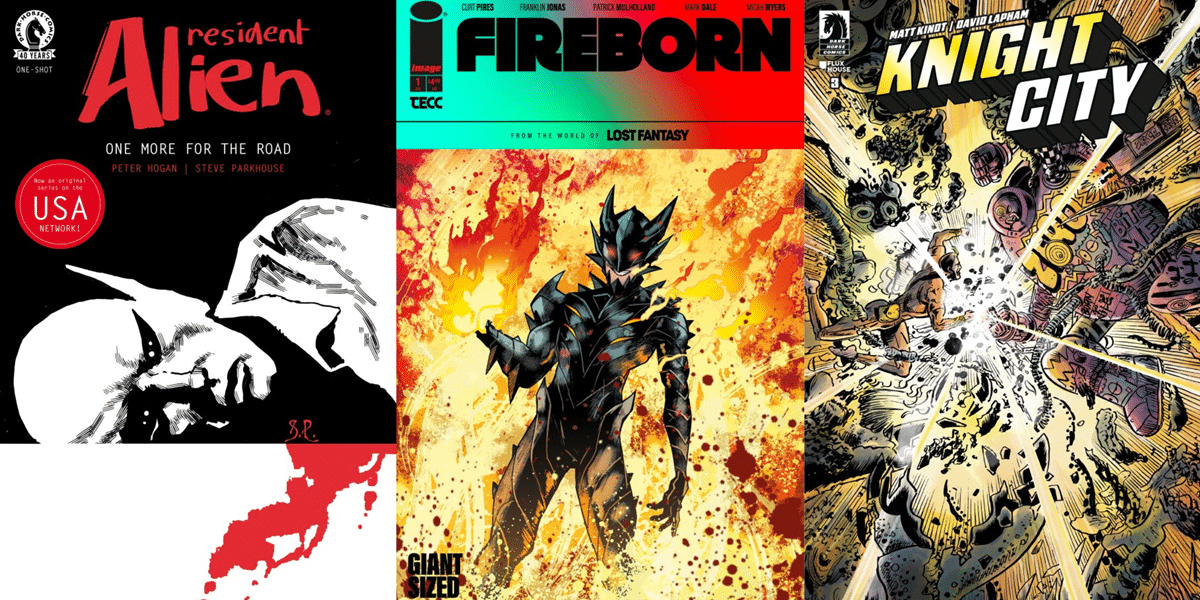

In this week’s Wednesday Comics column, we have a look at the finale issue of Resident Alien – One More For the Road, another finale with Knight City #3, and more! Plus, FOC Watch and The Prog Report!
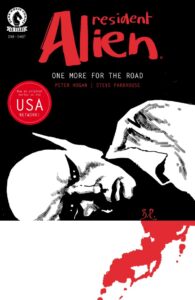 Resident Alien – One More For The Road #1
Writer: Peter Hogan
Artist: Steve Parkhouse
Publisher: Dark Horse Comics
Review by Joe Grunenwald
From the very beginning, Resident Alien has been a little different. Peter Hogan and Steve Parkhouse’s series about an alien stranded on Earth and living in disguise in the small town of Patience, Washington, has danced between a number of different genres over the course of its fourteen-year run, from detective fiction to medical drama to romance to, of course, science fiction. It’s a quiet series, telling deeply human stories, ironic given its extraterrestrial lead character. This week sees the release of the series finale, Resident Alien: One More For The Road, and it’s a conclusion that’s as offbeat– and enjoyable – as the series has ever been.
Things have changed a lot for the titular alien, Harry Vanderspiegle, over the last few Resident Alien storylines. He’s fallen in love and had a child with his human partner, Asta Twelvetrees, and the arrival of their child has drawn the attention of his homeworld, which now wishes to bring Earth into their Circle of Worlds. While the scope of what’s going on in the greater world of Resident Alien has grown to an intergalactic scale, the focus of the One More For the Road remains squarely on Harry, Asta, and the residents of Patience. Hogan and Parkhouse have spent over a decade building this small Pacific Northwest town around their alien main character, filling it with an assortment of loveable, quirky characters (What is it about the PNW that breeds such delightful weirdos?). The finale is a showcase for many of those characters, giving them small opportunities to display what made them so memorable in the first place, and reinforcing their relationships with Harry in meaningful ways.
Resident Alien has never been the most action-packed series, but when there is action it hits hard, and there’s a moment of startling violence in One More For The Road that was truly shocking to read. That moment serves as a catalyst for the character-driven drama of the rest of the issue, which I won’t spoil here. If there’s anything to complain about here, it’s that that drama isn’t given more room to play out. That said, when all is said and done the resolution to that drama feels perfectly of a piece with the rest of the series. Maybe the complaint, then, is just that there’s not more Resident Alien to enjoy.
Delivering a satisfying ending is hard, especially when it comes to long-running series with devoted fan followings, which Resident Alien most certainly is. By staying true to what has made the series so endearing since its debut, Hogan and Parkhouse deliver a finale that’s both entertaining and deeply satisfying. No doors are closed in One More For the Road, but at the same time no loose ends are left untied. It’s a conclusion rooted in the characters at the heart of the series, and it’s a perfect encapsulation of everything that has made Resident Alien great.
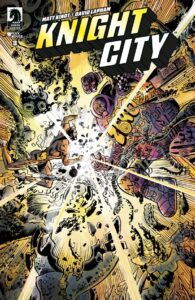 Knight City #3
Writer/Colorist: Matt Kindt
Artist: David Lapham
Letterer: Josh Reed
Publisher: Dark Horse Comics
Review by Jordan Jennings
Matt Kindt and David Lapham’s Knight City reaches its thrilling conclusion this week with Knight City #3. Knight City tells the tale of a Superman pastiche named Knight as he struggles under the weight of the world that has grown increasingly dependent on him. The stress and burden has caused Knight not to sleep and in the process create a splintered reality where he is a normal person. The premise of the series comes to a fever pitch with this issue as the realities come crashing together and Knight must race against the clock in both realities to save the ones he loves.
I am going to be upfront and say, I loved this series from start to finish. Kindt and Lapham’s talent for the more unconventional superhero comics really provides a fresh voice to a familiar trope of the increasingly burned out Superman homage. Kindt’s evolving characterizations of Knight and his alter-ego Carl as evidence. Kindt throughout the series has provided internality to Knight. It starts out very weary and matter of fact but by this issue there is a real sense of personal motivation and fears. It reads increasingly less robotic and more purposeful and driven. Another interesting aspect of this world is the Luthor analog Zero/Nill. We see probably the darkest take on this villainous archetype play out across these issues. Not only does he insert himself into these alternate reality dreams as Carl’s best friend to manipulate and attempt to kill him, we see him just murder people in cold blood to test a hypothesis. By being so calculating and unhinged at the same time we get this monstrous foil to Knight.
David Lapham’s line work and Kindt’s water colors really elevate the book. First, it’s just gorgeous to look at. The color palate and page composition is brilliant. Second, it plays around with using the comics medium for storytelling. Throughout the series, the dream sequences had a more yellow/ochre tone to the page’s gutters. It served not only as a subtle visual cue for the reader that it was a different reality, but also as a general tone shift. On one page there would be bright saturated colors of superheroes with crisp white gutters across the page. The other page would have this yellow tinged gutter and relatively desaturated colors. This issue features Knight/Carl losing a sense of what is real and as a result we see the page colors flip-flop. This is combined with several intermittent panels of solid black as Knight and Carl lose time and pass out. It does create a sense of surreal confusion for the reader that, while hard at times to follow, emulates the surreal nature of the dream world.
Knight City #3, and Knight City as a whole, is a masterclass in comic book storytelling that takes advantage of the medium in novel ways. Kindt and Lapham take the Superman homage into fresh territory that explores the complex relationship between the world and its hero. It is easily an early contender for one of 2026’s best comics. It’s just that good. Don’t sleep on this one, folks.
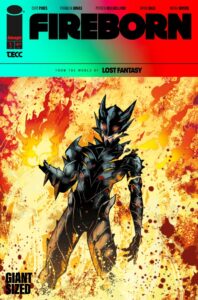 Fireborn #3
Writers: Curt Pires and Franklin Jonas
Artist: Patrick Mulholland
Colorist: Mark Dale
Letterer: Micah Myers
Publisher: Image Comics
Review by Khalid Johnson
Fireborn #1 throws you right into the action, building intrigue, and as we’re pulled into the backstory, it also builds anticipation for how things unfold. There’s quite a bit of technical craft on display in the storytelling that is indicative of a team who really love comics and know how to make these elements mesh.
Writers Curt Pires and Franklin Jonas are weaving a story that’s action packed and full of attitude, and though I didn’t find myself fully hooked on our protagonist Aaron, he does look cool as hell in action and his soft spot for animals is endearing. We bounce around a bit in ways that establish him as a character and parts of the world, but we don’t hold long enough to quite feel grounded. But there’s also a lot of ground to cover and obviously some threads to pick up.
The book looks amazing as we move from place to place; Patrick Mulholland illustrates kinetic action, movement through space with some inspired paneling, only punched up by vibrant colors by Mark Dale and letters by Micah Myers. There’s a sequence here where things collide in a way that had me so excited as a big fan of the way that comics can compress time in ways that other media can’t quite do as well. The team works well together to set up a story that promises more explosive action, and the craft on display makes this one to keep an eye on.
FOC Watch
The following title is currently available for pre-order at your local comic shop!
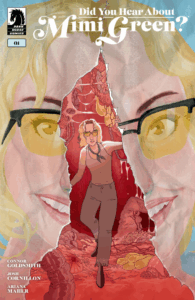 Did You Hear About Mimi Green? #1
Writer: Connor Goldsmith
Artist: Josh Cornillon
Letterer: Ariana Maher
Publisher: Dark Horse Comics
Publication Date: May 27, 2026
Review by Zack Quaintance
Did You Hear About Mimi Green #1 is a comic with a lot of ingredients. Ostensibly, it’s set at a sort of rehab facility for Internet pariahs, and that’s what our titular character, Mimi Green, is. She’s a sort of hybrid writer-high-level influencer, who got so big she landed a book deal…at which point blogging from 14 years ago with cruel remarks about body types resurface, costing her everything.
And so she ends up at the chill out facility. This is a lot of plot in itself for a first issue, tackling as it does Mimi’s mistakes, who she is/how she feels now, and the fallout in both her romantic and professional lives. Then on top of that, this comic layers in body and dreamscape horror.
In brief, Mimi is famous for being awful. She’s in a meditative retreat (lightly) against her will. And when she goes to sleep at night, viscera is spilling out of her underwear and/or she has to beat off bloodied eldritch horrors with a tennis racket. And if those horror touch her, there might be actual damage to her body when she wakes up.
It’s a lot.
Which is all to say that I think artist Josh Cornillon does a fantastic job making it all cohere and read clearly. I particularly liked the sort of blood platelet or bone marrow-inducing panel layouts he deployed in this issue during the most gruesome scenes. Cornillon also does a tremendous job coloring himself in these pages, nailing both the tone of the hippy dippy retreat as well as the nightmare dreamscape. It’s a book that bounces from aesthetically gruesome to visually mellow, and casually weaves the feeling of a horror story through both.
If I have a note for Did You Hear About Mimi Green #1, it is perhaps that I did not particularly mind if bad things happened to Mimi Green. Maybe it’s a me thing, but I’ve never quite found the type of figure she’s meant to evoke — the Internet sensation-turned-outcast — inherently sympathetic, and the book didn’t quite give me a reason to root for Mimi. There’s even a two-page montage where people who know her in real life go in on her and say she deserves to lose everything. Who am I to argue?
But I am, however, interested in seeing more of the story. The first issue is packed but fast-paced, and I am game to see just how grody this de-stressing retreat can get.
The Prog Report
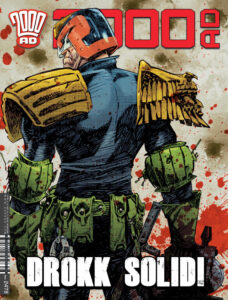 2000AD 2478 (Rebellion): Another strong issue this week, and it makes sense I would feel that way. I heaped praise on last week’s mag, and this week’s continues all those stories, with another Future Shocks, which inherently stands alone. One thing I’m enjoying about 2000AD right now is how interesting the artwork is and in sort of non-conventional ways. While Brink has been grounded of late, with a lot of conference room talking, INJ Culbard is an always-interesting artist who works wonders with his take on everything from facial expressions to scene lighting. Meanwhile, we get more work from Joe Currie on Silver and D’Israeli on Helium, both of which are a visual treat. And finally, Paul Marshall (with Quinton Winter colors) feels like a less-obvious Dredd artist, but his work on Judge Dredd: Flames & White Phosphorus has been a treat. It’s a fun set of artists in 2000AD right now, and I’m enjoying it. This week’s cover (above) is by John McCrea with colors by Mike Spicer. As always, you can pick up a digital copy of The Prog here. —Zack Quaintance
Column edited by Zack Quaintance.
Read past entries in the weekly Wednesday Comics reviews series or check-out our other reviews here!