
HP Lovecraft leaves no doubt as to the evil inherent in Cthulhu and its brethren. Anything that comes from the sea is an ancient horror of cosmic proportions that has a penchant for infecting small coastal towns with its aquatic corruption. Villagers slowly turn fish-like, shaped in the image of the deep ones. Ultimately, they become worshippers of the old monsters. The monsters, alternately, see humans as blind animals in need of an existential reset.
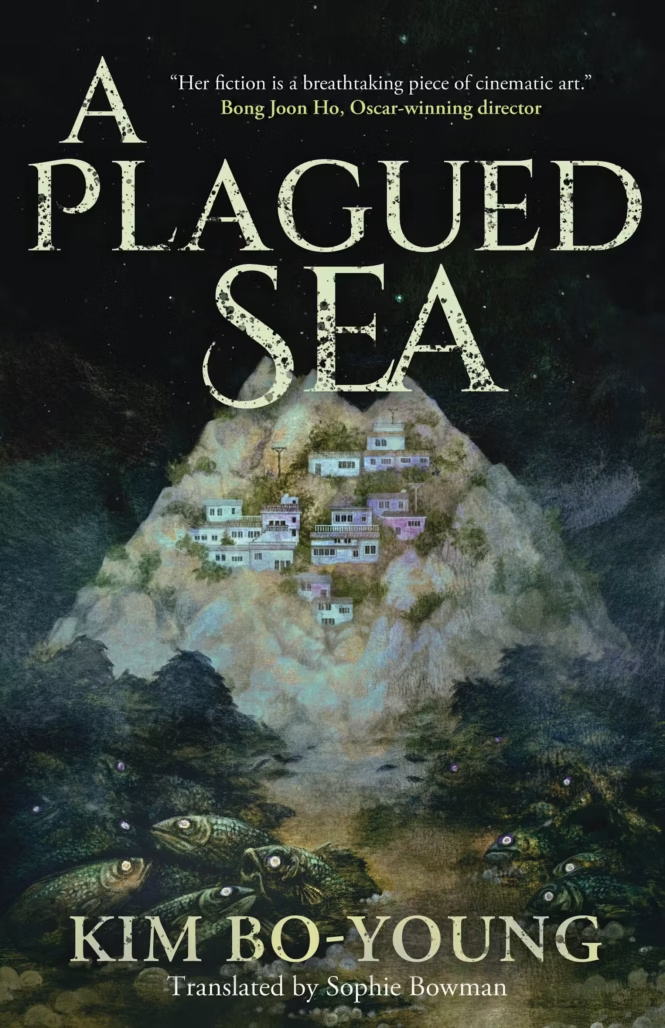
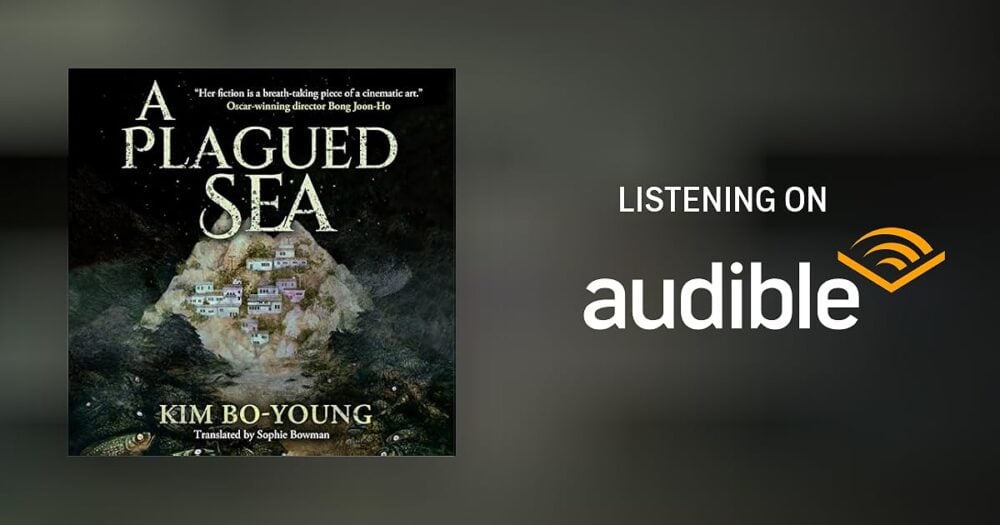
South Korean sci-fi author Kim Bo-young opts for a more complicated take on Lovecraft’s creatures. They’re still terrifying, but they remain possessed by some form of humanity. Her book A Plagued Sea stands as a rare rebuttal of the genre titan whose work she’s intentionally taking from, and it shatters an entire fictional worldview to put forth a more generous and original vision of the time-tested mythos we’ve come to know as Lovecraftian.
A Plagued Sea (translated into English by Sophie Bowman) follows Mu-young, a woman who was visiting a coastal village called Haewon with her niece on the day a massive earthquake changed their lives forever. Strange creatures emerged from the sea following it, bringing with them a strange infection that forced the government to quarantine the village.
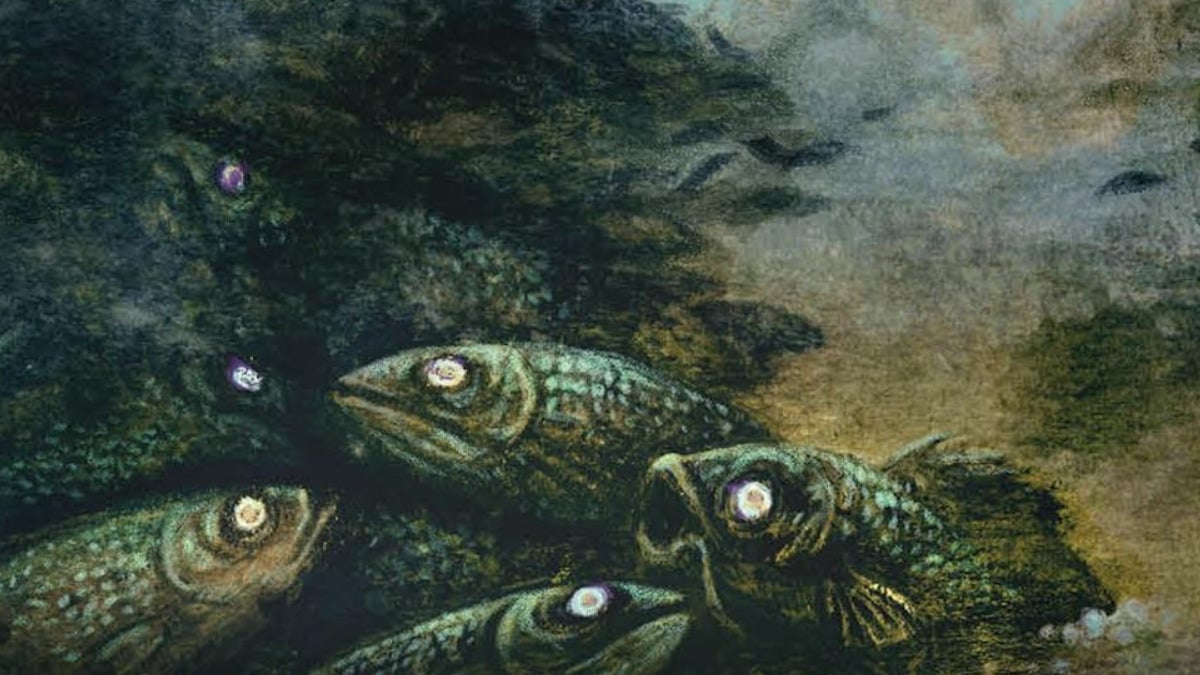
The infection causes bizarre biological changes that turn victims into fish-like creatures. Mu-young’s niece is said to have succumbed to it in early days of the crisis. Three years later, Mu-young is still stuck in quarantine, only she’s taken up the role of helping the authorities make sure residents follow medical directives from the mainland to prevent the infection from breaching the confines of Haewon.
Readers of Lovecraft will immediately know which of his classic short stories serves as the main inspiration for A Plagued Sea: “The Shadow Over Innsmouth.” In it, a man reaches the titular coastal town only to find everyone there has turned into humanoid fish people. They’ve started worshipping old gods, eagerly awaiting for them to emerge from the depths and grace them with their horrifying presence.
Existential horror is Lovecraft’s goal. He opts for an exploration of isolation and how it produces its own kind of repulsive alienation.
Bo-young, on the other hand, sets her sights on societal attitudes towards sickness and how it dooms the people affected to a very negligent kind of isolation. Rather than highlighting monstrosity (and there are monsters here), the story instead focuses on the more communal aspects of body horror. It contemplates biological shifts and how they bring about new expressions of life, giving the read a more anthropological flavor.
Naturally, A Plagued Sea carries more emotion and human philosophy than Lovecraft’s short story. Bo-young’s prose is expressive and ripe for reader interpretation, inviting active engagement given monstrosity and empathy are put on the same playing field. Just because the book invests more in its emotional core doesn’t mean that it’s devoid of instances of pure terror, though. It’s just that the intention isn’t to let fear take the reins (which is what Lovecraft leans on to venture into themes of madness and how the human mind can break when faced with impossible things).
Whereas Lovecraft sees horror as a means to challenge reality via fear, Bo-young sees it as subject in need of further study. Her approach is more intently scientific, an invitation to let curiosity drive the conversation rather than terror.
This approach lets Bo-young develop Haewon Village even further as well. Readers will get a good sense of how the infection impacts all aspects of life, down to the residents’ relationship with the sea and the creatures it harbors. The setting feels both lived in and alive, as if it’s also struggling with the complexities of the transformations. Haewon comes across as a place that’s had horror forcibly thrust upon its identity.
A Plagued Sea is a rare thing. It looks to one of horror’s most revered authors and dares to challenge him and his worldview on his own turf. It’s one of the best examples of a literary dialogue between two writers separated by time. What truly impresses about this correspondence is that Bo-young decides not to punch down at Lovecraft when she easily could have. Rather, what she offers is an alternate approach to the author’s mythos, one that fosters conversations we’ve yet to have with the material. In doing so, she opens up a new doorway to storytelling—one that can change the way we look at an entire fictional universe.
A Plagued Sea is published by Tor Nightfire and is now available in bookstores everywhere.