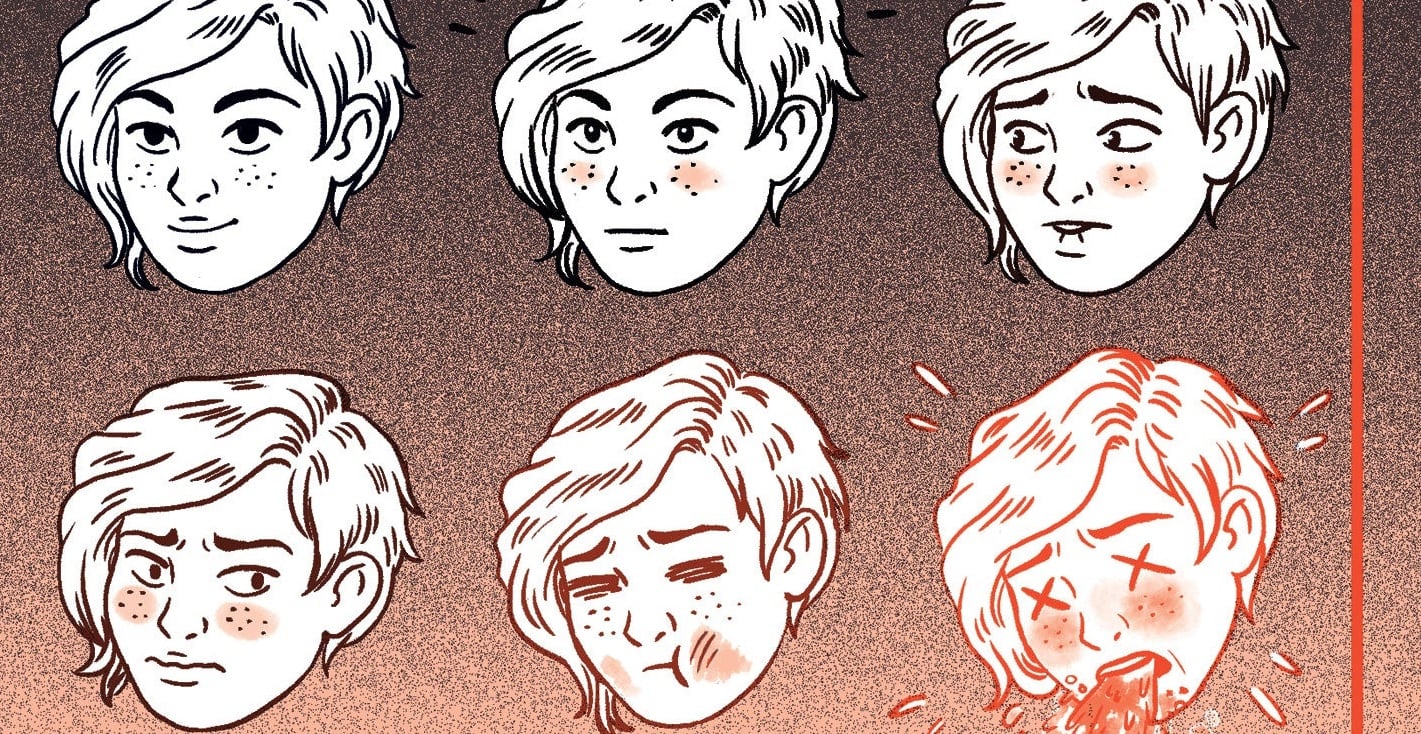

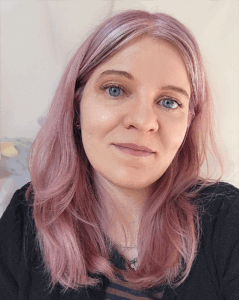
 Canadian cartoonist Jenn Woodall loves comics and her work shows that. Talk to her for two minutes and it’s hard not to see her both her passion and insight into the medium. She funnels that passion into her own comics work which plays with form while telling very human stories. Her latest graphic novel Worrywart is being serialized on her Patreon. For this, she’s taking a unique approach where each chapter is completed as a zine and sent out to her supporters. This interview covers the impetus of the of the graphic novel, her love of making zines, and what the future holds for her.
This interview has been edited for length and clarity.
D. Morris: So I want to start off asking about the genesis of the original Marie and the Worrywart mini comic, which you’re now expanding into a graphic novel?
Jenn Woodall: How long ago was that? So in 2014, me and some fellow Toronto cartoonists formed an art collective called Friendship Edition. We did an anthology where we all did short strips for it. I was working in film at the time and preparing to go back to school to study illustration. I did a short strip which was the first Worrywart strip, which if you’ve read the zine, it’s the strip that’s in the beginning of the book. It’s Marie, sitting on a bench and the worrywart is on her shoulder, catastrophizing about going to a cabin with her friends.
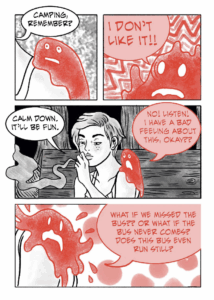
So that was the very first version of it and I kind of did it on a whim because I guess I didn’t really know what else to do. I have always had anxiety so I thought that would be a good way to express my inner dialogue. It was partially inspired by a camping trip I took where I was absolutely terrified a bear was going to attack me in my tent.
When the anthology came out, some people had really positive words about the strip specifically. So then I thought, “Okay maybe I’ll make a couple more strips and collect it into a zine.” And that’s where the Marie and Worrywart zine came from. I think I first published in September 2015. From there, a lot of people told me that they really saw themselves in it. They got a lot of comfort reading it. Afterwards, Silver Sprocket picked it up for publication.
Eventually, I just decided I wanted to expand the story into a full book because I’ve had anxiety since I was a little kid, but I didn’t get diagnosed until I was 21 or 22 years old. So I’ve had many years fraught with mental health issues. I thought it would be somewhat useful to put it down to paper for other people to read instead of having all these awful experiences with no silver lining.
D. Morris: Is there difficulty in discussing this subject matter for you because it is a difficult subject? I say that because mental health can be something that is a very private subject that not everyone experiences
Jenn Woodall: I guess a little bit. I feel like because I have anxiety and OCD, and they overlap in very specific ways, I find that talking about my anxiety is easier. I think most people at least have experience with anxiety in some regard. Like you worry about your pet if they get out of the house. You don’t like public speaking. You worry about test results. You worry about your job. So everyone can kind of relate to your good friend from Canada.
D. Morris: Absolutely
Jenn Woodall: I think anxiety is a universal experience. Clinical anxiety is different, but you know, people understand being worried. Whereas OCD is really hard to describe to people because so much of OCD is just completely illogical. If I tell people I have to watch television and the volume has to be a number of two because odd numbers are bad and a bad thing will happen. They’re like “What the heck are you saying to me?” But you know, people with OCD understand. But people who don’t have OCD just think you’re a freak if you have these very bizarre rituals. Which is fair because the rituals are bizarre and they make no sense.
But it is just something that I think people can’t understand unless they have OCD or seen how OCD impacts someone they are close to. Or maybe they have some superstitious magical thinking that they can see is kind of similar.
So yeah, this is a very long-winded answer. I feel like anxiety is easier to discuss because it’s culturally more accepted now. I know so many people who have anxiety disorders. It’s more understood now. OCD I would say is still very misunderstood and presents in so many bizarre ways. So I do feel like it is still kind of an oddball illness in many ways.
D. Morris: Yeah, and it makes you feel othered in some way, which I can understand given my own neurodivergence. I also have times where I have to do things that end on a five. I can’t explain it. It’s just the number five comforts me, fives and zeros.
Jenn Woodall: Yeah, yeah, that’s definitely along the same vein where there’s just some sort of magical reasoning in your mind where you’re like, these are safe numbers! These are bad numbers or you look for signs, and all that kind of stuff is rolled up in superstitious thinking which is similar to how my OCD thoughts operate.
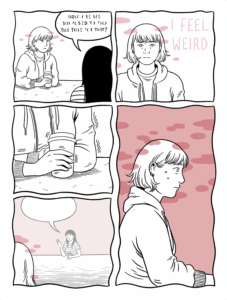
D. Morris: Something I wanted to ask that I found interesting was that you’ve shifted the lead to being yourself in the opening chapter. In the original version it’s Marie, a fictional character. And I’m kind of curious what was the choice behind that?
Jenn Woodall: Well, I know when I did the original comic, I kind of wanted to talk about anxiety, but I was like this is Marie’s anxiety. Marie is actually my middle name. It was kind of like it’s me but it’s not me, because I wanted to put it on a character instead of, I guess, outing myself as having anxious thoughts. Because I made the comic in 2014, the societal understanding of mental health was very different than it is now. I knew very few people who talked about their mental health issues. So I did feel very alone, but I had gotten pretty good at being able to kind of keep it inside. So that was the reason why I made this other character to express it through.
And then I figured if I’m gonna do the memoir, it has to be me. But I’m going to still keep Marie in the book because she’s gonna be the character who is in the shorts. I just like having this fictional little me character with the worrywart. Those original shorts are still gonna be in the book and they are gonna be expanded. But I just thought it would be funny to have my story which is pretty serious and painful broken up by these humorous strips where there’s the physical manifestation of anxiety as a blob. The worrywart nags this other fictional character, but it’s mirroring my anxieties and my experience.
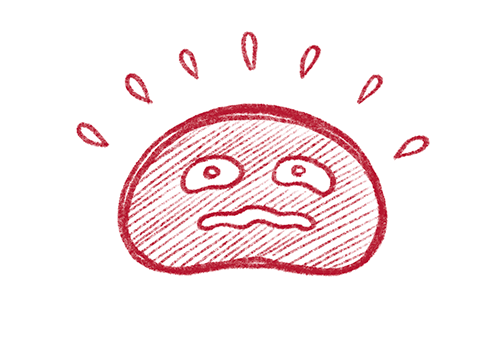
D. Morris I want to talk about the blob a little and I have a question; do you like Dragon Quest?
Jenn Woodall: Totally, totally taken from that. Like that was originally what I wanted it to look like but obviously it’s a lot stupider-looking than the slime in Dragon Quest. But that’s the original inspiration because I just love Dragon Quest, and I love the slimes. They’re so cute and they’re so expressive.
I think that’s the fun part of when you make this kind of amorphous blob character. You can make it get bigger or smaller. It can change shape. You can make it fit the needs of your story. You can use it however you want in a sequential comic.
D. Morris: Something I love about your work in general is the way you play with form.
Jenn Woodall: Oh, thanks
D. Morris: I do want to talk about formalism with your work and especially I love how you visualize anxiety outside of the obvious blob. I love the panel layouts and everything you do with them. So where does that come from with you? Does the form dictate the story or is the story dictating the form and you’re just trying to solve a visual problem?
Jenn Woodall: I mean, for me, the story definitely dictates the form depending on the kind of story I am telling. Like I’m going to approach the form for a funny story very differently than a sad story. With Worrywart, the main problem is, how do I visually convey anxiety? And what kind of anxiety am I trying to convey? Like is this anxiety that makes you feel claustrophobic? Is this anxiety that makes you feel alone? Is this panic inducing anxiety?
I think those are all very different and they all require different visual storytelling methods to convey it to the viewer. Which I think is the thing that’s really special about comics as a visual medium. It’s being able to convey really complicated feelings and concepts with visual language. I think that makes it more accessible for people instead of reading the DSM. Which can be very helpful, but if you’re reading it to try and see yourself reflected back, it is very academic. I think comics are a much more accessible way to get into someone else’s head.
Comics are great. They’re so good. I forget how good they are a lot, because I feel like I just get really depressed all the time because my brain sucks. And then I read an amazing comic, and I’m like God, comics are so good.
D. Morris: I have a friend who whenever I bring them into my office to show them stuff, I love seeing how they react. They’d never seen Fort Thunder books and I showed them Territoid Heights and Maggots. Their reaction was “Oh my god, these are incredible” and I’m like “You’re right!”
Jenn Woodall: Anyone who really likes comics knows the pain of getting really excited about a comic and trying to get one of your friends to read it. Because you know they’re gonna love it, then they borrow it for two years, and you finally get it back. They’re just like “Oh, I forgot about it.” You’re like, “Why are you doing this to me? Just read the comic that I suggested, it’s so quick!”
DM: That’s the other problem that I both love and hate about comics. You can read them so quickly even though it takes so long to work on them.
Jenn Woodall: Yeah, the book I finished last night was a 900 page comic. ‘The Third Person’ by Emma Grove. It’s wild how big it is and I can only imagine how many years it took to make that book. Then I read it over the course of three to four hours. Which is just so unfair, but you know that’s what it’s like. It’s great how fast you can read them. But you just think about the artist toiling for so many years. And now it goes on my shelf.
D. Morris: Since you brought up Friendship Edition, community and making comics. How important is that to you and to the process in making this new version of Marie and the Worrywart?
Jenn Woodall: I think it is super important. I have a lot of friends in the Toronto comic scene. So, that’s the community that I spend the most time with and who I am the closest with. We help each other in Toronto and I got a lot of help with Worrywart.
I have pretty much sent the manuscript to nearly all of my Toronto comic friends because at this point, I have to get the book done. I keep kind of telling myself, “it’s not good enough. Rewrite it, fix it, restart it.” And at this point, it’s been so many restarts. I’m just like, ”No, you’re just doing it now. Like no more stalling, just like get it done.” So a lot of my friends have read a version of the script, at least the first chapter or the entire book. They’ve been really helpful giving me feedback and pointing out things that might not make sense to a casual comic reader. I’m always torn if that is something I should be fixing or not.
Because you know, I grew up reading comics. So I understand the language of comics and I feel like it’s a pretty easy to understand language. Sometimes with that feedback, I naturally want to push back. I’m just like, “Well, I think most people will understand what I’m doing.” But you know, it’s just one of those things where feedback from other people is really helpful. They might be right that some choices are confusing to someone who hasn’t read as many comics, and keeping it accessible is pretty important.
D. Morris: Right. Yeah, I remember when I first started reading comics and wanting my friends to read comics and they couldn’t read them. Because it’s the 90s, there’s so many comics that are practically unreadable. They all just have crazy page layouts. But I love those though!
Jenn Woodall: I do too.
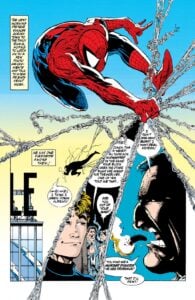
DM: I have my McFarlane Spider-Man book and just looking through it, his layouts are so good. Because he brings his graphic design practice into the page layout. And yeah, it might be confusing and kind of unreadable, but it’s so fun to look at it!
Jenn Woodall: Oh my God, it is!
D. Morris: We mentioned zine making and can you go into a little bit about your history with making zines, how you got exposed to zines and why they’re so important to you, especially since you’re making this as a zine chapter by chapter?
Jenn Woodall: Yeah, I didn’t discover zines until I moved away for college. I grew up in a pretty city in Ontario but I’m sure that there were people making zines. I just never encountered zine culture or anything related to it when I was growing up. Honestly, I wish I did because I would have loved making them as a teen. I didn’t really discover zines until I was living in the big city and I discovered TCAF. A lot of people had comics and zines at their tables. Then I started attending a Toronto event called Canzine, which no longer runs, which was all about Canadian zines and zinesters. And once I discovered that, I got really into reading about the history of zines and specifically riot grrl and punk zines. I just loved how accessible they were and how people just kind of made them even if they couldn’t draw. The photo collaging and the creative solutions they found to create something that wasn’t just text on a page but had so much texture and personality and just so much fun. I think that was what really resonated with me.
When I started making zines, I’d often end up at the Kinkos at 4 a.m. to finish printing something for a zine fair the next day at 10 a.m. And there would be some other weirdo cartoonist from my neighborhood there printing. I just loved being in that atmosphere. We’re doing the same thing and I just think it’s such a cool community because it’s not necessarily about making lots of money. Maybe there’s people who make real money off zines. I don’t know many of them, but it’s more like you almost feel this compulsion to make the zine and you just want to share it and give it to people and trade with people and I think that’s really beautiful.
I think with comics there’s more potential to make money, but zines, I almost feel like it’s so much more pure in a lot of ways because you don’t really expect a return on it. You just kind of want to make something that you’re obsessed with and you want to share it with people.
D. Morris: Yeah, I have a friend in Athens who has been putting out a wrestling zine for years. My friend Shawn just put out a zine that was titled, “Poops that look like GI Joe characters,” and that’s what’s so good, because there’s just so many weird ideas for zines. It’s just so diverse and strange and funny.
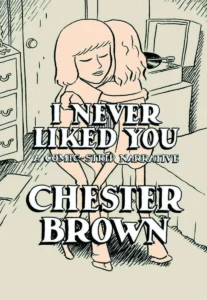
D. Morris: Another thing I wanted to talk about was autobiography and Canadian cartoonists because there’s Chester Brown, and Julie Doucet. Why do you think autobiography appeals so much to Canadian cartoonists?
Jenn Woodall: I don’t know what it is that specifically appeals to Canadian cartoonists. I feel like with Chester Brown, his comics really strike me as “These are Canadian comics”. Because I feel like his childhood growing up in the boonies of Quebec, having a vaguely religious family, and being surrounded by big trees, that reminds me a lot of my ‘Canadian’ childhood. But I feel like a lot of people in America would relate to that as well.
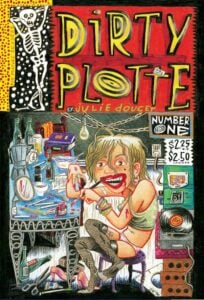
But with Julie Doucet, I feel like her comics are just so relatable. You move away from home to live in the big city and pursue your dream of being an artist. And you met all these weirdos and you’re just feeling so overwhelmed. Your boyfriend sucks and you have no money. I feel like that’s such a universal experience that it’s not even quintessentially Canadian. I think the most Canadian thing about her comics is that they are both available in French and English, which are our two official languages!
But you know Canadian cartoonists are really great at the autobio work. I really love the work of Cole Pauls, Rosena Fung and the group, ‘Hello Boyfriend.’
D. Morris: Let’s talk about your Patreon because that was the impetus for this conversation. Can you talk a little bit about why you decided to serialize this on patreon?
Jenn Woodall: Patreon just makes it really easy to make a mailing list and to know who to communicate with. But the main reason I decided to serialize the book this way was to keep myself motivated. I had quite a bad experience with my last graphic novel. It’s been very hard for me to get out from under this mental weight of feeling like a failure. I felt intimidated to go back to the drawing table and to do a long form book. I’ve done a bunch of short form work since then but I feel like I really doubted myself when it came to a longer form book again. That self doubt is so hard. So I’m trying to use the mailing list to push past it and make the book.
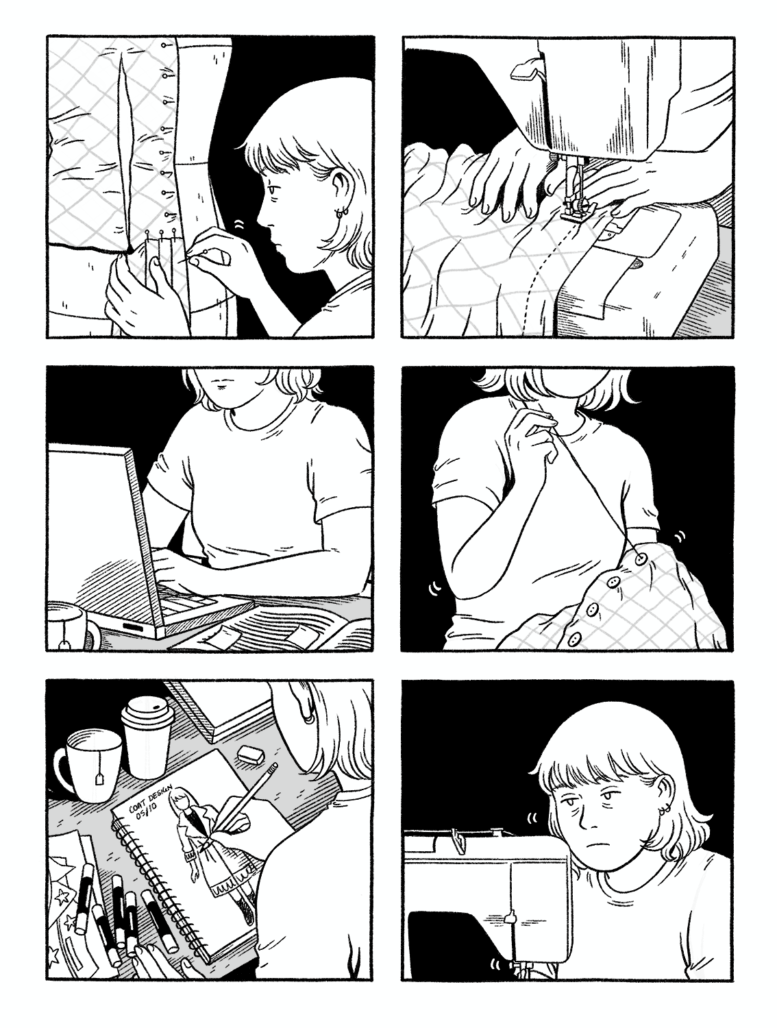
And you know, I love making zines and I just thought “What if I just broke the chapters up? And it was like I was just making a zine every two months?” Maybe that would kind of take the fear away from it. Because instead of thinking of this huge book with this entire narrative and how it all threads together, maybe just taking it piece by piece makes it less intimidating. And approaching it that way is a good way to trick my brain into working on it. So that’s why I’m approaching it like this.
I just need to trick my brain into doing it at this point because I’ve been working on this book for over two years now. It just feels like my brain is a tractor stuck in the mud. So, this is my way of trying to work around the fear of doing a long form book again. And then you know, hopefully people will like it and it’ll build momentum when the book is released in a couple of years.
D. Morris: You already enjoy making zines. So that has to be part of it.
Jenn Woodall: Oh yeah, I mean that’s a huge part of it because you know, part of making a long form book is that it is just such a marathon. It’s kind of depressing because the progress is just so slow. Especially if you know you’re working on a 300 page book and I’m on page 50. You look in the file folder and just see how many pages you have left to go. It just feels like you’re never gonna get to the end. I do feel like there is kind of a mental hack to chop it up. Then you get to tell yourself, “Well, I have to finish 20 pages and then I’m done.” Then you just keep resetting your brain every time you approach the next 20 pages, the next 30 pages. Whatever the next chapter entails. So I do feel like it’s gonna help me to get it done.
I got this idea originally from a cartoonist friend of mine who serialized his comic in the mail. And I think he originally got the idea from Charles Forsman when he originally serialized The End of the Fucking World. This was pre-Patreon. So I feel like it must have been a true mailing club.
D. Morris: Would you also say that doing this through Patreon also gives you another sense of community? Because you now have people who are contributing to it and they’re along with you on this journey. So it makes it less of sort of a long distance runner on your own thing?
Jenn Woodall: Yeah, absolutely because making a long book is so solitary. Obviously, I have cartoonist friends and I talk to them. “Oh, this is taking so long.” And they’re like “I know this sucks!” But it’s so different to get feedback while you’re working and especially with topics like mental health. I feel like, at least for me, whenever I come across narratives that I can see myself in, I feel so much less alone when I understand that there’s other people out there who have my specific neuroses, and who understand what I am going through.
I just read a preview chapter of Gemma Correll’s latest book which is called Anxiety Land and it’s amazing to read. I have never read a book about anxiety that reflected my own experience back at me so perfectly where I was like “You’re me!” That’s what I’m kind of hoping to do with my book as well. I hope people can read it and they’re like “Wow, I have never seen myself represented so accurately on the page!” And I think making it a cheap mail subscription model is hopefully accessible enough to get people interested. Another excellent comic that really hit me was, “I’m Crazy” by Adam Bourret. That really made me feel like my OCD was understood by someone else.
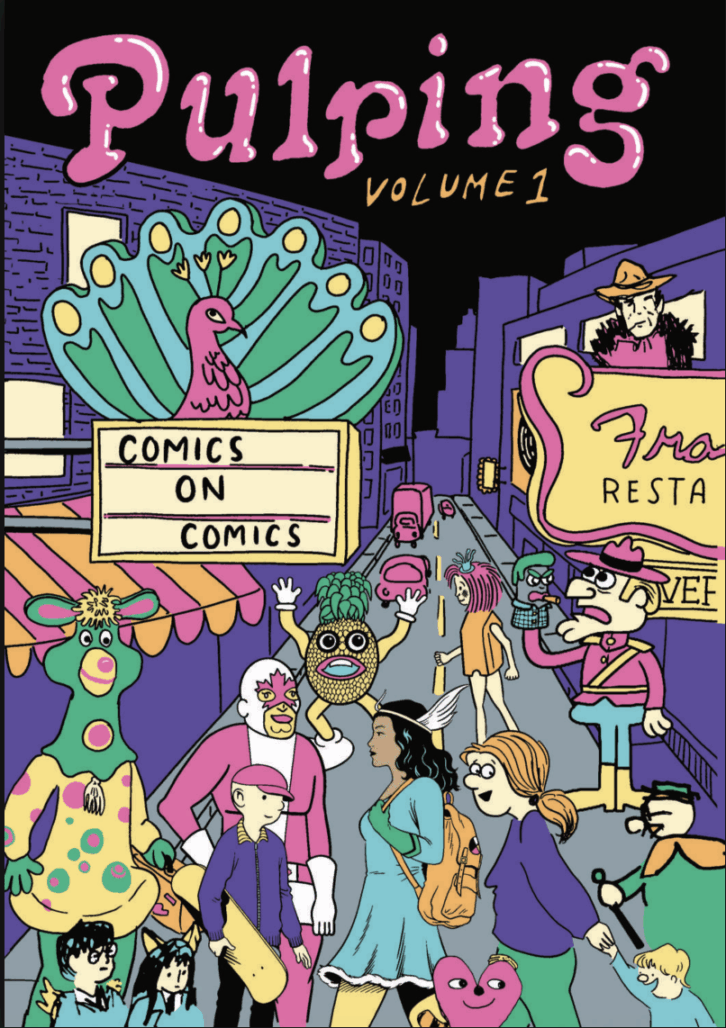
D. Morris: I do want to talk a little bit about the Ignatz award-winning anthology Pulping.
Jenn Woodall: Oh yes, Pulping.
D. Morris: I feel like that’s one of your pet projects. Is there another issue coming?
Jenn Woodall: I hope there is. The editorial team is me and four other Toronto cartoonists, Jon Inaki, Mitch Lohmeier, Jonathan Rotsztain, and Paterson Hodgson. It’s one of those things where we all need to agree on what the format is going to be and if we have time to come together and work on another volume. And I feel like the editorial team has different ideas about how the third volume is going to shape up or if a third volume will exist. We did put the project on hiatus last year because we obviously had Pulping #1 release in 2024. And then we did Pulping #2 exactly one year later. We just really needed a year off because Pulping #2 was such an undertaking. It was double the page length of volume one. We had to sell more ads. We had to sell more copies. It took us longer to pay off the artists. So I think we just all felt a little burnt out.
I’m hoping that later this year we’re gonna reconvene and do the third book because I feel like an anthology project should always end on a three or a five. I think two books in an anthology series is weird. Four books is weird. Three or five? Those are good numbers This isn’t an OCD thing. This is a book thing. I’m hoping we’ll get back to it, but you know if the project has run its course? I think that’s okay too because we did everything we wanted to do. But I’m personally hoping we will do a third book.
D. Morris: If it makes you feel better, Art Spiegelman apparently says that Raw is still a thing but it’s just in hibernation and that’s been over 30 years at this point.
Jenn Woodall: I mean, that’s true. We have also talked about adapting Pulping into the Raw model of a magazine. Self publishing is so different now than it used to be. It’s so much harder. Print costs have gone up and the distribution itself is so hellish. Trying to get Dumbass into stores, I’m just looking places up and cold emailing them. It’s really so much work. It’s not ideal. So I do think it is a really tough business to be in. So, you know kudos to anyone who can make that work. They have a much better work ethic than I do.
DM: It is always fun though when I see, because I think it’s Silver Sprocket they order them through, a copy of Magical Beatdown in my LCS which is nowhere near Toronto because I’m in Central Florida. It’s just like, “Oh, I’ve got to take a picture and show it to Jenn!”
Jenn Woodall: I mean, I love that too. And I feel like that is the biggest benefit aside from, you know, maybe royalties and advances. It’s working with the publishers and getting your books into stores. You don’t have to have this crazy mailing list of hundreds of stores being like, “Please order my comic!” Because it is so exhausting to do that and to do all the packaging and everything. I feel working with Sprocket gave me such a career boost because they were able to distribute my comic all over the place, especially in the US. It honestly made such a huge difference for my career. I didn’t know how to do any of that stuff when I started out making comics. Plus, I already have a job! I don’t need another job! That’s too much. There are pitfalls to working with publishers, but you really have to take on so much extra work when you want to get it in stores, at shows, get reviews, all that stuff.
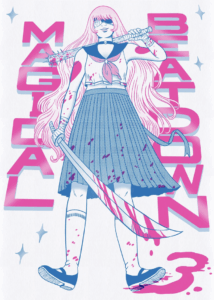
D. Morris: Since I brought it up, I have to ask; will there be any more Magical Beatdown? because that’s how I first discovered your work.
Jenn Woodall: Oh, yeah. With Magical Beatdown, it’s the project I kind of only go back to when I have a good idea. I did #1, #1.5 and #2 all pretty close to each other when I was in art school. And then I did volume three in 2022. So I do have an idea for the fourth one which I do really want to work on very very soon because I have it in my mind and I want to put it on the page. It’s just trying to find time between this beast of a graphic novel I’m working on. But I am hoping to do it maybe in the next year or so. That series is my baby. It’s the thing people know me for. I love working on it. It’s so fun. It’s so stupid. It’s so violent. I only go back to it when I have a good idea because I wanna be excited to do it. I don’t want to go back and do a comic if I just feel like I’m going through the motions. I want to feel the inspiration and the drive and I want to have the central idea of “Okay, this is what we’re gonna do in this issue.” So it makes it very slow to come out, but it’s just so hard to make a comic if you don’t feel excited about it.




No, D Morris, OCD isn’t like you liking something to end in a 5. But thanks for giving it a good go.
Comments are closed.