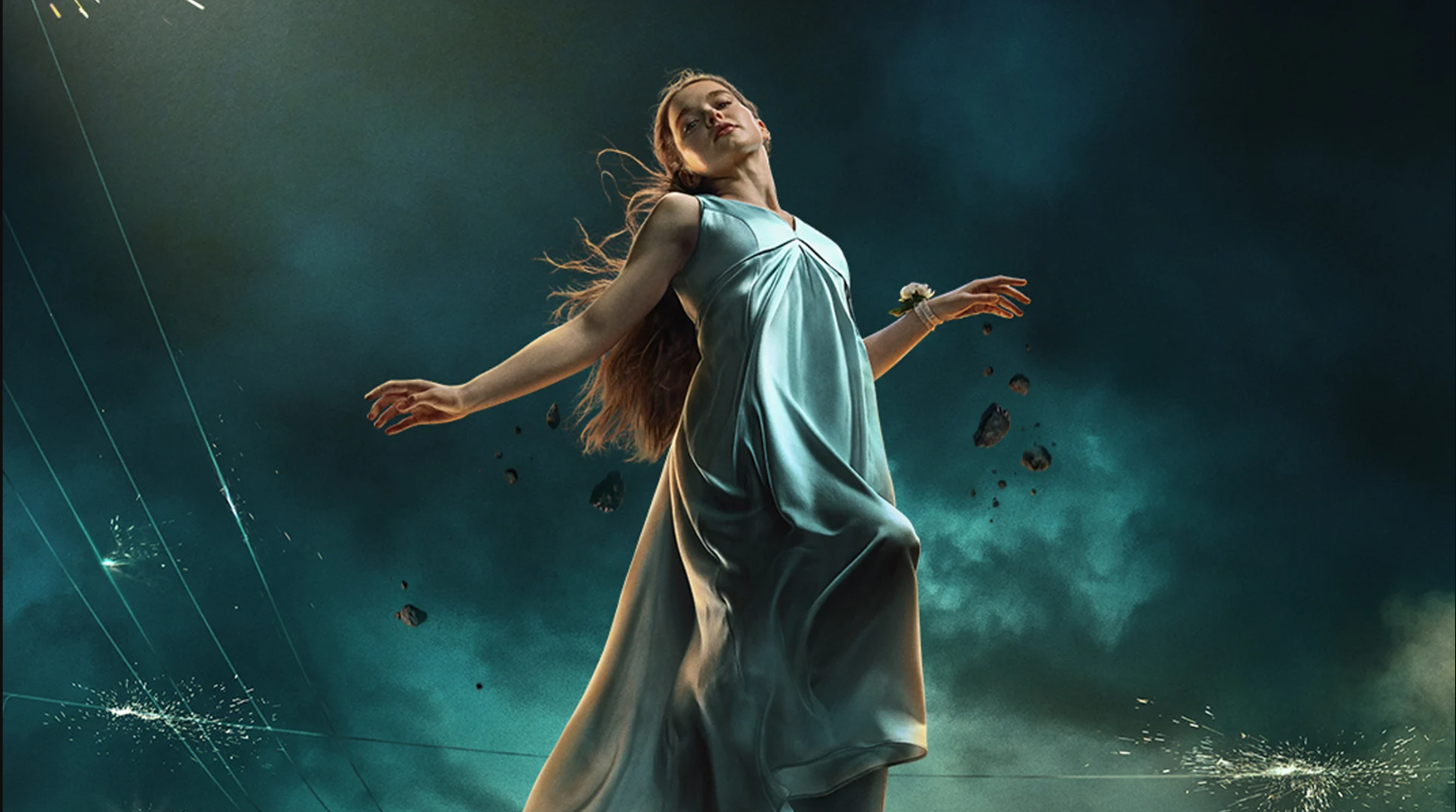

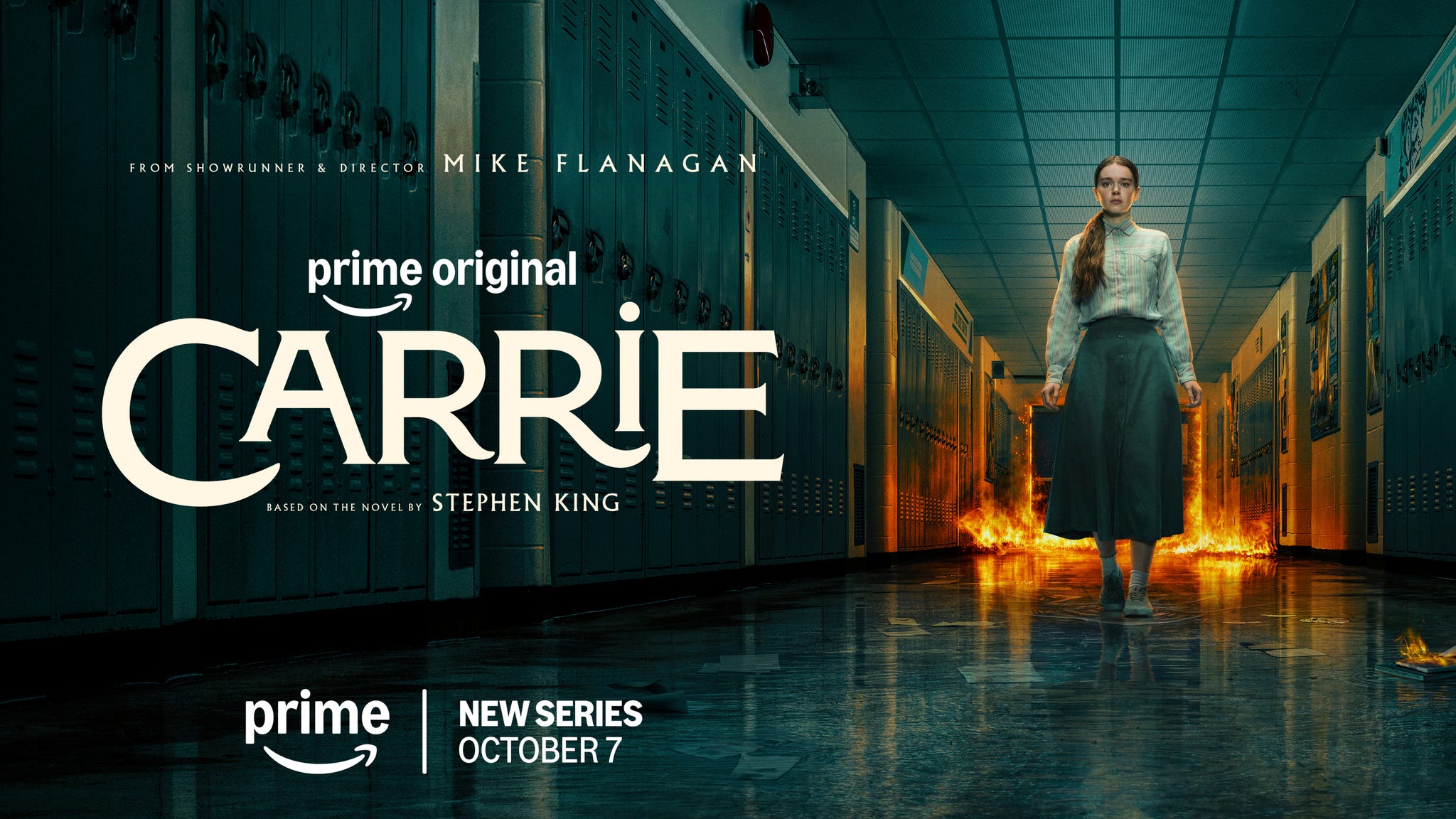
Carietta White has spent her whole life entrapped under the keen watchful eye of her mother, Margaret White, and her overly suspicious, conspiracy-theorist father. All she knows of the world is the word of the lord, information she’s read in books given to her by her neighbor, and whatever her parents believe is best to teach her. When her father dies in a workplace accident, Carrie and her mother will have to face the outside world for the first time in fifteen years, and both of them will come to learn the world can be a cruel, vicious place. Being a teenager is already hard enough, let alone a teenage girl, and let alone a teenage girl with no understanding of the world and potentially devastating telekinetic powers…
The fifth on-screen adaptation of Stephen King‘s legendary debut novel Carrie sees modern horror legend Mike Flanagan (of The Haunting of Hill House and Midnight Mass fame) reinterpret the classic story for the modern day, placing it squarely in a present day context that works to reframe the story without sacrificing it’s classic, ageless themes. In doing so, Flanagan crafts one of the finest King adaptations of the decade yet, one which takes some big swings but mostly enriches the text by doing so, fleshing out the narrative in fascinating and exciting ways. When it came to approaching Carrie, and why he chose to make changes to the original source material, Flanagan stated:
Carrie has already been perfectly adapted. It was adapted iconically by Brian De Palma, and then adapted again, and then adapted again, and then adapted again after that. There was just no point in a direct adaptation.
Flanagan is absolutely correct here in my opinion, and makes the wise decision not to simply repeat the hits of De Palma’s adaptation or any other on-screen version, instead making this version it’s own. The changes may not all work for some, but I think they ultimately lead to a new and exciting take on the material that justifies its existence and then some. Why adapt something for the fifth time if you aren’t doing something new with it?
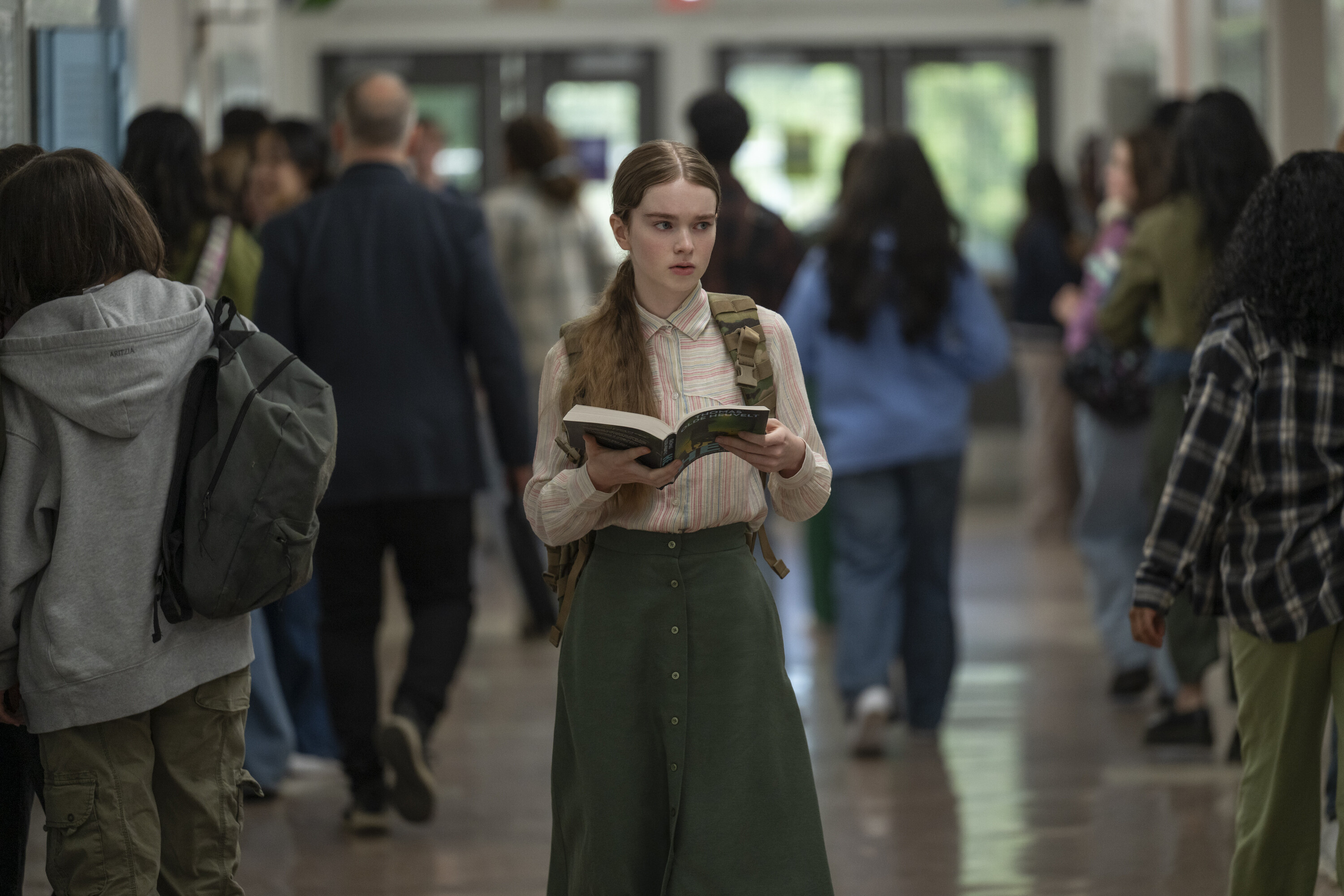
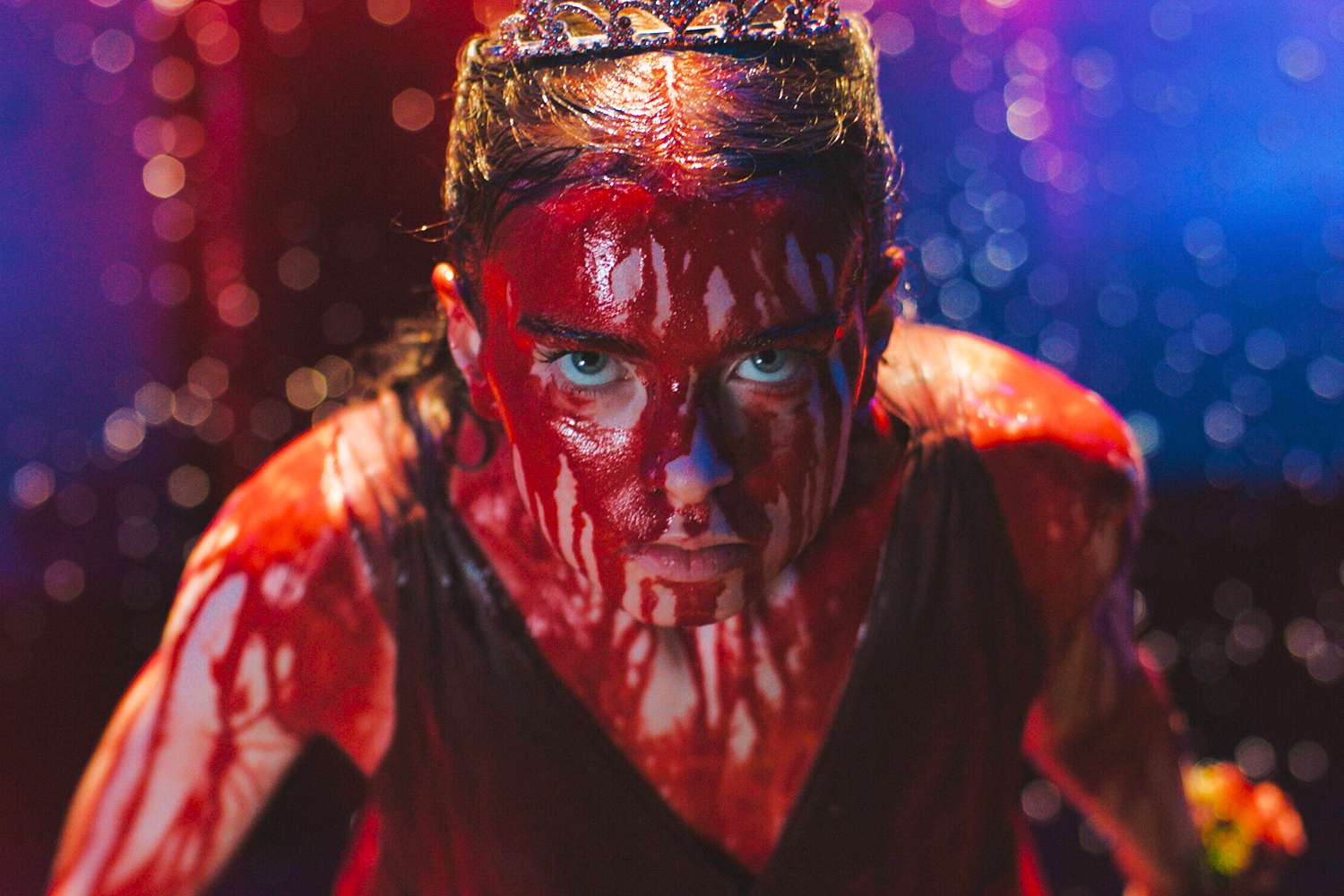
The plot of Carrie actually kicks off slightly differently to the traditional story. As opposed to simply being incredibly sheltered, the titular character has actually never left her home at all, raised exclusively by her religious, conspiratorial parents without any influence from the outside world. She doesn’t have a phone, or know what a period cycle is. As far as the state is concerned, she doesn’t exist – or at least she didn’t, until her fathers death, when police and social workers uncover her and Margaret hiding in their closet. This initial change is a stroke of genius, and immediately reframes both the extent of Margaret’s abuse, not only restricting her daughter but actively engaging her, and why Carrie herself is so naive and oblivious to the workings of the world. As she is placed into public high school, while her mom takes up a job for the first time in over a decade, both of them will come to learn the ways of the outside world and just how meaninglessly cruel it can be. The essential plot points of the novel remain intact here, including the shower sequence and the bloody, explosive conclusion to Carrie’s prom, but a narrative is built around them that fleshes out the entire town of Chamberlain, Maine. We learn about Carrie’s bullies, classmates, and teachers. We see into their lives and how the events of the plot reverberate throughout the entire surrounding area, and when things inevitably turn brutal, we have seen so much of these people, for good and bad, and it emotionally complicates the series is a fantastic way.
Across eight episodes, we see Carrie’s rage gradually grow at the world she finds herself in. The bullying she experiences takes an explicitly modern tilt, complete with a ferocious Instagram account titled Carrie Red that ruthlessly insults both our protagonist and every student and teacher in the school around her. This is also true of her abusive relationship with her mother, which is less physical in nature and more verbal and emotionally manipulative. Margaret White is a fascinating figure here, someone who unequivocally loves her child, very deeply, but exercises that love in the form of merciless control and restriction. In order to adapt a 250 page novel into an eight episode series, you will inevitably have to pad it out, but it feels worthwhile here. Flanagan is careful to build tension carefully over the course of the series, and while it is probably his least ‘scary’ series yet, that’s not to say it’s not thrilling and immersive. In true Stephen King fashion, we spend so much more time with these characters and their interior worlds, so when things do become horrific and brutal, it hits all the more hard. The essential driving threads of the plot are the same but they become more emotionally complex and interesting, and it fleshes out the material beautifully.
 Courtesy of Amazon Prime
The writing team, led by Mike Flanagan but including writers such as Alexandra Magistro, Justina Ireland, Elizabeth Padden, Jamie Flanagan and Dani Parker, do a wonderful job at making the writing feel consistent throughout in terms of both quality and tone. This is effectively Flanagan’s second young-adult oriented series, following The Midnight Club, which might be a negative to some but I think it’s essential given the subject matter. It would feel disingenuous to not aim this story in large part about the youth to the people it’s about; that’s not to say you won’t enjoy it if you’re an adult, in fact far from it, and there’s certainly plenty of very adult subject matter here, it’s more that it explicitly focuses on the struggle of a teenage girl and the people around her who torment her. It’s wonderful to see how the writing team successfully manages to balance plot threads, ensuring that the series moves at a consistent slow burn pace without feeling uneventful or plodding. It helps that each episode will focus on a specific incident or series of incidents for the most part – and it feels odd to praise a television series for actually being television and using that format in the way it should be used, but I think it’s good to dissuade any fears that this will feel like a two hour movie stretched out over eight hour-long episodes. The quality of the script in general is fantastic and easily on the same level as much of Flanagan’s previous work, jam-packed with subtle moments of emotional conflict that always serve to further the narrative in interesting ways. There’s even a couple of moments here that made me tear up, highlighting just how effective Flanagan’s “the drama enriches the horror” approach can be.
On a technical level, this series is brilliant as well. Carefully shot by a wonderful cinematography team including Flanagan regular Michael Fimognari, as well as Michael Wale and Maria Rusche, they really make this series standout in the bevy of other major streaming series this year. There are several moments where the lighting, staging and general production design are beautifully brought to life by careful, deliberate cinematography in a way that really shines. It does lean into a slight moody 2000’s visual aesthetic similar to the early Twilight films, which may sound baffling at first but works wonderfully in execution and gives the show a great look throughout. Flanagan and the rest of the directorial team, including his wife Kate Siegel, really make this series tick with moments of delightfully subtle technicality that I really appreciate throughout, making the most of the clearly decently-sized budget at play here. Flanagan also edits much of the series himself, allowing for a carefully curated pace that feels consistent throughout the entire eight episode run. It also sounds phenomenal, with a great soundtrack by The Newton Brothers. There’s a veritable smorgasbord of needle drops here, including Lana Del Rey, Haute & Freddy and Sofia Isella, and admittedly not all of them work, but many of them serve to enrich the visuals and the story, particularly when used as reoccurring themes and leitmotifs.

The star of the show, and really the person that holds the entire series together, is Summer H. Howell, who plays the innocent, good-hearted Carietta White. Carrie has become such a deeply loved, tragic literary figure over the decades, and Sissy Spacek‘s performance remains iconic and etched into people’s minds, but this is probably the best performance the character has ever experienced. Howell commits 120% to her vision of Carrie, a doe-eyed and gentle young woman with a profound sense of anger and grief that erodes at the very basis of her being. Across eight episodes we see Carrie for all of her highs and lows, ranging from moments of total confidence to crushing anxiety, from first loves to embarrassment at a level hard to comprehend without your stomach churning. She’s a powerhouse, never succumbing to the weight of the material and consistently holding herself with a commendable level of grace throughout. Howell does a phenomenal job at making Carrie feel alive, with mixed emotions and complicated thoughts and feelings that aren’t as simple as shows often reduce teenage minds to. I greatly appreciate the reinterpretation of Carrie as a book-lover, seamstress, and creative, which gives her character more than just her misery as her defining trait.
Yet, Howell is perfectly matched by her co-star, and the strongest performance in the entire show, the stupendous Samantha Sloyan as her mother Margaret White. It should come as no surprise to anyone who’s seen Midnight Mass that Sloyan is absolutely revelatory here, but I think her performance will still take some by surprise as she mostly plays it subtle. Margaret is not the physically violent, screaming abuser of past iterations. It’s far more insidious than that. She’s often very nice, to Carrie and to others around her, before her snake-like true colors show as she begins to manipulate them and attempt to fold them into her warped way of seeing the world. The religious psychosis of it all is still here, just different; she believes in god to the very core of her being, and his love for her specifically, and how the world around her has forsaken him and his love and that’s why they’re so vicious and cruel. It’s a blindingly effective portrayal, so lived in and earnest and compelling that you forget you are watching a character and not a real person on the screen. Sloyan particularly shines later in the series, as her and Carrie’s dynamic becomes more emotionally complicated while Carrie discovers herself, and I think Sloyan delivers some of the best acting I’ve seen all year here. Margaret loves her daughter more than anything, and that is why she cannot let Carrie off the leash. It’s riveting, emotionally truthful, and utterly fucking devastating stuff.

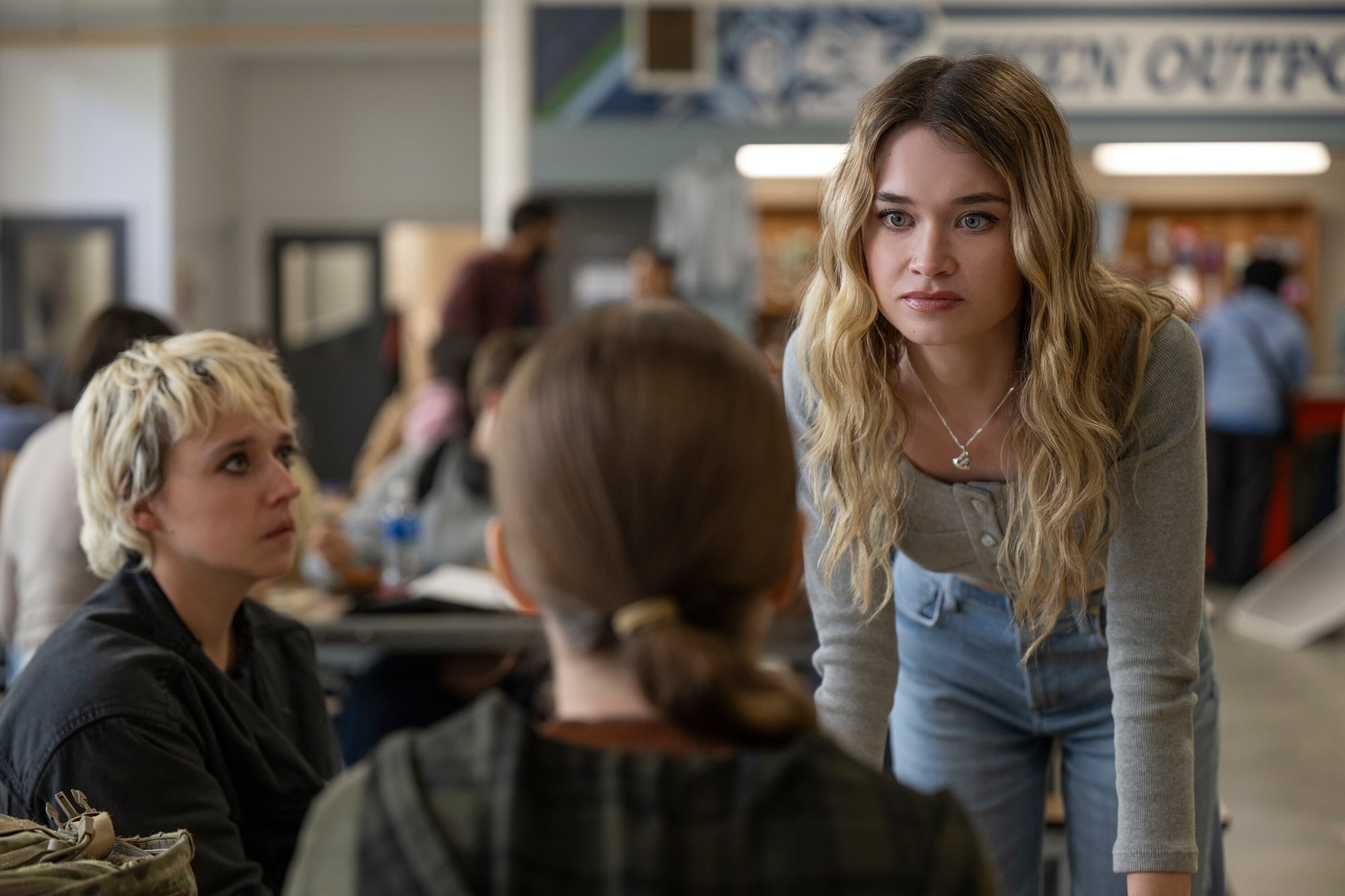
Alison Thornton is another standout performance here as Christine ‘Chris’ Hargensen, the primary bully behind the abuse towards Carrie in their school. Chris is admittedly a very one-dimensional character in the book, an exemplification of children’s capacity for cruelty for the sake of it. The adaptation’s best decision then, is to flesh out her character, not to make her more sympathetic per say, but to make her cruelty feel more human and realistic. She hates Carrie with all of her body, because Carrie is oblivious to the things that define Chris’ entire world; money, power, beauty, influence. She just doesn’t like her at all, and takes out any and all anger that she has at her crumbling home life on Carrie just because she can. Thornton gives Chris’ rage a real palpable sense of fear and grief at it’s core, and yet she remains the least sympathetic and most anger-inducing character in the series. I mean, seriously, this is a Joffrey Baratheon-style performance, where she’s absolutely brilliant at making you hate her deeply. In a show where everyone feels more human and complicated, Chris is too, and yet still immensely easy to hate to the point of pure detestation. Hats off.
Other supporting performances here include Siena Agudong as Sue Snell, Chris’ best friend who finds herself in a complicated middle ground between Chris and Carrie. Agudong does a wonderful job, but Sue definitely feels a little short-changed here, if only because it’s hard to command any attention in the series when surrounded by absolute powerhouse performances. Joel Oulette, Josie Totah, Thalia Dudek and Arthur Conti make up the rest of the teenage cast here. Dudek is a highlight as Carrie’s first friend, Emaline, who is an original character for the show. Her addition will undoubtedly be a controversial one, especially as the narrative goes on, but I think she shines as a manipulative force, always egging on Carrie to go further and more extreme than before. She almost reminded me of Dane DeHaan in the 2012 film Chronicle, and I’m curious to see where her character may potentially go from here. Oulette is also great as Tommy Ross, Sue’s boyfriend who goes on to take Carrie to prom. He’s the only truly good-hearted character in the young cast apart from Carrie, and his bonding sequence with her midway through the show was one of my favorite scenes in the entire show.
Long-time Flanagan fans don’t fret, because his regular collaborators are here as well, mainly as members of the adult cast. Matthew Lillard gives one of my favorite performances of his career as the well-meaning but slightly incapable principal Henry Gayle, whose people-pleasing nature ends up severely aggravating the issues of the school as things escalate far beyond his control due to a lack of genuine discipline or punishment until it’s too late. Rahul Kohli is great in a supporting role as a disillusioned English teacher hiding dark secrets, and serves as a very real reflection of some of the disastrous impacts of online bullying campaigns, whether understandable or not. Tim Bagley is really good as school counselor Peter Morton, who has an absolutely breathtaking conversation with Carrie about the power of novels that left me emotional, and Amber Midthunder is very compelling as Rita Desjardin, Carrie’s home room tutor and physical education teacher. I love how they complicate the teachers and faculty here, as the expanded format allows Flanagan to delve further into how the educational system fails Carrie, and how they purposefully let things get worse because of bureaucratic red tape or fear of repercussion. Kate Siegel is phenomenal in her relatively minimal presence here, serving as the narrator and the primary interviewer of the survivors of Carrie’s eventual massacre. It’s always great to see her in projects like this, and she shines no matter how big or small the role, leaving a firm presence in the viewer’s mind.
Now you might have picked up on this over the course of this review, but Carrie does set up future seasons, and significantly alters the books’ ending in order to do so. This wil get spoilery, so skip over this paragraph if you want to go in blind, but our titular character does in fact survive this season, and the specifics of her massacre at prom are altered for dramatic effect. It’s a series of huge swings, especially in the last episode, but I for the most part really can respect them and get on board with them. It sets up a world larger than just our character, full of other damaged and angry young women with telekinetic powers who shine (ha) no matter what comes their way. This being the fifth adaptation of what is one of King’s most simplistic narrative, I would be frustrated if it follows the playbook too literally to be entirely honest.
Why adapt it again if it’s just to do the same things De Palma did fifty years ago? I like the ideas at play here, and I think the core themes of the story are still maintained even if some of the specifics are changed. Potential later seasons have the exciting potential of adapting other similar King stories, including perhaps Firestarter or The Institute, and I for one am excited for the prospect of a multi-season Flanagan series, something he attempted with The Midnight Club but never got the chance to execute. Some folks will absolutely hate these changes, I’ll be entirely honest, but they worked for me, and I would absolutely encourage watching the show yourself to make up your own mind.
Thematically, the core concept of Carrie remains the same. This is a story about rage and anger, about bullying and shame and the human capacity for violence both physical and emotional. The lengths of the bullying here goes far beyond any previous adaptation, as Carrie is ridiculed on a level unseen before the presence of the internet. It can be tough to stomach, especially with how genuine and raw it all feels, which makes Carrie’s character development feel even more impactful. Her internalized sense of guilt and shame is devastatingly sad here, born from a people-pleasing, kind-hearted nature that is maliciously preyed upon by those around her, including her own mother, who seeks to further that internal shame by locking her in a prayer closet for hours at a time. Carrie is one of the meanest books in King’s entire bibliography, and even if Flanagan generally is far more earnest and sincere, he is unafraid to make this a show about how vicious and cruel people can be, even if they are just kids. Even when modernizing it into the present day, he’s actually just emphasizing the universality of the themes here, and how they are tragically still so prevalent and applicable despite how things have ‘gotten better.’ Even if Carrie’s ultimate fate differs from the source material, she is still surrounded by people trying to manipulate here and do her harm, and she isn’t free to be her own person and figure things out for herself by herself. That there is the tragedy. Her lack of agency is part of the point. She is helpless, and her conflicting emotions are being taken advantage of by the people around her. She’s hurt and grieving and looking for comfort in wherever she can find it, and ultimately will have to figure out for herself that she has to be careful where she finds that comfort.
In conclusion, Mike Flanagan brilliantly brings Carrie into the modern day, casting new life into the legendary story by wonderfully fleshing out the story and characters to make them more human and multifaceted. By doing so, Flanagan and company craft a story where the emotional beats hit harder and deeper, and allows us to truly invest in these characters and their lives before devastating them. Wonderfully realized by a cavalcade of fantastic and impactful performances, including two pitch-perfect leading actors who play off of each other beautifully, this is one of Flanagan’s most essential series yet and a real testament to the timelessness and universality of the original story. Whilst some of the bigger swings may alienate certain fans unwilling to entertain change, it allows the story to stand on its own feet and really carve out an identity for itself and set-up very compelling storylines to come in potential future seasons. Even if this is all we get, it’s a great re-adaptation and reinterpretation of King’s infamous debut novel, one that proves its own right to exist if only by how damn good it is. A perfect watch for this autumn, I absolutely encourage anyone curious to give it a viewing and make up their own mind; let yourself get invested in this world, in these characters, in their anger and their passion and their longings, and you will be treated to a wonderful series that’ll hit you hard like a bucket of blood to the head on prom night.