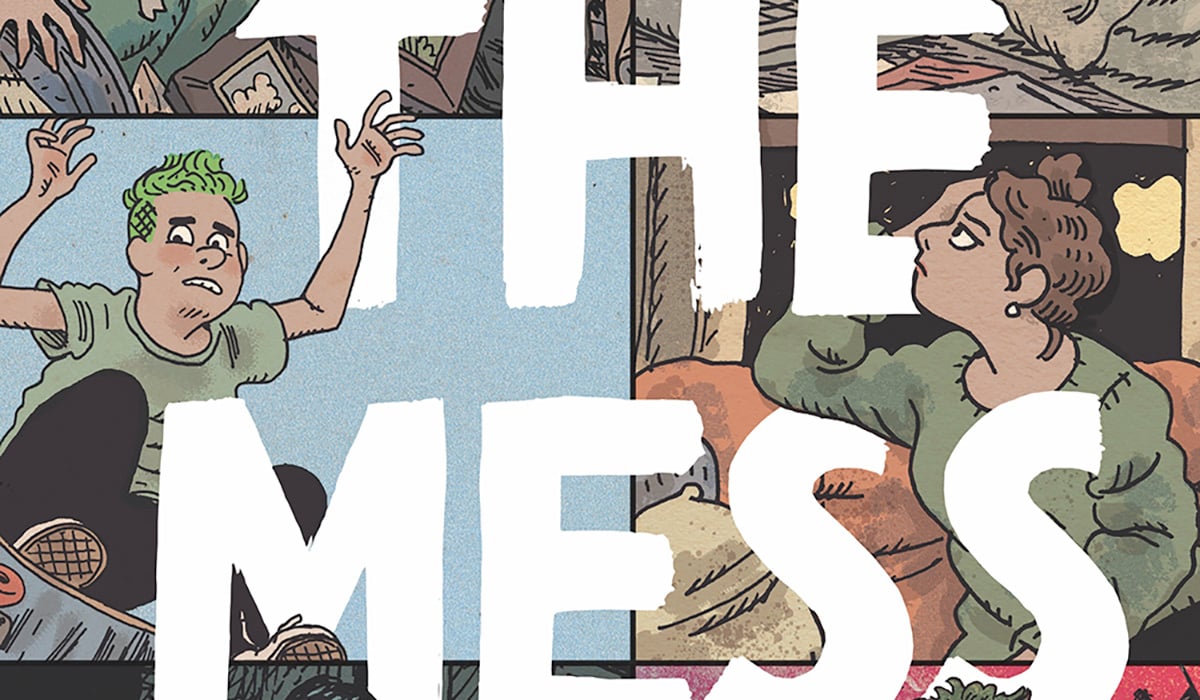

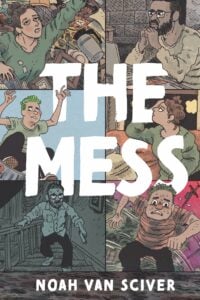
 The Mess
Cartoonist: Noah Van Sciver
Publisher: Fantagraphics
Publication Date: September 2026
When readers first meet Erin Messina at the beginning of Noah Van Sciver’s latest graphic novel, The Mess (Fantagraphics), she’s standing outside her deceased father’s house, hauling bags of garbage to the curb. It’s not exactly the glamorous entrance of a protagonist. But it tells us almost everything we need to know about her. Erin is a divorced schoolteacher pulled back to the backwater town she grew up in, and she has one week to dig through her father’s ruined house, find something of value, and somehow make her way back out.
She is tired and broke and pissed. But, more than anything, she seems to have run out of good options.
It has been more than a decade since Van Sciver published Saint Cole, his last full-length work of dramatic literary fiction. In the interim, there’s been epic historical biography (Joseph Smith and the Mormons), keen satire (Fante Bukowski), and personal rumination (As a Cartoonist) added to the bibliography. But looking back at Saint Cole, published in 2015, readers get a glimpse of the work of a raw cartoonist working without sentimentality or hope. What makes that book particularly interesting is its unapologetic bleakness. There is no heroic transformation waiting around the corner, no clean way out for this guy trying to get through another day while completely fucking up his life.
The Mess is a more existential tale. Instead of following one person almost exclusively, Van Sciver gives us a trio of leading characters: Erin, her teenage son Jackson, and Marcus, the quiet Black man living across the street from Erin’s late father’s house. Each carries a different kind of yearning, shaped by grief, and none of them is particularly good at telling anyone else what that grief looks like.
That’s where the connection to Saint Cole becomes apparent. Van Sciver is still interested in people who are down on their luck, people who some might consider the dregs of society. The difference is that The Mess is less interested in watching one person drown than in looking around at everyone else standing in the same water.
Erin has returned home because her father has died, leaving behind a house so completely overtaken by detritus that it’s difficult to imagine anyone could have possibly lived there in human comfort. Somewhere inside the old house, Erin believes, is an original Picasso drawing her father was given years ago. Perhaps if she can find it, she and Jackson can finally get off the precarious financial ledge they’ve been standing on.
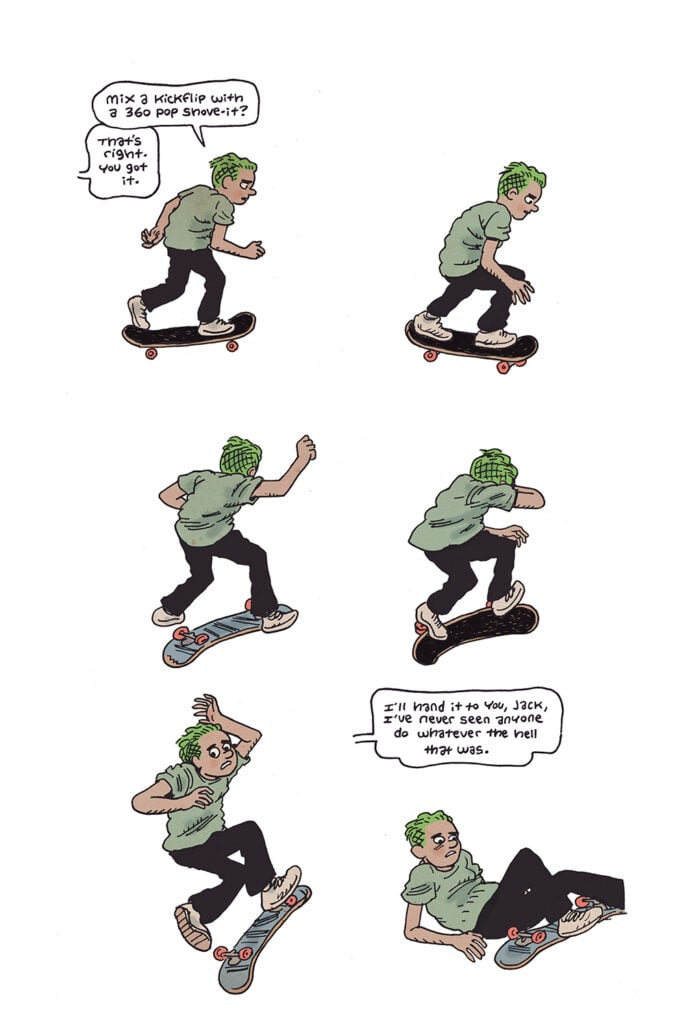
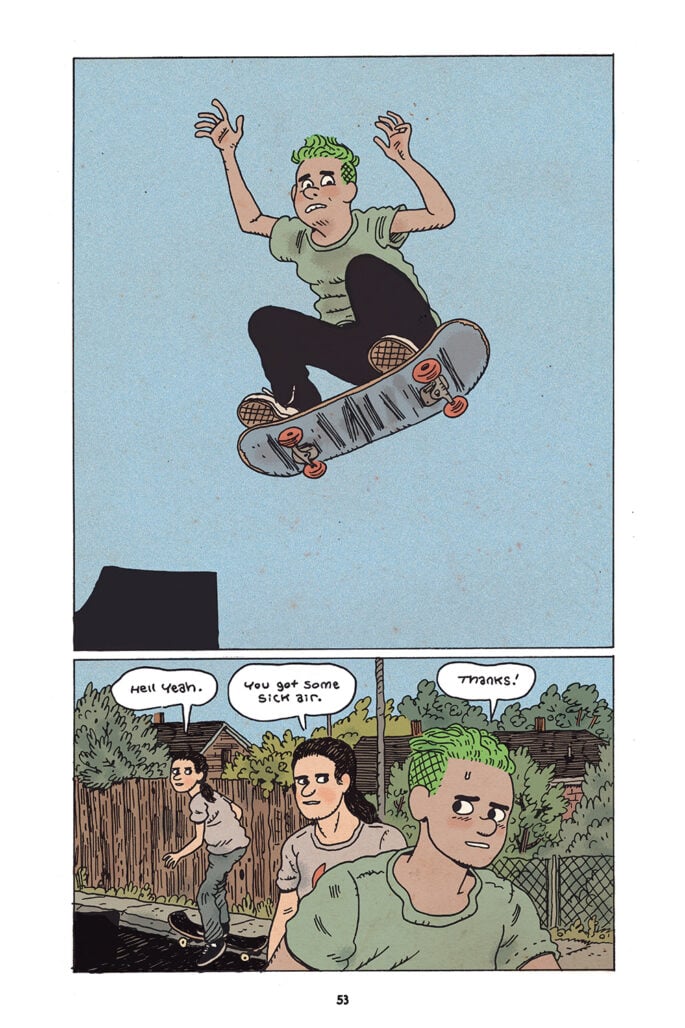
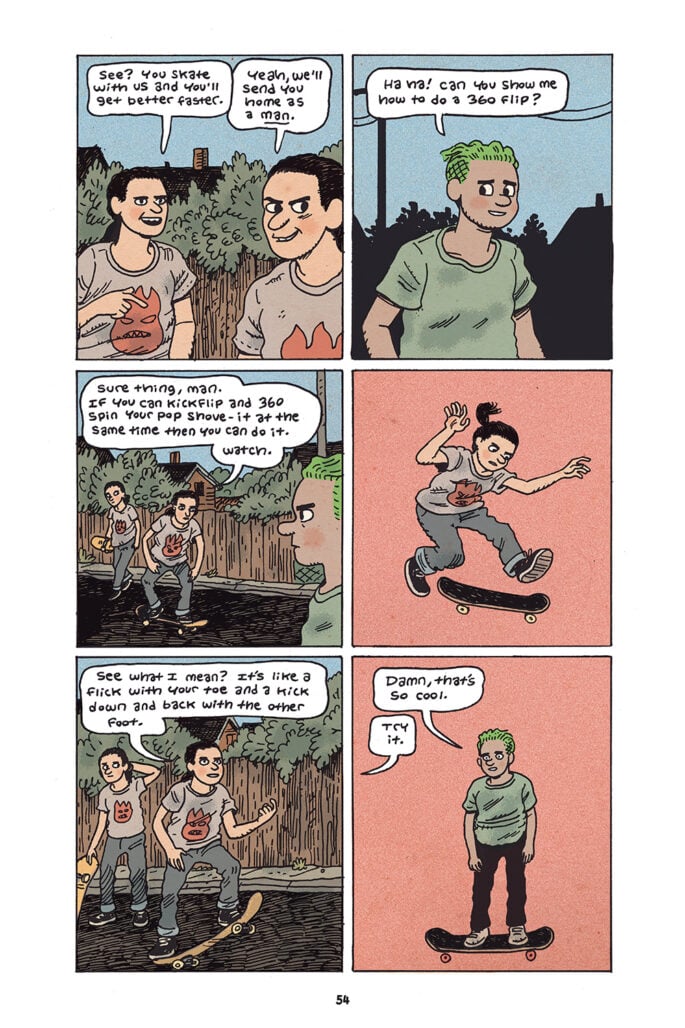
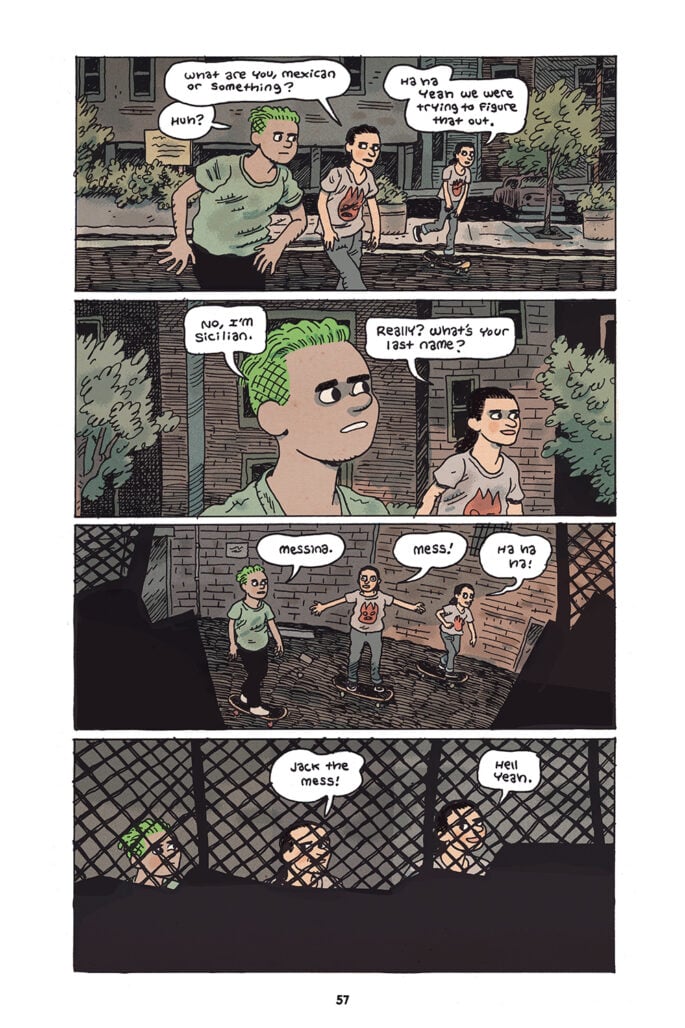
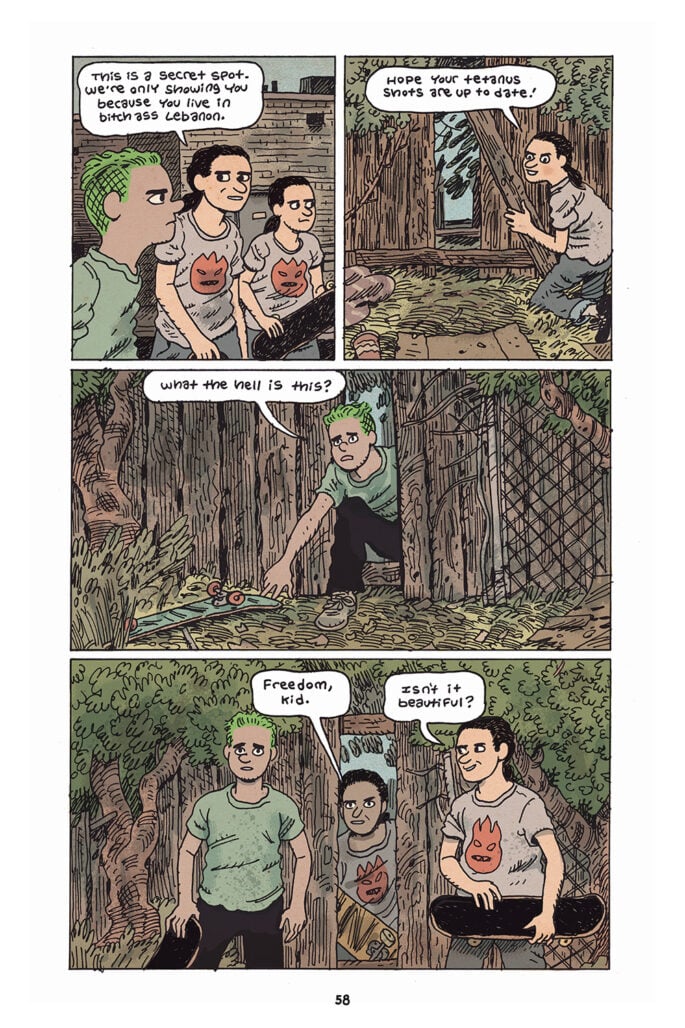
Jackson, meanwhile, would rather be anywhere than this dilapidated house, haunted by demons, real or imagined. While he would love to be spending spring break with his mother, spring break has become a week of hauling towers of garbage out of his grandfather’s house, his true inheritance. While slacking off and clearing his mind, Jackson falls in with a pair of skateboarding twins who offer him something his mother can’t: attention, freedom, and the feeling that maybe he is good at something.
Then there’s Marcus. The town has decided that Marcus killed his boyfriend, Alan, even though there’s not much proof beyond the fact that people love to gossip. Rocks are thrown through his window and a slur is written on his door. He’s become the kind of person people stare at in the grocery store.
The Mess isn’t particularly interested in solving that mystery, and as readers, we aren’t really meant to wait around to find out whether Marcus killed Alan. The more interesting question is whether any of these people will manage to understand one another before the week is over.
That turns out to be the real mystery of the book.
Erin seeks the Picasso simply because she needs the money. There’s nothing particularly noble about that, and Van Sciver doesn’t try to make it a morality tale. Jackson wants to matter to somebody, which is perhaps even more important to him than the trouble he gets himself into. Marcus wants to speak to the man he loved after he’s gone, and that desire leads him toward a genuinely strange piece of old equipment that was apparently once sold as a way of communicating with the dead.
In the end, it’ll be Marcus who stays with the reader longest. He is also where one can see how much Van Sciver has evolved as a storyteller since Saint Cole. He could have made Marcus into the obvious sympathetic figure, the decent man in a cruel town, persecuted for something he didn’t do. Instead, Marcus is allowed to be difficult. His grief has made him strange. He pushes people away. He can be unpleasant. He doesn’t always make the choices we want him to make.
There’s a scene early in the book that captures this better than anything else. Marcus stops on a country road to help Erin with her dead car battery, though she doesn’t yet know he is the man who lives across the street from her father’s house. What starts as a small act of kindness gradually becomes uncomfortable. Erin begins to wonder if she’s being followed. Marcus doesn’t quite know how to explain himself. Then they both arrive home and realize they live directly across from one another.
Van Sciver revels in letting the awkwardness sit there. Nobody delivers a speech explaining what they were thinking. Nobody tells us what the scene means. Three pages of expressions, pauses, and small misunderstandings do the work. You couldn’t really have found a scene like this in Saint Cole. That book was much more interested in telling us exactly what was happening inside its characters. Here, Van Sciver trusts us to figure some of it out ourselves.
Van Sciver has always been a remarkably transparent storyteller. Previous work could spend a page or two explaining where somebody came from, what happened to them, why they became the person we’re looking at. The Mess is more comfortable with gaps. Frank Messina, Erin’s father, is a good example: His transformation from an artist and husband into a hoarder is never neatly explained. We get pieces of his life instead, like the junk accumulating around his house; indeed, the house tells us as much about Frank as the dialogue does.
Readers will also see how Erin struggled to understand her father. And in that struggling to come to terms with who he was, now she is forced to reconstruct him from the remnants he left behind. The ambiguity is part of what makes the book’s treatment of parental loss so compelling. Van Sciver leaves Erin, and us, with pieces rather than an explanation that ties everything neatly together.
The artwork throughout shines as well: Every panel still looks unmistakably like Van Sciver: the lines are ragged and asymmetrical, which suits these people and the places they live. But the pacing has slowed, and he lets panels just hang there when it’s effective to do so. Characters’ faces don’t always reveal their emotions; a single glance can have multiple meanings. Van Sciver has gotten better at knowing when not to explain himself.
The book also has more humor than Saint Cole, which is probably necessary because otherwise The Mess would be almost unbearably bleak. Jackson’s introduction to the twins and their skateboarding world has some of the loose, funny energy of Van Sciver’s Fante Bukowski books. Yet, in their humor is also the presence of some of the darkest characters he’s ever put to page. The incongruity is devastatingly effective.
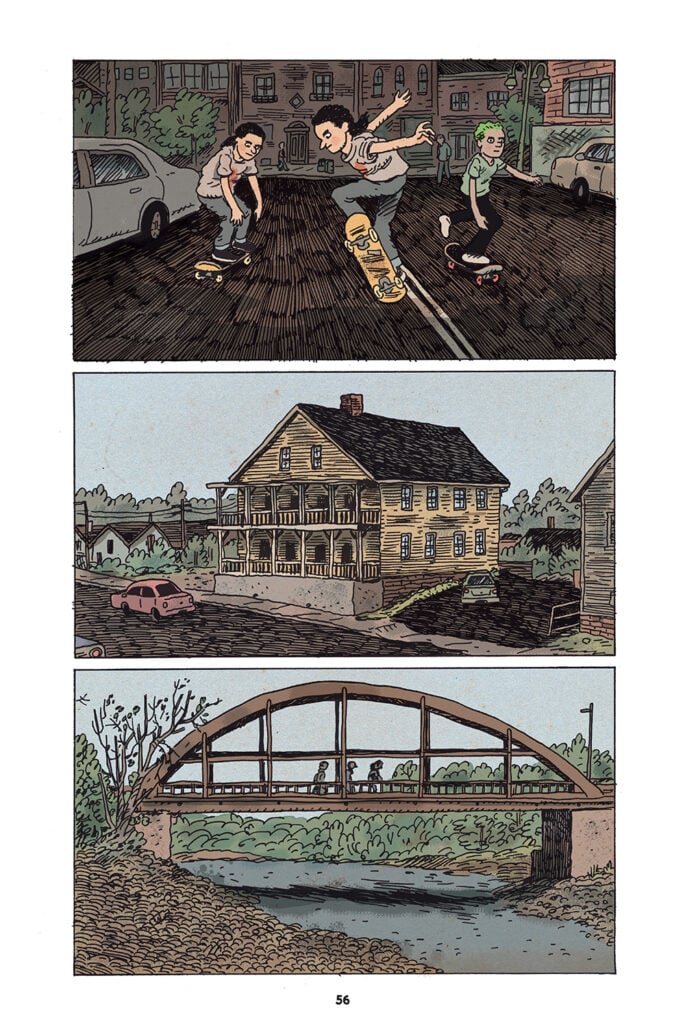
Ultimately, The Mess is as much concerned with the town as it is with Erin, Jackson, or Marcus. Van Sciver’s New Hampshire is not the kind of New England that looks picturesque. There are no cozy bookstores and no attractive old houses. The buildings are worn out, storefronts sit empty, and houses are filled with clutter. People manage to get by.
There is no need for a discussion of the economy or twenty years of American decline. Van Sciver has put all of that into the landscape.You can see it in every situation: in Frank’s home, in Erin’s state of desperation, in Jackson’s strong desire to belong somewhere, and in a town that prefers to label its quiet gay neighbor a murderer rather than acknowledge that nothing much happens here anymore.
There is something very up-to-date about all this. Instead of waiting for their lives to get better, these people are hoping for something highly unlikely: a Picasso, a lucky break, a bit of attention, or a message from the dead.
If Saint Cole showed how adept Van Sciver was at depicting people whose lives had come badly off the rails. With The Mess, he brings several of those people together and gives them room to misunderstand one another. Their problems start to bleed into the lives around them, almost without anyone noticing.
Decades into making comics, Van Sciver has become a more confident cartoonist. The satire is here, along with the history, the memoir, and that particular strain of weirdness that has always belonged to his work. What has changed is the way he lets all of it sit inside a quieter story. The Mess carries a melancholy that feels close to contemporary life. Its characters are grieving, lonely, and hungry for connection, though they rarely know how to ask for it. They talk past each other, make assumptions, and retreat when they might have reached out. People keep ending up beside those who might understand them, yet somehow fail to connect.
That gives the graphic novel much of its emotional force. While the grief is palpable, Van Sciver is also interested in the strange ways people learn to live alongside one another without ever quite becoming understanding who the other truly is.
The Mess is out this month from Fantagraphics
Read more reviews from The Beat!