
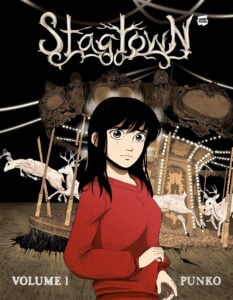
 Stagtown
Creator: Punko
Publisher: Ten Speed Graphic
Publication Date: October 2026
Stagtown collects the first season of the supernatural horror webcomic created by Punko, a veteran storyteller whose explorations of creepy little towns began with the popular Bizenghast series published by Tokyopop. Originally posted on WEBTOON, Stagtown introduces itself as an anthology of short stories. Following a monster-of-the week structure, each episode highlights a strange and terrifying manifestation of an overarching disturbance in the town’s reality.
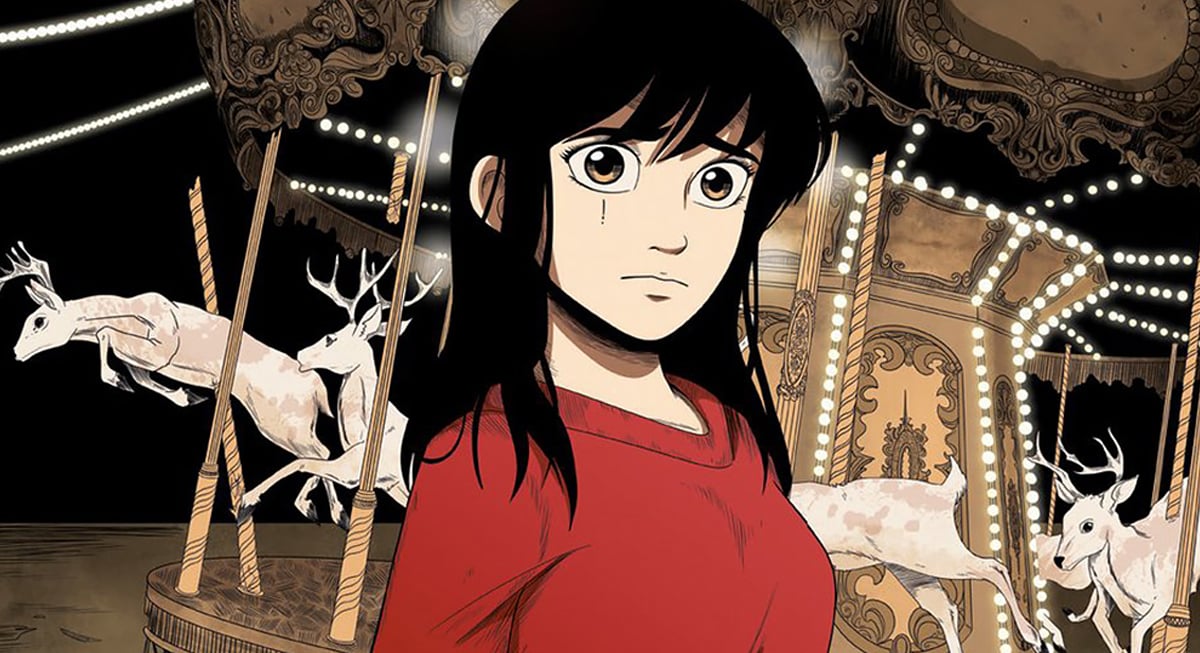
After graduating from college, a young woman named Frankie moves back home to Stagtown, a small city in the mountains that seems perfectly normal. Jeremy, Frankie’s next-door neighbor in a large apartment building, begs to differ. Jeremy has crafted a constellation of conspiracy theories surrounding the town, and Frankie quickly learns that he’s right to be afraid. Something unpleasant is indeed happening in Stagtown, and this opening volume of the series lays a foundation of suggestive clues while still only revealing the tip of the iceberg.
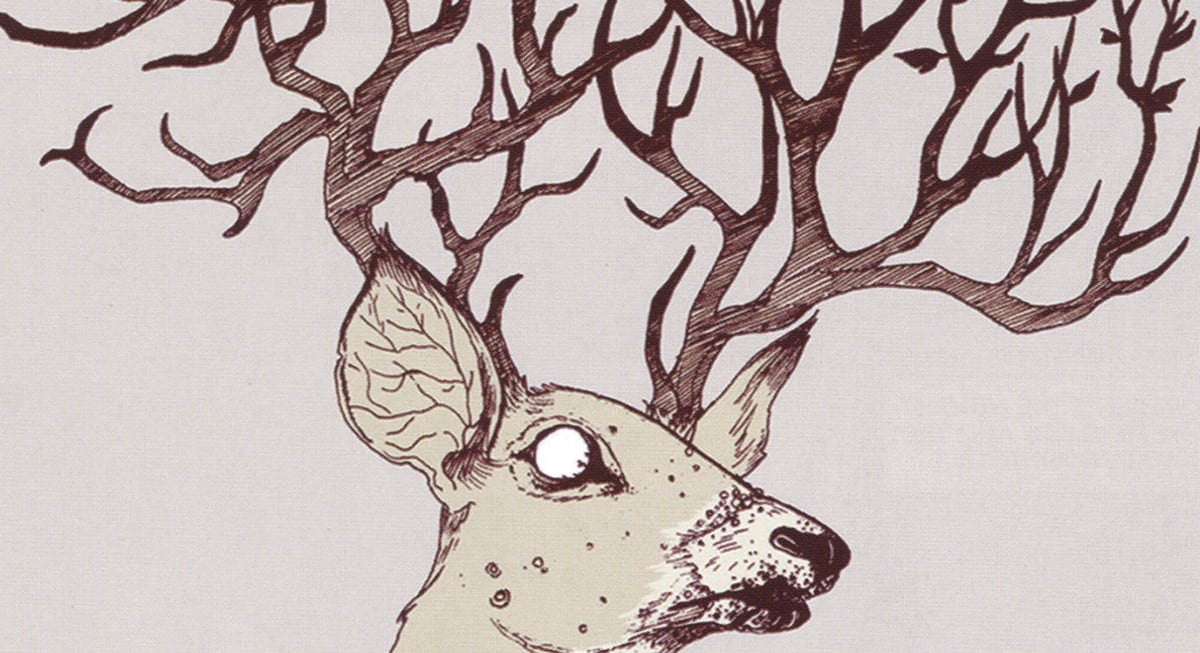
The opening chapters of Stagtown play on archetypal human fears in the style of the popular horror anthology podcast The Magnus Archives. In “Surveillance,” for instance, CCTV cameras begin to appear all over town. When the residents attempt to take the machines down, more appear overnight. Even more disturbing than the cameras themselves are their cables, which stretch for miles before disappearing underground. Who is watching the town’s residents, and why? Though the cameras vanish as quickly as they appeared, no answers are forthcoming.
For me, the most viscerally upsetting of these early chapters is “Under.” Following a decoded clue in Jeremy’s old notebooks, Frankie investigates an abandoned farmhouse on the edge of town. She finds an entrance to an old cellar and, after properly preparing for an excavation, descends underground. What she discovers is a network of tunnels that become narrower and more labyrinthine as she progresses. Frankie manages to make her way back aboveground, but only after enduring a claustrophobic nightmare. This chapter is an intensely atmospheric work of horror reminiscent of early internet creepypasta like the infamous “Ted the Caver” story.
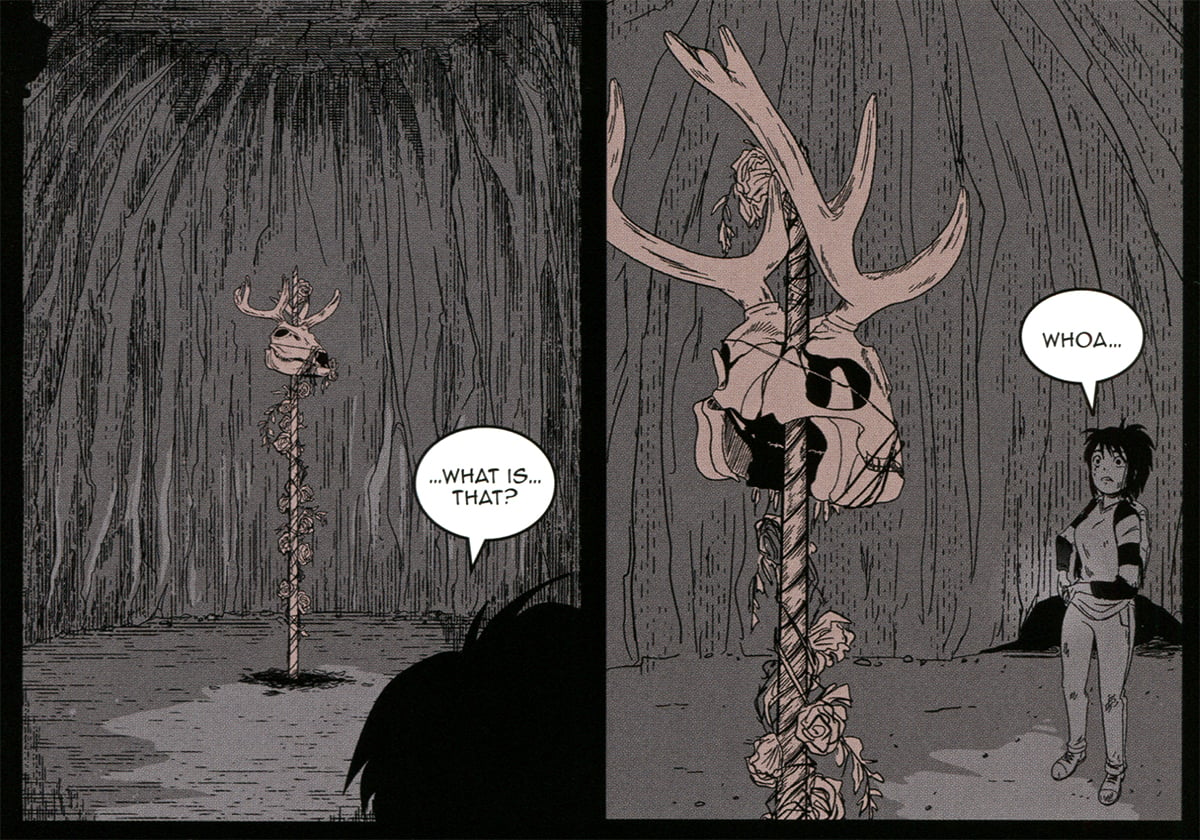
Despite the episodic structure of its opening chapters, the overarching plot of Stagtown gradually moves the series into The X Files territory. Each of the anomalies in the town is a manifestation of a larger underground entity that’s somehow connected to town secrets. The town functions normally, at least on a superficial level, but it’s impossible to leave. Only Jeremy realized that something was wrong, and now Frankie is aware as well. As clever and determined as Frankie is, though, she’s going to need help.
Halfway through the first act, Frankie meets another of Jeremy’s friends, a young man named Felix who had initially humored Jeremy due to a romantic crush. After Jeremy disappeared, Felix realized that he, along with Stagtown’s other residents, had been suffering from periodic memory loss. Frankie and Felix team up and make several escape attempts, all of which fail. In order to leave, they’re going to have to eliminate whatever is lurking under the town, but their prospects seem bleak. As the first act of the story closes, Frankie wonders out loud, “How do you fight something so big, so impossible?”
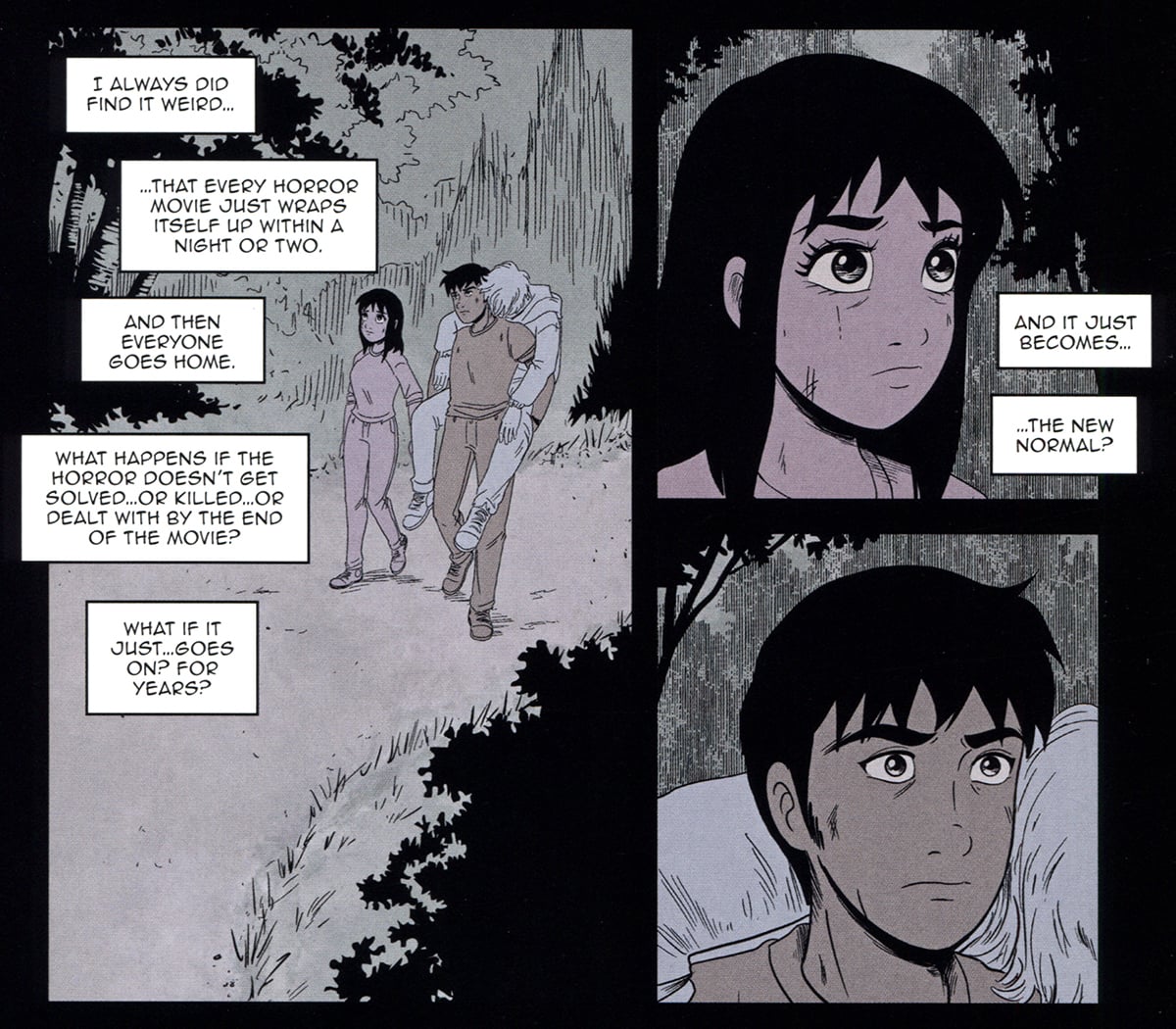
Paranormal horror anthologies are a popular genre of webcomics, especially on WEBTOON. What sets Stagtown apart is the emotional maturity and self-awareness of its characters, as well as the artist’s dry and subtle sense of humor. It’s easy to sympathize with Frankie and Felix, who handle unfortunate situations with an active problem-solving approach. Their pragmatism is increasingly tempered and shaped by their trauma, so they remain sympathetic and believable characters throughout the story. Because Felix is gay and Frankie is more interested in survival than romance, their friendship isn’t complicated, and the warmth of their bond lightens the grim nature of their circumstances.
Underneath its elements of supernatural horror, Stagtown is a story about young adults being stuck in place. The characters feel fresh and contemporary, but the setting is haunted by the analog horror sense of being cut off from the broader culture and society. Frankie and Felix are doing their best to overcome a less-than-ideal situation, but their efforts have depressingly few tangible results. Stagtown is small-town gothic horror that would make Stephen King proud, but it’s also a cautionary tale about economic recession, suburban stagnation, and a younger generation trying to survive in a world that has no place for their dreams or energy.
Punko puts Stagtown into conversation with a number of aspects of American culture in the twenty-first century, and it can be interesting to make comparisons to other landmark works of horror. Still, Stagtown boasts a unique tone and texture that set it apart from its inspirations. The multilayered story resonated with readers during its serialization on WEBTOON, who left numerous comments on the sharpness of the writing and the relatability of its themes, as well as the appeal of Punko’s distinctive line art. Variety reports that Stagtown has been optioned for a live-action movie (and Punko shared the announcement as a short comic), so we may be seeing more of this creepy little town in the future. Whether you can leave once you’ve entered, however, is a mystery yet to be solved.
Stagtown is available from Ten Speed Graphic.
Read more great reviews from The Beat!