
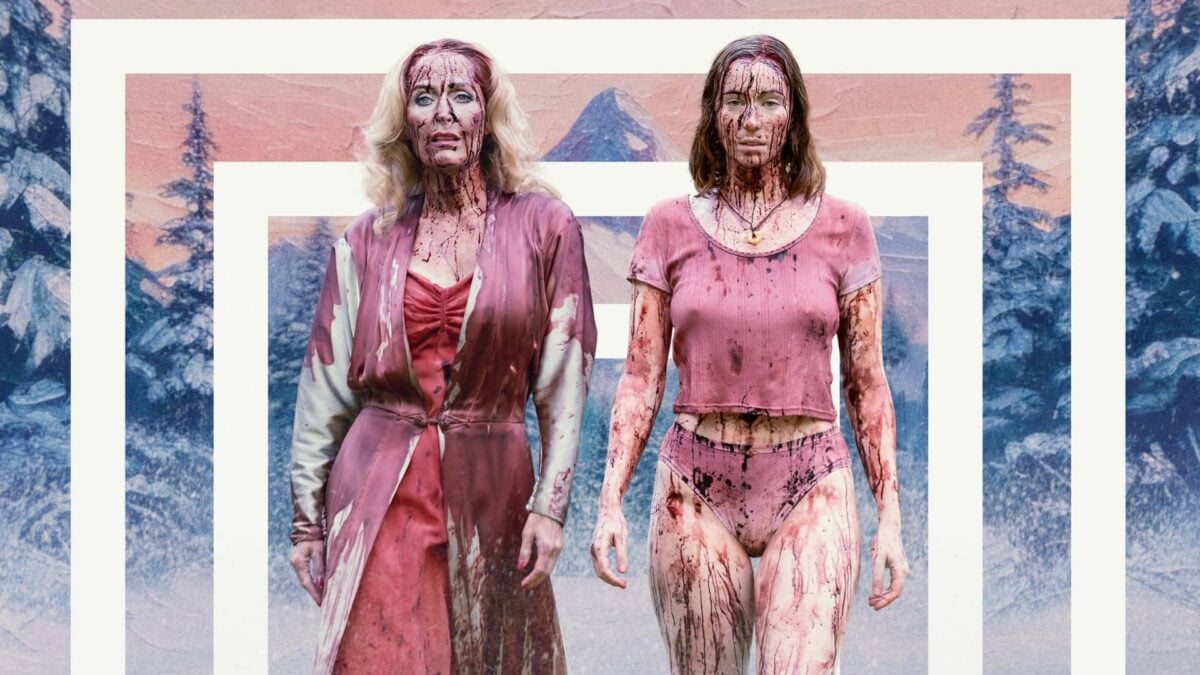
The Slasher film has produced as many academic papers as full-blown franchises, both to the delight and derision of many. Whether it be dissecting the significance of the “final girl” (Why her? How does she defeat the bad guy? Has she had sex?), fixating on the killer’s weapon of choice (phallus, anyone?), or hardcore fans rolling their eyes at a reboot of a beloved classic while cherishing arguably the worst entry in the franchise, the allure of the Slasher and its impact on modern culture ranges broadly both in fields of study as well as fandom. This is by no means a takedown of the academic views on Horror, nor Emily Wilson-style The Odyssey pedantry. The observation here lies more in how vast of an appreciation the Slasher receives across audiences.
With Teenage Sex & Death at Camp Miasma, writer/director Jane Schoenbrun finds the common thread between academia and hardcore fandom: a distinct love for a niche genre. Whether it be an essay singling out Sleepaway Camp as nothing more than a violent male fantasy captured on celluloid, or a Youtube video ranking the best nude kills in the Friday the 13th series, an underlying current of love and reverence drives the narrative forward towards its bloody climax.
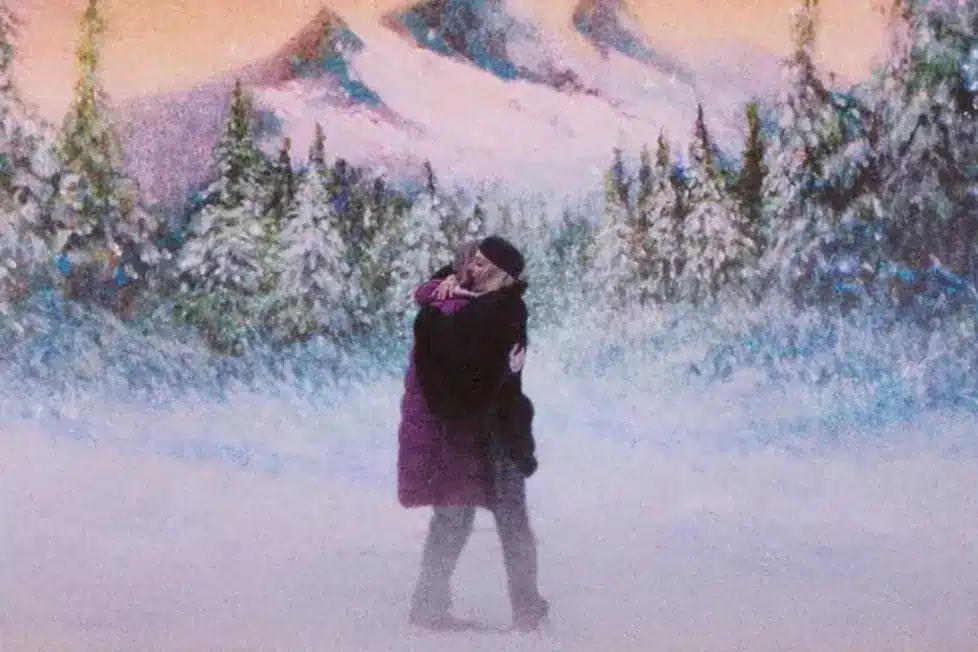
There are more things at play in Schoenbrun’s film, but in essence, love, desire, and sexual discovery through Horror make up the story’s beating heart. Set in the Pacific Northwest, queer filmmaker Kris Williams (Hannah Einbinder) seeks out the original “final girl” from the classic film series she is about to reboot: Camp Miasma. Having been tasked with breathing new life into the series, she believes finding the reclusive Billy Presley (Gillian Anderson) will help crack the script, but when Kris finally meets Billy, sparks and body parts begin to fly in equal measure.
Secluded in the original filming location for Camp Miasma, Kris is suddenly led by Billy into an alternate reality where sex and death offer pleasures previously unknown to her or others outside the realm of bloody delights. Kris and Billy delve headfirst into a world of gore, sex, and a big bad killer with a transphobic origin story called Little Death.
After three feature length fiction films, writer/director Jane Schoenbrun’s style and vision begin to flourish and solidify in ways as unpredictable as their insane queer horror plots. Strikingly and warmly photographed in 35mm, cinematographer Eric Yue captures the cozy but dangerous atmosphere of the camp Slasher film while adding a layer of dreamlike haze, like a thick blanket of dread.
As in the most intimate moments in Schoenbrun’s I Saw the TV Glow, Teenage Sex & Death at Camp Miasma lights its characters with soft, obscuring sources, like the glow of a film projector and the sparse yellow lamps strewn about a cabin room. Unlike their previous films though, Camp Miasma’s sudden breaks from reality feel much more inviting, despite the violence being depicted.
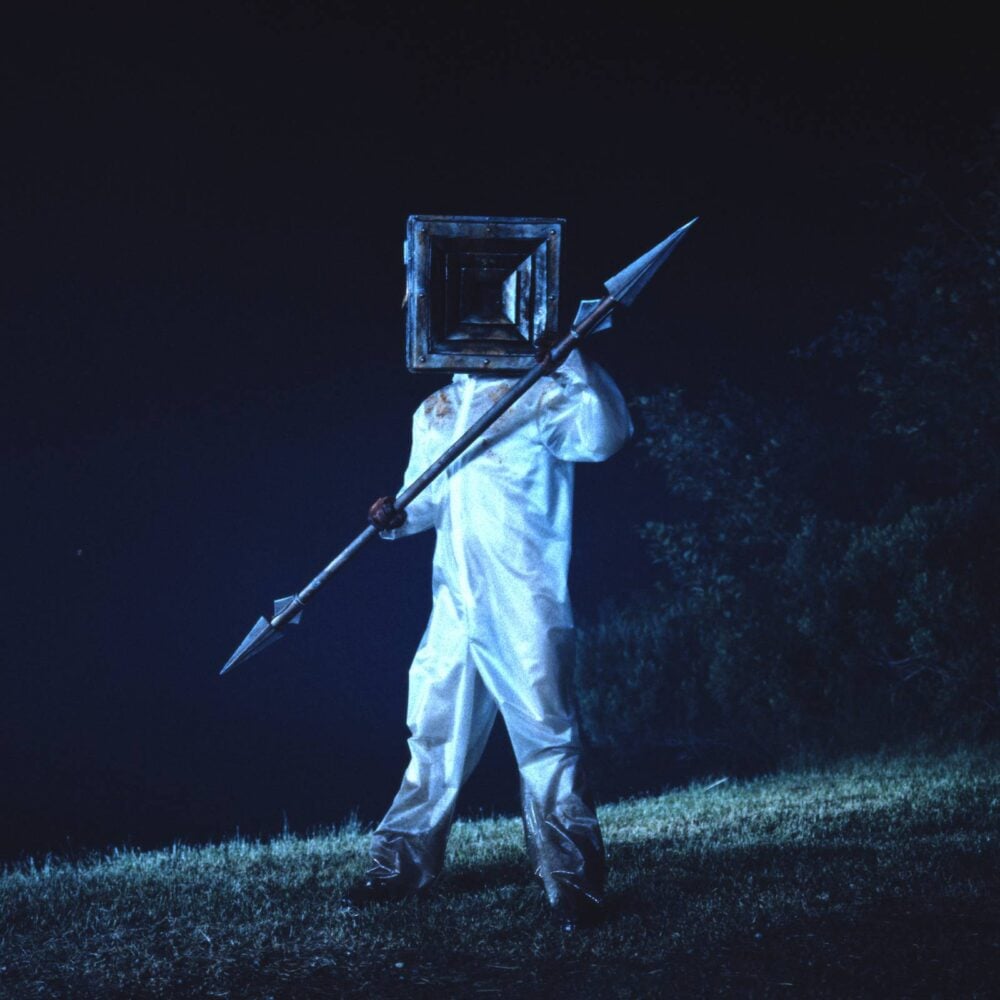
A standout moment has the film’s monstrous serial killer Little Death (Jack Haven), fishing spear in hand, slaughtering campers to the tune of Counting Crow’s “A Long December”. In what is meant to be a moment of shock and terror, Schoenbrun and Yue capture the killings in a swift one-take that is both hilarious and joyously gory.
Aided by the gently surreal matte backdrops of production designers Brandon Tonner-Connolly and Matt Hyland, the film does a great job of easing viewers into this violent universe much in the same way as Billy guides Kris. But it’s Einbinder and Anderson who truly fill the film with the flesh and blood needed to reach the explosion of beautiful chaos the film builds towards. With Anderson’s genre background in The X-Files, she imbues Billy with an organic history that feeds off from her past Horror and Sci-Fi tenure as well as the metatextual references Schoenbrun throws at her, such as the many purposefully obvious winks at Sunset Boulevard’s infamous recluse, Norma Desmond. Anderson displays a knowing sexuality, well aware of the swarms of fans of all sexes who thirsted after Dana Scully when “thirsting” wasn’t even in the general vernacular.
Einbinder in return is funny and awkward as the befuddled filmmaker/fangirl, but slowly matches Anderson’s weird, crafting a relationship both unique and relatable to those who have found strange pangs of pleasure in pop culture personas of the past. They form a bond that blends into the inviting and deadly atmosphere carefully built by Schoenbrun and their team, the tension simmering from the discovery of each other’s bodies and fantasies.
Loaded with references to Slasher classics such as Friday the 13th, Sleepaway Camp, A Nightmare on Elm Street and The Texas Chainsaw Massacre, it’s a film that relishes the intrinsic simplicity of the subgenre. It satirizes modern filmmaking’s efforts to rework these films via trauma-filled origin stories and clever metatextual winks. Schoenbrun goes for the primal and visceral elements that made those films connect with audiences in the first place, and yet never condescends those looking for more substance with their blood. This is because Teenage Sex & Death at Camp Miasma is precisely that Slasher — a gory, sexualized erotic fantasy as well as a fun dissection of the old and new tropes dominating the discourse.
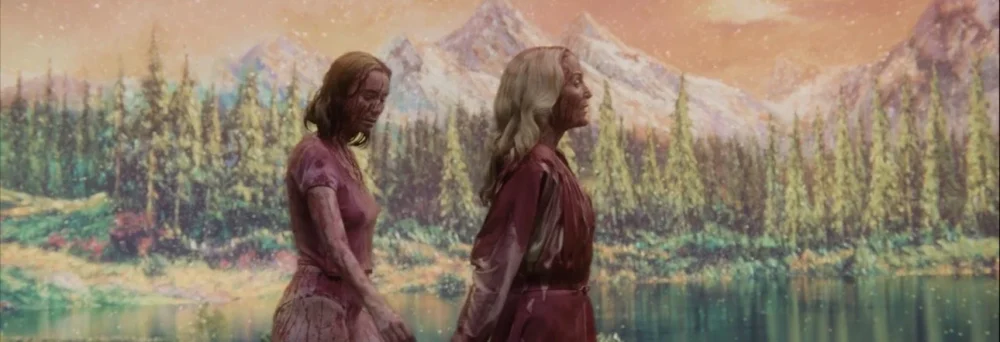
With style to burn and an appropriately lo-fi score from long-standing collaborator Alex G., Teenage Sex & Death at Camp Miasma strangely makes sense in Schoenbrun’s short but explosive oeuvre. Having explored self-discovery and isolation in the beautifully tragic We’re All Going to the World’s Fair in 2021, they followed it up with another journey of trans discovery with I Saw the TV Glow. Both these films find solace in niche communities and obsessions with pop culture phenomena. They display an affinity for Horror and the capacity for change by experiencing it rather than simply watching it. While these films revel in the joys of finding that very specific artifact, they also contain a darkness that threatens their newly discovered world. Teenage Sex & Death at Camp Miasma subverts the darkness and turns it into a source of warmth, a loving embrace for all the weirdos in search of those who will understand their obsessions and unknown pleasures. And who love blood and sex as well, preferably together.