
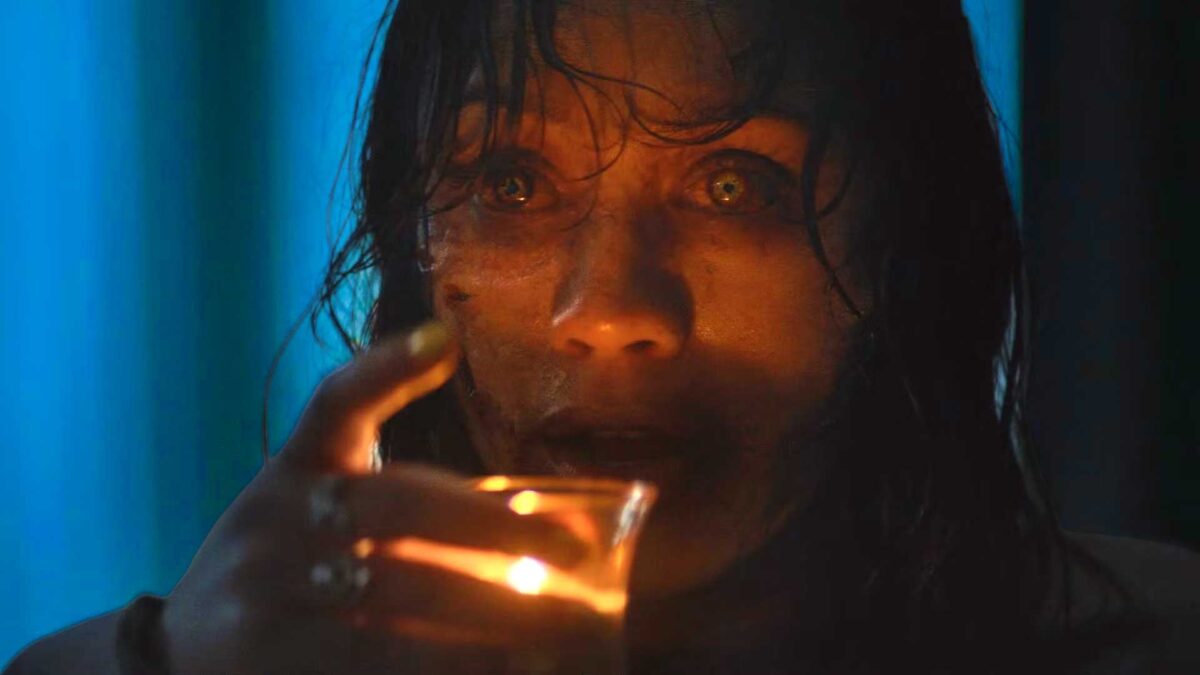

The original Evil Dead movie, directed by Sam Raimi and released in 1981, truly honored the promise of its title. The now iconic Deadites, the possessed victims of the Naturom Demonto (a version of the Book of the Dead), were downright sinister. They not only physically tortured the living, they stuck their dirty fingers into their psyches. What made it more terrifying was that they looked like they were gleefully enjoying every second of it. Madness was the goal, and psychological torment was how they achieved it.
Fede Álvarez’s 2013 Evil Dead remake/sequel tapped into some of this, though its method involved more brutality. The Deadites were masochistic worshippers of pain that dug into their creativity to more fully enjoy the process of separating flesh from bone. In 2023, Lee Cronin took a similar approach, though his contribution to the formula rested on a more personal take on Evil Dead horror by making one Deadite more important than the rest.
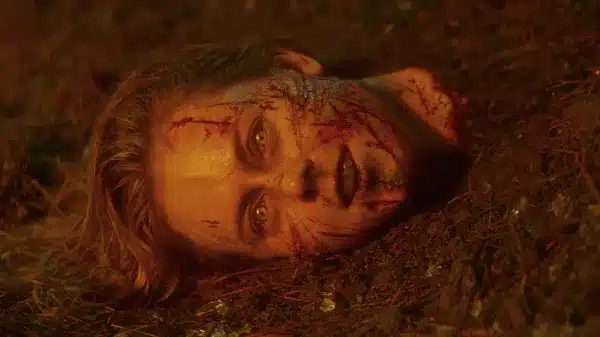
So, what makes French filmmaker Sébastien Vaniček’s Evil Dead Burn stand out from what came before? Sadly, not much. It’s the most brutal of the bunch, but it’s also the emptiest. Blood on its own is never a substitute for story, less so for character development.
In other words, it lacks what all the other movies had: a strong reason to follow and care for the people trying to survive the Deadites. Hell, it’s how we got one of the most popular characters in the genre, Bruce Campbell’s Ash.
Evil Dead Burn follows Alice (Souheila Yacoub), a woman who losses her abusive husband to a hellish car crash. Her in-laws (played by Tandi Wright and Erroll Shand) make it clear they blame her for their son’s death, to an extent. The husband’s brother, Joseph (Hunter Doohan), and his girlfriend (Luciane Buchanan) try to help Alice get through the funeral and the family’s scorn.
Things go from tragic to bloody once they all arrive at their rundown family house. Joseph’s been researching his grandfather’s obsessive pursuits of both the Book of the Dead and a dagger that can kill Deadites. He stumbles upon a recording of his grandfather reading a strange incantation, which he obviously plays. This opens the door for the demons to descend upon the grieving family.
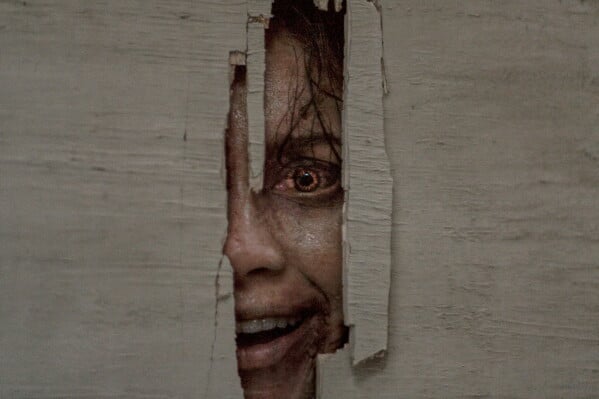
If you’ve seen one of the many trailers for Burn, you’ve seen its best parts. Save for a sequence involving a Deadite with a gun and the car crash I mentioned earlier (which set what I thought would be the tone for the rest of the film), there’s not a lot of the creative and evil playfulness the series is known for on display. The guy falling on the knives and forks sticking out from the open dishwasher door, the car door closing and severing someone’s fingers, and the hot wax shot are the closest things we get to the core ideas of Evil Dead here and you can see them well before going to the movie theater by pulling up YouTube.
As if that weren’t enough, the excellent teaser trailer for Burn, which showed a single-take sequence of Alice crawling away unnoticed as a Deadite wreaks havoc in the dinning room against another character, spoils what could very well be the film’s most impressive set piece.
What’s left is a pedal-to-the-metal succession of blood and gore scenes that shouldn’t feel all that fresh for fans of the New French Extremity wave of movies that came out in the early aughts. Watch Martyrs, Frontiers, or High Tension to get an idea of what Burn is somewhat going for (though the movies just mentioned are far superior to this one).
At least, Vaniček proves to be quite adept with the camera (something he made evident with his spider horror movie Infested). Some scenes that were thankfully kept out of the trailers showcase this very well, complete with strange but fascinating angles and shifts on perspective that are both clever and fun to watch. That said, they’re buried under a lot of uninspired blood and gore.
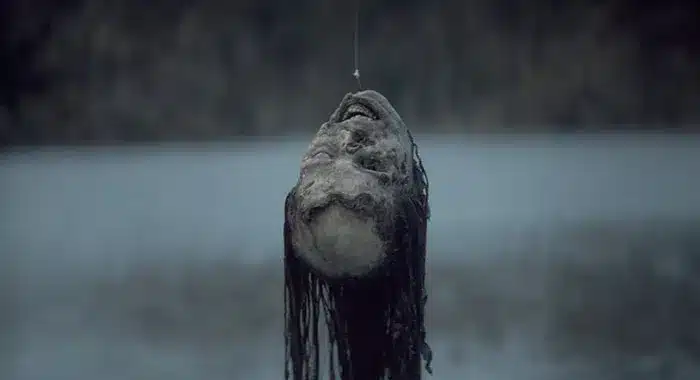
Vaniček essentially confuses brutality with creativity, and then he undermines it by not adding any kind of stakes to the story. The movie is so unrelenting with its violence that it forgets to develop any meaningful reason for us to worry about Alice’s fate, or anyone else’s.
The problem lies in that every bit of key information, the type that moves the narrative forward, is dished out through brief exposition dumps that are simply obtuse and ham-fisted. We’re not allowed to sit with any of the revelations. The movie wants to speed through those very short story pauses to get to the gore.
Consequently, things just happen because they need to. There’s no flow, rhyme, or reason to it. Vaniček puts his toys in front of the camera and moves them around without a clear sense of vision. So long as things are in place for the next kill, regardless of whether they make sense or not, the movie’s okay with it.
The same happens with the story’s message. There’s an attempt at looking into abusive partners and how families enable them, but it never goes deeper than that. Alice learns to accept that it sucks living with a toxic man and that she doesn’t deserve to be gaslighted at every corner, and that’s it. And even that is drowned out by the mayhem.
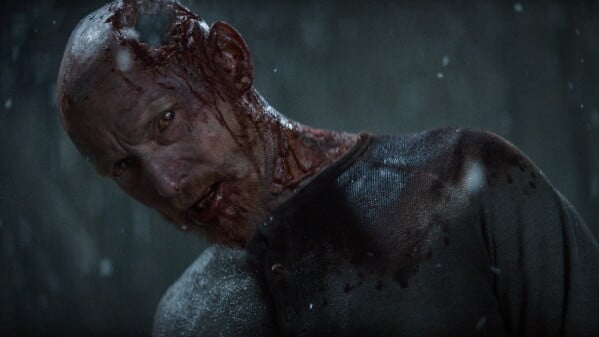
The movie also confuses loud sound design with tension and horror. Every instance of flesh being ripped or of skulls being crushed sound appropriately squishy and crunchy, but it distracts from the actual act of ripping and crushing. It sounds brutal, but it doesn’t add much to anything. Burn is the best example of why more isn’t always better.
Vaniček’s contribution to the Evil Dead license is certainly its most brutal. It’s also its dumbest. Burn ultimately betrays the elements that give the series its identity in the first place. Álvarez and Cronin were infinitely more fascinating with their approach to brutality because they built characters around it and flirted with the original’s concept of madness. Vaniček just throws buckets of blood and limbs at the screen, nothing else. It results in the least memorable Evil Dead movie ever made thus far, something I didn’t think possible given the richness of the material.




The fact that Comics Beat thought the title of this article was appropriate or professional really shows where online journalism has gone. The dumpster.
I guess the cleverly named “Justin Thyme” liked the movie a lot more than the reviewer.
Still, he has a point. “Evil Dead Fizzles Out” might have been better.
Comments are closed.