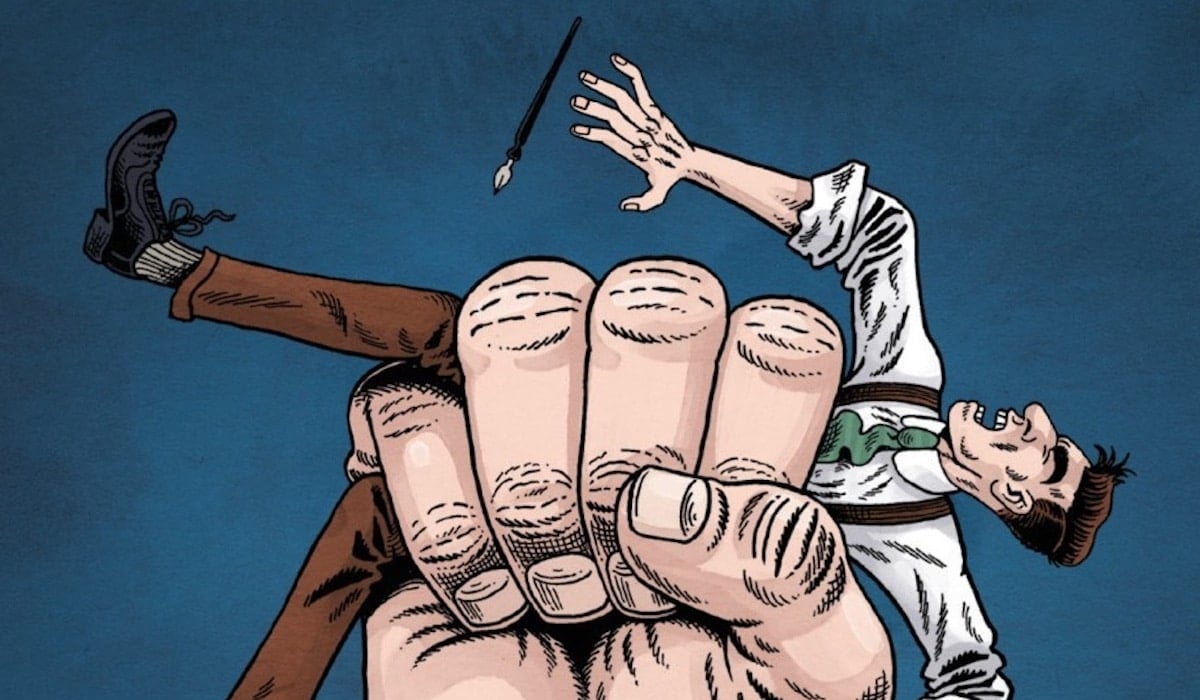

The Dissidents
Writer/Artist: Derf Backderf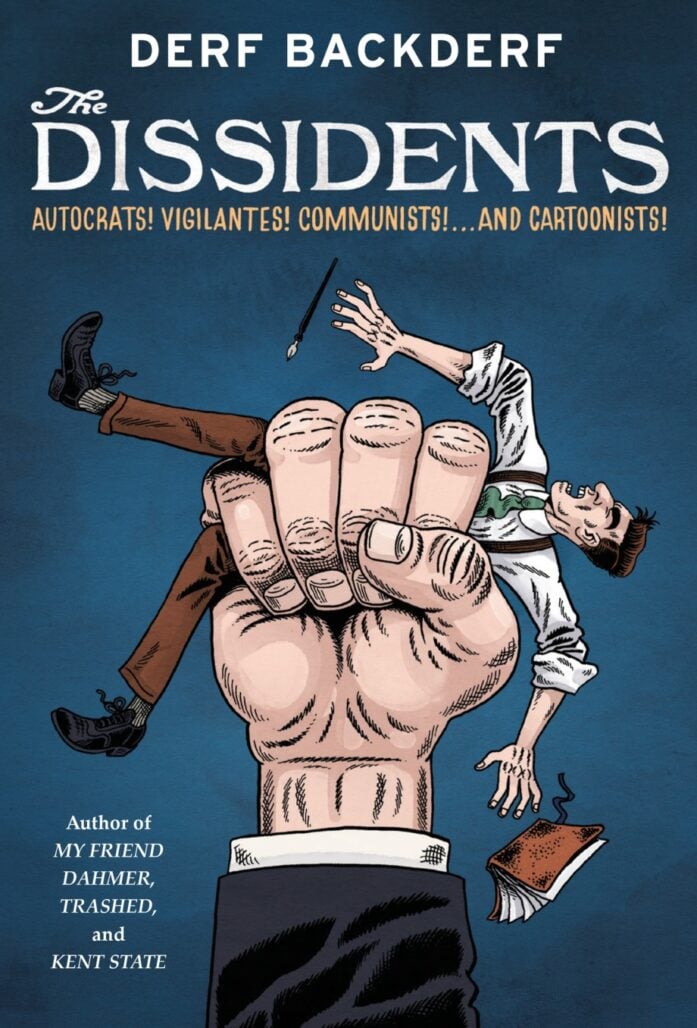
Publisher: Abrams Books
Publication Date: September 2026
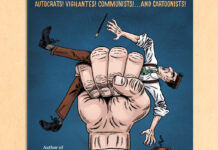
Being a political cartoonist has never been an easy profession. In 1910s America, if you didn’t follow marching orders and spoke your mind, you could lose your livelihood, your reputation, your freedom, even your life. In Derf Backderf’s The Dissidents, out in September from Abrams Books, we see that the powerful go after such cartoonists because their art is powerful, with the potential to sway public sentiment.
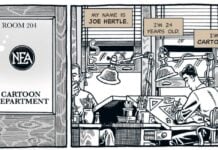
The Dissidents follows one fictional cartoonist, Joe Hertle, as he rubs elbows with real historical figures and bears witness to real events of the day. The book focuses primarily on cartoonists who drew for an indie volunteer political publication called The Masses, a few journalists of the time, and various union activists. Many of the featured figures also supported socialism, though their political views are shown to be diverse and their debates spirited. In his intro, Backderf mentions that he is not a Marxist.
The tagline kicking off the book is “We’ve been here before… but we forgot.” Backderf’s depiction of this era highlights an astonishing number of parallels to our own time. He hones in on a period between 1917 and 1919 and uses the lens of The Masses cartoonists’ experiences to comment on some truly disturbing events of the day.
The policies of President Woodrow Wilson’s administration quickly created a climate of fear, distrust, and anger. If you thought Wilson was a pretty okay leader, you might be surprised, as his racist, authoritarian actions speak louder than words.
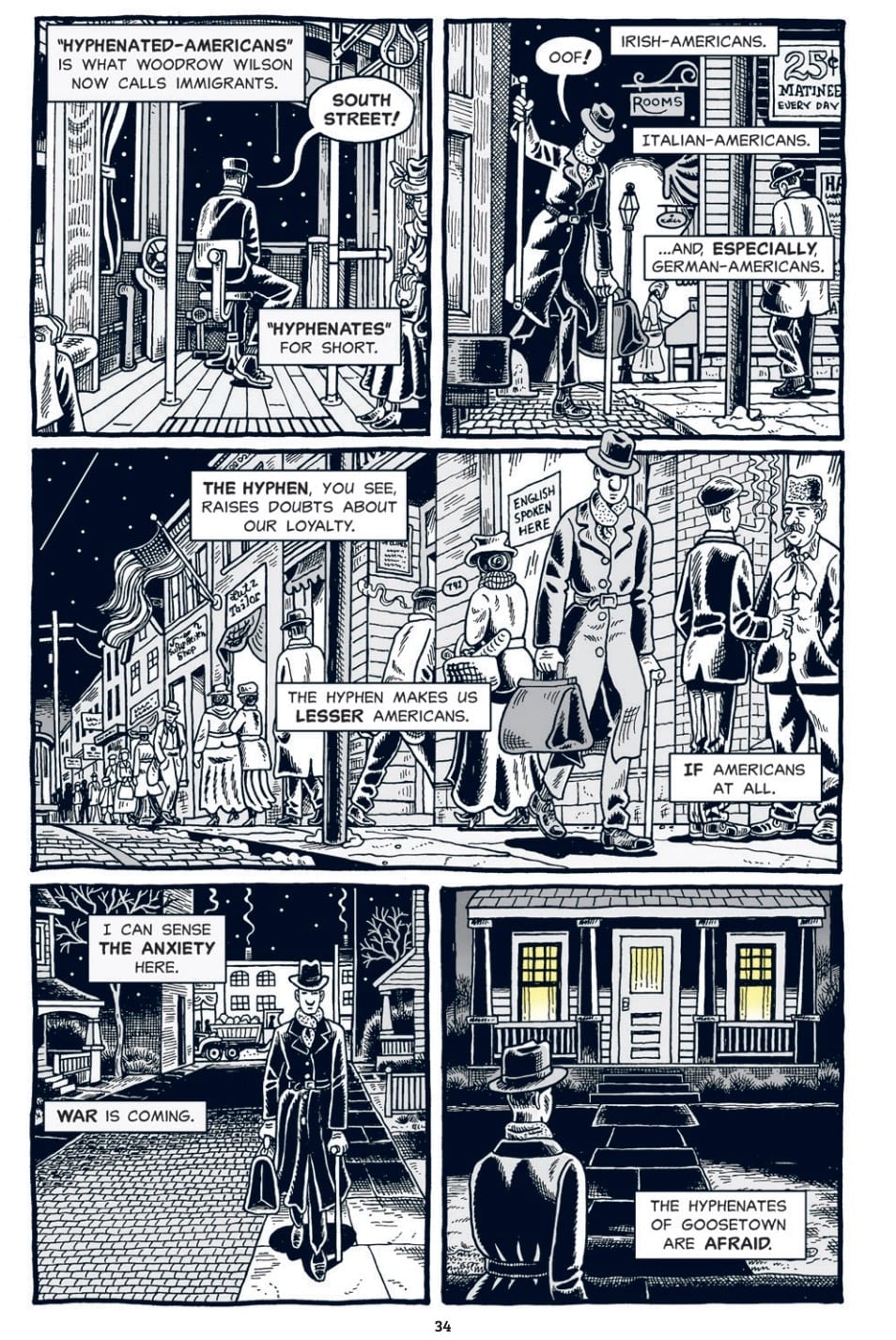
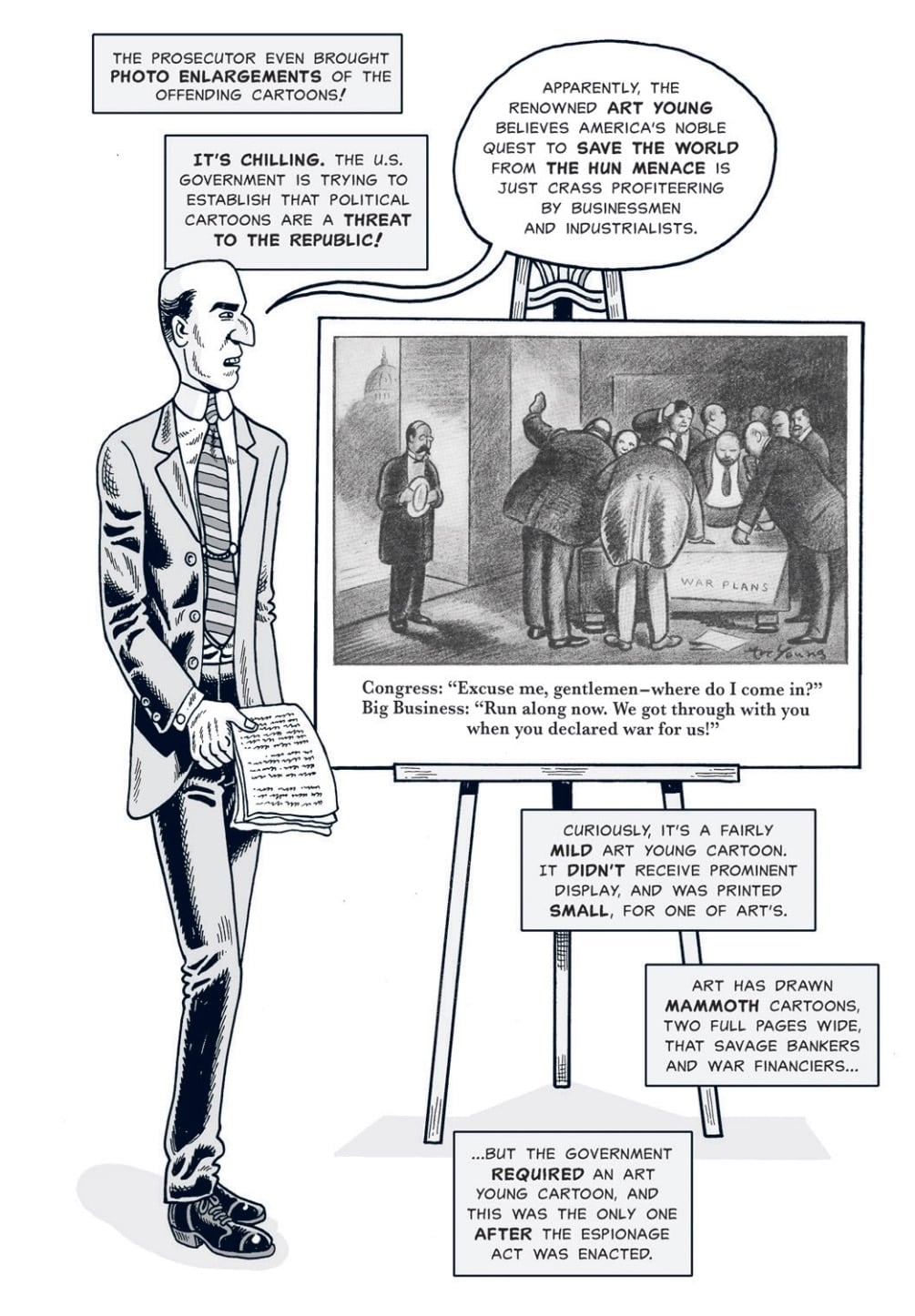
The book illustrates how the government used its power to coerce and suppress dissent, while encouraging the portrayal of peace activists, workers’ rights activists, women’s rights activists, socialists, and immigrants as dangerous radicals and criminals. Sound familiar? The aforementioned activists and immigrants were often attacked by outraged and misinformed citizens, often without recourse. They also could face assault or unjust imprisonment by law enforcement.
Adding to the turmoil was a press under threat that partially caved to pressure from the administration to talk up a war that few people actually wanted. The cartoonists of The Masses were among the activists targeted and the media threatened. I will avoid spoilers as to the fates of the various cartoonists and other people, because I think this reads as a suspense story with surprising twists and turns.
Cleverly, the fictional protagonist, Hertle, has several traits to give him as strong and complex a perspective as his real-life counterparts. He is a German-American with a day job as a puzzle artist, who idolizes the cartoonists of The Masses. Hertle also has a controversial romance in the story. You’ll see what I mean.
Backderf mentions in Chapter 1 footnotes that Hertle and his family’s immigrant experiences were based on Backderf’s grandmother and her siblings’ lives, who were German-Americans (called German “hyphenates” at the time), while Hertle’s cartooning experiences were informed by Backderf’s own work as a political cartoonist. The result is a character whose story feels genuine and who can serve as a relatable everyman to understand the events of the day.
If this is your first experience with Backderf, it’s helpful to know that he approaches his books with a strong journalistic ethic. In previous books such as My Friend Dahmer and Kent State, he not only wove in personal recollection but also did a great deal of interviewing and research (including photographic reference) to ensure as much accuracy as possible. While interviewing many people from the 1910s was understandably not possible, his research on The Dissidents was also extensive, with copious chapter-by-chapter historical citations.
Backderf’s narrative is largely chronological, often following Hertle, but not limited by him. The story sometimes roves elsewhere to shine a light on related events of the day. His art is stylized but realistic overall, and includes some scenes of shocking violence. However, much of the dread and discomfort in the reading experience is in the quieter ways that we witness people worn down by a hostile environment.
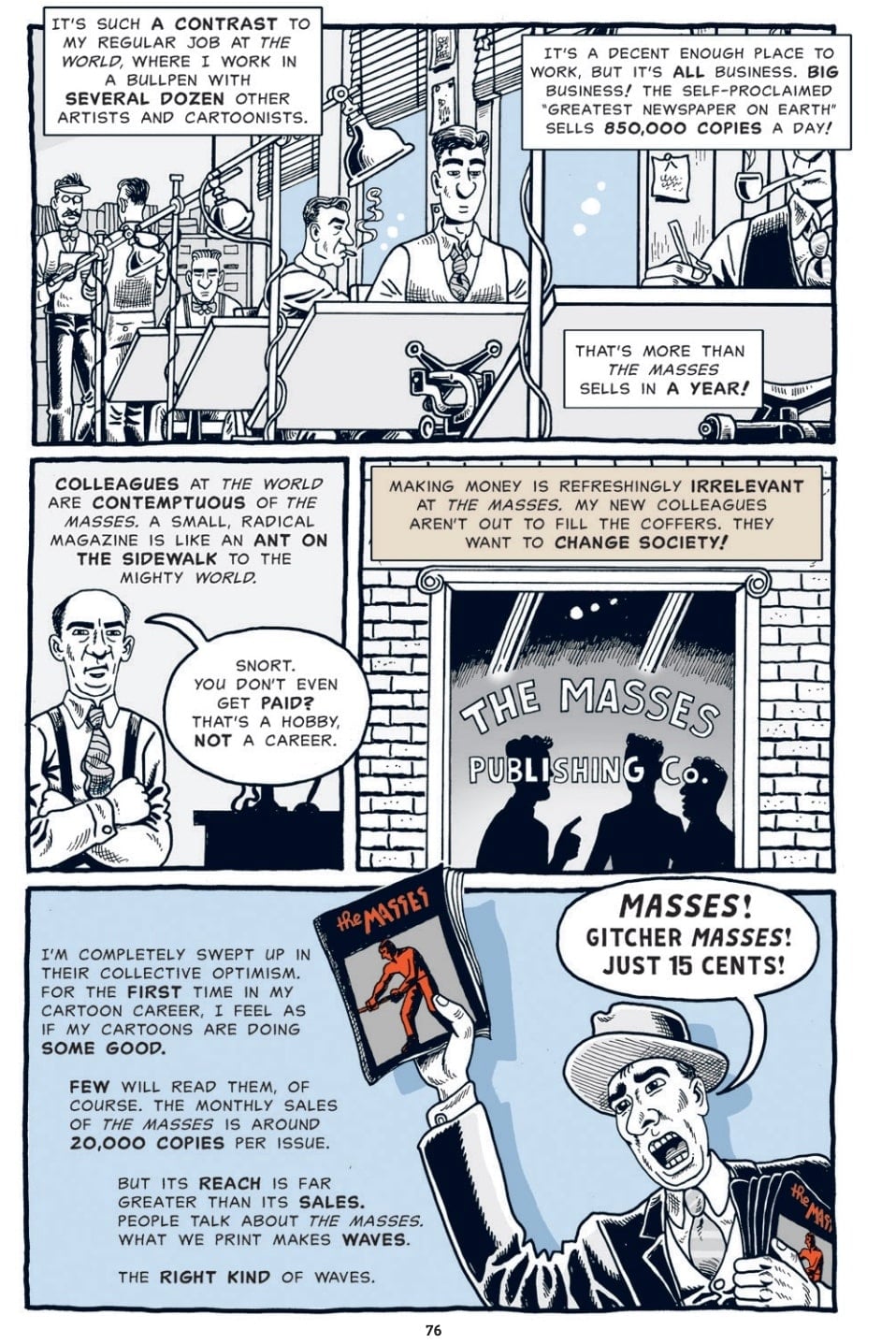
Some of the lighter parts of this book are sections with actual cartoons reprinted from The Masses, highlighting a number of stylistically different talents, clever visuals, and subtle humor. For comics geeks like me, there is also a little history of how The Masses was printed and what went into putting together an issue and distributing it. And the creativity and vibrance of The Masses’ working environment is an inspiring reminder of the importance of setting up open dialogues and welcoming differences of perspective.
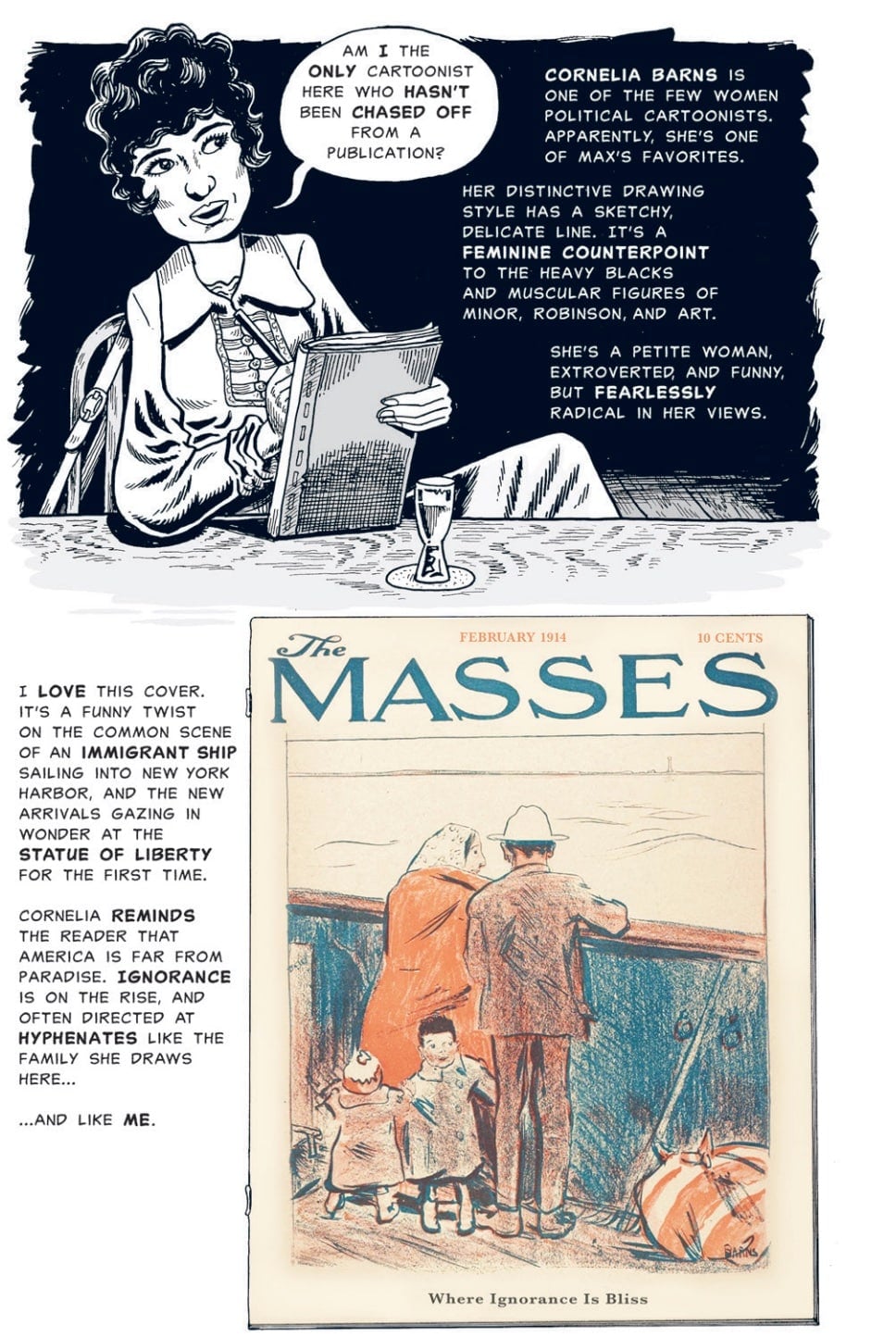
Some of my personal favorite parts of the book were the explorations of the cartoonists’ personalities, their different focuses, and contrasts between them. Art Young’s playfulness, Cornelia Barns’ spotlight on the everyday, Maurice Becker’s defiance… They were a group of humans, not superhumans, who made imperfect, courageous choices and did the best they could with the tools they had.
Anyone looking for models on speaking one’s mind could find a variety of options here. Backderf shares in his intro that the cartoonists of The Masses were an early inspiration for him in his own work, and it’s easy to see why.
Many of them took tremendous personal risk, which is not to be taken lightly, while others fought more quietly, which should not be discounted either. It wasn’t, and still isn’t, simple to protest when your livelihood, freedom, life, and even family are on the line. Another lesson on display is that the group is stronger than the individual, and even small groups of artists can raise awareness and put together something much greater than any of them could individually.
Backderf also explores the complexity of those that supported socialism as they faced the realities of the violent Russian revolution. It didn’t create the utopia they’d imagined. This issue was handled with sincerity and no apologies, as well as no excuses for the leaders of either the US or Russia to treat dissenters as they did.
The silent ideal displayed throughout the book is the ability to share a diversity of values and societal possibilities, to debate and work towards progress, without threat of violence, condemnation, or imprisonment. In other words… a free democracy.
It all raises an unsettling question in the present. For people who find themselves on the side of a mob or silencing others’ voices, thinking it’s justified, will they recognize themselves here, or simply make up an excuse for why it’s okay to oppress others if they disagree with them? I hope the compelling storytelling and the distance of just over a hundred years will mean the former.
History can provide a sharper vantage point with which to see the present clearly, and this book shines a bright, illuminating light on the challenges we face today. Backderf writes (and draws) boldly without shying away from complicated realities, and is himself a courageous voice of dissent and an advocate for a more positive society.
The Dissidents is essential reading for anyone interested in building a better world.
The Dissidents is out in September from Abrams Books.
Read more great reviews from The Beat!