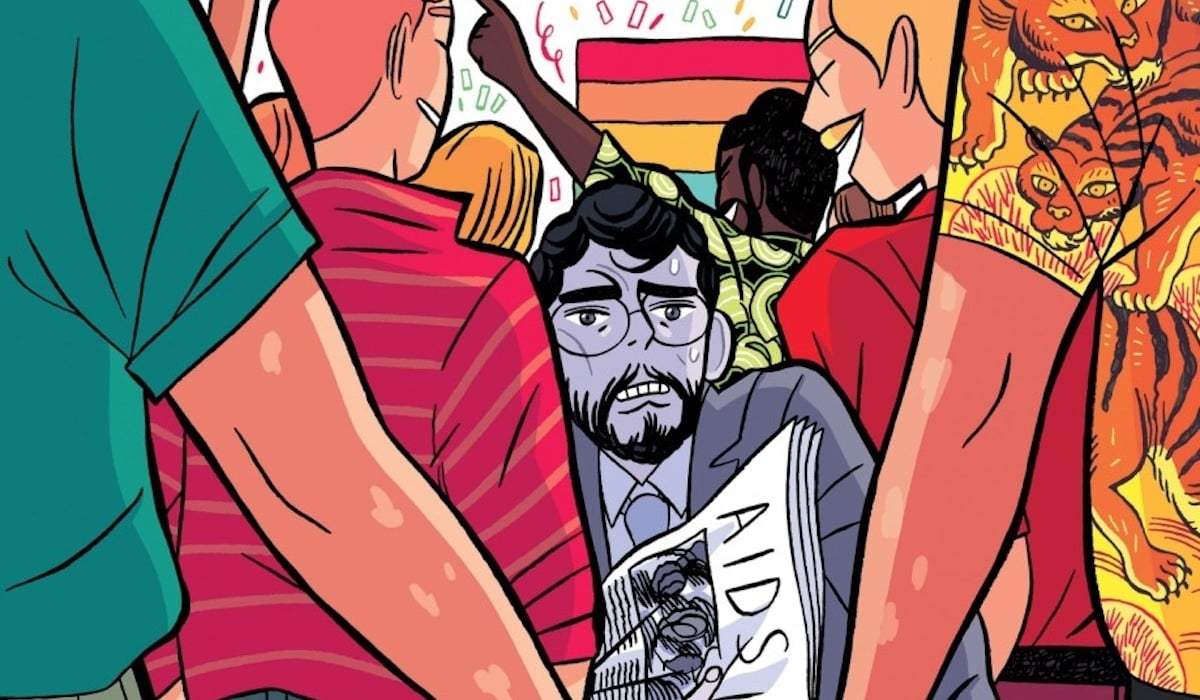

Bitter Pill: Randy Shilts and the Dawn of the HIV/AIDS Epidemic
 Writer: Clément Xavier
Artist: Héloïse Chochois
Publisher: Abrams Books
Publication Date: November 2026
A mysterious wave of deadly, typically rare cancer is sweeping the gay community in 1981. As Randy Shilts—one of the first openly gay American journalists working for a mainstream paper—discovers, a small number of people have theories on its origins… but they aren’t sharing them.
Shilts decides to take matters into his own hands. We witness the progressively deepening gravity of his quest in Bitter Pill: Randy Shilts and the Dawn of the HIV/AIDs Epidemic, by Clément Xavier and Héloïse Chochois, out now from Abrams Books.
The creators are French, yet their international perspective on US history never feels cold or distanced. Quite the opposite: they bring an open-minded yet personal take on the situation. Chochois’ dynamic body language and facial expressions on Shilts and other key players in the story feel intimate and Xavier’s writing emphasizes the little, telling moments, interspersed with periodic cultural pop-out sections for context.
I had limited knowledge of AIDS/HIV history going into this book. Speaking as a novice to this period, the narrative choices to make Randy Shilts the focus character and to show a limited excerpt of his work seemed wise ones, which concisely frame a massive subject.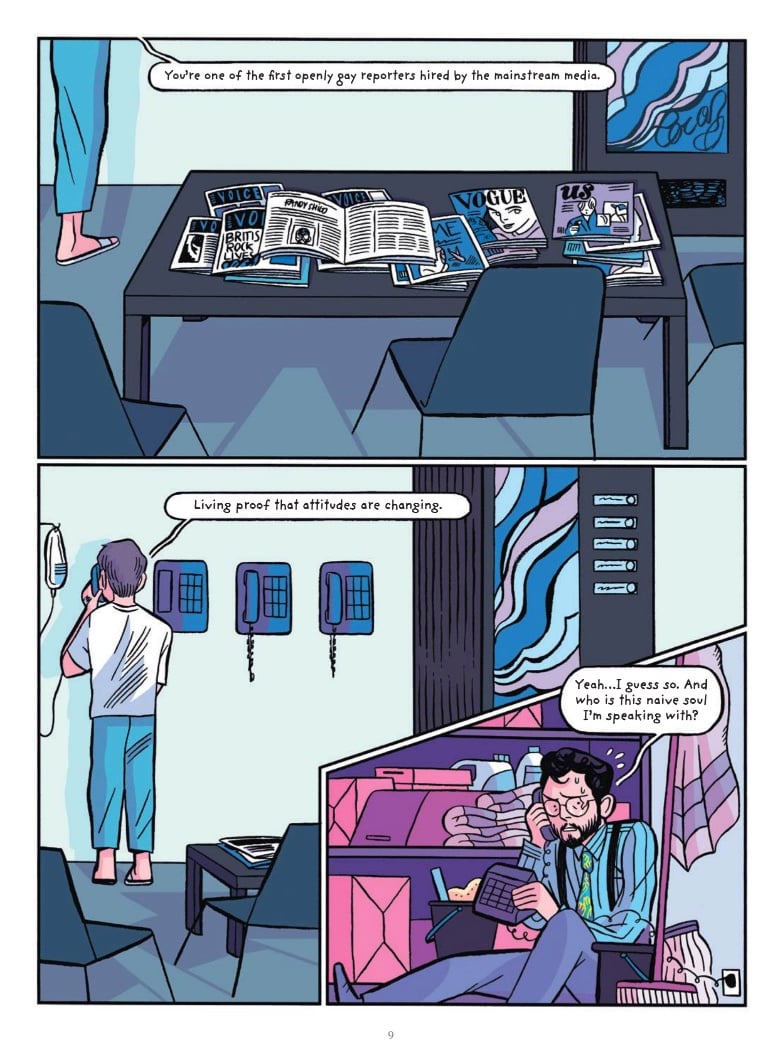
I did hear confirmation from a knowledgeable friend that Randy Shilts is controversial, to say the least. I was impressed by Xavier’s and Chochois’ portrayal of him as a complex figure, sympathetic in some ways and very bright, but also capable of taking actions that could alienate people, and not averse to playing a bit fast and loose with information to prioritize attention.
Shilts faced a balancing act both because of the times he lived in and who he was, confronting the harrowing illness and death of many in his community, and as a gay journalist, walking a fine line between participating in his community and attempting to meet his professional goals.
Another figure with a complicated legacy in the history, Gaëtan Dugas, a flight attendant and one early spreader of the virus, is shown to be a person who also inspired others with his confident, lighthearted embrace of his identity.
Xavier notes in the back of the book that he had a personal connection to the story after looking into the definition of “Patient Zero” and encountering both Dugas and Shilts, then digging further into both of their stories. This connection shows through in his multifaceted, empathetic depictions of them and other historical figures.
Héloïse Chochois’ lively and fluid artwork adds gentle humor and energy to the largely difficult subjects in the story. Her color also moves from bright to muted as events progress (a conscious choice highlighted in the creator interviews in the back), which subtly suggests the growing darkness. There are also a few surreal, fantastical scenes that add symbolic impact to the otherwise realistic style.
Anyone with an interest in the San Francisco Bay Area will find insights here. The history of the Castro bathhouses, how that neighborhood became an important community for LGBTQ+ people, and some history of journalism itself in the form of William Randolph Hearst and Shilts, are made accessible in visual form.
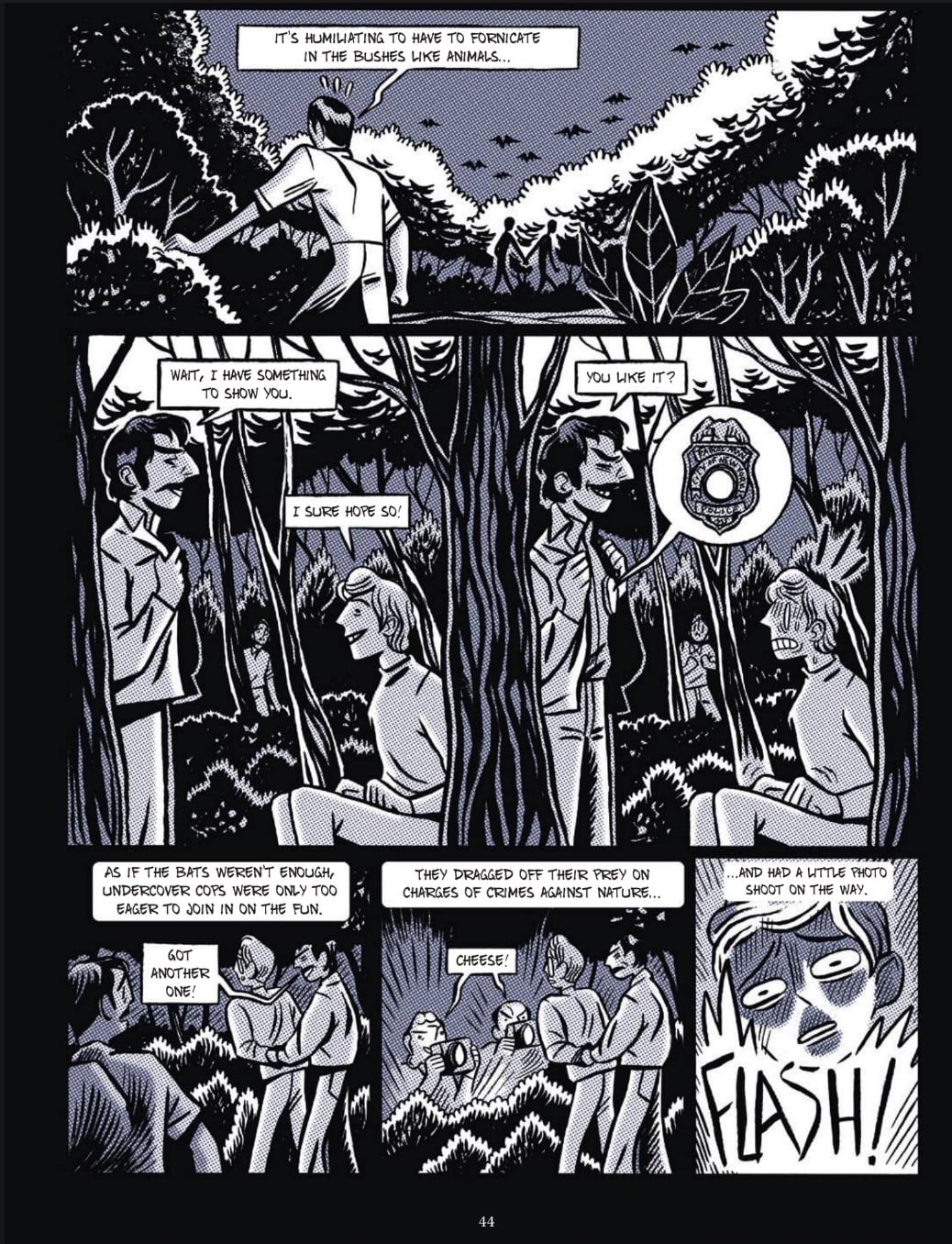
There are also serious journalistic ethics questions to ponder. What is your responsibility to share important health information you’ve uncovered, versus waiting for more context or vetting? How do you avoid the most harm? How do you promote effective action to a dismissive government and a society that is biased against a virus’ most prominent victims? It’s complicated. In our current times of politicized healthcare, marginalization of LGBTQ+ people, and pandemic fallout, these questions are still painfully relevant.
Shilts succeeds in garnering more attention for the problem, but the costs are high. Still, Bitter Pill shows us some of what Shilts does without demonizing him, and provides a starting place for further exploration.
For those who want to go further, there’s a wealth of additional historical details in the back as well as multiple references to follow.
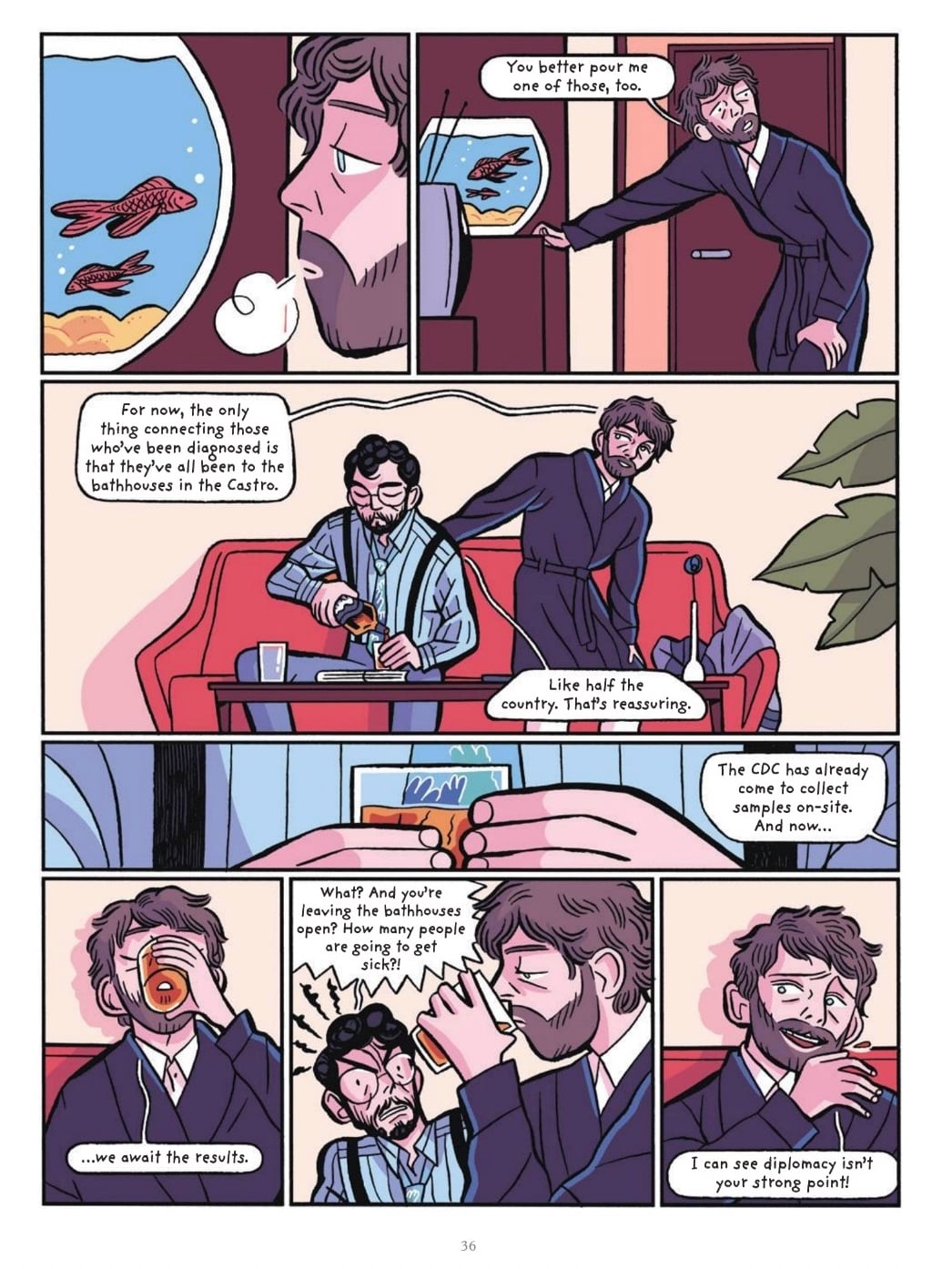
In making this story a graphic novel, Xavier and Chochois bring a dark period in health history and fascinating moral questions to a new audience. They pull off brevity of expression without reductive portrayals of the issues or people involved. This short and thought-provoking read is highly worth your while, and may cause you to see our present health moment through different eyes.
Bitter Pill: Randy Shilts and the Dawn of the HIV/AIDS Epidemic is out now from Abrams Books.
Read more great reviews from The Beat!