
“I am steeped in the Backderf.” That’s what I told a friend recently as I read through Derf Backderf’s complete catalog of graphic novels. Before this year, I had never read Backderf, but he had been on my list for a long time. I had heard him discuss the turbulent release of his book Kent State in the midst of the Covid-19 pandemic lockdown, and My Friend Dahmer is a frequent recommendation in the indie comics world.
His latest, The Dissidents, which I reviewed, out this September, seemed to me to be an opportunity to understand his work in context and read all of his books. I think he’s a very rewarding creator to explore, so I wanted to share a little about each book so you can decide your best starting place too.
More than any other cartoonist I’ve read, Backderf brings in his locality (mostly Akron and Cleveland, Ohio) as a grounding force and cultural reference point, which I really enjoy. He is drawn to real stories and journalistic accuracy. Even though he will sometimes fictionalize certain details in service of a narrative, as in Trashed and The Dissidents, his tendency is to draw mainly from his own experiences and those of others he’s interviewed or researched. Like other nonfiction cartoonists, he also aims for visual accuracy. In most of his works, he cites sources heavily, which I appreciate. Per an interview with The Comics Journal a few years ago, he feels a deep responsibility to do his source material justice.
Backderf’s sense of humor and sense for the absurd and outrageous are interwoven throughout each of his books. Despite the comic relief, his books often trend towards exploring dark subject matter, both aspects of human nature and social systems. He doesn’t shy away from illustrating the disgusting or the horrific when it serves the story. Over time, he has moved from the very personal and local towards broader societal commentary.
In terms of aesthetic, Backderf’s earlier works, including True Stories, Punk Rock & Trailer Parks, and My Friend Dahmer, have an “underground” look. Characters have large heads, faces and bodies are stylized, perspective is sometimes less literal. In later works like Kent State and The Dissidents, traces of this original style are still there but much more subtle, tipping them toward a more realistic feel.
As well as the books below, Backderf drew earlier, shorter versions of My Friend Dahmer and Trashed, also doing a stint as a political cartoonist staff member and 24(!) years of drawing The City, which comprised social and political humor strips that were printed by alternative weekly papers. The archives of The City can still be read online. Backderf studied journalism in college. He has definitely put in the time, and it shows. You are in the hands of an experienced storyteller, even from his first book.
Core Works
My Friend Dahmer (2012)
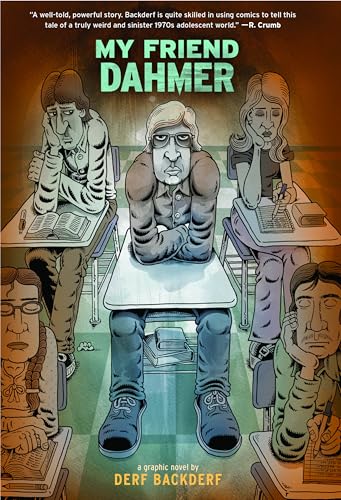
My Friend Dahmer is Backderf’s most famous work so far, and was nominated for multiple awards. It won an Angoulême Prize for best debut graphic novel and was also adapted into a well-regarded film in 2017. In an incredible true story, Backderf grew up in the same town and attended the same high school as future serial killer Jeffrey Dahmer. He and his circle were friends with Dahmer, albeit in a light way, and they held him somewhat at a distance while finding him amusing. There is some unfortunate cerebral palsy mockery that factors into Dahmer’s connection with Backderf and others, which captures a certain high school callousness.
While Backderf is quick to condemn Dahmer’s later crimes, he had no connection with him at that point. What he shows in this book are both sympathetic and unsettling high school moments featuring the troubled yet bright young man that Dahmer once was. Dahmer is socially awkward and compelled by dead things, and starts to suffer very disturbing intrusive thoughts that for a time, he tries to numb with alcohol. His parents’ divorce and absorption in their own troubles make his life even more difficult. Watching Dahmer’s descent is watching a slow-motion tragedy unfold. Although it’s hard to say what could have been prevented, it’s also hard to imagine things going any worse.
Backderf also explores the perils and social pressures of being a ‘70s high schooler in a small town. The book isn’t nonstop darkness though, as Backderf’s eye and memory for the absurd brings little moments of lightness and hope, like a time when Dahmer talked his way into a politician’s office on a field trip or when Backderf’s group snuck Dahmer into a series of yearbook photos for laughs. These are welcome breaks in a book that packs some heavy punches.
I found it admirable that, in addition to living through much of what he depicts in the book, Backderf did an extensive amount of interviews, as well as photographic and news research, to ensure that he was pulling together the most factual account possible. This book is on numerous top recommendations lists for good reason. It is haunting and unforgettable.
Trashed (2015)
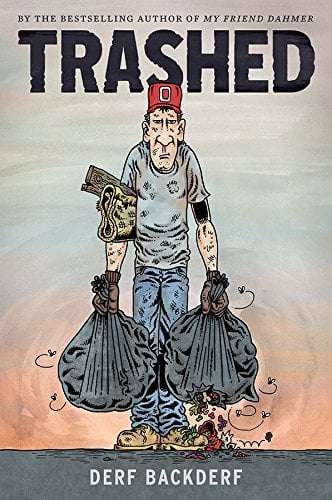 Trashed is fascinating in a different way, drawing from Backderf’s real experiences as a garbageman, and going through four seasons with a fictional character named JB and a few of his friends.
If you are disgusted by used diapers, this probably isn’t the best starter for you, though I still recommend it. Backderf is good at viscerally showing the ways the job bathes you in trash, especially new hires who aren’t good at understanding its hazards. However, veterans can’t avoid getting their hands dirty, so to speak, they just become accustomed to it.
He also explores the implications of all the trash we throw away, which is a weighty topic on its own. As an environmentally conscientious person, this one really made me think. When you look at all the detailed mountains of trash Backderf drew, this is also a very impressive book artistically. It also won an Eisner Award for best lettering.
I enjoyed that Backderf delves into social aspects of the role, like how people perceive your job, and elements of working with your team, as well as some emotional aspects, like dumping out people’s old photos left at the curb after foreclosures. There are also some pretty funny portrayals of different kinds of trash-dumping personalities that one encounters. I learned just how dangerous a job it is, and it makes me appreciate my own sanitation workers and think about where my bags of trash go each week.
Kent State (2020)
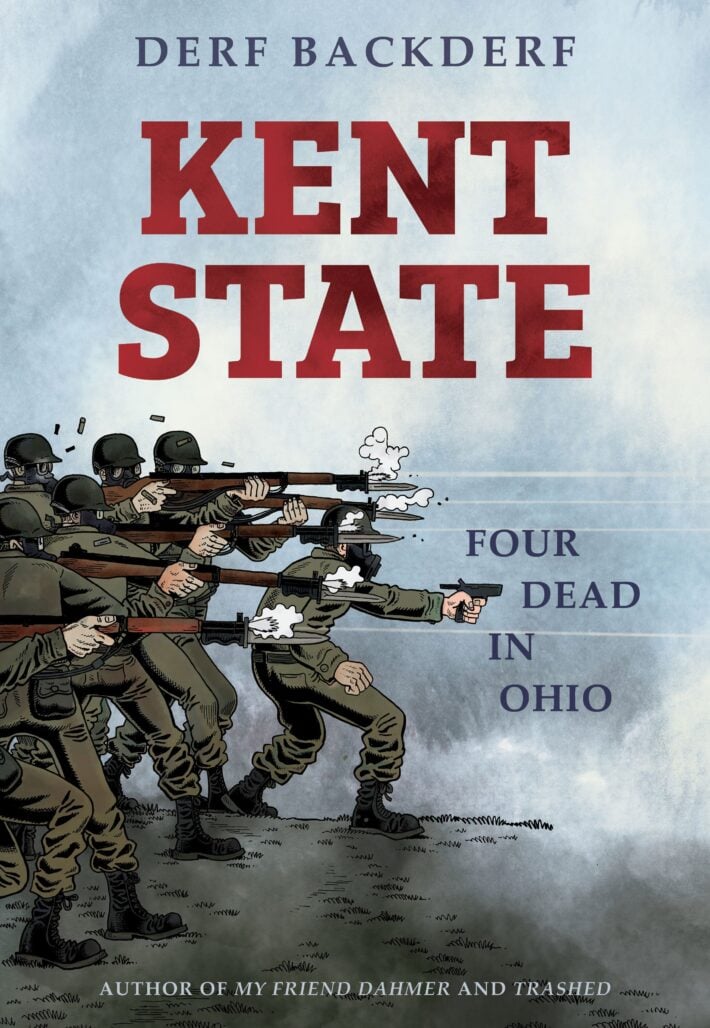 To me, this is Backderf’s most disturbing work to date, covering the real-life shooting of students (four of whom died, with many others injured) at Kent State during the days of Vietnam War protests. It’s also his first big departure from direct personal experience, relying mostly on interviews and other research. It does take place in Ohio, however. Backderf noted in the same interview referenced above that many in his circle were connected to the events in some way and he followed the coverage in local papers for many years after, so even though he didn’t personally witness the incidents, they were on his mind and in the consciousness of his region.
We get to know the students in their everyday lives, and witness the government and university situation that was building to a fever pitch around them. Kent State was almost unbearable to me to read, knowing what was coming to some extent but not exactly when or the details of it. The evolution of Backderf’s art to a more realistic style only enhances the intensity. He brings state violence down to a very human scale.
The climax is shattering and enraging. Had I not been reading it on a plane at the time, I would have started crying uncontrollably. Even thinking about it again makes me emotional. Indeed, in his intro notes, Backderf mentioned having to unwind from emotionally draining research. I can only imagine needing to live with the stories for long enough to create this.
It’s a shame that the book’s release during Covid-19 lockdown meant that Backderf’s large tour for this book was canceled. It won both an Eisner Award for best reality-based work and a Ringo Award for best non-fiction comic. Read Kent State because it matters, because it’s important to understand the irrational things people can do in a climate of fear and propaganda, because protest should remain legal and safe. Because these students were real people who did nothing wrong.
The Dissidents (out September 2026)
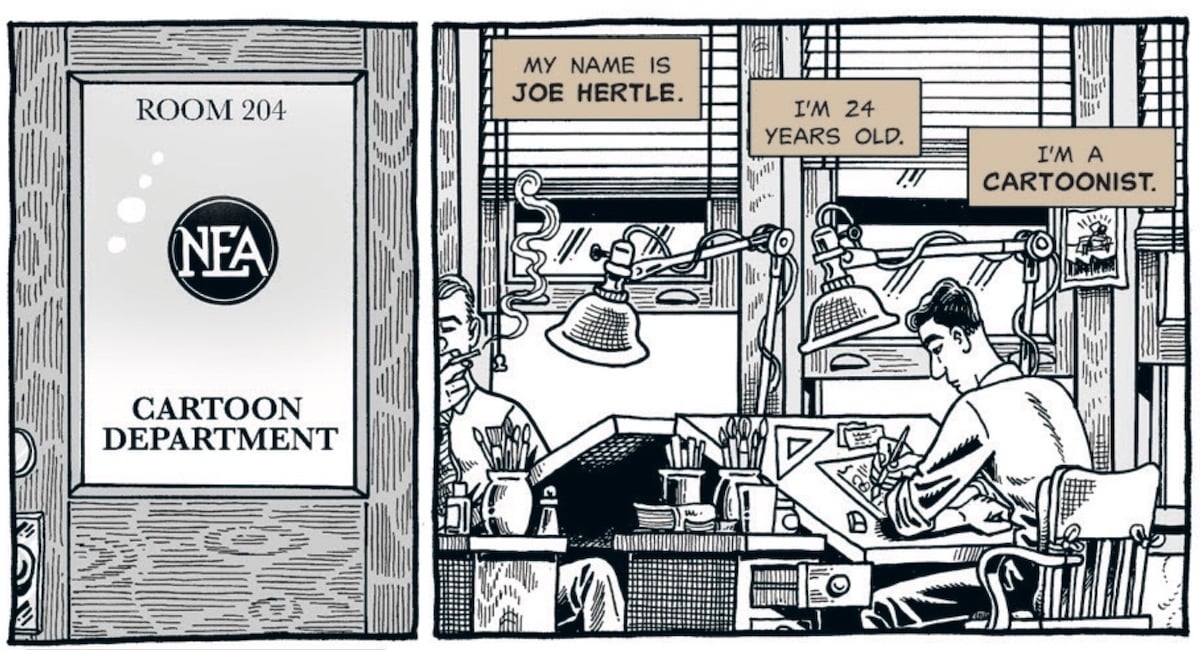
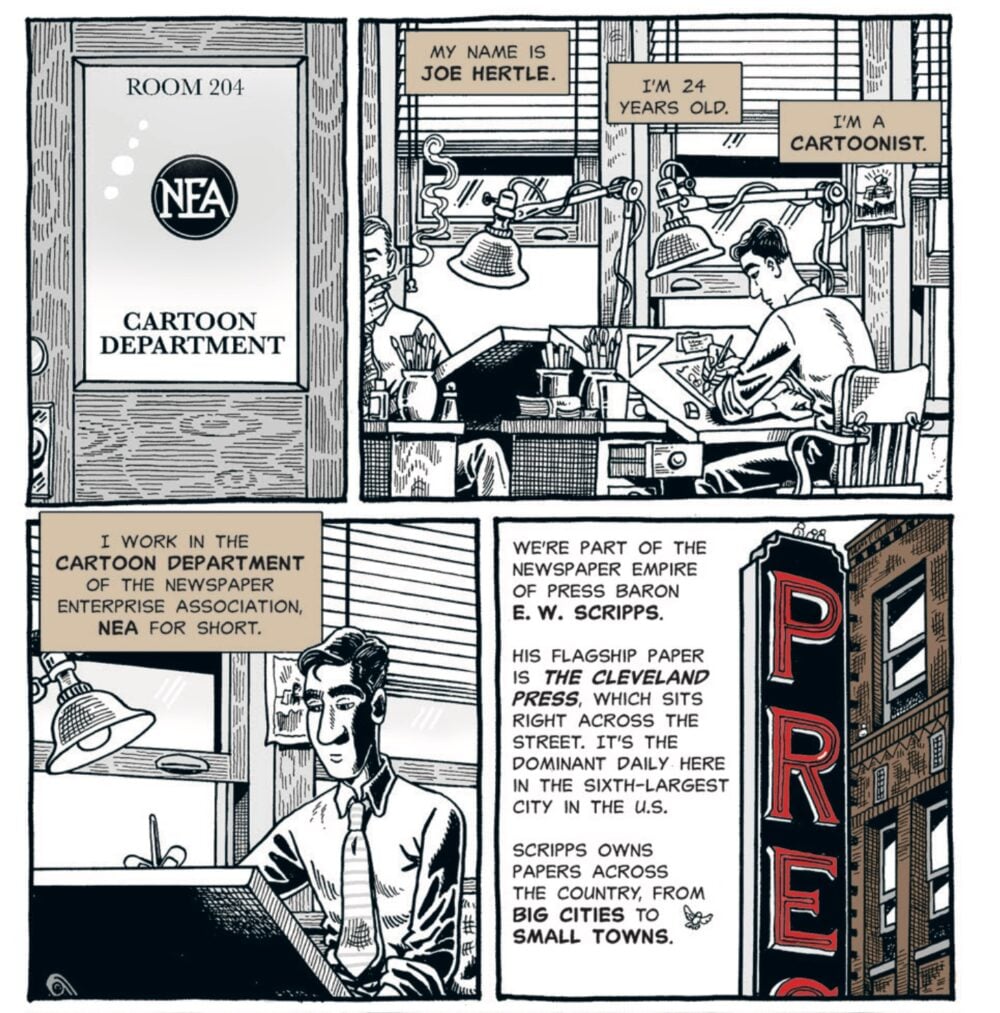
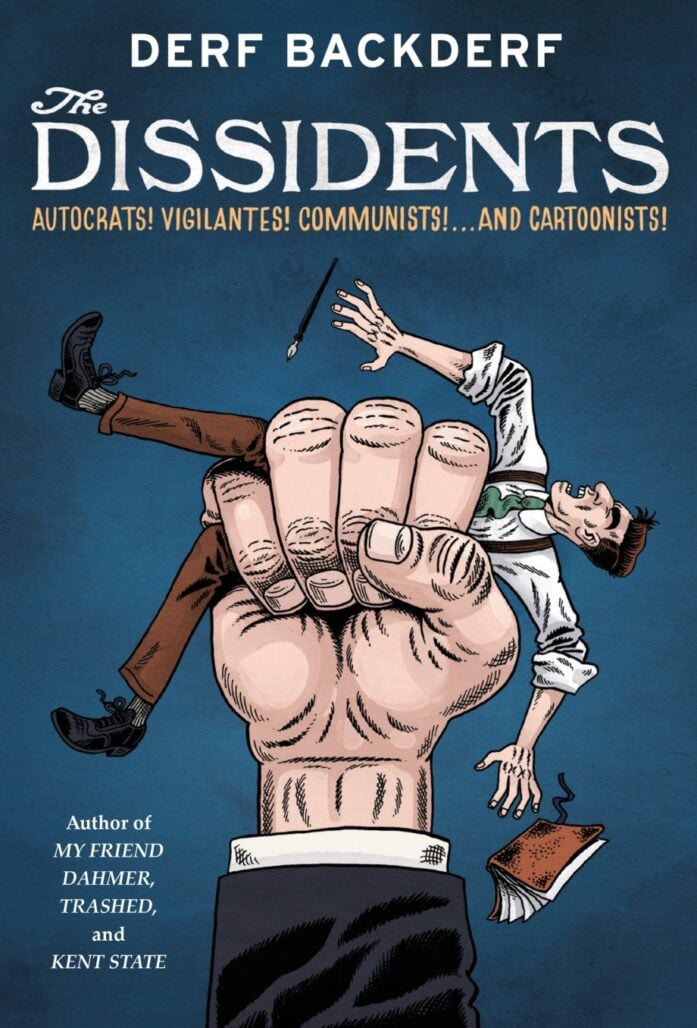 The Dissidents follows a set of real 1910s political cartoonists in the United States, drawing for a real publication called The Masses. A fictitious cartoonist, Joe Hertle, is the protagonist (in some ways a stand-in for Backderf himself, with real details from his own immigrant family and cartooning past).
Although it takes place in an earlier time, this feels like a spiritual sequel to Kent State, in its exploration of consequences to protest. It follows Backderf’s realistic artwork trend, and while it does feature Cleveland, it also goes further geographically than he has gone before in a graphic novel. In many ways it is his most ambitious work, covering a range of locations and subjects, yet the focus on The Masses keeps it grounded and unified.
The parallels to our current times are eerie, from anti-immigrant sentiment to a government keen on smothering dissent, and Backderf is clear on that, introducing the book with: “We’ve been here before…but we forgot.” Seeing the range of artistic styles from the real political cartoonists is a treat, and their vibrant working environment provides real inspiration.
Yet fundamentally The Dissidents is Backderf meeting our current moment with courage and foresight, showing us that it should be acceptable to use our own voices to fight back against systemic injustices, without having to pay a brutal cost. You can read the detailed review of The Dissidents here at The Beat.
Extra Credit
True Stories, vol. 1-4 (2015, 2016, 2018)
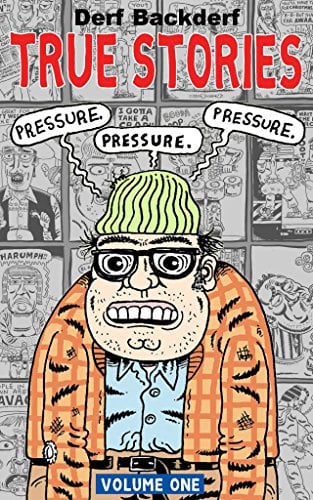 These short volumes collect one-pager stories that Backderf drew over many years before the volume publication dates, selections from his decades-long The City strip (some by chronology are his earliest published work in book form). He explains in the volume intros that they are mostly from his own personal encounters and those of his friends. Each story is typically played for comedy or a tiny insight, and I would say the typical themes are odd and remarkable people. There are other undercurrents, like ignorant or ironic things people say or do, or sometimes really baffling things.
One hilarious recurring character is a wide-eyed guy who stands by himself and repeats, inexplicably: “Pressure. Pressure. Pressure.” Many of them made me laugh out loud. It’s amazing that people actually said and did all of these things. People are strange.
He features some anti-racist commentary and sometimes subverts expectations or tropes, which I appreciated. There was a small number poking fun at higher-weight people’s nutrition habits and movement difficulties that didn’t sit quite right with me, but it’s not a trend that persists in his other work. There are also many kids pleading desperately to buy stuff. America.
Different volumes collect different eras of his work, and Backderf provides a little context to each era. Backderf’s sense for the absurd and his comic timing are very skillful, and he no doubt continued to hone his skills with this regular practice. It’s a good set to be able to pick up and read a few, laugh, and come back again and again. You’ll probably be tempted to tell someone else about your favorites.
Punk Rock & Trailer Parks (2010, currently out of print)
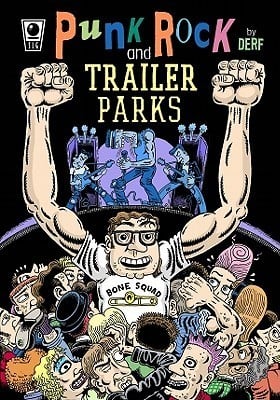 One of Backderf’s first books, Punk Rock & Trailer Parks, is a dip into one of his early passions, punk rock. If you are a fan of punk rock in the ‘70s (and Akron, Ohio was a hotbed of it), this is a must-read. I can’t say that I’m well-versed, but I enjoyed the recommendations and I could relate to getting very into a music scene.
While the main storyline is fiction, real musicians feature on its pages—including The Clash and The Ramones—as well as a real performance space. As of the time of this writing, this book is rare and expensive to find used in print, and not currently on digital, though I tried to follow some ultimately broken links. Thankfully I was able to track it down through my region-wide library network.
Since this early work, it is interesting to see how far Backderf has come in his art. It is also hard not to see parallels with other books, especially My Friend Dahmer. The main narrative features a few boys in high school, and the boy who eventually ends up being the main character, Otto, a.k.a. “The Baron,” had minor shades of Dahmer to me, mostly in his large body and past history of being bullied. But there their similarities end. He seemed remarkably well-adjusted, upbeat, a defender of justice, and endlessly charismatic, with a much more forgiving environment overall.
The high school setting has notes of that later book in its ruthlessness towards those who don’t fit in, and some vulgar and violent scenes, which gives it a grittier feel than I expected, but perhaps befits the wild days of punk. There are some bittersweet points too, but this book is far lighter than My Friend Dahmer. Besides the protagonist, music is the main character here. If you’re a Backderf completionist, do your best to get your hands on this.
Final Thoughts
Backderf seems to make it a habit to deeply observe what he sees, often right at home, and then digs beneath that to illuminate something. As his work progresses, he moves from observing offbeat strangers to reflecting on punk rock to exploring the direct insights he and others in his town had into a serial killer’s childhood. He examines the experience of collecting trash as a worker and looks into society’s collective role discarding our waste. And then he goes even deeper, into the role of government in suppressing protest and dissent and the tragic consequences.
It’s hard to predict where Derf Backderf will go next, but I’m confident he’ll do it with balance, precision, humor, and conscience. No matter which book you pick, you’re in for a provocative and enlightening ride.
Check out the links above to get started on his books, and see more news about Derf Backderf at The Beat.





I LOVE Backderf! I’d been reading “The City” for years in Funny Times when he started producing graphic novels. His cartoon about getting picked up hitchhiking by Mr. Rogers made me cry. I actually have Punk Rock and Trailer Parks. I bought it for a friend of mine too. I had no idea that it was rare! I’m a year older than Mr. Backderf, and my best friend and I discovered CBGB’s in ’77, so that one was particularly enjoyable for me.
Comments are closed.