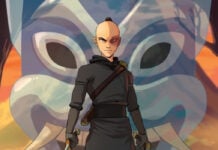
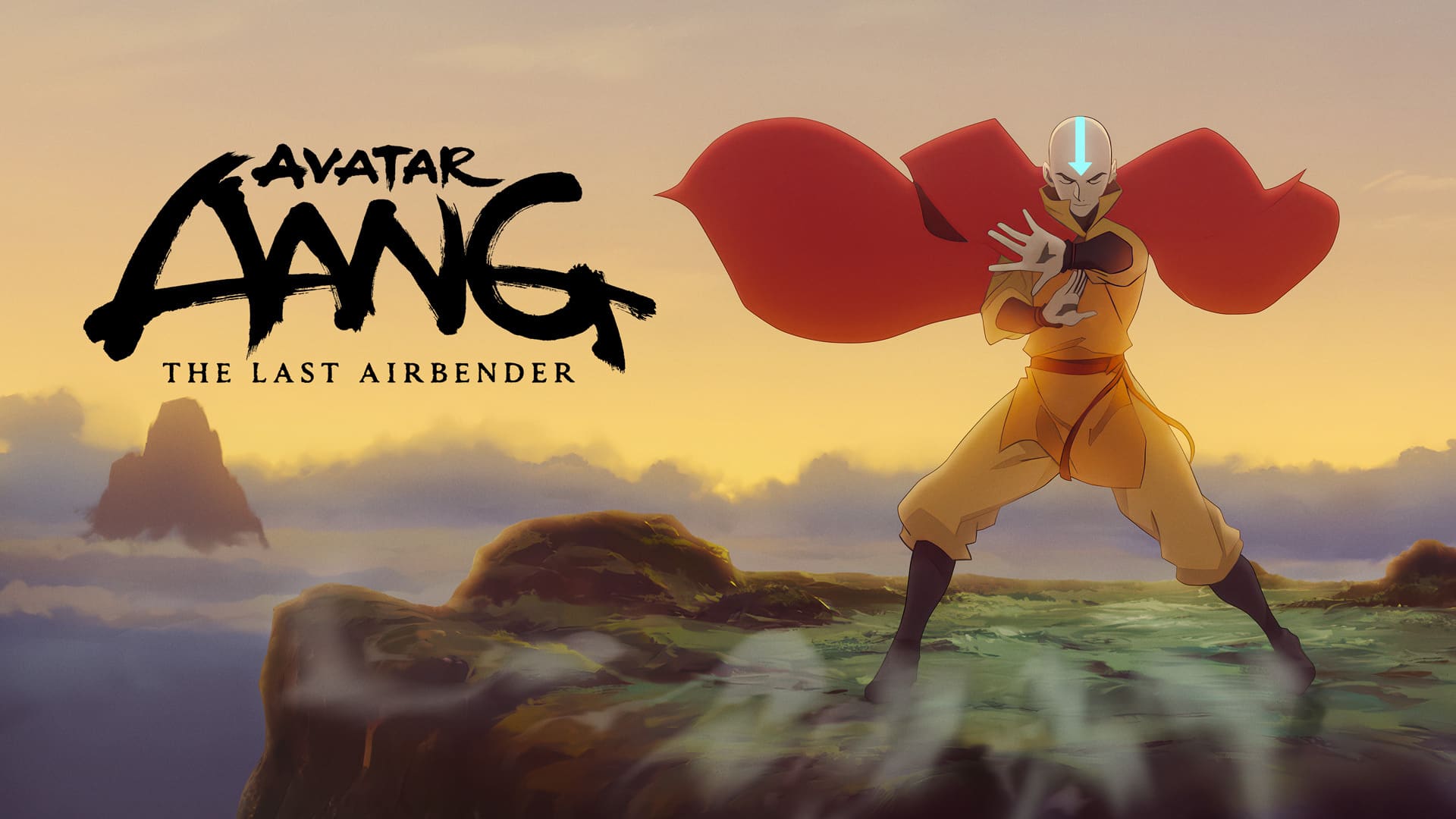

Avatar: The Last Airbender (2005-2008) was lightning in a bottle not just for children’s television, but television period. It came at the right place and the right time and was executed with a level of technical and narrative craft seldom seen. I was around Aang’s age when the show debuted and I was glued to my television during the summer of 2008 (at Katara’s age) to watch the marathons before Sozin’s Comet.
So I was excited about the announcement of Avatar Aang: The Last Airbender, a movie in which all of the original cast is grown up. I saw the studios involved and knew that I was in for a visual feast and an animation showcase, at the very least.
Avatar was already pushing the boundaries of what could be done with children’s animation in the 2000s, and every project Studio Mir and Flying Bark Productions have been a part of since has raised the bar. I’ve had my eye on the former since The Legend of Korra (2012-2014) and the latter since The Rise of TMNT‘s (2018-2020) exceptional fight scene choreography (a specialized skill I didn’t often see in western animated productions until Castlevania).
I understand that with every review Avatar Aang, there’s an expectation to discuss the leaks—but I’d rather not. I’d rather not cede ground or any more digital ink to people who use their hacking capabilities to steal art instead of—gee, I don’t know—figuring out how to get rid of the student loan debt problems we have. I didn’t watch the full leaked movie, but I couldn’t avoid leaked screenshots on socials. I could glean certain things from them, and from the responses of those who watched.
I saved my opinions until I saw the movie myself, and I’m glad I did. I have plenty of thoughts.
Avatar Aang: The Last Airbender is visually on par with films from Japanese studios like MAPPA or Bones. It’s flex on multiple artistic levels, from the compositing, to the fight choreography, to the designs. It’s clear that everyone on the team came to work and worked on something they loved.
Not only that, but Avatar Aang is the clear result of decades of encouraged cross-cultural pollination between Eastern and Western fandoms, as well as media meeting the dedication to film quality animation. It’s damn near a celebration of that fact.


Aang meant to be seen in theatres in the same way that animated features stateside and from Japan get seen. Its limited theatrical release is a crime. If you’re reading this wanting a solid recommendation for this film, you have it—albeit, if you know what kind of story you’re in for.
SPOILERS AHEAD!
Avatar Aang takes place 10-12 years after the original show. Aang (Eric Nam) and his found family are off doing their own things—Sokka (Román Zaragoza) is an inventor; Toph (Dionne Quan) is a metalbending teacher; Katara (Jessica Matten) is city councilwoman; and Zuko (Steven Yuen) is running the Fire Nation—when Aang gets attacked by an extremist group called The Denied while returning an Air Nation relic to one of the temples. The relic the group is after is a map they can use to find someone named Sonam.
After a bit of investigation and consulting his past lives, Aang finds out a few things. Sonam was an Avatar, but he’s missing from Aang’s line of past lives. He can potentially find her (or something of her) in the mountains.
When Aang travels to the location, he finds an ancient Airbender named Tagah (Dave Bautista) trapped in ice, just like Aang was all those years ago.
Their bond is immediate and bittersweet. The desperation Aang has to preserve the culture stolen from him through genocide is palpable. When Tagah tells him about Avatar Sonam’s staff, which could could grant people Airbending, Aang jumps at the chance to find it—no matter the cost.
One of the things that I appreciate in the film is how it explores the friction among the cast regarding Aang’s decision to go on this perilous journey to find the staff, even if it’s a pretty standard McGuffin quest.
Aang’s relationship (marriage?) with Katara doesn’t put her in the supportive wife role that many viewers seem to have boxed her into after Korra. Their partnership is genuine, the kind that can only be formed between a deeply traumatized, hopeful pragmatist and a deeply traumatized Pollyanna trying to fulfill their personal and societal dreams together. As the journey becomes more dangerous, his relationship with the rest of his found family mimics that of siblings when they watch someone they love veer off a solid path.
The rest of the narrative in Avatar Aang feels similar to anime features of my youth, like Bleach The Movie: The Diamond Dust Rebellion (2007) and Tales of Vesperia: The First Strike (2009). It adds a little bit of extra lore to fill in gaps in the overall world-building (like why The Legend of Korra has sky bisons) and a one-time, one-note villain, allowing animators to flex and the writers to give fanservice to long-time viewers of the show. It’s not supposed to be complex, and the movie is much better for it. After all, it’s been 20 years since we’ve seen these characters.
However, there are issues. Avatar Aang suffers from an issue I see with many animated features for younger audiences: It’s too short. Eighty-two minutes for a film for any age bracket is too short. The Denied’s intentions with the map should have been explored more and Suki should have been in the movie. I think adding 15-20 minutes to the runtime would have fixed a number of these issues.
As always, in a review, if I come away with the conclusion that the only problem is that there should be more of something, that’s a good sign.
Avatar Aang marks the start of new era of the franchise, and I’m excited to see what the team dreams up next.
Avatar Aang: The Last Airbender is streaming now on Paramount +.