

Welcome back to The Beat‘s breakdown of season three of The Lord of the Rings: The Rings of Power, Prime Video’s prequel to J.R.R. Tolkien‘s novel, depicting the rise of the Dark Lord Sauron thousands of years before the events of the book and films. The first four (of eight) episodes are available now, so join us for a mix of recap and review of each chapter, sharing our thoughts as a Middle-earth devotee on their merits, flaws, and how they engage with Tolkien’s themes and ideas; in other words, spoilers.
“The Gift of Men” (written by Justin Doble, directed by Charlotte Brändström):
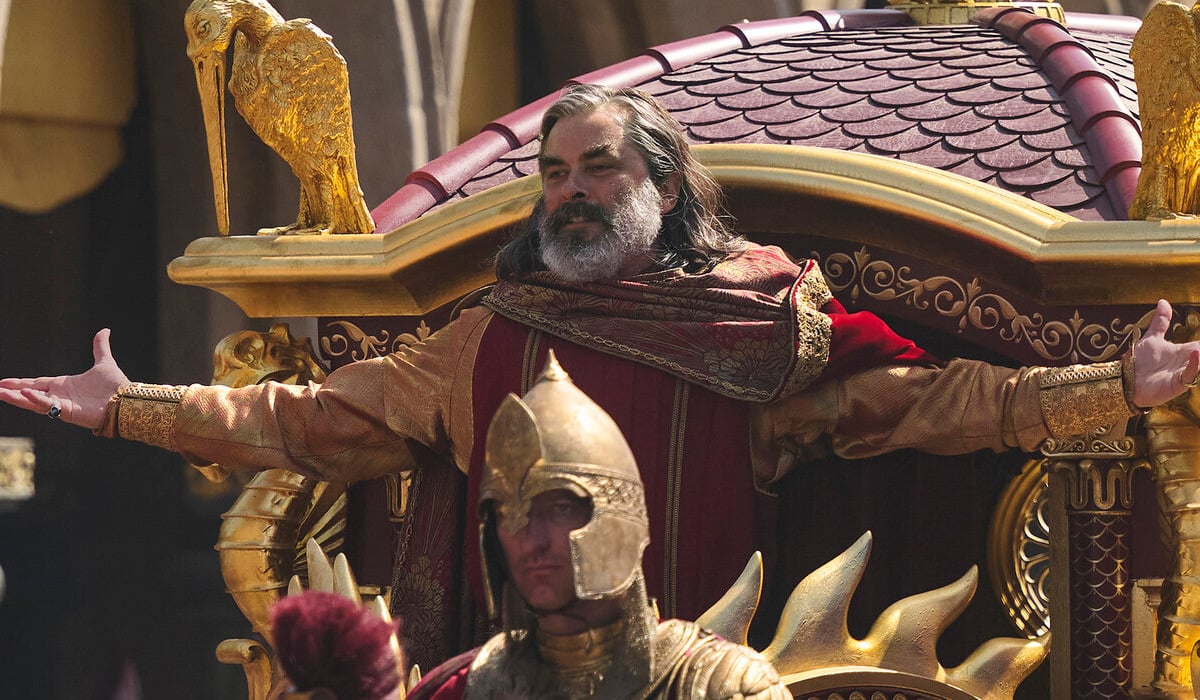
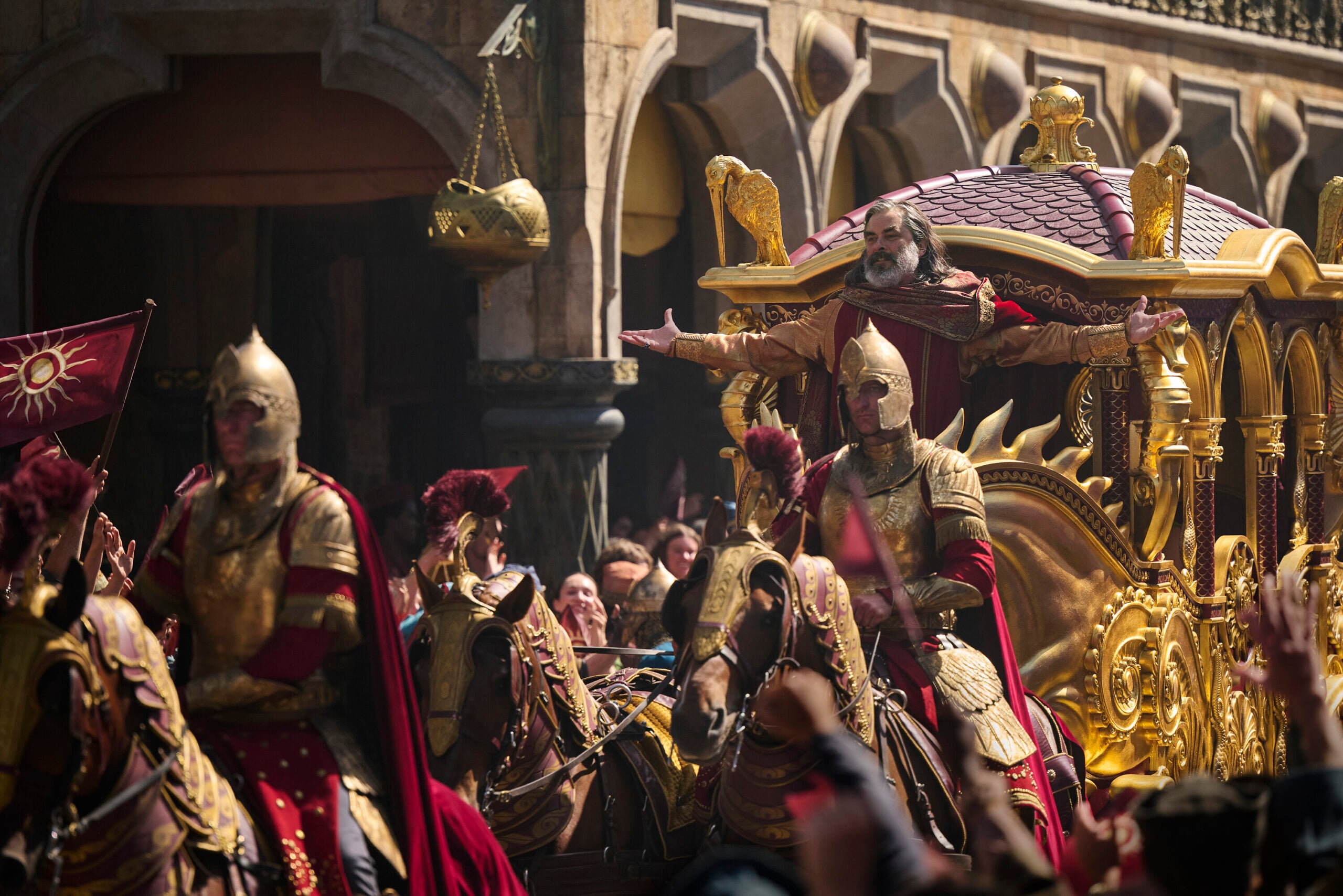
The episode switches the focus to Númenor, unlike the first two seasons, where the island kingdom’s appearance was withheld until the third episodes. The caption now describes it as the capital of an empire, and King Pharazôn (Trystan Gravelle)’s procession certainly feels imperialistic, with everyone waving their little flags. Isildur (Maxim Baldry), who’s grown a beard, makes an attempt on his life, but accidentally kills a courtesan instead. Firstly, Isildur playing Robin Hood is very in-line with the adventures The Silmarillion describes him as having before becoming a king.
Secondly, it is surprising to see courtesans in Middle-earth, but it reflects the more mature tone of the season, and the decadent nature of the King’s Men. It is cliched to see someone like that being killed, but at the very least, the queen-in-exile Míriel (Cynthia Addai-Robinson, who’s escaped captivity in the years since season two) soon reminds Isildur when he’s being dismissive about it that she was still a human being, even if she was one of “them.” Galadriel herself would agree you should never be apathetic about violence, just as you should never revel in it.
The Númenor story centers on Isildur’s sister Eärien (Ema Horvath), who is the Faithful’s spy in Pharazôn’s court, forced to maintain the facade by interrogating prisoners like Isildur’s accomplice, or have her own, old handmaiden sent to the gallows. If being good is about deeds, and not intrinsic, then where does Eärien fall on that spectrum, engaging in evil for the greater good? Her brother tries to reassure her, but it’s still a bleak and morally murky situation, that compounds the guilt she has for helping Pharazôn rise to power in season two.
The story also starts to establish the notion of death as a gift for Men, whereas immortality is a curse for Elves, something that’ll become very important to Númenor’s trajectory in future. The show has thus far only emphasized xenophobia towards Elves, and dismissal of “lowborn” Men as the cause of Númenor’s eventual rebirth as Gondor, so it’s about time. Pharazôn is not getting younger, and his decision to name Kemen the heir apparent feels desperate, to say the least.
We’ll circle back to Númenor, but let’s talk about the Lord of the Rings himself for now. Here, after noticing the mark in Theo’s wrist, Sauron demands to know who his father was. As Bronwyn never told her son who he was, Sauron resorts (in a great callback to his title in The Hobbit) to necromancy, and tells Theo his father was Fäldred, a “steward of Mordor” (presumably figuratively, rather than literally), who Bronwyn murdered after discovering his identity.
Theo denies it, knowing Sauron is the Great Deceiver, but the Dark Lord continues to appeal to him, reminding him he has spent his life oppressed by Elves, Orcs, and Númenóreans, and that a Ring would supposedly grant him the freedom to carve his own destiny. Most arrestingly, he tells Theo he could become a sorcerer, strongly implying we’ve been watching the origin of the Witch-king of Angmar, the greatest of the Nine, all along.
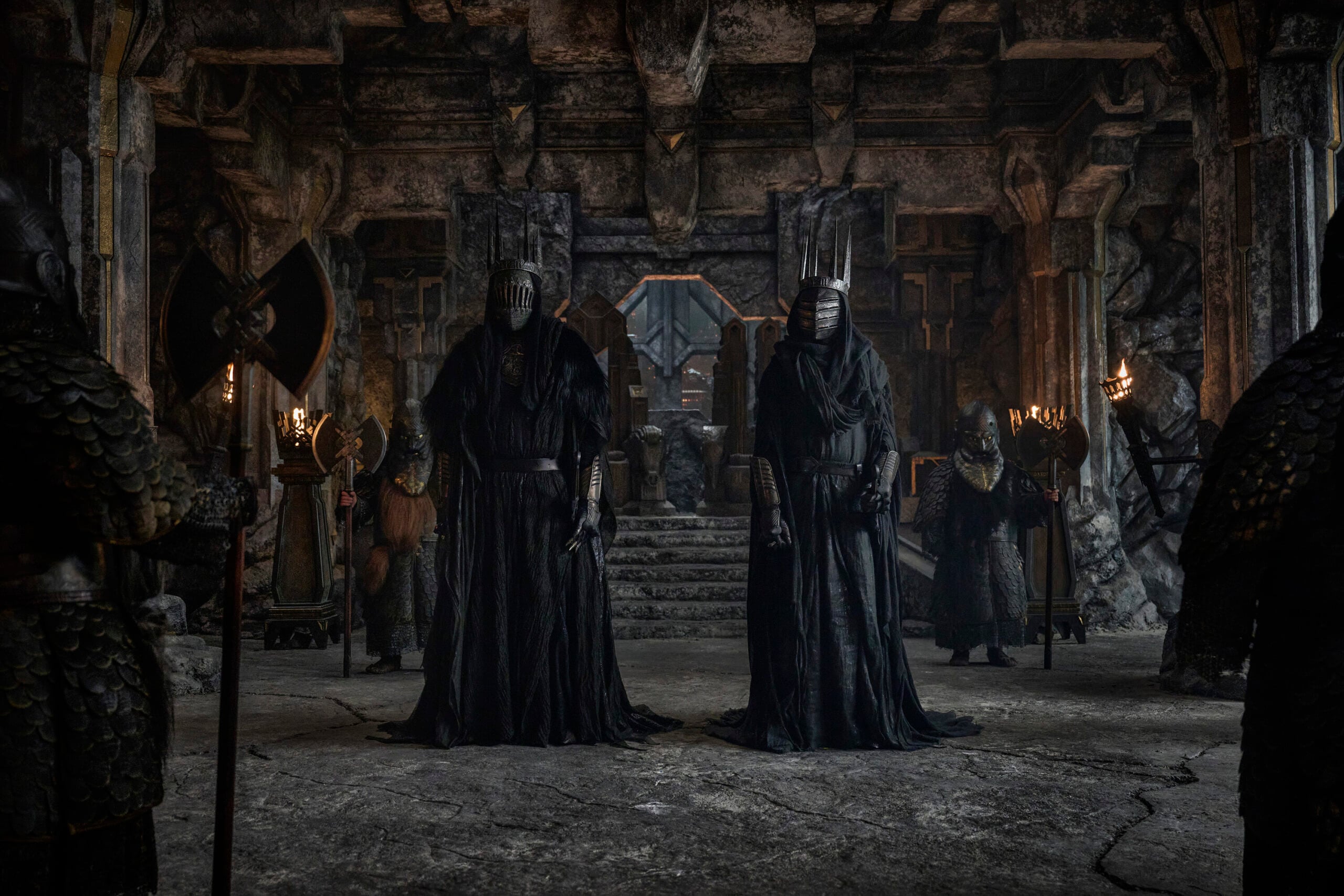
In Khazad-dûm, Durin hands over Marnûkh to Elrond, prompting a visit from the Nazgnagôl of Lossoth (Paul Hickey) and Harad (Cyril Nri), who want the Dwarven Rings returned. Thráin joins his brother in denying their demands, but is revealed to us to be in league with them, after leaving the mountains to chastise them for following him underground. He informs them of Marnûkh’s location, indicating the Orc may still be following Sauron’s plan.
In Rivendell, Marnûkh informs Galadriel, Elrond, and Arondir of Sauron’s plans, explaining he’s afraid of what it’ll mean for Orc independence, and reminding her of the dream of his progenitor Adar. He claims one last remaining Elf-smith, Maitalle, is being kept prisoner in Gundabad, without Sauron’s knowledge, spurring Galadriel and Arondir to rescue her with the Orc in tow, while Elrond resolves to persuade Gil-galad to petition the Númenóreans for help. It’s all about plotting here, although we are given a sweet moment where Arondir realizes Galadriel considers him a friend, not merely a subordinate, and at least Elrond isn’t spending another season arguing with her.
Back in Númenor, Eärien’s true allegiance is exposed while helping her brother gain access to the Palantír, to warn their father Elendil (Lloyd Owen) that the Faithful’s stronghold in western Númenor is compromised. Unable to continue to be evil for some long-term gain, she stuns Pharazôn, Belzagar, and Kemen, and everyone (me included) by leaping off a balcony to her death. Given she wasn’t created by Tolkien, it was likely Eärien would have a dark fate, like turning out to be a double agent, or becoming one of the Nine, but that was totally unexpected and tragic.
The way the last time Isildur sees his sister is so bleak, with her graphically lying in a pool of her own blood, while having to deny knowing her when asked by a bystander. (Strong shades of Peter denying Christ there.) This episode begins with Isildur accidentally killing a woman, and ends with him failing to save his sister. I’m glad I took a break after this episode, because I really needed to sit on it, and unpack why it unsettled me more than any other death on the show: it’s probably because it comes across less like a noble sacrifice, and more like an actual suicide.
(If you are struggling, and need help, please remember it is always available 24/7 via the 988 Hotline, Samaritans, and other local hotlines. You are not alone.)
Eärien’s death should remind the King’s Men of how shallow, and cruel their approach to life is, but it will probably stoke their fear of their mortality. But regardless of their failures, or her family and allies’ failures, she demonstrated death is not as scary as being a bad person in the end (as culpable as she was for many deaths). Hopefully, it’s not a topic that will hopefully be forgotten in the rush to bingewatch the new season.
Check back soon for our thoughts on subsequent episodes, and as always, namárië.