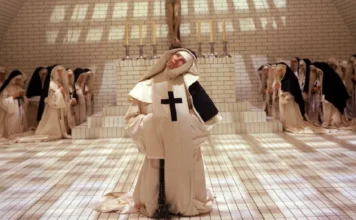

Some movies become markers of something important, watershed moments, that can only be appreciated years after they first released. Fernando Méndez’s 1957 El Vampiro is one such film, a classic vampire story that leaves Transylvania for the Mexican countryside and all its idiosyncrasies. It marked the beginning of Mexico’s horror boom in the 1960s, a decade that gave fans future masterpieces of the genre such as El Esqueleto de la Señora Morales, El Libro de Piedra, and El Espejo de la Bruja.
As far as choosing a movie to kick off the Halloween season with, it doesn’t get any better than El Vampiro.
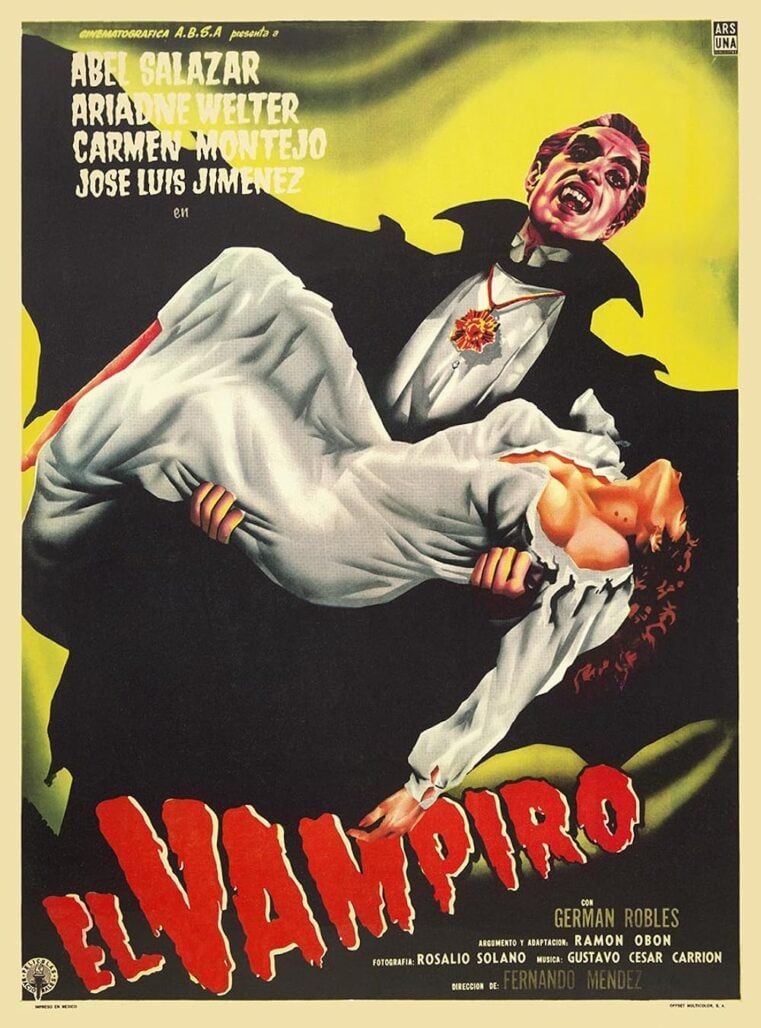
The movie follows Marta (Ariadna Welter), a woman that returns to her family hacienda after she receives word that one of her aunts is seriously ill. She meets a stranger at the Sierra Negra train station that tags along, a man called Enrique (Abel Salazar, also the film’s producer). Once at the Los Sicamoros hacienda, Marta learns of her aunt’s death. She’s also surprised with the striking physical appearance of her second aunt (played by Carmen Montejo), who is supposed to be much older than she looks.
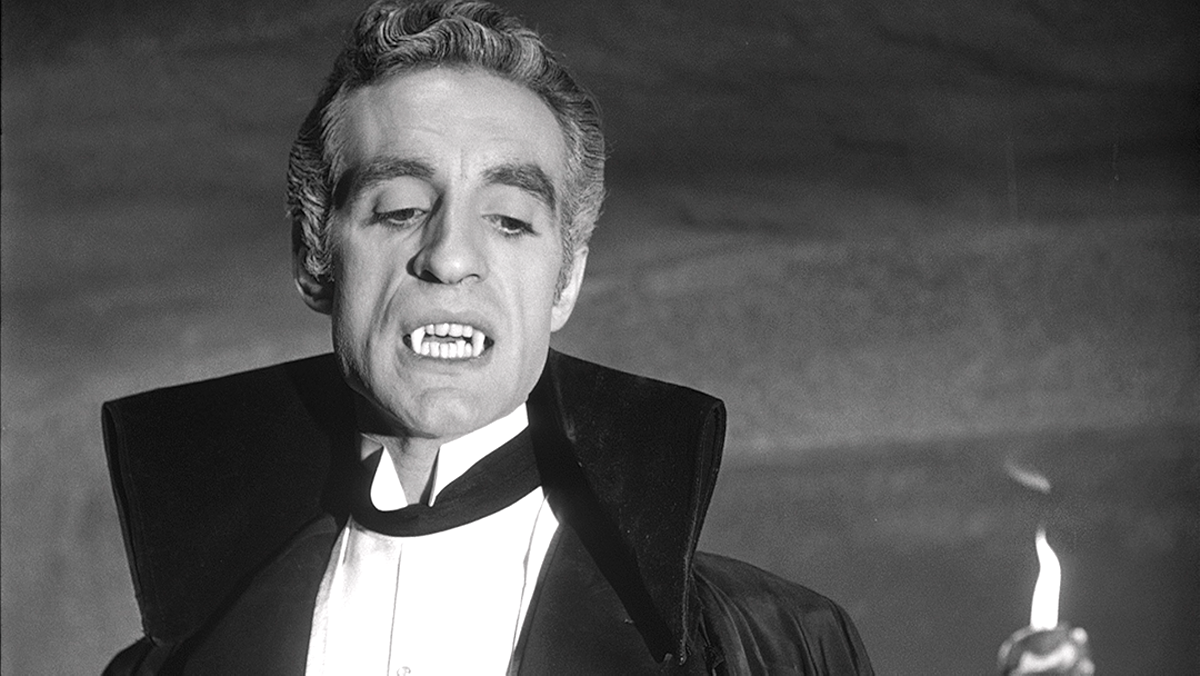
After learning the sick aunt has passed, Marta is quickly made aware of a gentleman that wants to purchase the hacienda. Enter Count Duval (Germán Robles), the titular vampire. The movie itself opens with him in a courtyard, waiting for his next victim to turn in for the night and leave herself open for a bit of blood loss.
Despite sporting the classic tuxedo and cape combo, Count Duval stands out for not being a copy of Bela Lugosi’s iconic version of the vampire in 1931’s Dracula. The same applies to the story. Whereas Universal’s take on the monster sticks closer to the literary source material, albeit loosely, Mexico’s opts for an original story that only evokes Bram Stoker’s creation. This gives Count Duval an identity of its own, one that responds to the cultural landscape he’s inserted himself into (it’s revealed he’s originally from Hungary).
As such, the hacienda becomes a potent symbol of power that calls to Mexico’s colonial history. It’s not a stand-in for Dracula’s castle or Carfax Abbey (the place he buys in London). Instead, it’s the object of desire.
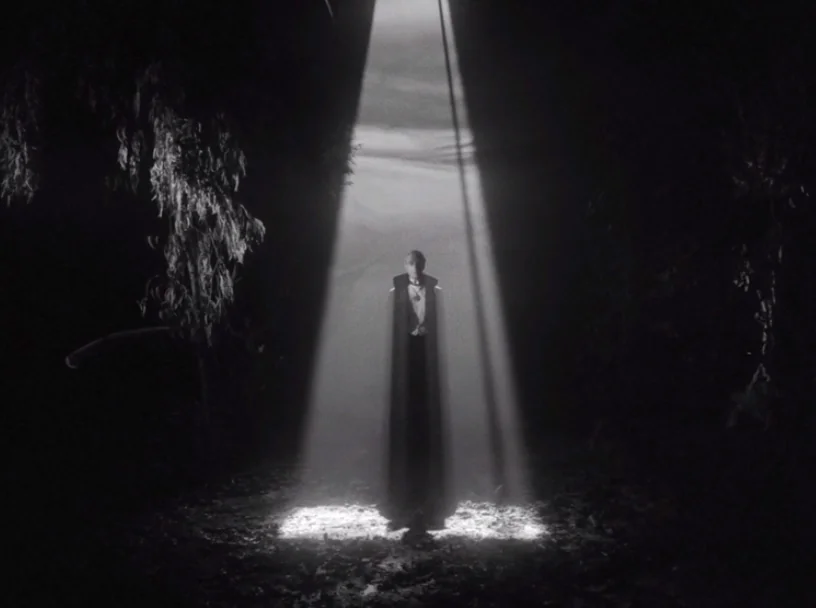
Duval shows more interest in being a landowner than in wooing the leading lady. If anything, she’s a means to end, a part of the overall design. No crossing oceans of time to find love here. Having a physical foothold on an entire area seems to be the path towards eternal bliss for this bloodsucker.
The score by Gustavo César Carrión is a highlight and it pairs well with El Vampiro’s themes. It’s thunderous and dark, building on a sense of doom that mounts. It imbues the movie with a sense of consequence that heightens the vampire’s presence. It sounds like something the Grim Reaper would enjoy, a bleak ode to death.
El Vampiro represents a different form of darkness, one that belongs to its own tradition of genre filmmaking. As such, it’ll make you want to go deeper into Mexico’s legendary horror output to further appreciate the specificities of its brand of fear. It might even turn your Halloween movie marathon into an education in Mexican horror cinema. If it does, you’ll be glad it did.