
Death is an inevitability that scientists, both mad and sane, have been trying to outsmart for centuries. It’s perhaps our most delusional existential pursuit. While the goal is immortality, we’ve shown a willingness to at least settle for an extended lifespan (with 100 being the key number we want to reach and then surpass). We simply want to exist for longer.
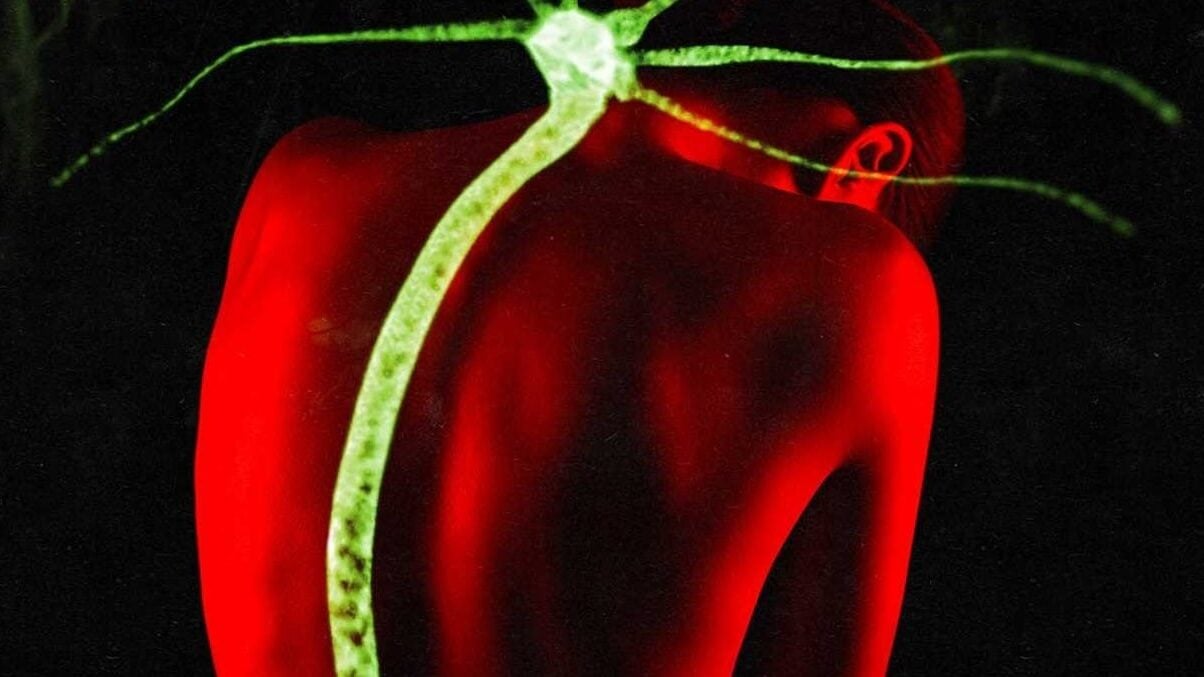
Nick Cutter’s latest novel, The Dorians, contemplates this particular endeavor with an eye to elicit the kind of horror that unethical science is so good at producing. It features the author’s signature body horror stylings along with a nasty parasitic creature that offers youth at a cost.
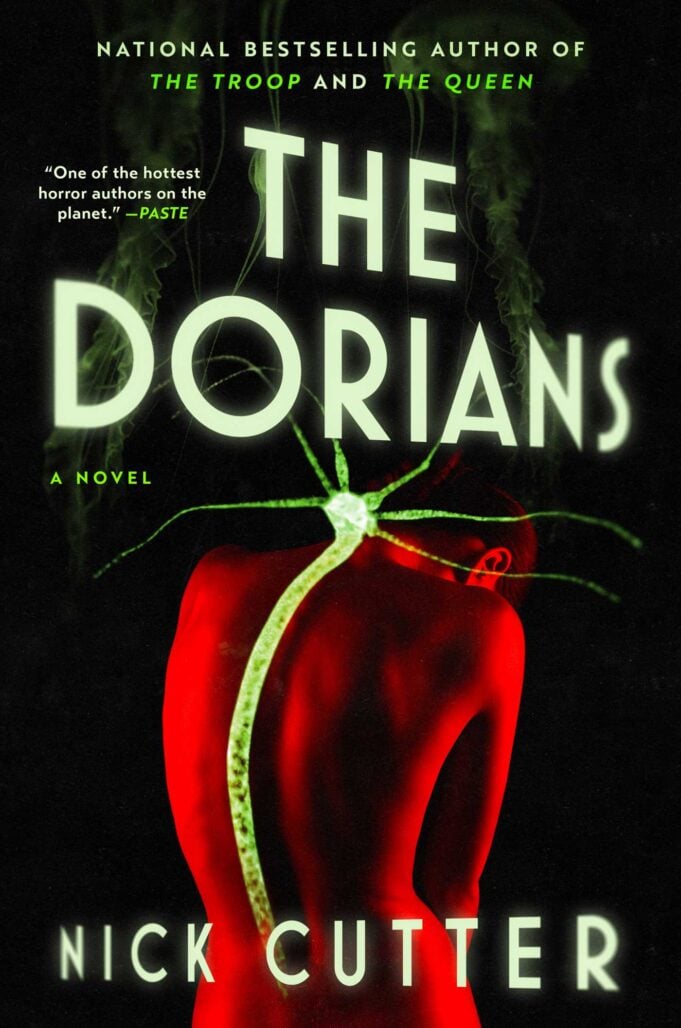
The story centers on five terminally ill elderly people that get a miraculous offer to stop death in its tracks and become younger in the process. These volunteers were already on the cusp of expiration, so they accept the offer thinking they have nothing to lose.
They meet a teenage prodigy in the form of Dr. Astrid Marsh, a high energy genius that carries herself like a tiny god. She presents the group with a wiry creature that, once placed inside their bodies, will reverse illnesses and restore youth. As to be expected, things go wrong soon after the procedure is done. Parasitic creatures, turns out, have certain needs that must be met before they go about making anyone younger.
The Dorians is certainly a story about the terrors that unsupervised science can unleash. But it is also a story about what it means to view youth from an elderly standpoint. Cutter asks some truly thought-provoking questions here, especially as it pertains to what it means to consider a biological rewind at an age in which memory and experience have already shaped our worldviews.
Does the mind remain old if the body renews itself? Can youth be completely retrievable, or are certain things destined to decay despite scientific progress? Cutter finds a bit of Frankenstein in the process of formulating answers to these questions, but some of the things he unearths while exploring the relationship between life, death, and age in The Dorians are terrifyingly unique. And when it’s all wrapped up in so much exquisite body horror, well, it turns into something special.
I sat down with Cutter to discuss influences, old men screaming at clouds, and how the glories of youth can entice the elderly to indulge in risky science. The Dorians is out now on bookstores everywhere.
RICARDO SERRANO: Stories that turn back the clock on its characters offer the opportunity to comment on the current state of things. This is where the famous “old man screaming at clouds” comes in. Did you relish the opportunity to do a bit of this here?
NICK CUTTER: It’s funny because the last book that we spoke about (The Queen) was centered on teenagers. That was a lot harder for me to write about than going up 20 or 25 years from my current age. I actually enjoy writing from the perspective of elderly people. As a kid, I found myself gravitating towards them, talking with them and spending time with them. You pick up some of their dialect and the way that they speak.
You also pick up a lot in terms of physical health and lifespan. You start contemplating the fact you’re not going to live forever. And yet, medical interventions are now more and more engineered to try and get us to live past what would be a normal human lifespan. We’re looking to go past a hundred, going towards 150.
Since the moment we understood that we were eventually going to die, people have had a desire to try and live longer, if not forever. We want to sort of stave off death. It’s only now that we’re starting to see bigger advances in the realm of technology and medical science. You have the CEO of Google, for instance, investing heavily in this. To an extent, we want to go beyond death, to live on in some shape or form.
SERRANO: There’s something to be said about the ethics of science in that. Obviously, that takes us into Frankenstein territory. Were you trying to channel a bit of that here?
CUTTER: Absolutely. It still staggers me that Shelley wrote this at 19 years of age. But yeah, Frankenstein’s the granddaddy of them all, and it’s certainly in The Dorians. You know, what we generally like about the character of Victor Frankenstein in that story is that he suffered profound misfortune in the form of the deaths of the people that he loved. It’s easy to see how you become a mad scientist to avoid going through loss again. I think the best of these types of characters are weirdly understandable at some level.
What a mad scientist does can come out of hubris and a sense of their own excellence, but it starts from a place of wanting to control life and to dictate its end phase to avoid pain.
Jurassic Park, which is another big influence, considers this level of control as well. On paper, going to an island to see long-extinct creatures is not necessarily a bad idea. It can even be utopic. But Michael Crichton knows that science unshackled from morality can go sideways fast. I think the same. I’m not religious, but you can say that an ungodly use of science will eventually lead to chaos and destruction.
SERRANO: As is the case with all of your books, your research is felt throughout the narrative. It makes all the body horror uncomfortably believable. How do you make that research come through without it taking over the fiction of it all?
CUTTER: It’s about the balance. It’s about giving your own fascinations space and then relying on your instincts so as to not overindulge. I want to make sure the story is believable at some level, and that requires a little bit of groundwork. It requires a little bit of scientific grounding. Crichton did this really well. He would take really complex things and somehow make them relatable and accessible. He was great at weaving them into the fabric of the narrative without compromising momentum and other things.
You need to be ahead of 99% of your assumed readership. You don’t have to be better than anyone who works with jellyfish, for instance, if you’re writing about jellyfish. They’d be like, “oh, Craig, that’s absurd.” But you know you’re generally not going to have to worry about too many jellyfish experts reading your book. You’re really writing to the other 99.9% who are not going to be jellyfish scholars. Then it can all come off as being well researched.
For The Dorians, I expanded the research from books to conversations with actual researchers. It was mostly out of fascination and wanting to have some kind of grounding on the story before I even started writing it. I found that fun.
SERRANO: Even when they’re younger, your characters remain “old souls” in The Dorians. There’s been a reluctance in the genre to go this route age-wise. What did you find in these older characters that appealed to you?
CUTTER: I liked the idea that even though their bodies were getting younger, they were not reverting in certain psychological ways. Their brains ultimately retained all the memories and experiences they had already acquired. Their wisdom remained.
When they become younger, they become more impulsive. More dangerously impulsive, even. A kind of selfishness surfaces there that’s interesting. Did they become that, or was it there already, innate? Did the selfishness manifest because of the scenario?
I have to admit that there’s a bit of wish fulfillment here. I’m 50, and even though I can still go and do the things that I’ve always done, I’m not moving out there with any kind of swiftness. Everything is kind of slowing down. I’ll get out of bed in the morning and let out a sigh. So I ask myself why I’m even doing that now. I never used to groan getting out of bed before.
I asked myself if it would be nice to go back to a time when you were thoughtless about your physical state and your overall health. When you didn’t have to take an arthritis pill before you went to the gym or even worry about what you eat all the time because your metabolism is just ticking along. It’s the glory of youth. You really don’t know how good you had it in a bodily sense till age catches up.