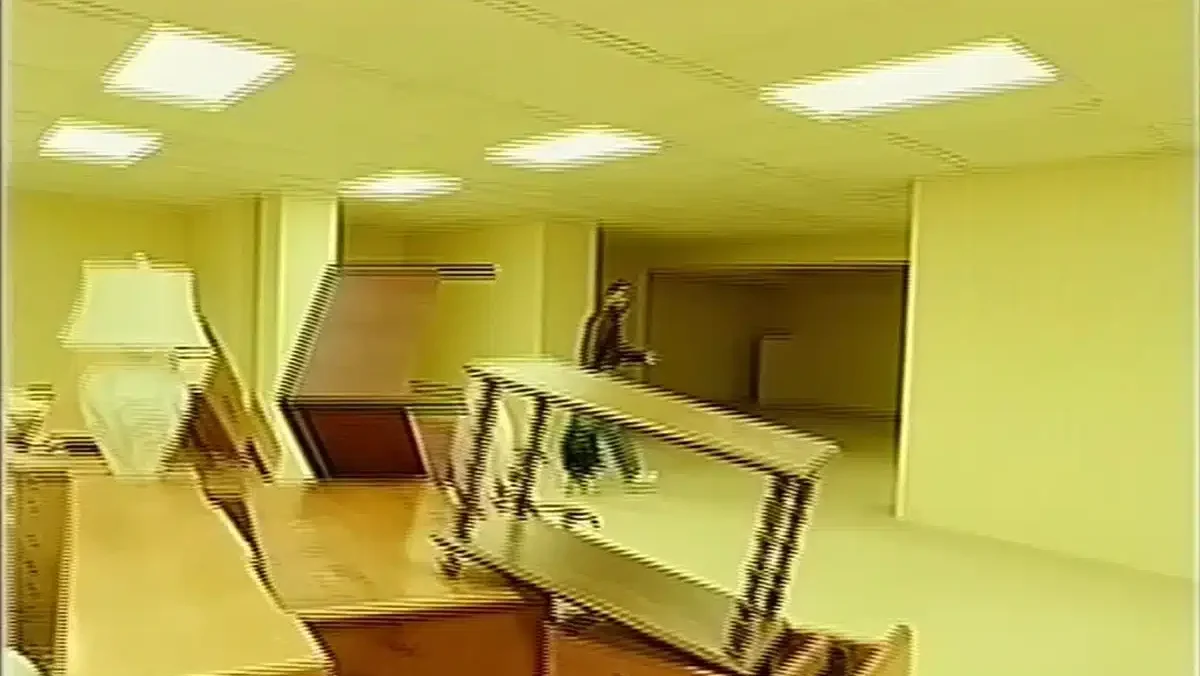

Kane Parsons started Backrooms as a series of shorts, varying in length, that he posted on YouTube. They focused on invisible doorways that led to a seemingly infinite liminal space made up of basic corridors and warped furniture that got increasingly weirder the deeper it went. It unfolded in the style of found footage, with some entries focusing on hazmat suit agents exploring the area. A dark presence roamed the corridors, but its existence offered no answers. Just more questions.
What made these videos so fascinating was their hyperfocus on the titular backrooms. The experience felt like going on an expedition into a new version of Hell. Character work was minimal, but it worked because Parsons decided to fixate on the reality-shattering dimensions of the rooms and what they could be. It can even be argued that it entertained existentialism, to an extent.
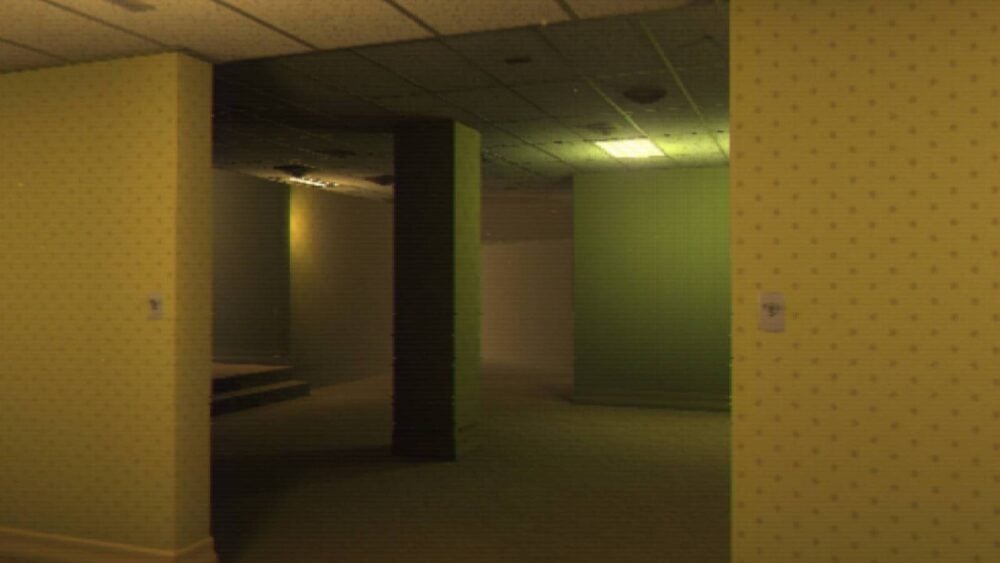
Parsons got the chance to turn all this into a near two-hour feature that added fleshed out characters to the mix for a more conventional storytelling experience. The results are uneven. While the rooms remain the star of the show, the script leaves the new additions severely undercooked. Backrooms essentially makes the case that YouTube might ultimately be the better home for it (which won’t be happening any time soon due to its record-breaking opening weekend numbers).
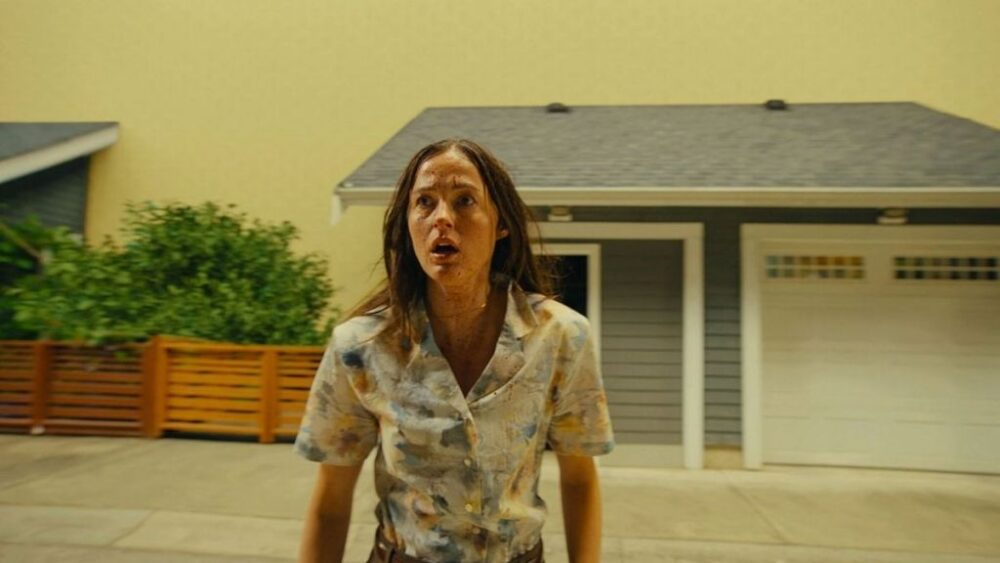
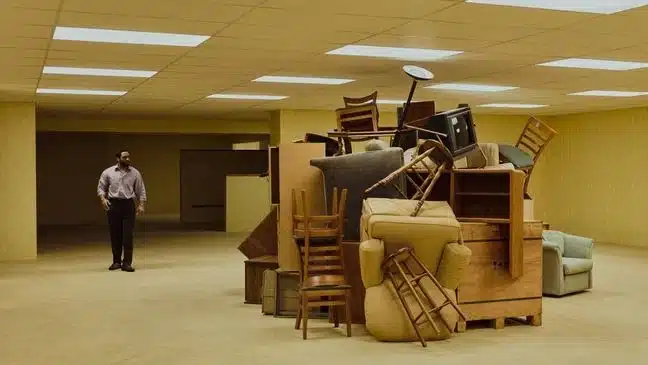
The movie centers on Clark (Chiwetel Ejiofor), a furniture store owner that discovers a doorway to a series of endless corridors littered with furniture and appliances. A sense of wrongness pervades. Things look and feel off, with sofas and chairs impossibly stacked on top each other and some objects fused to the walls and floors. Small doors lead to more rooms, and eventually the lighting starts changing. Clark tells his therapist, Mary (Renate Reinsve), all about it but is only met with incredulity.
Clark’s been dealing with anger issues related to his separation from his wife and is contemplating what being alone means for him. The backrooms discovery gives him new purpose. Mary, on the other hand, is dealing with the memories of a traumatic childhood. She stumbles upon the doorway while trying to help Clark.
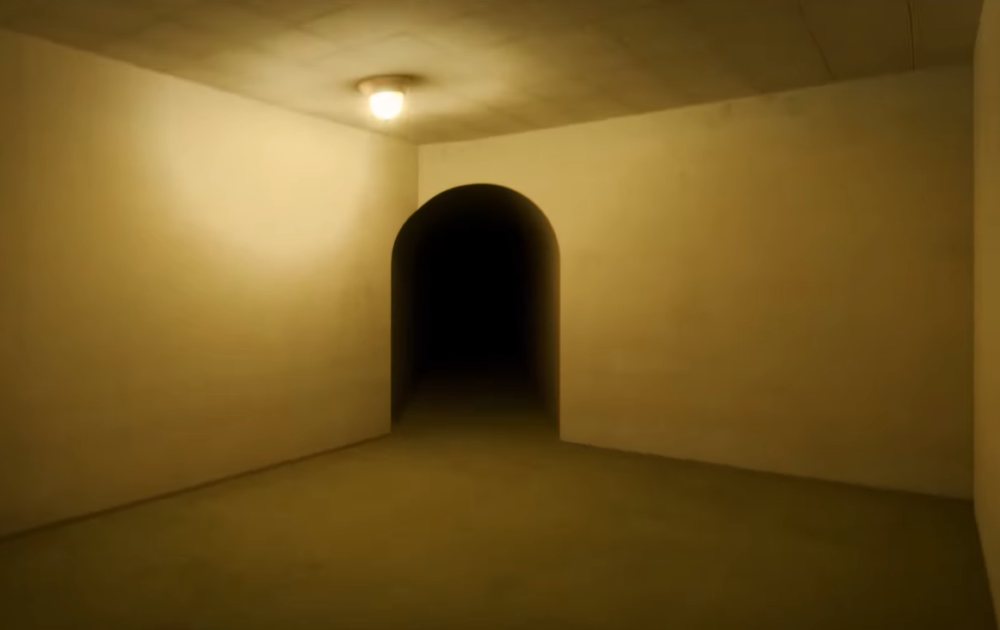
Parsons masterfully blends silence with creepy visuals to create an environment that feels dangerous without looking outright hostile. Clever set design and inventive camera work establish a real sense of place that makes the rooms come across as plausible, as if it weren’t entirely out the realm of possibility to come across one of the doorways that leads to them. There are some truly disturbing spaces throughout and they point to something even more sinister just beyond them.
Things get progressively more terrifying, not less. By making audiences aware of this, Parsons lays the groundwork for a special kind of dread that leaves audiences wanting to see more rooms. This is where the movie is at its best, when it’s just one person walking around and taking it all in.
Unfortunately, the script gets in the way of this far too often in its lazy attempts at character development. Screenwriter Will Soodik never finds a compelling enough reason to justify stepping away from the backroom action. Clark and Mary are given somewhat of a backstory, but it never materializes into something interesting.
There’s an attempt to make the backrooms a kind of metaphor for loneliness, but there’s not enough there to carry the message through. As such, these character detours end up being dry and boring. They weigh the movie down despite Ejiofor and Reinsve’s performances, which are strong and deserving of better material.
The little narrative consideration afforded to the characters regarding their traumas and motivations barely frames their participation as necessary. There was a better movie in simply following Clark or Mary, or both, as they became consumed by the horrors of the backrooms. They’re the story’s greatest achievement. Why force in characters that don’t match that level of intrigue?
Another point worth addressing concerns originality. Parsons has stated in interviews that he took inspiration from the game Portal 2, in which players create portals with a device to escape challenge rooms. The game’s design sticks to a retro-inspired aesthetic that also relies on basic furniture and appliances to populate its rooms. Additionally, players can find hidden rooms with drawings and cryptic messages on their walls that reveal bits of information on what’s really going on with the portal tests.
Backrooms borrows quite freely from Portal 2, to the point that it can come off as blatant. There’s the matter of the sparsely decorated environments and how silence figures into the experience, but there’s also a scene where Mary stumbles upon a wall that has drawings and cryptic messages of its own that look as if they were ripped straight out of Portal 2. It robs the movie of its voice somewhat.
To be fair, Backrooms isn’t the first movie/YouTube series to tackle liminal spaces (books like House of Leaves and A Short Stay in Hell approach the subject in their own ways), and it’s not claiming to be hold that title. That said, there is such a thing as flying too close to the sun when it comes to inspiration. This isn’t to say Parsons copied Portal 2 wholesale. Just that some of its ideas were a bit too close to the game for comfort.
Despite these observations, Parsons still proves to be a filmmaker with vision. At just the age of twenty, he’s already become a director worth hyping up, which certainly benefits box office projections for the inevitable Backrooms sequel. A stronger script and an even more intense focus on the very rooms that make the trip worthwhile in the first place will certainly get things closer to a more interesting watch.