

Ghost hunting is one of the most reliable forms of storytelling in horror. It’s the perfect setup for scares and it offers a great excuse to have people inside a haunted house. Franchises have been built on it, with Ghostbusters and The Conjuring among its most popular. To an extent, they might be the most relatable stories in the genre. They’re great at showing how easily the familiar can become hostile and repellant, with long-buried secrets threatening to shatter preconceived notions of safety.
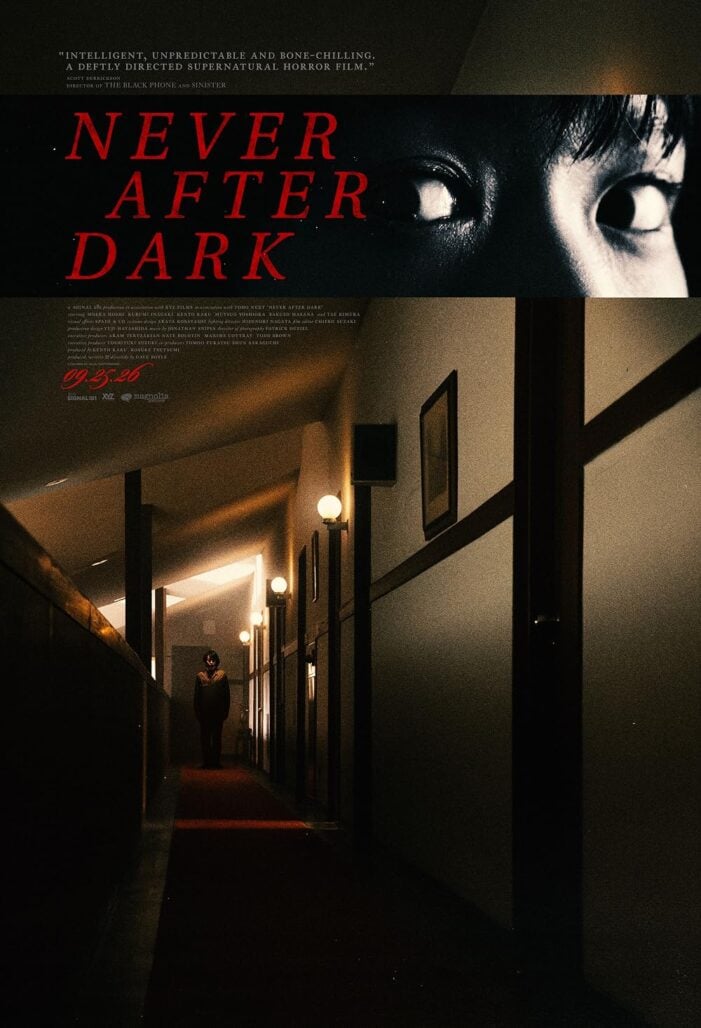
Dave Boyle’s Never After Dark takes to this crowded subgenre with the intention of taking a road less traveled, and it finds some truly refreshing ideas along the way. Rather than going for the serious and doom-filled stylings of traditional J-horror, Boyle opts for nuance and nonchalance.
The approach reconfigures the concept of tension and dread for something less rigid and overbearing. While the result is certainly fascinating, and imaginative, it does sacrifice some of its ability to scare and unsettle as intensely as it could.
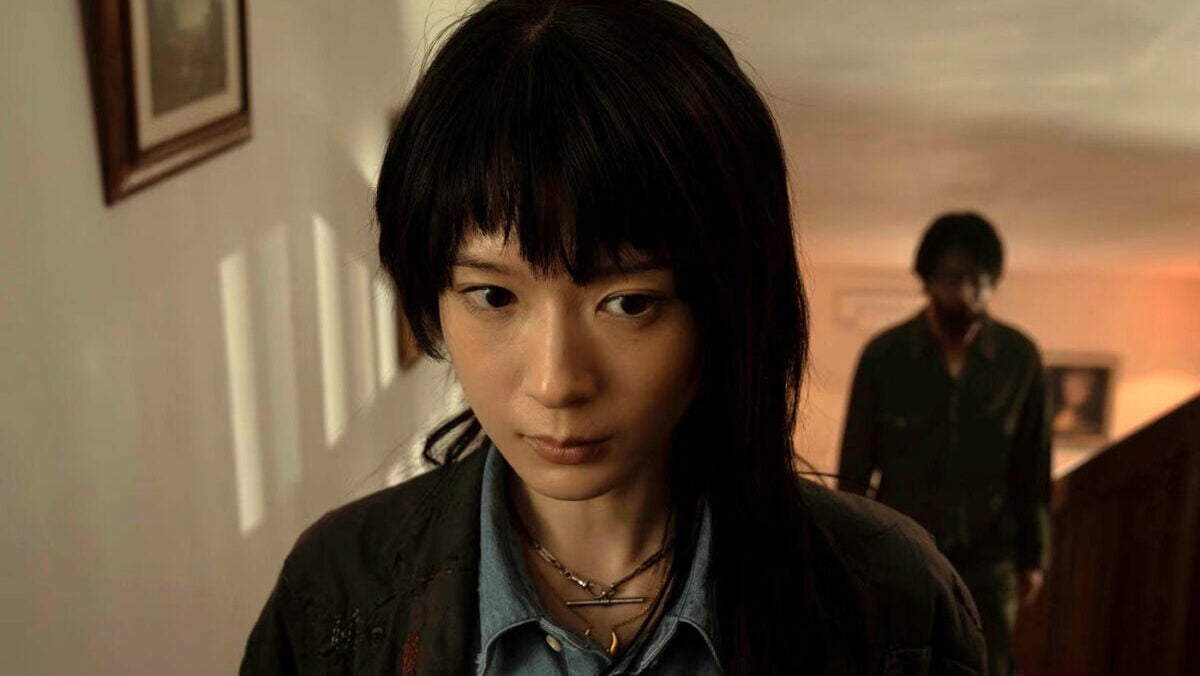
Never After Dark follows Airi (Moeka Hoshi), a medium that helps lost souls cross over to the other side. Her dead sister Miku (Kurumi Inagaki) accompanies her throughout, her presence pointing to a troubled past in which loss changed the course of her life and her relationship with the living.
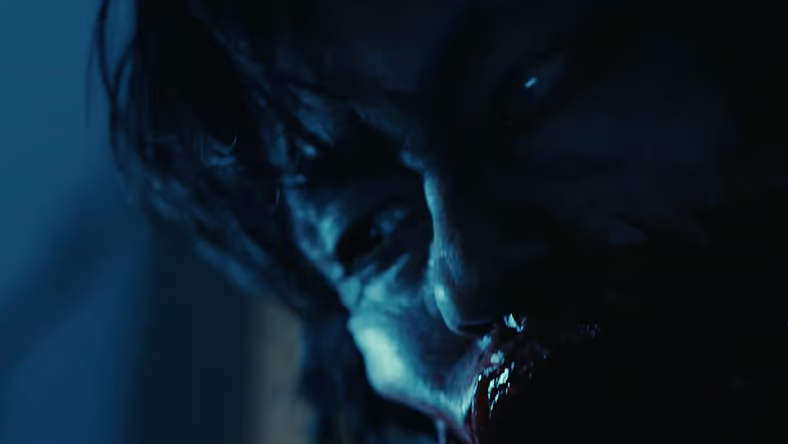
The owner of an old hotel hires Airi to exorcise the premises. A scary ghost roams its halls, its jaw a mess of gore and broken teeth. This spirit was subjected to a very violent and angry death, a detail that will lead to some very creative sequences later in the story. Airi takes the job, but she soon finds that the task is infinitely more complicated, and darker, than initially thought.
The premise is simple enough, even basic at a surface level. Where Never After Dark sets itself apart is in its character work. Airi is not a traditional ghost hunter. She doesn’t approach ritual with a sense of spiritual self-importance or religious authority. She’s there to do her job so she can get paid and go home.
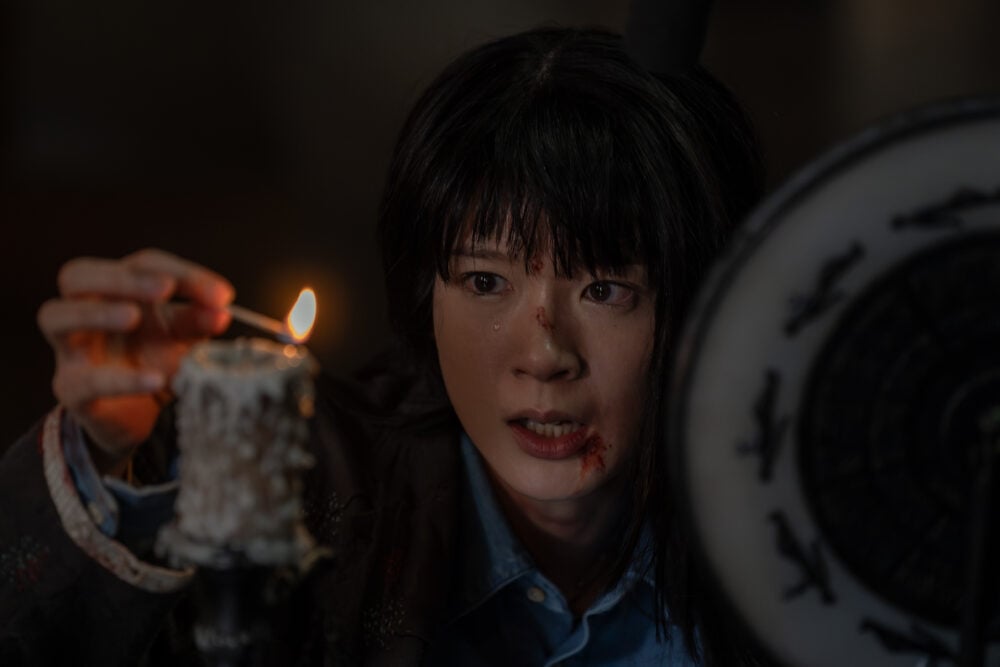
Moeka Hoshi does an excellent job of conveying Airi’s nonchalance. She plays her as a painfully quiet and reserved person that could be confused for someone that doesn’t care about much. But that quiet hides bad memories, which get brought up occasionally by her sister Miku. This is where the movie’s emotional core lies.
The sibling dynamic here acts as a puzzle box of sorts that builds on Airi’s character and her worldview, especially regarding the insight she gets by working with the paranormal. It seems that lot stays unspoken between them, that their paranormal connection is owed to something ugly that happened to them when they were younger. The way they dance around this conversation reveals a sisterly bond that is down to earth but a bit strained. It is always entertaining.
The ghost that haunts the hotel is effectively creepy and remains so for the duration. It’s a macabre reminder of the many forms death can take. He’s tied to another character that comes up around the halfway point, played by Mutsuo Yoshioka. This man changes the tone of the story at just the right time, putting it in a very different trajectory. Things take a darker turn after his arrival, changing the very shape of the horror elements displayed up to that point.
This is where Airi’s nonchalance and deadpan demeanor interferes with the movie’s ability to generate tension. From beginning to end, Airi remains mostly unchanged as a character. There are some emotional high points, but they’re few and far in between. As certain details come to light, one would expect some kind of shift in the character’s mood or personality. At least something that points to the situation becoming more precarious or terrifying. But this never happens.
Boyle could’ve relied on the sister to raise the emotional stakes here, but their relationship doesn’t grow as much as it’s initially hinted at. As the movie progresses, it’s clear the character is a means to offer key bits of information when needed. It’s not outright exposition we’re talking about here. More like breadcrumbs. But it doesn’t go deeper than that. There was something special in this pairing. It just doesn’t get the chance to really flourish.
Despite these shortcomings, Never After Dark succeeds in offering a different flavor of ghost hunting. The mystery behind the haunting is always compelling, and the hotel setting proves to be perfect for it. A well-designed ghost and some creative storytelling decisions make Boyle’s ghost hunter a memorable one. There’s enough here to make anyone wish they could spend more time seeing the world through Airi’s eyes.