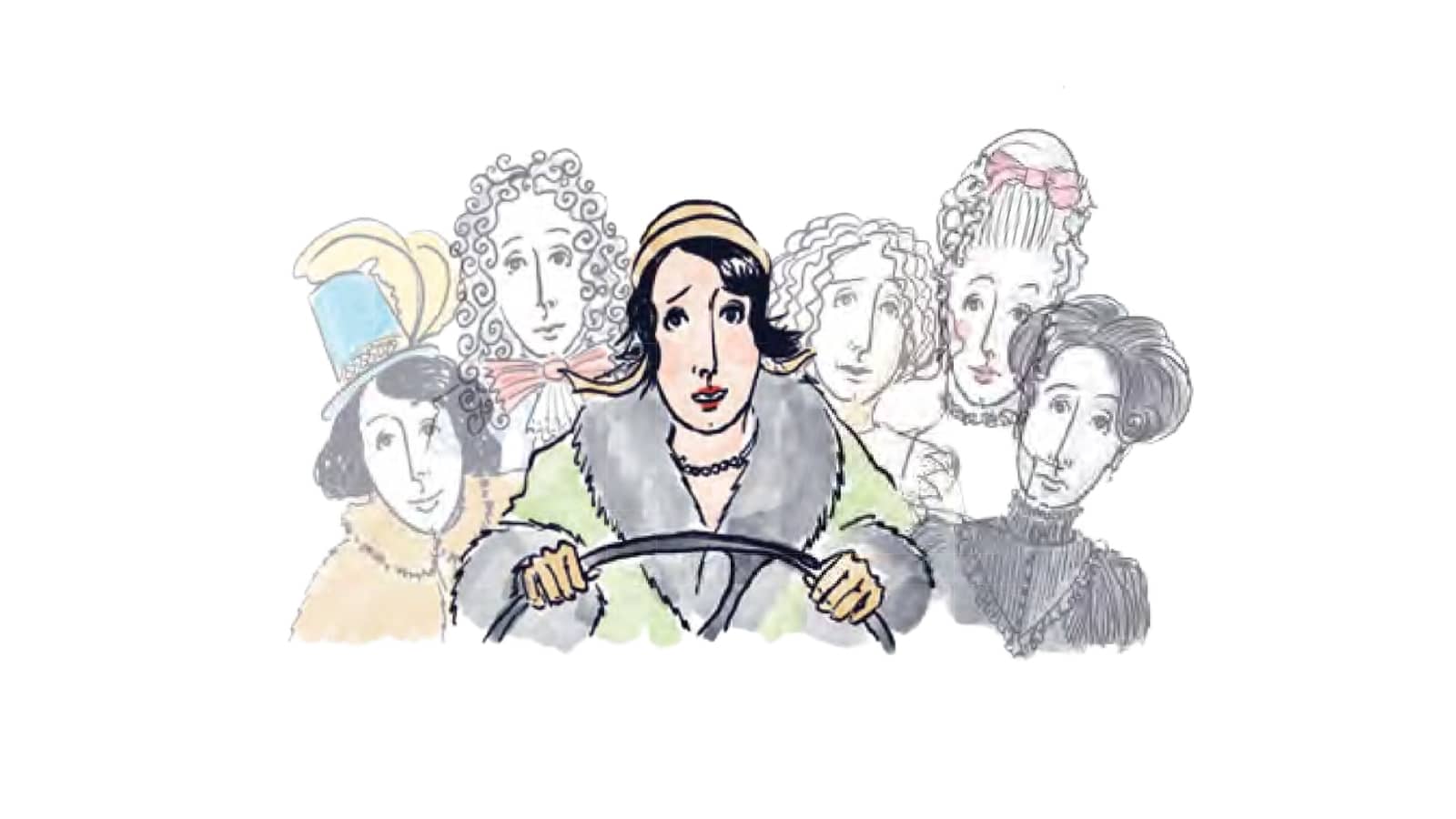

Orlando: A Graphic Novel
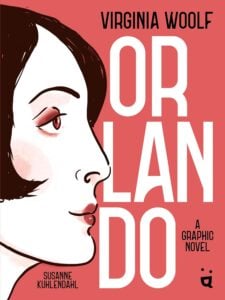 Writer/Artist: Susanne Kuhlendahl
Original Novel By: Virginia Woolf
Publisher: Helvetiq
Publication Date: March 3, 2026
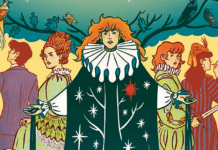
In this whimsical, graphic adaptation of Virginia Woolf’s satirical love letter to Vita Sackville-West, writer and artist Susanne Kuhlendahl splices together key moments from Orlando to create something new, but familiar in the best way.
Woolf’s Orlando: A Biography follows a young, English aristocrat across the centuries, from the 1500s to the 1920s. Orlando ages and falls in and out of love with various figures, including, to some extent, herself. She also flits between interests, though never gives up her love of poetry—even when it would most suit her. In the novel’s most famous scene, Orlando transitions from male to female during a period of inexorable sleep while operating as an ambassador for the king in Constantinople.
Orlando is one of Woolf’s most famous works, not least of which because it is written entirely about and for her close friend and lover, the poet and aristocrat Sackville-West.
Kuhlendal’s graphic novel adaptation of Orlando is similarly a love letter to the source material. Kuhlendahl pulls together the novel’s biggest moments, stitching them together through small vignettes to create a full tapestry. Woolf herself is a character on the page, her narration contextualized through direct commentary on the story and the occasional aside.
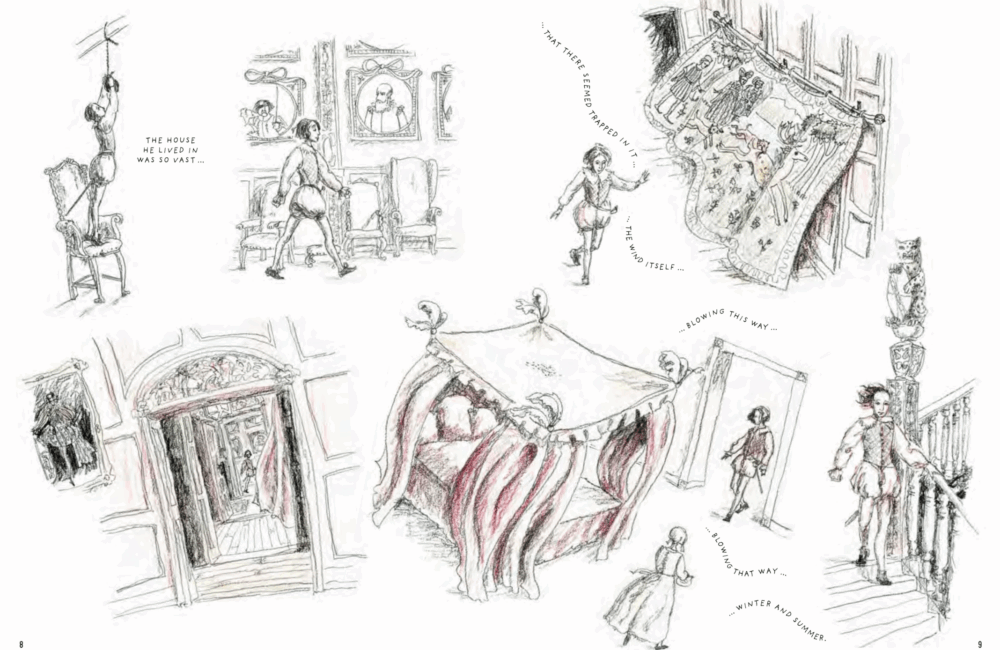
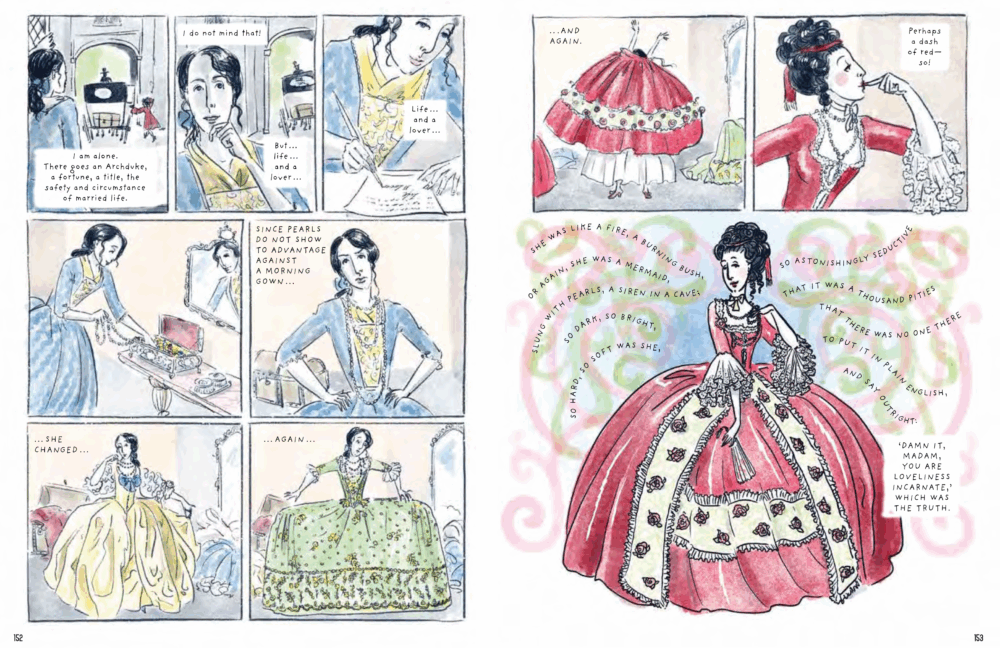
Each page feels like looking at a gallery of Orlando’s life. Kuhlendahl employs a painterly illustration style, which slowly changes from loose scribbles to full, brightly-colored watercolors as Orlando moves through the eras. The color palette shifts as well, with Kuhlendahl offering spreads that range from black-and-grey to single-color to multi-hued, all seemingly in accordance with Orlando’s whims and moods.
The lettering is just as artistic, in that it swirls and winds around images as often as it is presented in simple statements and paragraphs. Kuhlendahl rarely follows a traditional panel layout, instead using text, illustration, color, and page placement to push the story forward.
This lack of adherence to tradition is a major strength of Orlando, as it nods to the absurdity of the English aristocracy and gender/sexuality policing as called out by Woolf. It also suits Orlando’s overall demeanor, underscoring her desire to love and live freely.
Despite the beauty of this book and Kuhlendahl’s excellent rendering of Orlando in graphic form, it’s difficult to whole-heartedly recommend it, namely for Kuhlendahl’s use of a slur for the Romani people. While the lines in question are copied directly from Woolf’s novel, the decision not to edit (which could easily be explained with a note in the backmatter) is hard to swallow in 2026, when the Romani people continue to face everyday racism and violent attacks from extremist groups.
When historical works like Woolf’s are adapted for new forms, removing or altering harmful language should be the norm, not the exception. Kuhlendahl’s Orlando is gorgeous—but its casual racism (historically accurate or not) significantly impacts its rating.
Verdict: Borrow