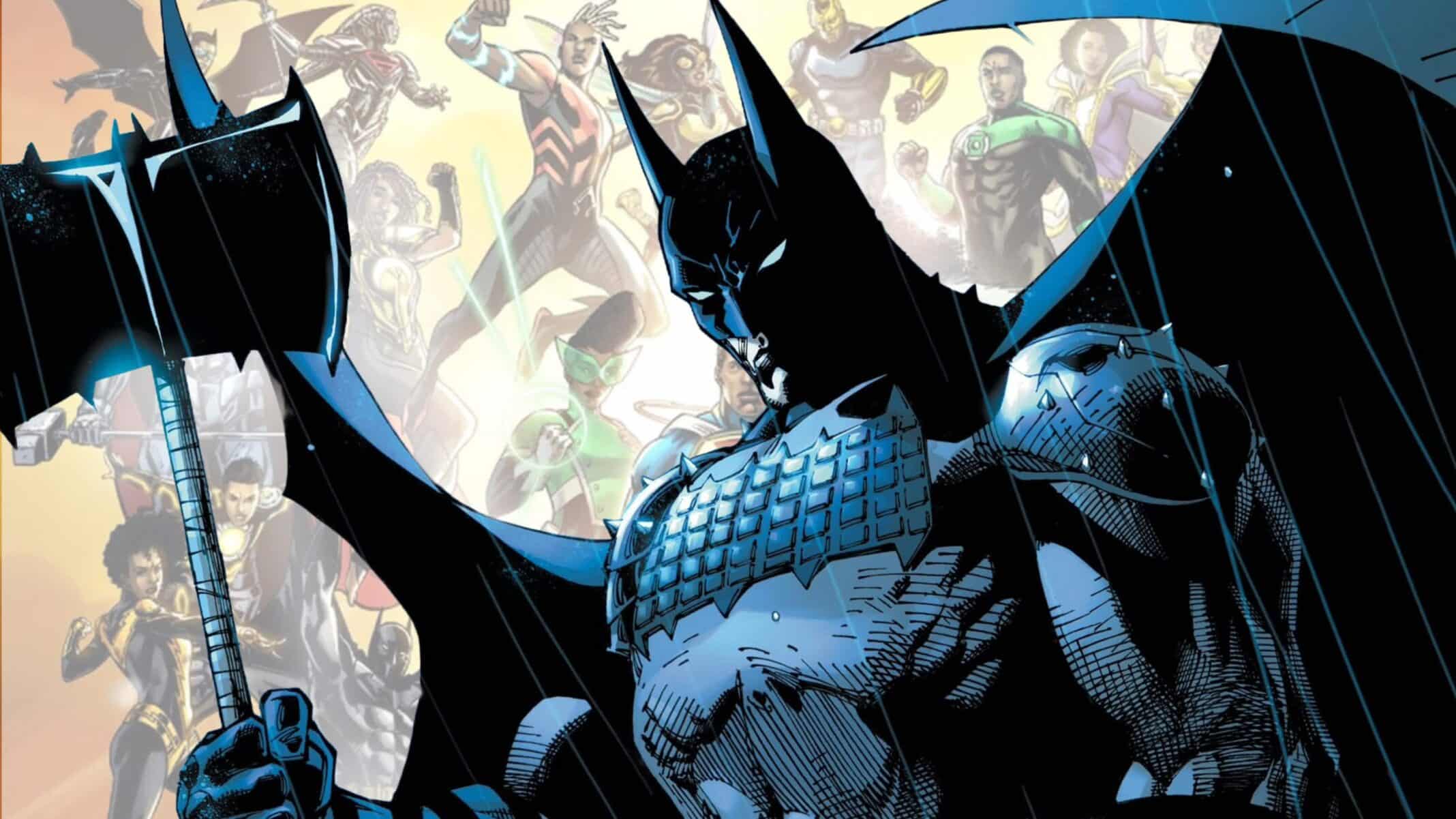

In 1977, DC Comics approached writer Jenny Blake Isabella with the idea of creating an ongoing series for a brand new Black superhero. What they presented wasn’t just misguided; it was a warning sign. The character, The Black Bomber, was a white man whose “power” was the ability to transform himself into a Black man with an afro and superhuman abilities. Isabella immediately denounced the concept, recognizing the damage it would do to DC’s reputation. After going back to the drawing board, Isabella and artist Trevor Von Eeden would bring Black Lightning to newsstands and comic shops across the country. In the decades that followed, however, DC would begin to neglect, sideline, and use the same recycled excuse of “they just don’t sell” when criticized about their lack of representation in the spotlight. It has now been 1171 days since the last time DC published an ongoing series for a Black character in their mainline continuity, and it wasn’t the publisher who realized this; it was the fans.
2025, at first glance, appeared to be a promising year for Black characters at DC. Black Lightning had returned in a brand new mini-series, and was on its third issue, and the DC Power one-shot returned for its third annual release. Outside of the main continuity, Absolute Green Lantern continued to sell out on store shelves alongside the other titles in the Absolute Universe, and the Milestone Returns Universe concluded in the pages of Shadow Cabinet. As the year progressed, writers Jeremy Adams and Morgan Hampton would collaborate on the Green Lantern Corps, featuring leads John Stewart and Sojourner “Jo” Mullein. Mr Terrific: Year One, written by award-winning journalist Al Letson, was released alongside the new Superman film. The year would close with the return of fan favorite character Static in the pages of Batman/Static: Beyond.
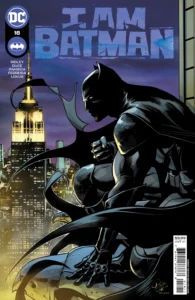
These projects, while well-written and worthy of praise, all share the same limitation: none of them was an ongoing series. In DC’s main continuity, there is not a single solo ongoing series featuring a Black main character. The only current title in the DC line-up that does is Absolute Green Lantern, and again, it does not tie into the main DC continuity. The last ongoing mainline title led by a black character was I Am Batman by Academy Award-winning writer John Ridley, centering on Timothy “Jace” Fox. This series concluded after 18 issues on February 14, 2023. Since then, DC has relied almost exclusively on mini and limited series for its Black characters, leaving fans to ask “why?”
This has led to a segmentation within the comics world with a not-so-small contingent of so-called ‘fans’ defending the lack of Black-led main continuity ongoings with the predictable response of: “Black-led books don’t sell.” But the argument doesn’t hold up under scrutiny outside of the “Big Two”, referring to both Marvel and DC Comics. A perfect example is Sebastian Jones of Stranger Comics, who recently completed another highly successful Kickstarter that raised over six figures. That continued success has led to a partnership with Viola Davis and Julius Tennon’s JuVee Productions to adapt his series The Untamed into a live-action project. When asked his thoughts on “Black-led books don’t sell”, Jones said:
In 2009, nearly every publisher I pitched to told me, ‘Black comics don’t sell.” So I started Stranger Comics. Seventeen years later, here we are creating comics—where the love of story, depth of character, and great art are nurtured, cared for, and prioritized above all else. I can tell you—Black comics do sell.
The issue isn’t demand, it’s DC’s structure. Their biggest shortcomings fall in three core areas: a lack of promotion, a lack of market transparency, and a lack of opportunity. When it comes to promotion, Black-led titles are not marketed with the same consistency or intensity as flagship characters like Batman or Superman. This imbalance directly impacts visibility and, by extension, sales.
When it comes to the direct market, the comic book industry still relies heavily on a preorder system where sales are determined before a reader ever picks up an issue off a shelf in their LCS. Many fans, even dedicated “Wednesday Warriors,” had no idea this was the case. Publishers have left this information in the hands of the comic store owners to dispense to their customers and have remained in a position of plausible deniability.
The challenges extend beyond the single-issue format, especially when it comes to digital formats. Younger fans, especially, have been enjoying the experience of digital formats such as platforms like Webtoon, or even the platforms designed by DC and Marvel with DC Universe Infinite and Marvel Unlimited. However, when it comes to things like Marvel Unlimited’s Infinity Comics, creators who have written for these platforms have expressed that the views for digital issues are not considered the same as single-issue sales, which illustrates a lack of faith in these platforms as viable sources for fans to read comic books. Meanwhile, digital storefronts remained fragmented. Comixology’s assimilation into Amazon eliminated consumer trust, while newer platforms like Global Comix, Neon Ichiban, and Sweetshop are still developing their footing. There is no centralized, trusted system for tracking digital sales performance, which allows publishers to ignore these data points in favor of pushing the physical singles market over the growing digital one.
Collected editions present another missed opportunity. Trade paperbacks are seen as more affordable and accessible to many readers, and especially to parents of younger readers. Yet many Black-led titles are canceled before they can even reach their first trade volume. Publishers cite low sales without accounting for audiences who support these titles in different ways.
Finally, when it comes to opportunity, the constant reliance on mini-series prevents meaningful sales data from ever forming. Without sustained runs, there’s no way to evaluate growth, retention, or long-term audience engagement. These characters aren’t failing; they’re never being given a chance to succeed.
DC’s approach to public relations only compounds the problem. Compared to publishers like Image Comics or BOOM! Studios, DC’s social media presence lacks consistency and urgency. Key initiatives often receive little if any support. A perfect example of this is the case of The New History Of The DC Universe: The Dakota Incident, where co-writer and former Milestone editor Joseph Illidge, alongside Stephanie Williams, Morgan Hampton, and Nikolas Draper-Ivey, led a grassroots campaign to promote the book. Illidge even funded a promotional trailer out of pocket for the release, but DC’s official social channels never shared it. On the same day of its release, however, those same platforms actively promoted the return of the Vertigo Imprint. To many, that contrast didn’t feel accidental.
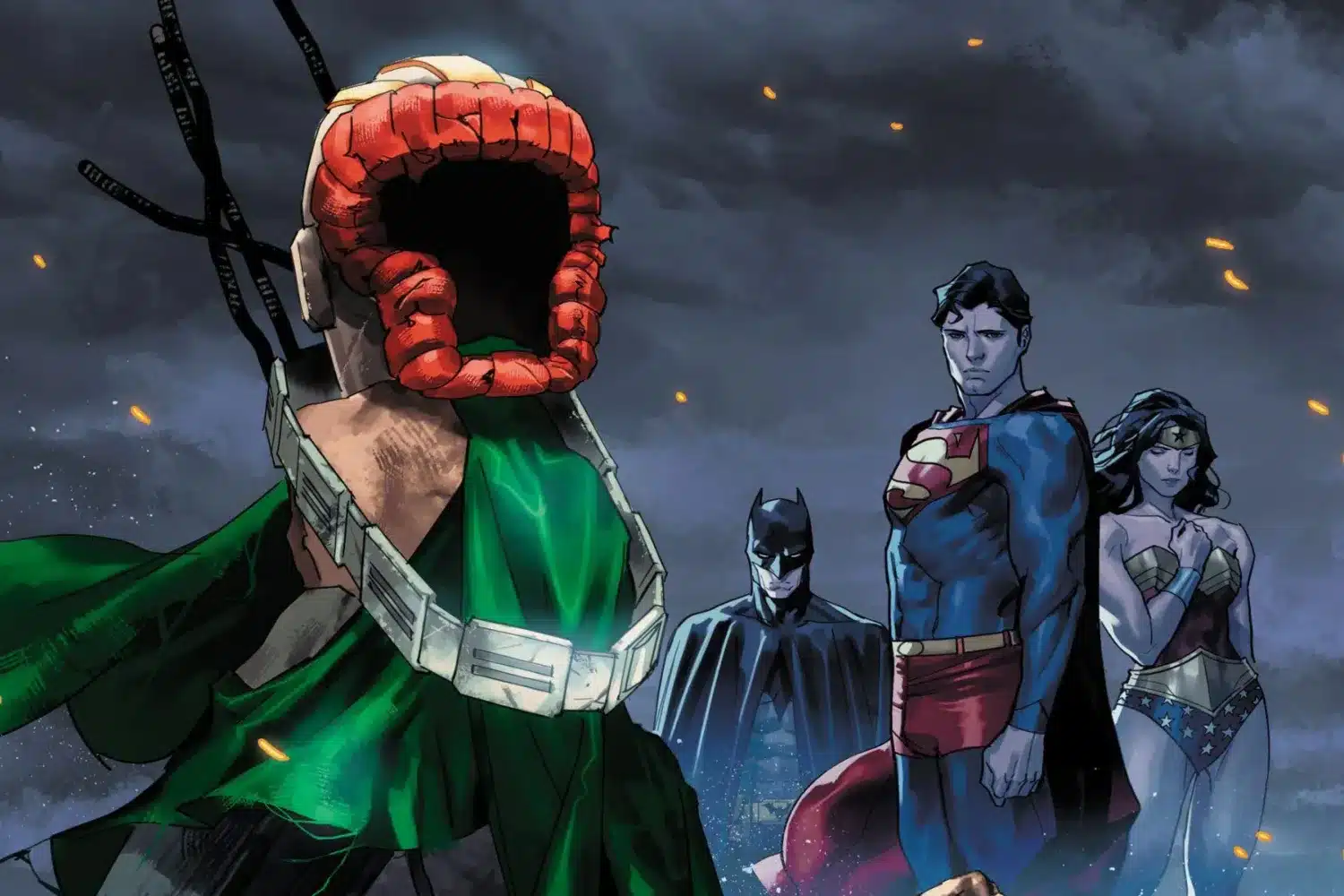
When evaluated all together, these factors create an uneven playing field. Whether intentional or not, the system consistently leaves Black-led titles at a disadvantage. DC often will use this data to point to underperformance without acknowledging the conditions that produced it. One particularly glaring gap underscores the entire issue: DC Comics has never published an ongoing series centered around a Black woman superhero in its mainline continuity. And despite the outpouring of fans urging DC to give that honor to Vixen and to have industry trailblazers like Stephanie Williams and Tee Franklin pen the project, it has seemingly fallen on deaf ears. “That’s too risky, how about 5 more Batman titles?” has become less of a joke and more of an expectation.
So what can DC Comics do to address this? Well, if you ask the members of the #DCSoWhite movement, it is quite simple:
- Launch 1-3 titles in DC’s mainline continuity with strong creative teams to give them the best chance
- Properly promote these series in the same methods used for characters such as Batman and Superman
- Give these titles immunity from cancellation for 18-24 months in the same vein as Batman and Superman, so that fresh data can be gathered on their sales from multiple avenues like digital and collected editions, not just single issue preorders
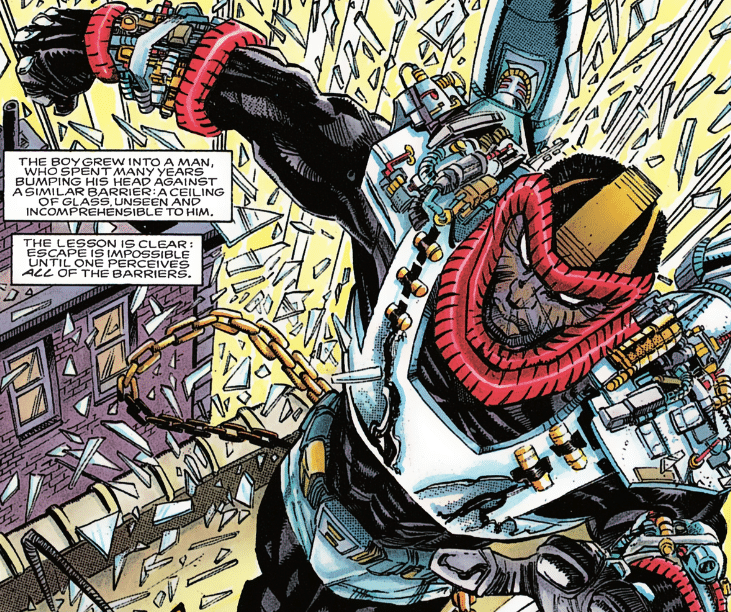
With these three simple steps, DC can give these titles the best chance of success in the eyes of fans and end what many perceive as unfair treatment, which, in reality, is just negligence and risk-averse sales tactics. While DC stands for Detective Comics, to many, it stands for “Discrimination Comics,” and an easy search on social media will show that this has been a trend for the past few years due to the actions, or lack thereof, by the publisher. On dcsowhite.com, where the days since DC gave an ongoing title in their main continuity to a Black character are listed, a quote appears at the bottom of the web page.
“Escape is impossible until one perceives all of the barriers.”
–Dwayne McDuffie, Hardware #1
If DC has any hope of shedding this image of discrimination in the eyes of fans, they have to perceive the barriers they created for themselves and remove them.






Why is it always black & white? There are even less comics starring Hispanic, Asian or Native Americans. They deserve representation just as much.
Yes, but bear in mind there are Black Hispanic, Asian, and Native American people too, as well as Black Jews, Arabs, South Asians…
To quote Moonlight, “Let me tell you something, man. There are Black people everywhere. You remember that, okay? No place you can go in the world ain’t got no Black people, we was the first on this planet.”
Every day that passes without a black character leading a mainline comic book series, is another day that DC refuses to beat the allegations. To those detractors who say what about (insert race/ethnicity here), join the movement instead of tear it down. No one is excluding any other minorities. Black folks saw the problem and they want to fix it. You could do the same by joining this efforts.
“Launch 1-3 titles in DC’s mainline continuity with strong creative teams to give them the best chance”
The focus on black characters, rather than on creators with stories to tell, is a problem. Assembling “strong creative teams” isn’t as easy as going to a list of names and telling an editorial assistant to email these five people. If properties are treated like dolls and the attitude is that any story about a black character will sell, as long as it’s promoted properly, the result will be junk. Creators have to come up with good stories to publish.
This “article” is so biased, it’s insane. Pure propaganda. Tee Franklin has proven herself to be an absolute garbage person. No one in their right mind would give her any other assignments. And I bought both the Batman/Static and Mr. Terrific books last year. Most didn’t. The fact these books have not resulted in sequels or ongoings tells you all you need to know. If the potential sales were shown to be there, they would be green lit. But even the icons are having a rough go sales wise these days. And long gone are the days where you could put a McFarlane or Jim Lee on, say, Vixen, and have that practically guarantee a hit. Here’s a helpful hint. Actually buy black led titles and make it more likely we see more.
Isn’t Green Lantern Corps ongoing? The article says it isn’t.
bring back the “blue marvel” this is a great story of COLOR. if you haven’t read it your missing out
The Brother above has no idea what he is talking about, as a “Black creative” let me tell you how it works. We (us Black People) approach DC with ideass or they ask us if we would be in interested in such and such a project. The moment we start designating continuing titles (with set numbers needed) based on race, ethnicity, sexual preference, etc. Is the day I walk away from the industry. I am working on a title for a non-DC company, for less money then I could be making at DC. Because I like the character, and have had story ideas forever in my head for decades. Believe me, I could walk into DC tomorrow and tell them I am interested in writing two books starring “Black Characters” and I am throwing out character names just to give you an idea were my head is. “Steel” and “Bronze Tiger” if I mention I want these “Green-Lit” as regular series, I would have a yes, in less then 5 minutes. And I am not alone, there are many Black writers or artists, who can do the same at DC. But if we really don’t have an idea that we really don’t believe in, why approach them. Organic, my Brother, it all has to be organic and not forced. Which by the way is why DC is dominating right now, no forced hands. I have two projects starring “white characters” coming up for DC. Why? because I have had a 3 to 5 year creative direction in my head for the characters, nothing forced.
Regarding Jerome Maida’s comment regarding Tee Franklin, I gotta agree. Looking at her unhinged social media posts and past behavior, at this point, she’s pretty much burned all her bridges with DC, and pretty much any major publisher
This article is a farce. DC gave us Milestone 2.0. a few years ago. Gave you a Black Batman book. Problem is these books DO NOT SELL. As a Black publisher of books that mainly features characters who are Black I can tell you that the customer base DOES NOT SHOW UP for most black books in large enough numbers to cover the costs of production of a large print run. You can’t ask a publisher to produce material when the customers are NOT THERE and DO NOT BUY books they ask for. There’s only so many losses a publisher can take on a book in a catalog before they stop producing said books. Folks need to understand comics cost money for the writing, the art, the colors, the letters and the editorial labor to put it all together. At the end of the day a publisher needs to see a profit from sales in order to continue a series. And until Black customers start putting their money where their mouths are there’s no reason to take campaigns like DC so white seriously.
“Give these titles immunity from cancellation for 18-24 months in the same vein as Batman and Superman, so that fresh data can be gathered on their sales from multiple avenues like digital and collected editions, not just single issue preorders”
I get and mostly agree with the other points but, let’s be real, short of Batman nothing in the big two has immunity from cancellation for 18-24 months.
Dan Slott said Marvel wouldn’t even greenlight his new Spider-Man (!) book for more than 5 issues at a time. I understand the direct market system is kinda fucked, but let’s try to be more realistic here.
I really don’t follow or calculate how many non-white characters make it at DC or elsewhere, whether titular characters or support characters. Mostly cuz I don’t care–I have no axe to grind about representation one way or another. I like Jon Stewart, Miles Morales, T’Challa the Black Panther, and others but I’m a white guy so for many people, my opinion doesn’t matter at all.
It’s difficult to argue that DC “doesn’t release Black comics” then say comics like Absolute Green Lantern, and mini‑series don’t count. Mini series is the strategy Marvel does across nearly every line.
And the claim that “there’s no market for it” doesn’t hold up. The market is there. It simply requires nuance and a willingness to engage it with intention rather than excuses.
The first step is ending the tired argument that it can’t be done.
It can.
It has.
And the answer, lives somewhere in the middle. between corporate hesitation and audience demand.
So I feel like we’ve had a good, fairly civil discussion here (with a few removals) and will be closing the comment thread now. But the discussion will continue.
Comments are closed.