
The Toronto International Film Festival closed out its Primetime section this year with the highest-profile TV title on the slate: Carrie, the series adaptation of Stephen King’s novel, from horror maestro Mike Flanagan. Flanagan has made a career out of bringing King’s work to the screen, including Doctor Sleep, Gerald’s Game, and most recently, The Life of Chuck. He’s also known for his previous Netflix partnership, where he created popular shows like as Midnight Mass, The Haunting of Hill House, and more before striking a multiyear deal with Amazon. TIFF screened the first two episodes ahead of the show’s October 7 premiere on Prime Video, where all eight episodes will drop at once.
Carrie’s pilot may be one of the best I’ve seen in years. It opens with police interviews and footage of the deadly fire we all know from the film and book, which started at a high school prom. Surviving residents and classmates of Carrie White begin piecing together the events that led to the fire, starting with an origin story for Carrie that departs from both the book and the film.
In King’s novel and in the 1976 movie, Carrie has already spent years inside the public school system and is an established outcast by the time we meet her. In Flanagan’s version, Carrie (Summer H. Howell) has been homeschooled and almost entirely isolated from the world until her father dies in a construction accident.
When police arrive at the family home expecting it to be empty, they instead find Carrie and her mother, Margaret (Samantha Sloyan), hiding in a closet. Carrie has no birth certificate, has never left the property, and has never set foot in a classroom. To avoid losing custody of her daughter, Margaret agrees to let Carrie attend public school for the first time in her life, while she takes a job at a grocery store to keep the family afloat. When Carrie shows up on her first day, she’s naïve, disoriented, and instantly a target for her peers, which is where the show starts drawing its connections between Carrie’s emotional state and the physical world around her.
What the first two episodes do especially well is elaborate on and modernize the concepts in King’s novel. For an eight-episode series, there’s obviously room to mine the material for more depth, and early signs point to Flanagan building out the mythology around Carrie’s powers. This is something the novel gestures at through newspaper clippings on telekinesis, but which the film leaves out almost entirely.
The series also gives its characters some surprising, and welcome, updates. When I heard Sloyan had been cast as Margaret, I wondered whether she’d bring anything new to the role beyond what we’d already seen from her as the fanatical, uptight Bev Keane in Midnight Mass, a character that I loved but which already felt like a dry run for the frantic, religious Margaret.
Flanagan seems to have turned Margaret on her head. In spirit, she’s as fanatical and closed-minded as her previous incarnations, but there’s a more genuine version of a mother fighting for her child underneath all of that. This Margaret is less interested in inflicting pain and punishment on Carrie than she is on protecting her and fighting against the world’s status quo, whether that’s sex education, active-shooter drills, or artificial sweeteners in the food supply. Margaret seizes on exactly the kind of fears we hear parents voicing today, even when her response to those fears is extremism. The result is still an intense and radical helicopter parent, but one that feels anchored in today’s reality instead of something cartoon-like or one-dimensional, which could easily have been the outcome.
The other place the show finds unexpected depth is in the character of Chris Hargensen (Alison Thornton), who remains the ringleader driving Carrie toward the edge. Chris can be just as cruel here as in past versions, but Flanagan takes the time to dig into her home life and the frustrations underneath the cruelty, the roots of which make her lash out at Carrie in the first place. Giving both of the story’s clearest villains that kind of complexity makes for a world that feels truer to Flanagan’s storytelling instincts. That instinct is what makes or breaks what I assume will be the show’s other big swing: asking us to find the same in Carrie herself.
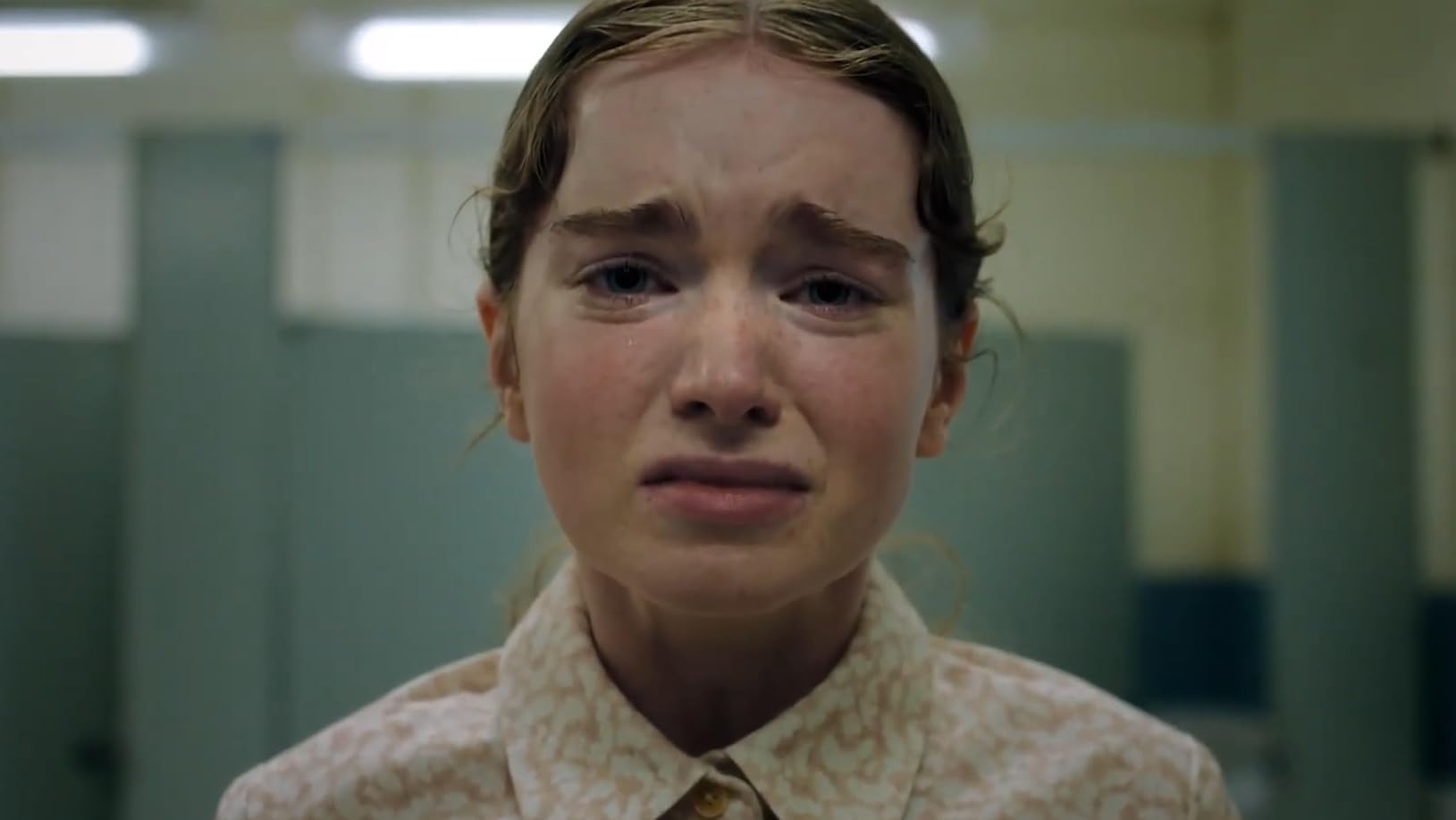
No performance carries more weight than Howell’s Carrie. Like Sloyan, this was a casting choice I wondered about, though for a more superficial reason. Sissy Spacek wasn’t exactly book-accurate casting, but she found a way to inhabit Carrie that felt just strange enough, just unique-looking enough, that her alienation and the bullying that followed felt believable in the film interpretation of Carrie. Howell, frankly, looks a little too conventionally pretty for a role like this, giving echoes of 90s films where an ostracized high schooler took off her glasses and suddenly became prom queen. But the casting here works, partly because of the changes made to the character. Carrie has been so sheltered up to this point that she acts, dresses, and carries herself more like a little kid than a high schooler, and Howell’s doe-eyed innocence sells that read well.
My one real gripe with these episodes is a familiar problem for any high-school show: everyone on screen (except Carrie) looks about 28 years old. I wish Flanagan had used this as a chance to cast more age-appropriate, or at least age-appropriate-looking, actors, to reinforce that these are supposed to be children going through some very traumatic events, not adults who happen to have lockers and study hall.
It’s a minor complaint against two episodes that otherwise do exactly what a Carrie adaptation needs to do in 2026: take a story we think we already know and find new ways to explore it. If Flanagan can sustain that same generosity toward Carrie herself once her prom night arrives, Carrie could end up standing alongside or even surpassing Midnight Mass as his best work for the small screen.