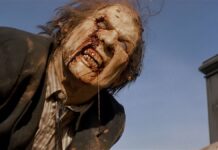

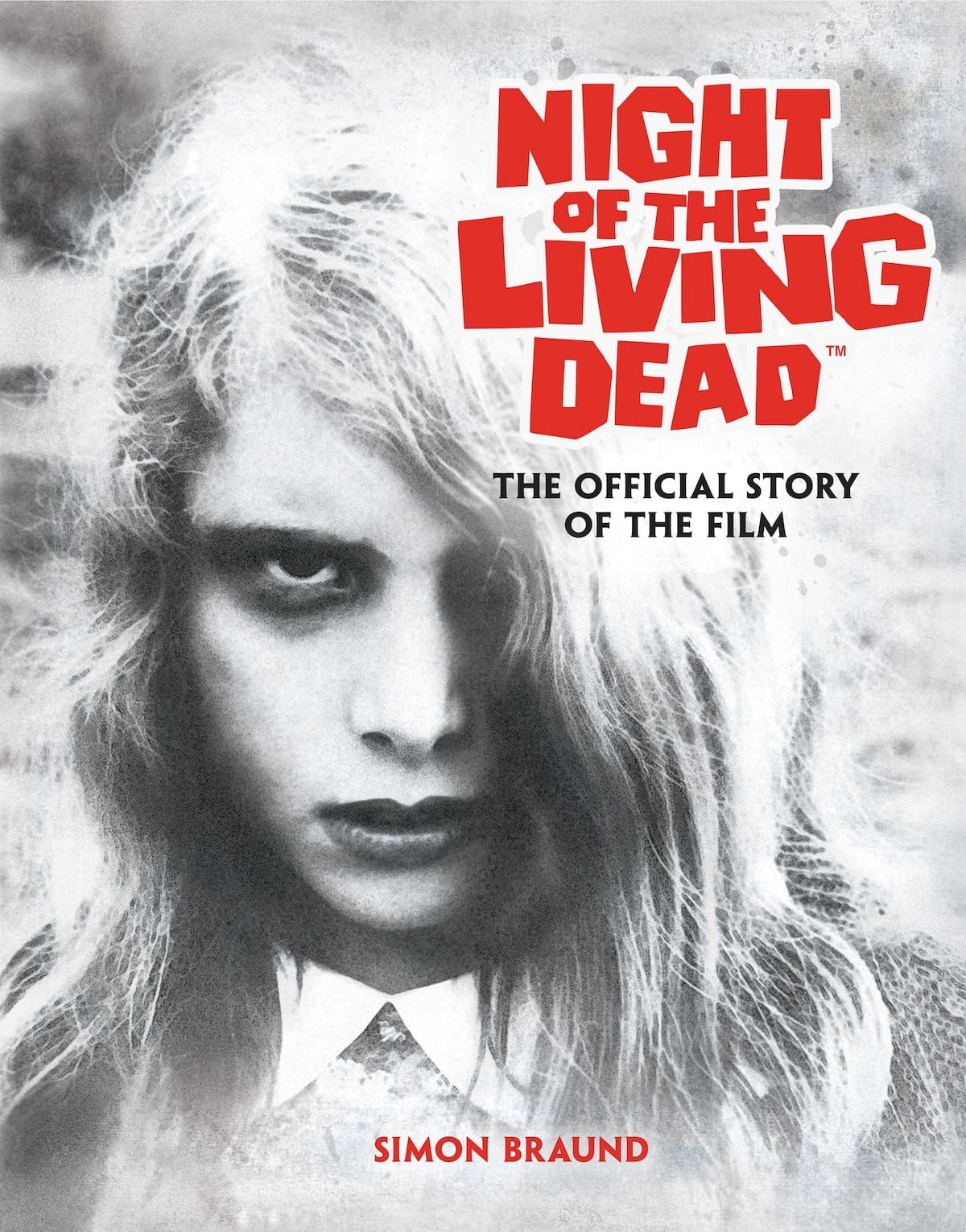
On August 18th, 2026, Titan Books will be publishing Night of the Living Dead: The Official Story of the Film by Simon Braund. The book shares the story of the making of the seminal 1968 horror film, directed by George A. Romero and written by Romero and John A. Russo. And who could forget the unforgettable opening scene, where Romero’s (eventually) six film Dead series begins with Barbara (Judith O’Dea) and her brother Johnny (Russell Streiner) encountering a freshly buried and almost equally freshly reanimated ghoul (Bill Hinzman)?
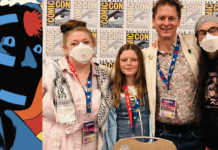
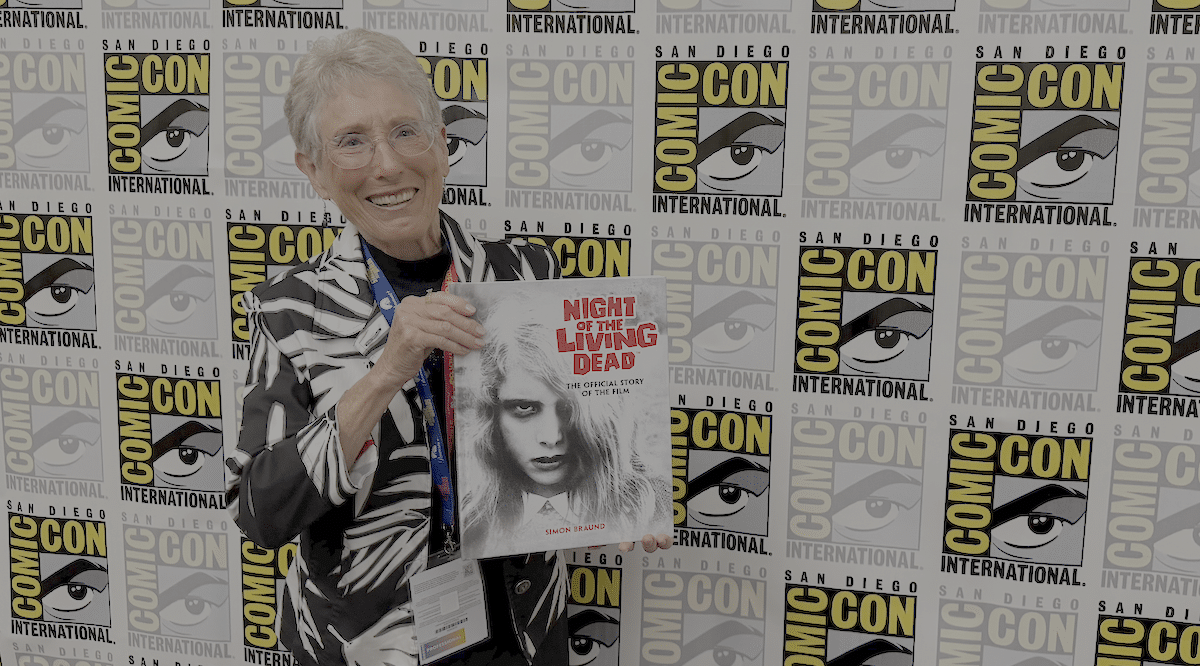
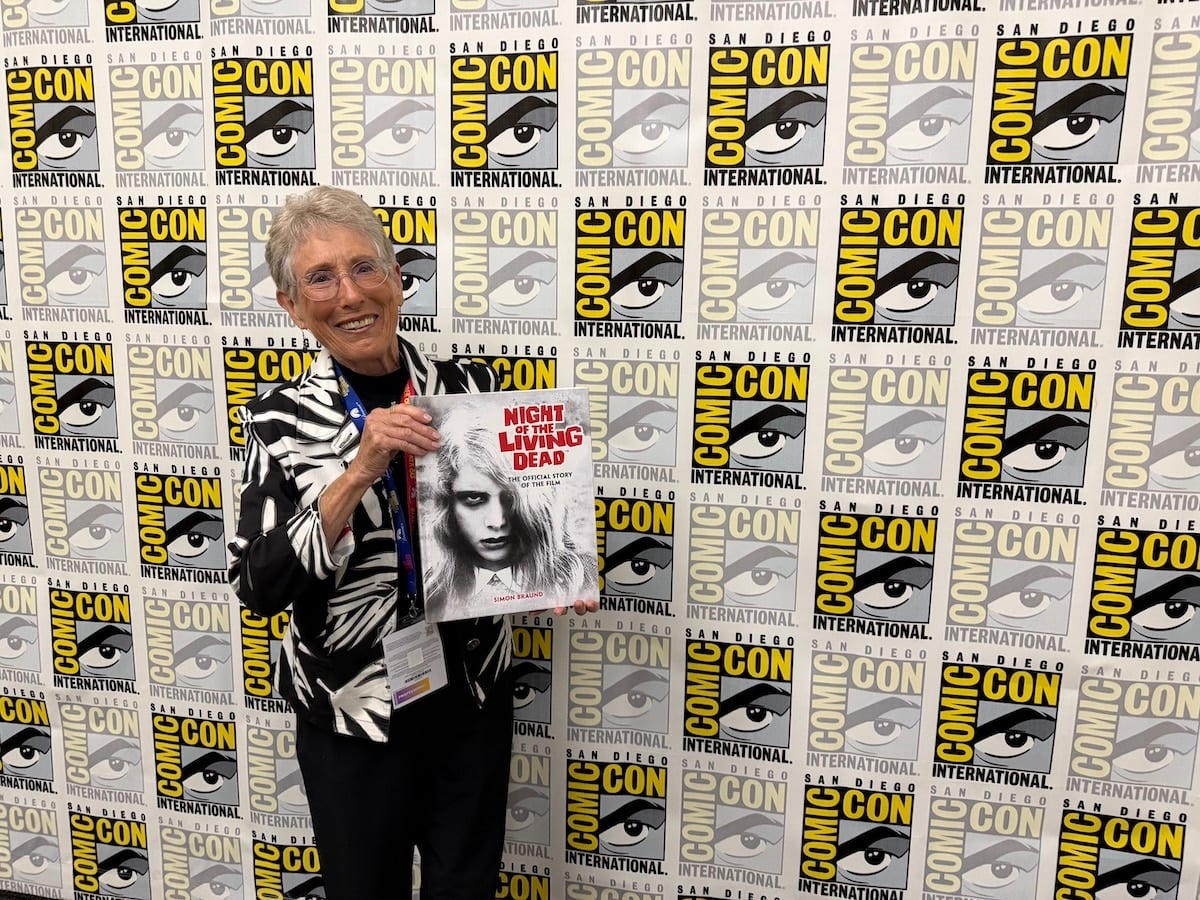
To celebrate the release of Night of the Living Dead: The Official Story of the Film, Titan brought the iconic O’Dea to San Diego Comic-Con 2026. There, Comics Beat got the chance to speak with O’Dea about her involvement in the watershed film, about how her performance in the role has affected other areas of her life, and about her acting and creative work beyond the silver screen.
AVERY KAPLAN: What do you think of the Night of the Living Dead art book?
JUDITH O’DEA: I was really taken with it.
KAPLAN: Do you find you’re learning anything from it?
O’DEA: Yes, many things that I didn’t know, many pictures I had no idea existed. So this is a gift, really, to me, as well.
KAPLAN: What were your thoughts on the movie while you were filming Night of the Living Dead? Did you have any sense of what you were filming?
O’DEA: Didn’t have any sense, because I never got to read a full script, ever. I’d be given a scene every time my call came up; I really didn’t know where it was heading, every day was new. And oftentimes, George would change things in his own mind from the working script he had. No, it was brand new every day, and I didn’t know where it was going to go.
KAPLAN: Do you have any stories from the set that you can share with us?
O’DEA: One of the most frightening scenes for me to film: when Johnny comes back at the end, and you see that driver’s glove, pulls me out… Of course, you know it’s not real, but in that moment, it was terrifying. It really was terrifying.
Also, when Bill Hinzman, in the very beginning of the film when he came up to me and he grabbed me, that too. It’s amazing how easy it was for me to fall right into the fear, the horror, the unknown, because of the people I was working with – they made it easy.
KAPLAN: I always thought I would react like Barbara did, if I ever encountered zombies.
O’DEA: A lot of times, people at conventions will say, “Oh, Barbara was sort of out of it, wasn’t she?” And as the years have gone by and as I’ve talked to a lot of people who have delved into her character…
We all would react differently in that situation. Some of us would carry an uzi and get ‘em all down, and yet others… How do you deal with just seeing your brother killed? What are you supposed to do, laugh? I totally understand why that woman went into herself – as I did – and had to process that a little bit, to be able to come out.
I really embrace Barbara now more than ever, because I understand her better. From all the conversations I’ve had with so many people who have cared about her role, her character.
And to see her coming up to active consciousness, and then at the end, pulling Helen Cooper (Marilyn Eastman) away. She was strong. Yes, she had to figure it out, but by god, she wasn’t going to run away. She was there, and she fought to the end.
KAPLAN: When did you realize the movie was going to be such a phenomenon?
O’DEA: It wasn’t really until 25 years in, when I went to the Zombie Jamboree. That was the 25th anniversary in Pittsburgh, Pennsylvania. I left Hollywood. When I saw all the people, and got to talk to people… Because I hadn’t gone to conventions, I didn’t even know they existed! People back east did, because they were all there – the convention circuit was more in that area, so I didn’t know.
That’s when the lightbulb went on, and I thought, “Holy god, we’re in this for the long haul.”
KAPLAN: How has your relationship with Night of the Living Dead changed over the years?
O’DEA: Through Q&As that I had with George when he was alive; Russell Streiner; John A. Russo; questions were asked, stories were told. I got to know the film far better as the years went by, just listening to the people who I was with but also listening to the exchange with people who watched it. So, I think I have a much better understanding of the movie and appreciation for the movie than I ever did at the very beginning.
It was an exciting job for me; it was my first feature film. But now, now I cherish it more than I ever did.
KAPLAN: How did you come to be cast in Night of the Living Dead?
O’DEA: You’ve heard the expression, “Who you know will make the difference?”
Well, Karl Hardman had Hardman Associates. He and Marilyn Eastman ran Hardman Associates to do audio recordings for commercials. I did a lot of those commercials when I was growing up.
I started on the stage when I was fifteen, back in Pittsburgh, at the Pittsburgh Playhouse. And as my career began to grow a bit, I got into radio and television commercial work. I did a lot of work at Hardman Associates; got to know Marilyn, got to know Karl. Then I thought, “I’m gonna go west, make it big in film.”
Got out there, and you don’t make it big in film – at least I didn’t, out there. Although I did make The Pirate for Warner Bros.
Karl called me and said, “Jack, Russ and I are going to be making a film with George Romero. You want to come back and audition?” Because we had had a wonderful relationship. We had a good friendship. They must have believed that I had a certain talent that possibly I could bring to the movie. It was on his invitation I flew back home and auditioned.
Hadn’t worked with George, really. I think I might have done one commercial with George. But I didn’t have much of an association with him, and he made the decision. I thought initially he was going to choose Judith Ridley because she’s the pretty one. And she’s so beautiful! And I’m not “a pretty one,” I’m sort of a character person. So, I thought, “Julie will probably get that.”
But for whatever reason he chose me, for which I am eternally grateful.
KAPLAN: Has Night of the Living Dead significantly affected your life in the years since you filmed it?
O’DEA: Oh, mega yes.
Good example: I created my own business called O’Dea Communications. I worked with executives in major corporations; Hughes Aircraft being the first big major corporation that hired me. I helped people – executives, engineers – present their material as effectively as possible. I created a six-week course.
What I noted was: these engineers, and sometimes the executives, would come into my course. And I had my camera ready, et cetera, and we’d meet. Somebody inevitably would say, “Weren’t you Barbara in Night of the Living Dead?” And I’d say, “Yes.”
The attitude changed. Rather than, “I’m an engineer, I’m an executive. What can this kid teach me?” All of the sudden, there was a greater respect, and a willingness to listen. Maybe I had something they really could use! It blew me away every time that happened.
KAPLAN: Did you keep up with Romero’s zombie movies over the years? Or any other zombie movies?
O’DEA: It wasn’t really my genre. I’m sort of The Ghost and Mrs. Muir, Wuthering Heights, Gone with the Wind kind of gal. I always hoped to work with George again, but unfortunately that never happened.
But, when I was invited after that 25th Zombie Jamboree to attend more conventions, then I was introduced to these things that I didn’t get involved in, or I hadn’t really seen. I’m almost embarrassed to say, I didn’t see back then Dawn of the Dead. That’s when I got to know the Dead and George’s career far more than I ever did in the early days.
In fact, I remember when he did Land of the Dead, they had a premiere in Westwood in Los Angeles. I was in LA at the time, so I went to the premiere. Well, George was there, he was in row whatever and I was about four rows back. We watched the film. I came over to him and he gives me this big hug, he said, “Did we ever believe it would come to this?”
And we didn’t. He always was a down-to-earth kind of guy who just wanted to do his work.
KAPLAN: What was it like to return to acting after taking a break?
O’DEA: Well, I never really took a break. From film, possibly, but I began on the stage and continued on the stage. Even when I had my work teaching presentation, I would work during the day – I had two children to raise – and then I’d go to the theater and work at night. So that kept me involved.
Then, when the internet really began to flower, young independent filmmakers would get in touch. And that’s how I kickstarted back into the horror genre. I think the first one I did was Claustrophobia. And I was killed in that movie by a crossbow, and that’s how all of that started again. So I was so fortunate to do both theater and then come back into film.
In fact, when I go back home, I’ll repack my suitcase and go to the shooting of a new film. It’s called Eugene, we’re going to film in Virgina. Another wonderful independent little gem, I’m hoping.
KAPLAN: Do you have a favorite role you’ve played onstage?
O’DEA: Well, the one in film was in a movie called They Came from the Ether. I played Miss Clara, old lady. In fact, I even won a supporting actress award for that! They sent me a picture of the award, I was so thrilled. But that wonderful little Miss Clara was one of my favorite roles.
On the stage… Well, golly. There’s so many. But I played Eliza Doolittle in My Fair Lady, and that was a role of a lifetime. I played Maria in The Sound of Music, and I loved doing that. And I had my two kids, as a matter of fact
It was down here in San Clemente, at the equity theater called Sebastian’s West. I was playing Maria. My daughter Jenni auditioned… She was so nervous. She auditioned and got the role of Gretel. In that first production, we were daughter and mom doing that, and it was wonderful. She is a very intense young woman, and she just really got into it. She could tell you stories about it.
But then I was doing another production of The Sound of Music. By then, John, my son, was about five years old. I of course had to ferry the children back and forth from production if I didn’t have a babysitter, which I usually didn’t, so I had them with me. The director said, “We’re going to add a seventh von Trapp child.” Or eighth, however many there were. And here was little John. His hair was white and curly, blond and blue-eyed. He was damn cute. He played Little John.
After this run, we did the run for several months, I told the director, “We’ve got to pull him out.” Because in the opening scene when the children all appear, and they’re all standing there, they come out and go down the balcony. Well, little John would wait until the very end, and then this little five-year-old boy would come out. And he knew what he had. The audience would go crazy. I told the director, “It’s stopping the pace of the show. We’ve gotta get the kid out of there.” So we did, we yanked him out. But boy he had fun while he was there!
But you talk to them today, and neither one of them want anything on stage. They did have their little stints. In fact, both of them ended up doing backstage work for major productions that would come into the city. Rhino is a production company that handles all the flying and whatnot, and they did that kind of work for a while.
KAPLAN: You later portrayed Barbara again – do you have any thoughts on the character specifically?
O’DEA: When you say played her again, are you talking about the Matt Cloude film that’s never come out? It has never come out! But from what I understand, they have changed the title because you can’t use “Night of the Living Dead” anymore, we finally have trademarked that name. So they changed the name to Barbara.
And I played old Barbara. The movie opens at an insane asylum, and that’s where Barbara has been all these years. In other words, Barbara survived in this movie. So the movie is old Barbara relating what happened to her, and then it goes back of course into the actual movie of Night of the Living Dead.
And it ends up with Barbara… I won’t tell you how it ends, because someday, that film is going to come out. But I wanted to do that role because of that twist. People will say, “Do you think Barbara survived, or did they kill her?” I think most people think that Barbara was killed. But Matt came up with this idea where she wasn’t. Her brother had enough humanity, according to Matt, not to have her killed, and somehow she’s found at the beginning of the film, you know, walking along the road. She’s just managed to survive.
But I thought, “What an interesting twist.” And the end was a hoot! That’s a real twist.
KAPLAN: In your version of events, do you like to think she survived the end?
O’DEA: You know what, I never did. Because that scene… When he grabbed me and took me out, that was so powerful to me. And they were all just all over… I pretty much thought she was a goner.
KAPLAN: And you don’t see her again…
O’DEA: Not even on the pyre, with all the bodies!
KAPLAN: Do you have any particularly memorable fan interactions?
O’DEA: There was a young girl – this was a long, long time ago. We had had a Q&A panel, George was there, we had answered all kinds of questions. One of the questions was from this little girl. We had answered that question.
When it was all finished, we got off the stage and I saw the girl, and I went over to her, and I said, “May I ask you a question?” She said, “Okay.” I said, “What is it about horror films that you really like?” She looked at me and she said, “I like to see the different ways people can kill each other.”
Whoa. Whoa! I said, “Oh. Thank you.”
KAPLAN: I want to know what happened to her later.
O’DEA: Me too!
KAPLAN: Do you regularly attend conventions?
O’DEA: Yes, in fact, it’s so much fun when Russ and I are together, and we’ll play “bro and sis.” I love it when people ask, “Can we get a shot with both of you?” We have such a good time!
The conversations that I have had with fans – literally generations of family. You know, the grandpa who’s talked to the son and shared that film, and he has talked to his little girl and shared that film, and I’ve met all of them – they’ve come up. I have had some of the most enlightening, some of the funniest interchanges, how “you changed my life with that film!” And some sad ones, too; it’s just run the gamut.
I’m so grateful that even at my age now, I’m still able to go. Because this movie is a legacy for me, and to be able to thank people for making it what it is. Because without them, it wouldn’t be, if they didn’t care for it as much as they have.
I really love going to those things. They’re tiring as heck! I mean, the hours get longer and longer. But it is worth it.
KAPLAN: Is there any advice you have for aspiring scream queens?
O’DEA: Now, the best person to talk to would be Brinke Stevens, who is one of the top! I have never considered myself a Scream Queen, although I do have that moniker. I always said to people, “I didn’t scream, I yelled!”
Just persevere. If this is what you want to do, and it calls you, be as honest in your performance as you possibly can.
KAPLAN: Is there anything you would specifically like to tell your 1968 self?
O’DEA: Specific to my life in general, I’d have a lot to say! But specific to the movie… I don’t know. Because I look at that movie now, and I remember what it was like doing it. The believability. I look and I say, “You know what? I believed you.”
And just what I said for a Scream Queen: give the most believable character presentation that you possibly can. Be that person! Don’t act that person. Be it!
That’s one of the things I’m most proud of, in regard to the film. People have said, “I really believed you.” And that’s the highest compliment I could ever get.
KAPLAN: Do you ever get random people saying, “They’re coming to get you”?
O’DEA: Oh ho ho ho! Oh yes. And of course, this old face, they don’t really recognize. But when it does happen and they’ll say that, I have to smile. They’ll say, “Don’t you get tired of hearing that?” And I say to them, “Oh, no. No. You say it as much as you’d like.” And I love it, I love it when I hear that.
KAPLAN: Is there anything else you’d like me to include?
O’DEA: Well, the old girl’s still going! She’s doing her best.
As long as I bring value to a project, then I’m willing to give it a try. But I’m working on a screenplay that I’ve been editing and re-editing for years now, that I’d dearly love to see on the screen. It’s called The Old Lady and the Alien.
And having a project to do at this point in my life is really important. It keeps me alive. I cannot do, physically, all the things that I used to be able to do – although I still scuba dive! By god, I still do that. Having a project that means a lot is important. And right now in my life, that’s important to me.
The Old Lady and the Alien. Or maybe someday you’ll see a comic!
Night of the Living Dead: The Official Story of the Film will be available at a local bookstore and/or public library near you beginning on August 18th, 2026.
Read all of our SDCC ’26 coverage here.