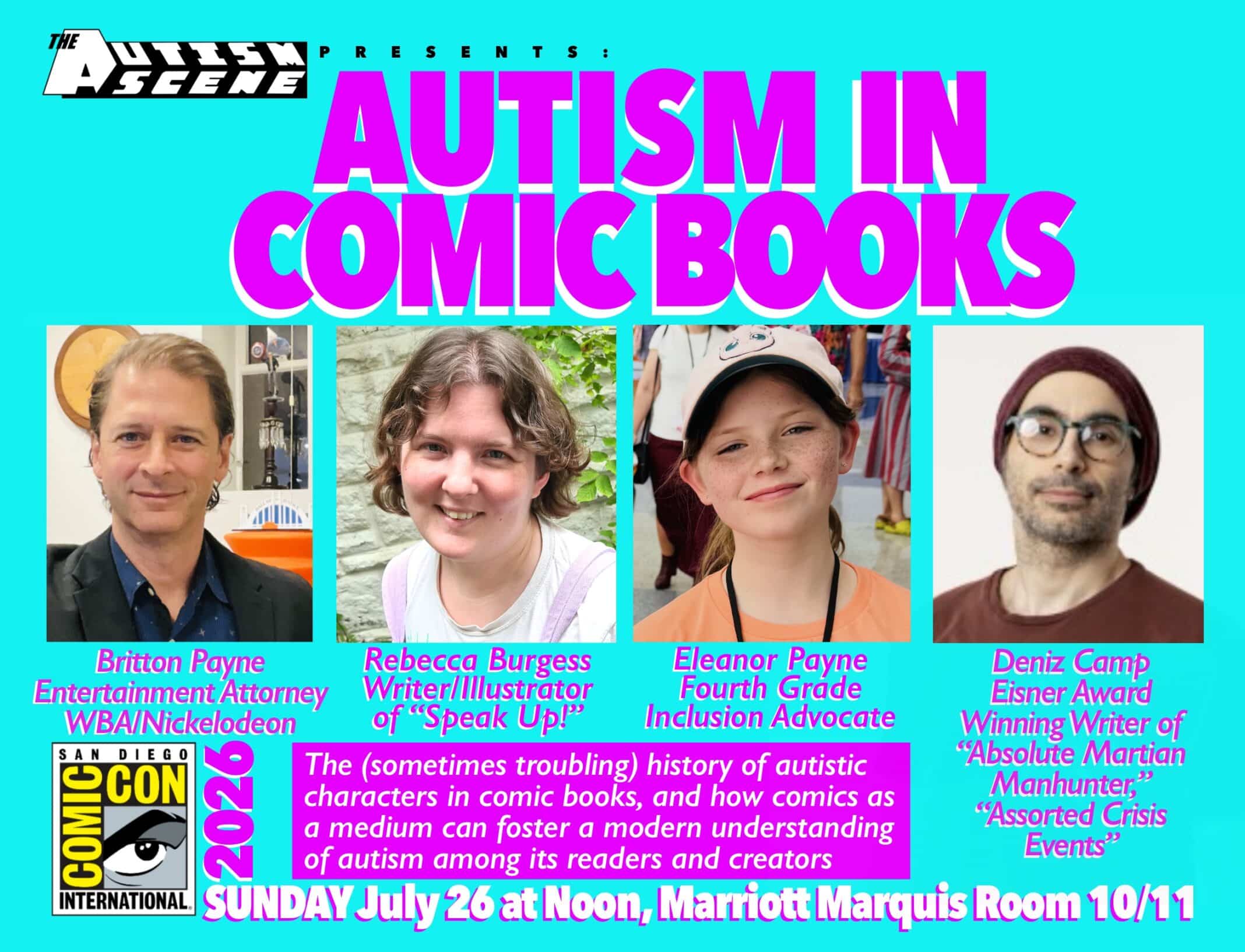
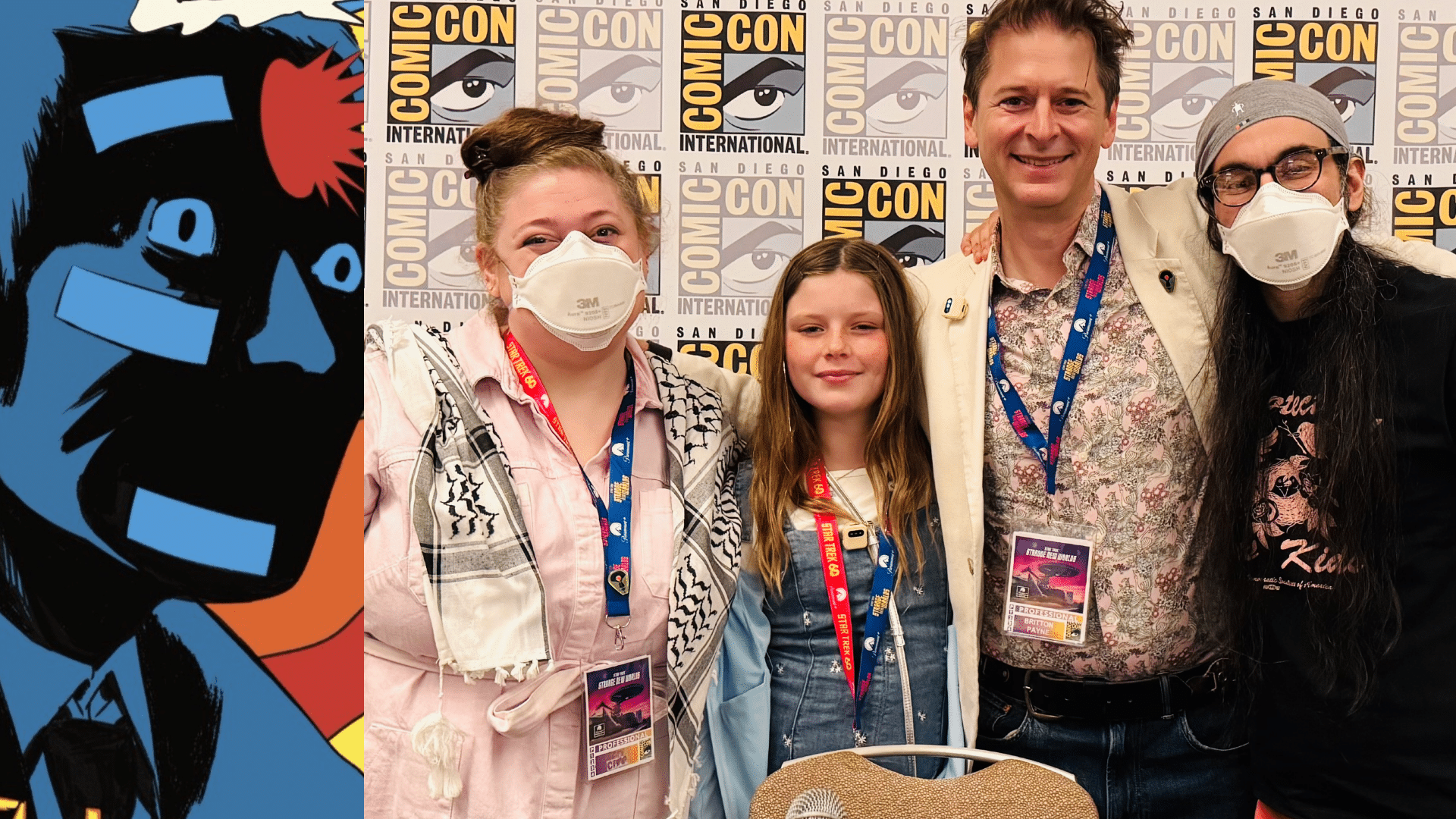

In continuing its mission for promoting autism representation in popular, the nonprofit the Autism Scene held an “Autism in Comic Books” panel featuring newly-minted Eisner Award-winner Deniz Camp discussing how his critically-acclaimed Absolute Martian Manhunter miniseries from DC featured autistic characters not only with the main character’s son but even the main character himself, John Jones.
For those who were unable to attend the panel in person, the Autism Scene organization has provided a summary of some of the highlights which you can read below:
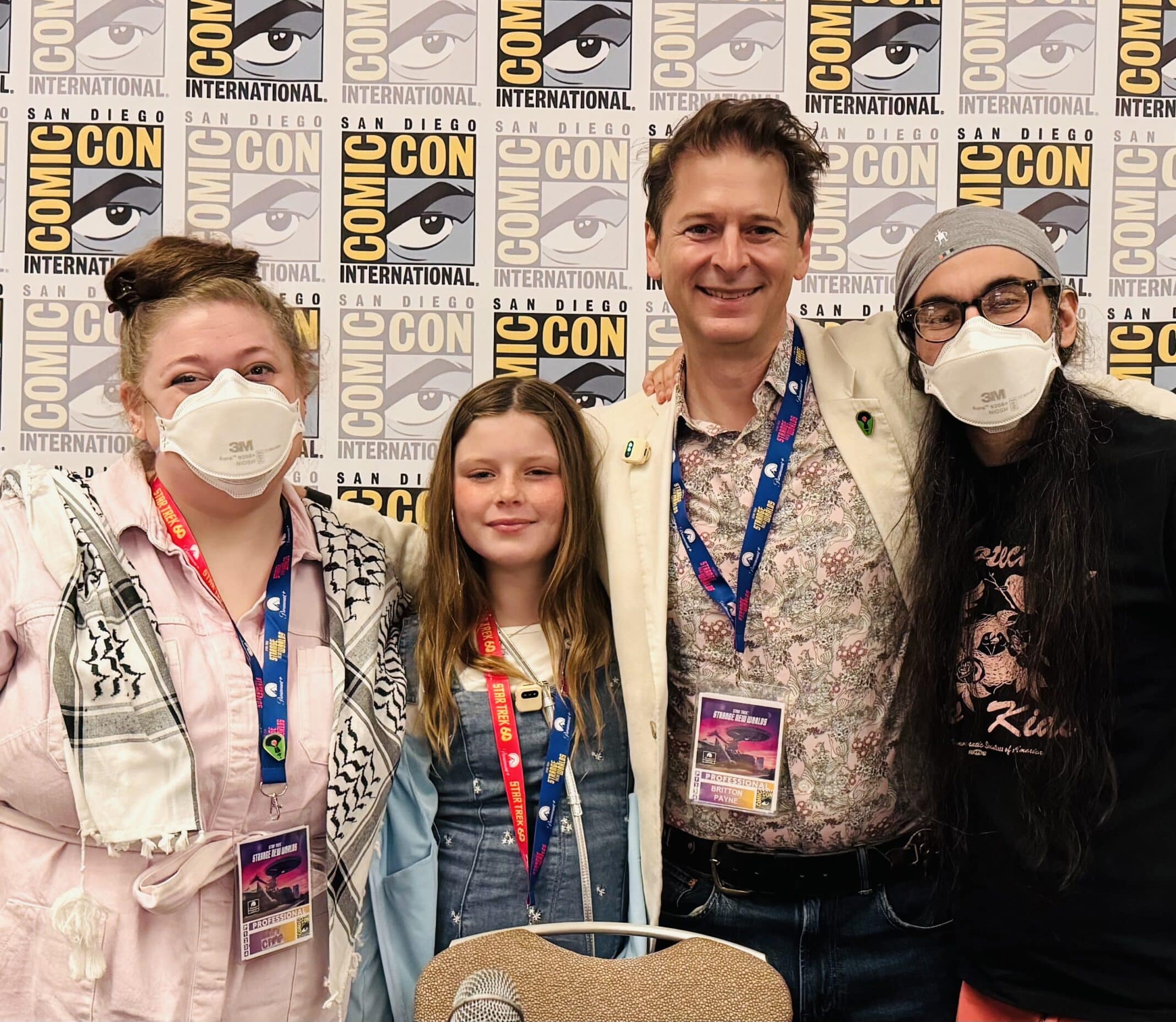
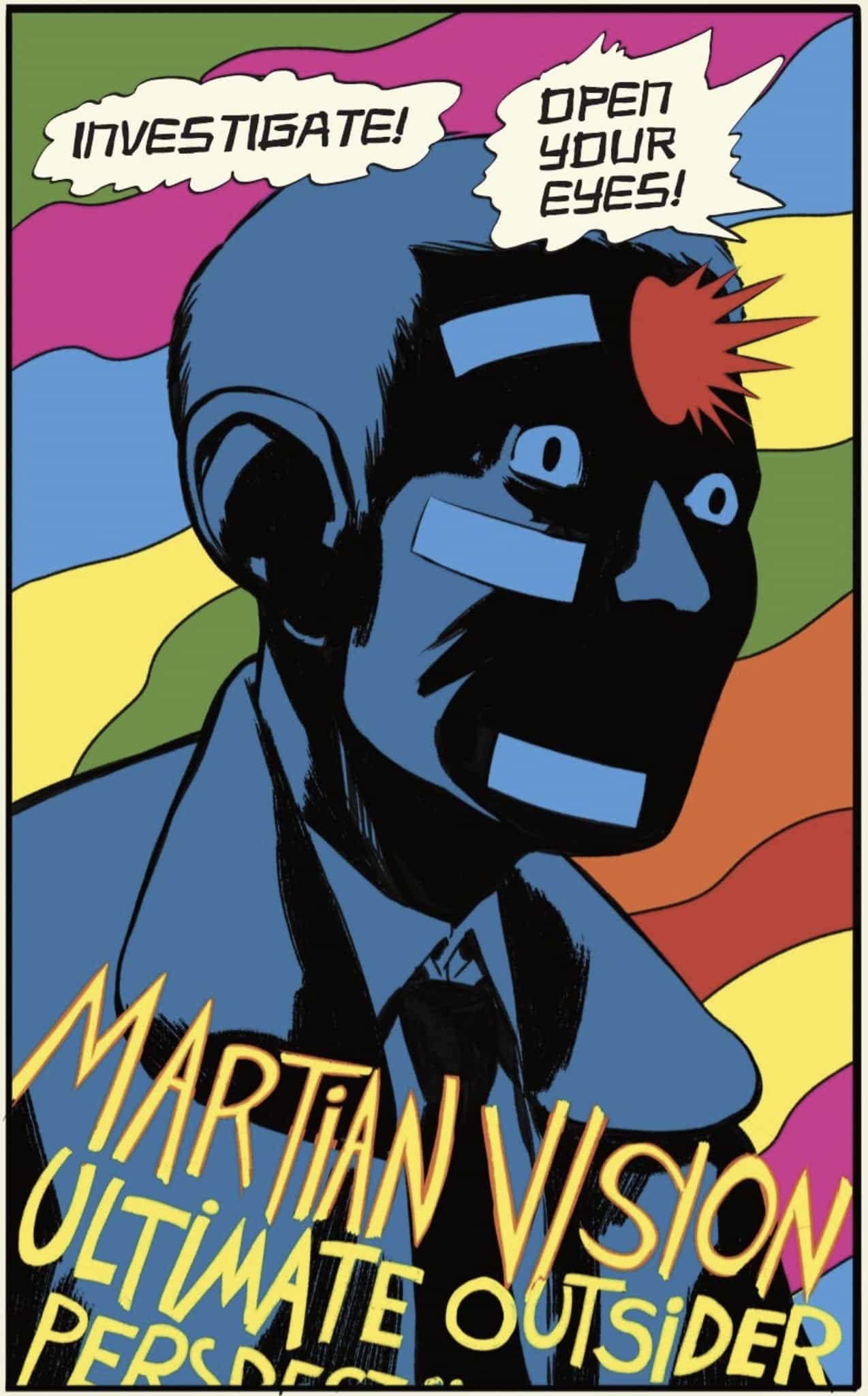 This year’s “Autism in Comic Books” panel at San Diego Comic Con 2026 was extra-special because of an appearance by newly-minted Eisner Award-winner Deniz Camp, writer of the highly-acclaimed Absolute Martian Manhunter limited series from DC Comics. In it, Camp and brilliant artist Javier Rodriguez tell the story of the hard-scrabble police detective John Jones, who wakes up one day with a well-meaning but surreal alien stranded in his consciousness. The two minds struggle to work together to fend off an alien invasion, which takes a toll on John and his family.
Autism is not explicitly mentioned in the series, but is highly suggested in the non-speaking child Tyler, and many have seen autism coded in his father John Jones. Deniz Camp used the “Autism in Comic Books” panel as an opportunity to clarify. “John Jones is himself on the spectrum and I’m writing him that way,” said Camp. “They know their son Tyler is autistic, he’s been diagnosed. But the father, John, is someone who has not accepted that diagnosis of autism, has not been willing to dig into himself in that way.”
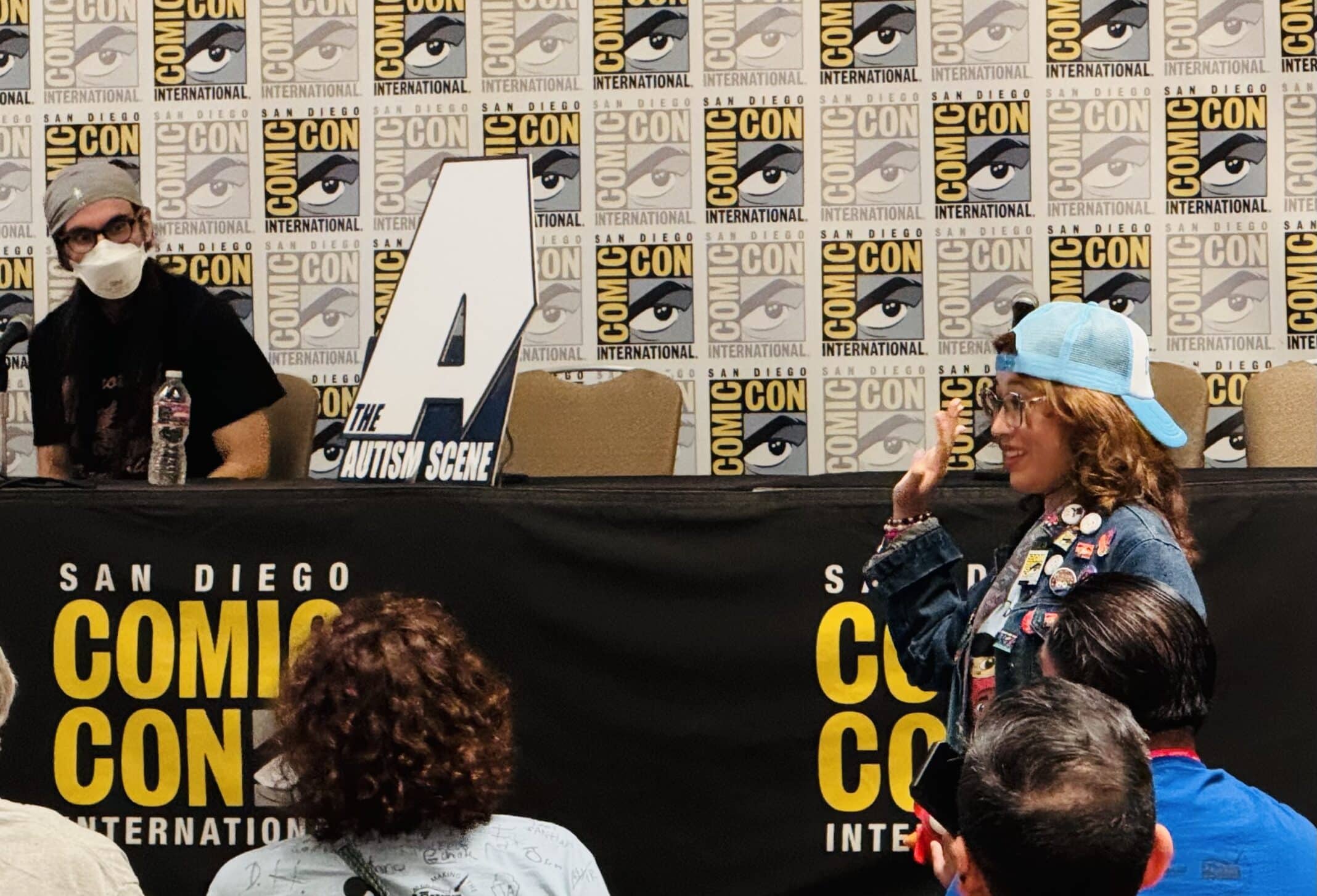
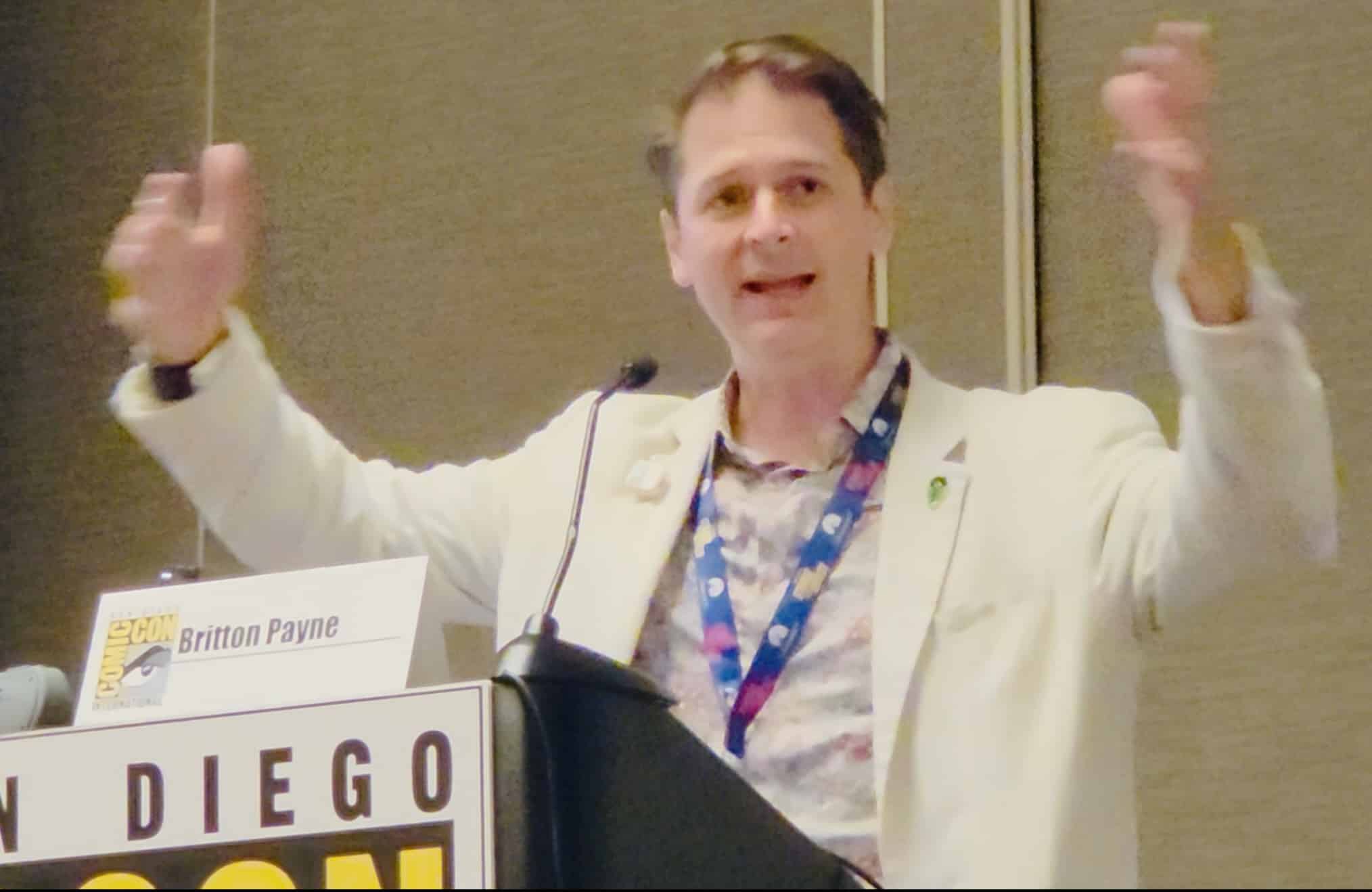
The Autism Scene regularly presents panels about autism in pop culture at comic cons and other events around the country. The panel was moderated by The Autism Scene’s executive director Britton Payne. It was rounded out with young autism advocate Eleanor Payne to handle the middle grade graphic novels, autistic graphic novel creator Rebecca Burgess talking about their autism-centered books Speak Up! and Incorruptible, and Deniz’s wife Katy Camp. The audience also included autism luminaries like animator and Love on the Spectrum star Dani Bowman and Dugout Dads’ new star Declan McConville (in full Adam West Batman cosplay). The panel usually details the history of every explicitly autistic character who has ever appeared in comic books, but having Katy and Deniz Camp on the dais let everyone take a deeper dive into Absolute Martian Manhunter.
Katy contributed significantly to Deniz’s research into John Jones, his wife Bridget and their son Tyler. Katy is a nurse, a midwife and a healthcare advocate who works on single-payer health care advocacy in New York. She got her autism diagnosis as an adult, after a lifetime of questioning why she had certain kinds of social difficulty. “I’ve learned a lot about disability justice and neurodiversity through my activism and my adult self-diagnosis process,” said Katy. “I don’t think it would be overstepping to say that a lot of what Deniz has learned through that whole process. A lot of what I learned is reflected and represented in Absolute Martian Manhunter.”
“My wife is an autistic person,” said Deniz, “and so living with her, talking with her, and reading some books that she recommended, a lot of that went into Absolute Martian Manhunter and kind of showed a whole spectrum of neurodivergence, something that I’ve studied. It was a big thing for me to learn that there’s no one way to be autistic, to be an autistic person. I wanted to be very careful that I didn’t make it seem like me, somebody who’s not autistic, was trying to say, ‘This is what autism is.’ Putting multiple different kinds of neurodivergences in the book was really important to me.”
Deniz carved the story of Absolute Martian Manhunter from learning about and experiencing Katy’s family dynamic. “Her father is undiagnosed and unwilling to accept the diagnosis. And that’s no judgment there – everybody has to come into it in their own way,” says Deniz. “I saw the kind of strife that it could cause Katy and some of the other kids who were diagnosed or weren’t diagnosed. For me, it was seeing that everyone had all the right intentions, but there was this miscommunication, this difficulty in communication, because not everyone had the language for it.”
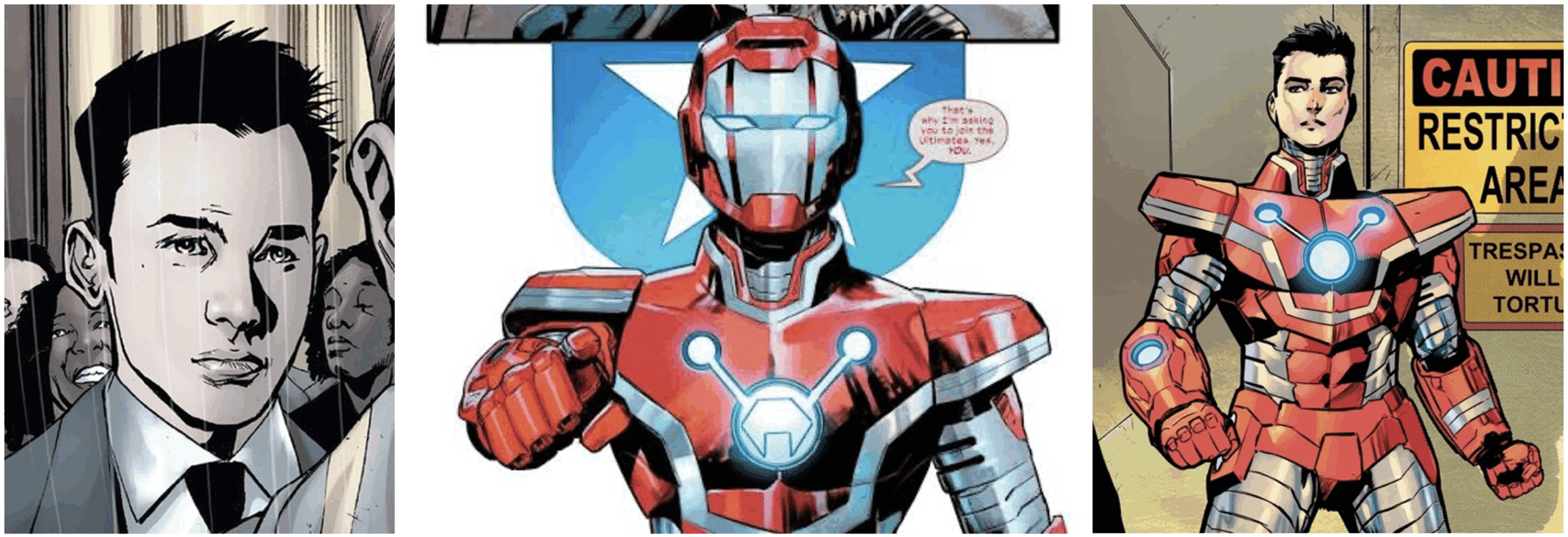
At the “Autism in Comic Books” panel, Deniz Camp further revealed that Absolute Martian Manhunter is not the first time he has written a major comics superhero as autistic. “I did another book called The Ultimates at Marvel, and I wrote Tony Stark, the Iron Lad as autistic,” said Deniz. “He was even more based on my wife. There were a lot of moments that resonated with the audience as well. A lot of autistic people reading the book saw themselves in that character, and asked me specifically if I was writing him that way. And I told them explicitly that I was, and that it was based on my wife.”
The panelists had a rich discussion of the value of making characters explicitly autistic, or having them coded as autistic. “The Autism Scene is focused on pop culture aimed specifically at kids, especially neurotypical kids,” said Britton Payne. “When a character’s autism is explicit in a mainstream cartoon show or whatever, it helps young viewers expand their understanding of autism, destigmatize the word, and more easily translate to empathy for their autistic peers at school and on the playground.”
John Jones was undiagnosed, which paralleled Katy’s experience, and Tyler’s diagnosis was clear but not explicit. “There’s another reason I didn’t have the character’s diagnosis in the book,” said Deniz. “There’s a large number of people who are undiagnosed, and maybe with a profile like John Jones, not knowing or wanting to accept that diagnosis even. For kids, its super-important if you put that label on there. For adults who sometimes can be a bit more intractable, I wanted to put those things in there and let them think about it and wonder about them. Maybe they can see themselves or see their relatives in it without putting a label on it, maybe it could be helpful.”
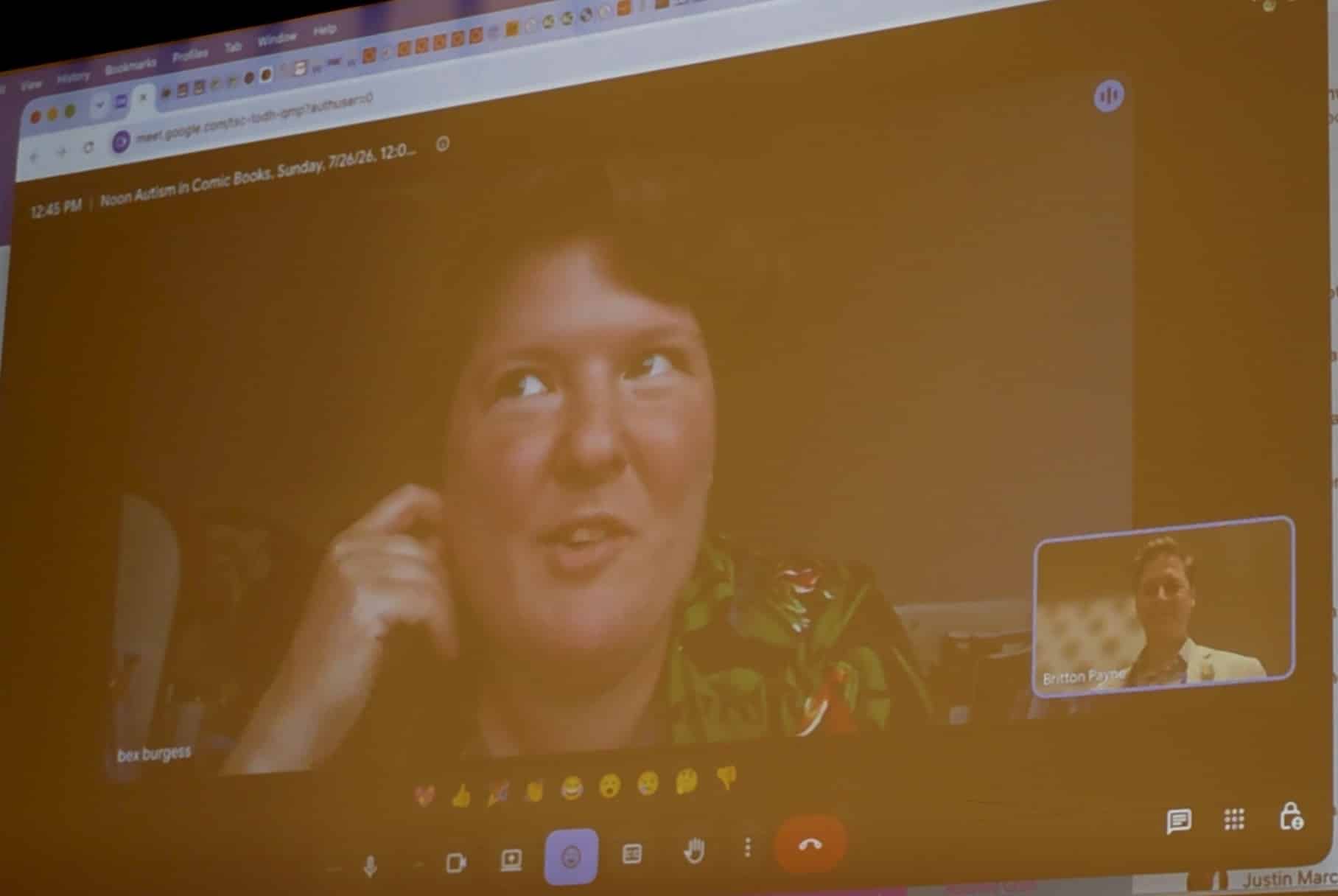
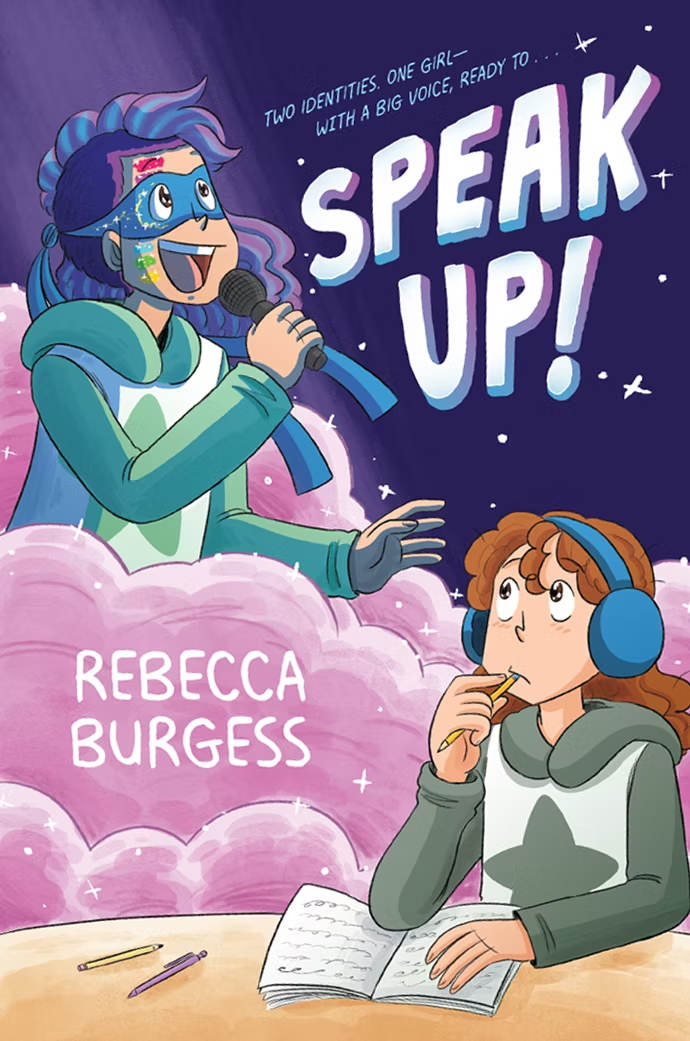
The panelists also talked with Rebecca Burgess about their middle-grade graphic novel Speak Up! Eleanor Payne summarized this book that regularly appears in elementary school book fairs. “It’s a great story. Speak Up! is basically about an autistic girl, Mia, who has a secret pop star online persona Ellie-Q, who is really big on the internet. There’s a bully at school who really likes Ellie-Q but always picks on Mia. Then Mia’s friend Charlie secretly signs her up for the talent show, and Mia is nervous to perform, and is worried what will happen if people figure out her secret, including her mom.”
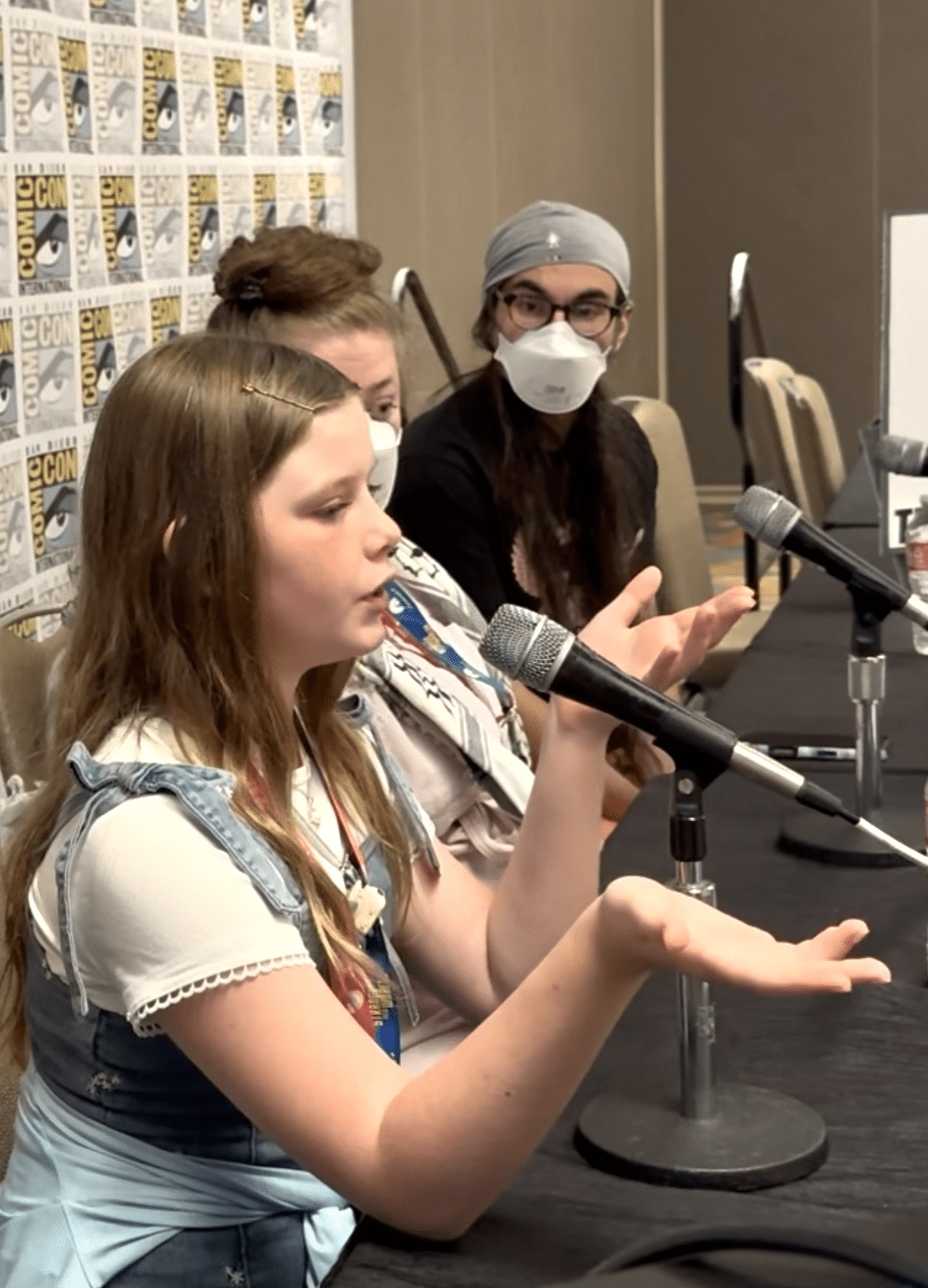
Burgess talked about the inspiration for Speak Up! “I made this book originally because at the time the stories that I was seeing about autistic characters were all very sad stories. I wanted to make a story that was not so serious and just something really fun. It kind of shows a little bit of the bad experiences that you can have when you’re autistic, but also the great experiences. I think by having a fun time, it kind of helps make autistic kids feel proud of themselves – all of themselves. All of our negative and positive feelings that we have about ourselves.”
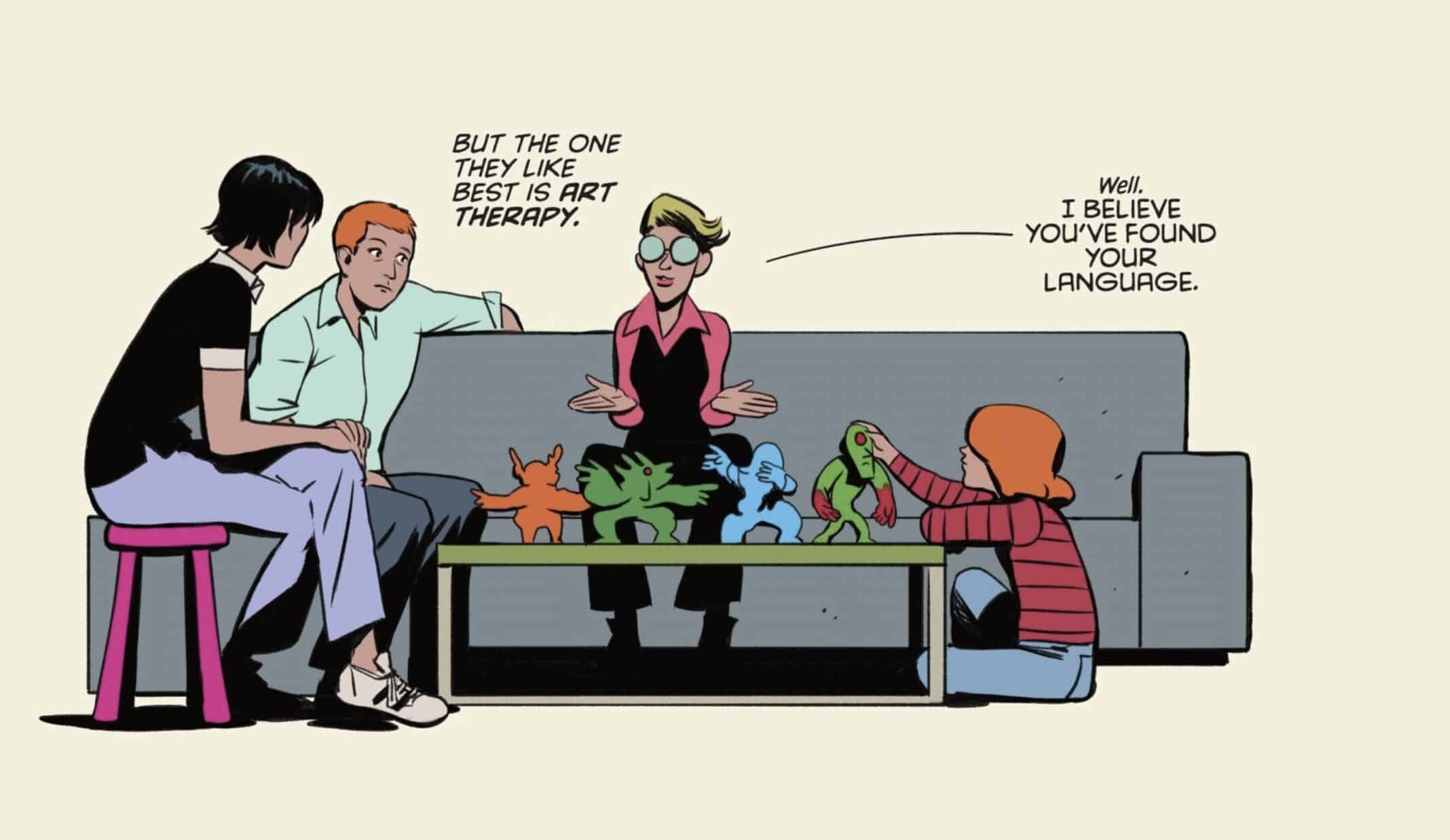
“I just came from a place of the hope that most parents want the best for their kids,” said Deniz Camp, “and that the conflicts that arise are from ignorance, or from an inability to communicate, and mostly well-meaning. And that’s what I’ve seen. But, when it is the case that parents do try to force something on their autistic child, or a person who has been diagnosed as autistic, because they would think that that’s what’s best for them — I think they’re wrong, they’re wrong, obviously — but it comes from a from a warm place, and it just takes some understanding.”
Contact: Britton Payne, Brit@TheAutismScene.org, (917) 561-3496
The Autism Scene is a non-profit that advocates for the inclusion of more explicitly autistic characters in kids pop culture.