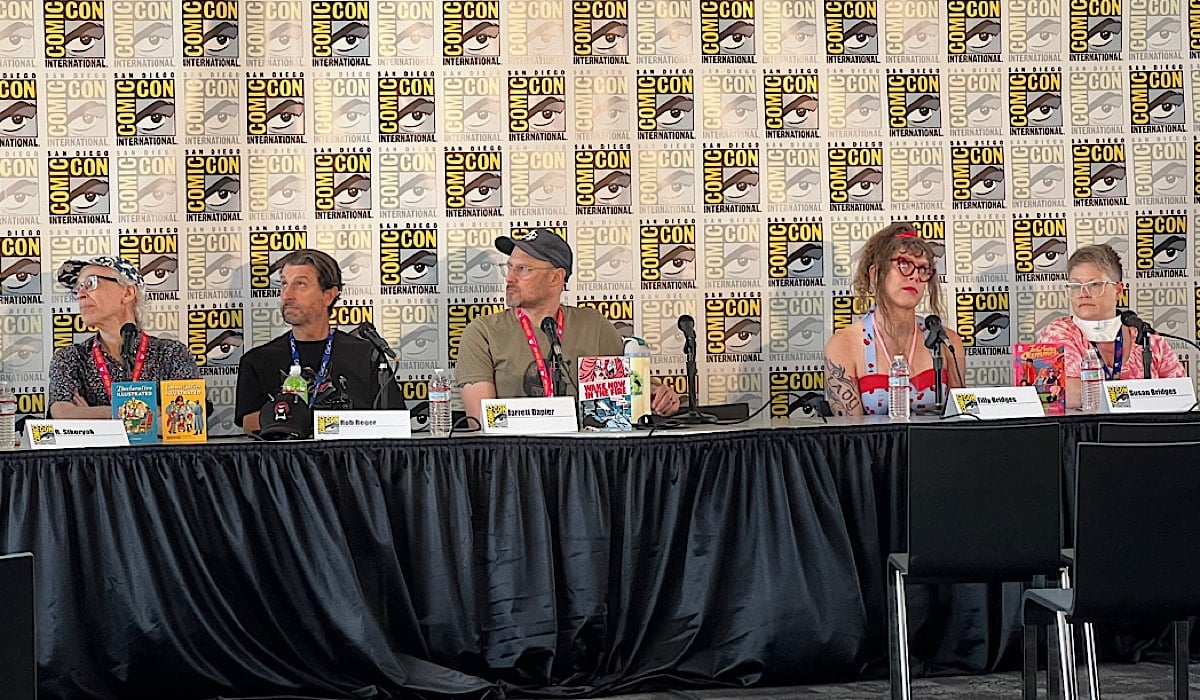

R. Sikoryak (Declaration Illustrated, Emancipation Illustrated), Rob Reger (Emily the Strange), Jarrett Dapier (Wake Now in the Fire), and Tilly and Susan Bridges (Just Another Summer, DC’s Princesses of the DC Universe) agreed on one thing at the Children’s Book Council’s Graphic Novel Committee San Diego Comic-Con panel, “Drawing Courage: YA Graphic Novels That Speak Up”: Comics don’t just tell stories about social change. They’re built to survive attempts to shut those stories down.
The clearest example came from Dapier, whose Wake Now in the Fire dramatizes the real 2013 banning of the late Marjane Satrapi’s Persepolis in Chicago Public Schools. Built from grad-school thesis interviews with the teens who organized and facilitated the pushback, the book centers around a detail that continues to amaze Dapier: Students heard about the ban at 2 p.m. and organized a library sit-in that very same night.
“They have such an innate sense of right and wrong and justice, and they hold up a mirror to adult society,” Dapier said.
The panel’s other three creators traced that same instinct back to their own influences: Mad Magazine and Harvey Kurtzman’s cultural parody for Sikoryak, punk album art’s DIY ethos for Reger, and ’90s Superman comics for Tilly Bridges. Bridges later found herself reflected as a trans reader in Jadzia Axelrod’s Galaxy: The Prettiest Star.
Asked why comics specifically carry this weight, Dapier pointed to “reading shame,” the cultural message that pictures don’t count as real reading.
“Here’s a whole fricking book of pictures,” he said, calling the format itself a built-in act of resistance.
Sikoryak, whose books reproduce the unabridged text of the Declaration of Independence and the Emancipation Proclamation, added that comics let readers “dip in and out,” absorbing dense material at their own pace.
The Q&A turned practical when the discussion shifted to legacy content and book bans. Tilly Bridges offered a working model: Treat problematic older material the way Looney Tunes handled its own racist history on DVD, keeping the work intact but adding context.
“If we ignore the problems, they think it’s better,” she said.
Dapier agreed, warning that quietly rewriting classics erases more than it protects, though he flagged harder cases like Dr. Seuss’s If I Ran the Zoo, which was pulled from his own library’s shelves before he joined the staff.
Dapier widened the lens to the panel’s audience as a whole, noting that trans and nonbinary people have existed “for a thousand years.” They simply lacked the language or safety to say so.
Bridges closed with a message aimed squarely at her book’s teen readers: “It doesn’t matter who you are as long as you are happy with it… nobody else gets to tell you who you have to be.”
Stay tuned to The Beat for more news from SDCC ’26.