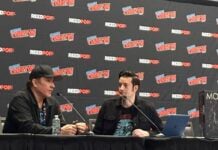
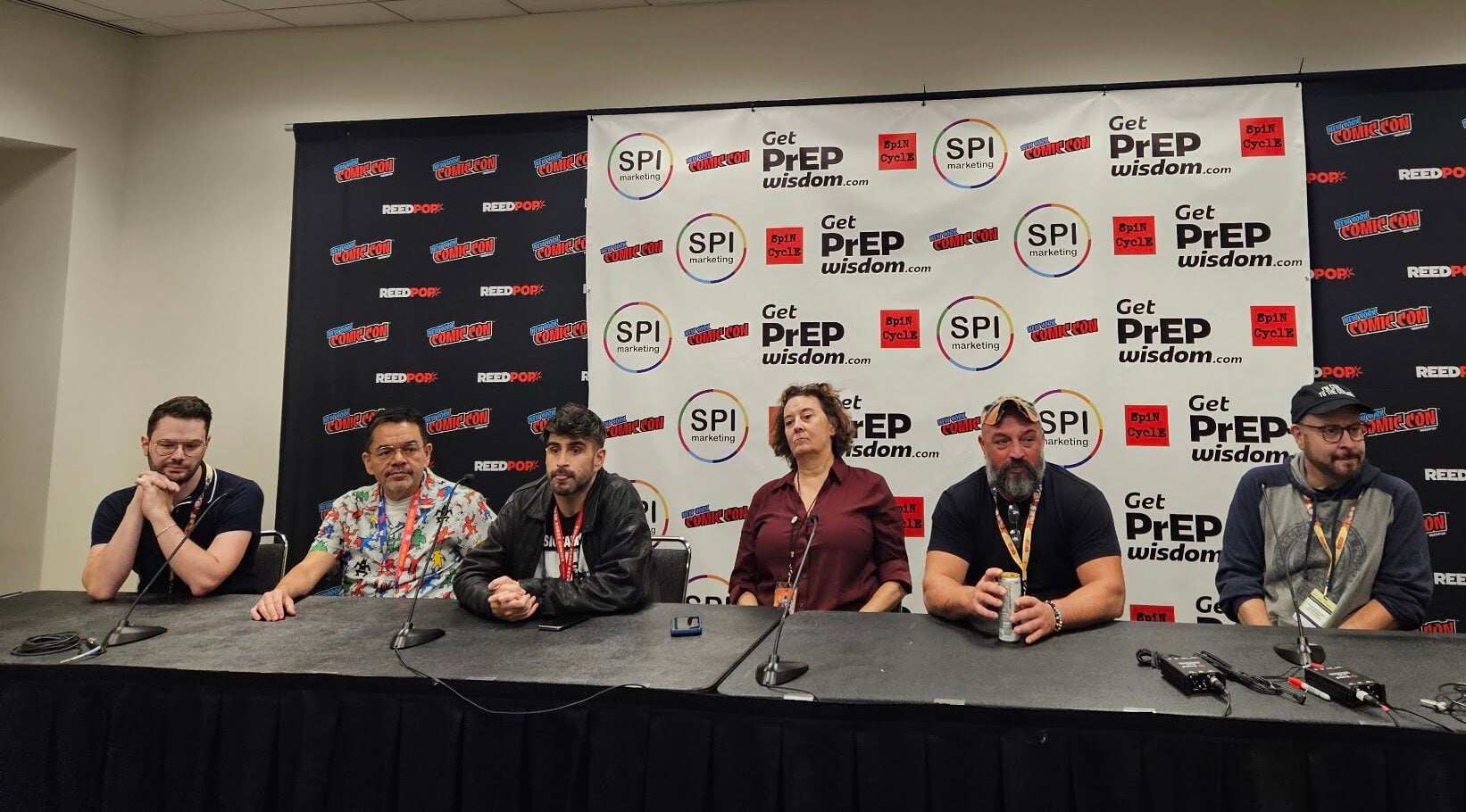

The NYCC panel “Ink and Identity” opened with panel moderator Marc Andreyko clarifying that the panel description that made me sign up for the panel (“A fast-paced showcase of independent comic creators discussing how they weave trans, non-binary, and queer lived experiences into mainstream and indie comics”) was inaccurate, and that instead they would be focusing on queer characters in mainstream superhero comics, which I generally do not read. ‘Well, maybe I’ll learn which mainstream superhero comics I might want to read from this panel,‘ I thought, and remained in my seat instead of leaving immediately.
The panelists had a wide range of experience with mainstream comics: Phil Jimenez has been writing and drawing comics for Marvel and DC for decades, and Joan Hilty was a senior editor at DC before moving into animation and the Avatar franchise at Nickelodeon. Connor Goldsmith has only one graphic novel from Dark Horse under his belt so far, but his X-Men podcast CEREBRO has millions of listeners (some of whom attended the panel) and his graphic novel Did You Hear About Mimi Green? Was published to positive reviews. Goldsmith’s collaborator Josh Cornillon was also on the panel, along with journalist George Gustines. Only Hilty could be considered an independent comic creator to any degree as per the panel’s original description.
There were no trans presenters on this panel about queer characters and only one queer woman.
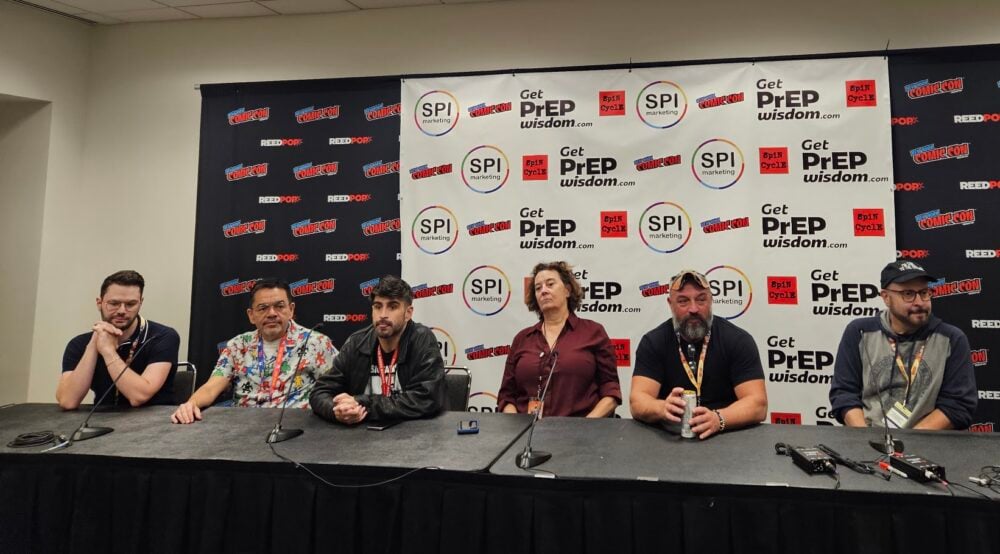
Andreyko opened by asking each panelist about the first gay character they remember seeing in mainstream comics, and Goldsmith immediately said Northstar. Cornillon mentioned Anole from Young X-Men, having started reading comics much later in life, and Hilty talked about finding Chris Claremont’s X-Men after reading gay and lesbian independent comics around 1985, after coming out in high school in the 80s. Jimenez said he read mainstream comics without seeking representation in them, and instead felt represented by the ideals and concepts he felt characters like Wonder Woman and the X-Men embodied. Gustines mentioned the first time he saw a Latino character in a comic book, which was more impactful to him than the first gay character he saw.
Andreyko said that in regards to queer representation in media, “the amount of progress is like going from the telegraph to the cellphone.”
Jimenez said that nowadays, he’s less interested in seeing gay characters be gay on the page and is instead more interested in seeing them help other queer people and build queer community.
“Especially if they only do it once a year for the pride special,” Goldsmith said.
“That describes my sex life,” said Andreyko, to audience laughter.
The panelists discussed DC characters Manhunter and Obsidian, which Hilty and Andreyko both worked on, and how Hilty had fought to make Obsidian’s story feel less like an afterschool special. They mentioned Half a Life by Greg Rucka and its flaws, and Goldsmith said he read it as a teenager and it means a lot to him. “I don’t know if a gay writer could’ve outed a Jack Kirby character like Iceman. When one of us does it, it’s seen as pushing an agenda.”
A straight writer made Jon Kent come out, but queer writers made the character “really sing,” Cornillon said.
“It’s the learning curve of any minority in entertainment,” said Andreyko. “From exotic, to villain, to victim, to a three-dimensional character.”
The panelists talked about how the hypermasculinity of the ’90s Image era turned into a kind of homoeroticism regarding comics like The Ultimates and the works of Rob Liefeld, which reminded me of similar conversations regarding shonen manga and fan shipping.
A guest asked the panelists for their thoughts regarding the militarism of superhero comics, and Hilty tried to answer but Andreyko spoke over her to discuss his desire for heroes that want to be superheroes and don’t turn into genocidal maniacs and are not fueled by trauma. When Hilty was finally given the floor, she pointed out that superheroes are inherently militaristic and conservative as a concept, and that she sees more interaction between indie and mainstream storytelling as the real path to narrative innovation, pointing to Nimona as an example. Cornillon talked about how superhero comics are approaching a period of re-construction following the deconstruction of the last few decades. “The pendulum always swings.”
The panelists shared times gay fans had told them how much their work meant to them. Jimenez teared up when he said that a gay fan told him comics were important because the good guy always beats up the bad guy, which didn’t happen for him in his own life. Andreyko mentioned a fan letter he got from a teenager in rural Kansas who happened to read Love is Love at a library and learned a better future for him is possible.
Goldsmith said that the most important thing fans can do to make sure there’s more comics they love is respond enthusiastically to what they enjoy, and if fans are articulating how gay and trans certain characters already are, it shows to shareholders it won’t devalue the IP. Hilty, having been on the corporate side, says “I don’t think it’s seen as devaluing the IP.” The new Avatar series, Seven Havens, is a lot more queer than Legend of Korra was, but “we won’t know if we’d done a good job if we don’t hear from you.”
Goldsmith mentioned that certain types of fans have a “prosecutorial approach to all art” that is detrimental to culture, and that what really moves the needle is trying new things.
Hilty maintains that comics must continue to innovate outside of superheroes and support new creators.
In regards to representation, Jimenez said that “any progress is progress if we’re all moving toward the same goal.”
Overall, I found this panel disappointing in how it differed from its description, and in how three of the five men on the panel dominated the conversation and talked over the rest of the panelists. Gustines barely spoke at all, and Hilty was interrupted more than once. Not a great look for a panel about representation.
Stay tuned to The Beat for more news from NYCC ’26.