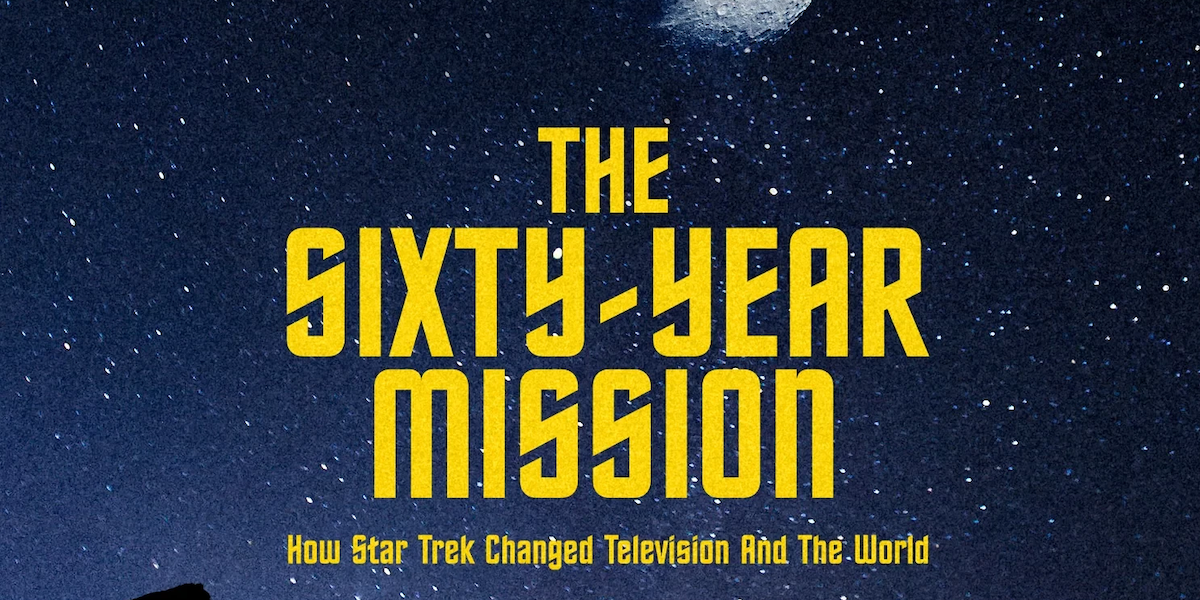

There’s a pivotal moment in the iconic series finale of Star Trek: The Next Generation, All Good Things…, where Picard witnesses the primordial soup coalesce to form the earliest spark of life. From Executive Producer William Shatner, The Sixty Year Mission: How Star Trek Changed Television and the World, captures that moment for Star Trek, illuminating the cosmic convergence of timing, philosophy, talent, and humanity that forged the legendary phenomenon that, 60 years later, shows no signs of losing its relevance.
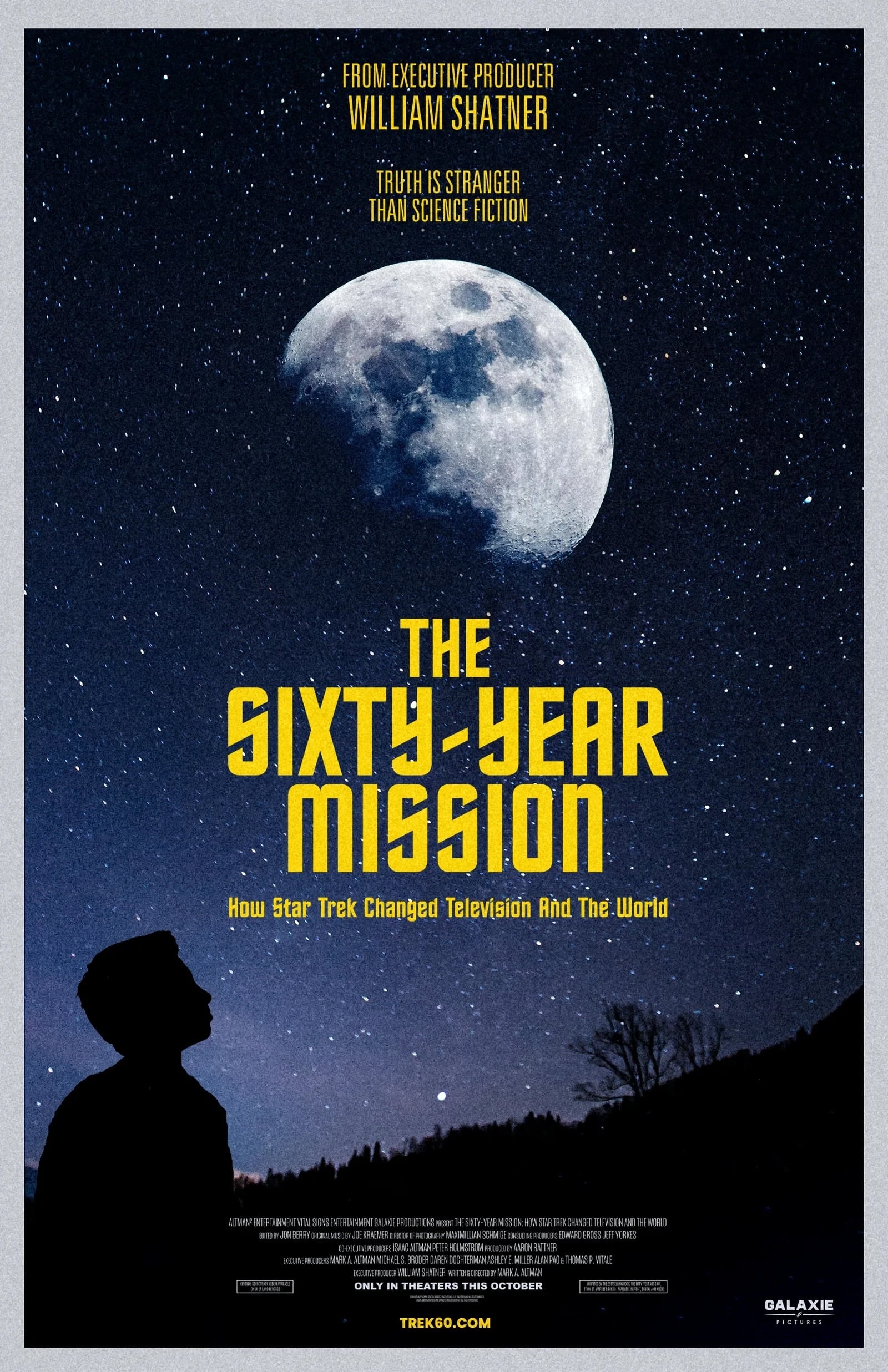
Featuring exclusive interviews with all three living stars of Star Trek: The Original Series (William Shatner, George Takei and Walter Koenig), along with stars of The Next Generation, Star Trek: Deep Space Nine, Star Trek: Voyager and Star Trek: Strange New Worlds, The Sixty Year Mission reveals the archival footage, behind-the-scenes innovations, and unsung heroes who gave Star Trek its special sauce.
At the film’s New York premiere on October 8th, 2026, Comics Beat asked some of its stars and creators to share their insight.
William Shatner, Executive Producer, Star Trek, Icon
Z. RICE: How has what Star Trek means to you changed over 60 years?
WILLIAM SHATNER: It’s been a growth, a wild growth, something that was uncontrollable. Here we are 60 years later, a phenomenon. I’m part of a phenomenon. Who thought?
RICE: What do you most want people to take away from this film?
SHATNER: Well, why is it a phenomenon? What happened? It’s an interesting question, both as a show business question, but also from a human point of view. What happened? Why did Star Trek affect so many people? That’s what this movie is all about.
Mark Altman, Writer/Director, co-Author of The Fifty-Year Mission: The First 25 Years
RICE: With 60 years of material, how hard was it to decide what to include and what not to include?
MARK ALTMAN: That’s a good question. It’s really tough. This first movie focuses on the original Star Trek in the 1960s, although we talk a little about what’s to come. In future installments, we’ll learn more about the ’70s, the movie series, and the shows that came later. I’m very proud of it. By focusing on that era of Star Trek, we’re able to do a deep dive and explore the complexities of everything rather than just scratching the surface.
RICE: Is there anything you learned about Star Trek that you hadn’t known before, or any new perspectives you developed?
ALTMAN: Oh, yeah. I was surprised because, having done the books, the podcast, and having been a Trek scholar – whatever that means – for so long, I thought there was nothing left to learn. And I learned so much. I think the movie really explores that. Having Bill Shatner as executive producer, George Takei in it, and all the living cast members, we got stories that I don’t think some of them have ever told before. One thing I was really proud of after our world premiere in Los Angeles was hearing from people who were huge Star Trek fans. They said, “I love the movie. I learned things I never knew, and I thought I knew everything.” And then they’d say they brought someone who had never seen Star Trek, and that person loved it, and now they want to watch Star Trek. To me, that’s the biggest compliment you can get: that we made Star Trek so compelling. This is a celebration of everything we love about Star Trek. I like to say it’s our birthday present for the 60th anniversary.
Ashley E. Miller, Executive Producer; Writer, Thor, X-Men First Class
RICE: What do you think sets Star Trek fans apart from fans of other franchises?
ASHLEY E. MILLER: Right now, New York Comic Con is going on while we’re doing this. There would be no New York Comic Con if we did not have Star Trek. Star Trek fans were the first fans in the world who came together globally to say, “Let’s celebrate this thing that we love that is unlike anything that we have ever seen.” There’s no fandom in the world that can make that claim. Everybody else is copying.
Robert Picardo, Voyager, Starfleet Academy
RICE: What is it like filming Star Trek now versus thirty years ago?
ROBERT PICARDO: Wow, good question, because I’m one of the few people who’s had it both ways, if you’ll excuse the expression.
RICE: Yes, I know!
PICARDO: The Starfleet Academy main set was the most extraordinary set I’ve ever been on as an actor in my life. It was so enveloping and on such an enormous scale. And I’m so sad that it’s been cut up and thrown away. So I think the technology just made it realer for the actor. But having said that, the most important thing is the storytelling. And we don’t need all of the new bells and whistles if the story is great.
Karim Diané, Starfleet Academy
RICE: When you’re joining something like Star Trek, which has 60 years of history, is that more inspiring or intimidating?
KARIM DIANÉ: Inspiring. I’m not scared of nothing, baby! Very inspiring. I’m most inspired by Nichelle Nichols, learning her story. I remember the day I learned that Martin Luther King was a fan of Nichelle and convinced her to stay on the show. I was like, “Holy crap, this is an incredible piece of history.” If I could just have an ounce of what she had and an ounce of what she did, you know? And I’m hoping that by playing this queer character, and by being loud about it on the internet, that she would be proud of me.
RICE: I am sure that she would.
DIANÉ: Yeah. Thank you.
RICE: Do you remember the first time you saw Star Trek?
DIANÉ: Yes, when I got cast!
Nana Visitor, Deep Space Nine
RICE: Kira was such a complex character. What did you get to explore with her that we hadn’t seen in other female roles at that time?
NANA VISITOR: The ability to fail. The ability to have emotions that might be uncomfortable for other people, or even for herself. Having appetites, and even having spirituality. All these things were unusual. She also had a questionable past, and yet she was given – as she herself said, using the perfect word – grace to find herself. The crew of characters held her while she recovered from post-traumatic stress.
RICE: What do you think Deep Space Nine brought to Star Trek that it hadn’t seen before?
VISITOR: I think it brought the process of getting to Roddenberry’s perfect future. We’re all together on a space station, and you could think of the world as a space station. How are we going to make it work?
And fundamentally, the documentary explores just that – how did Star Trek work? Perhaps the answer is as simple as the film’s final line: “We can all agree, Star Trek rules.”
Keep up with all of The Beat’s Star Trek coverage here.
Stay tuned to The Beat for more news from NYCC ’26.