
Welcome back to The Beat‘s breakdown of season three of The Lord of the Rings: The Rings of Power, Prime Video’s prequel to J.R.R. Tolkien‘s novel, depicting the rise of the Dark Lord Sauron thousands of years before the events of the book and films. The first four (of eight) episodes are available now, so join us for a mix of recap and review of each chapter, sharing our thoughts as a Middle-earth devotee on their merits, flaws, and how they engage with Tolkien’s themes and ideas; in other words, spoilers.
“The Secret Fire” (written by J.D. Payne and Patrick McKay, directed by Sanaa Hamri):
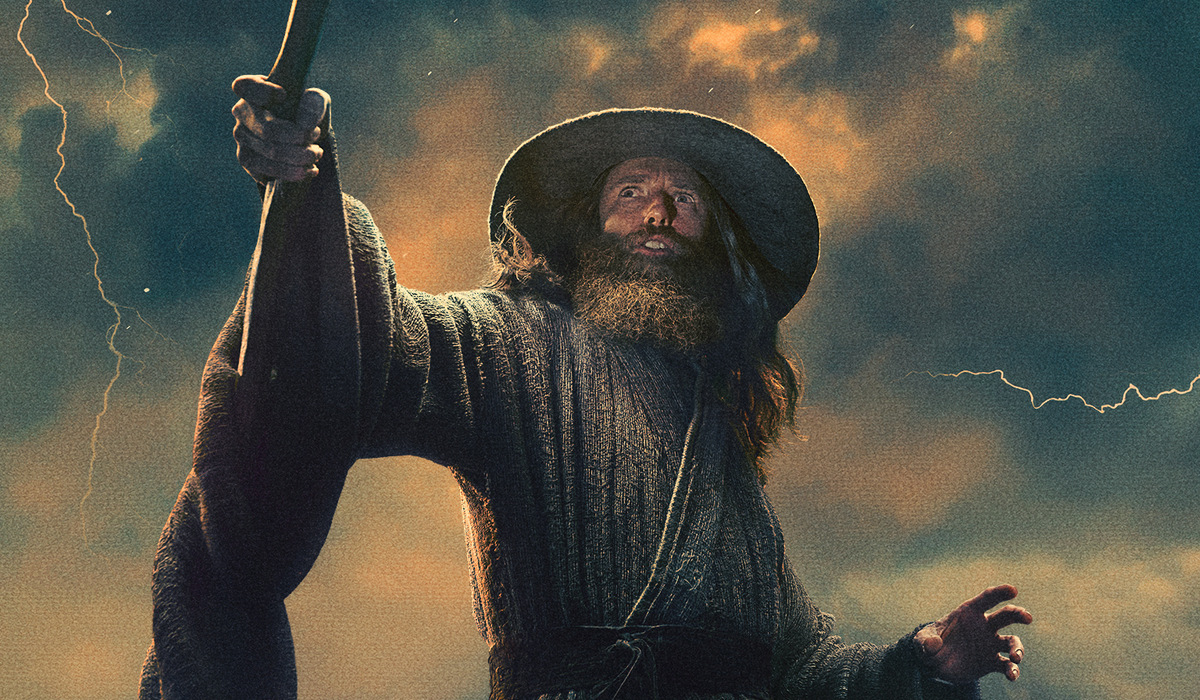
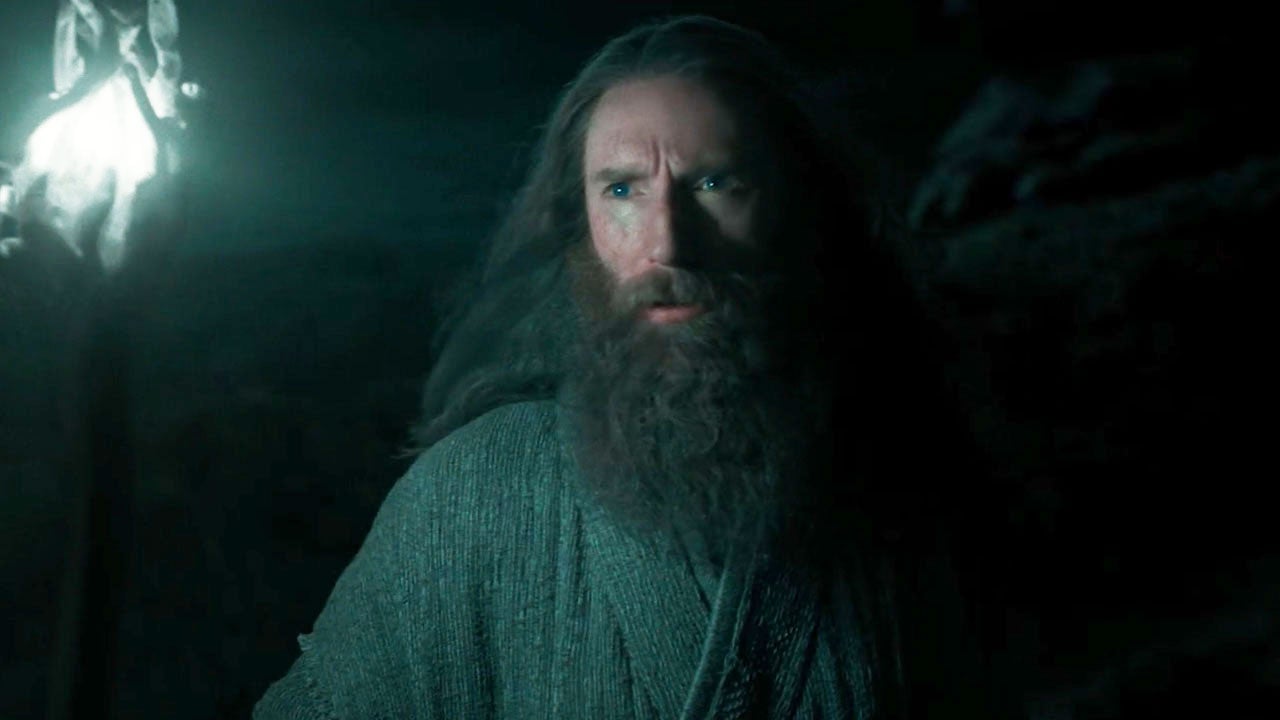
After his brief appearance in the season’s first episode, we fully catch up with Gandalf in Rhûn here, as he and Tom Bombadil (Rory Kinnear) witness Khamûl usurp the Dark Wizard’s throne. It’s not the show’s strongest sequence, as the pair’s confrontation comes across as stagy and hokey, with an emphasis on visual and sound effects (including the infamous Nazgûl wail) instead of the pair’s acting; it’s also wild that the the Nine are still portrayed as being powerful enough to break a wizard’s staff.
Gandalf is somehow incognito until he can’t be, although it appears his story is meant to be lighthearted, between the oblivious way he dispatches the mystic who’s onto him, and his scene with the rudely awakened Oliphaunt, who turns out to be nothing more than an abused animal (despite its creepy fanged mouth). He returns to Bombadil’s home, where it becomes clear he’s grown exasperated with his enigmatic mentor, who’s decided to return to his dwelling in the west, instead of continuing to help against the Dark Wizard.
Still, Bombadil obliquely advises Gandalf to fetch a runaway rabbit, that leads him to the titular fire the wizard will one day call himself a servant of. The Secret Fire was Tolkien’s term for the Holy Spirit in his fiction, and this plays very much like Moses and the Burning Bush, with God/Eru Ilúvatar (Allan Corduner) revealing Gandalf was one of five sent to aid Middle-earth, and that the Dark Wizard was Pallando, one of the two Blue Wizards, until he betrayed and murdered his partner, devastating Rhûn in the process. (Tellingly, Pallando’s robes and jewel in his staff are now blue.) It’s pretty amazing God Himself has had dialogue on the show before any of the Valar.
More importantly, Ilúvatar tells Gandalf he was not sent to defeat Pallando, but to save him. Suffice to say, this is an important theme in the book, where Gandalf tells Frodo to “not be too eager to deal out death in judgement,” and that even someone as wretched as Gollum (or in this case, Pallando, and indeed the Oliphaunt) may still have some part to play in saving Middle-earth.
After awakening from his experience, Gandalf checks to see if Bombadil has left, and finds his cozy hut is now dark and desolate. However, the wind deposits Bombadil’s pointy hat by his feet, and he picks it up and dons it. It’s a very superhero moment, but for better or worse, everything about Gandalf on The Rings of Power has been reminiscent of a superhero’s origin story, and perhaps that’s because of their own Biblical influences.
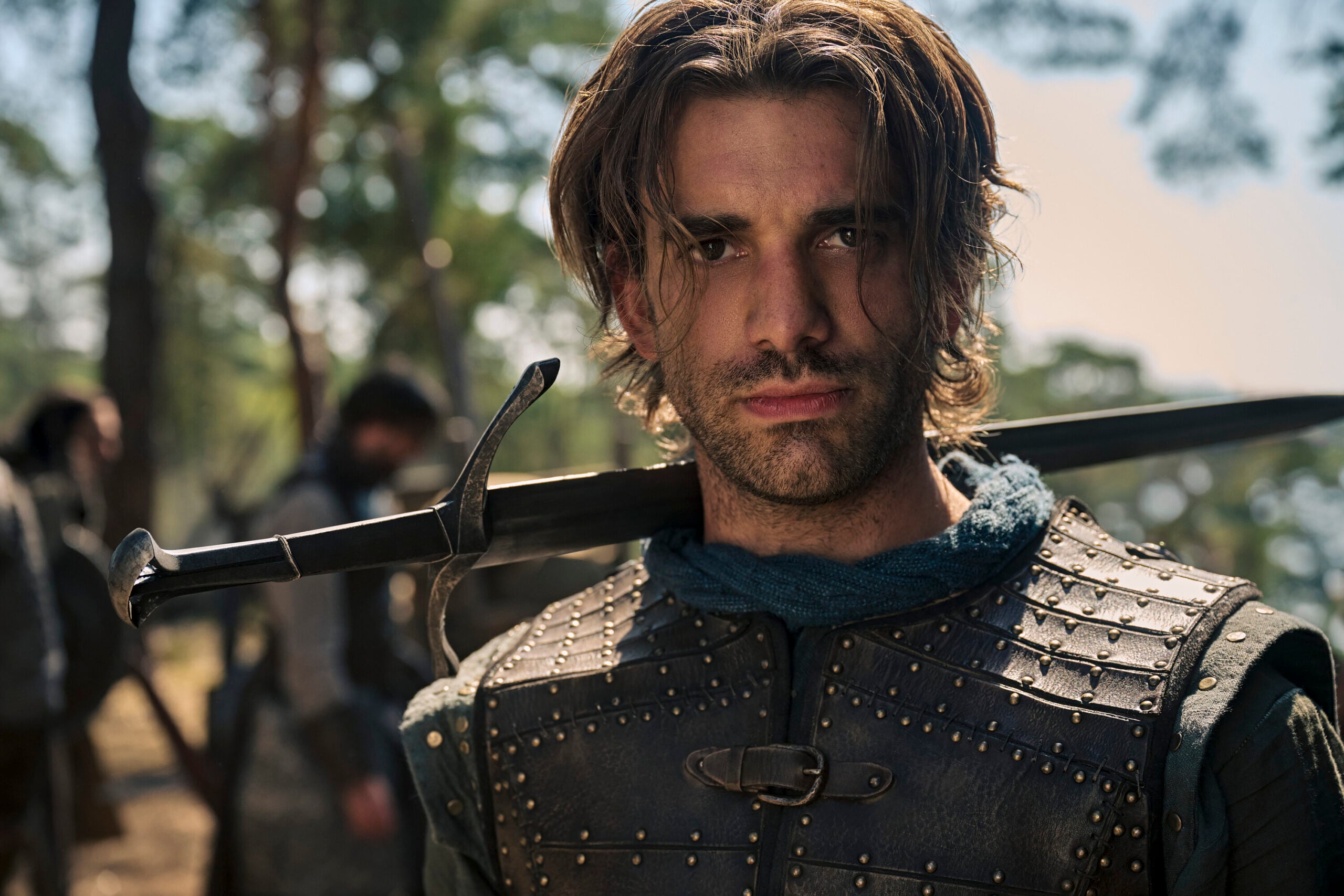
In Númenor, we’re introduced to Isildur’s charismatic brother Anárion (Andrew Richardson), training the Faithful to fight, when his father arrives to inform him of the mole in their ranks. Elendil has ascertained the traitor’s meeting place and intends to flush him out, but only trusts his son to accompany him. That night, Elendil confronts him in a ruined stargazing tower, only to discover it’s Kemen, carrying out the trap Pharazôn mentioned in the previous episode. Kemen expresses surprise that Elendil hasn’t been informed of his daughter’s death, while creepily telling him of how beautiful she still looked afterwards. Although he and his son put up a good fight, Elendil winds up captured and chained for the second season in a row.
North of Rivendell, Galadriel, Arondir, and Marnûkh undertake their journey to Gundabad, where the Orc proves to be too vulgar and crude of a person to get on with, although he starts to show glimmers of grace, from declining to eat a butterfly in front of Galadriel, expressing a desire to bury a dead comrade found on a quiet battlefield, and revealing he composed a haiku for his friend. While the three’s dynamic is strongly reminiscent of Frodo, Sam and Gollum, Marnûkh is arguably a greater example of an Orc with more dimension and complexity than Adar, as he looks far more like an Orc, and is hobbled by everything people find vile about them.
The trio are being followed by the Ring-servants who were in Khazad-dûm, who use their dark magic to turn a bird into one of the crebain that keeps Sauron informed, and are soon forced to hide from them. The scene is a blatant homage to the Hobbits hiding from the Ringwraith in Peter Jackson‘s The Fellowship of the Ring (which had been previously referenced in the first season), but it goes beyond that when Galadriel uses her Ring to create a distraction with the butterfly Marnûkh had stashed away for a snack. Not only does it foreshadow her eventual role as a sorceress, it reflects how, even when there is evil, there is also always nature and beauty in the world, and even evil must be awed by how much greater it is.
The close encounter exacerbates Arondir’s distrust of Marnûkh, and while the Orc does not endear himself, Galadriel decides he’s still drowning in grief over Bronwyn’s death as a result of their kind, and that he should return to Theo. Ironically, Sauron himself is suspicious of Marnûkh, and asks for information about him. The Orcs bring him the Elven couple Carammir and Ellas (Lorne MacFadyen and Alice Orr-Ewing), who were captured at Eregion, and he learns Marnûkh had moved prisoners elsewhere. It’s an incredibly twisted scene, with Sauron getting the intel by poisoning Ellas, slipping a fire-drake’s glands into the water he gives her to turn her into a literal time-bomb. He gives Carammir the antidote, but he’s unable to open it, killing them both.
The way Sauron disdainfully refers to himself in third person during the scene is a great reference to the books explaining his name is an Elvish insult (it means “the Abhorred” in the Quenya dialect), and Carammir pleading with him by asking if there’s someone he feels “something like love” for is so revealing. Sauron certainly desires “mastery” over Galadriel, but is he capable of love, romantic, platonic, or otherwise? Maybe he did once, but it’s already hard to believe this monster was also capable of being heroic during his time as Halbrand.
Between Sauron discovering Marnûkh’s duplicity, and Arondir seeing he was telling the truth about a planned attack on a nearby settlement, it becomes clear Galadriel was right to trust the Orc, and Arondir rejoins them, ready to infiltrate Gundabad. All in all, this is an odd duck of an episode, with Marnûkh and Sauron’s sequences strongly outweighing the tonal dissonance of Gandalf’s adventures, as interesting as Ilúvatar himself making an appearance was. Also, more facetiously, if any overwhelmed parents needs to answer kids’ questions about rabbits’ role in Easter, they can always tell them about the bunny in this episode.
Check back soon for our thoughts on the fourth and final part of the premiere, and as always, namárië.