

Abigail Hing Wen has spent years mastering the novelist’s version of total creative control: dialogue, pacing, and interiority. But a decade-old manuscript she once shelved as “too early” is premiering as a live-action/animation hybrid short this week at Comic-Con International in San Diego.
Wen stepped behind the camera for The Vale: Origins, joined by animation director John Aoshima, who was enlisted to help solve the tricky problem of blending live action and animation into a single coherent world. Ahead of the premiere, Wen and Aoshima talked about the leap from writing to directing, why a story about a boy who escapes grief into an AI-built fantasy world finally found its moment, and what happens when you put 12 six-year-olds on a set.
Nancy Powell: The Vale is such a different world from Loveboat, Taipei — middle-grade, fantasy, and AI-driven. What drew you to tell this story now, and what made the short film the right vehicle for it?
Abigail Hing Wen: Before I published Loveboat Taipei, I’d actually written and buried five other novels, and there was no overnight success there. But my very first novel was actually a middle grade fantasy. So, I think that’s actually where my heart really is. It’s my first love. I love the Chronicles of Narnia and A Wrinkle in Time. I think of The Vale as a combination of the two.
I actually wrote The Vale in 2015 — so ten years ago, before Loveboat Taipei. It was the last book that I had to bury before I finally broke out, and it was too early to publish a book about AI generation, so that that was why that one had to vanish into the ether. But with the short film, I think what happened is I just kind of hit the zeitgeist at the right time. A series of coincidences led me to pull the story out again, and then something just made so much sense. The opportunity to direct a short film, and take on such an interesting creative challenge of doing live action and animation together, was all part of the fun of it.
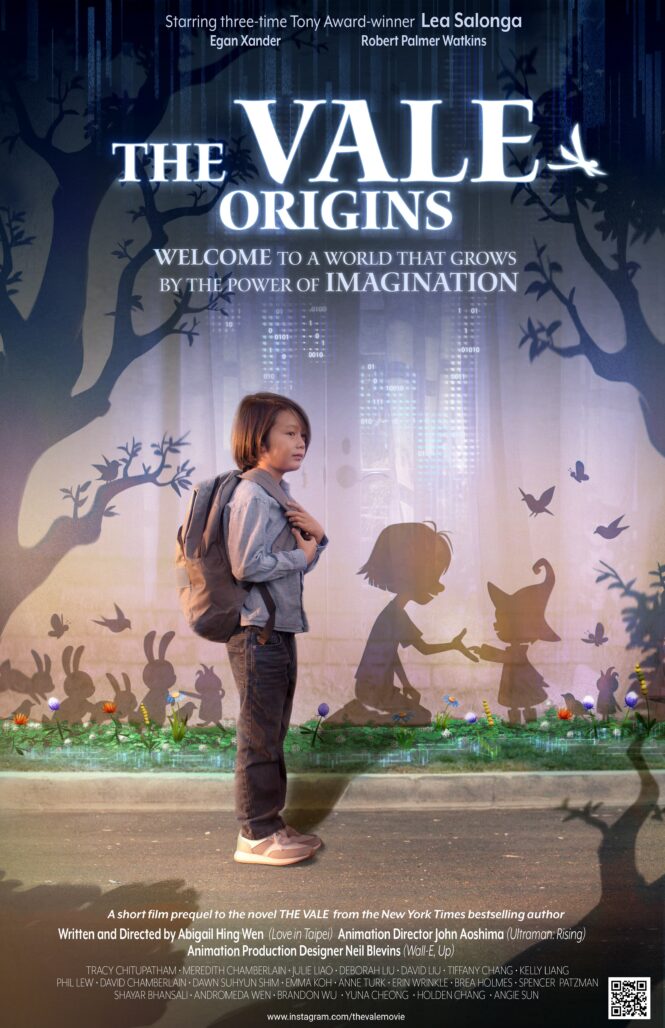
Powell: Bran finds real comfort in the Vale, enough that it helps him process his grief. But there’s an obvious tension there too, a kid that immersed in an imaginary world, especially one his own parents’ AI built. How did you think about balancing those two realities for him?
Wen: That is actually the heart of his journey in the novel, and that was actually one of the challenges of doing the prequel because I’m like, well, the prequel, in sets up the novel, so, it doesn’t really end on like it’s not a full happy ever after. You don’t want this kid vanishing off into the ether and living in this virtual world forever.
So that’s actually why we added the post credit scene where we see him engaged with his classmates, healed, recovered enough to actually have real human relationships. In the novel, which takes place seven years later, he’s been living in this Vale for seven years. I mean, he goes to school, but really, his heart and soul are poured into this world that he’s creating. And part of his journey is to learn how to live in the real world.
Powell: Is Bran’s balance the model you’d want kids to aim for, or a cautionary contrast?
Wen: That’s a really great question. I think I’d love to hear John’s thoughts on this. When you write stories, I think the strongest stories take the judgment out of it, and it just tells the story and tells this journey of someone, and the readers can take what they want from it. Maybe it’s a mirror that’s held up to their lives. I joke that we don’t have kids living in virtual worlds today, but we do. Every kid on social media is living in a virtual world, and even my interns that I work with, they don’t pick up the phone to call anybody.
It’s like they think there’s something wrong if they receive a phone call from someone. So, I think it’s actually very relatable, this experience of wanting to live cocooned. Real world relationships are hard. You get misunderstandings. Someone doesn’t respond to you, and you get rejection syndrome, right? But when you’re in this virtual world that you control, a story world that’s AI generated, it’s an artificially safe place, and I think that’s every kid’s journey, to learn to live in the messier reality of our world.
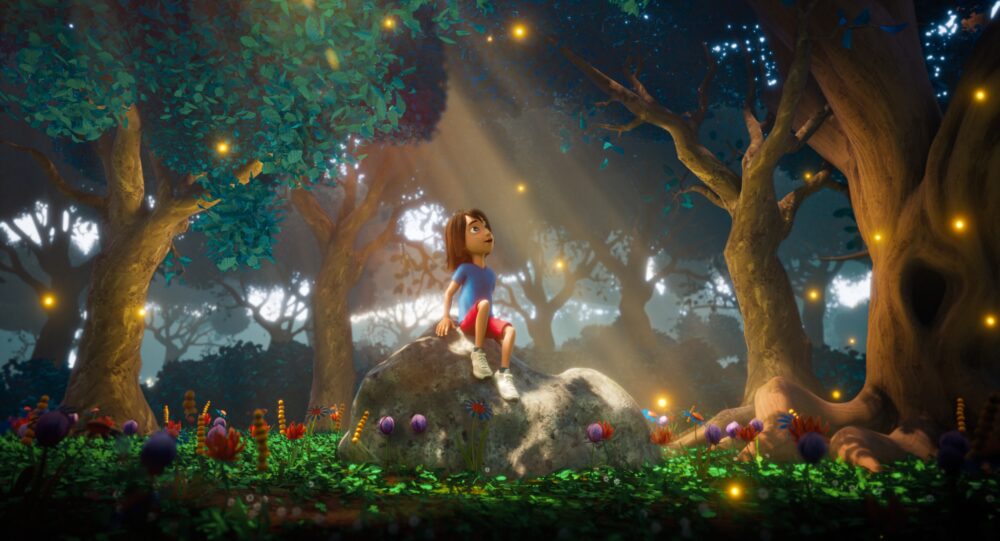
John Aoshima: Yeah, and I do think that if you allow the viewer, or especially a child, to step into an unknown world themselves, you know they can. It allows their imagination to be free, and they can fill in the blanks in a way that allows them to feel comfortable, especially at a younger age. In my experience in working with a medium for family, we have to be mindful of how much information you emphasize and how much you allow for the audience to fill in that blank. It allows them to have a closer connection. In their subconscious maybe they kind of make it more personal.
Powell: How does your mindset as a director differ from your mindset as a writer? And practically speaking, was it hard to switch between them, especially since you were adapting your own material?
Wen: As it turns out, being a novelist is very similar to being a director, in that you have to do everything, or you have to be an expert somewhat at everything. You’re not only doing the dialog, the set design, the camera angles, the lighting, the mood, and the tone. When you do a film, you get to work with other experts in these areas, so it’s more fun, less lonely. I also think that being a screenwriter is very similar to being a director.
It’s putting it into words the vision that you’re looking for. Maybe the main difference I see with some of my director friends that don’t screenwrite is that they probably speak more of a language of visual, so they might cut together as a sizzle reel to convey their vision instead of writing out a script. But a lot of it is the same.
Powell: Was there a scene that changed significantly once you had to direct it versus just write it?
Wen: I would say everything changes a little bit when you’re on set because you don’t really know the orientation of anything until you finally lock down a location, and then you have to figure out where the lighting comes from. You don’t always have your choice of time of day, so that can shape things, like if the sun is overhead versus coming in at a softer angle. I’m trying to think if there are specific scenes.
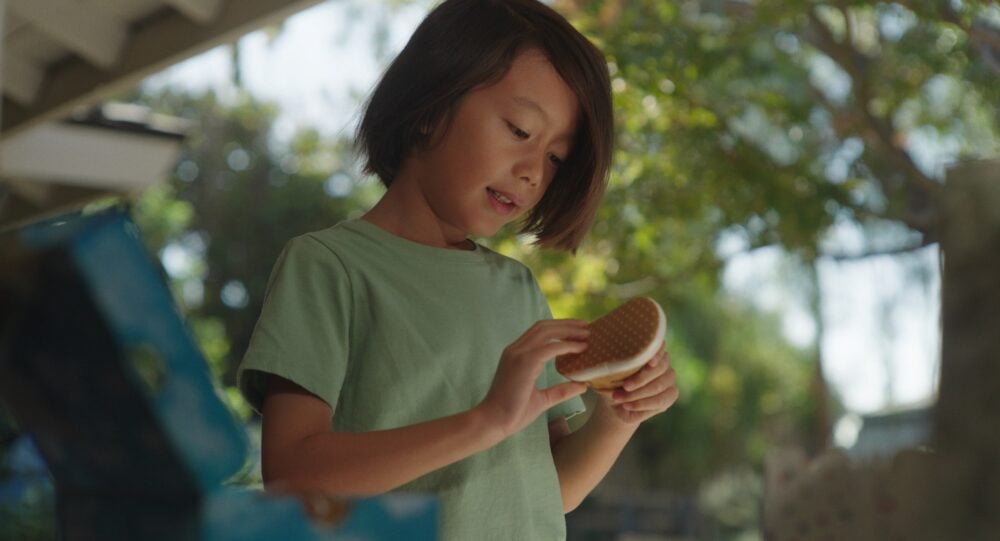
I had 12 six year olds on this set, which was insane. With the sheer like wiggle factor of dealing with these kids, I had to make some quick adjustments because I don’t think any scene went exactly according to plan with that many kids.
Our lead, Egan, was fabulous. He’s actually the son of two actors himself, so it’s in his blood, and they were there on set helping out.
Powell: How did the two of you end up collaborating on this? And Abigail — how did you decide how much of the novel’s story to reveal in the prequel, versus save for the book itself?
Aoshima: I first met Abigail at a mixer called Stone Soup, and at this mixer, where it’s basically a variety of professionals from different industries that come together, we got to listen to some special guests in a fireside chat setting. And when I met Abigail, she had told me about this project that she was working on and that it had some animation.
She wanted some guidance to understand the pipeline and how to go about it. When we met later, she just pitched me the whole project idea, and I found it really fascinating and an opportunity where I can personally expand my expertise outside of animation and tap into a bit of live action. That’s how we got started.
Powell: John, what was the most rewarding, or trickiest, part of bringing Abigail’s vision to the screen, especially working in that live-action/animation hybrid format?
Aoshima: I think Abigail said this earlier, where she found it beneficial to have me on set to help resolve some of the transitional scenes. From my experience as a director and a storyboard artist, those types of transitions naturally can be creatively and technically challenging.
I think live action and animation hybrid projects makes it even more complicated, and so I love the collaborative creative process and understand what’s important to the subject and to find that that balance where we see things eye to eye and find an alignment creatively. When that happens, I think that’s where the magic of the medium comes from. It opens me up to areas that I never thought that I would think of or come up with, and it’s exciting that way. When you see the finished product come through animation, it’s just a big bonus.
We all understand that it took hard work and passion to understand what the vision is, and so we get to celebrate that collaboration all together when it’s done.
Powell: This story lives across a novel and across this hybrid short. And if I’m correct, it lives also across a game.
Wen: That’s right.
Powell: I’m guessing there will be more of this franchise to come. As the animation director, how much did you think about the other iterations of this world while you were designing the look and feel of Origins?
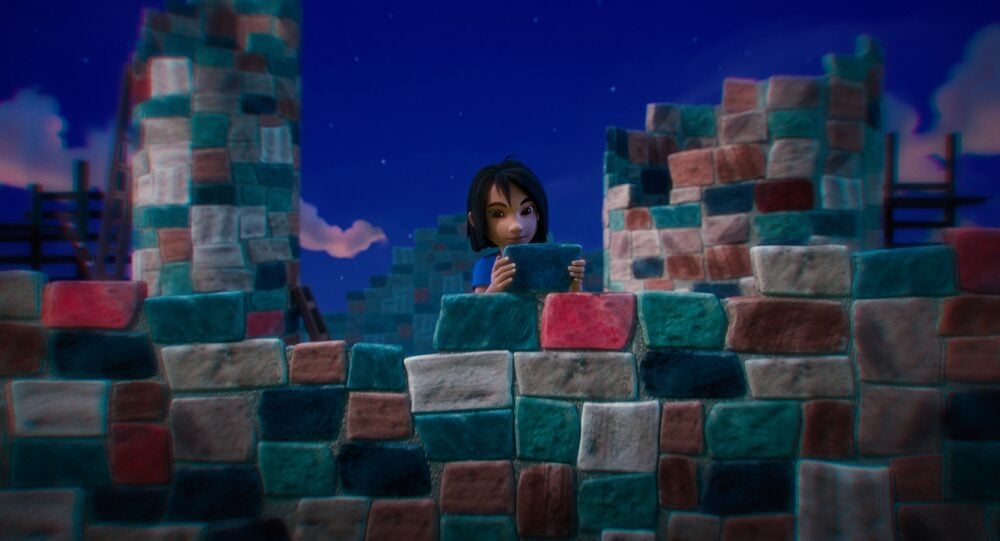
Aoshima: I didn’t really think too much because I came into it knowing that was a prequel to a book. Abigail wanted to tell this short story about Bran the character. Visually, as we were working with our production designer and our director to explore the visuals for animation, we stumbled upon some great artists. I think that’s where it may have helped expand Abigail’s vision, to take it further and find opportunities.
Abigail, did you always have a big master plan in place? From my position, it started to grow from the short.
Wen: Yeah, that’s exactly right. I had no idea this was going to happen. I had a former intern from Harvard. I’m on the board of Harvardwood, which sends me these wonderful interns. And one of my former ones from maybe three years ago emailed me saying that she was now in animation school, and did I have a project that she could take on as her student project? Well, we just did this short film. Do you want to build the Roblox game? And she did.
She built it in eight weeks. It ended up going viral, so you had almost 300,000 plays. We’re building a second Roblox game that’s closer to the story. Basically, you are the steward of a world, and you cultivate your harvest and name your elves and assign the roles. Then you have to protect them from the attacks of this evil wizard that comes at night.
And now, we’ve got this San Diego Comic Con premiere. They gave us an 884-person room that I need to fill. I’m told the best part is actually getting to talk with you and the other interviews, and our social media has had hundreds of thousands of hits and views already. In some ways, we’ve gotten everything that we need from San Diego Comic Con, but I still would like to have a strong showing, so we came up with these collectible character cards of every elf in the Vale, and for the humans too. I just didn’t know that was going to happen either. It’s been about following where the energy is, a million creative ideas, and then you decide which ones you want to pursue.
Powell: Will this be your first Comic-Con?
Wen: This is my third. It’s my first time ever having my own panel, which I was not expecting to happen.
Aoshima: I was going to Comic Con since college as a fan to all the mediums and everything that they showcase out there. I work on a lot of existing [intellectual properties] and big TV projects, so I have been part of panels in a different way. I think The Vale: Origins short premiere is a different experience where I get to stand beside Abigail and showcase something that our team had put together. To have a world premiere and an audience is very exciting. So, this is a special one to see.
Powell: What is it that you’re most looking forward to? What do you want to see?
Wen: I just went through the whole schedule, which is intense. There are so many panels, and of course, just walking the floor is an experience in itself. So, I marked like all these amazing panels. I won’t be able to go to all of them, but I’m really interested in the indie studio build out because Hollywood is in this very strange time now. There’s not that many projects being greenlit, and I feel like a lot of people are now turning to indie films. One, you have more creative control, and two, it just seems like you’re able to move projects forward much more quickly, and with the teams that you want to work with. How do you move forward as an indie, and how do you get a billion views, and all these one-on-one things that I think I’ll benefit from.
Aoshima: You know my usual things that I look forward to at a Comic Con event is really running into some old friends and colleagues from projects or even school. After school, our class will spread out through the world and do different things, and you watch their growth from a distance. When they come to Comic Con to showcase a project that they’ve been on, it’s an opportunity to connect and to celebrate their achievements. I think as people start to find that I’ll be there, I’ll probably see some of my friends and colleagues, and we just get to celebrate our wish fulfillment from our college days to where we are now professionally. That would be definitely the highlight of the visit.
Wen: That must be so rewarding to get to see where everyone’s how far everyone’s come.
Powell: And finally, what book do you have on your shelf that you’re currently reading?
Wen: I have Michael Luo’s Strangers in the Land. It’s a history of Asian Americans. Very comprehensive work. He was a year above me at Harvard and is the executive editor of The New Yorker. I know he’s been working on this book for a long time, and I’m thrilled to see it in the world. It’s a book that’s going to be around for a long time as part of our canon.
Aoshima: I actually have a graphic novel, a biography. It follows the godfather of manga, which is Osamu Tezuka. Even though I was born in Japan, I had to step away from Japanese manga and some of the popular titles. Now in my profession I’m exploring other Japanese IPs, and so for me to kind of catch up to the material, I wanted to understand some of these creators, and so I’m taking a step to like to read up on them.
The Vale is available for purchase through Amazon and Barnes and Noble.
Stay tuned to The Beat for more news from SDCC ’26.