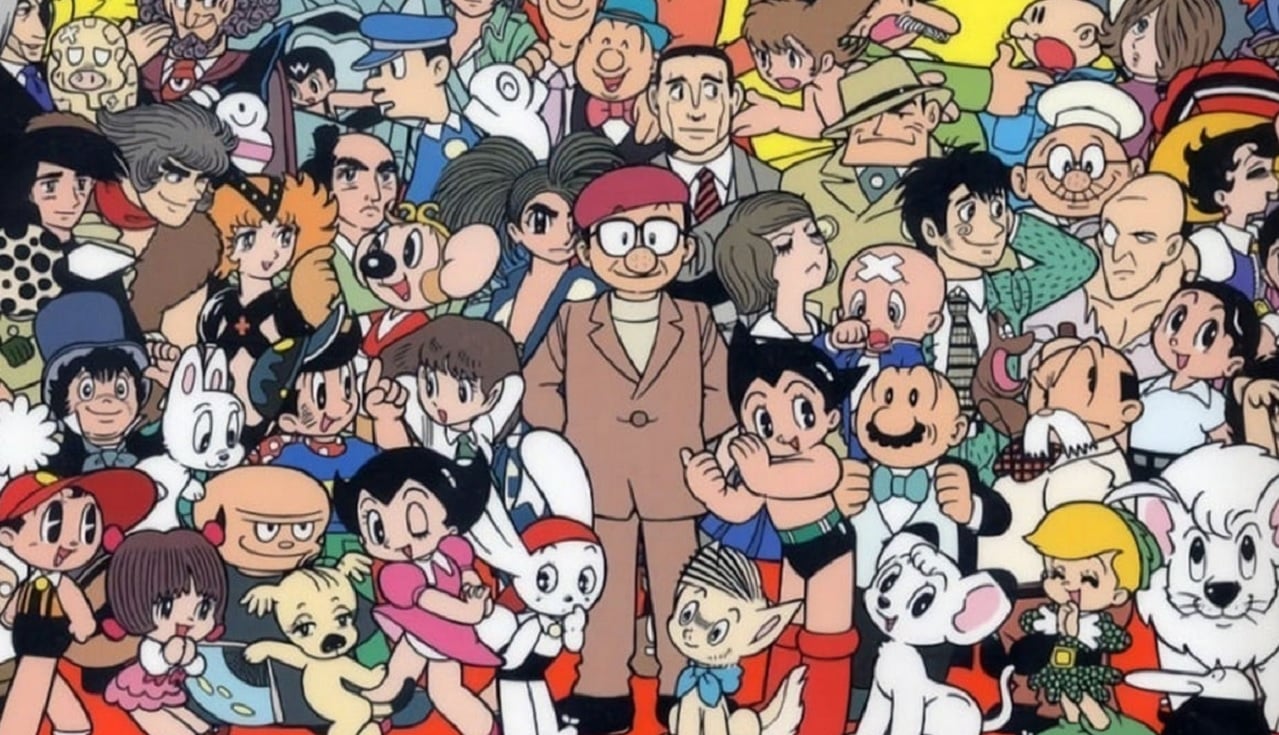

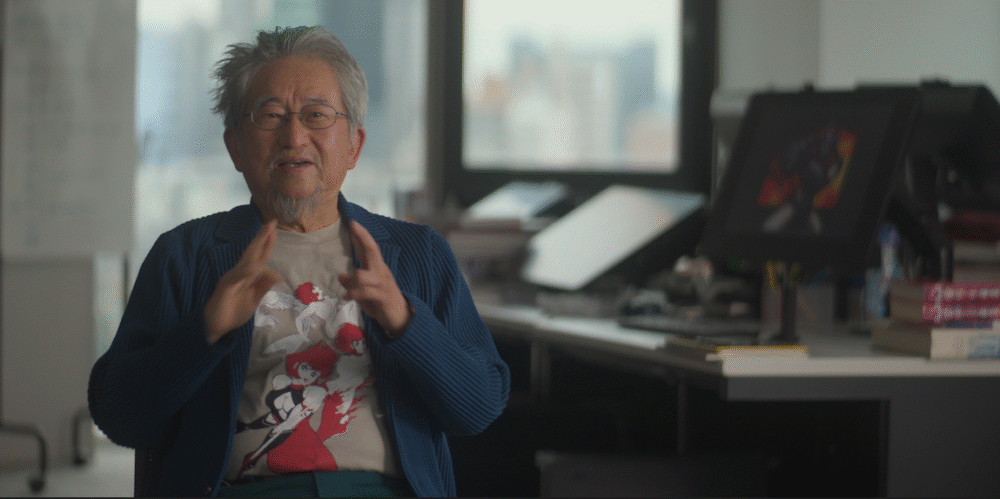
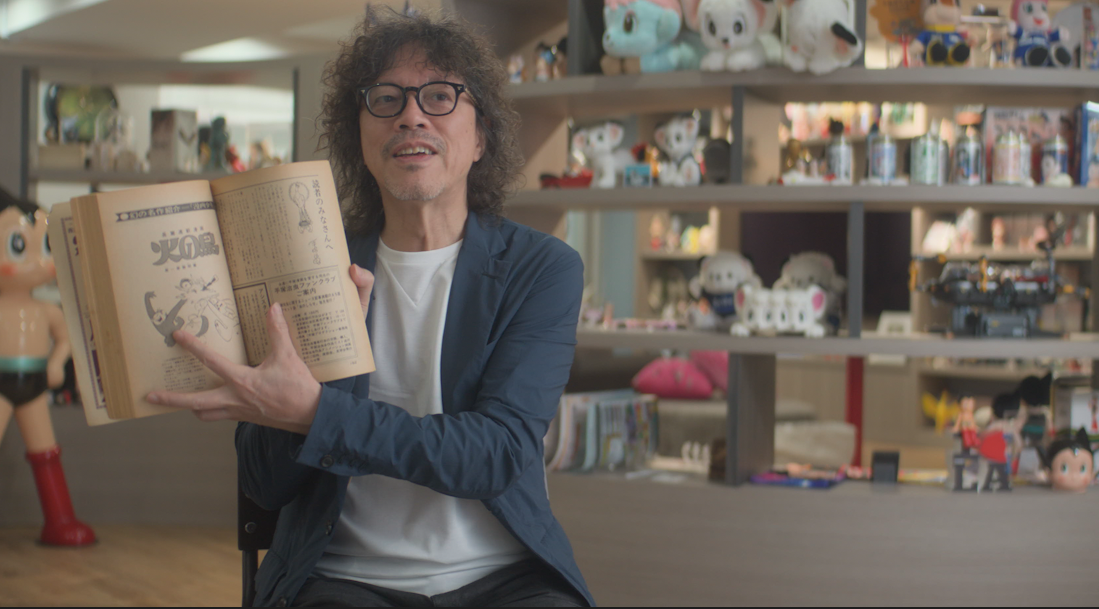
When one talks about Osamu Tezuka, it’s hard not to sound hyperbolic. But Tezuka is one of the rare artists whose body of work supports the hyperbole. The innovations that he made with comics, animation, and even publishing continue to be felt in Japan. In the western world though, he remains a cult figure outside of comics circles. Tezuka! The God of Manga is an upcoming documentary with the goal of building a bigger audience in the west of for Japan’s “God of Manga”. Interviewees include Katsuhiro Otomo (Akira), Riyoko Ikeda (Rose of Versailles), Helen McCarthy (The Manga Bible), Frederik Schodt (Manga! Manga!) an many more.
The documentary is currently raising money through Kickstarter to complete production and potentially interview more artists and creators. Rewards include posters by Jesse Lonergan, Elsa Charretier, Gurihiru, Jeff Lemire, and many more! To discuss this new documentary, The Beat sat down with the documentary’s director Jason Andrew Cohn, and artists Dave Baker, Samuel Sattin, and Nicole Goux to talk all things Tezuka.
D. Morris: What was your first exposure to Tezuka?
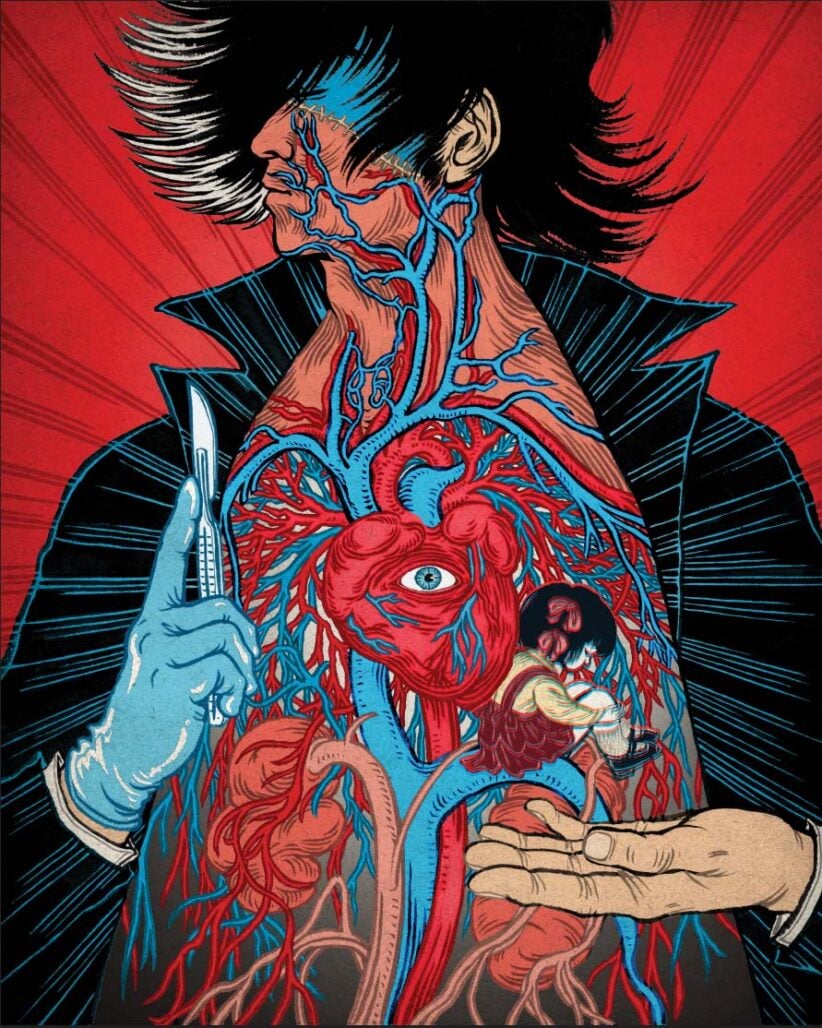
Dave Baker: The first Tezuka property I encountered was, like many Americans, Astro Boy. I instantly fell in love with the character, his story, and the animations that they inspired. I think I then read Black Jack, which I really enjoyed as well. And from there, I’ve been an obsessive. You can’t go wrong with Tezuka.
Jason Andrew Cohn: I was living in Sapporo after college in the nineties and I used to study Japanese by reading manga. Usually, I’d hang out in coffee shops and pick up whatever was lying around, which was typically sports manga or romance manga. It was fine because I was learning idiomatic Japanese but I didn’t think the stories were that interesting usually. So my roommate, who was Japanese, started lending me his Tezuka books. I think one of the first ones I read was Gringo, which is this sprawling novel about a Japanese businessman living in South America who gets pulled into a mess of industrial corruption. The language was super challenging because it was a seinen manga, so it was written for adults and I was reading at maybe a 4th or 5th grade level. It probably took me an hour to read five pages. But the story was way more interesting than anything I’d seen in a manga before. After that I started reading more of his stuff and I was blown away by the sheer range of stories he created. The second you thought you knew Tezuka you’d be confronted by something that completely shifted how you thought about him. He seemed to be able to do anything.
Samuel Sattin: I must have been six or seven when I saw Unico and the Island of Magic in theaters, though I wouldn’t realize that Tezuka was behind that film (and character) until decades later. As an adult, the film Metropolis, directed by Rintaro and the legendary Katsuhiro Otomo, served as my reintroduction. Even though Rintaro’s Metropolis strayed from Osamu Tezuka’s original manga in many ways, the heart of the story stuck with me, as did the characters. From there, I really went down the rabbit hole. A professor and mentor of mine eventually introduced me to works like MW and Phoenix. I think that’s when my interest turned from curiosity to obsession.
Nicole Goux: Probably Astro Boy? I’m not sure, honestly. He’s one of those people who just kind of feel like they’ve been around forever.
DM: How has Tezuka’s life and/or his work influenced you?
DB: Well, both Tezuka and his assistant, and later massive mangaka Shotaro Ishinomori are both big influences on me. Honestly, probably Ishinomori even more. Specifically, the way he draws. I really like Tezuka for his ideas, his output, and his vision to reshape what comics could be perceived as, and the idea that he pushed Ishinomori and fostered his talent, and attempted to help him build a career.
JC: I’m a documentary filmmaker. So it’s not a direct influence like it might be for an artist or animator. But I don’t think I’d be a big fan of Japanese pop culture if I didn’t discover Tezuka early on. I was a Japanese history major as an undergrad and I was very interested in modern Japanese novels by writers like Kenzaburo Oe and Junichiro Tanizaki, the movies of [Akira] Kurosawa and [Yasujiro] Ozu, sort of highbrow stuff like that. But I always loved comic books and graphic novels. I was really into some American alternative comic book artists like Peter Bagge, Roberta Gregory, and Daniel Clowes. And I was under the impression that Japanese comic books and animation didn’t have the same kind of depth because I thought it was all aimed at kids and sort of lowest common denominator audiences. So discovering Tezuka changed all that and it led me to start reading other great ‘Golden Era’ manga artists like Shigeru Mizuki, Sanpei Shirato and Yoshihiro Tatsumi, not to mention the anime of people like Satoshi Kon. So it opened my eyes to a whole world of Japanese creativity that I’m now eager to introduce to Western audiences through this film.
NG: I’m someone who loves narrative clarity. I love to create a story where the scenes flow into and out of one another. And they have an emotional resonance. I don’t know if that really comes from Tezuka, but we’re definitely both interested in that.
SS: I might venture to say that Tezuka had the most outsized influence on my life than any artist to date. I became so invested in his work that when I found myself in the position to pitch a new Unico series idea to Tezuka Productions, I jumped at the chance, and then nearly hit the ceiling with they gave me the seal of approval. In the time since, my wife and I have moved to Japan, and I am currently leading an initiative to reimagine more of Tezuka’s work at Scholastic. Tezuka didn’t just have an impact or influence on my life. He redirected it. I thank my lucky stars everyday.
DM: Which work of his had the biggest impact on your own?
DB: Astro Boy, probably. But also Pluto, Black Jack, and a myriad of other titles that were associated with Tezuka.
JC: The ones that have given me the most pleasure to read are the big ambitious multi-volume stories he started drawing in the second phase of his career when he was determined to move beyond his reputation as a manga artist for young boys. Nothing against Astro Boy! But for me, the stories I go back to are books like Phoenix, Buddha, Ode to Kirihito, Gringo, Message to Adolf, and Dororo. You just get sucked in for thousands of pages and you feel like you’re caught in a vortex of Tezuka’s imagination.
NG: I know this is sort of a cop out answer: but it’s Pluto. I love Urasawa’s work so much.
DM: Is there a Tezuka work that maybe deserves a bigger audience in the west?
DB: I really like New Treasure Island and Metropolis. In fact, the eventual anime adaptation of Metropolis was one of the first feature anime I watched. I really loved that movie, as well.
JC: Really only a handful of Tezuka storylines have any purchase in the English speaking world. Astro Boy and Kimba the White Lion, of course, because they were daytime TV for a certain generation. Metropolis was made into an anime by Otomo and Rintaro so that made an impact, although they changed the story a lot. And Buddha sold a lot of copies when it came out in English. After that you have to make a real effort! The good news is that Phoenix, which many people consider Tezuka’s masterwork, is getting a big re-release in English by Kodansha. It’s a really far out piece of work in a dozen volumes that was never finished. It displays all of Tezuka’s genius as well as some of the aspects of his work that can be baffling for Western audiences. But it should be required reading for anyone who loves sequential art. I’m really excited to see what kind of reception the Kodansha release gets.
By the way, I said that the Anglophone world doesn’t know Tezuka very well, which is true. But he’s much better known in parts of Europe and Latin America. Comic books stores in France, for example, have way more Tezuka in translation than equivalent American shops. And I’ve been told by several Mexican friends that everyone grows up with Tezuka like you’d grow up with Disney here.
SS: Oh my, I would love to see a lot of Tezuka’s work get more attention. For instance, there’s a colorized release of Garon and Ambassador Magma happening next year in Japan, and it would be incredible to get those titles translated into English. I’d love the same for works like Flying Ben, Zero Man, Wonder 3, and Three Eyed One. There are some truly beautiful colorized versions of Tezuka’s work that have been released in Japan but not in the US—like Princess Knight, for example. Though works like Phoenix have received the acclaim they deserve in the US, for instance, there’s just so much we could benefit from having access to.
NG: I would love to see Tezuka’s work in general get more shine. I would like all cartoonists to get more cultural recognition, I think.
DM: If you could have an audience with him, what is one question you would ask Tezuka?
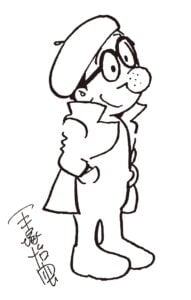
DB: obviously, got to ask where he got the berets, right?
JAC: This is sort of a weird question, but I think I’d want to get at his motivations to create the volume of work that he did. I mean, he was one of the most prolific storytellers ever. The number that gets thrown around is 150,000 pages of written work plus all the animation, so it’s mind boggling. And there’s a legitimate criticism that he could have focused more on quality than quantity. Which isn’t to detract from his best stuff, but there is a lot of forgettable material in all that.
So I guess my question would get at whether he was creating out of joy, which seems evident much of the time, or if there was also a kind of grim compulsion, which also seems to be the case at times. I mean, he was notoriously competitive and insisted on always being the top manga artist in Japan, which meant he was forced to constantly chase market trends. He was also part of a generation that experienced a lot of trauma during and after the war and I think a lot of people felt they needed to work constantly to keep the demons at bay and to avoid the specter of poverty. On the other hand, he clearly derived a huge amount of pleasure from the work, so it’s not a simple question. It’s really a whole line of questioning that I’d love to be able to dig into with him. It’s definitely a big part of what I want to get at in this documentary by talking to people close to him.
SS: I wouldn’t ask him anything about his process, his life, his childhood, or what he was trying to say or do or accomplish as an artist. I’d just thank him, and then ask if he wouldn’t mind me watching him draw for a little while. And I’d understand if he told me no.
NG: I would probably ask him about using assistants. That’s something I’ve always been interested in, but never really done. Or maybe I wouldn’t because that would be rude, haha. I don’t know.