
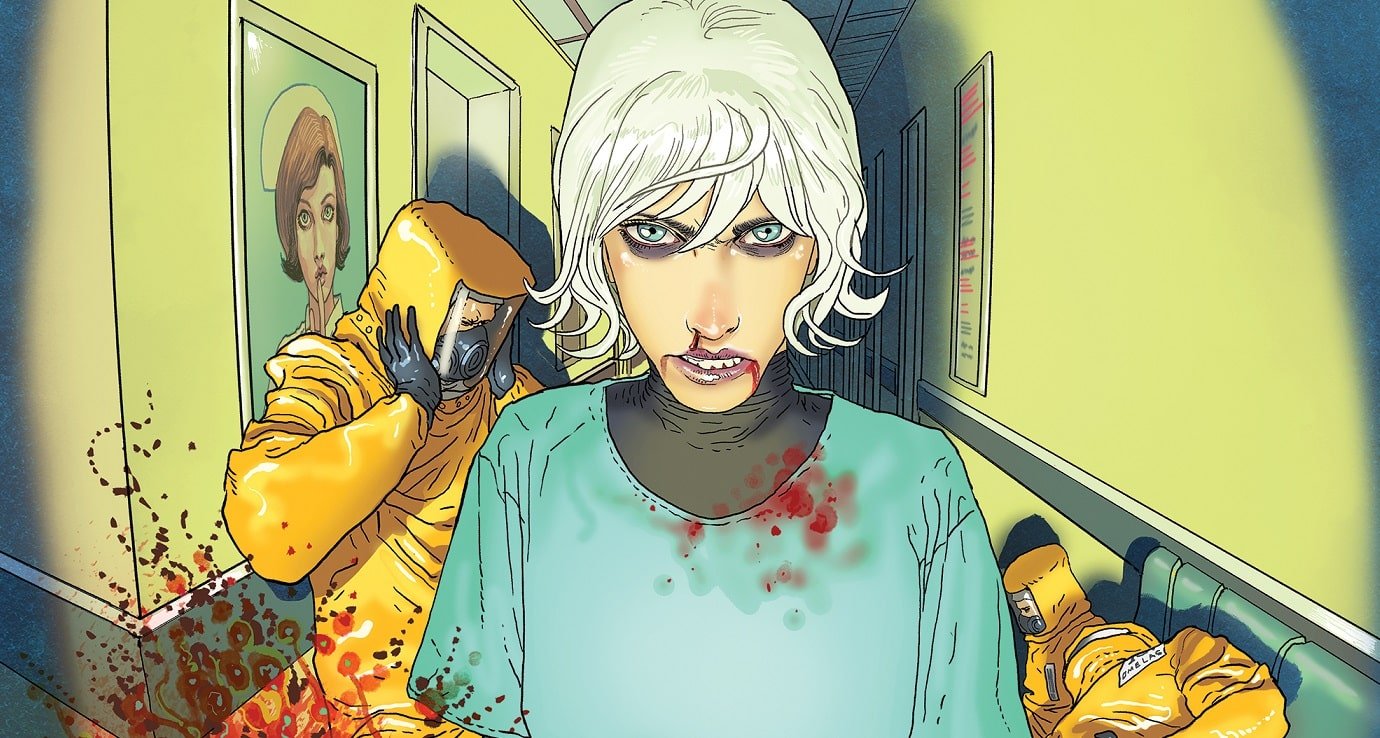
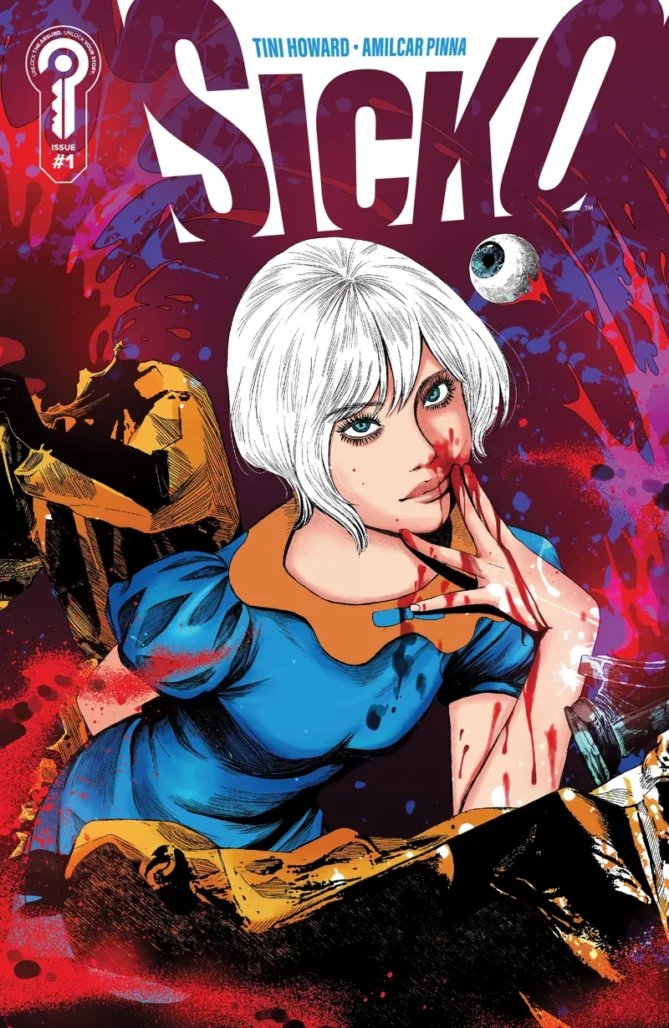
Writer Tini Howard’s Ignition Press title Sicko with artist Amilcar Pinna offers readers a thrilling horror tale that also takes a hard, if not brutal, look at healthcare in our country right now. Colorist Amanda Grazini and letterer Ariana Maher round out the creative team.
Howard was on hand at Ignition Pavilion during San Diego Comic-Con 2026 to discuss the book as well as how Ignition Press is carving out a creator-friendly niche in the comic industry.
DEANNA DESTITO: How has your San Diego been this year?
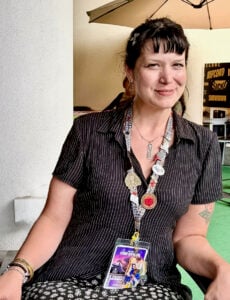
TINI HOWARD: Maybe my favorite ever, maybe also my busiest ever. I feel like every hour on the hour I’ve had to teleport to a different location, but I’ve gotten to talk about my work all weekend, which is like, what’s more exciting than getting to share your creative passion with people. I’m really lucky this is my job, so I can’t complain, you know. I’ve been busy working, but I have the best job in the world, and I’ve been drinking Americanos by the water all weekend. I can’t complain about that.
DESTITO: How is this new Ignition Pavilion?
HOWARD: I think it’s part of why I’ve had such a great con, for sure. Having this offsite right across the con location as a secondary base of operations. And, you know, Ignition, they’re getting a reputation for taking great care of their creators, and it’s really true. I’m a hard worker. I like to work hard…but it feels really nice to have a soft place to live.
DESTITO: Of course, a nice quiet place, right?
HOWARD: Yeah, I mean, the feeling’s great. We’ve had so many people in— I know at least five digits of people all weekend. It’s been crazy; it’s been packed. We have air conditioning and free coffee, and I’ve gotten to sell a lot of people on their first comic or their first comic in a long time. Not just my own, but other Ignition books too.
DESTITO: Somebody else said that too. Somebody just came off the street and was just like, “Hey, what’s going on in here?” And they bought their first comics.
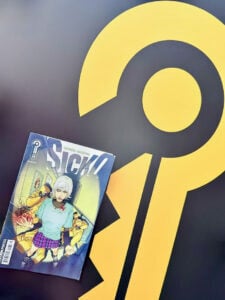
HOWARD: Oh yeah. I was sitting here at a Sicko signing yesterday, and if someone came in and I was like, “Hey, here’s my gross book,” and they were like, “I don’t like gross stuff,” I was like, “Well, The Dogsitter is right here. Everyone loves dogs and romance.”
I think this is a really welcoming space, and I think a lot of people at Comic-Con ironically don’t know how to approach comics, and this has been a really good space to be like, come get some AC and some coffee, and none of these comics require you to have any prior knowledge of anything. They’re all just cool stories from people making stuff. It’s just like seeing a new indie movie, you know, just walk up, and grab one. and get to reading.
DESTITO: You have a lot of experience with different publishers, large and small. How has it been working with Ignition? Specifically in having your own ideas and being able to share without having people micromanaging you.
HOWARD: It’s incredible. You know, I said on a panel the other day that the idea that became Sicko, the idea of a character who had an overactive aggressive immune system that harmed themself but that they could use to then throw their immune system at others, that core idea at Sicko started as an idea I had when I was at Marvel. And it occurred to me, well, she could be a mutant, right? This could be a mutant power. But then I was like, but if she’s an X-Men, she has to be a hero. And she’s also like part of a group of 600 Pokémon that never get enough page time.
And there would be limitations on what I could do. I wanted it to be very bloody, you know, like I wanted it to be very phlegmy. I wanted it to be very gross and weird and uncomfortable. And companies that are owned by multinational conglomerates aren’t known for that. So when I started talking to Jamie Rich at Ignition, it felt really perfect because I realized that my emotional touchpoints for this book were like the kind of Vertigo books that Jamie worked on when he was there.
And so it’s been really fun to work with him again because I only got to work with him very briefly when he was in DC. It’s fun to work together again and make this book that we’re both just having so much fun with. And Amilcar Pinna and our colorist Amanda Grazzini are incredible. And literally the thing Jamie repeats more than any other in the art emails is like, “Amilcar, I’ve run out of things to say. I’ve already told you six times that this is the best panel in the book. You’re gonna think I’m lying.”
I keep telling people, not every book I can say gets better with every issue. I confidently can say every issue of this book is better than the one before it.
DESTITO: So how do you work with your artists? Do you give them a lot of space to be creative or are you very specific?
HOWARD: I give a lot of reference, but I’m not anal about what they take from it. I give a massive amount of reference for vibes. For when I’m referencing something specific, I want the artist to know that I’m referencing that specific thing, but I don’t think that they have to take the same thing out of it, right? Like, the way a hospital makes me feel and the way a hospital makes Amilcar feel are different things, but those are both genuine experiences that go into the book and connect with other people’s genuine experiences.
I give my artists a lot of freedom, but I also don’t like working with artists who don’t like what I do. Whenever I like talk to an artist, I’m usually pretty upfront. Like with Marian Heretic, I was like, Joe [Jaro], it’s a bunch of Catholic trauma. It’s a lesbian nun with her boobs out. If that offends you and is not your thing, please let me know and we will work together on something else. Because what I don’t want is to write this and I don’t want you to try to like make it less because it makes you uncomfortable, you know?
I want you to lean in and get weird and get intense. And Joe does. He loves Mary, and from the first moment he ever drew her, she was perfect. And with, Amilcar, it’s the same thing. This is our co-creation, and every issue I write weirder things to push him more. In the second issue, there’s a scene that takes place at one of those roadside attractions that claims to be a gravity well. I was like, draw this, buddy.
It’s great. He kills it. It’s so good. I wanted to have him do that because one of the things he does so well is perspective. The perspective in the book is really dizzying. I love it because it feels very dizzy and nauseating, almost the way you feel when you’re sick.
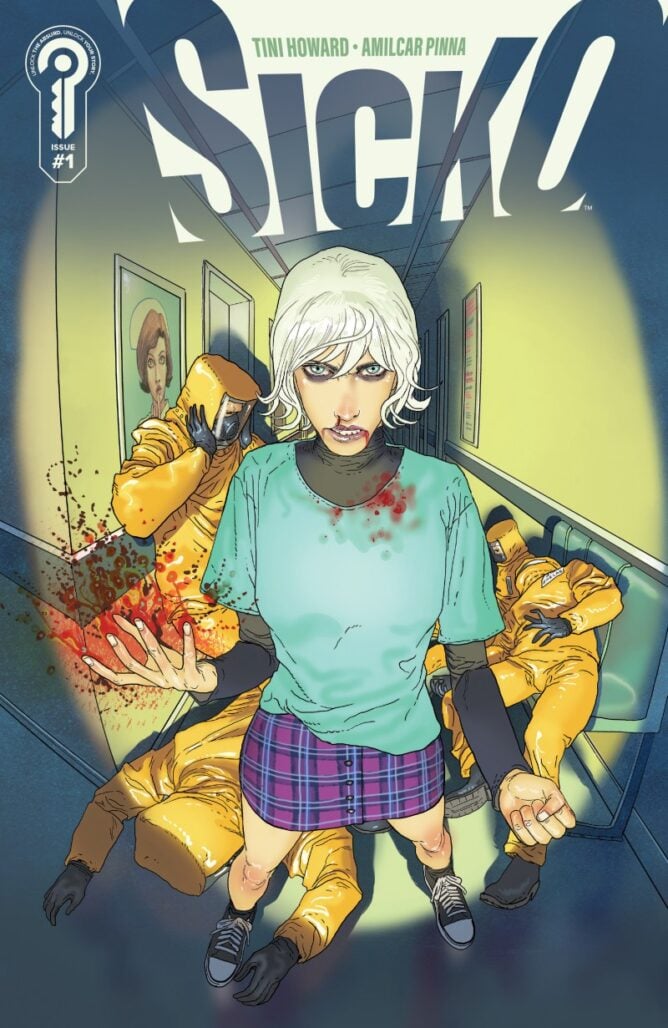
I’ve been having so much fun working with Amilcar and with Jamie Rich. You know, on one of the Ignition panels, they made it clear that, this is really the place you bring your weird, sick idea that you maybe couldn’t do anywhere else. And it’s been very fruitful and very fun for me so far.
DESTITO: Do you like to write those stories that really do push the envelope a bit?
HOWARD: Art should comfort the disturbed and disturb the comfortable. I don’t like writing a story if I don’t have something new and interesting to say about what’s going on within it.
It doesn’t need to be like— I’m not writing like moralistic fables. It’s quite the opposite. I think I’m very into putting discomfort on the page and making other people uncomfortable and finding other people that enjoy that discomfort like I do. I’m very like, if you don’t like it, my stuff’s not for you. The cozy romance genre is huge. I have so many really cool, brilliant friends who love cozy romance. I like Yorgos Lanthimos movies. I like to be uncomfortable.
DESTITO: There’s something for everybody.
HOWARD: Yeah, so I make art that’s, you know, uncomfortable, and I love that. And that for me is fun. And I don’t do it because I like pissing people off. I do it because you have to make art with the confidence that there are people like you out there who will get it. I like to make weird stuff, and I’m not making it to piss off normal people. I’m making it to find other weirdos.
DESTITO: To find your community.
HOWARD: Yeah.
DESTITO: How was it having that perspective and working for a place like Marvel?
HOWARD: My time at Marvel and my time writing ongoings at DC, it absolutely is like boot camp, right? You level up so fast. It’s like when you’re playing a game and you go into an area where everything’s a little too high level for you. Boy, you gain levels fast because you’re just doing it so much. If you’re writing two scripts that month and an editor is like, can you do ten pages? You want to say yes. And you got to give good ideas. You don’t want to give bad work because it’s being read by so many people who are very passionate, very vocal. I view that time of my life as boot camp. I made some great work that I’m super proud of. I made some friends and mentors and all that. I love everyone I’ve worked with. Even at DC, I feel like I’ve gotten to write in places like Black Label that have a lot more freedom.
I do feel like I have some freedom in my DC work for sure. But there still is a matter of everything is a pitch. Nothing is greenlit until the people above you greenlit. Whereas something like Sicko, Marian Heretic, my experience at Boom! is a lot more like, you tell us. It’s nice to be like, I’ve been making these books and stuff where it’s like, we trust you as a creator. You tell us what you need, what you want to do, and if we think that it’s a good idea, we’ll support it. It’s not like you’re not getting a note from an editor who has 17 bosses and someone has told them, hey, you can’t show buttcheek, and so we have to rewrite a page so there’s no buttcheek.
DESTITO: It’s funny, Leah Williams said something similar where she was like, “that was like exercise. That was like going to the gym.”
HOWARD: Yes, it really is. It’s a grind. You do month after month and it’s like— I mean, in comics in general, I think one thing that people don’t realize about the workload is finishing the script is not [the end]. It’s like being a project manager because you’ll have a script that you’re writing and then you’ll have another script that’s being drawn and you have to keep eyes on the layouts. And you’ll have another book that is one you wrote last month and it’s now in colors and you have to put your eyes on that. And then another, that book that needs colors also needs a lettering pass, which means before it gets lettered, you probably want to look at the art and look at your script together and edit it before you send it to the letterer, so the letterer doesn’t letter it and then you look at it and you’re like, never mind, I want to rewrite this scene.
And then on top of that, you’ve got press. You might have a con to go to. You want to make Instagram posts about your books. Being a writer in comics is more than just being a writer. You’re a project manager. And your editors are the real project manager, but you have to project manage in your head because your editors can’t be like every day, hey, send this now, send this now.
Before I go to bed at night, I write down what I have to do the next day and I wake up and those are what I call my EOD tasks, which are the things I need to get to my editor. I like to write at night when nobody’s going to email me. So during the day is when I’m like, I’ll answer emails.
Also I’m a freelancer and I live in LA. If I have to grocery shop, I do it in the middle of the day. I’m not doing that on Saturday afternoon. I’m not doing that at 5 PM when everyone else gets off. Daytime is my chores and tasks and stuff, and then night is my creative time. But this does mean I work a lot of like 10, 12 hour days. I do. But I’m very passionate about my sleep health. Unless I’m at a con, I sleep eight hours a day minimum. I’m 40 and I don’t have any children, so the least I can do is get good sleep.
DESTITO: So what do you have coming up that you can talk about or tease?
HOWARD: Well, Sicko, of course, is four more issues, and legit, it gets better with every one. For September I wrote a Hellraiser one-shot that’s coming out called Hellraiser: The Deep Gospel. It’s part of the five Hellraiser one-shots that Boom! is doing about the five original Cenobites. Mine is about the female Cenobite who’s often called Deep Throat, but I don’t like that name for her, and that’s kind of what the book is about. And Hello Darkness #25 from Boom! is gonna have the return of Marian Heretic with some incredible art by Savannah Meyer. But that’s just the beginning, there’s more Marian coming. And I’m working on a bunch of unannounced stuff.
Stay tuned to The Beat for more news from SDCC ’26.