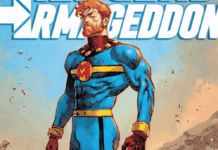
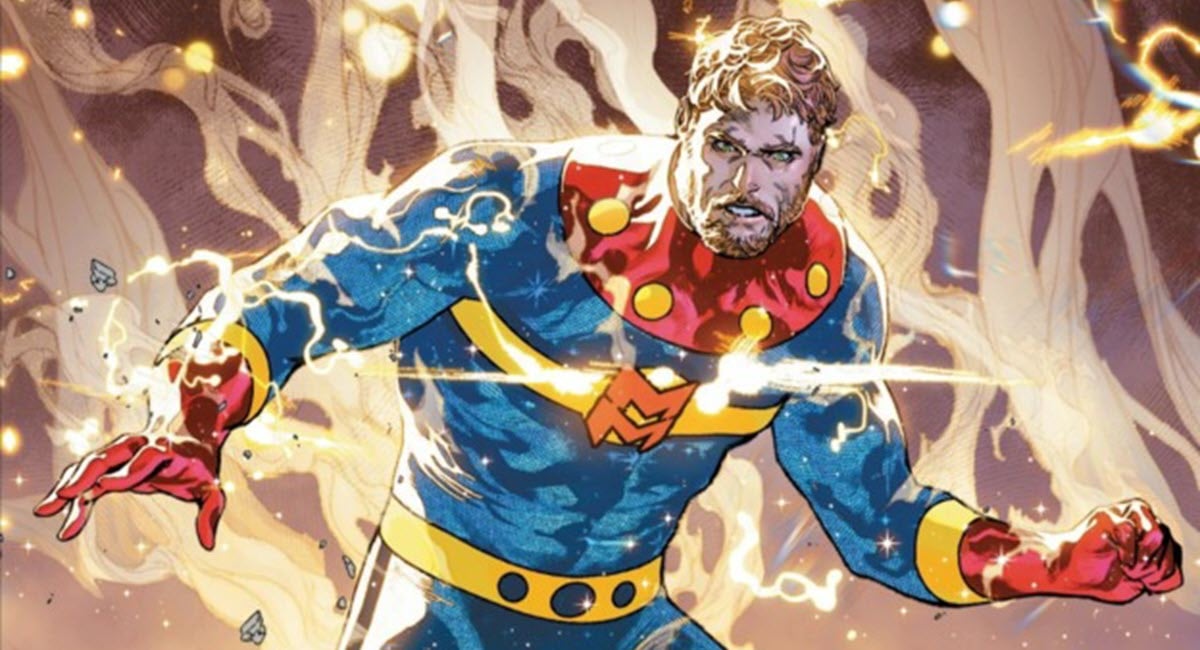

Miracleman has entered the chat. Last month’s Avengers: Armageddon #4 ended with a dying David Colton, a former fill-in Captain America granted superpowers by an interdimensional Origin Box, uttering the magic word “Kimota,” a move that saved his life and transformed him into the hero. The arrival should have been a startling surprise for readers. For many, though, the reveal was spoiled early by internet leaks, and they had a month to speculate on the circumstances around the character’s role in the series before he actually appeared.
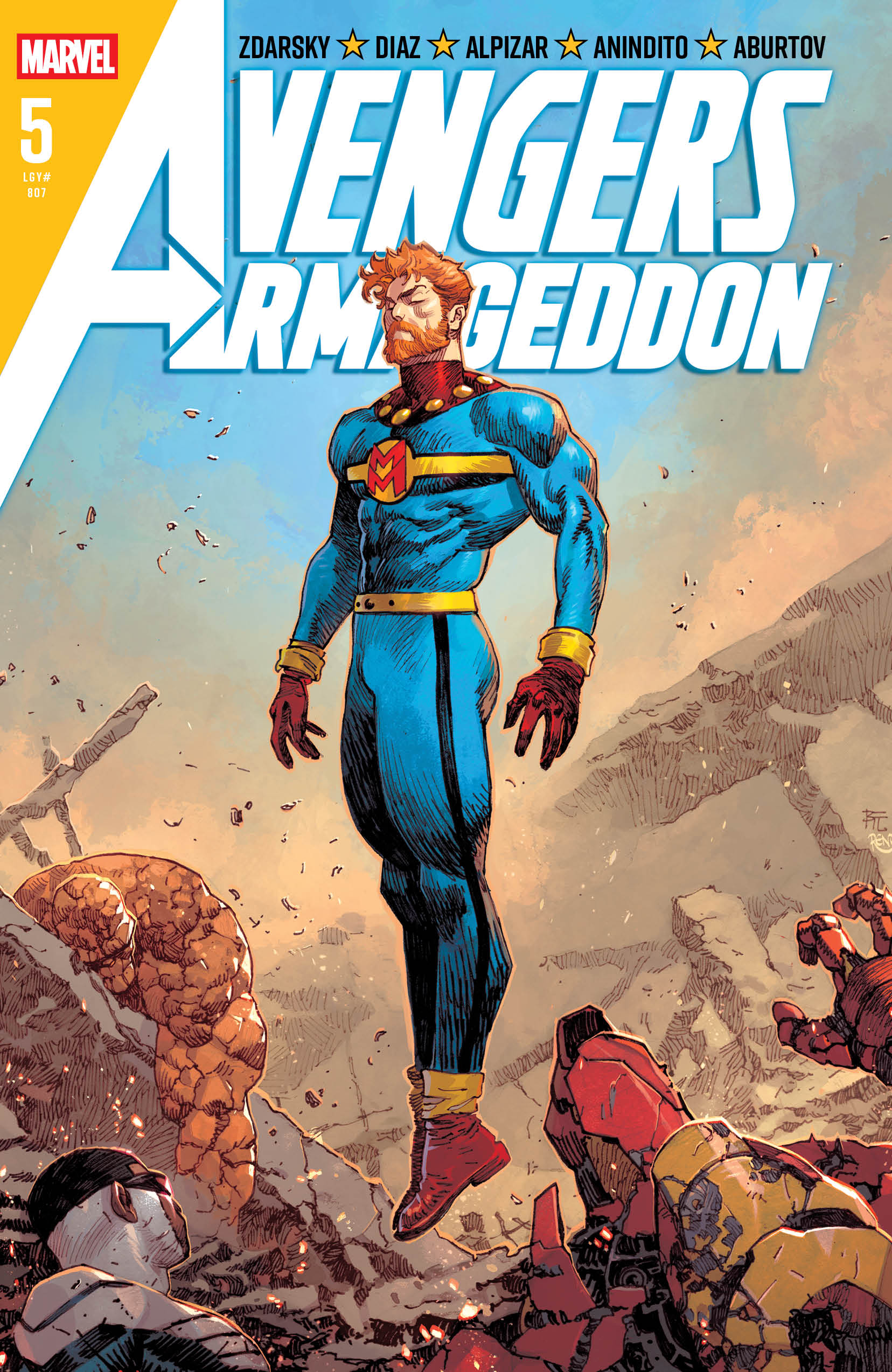
Throughout all that, series writer Chip Zdarsky stayed largely silent. Zdarsky introduced David Colton in last year’s Captain America relaunch, and the Miracleman reveal was just the latest step in Colton’s evolution. Beyond that, Zdarsky has been busy building the future of the larger Marvel Universe. This week’s Avengers: Armageddon #5 establishes a new status quo for the universe, and sets the stage for Zdarsky and artist Marco Checchetto‘s upcoming Avengers ongoing series – a book in which Miracleman is set to play a big role.
The Beat had the opportunity to chat with Zdarsky about all things Avengers and Miracleman, including the quiet conclusion of the Avengers: Armageddon event, a future meeting of the Miracleman and Marvel sensibilities, and being the hand tugging the most on the wheel of the Marvel ship.
(The following interview contains spoilers for this week’s Avengers: Armageddon #5. It has been edited for length and clarity.)
Joe Grunenwald: I wanted to start sort of generally, because the Miracleman reveal really grabbed me. I was blissfully ignorant of the leak, so you got at least one person. No, I found out the old-fashioned way: through a Marvel press release in my inbox later that day.
Chip Zdarsky: You know, I tried to push that back as far as I could. But that’s the thing too. When something like that leaks as early as it did – I think it was like a month early – the discussions began like, ‘Well, if it’s already out there, we should capitalize on it and like talk about it publicly in press releases to get the orders even higher.’ And I’m like, there are people who haven’t read it, so there’s a back and forth, and I think we just ended up on, yeah, later that day, yeah, which is still not far enough.
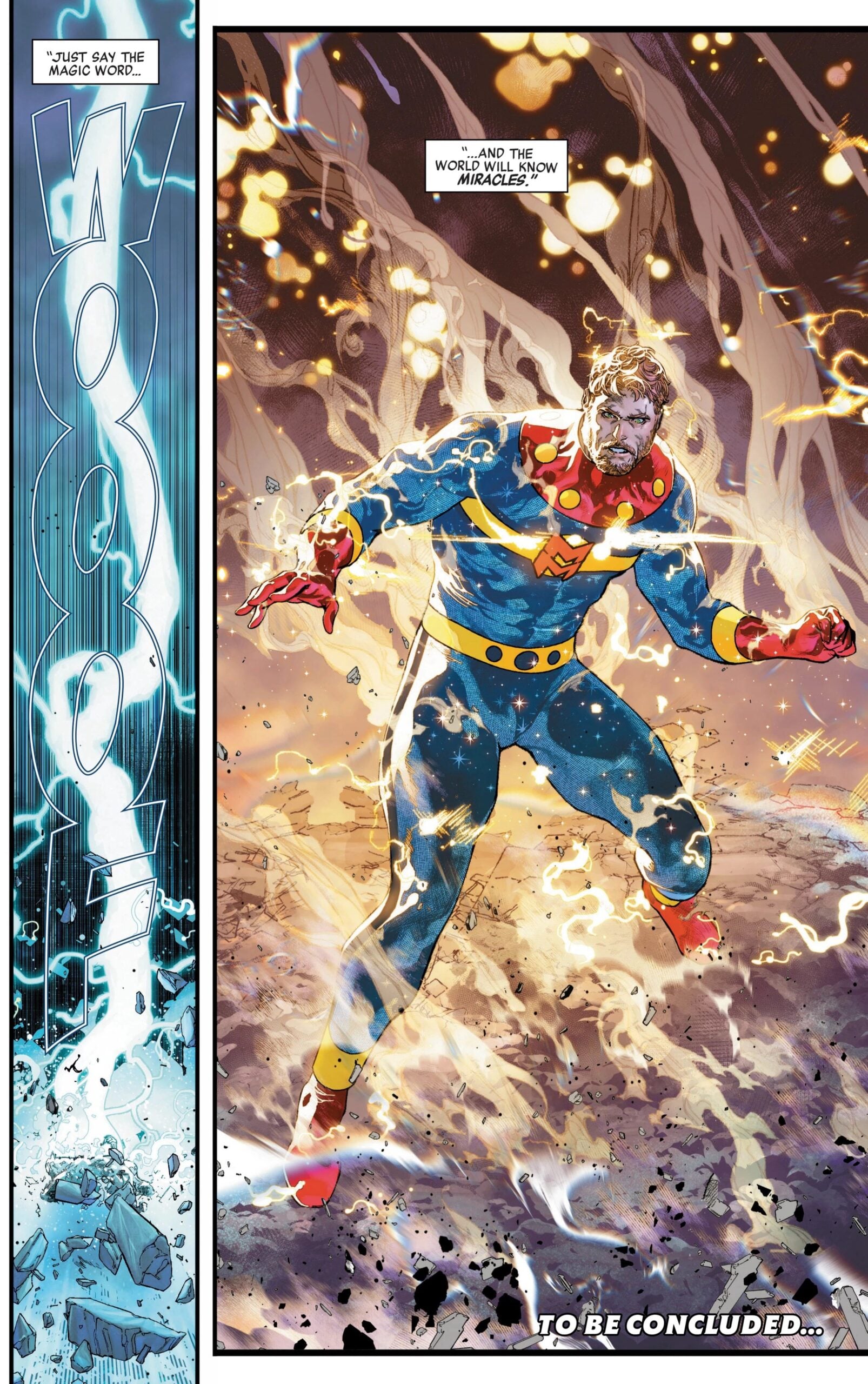
Grunenwald: But it did, it grabbed me. It made me take notice. Admittedly, I hadn’t been following what was going on, and I went back to read everything leading up to it, and it’s been really rewarding to see the progression of David Colton from the beginning of Captain America to now. It’s totally natural for the character, and it’s a natural extension of the themes you’ve been exploring in Captain America, too, around power and peoples’ autonomy and who gets to decide what’s right for people. Talk a little bit about those themes and what interests you about those. What about them makes for good superhero stories?
Zdarsky: I mean, I’m definitely a sucker for those kind of stories. The interesting thing about Marvel Comics is that it’s based on the real world. Marvel is very proud of that fact. ‘The world outside your window’ is what they say. That can only go so far, obviously. The heroes have to win; they have to save everyone. But it’s always fun to kind of push up against it and be like, “Oh no, what if this was real? What if someone had all this power?” Like, you’d be terrified. And then they would want to do what’s right, but what is right, and how much power is too much power? Those are kind of basic questions that have been asked for years in comics, but it’s still fun to kind of go back to them, especially on a larger scale like this, and to have it start with, in this case, David Colton as a young man on the other end of September 11th, and America’s power, and what that does to the world.
When I came onto Captain America, the first thing I had to do after I had the germ of the idea was to start reading books on American imperialism and overthrows of governments over the decades, and what does holding that kind of post-World War II power mean across the globe? To kind of distill that into one character was the goal, and to see him rise up was a long term goal. So yeah, like I said, it’s stuff that’s been done before. I mean, everything’s been done before, but hopefully, this feels like a fresh take on it.
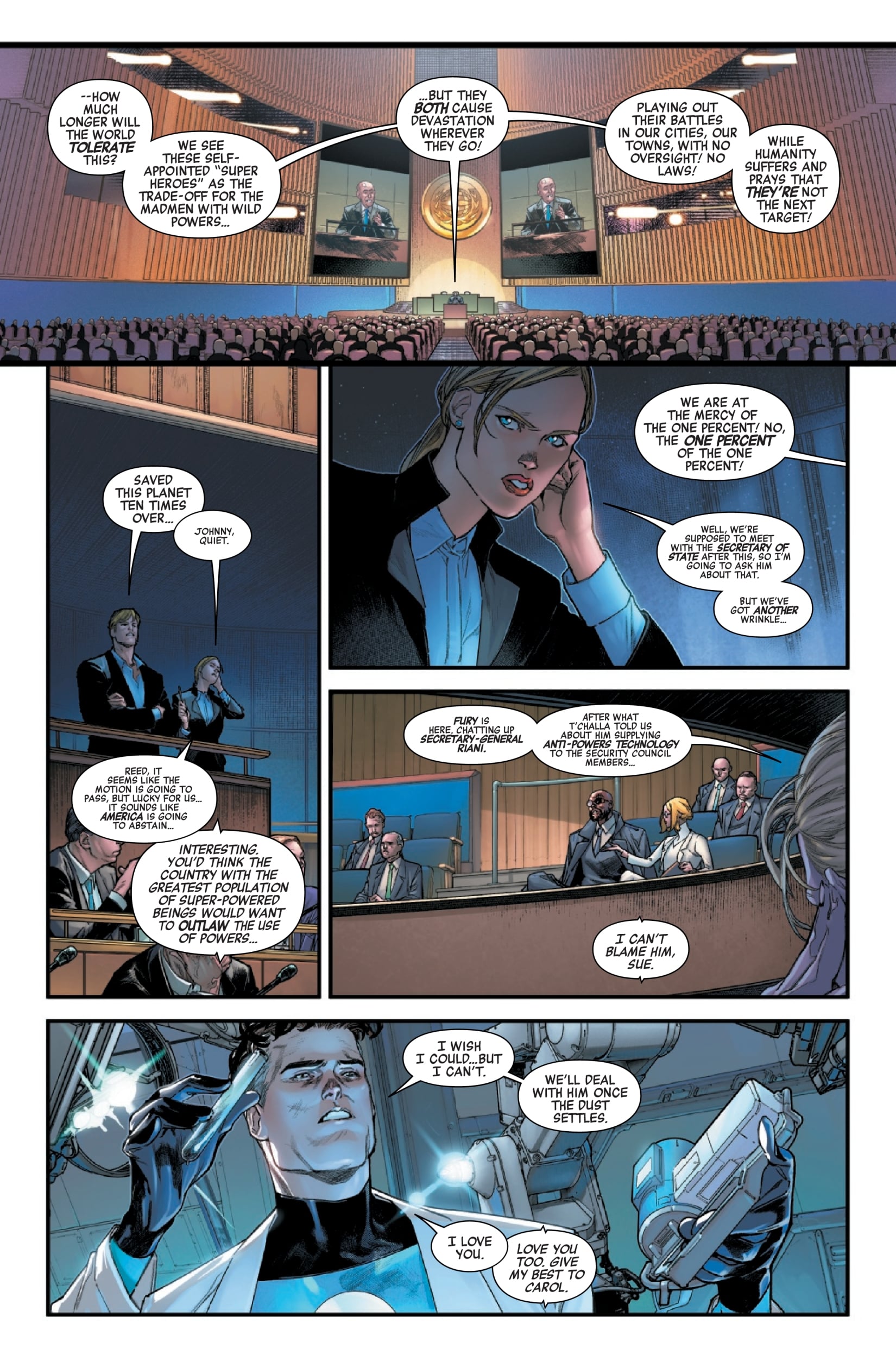
Grunenwald: I’ve been thinking about how, getting into post-Armageddon #5 spoilers, you now have a world where outside of the U.S. using superpowers is illegal. I was thinking about Civil War and the Superhero Registration Act and how that story was sort of a reaction to post-9/11 Bush era policies, where this is maybe a reaction to the rising conservatism in the U.S. I don’t know if that was on your mind at all while you were working on this.
Zdarsky: I think the big difference between Civil War and what we’re doing now is that, in this instance, America is abstaining, but their reasoning is they know they can’t do anything about it, and that’s a problem. Civil War showed them that enacting the Superhero Registration Act just isn’t possible, and it’s even harder in the current day because there’s too much to contain. I don’t know. You can look at that a lot of ways. It’s a tricky one politically. It’s not aimed at the rise of conservatism, but more the rise of fascism for sure, kind of globally. I feel like I’m reacting more just to ethical ideas instead of political ideas. I know those two can kind of be the same thing, but I also don’t want to tell the reader what to think. I want to leave it open to them to figure out their takeaway from it.
And I do find that fascinating too, especially at conventions when somebody comes up to me and is like, “Oh, thank you for talking about this.” I’m like, “What, did I talk about that?” Like, “Okay, you took that away. All right, that’s interesting.” Like, everyone’s takeaway is a little bit different from the story. And sometimes I’m worried I’m a little bit too hamfisted, especially when you’re writing Captain America and with what I put David Colton through in the commentary on previous wars. But I have yet for anyone to come to me with a take on it that is wildly wrong.
Grunenwald: I don’t know how you write a book like Captain America without being a little hamfisted. Maybe it’s sort of just the nature of the character and its relationship to America.
Zdarsky: And it’s the nature of superhero comics. Like, he’s fighting a bad guy whose name is Doctor Doom. I’m Canadian, so if my Prime Minister was a guy named Gary Evil who was doing bad things, it’d be like, okay, it’s a little on the nose.
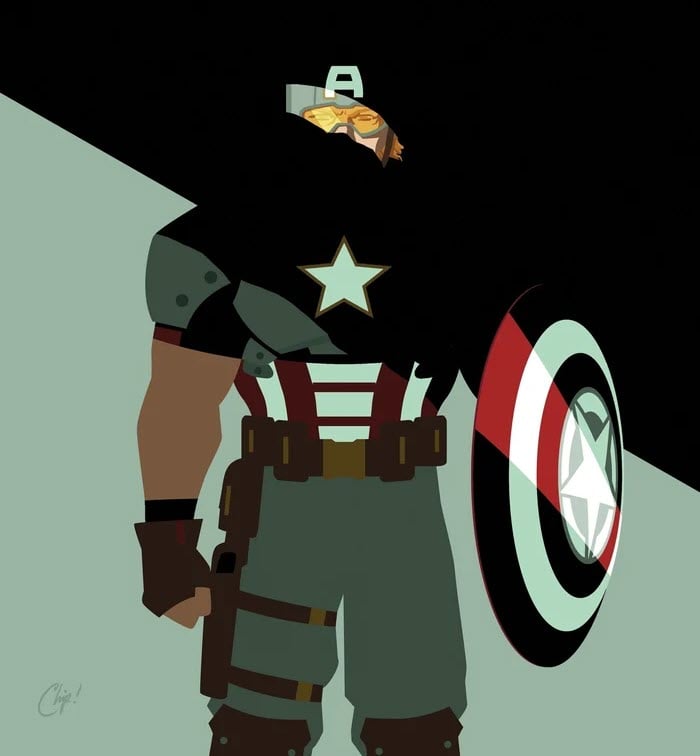
Grunenwald: <laughs> Back to Miracleman, how early in David Colton’s development did you know he was going be Miracleman? Did you know before Captain America #1 came out? Did you know before you wrote Captain America #1?
Zdarsky: Before I put pen to paper for the first issue script, I knew the general arc of David Colton. I knew at some point he would disappear and then come back, and then I would find some way to power him up. For some reason, I just had the phrase “American superpower” in my head, and that kind of drove that instinct, because I wanted to see what happens to that character as he became more powerful. And then I probably had at least written the first issue when I realized we could use Origin Boxes to give him the powers, because I was still kind of trying to figure that part out. I go ‘Origin Boxes, that’s great,’ and I started to go, well, what characters could we use? In the back of my head, I was thinking Sentry.
Pretty shortly after that, I was actually in New York in a meeting with Marvel — this is going back like at least a year and a half ago, two years ago probably — and in that meeting, I was outlining my story, and I mentioned, ‘I’ll power him up. Right now, I’m thinking Sentry, but it feels like too on the nose. I kind of want to think of something a bit more interesting.’ And we were talking, and then, I don’t know how it hit me, but I was just like, ‘Oh fuck, Miracleman.’ And I said to the room, specifically to Dan Buckley, I said, “Do you have any plans for Miracleman?” And he said, “Please use Miracleman. I spent way too much money purchasing that character. I would love it if you were able to integrate him into the Marvel Universe properly.” They’ve hinted at it for so long. There’s the Miracleman special where all these Marvel artists did their own Miracleman stories, and there was one of those Timeless issues that had a Miracleman tease at the end. But to my knowledge, nobody had a proper plan as to how to do it. And when all the Neil Gaiman stuff went down, it became clear that, well, that’s done on that end of things.
So yeah, Miracleman felt like a shelved thing that was just waiting for somebody to do something with it, and since we were no longer waiting for The Dark Age to finish, I was like, “Okay, well, let’s do this.” And once I got into the idea of Miracleman, everything opened up after that. All of a sudden, I was like, “Oh, what does this mean about this and about that, and how would that work with the Marvel Universe?” I started to generate a ton more story from the Miracleman of it all, so not just the David Colton story but the Miracleman stuff as well just opened the doors to new possibilities. My hope is, you know, it’s a new regime at Marvel and it’s a new day, and my plans are still all in place. I’ve got a couple years worth in me to explore this.
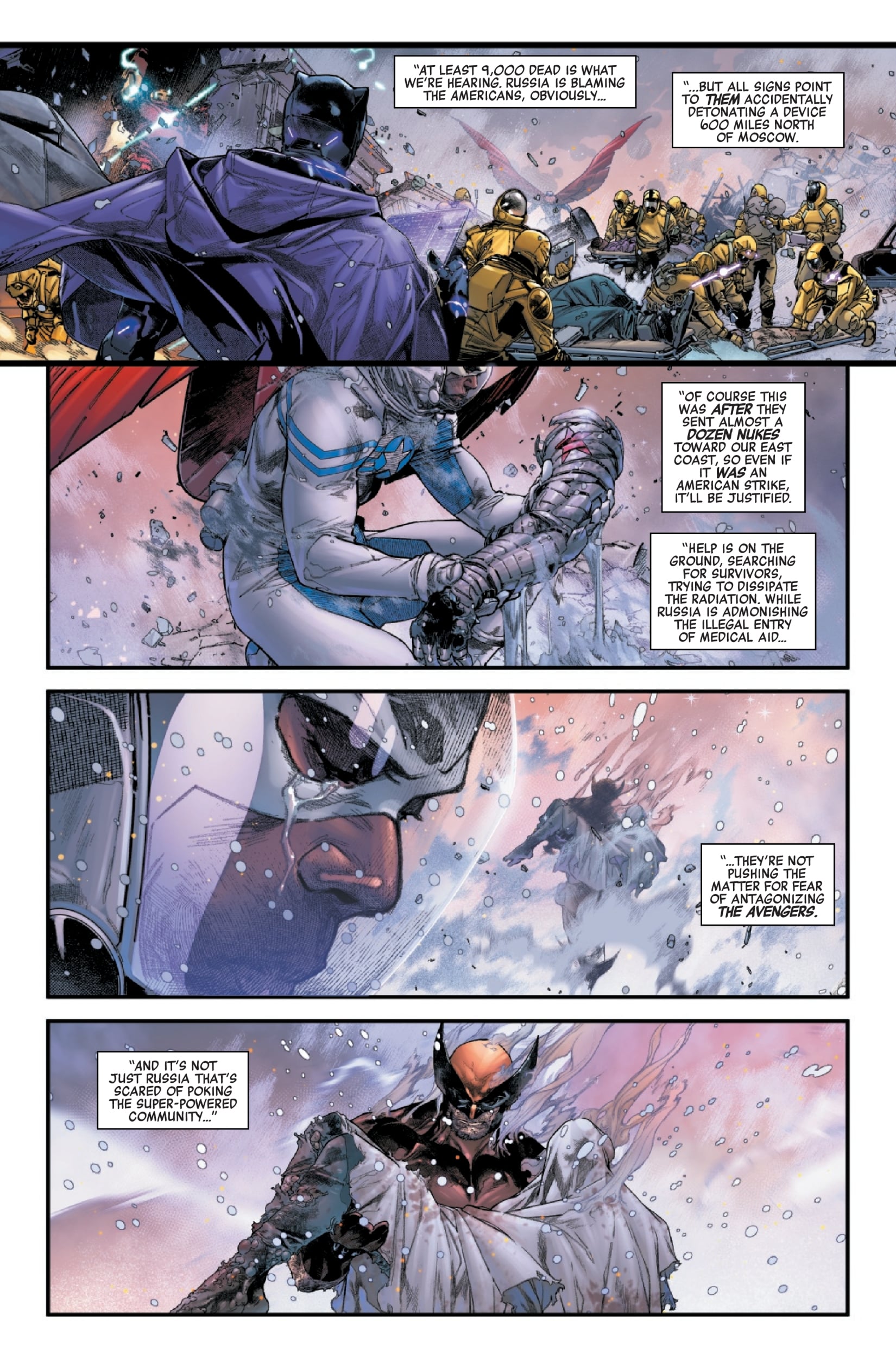
Grunenwald: Where Colton ends at the end of Armageddon is interesting. He and Wolverine sort of have a version of the “With great power comes great responsibility” conversation.
Zdarsky: Yeah, again, I tried not to be hamfisted about it, but there’s the Wolverine/Phoenix of it all, right? He’s seen this happen, and maybe part of it was like, I should have killed her, or I should have just talked to her, or I should have done something different. And Colton wants him to put the claws in him to try and end this, and like, that’s not how you live your life. It was very satisfying to write that scene and to write Logan being a bit of a mentor to somebody like Colton. They’ve both seen war, they both suffered losses, and to have that be their relationship carrying through from Weapons of Armageddon into this and then into Avengers has been satisfying for me as a writer.
Grunenwald: What role do you see Miracleman playing in Avengers? Or should I say David Colton…
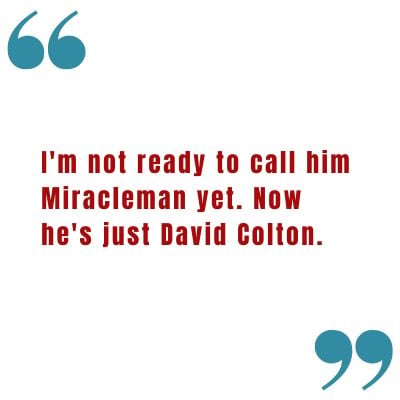
Zdarsky: Yeah, I don’t call him that. It’s a funny thing. I’m not ready to call him Miracleman yet. Like, no one’s said it in the comic, right? But all the press releases say Miracleman, so it’s the easiest way to get the idea across to people. But yeah, now he’s just David Colton. He uses his real name.
Grunenwald: But he is sort of one of the villains of Armageddon, or he’s certainly at odds with the rest of the Avengers. And now, like, Carol and Logan are just gonna work with him now? What’s the relationship like there?
Zdarsky: That’s been actually really fun to explore. The one fun thing about all Marvel heroes especially is, they’ve all made mistakes, and they’ve all tried to do the right thing, and sometimes it doesn’t work. There is a part of I think both Carol and Logan that can recognize that David Colton thought he was doing right, and in some ways was doing right, but went about it wrong, and all the power went to his head, and he wants to atone for it and make up for it, and it’s better to have him on a team than on his own. Sure, they could just let him fly off and do his own thing, but that’s a problem. To actually be able to keep an eye on him in the Avengers is a worthwhile pursuit. Also it’s been fun to play with the fact that David Colton’s a Marine, Carol Danvers is Air Force, and they do have both an inherent bond and a rivalry as a result of that, and that’s been fun to write and to play with.
Grunenwald: That is really fun.
Zdarsky: Yeah. I’m trying to make sure I don’t turn David Colton into a Marvel character, if that makes sense. I want him to kind of still feel like he’s just this guy. He’s gone through some stuff. He’s not going to give you a quip. He’s not going to punch somebody while saying, “And that’s for America!” It’s funny because it puts a restriction on me. Normally it’s like, ‘I want to fill this silence,’ but no, he wouldn’t actually say anything right here. He’s a man of action. I think it was issue two of Avengers: Armageddon, I don’t know if anyone noticed or not, in the whole issue he doesn’t say a single word until the end, he basically says “You all talk too much.”
Grunenwald: I think I remember clocking that.
Zdarsky: Yeah, it was a conscious choice, because they are banter, banter, banter, and he’s like, “We’re in a war. This is a war right now. Unless what you’re saying is a command or an acknowledgement of the command, what are you doing?” And they all run their mouths, every single Marvel character, even like the stoic ones. So I’m trying to really make sure I kind of rein the Marvel instinct in a little bit with the character and not have him just say random stuff, frankly.
Grunenwald: Yeah, that’s funny because you hear people complain about like the Marvel movies and all the characters talk exactly the same, so it’s interesting. You would have to make the conscious choice to make them sound different.
Zdarsky: Yeah, I mean, one bit of writing advice that I try to follow is, if you’ve written a page of dialogue for a character and an editor comes in and say, “Oh, we can’t use that character. Make it this character,” and you don’t have to change the dialogue, you’ve done something wrong. I had that recently, I think in Avengers #5, I have a guest appearance, just a few panels. I write far ahead, which is both a blessing and a curse. It was revealed later that I can’t use that character because they’re off in space or whatever doing something else. So I swapped the character out, and every bit of dialogue changed. The voice has to change. It’s a thing that bothers me in movies and comics, not just Marvel ones.
Grunenwald: The finale of Armageddon has Tony use the Probability Machine, and he sees a glimpse of something with Mephisto and Spider Man, and it doesn’t look good. Mephisto has also been a pretty big part of the current Captain America arc. And that arc is not over, I haven’t read the end of that yet, so I don’t know how that concludes. But how do the two dovetail into each other going forward in Avengers and in Cap?
Zdarsky: It’s pretty fun, once you start writing characters and a story, other stories kind of present themselves to you. Doom in that first arc of Captain America, I knew I wanted to come back to him, and Hell just kind of seemed like the appropriate place. Again, not necessarily a commentary on political situations. And then I start writing Mephisto, and I’m like, ‘Oh, that could mean this, and I could use him here,’ and these things present themselves. And when I started plotting out Avengers, I was like, the stuff that happens in Captain America would affect the Avengers in this way, and so therefore, Mephisto’s got to be in Avengers, and also Tony Stark is going to see this thing, which is going to prompt this thing. It sucks, I can’t talk about it all, so I feel like these answers are very much like, ‘And then other things happen, another story, and it leads to another story.’
But it’s the joy of Marvel. It’s the joy of the interconnectedness of everything that you can spin things off into different series, and storylines become a new thing as a result of working with the character for a while. Doom is so fun to write. Like, I pitched stuff in the room last week about Doom for like two years from now. Because I’m just like, ‘Oh, wouldn’t this be cool?’ So yeah, Mephisto is, it’s the devil. Writing the devil is a lot of fun.
Grunenwald: About the Probability Machine, too, earlier in the series, they’re sort of talking about it using very similar language that people use when they’re talking about like AI, like you give it a prompt and get output, and I think about AI hallucinations. So how much can they trust what this machine is showing them?
Zdarsky: We’ve shown that it is not 100% accurate because Ross, during Armageddon, predicted how the battle is going to end, but he did not predict David Colton’s appearance, because that Origin Box came from another universe. If something comes from another universe, it changes things because the Probability Machine can’t predict anything that happens because of an incursion from another universe. So yeah, I mean, it has the AI hallucination for sure, but for the most part, it’s pretty accurate.
Grunenwald: Are we gonna see more of that machine? It feels too big to just put away.
Zdarsky: Yeah, for sure. I think I pitched it to Marvel as the What If…? Machine, which I think is what sold it to them. It is a fun concept, and there’s also kind of the interesting implication of it. It’s something I realized watching Marvel stuff and time travel movies, where decisions splinter off, or if you time travel, it creates a new timeline. You’re creating trillions of new life forms. It’s a godlike thing to do, and there’s a responsibility there when you do it. That’s the fascinating thing about using this What If…? Machine. Every time you ask it a question, it’s creating trillions of life forms. It’s an ethical dilemma bigger than I think the human mind can comprehend, right? What happens when you create a universe where it turns into all suffering? Like, that was your fault. So yeah, the machine is fun to play with. Threads of that storyline get picked up in Avengers.
I’m trying to make Avengers the book you have to read. There’s a writer coming into Marvel, and he asked me, and I think an editor, “What’s the one book at Marvel I should be reading right now to know what’s happening in the Marvel Universe?” And both of us were just like, “I don’t know,” because there wasn’t one. It’s not a slight against the stories that are happening, everyone just kind of siloed off and kind of doing their own thing, and that’s great, like I did that on Daredevil, But there was nothing, there’s no Dark Reign, right? There’s no Bendis driving things or Hickman building to something. When Hickman was doing Avengers, that was the book you had to read. And same with with Bendis on Avengers, and so when I was offered the Avengers, I was like, “I gotta try and live up to that a little bit, and make this the one that drives the Marvel universe, for better or worse.”
Grunenwald: There’s also a tease in Armageddon #5 that there is someone else in the 616 universe who has Miracleman’s abilities. That could mean a whole lot of things.
Zdarsky: Yes, that’s the beauty of the tease.
Grunenwald: How scared should they be?
Zdarsky: Probably pretty scared. We’re definitely building towards, I don’t want to say a big event because I don’t like the ‘event’ word, but building towards a big story that’s going to be…how do I phrase this…an interesting meeting of the Miracleman comics ethos and the Marvel ethos. They’re two very different things, but to kind of impose one on the other is fascinating, and you can get some really interesting stories out of it. Like, I can’t show dismembered humans in London in a Marvel comic. But what does the Marvel version of a Miracleman story look like?
Grunenwald: I mean, we saw Bucky get disintegrated in Armageddon #4, so it’s not like it’s completely off the table.
Zdarsky: True. I think the closest we’ve come to like a Miracleman kind of visual was Sentry tearing Ares apart (in 2010’s Siege #2)?
Grunenwald: Yeah, just ripping a person in half. So gross.
Zdarsky: That’s also kind of awesome. Yeah, you can’t go full Miracleman in a Marvel comic because that doesn’t make any sense, but you can kind of infuse Marvel with a little bit of Miracleman, and vice versa, and see what happens from that. Something new.
Grunenwald: Speaking of Bucky, he’s dead, but he’s not dead.
Zdarsky: Ta-da!
Grunenwald: Of his deaths, that was probably the shortest one.
Zdarsky: Yeah, very intentional. Very intentional. I don’t like killing characters. Not to disparage any other writer’s work, but for the most part, in a Marvel or a DC comic, it’s cheap because you know they’re going to be back. So whenever I do it, for the most part, it’s just part of a story where they’re still around, right? I think I killed Sandman, but he wasn’t dead. He showed up next issue, right? That kind of thing. I killed Matt Murdock, but he was in Hell and he was like fighting bad guys there and came back as part of the story. I think it works for me, but as a strategy of shock and, ‘Can you believe this character is dead?’ I don’t quite buy into any of that anymore. I felt bad for Bucky fans out there who saw issue four and were like, “No, you fuckers, not again.” But I got your back, Bucky Stans. He’s back immediately, and he’s growing himself a new body, and how wonderful is that?
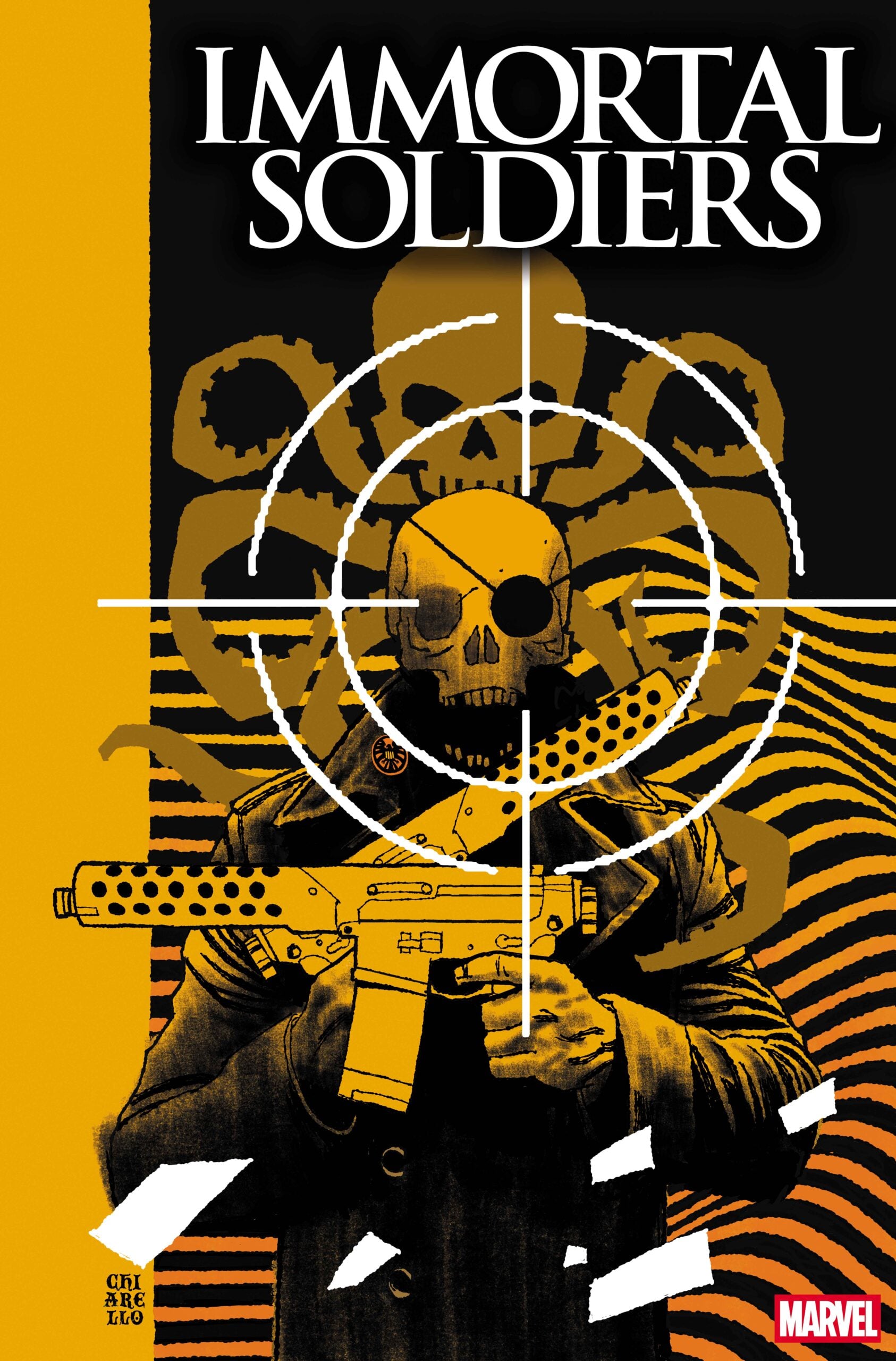
Grunenwald: Yeah, that’s real weird. But we have a little better idea now of what the Immortal Soldiers one-shot that was announced at New York Comic Con is about, too, with him and original Nick Fury, who’s been kicking around a little bit.
Zdarsky: Yeah, he bounces around. He was doing a little multi-dimensional jaunt.
Grunenwald: He’s been in some of the Infernal Hulk stuff, too, leading up to Hulk War. How connected is Avengers going to be to that story and vice versa?
Zdarsky: They kiss, for sure. I knew Philip (Kennedy Johnson) was bringing back Fury Sr., and I had some ideas that could spring from him coming back, especially since I’ve been focusing a lot on Fury Jr. in Armageddon in my Cap run. I don’t want to spoil Philip’s stories, but sure, there is stuff from my work that shows up there in Infernal Hulk. It’s the beautiful dance of continuity between comics, trying to figure out, ‘Okay, well, your character is dead this month, but maybe they can be alive next month.’ I definitely ask favors of creators for sure. “Hey, please, please don’t kill that guy right away.”
Grunenwald: Well, you have to tie up David Colton too, because we saw him going toe-to-toe with a Hulk in Armageddon, and he could just go take care of this whole Hulk War thing pretty easily, right?
Zdarsky: I mean, that’s always the problem with Marvel comics. Like, anytime anyone’s fighting a bad guy, it’s like, just make a phone call. What are you doing? You have each other’s numbers.
Grunenwald: Cell phones don’t exist in the Marvel Universe. Maybe that’s the problem.
Zdarsky: Yeah, the suspension of disbelief and, you know, hundreds of characters at the touch of a button to come help you is an unfortunate one.
Grunenwald: Is there anything else that you want to touch on, either based on what we’ve been talking about, or completely unrelated, about Armageddon or Avengers? Or anything else you want to talk about?
Zdarsky: It’s been a pleasure being able to write what started as a small Captain America story and has become kind of the bigger Marvel Universe story. That’s been a real delight, the fact that Marvel’s kind of entrusted me to, not steer the ship, but be one of the hands on the wheel of the ship, I suppose. Maybe the hand that’s tugging the most, which is a phrase I would like taken out of context.
Grunenwald: That’s going to be the headline, you talking about being the hand that tugs the most.
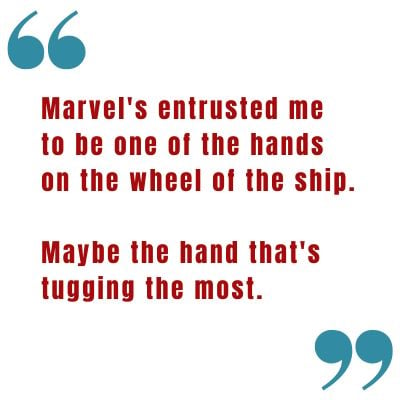
Zdarsky: Pull quoted in the interview on the page. I would love that.
No, they’ve been supportive, and all the other writers have been supportive. And Steve Wacker coming on board has been like a breath of fresh air. He’s just so in love with telling great stories. Just as an example of that, I submitted an outline for three issues of Avengers, and sent it to my editor, and he passed it along to Steve. I’m like, ‘Okay, all right, we’ll see what he says.’ And he came back and he had like five notes on it, he had five actual notes, and they were all great. They all made the story better or made a moment better. It was like, ‘have you thought about it this way?’ Like, oh my god, this is so good. I’ve been doing this long enough that I’m used to a variety of editors, and now editor-in-chiefs, and getting notes. Some are good, some are bad, some are just protecting the characters, and some are, you know, whatever, just notes to give notes. But Steve’s notes were smart and productive and helpful and will make the comic better for the reader, and that’s a rarity. That’s a rarity. I’ve worked with a couple of editors that have that in them, but to get it from the editor-in-chief was really delightful.
Grunenwald: That’s very heartening to hear as a lapsed Marvel reader who is now jumping back into things, that the people who are steering the ship – tugging, if you will – are are being thoughtful about the stories and everything. It shows in in your Cap run for sure. I’ve really enjoyed that a lot, catching up on that, so I’m excited to read other new Marvel stuff too.
Zdarsky: Even under CB (Cebulski), I was able to do Daredevil like Captain America. He was always really supportive of the stories I was pitching. So not to denigrate CB by praising Steve, but coming out of this past Marvel summit, I haven’t been this excited about comics in a long time. Like the feeling in the room was, this is, to quote a billion dollar movie, a brand new day. It’s a good feeling, and it makes me excited about comics and the kind of stories that not just myself, but the other writers are going to be generating in the next year or two.
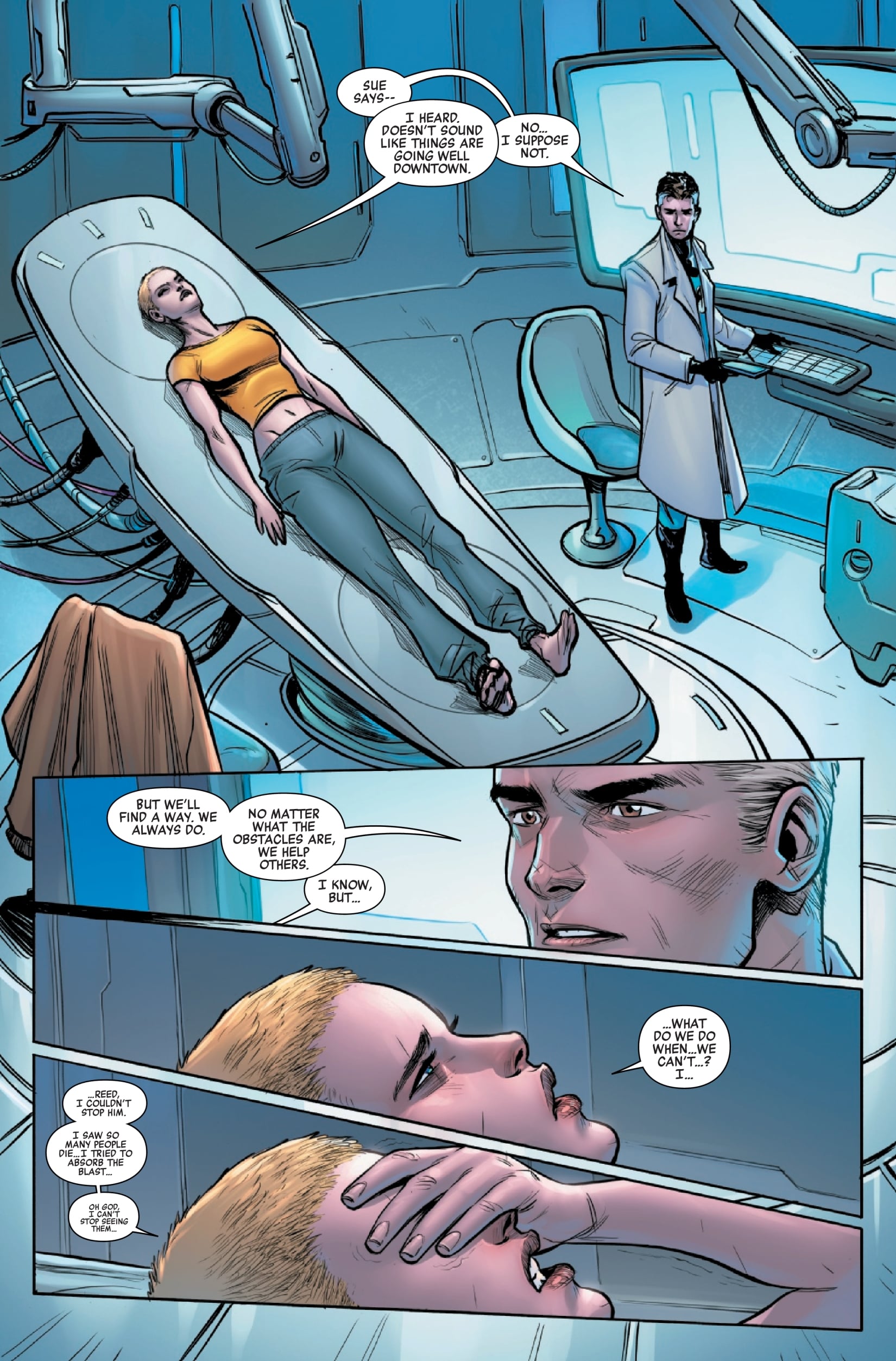
Grunenwald: That’s awesome. How closely have you been working with the other writers? Obviously with Captain Marvel, you set up Carol’s status quo for the new series in Armageddon #5. Do you work closely with the other writers yourself, or is it all the editors doing that stuff and you just implement, or how does that work?
Zdarsky: Like I said, I work pretty far ahead, so for the most part, when G. Willow Wilson and Rachael Stott were starting up with their Captain Marvel run, I’d already written a bunch of Avengers, and I had an idea for Carol and what her status quo is now. And luckily Willow was just like, “Oh, this is great! This is this is a good, fun starting point.” And she’s a genius, and she’s done her own thing, and we’ve had some brief conversations about what should happen where, because I have Carol in Avengers, but I want the I want the focus to be on her main title, so any big moments for Carol should happen there, which I think is the way you write Avengers. You don’t want to hog those. It is the unfortunate thing of, sometimes you pick characters for your team book knowing that no one else is writing a monthly, so you can kind of do whatever you want with them, but then as soon as you put them on the team book, people are like, “Oh, that’s cool! We should give her a monthly.” As a fan, I’m excited. Obviously, I worked with Rachael a bunch, so I’m excited to see what she does with it, and I love Willow, so as a fan and a reader, I’m really looking forward to it. As a writer, there’s a little bit of a sigh because I’m like, okay, all right, I don’t get to miss Carol up too much. I gotta leave something for Willow and Rachael.
Grunenwald: You need to introduce new characters, like the Justice League Detroit. You need a Vibe and a Steel and a Vixen to do whatever you want with.
Zdarsky: Part of why I put Luke Cage on the team was, it was twofold, really. One, I felt bad that I made him mayor and then left Marvel. Like, like I basically made him mayor of New York at the end of Devil’s Reign, and you know he popped up a bit in Daredevil, and there were plans to have a Luke Cage series. And then those plans kind of fell apart, and so when I left Marvel, not a lot happened with the character, and I felt like it was just a wasted opportunity. So I really wanted to write him again to dig back into the character, but also, he doesn’t have his own series, so I can do some really interesting things with him and Jessica. So now my greatest fear is that Marvel green lights a twelve-issue Luke Cage book. I don’t get to fuck up Luke Cage. My greatest fear, Marvel’s gonna put out a book that I’m really gonna want to read.
Grunenwald: But maybe it’ll be based on your fucking him up.
Zdarsky: True. At least I got David Colton. I can latch onto him. I have a degree of ownership over that character, which will help with things to come. You know, using Spider-Man is obviously always a nightmare. I definitely had to rewrite a few scenes here and there, just because things have changed or things have popped up over in his series. But he’s still a joy to write, so I’m glad I’ve got him on the team.
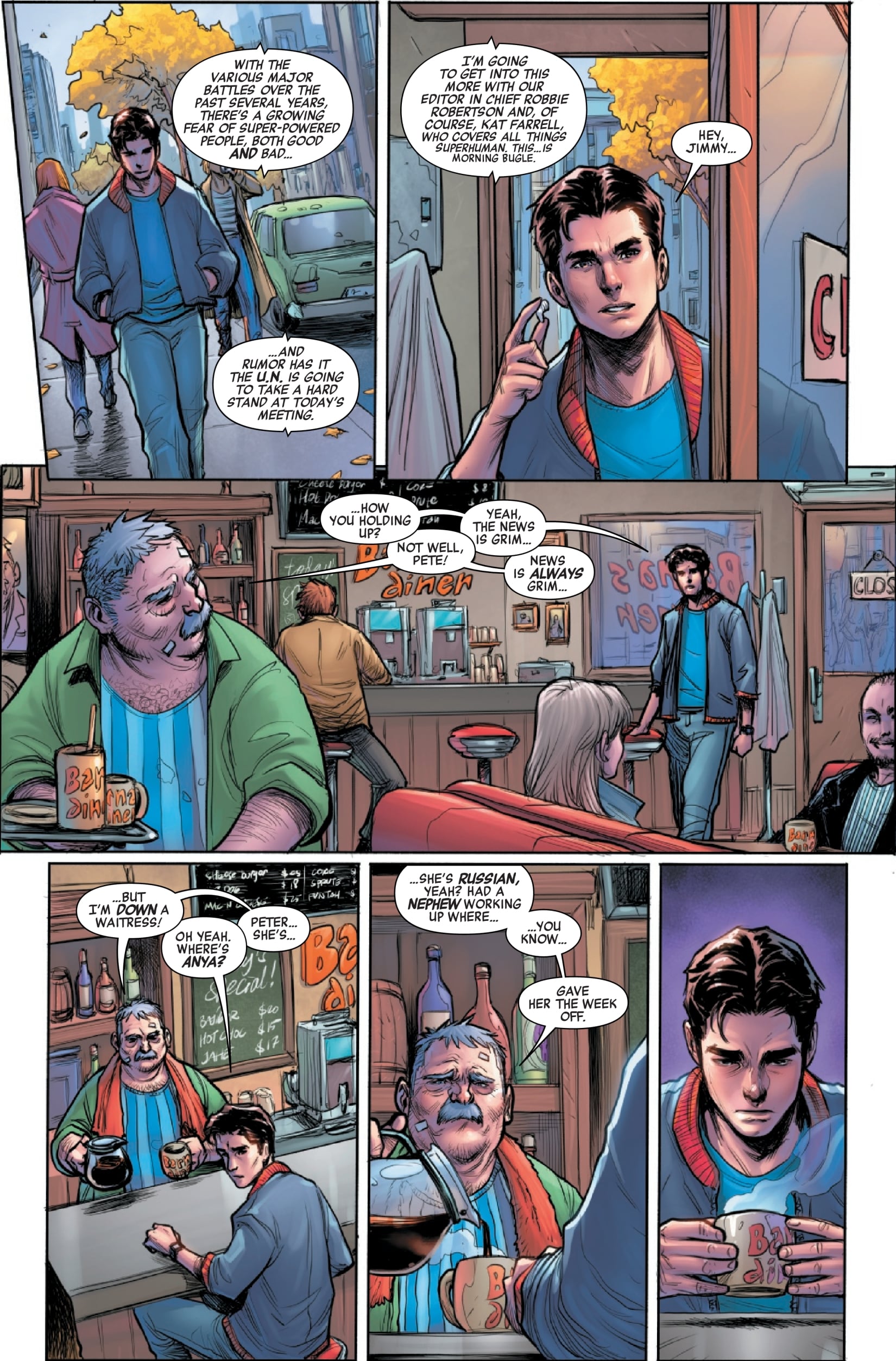
Grunenwald: I liked the lasagna bit in Armageddon #5, and part of me was like, ‘Why didn’t Aunt May make the lasagna? Oh right, because she doesn’t know who he is right now.’
Zdarsky: I think we’d already had a page drawn with Peter and Aunt May from Avengers before I found that out, and so we even had to redraw a little bit of it. Definitely had to rewrite it. Joe Kelly, God bless him, he’s super-supportive, so he came in like and gave me great suggestions for the page in question. But that’s just what working on a shared universe book is like. The trade-off is, you have these characters with these rich emotional histories that you can play with, so when something’s happening in another book, you get to play with that. That’s a ton of fun, too.
Grunenwald: Can’t get too pissed off about it, probably.
Zdarsky: No, no. But the lasagna scene, it’s funny. I don’t know what people are expecting for issue five of Armageddon. I mean, by the time this comes out, it’ll already have come out. I think maybe a lot of people are probably expecting some sort of big Miracleman issue in issue five, and like they all have to fight Miracleman? But no, no, it’s not. I wanted to swerve away from that because, that’s how these kind of quote unquote “events” go, where you have this big battle in issue five, and I don’t want that. I don’t want to do the thing that you’re supposed to do. I want a quiet issue. Peter Parker’s the heart of the Marvel universe, and he stayed out of this skirmish for good or worse, and you know, he’s a guilty guy, and I wanted to make this issue, especially a big chunk of it, just about him and the real people that kind of suffer in these kind of cataclysmic events, which I think is super-important. Sometimes you lose sight of it in a Marvel and a DC comic, punching gods, but what’s happening with the people below? You know, that’s always the the thing that they try to stress, but doesn’t always happen.
Grunenwald: It was a much quieter, much more grounded issue than I expected. But I think it was really effective.
Zdarsky: Yeah, we’ll see. It’s interesting because, people want something that’s different, but also you’re so conditioned with the 20-page comics and the five-issue arcs to expect certain beats. I think when it doesn’t happen, it can throw you off, and you can be like, “Well, nothing happened this issue, or too much happened this issue, or this should have been more exciting.” We have to be able to kind of surprise them, and sometimes the surprise is quiet.
Grunenwald: It’s a nice change of pace.
Zdarsky: My goal is to one day have a superhero comic where somebody doesn’t punch somebody.
Grunenwald: That’d be impressive.
Zdarsky: It’s so hard. Even as a writer, for just over 10 years now, there have definitely been scripts where I’ve been writing them, and halfway through, I’m like, “Oh, I’ve written this script before.” Because you’re so used to these beats. By page X there’ll be a confrontation, by page Y there’ll be a fight, there’ll be a reveal on page whatever. You have to make sure what you’re doing is new, especially to you.
Grunenwald: Yeah, if you’re bored with it, that doesn’t bode well.
Zdarsky: I think all writers, if you don’t struggle with it, then you’re probably committing the greatest sin of all. You have to kind of look at your work with every issue and every page and be like, “Does this feel fresh? Does this feel interesting to me?” And if it doesn’t, then you’ve got to go back and rewrite it. I do a lot more rewriting these days than I did in years past. I’ve definitely had things where I’ve thrown out an issue. Where I’ve written it, and I’m like, “Nope, not good enough. You gotta start over.” That’s a hard one. But, you know, people are spending money on this stuff, and the characters mean something to them. You don’t want to let everyone down.
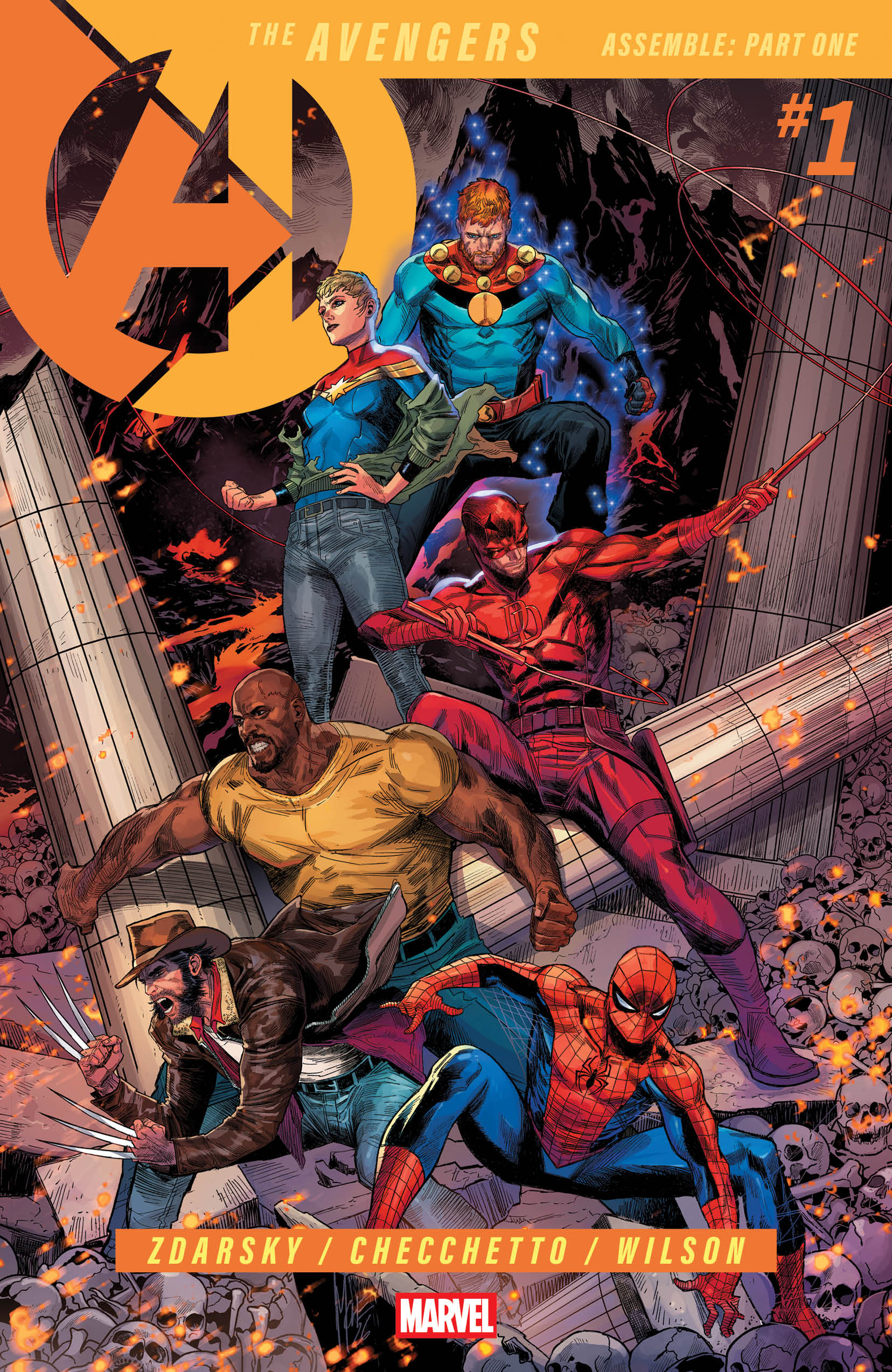
Avengers: Armageddon #5 is in stores now. The new ongoing Avengers #1 hits stores on Wednesday, November 4th.