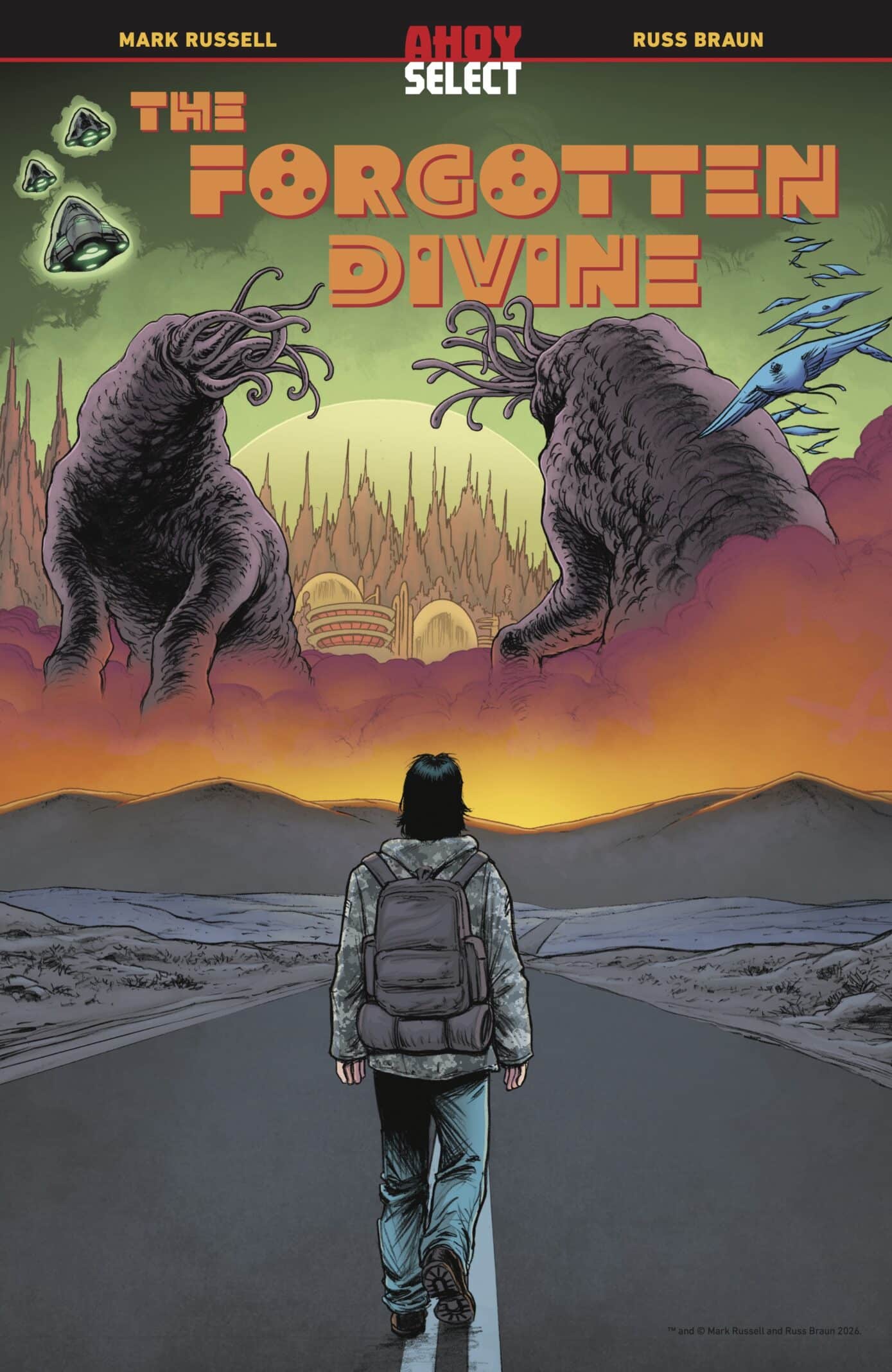

Throughout his career, Mark Russell has sought shards of holiness in the mundane. Or at least, the relationship between absurdity and chaos. Satire about systems destined to break guides him, from the slice-of-life reimaginings of The Flintstones, to the charged and prescient wit of Exit Stage Left: The Snagglepuss Chronicles. The crucial space between faith and tolerance fosters enduring belief through the acceptance of reality. His latest project, The Forgotten Divine from Ahoy Comics, which also happens to be publisher’s first ever Kickstarter campaign, appears to beautifully bridge that gap, though it also has the potential to challenge it. It’s an exciting development to watch!
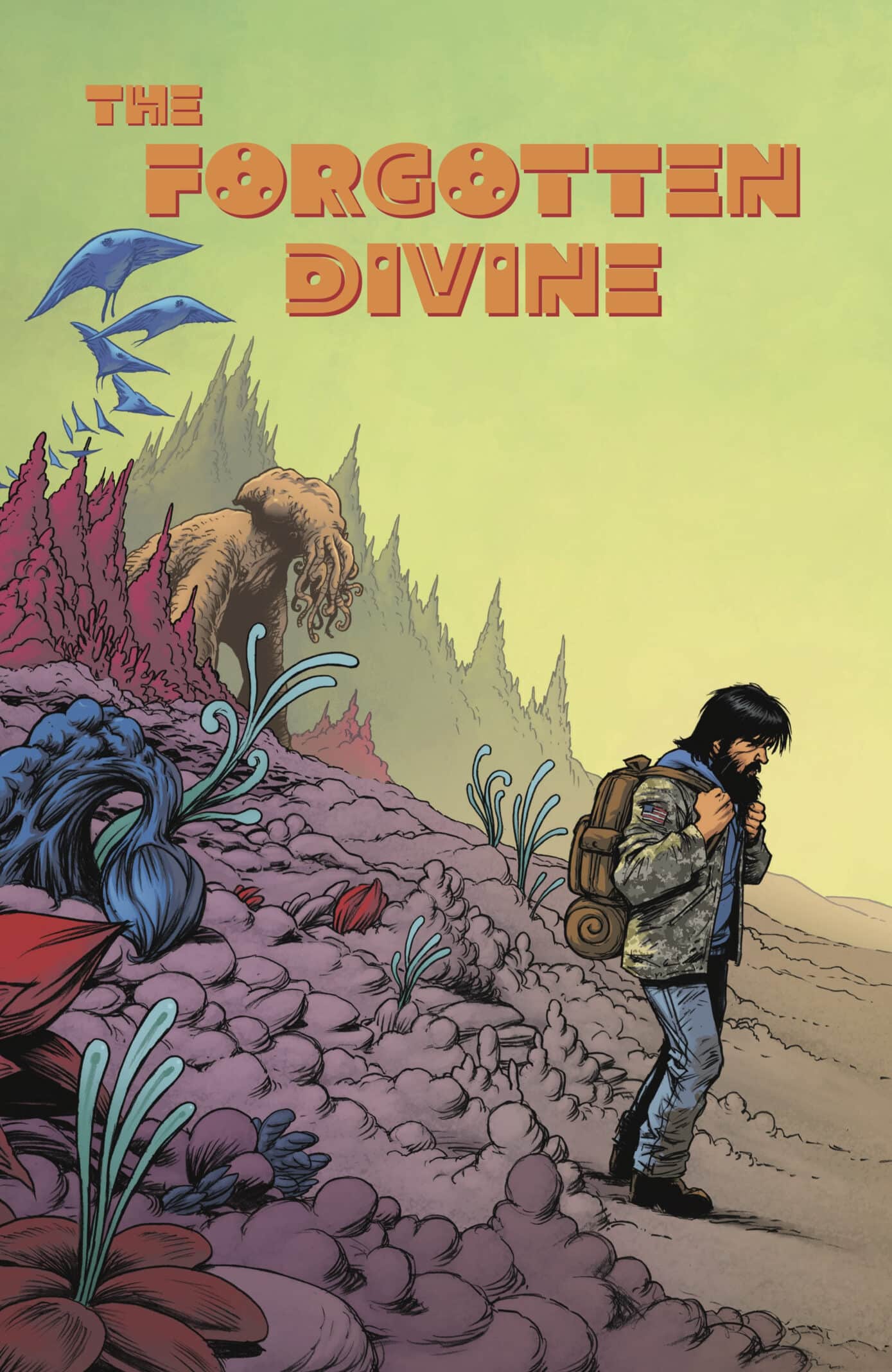
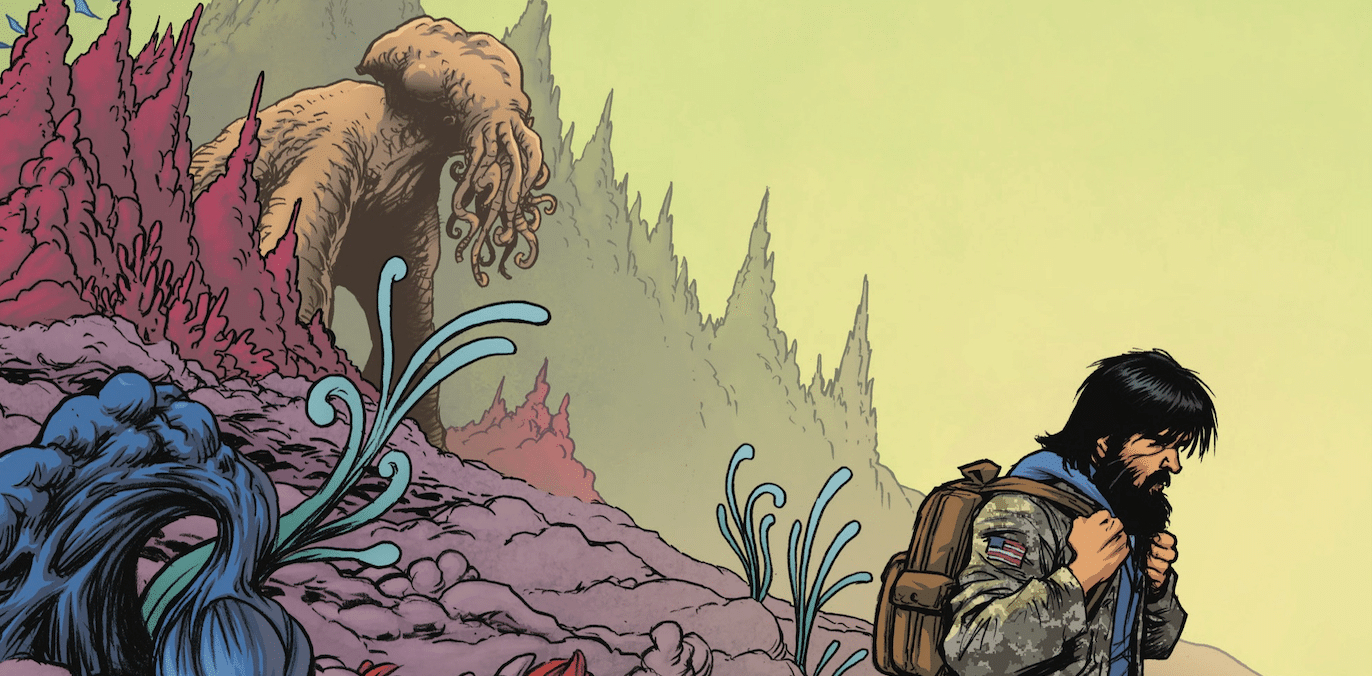
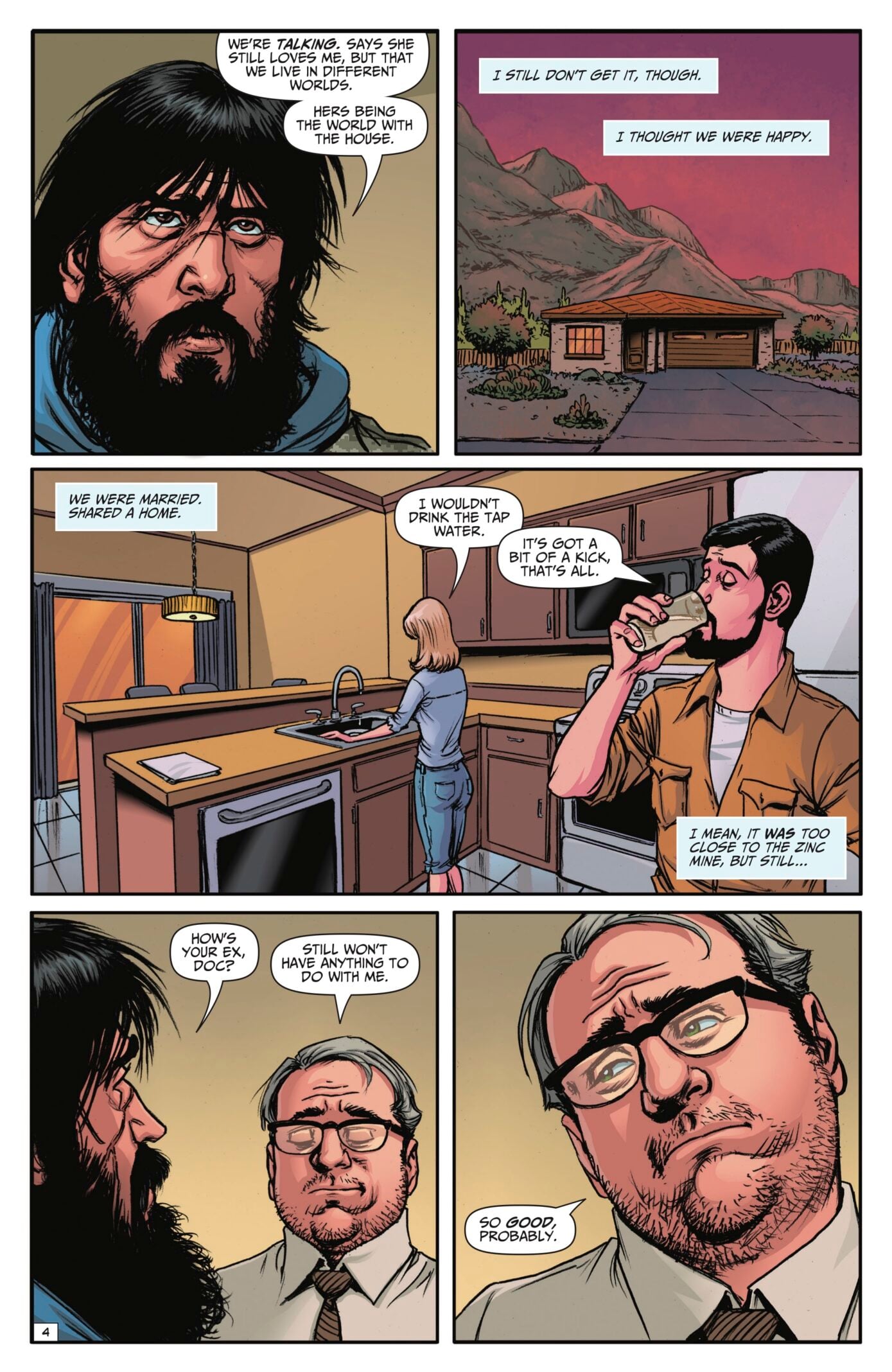
The story follows Rodney, an ex-soldier who once defused bombs but is now convinced he’s receiving divine signals. As he wanders dry towns, he hears voices that only he can understand, revealing a belief that disrupts his world rather than comforts him. Tales of miraculous healings and mystical maps spread around him, drawing others in, not for understanding, but because his unwavering faith feels grounding. Here, truth isn’t just about facts; it’s about who can shoulder the weight of belief.
Featuring vivid art by Russ Braun (The Boys), Forgotten Divine avoids clear definitions of reality, instead immersing us in the troubling uncertainties of faith. It explores how one person’s awakening can lead to another’s breakdown, blurring the lines between them. In the heat of it all, clinging to conviction alone might prove to be the riskiest choice of all.
I was keen to chat with Russell as I’ve read his work for years, but never had our paths crossed. We talked about finishing clearly, the desert as a form of inner structure, and how every fixed belief might be its own illusion.
AJ FROST: Hi Mark! Thanks for taking the time to chat with me. This book gave me a lot to think about, especially with the existential dread that is part and parcel of everyday life, it seems. So I wanted to start off with something relatively easy: Rodney’s visions feel hopeful and terrifying at the same time, like something he’s meant to glimpse but not survive looking at straight on. That’s basically the language of the sublime, right? How were you thinking about that line between revelation and psychosis while writing this story, and what’s actually at stake for you in keeping that line indistinct?
MARK RUSSELL: I wanted this to be a story about a cult told from the perspective of a true believer. Which, I suppose, all certainty is really a kind of psychosis, but it’s also one that comes with great clarity. If there’s something you feel to be real, the most real thing you’re aware of, but which makes you look crazy when you try to explain it to anyone else, that’s something you may very well build your life around. Something that will give your life focus even as it destroys it. Sort of like writing!
FROST: The Explosive Ordnance Disposal background isn’t just backstory as much as it is how Rodney sees everything in the world. The world turns into a series of threats and such. Was that the starting point for the character, or did you realize partway through that it was quietly structuring the whole book?
RUSSELL: His background as an EOD in Afghanistan works both as a backstory and as a metaphor. In fact, the original title of this story was “Pigstick”, a reference to the tool EODs use to short circuit a bomb before it can blow. And this is the sort of question Rodney faces as a member of the Forgotten Divine. To destroy his own circuitry or, you know, remain a bomb.
FROST: Early in the book, you write: “Life is mostly a question of real estate.” There’s a lot of philosophical and thematic potential in that thesis. When you land on a line like that, do you know right away what it’s carrying, or do those reveal themselves later as you work through the narrative?
RUSSELL: Usually a pithy line like that comes to me after I’ve been writing for a while on that theme. I know I’m trying to say, but I don’t really say it until this single line pops into my head that expresses it in totum. Of course, what Rodney means by that is that who we are, what values we hold, which flag we wave, which god we worship, is more a consequence of where we’re born than who we are. And his experience with the Forgotten Divine, maybe for the first time in his life, allows him to be more than just a by-product of real estate.
FROST: Rodney’s father carries this story about a Buddhist monk in Vietnam, someone who believed silence was the only thought we really choose, and who ends his life through self-immolation. What pulled you toward that lineage? And what does it mean for Rodney to grow up with a version of wisdom that literally ends in fire?
RUSSELL: The point of that story is that sanity is sometimes like underwear. Just because no one on the outside can see it, doesn’t mean you’re not wearing any. And, in fact, the thing that might make you look crazy is the thing you know you’re truly choosing for yourself. What I wanted is to have a brief moment at the beginning of the story to sort of set the tone for the journey Rodney was about to go on.
FROST: The American Southwest doesn’t only sit in the background of the comic; it bleeds into everything. The desert, Route 66, Roswell, it all starts to feel like part of Rodney’s inner world. I’m an Arizona native, so I have to wonder: What does that landscape open up for you? What would you lose if you set this somewhere more contained or familiar?
RUSSELL: Having grown up among Bible-thumpers, maybe I just equate the desert with prophets. I have a hard time imagining anyone having a spiritual revelation surrounded by shrubbery. But that’s probably just my own cultural baggage. I think one thing setting the story in the Arizona desert did, art-wise, was to draw stark contrast between the gritty and monochromatic daily life of the believers and the colorful and phantasmagoric world of their visions. Who wouldn’t choose this alien world? Even if you didn’t understand what it was or even if it was real?
FROST: Your previous works explored institutional failure through keen satire and an eye for the absurd. Here, it seems to extend to institutions failing and reality wobbling. Is this an escalation or the same concern taken to its extreme? If you can’t trust structures, what remains?
RUSSELL: The problem with human institutions is that they aren’t designed for human beings. They’re designed for groups of human beings. The institutions Rodney and the other members of the Forgotten Divine run into are designed to react to people scaring the horses and children, not really to facilitate deep and highly personal visions of a world you can’t prove is real. And if you choose the truth within, oftentimes it places you on a collision course with the institutions designed to recognize normality as wellness.
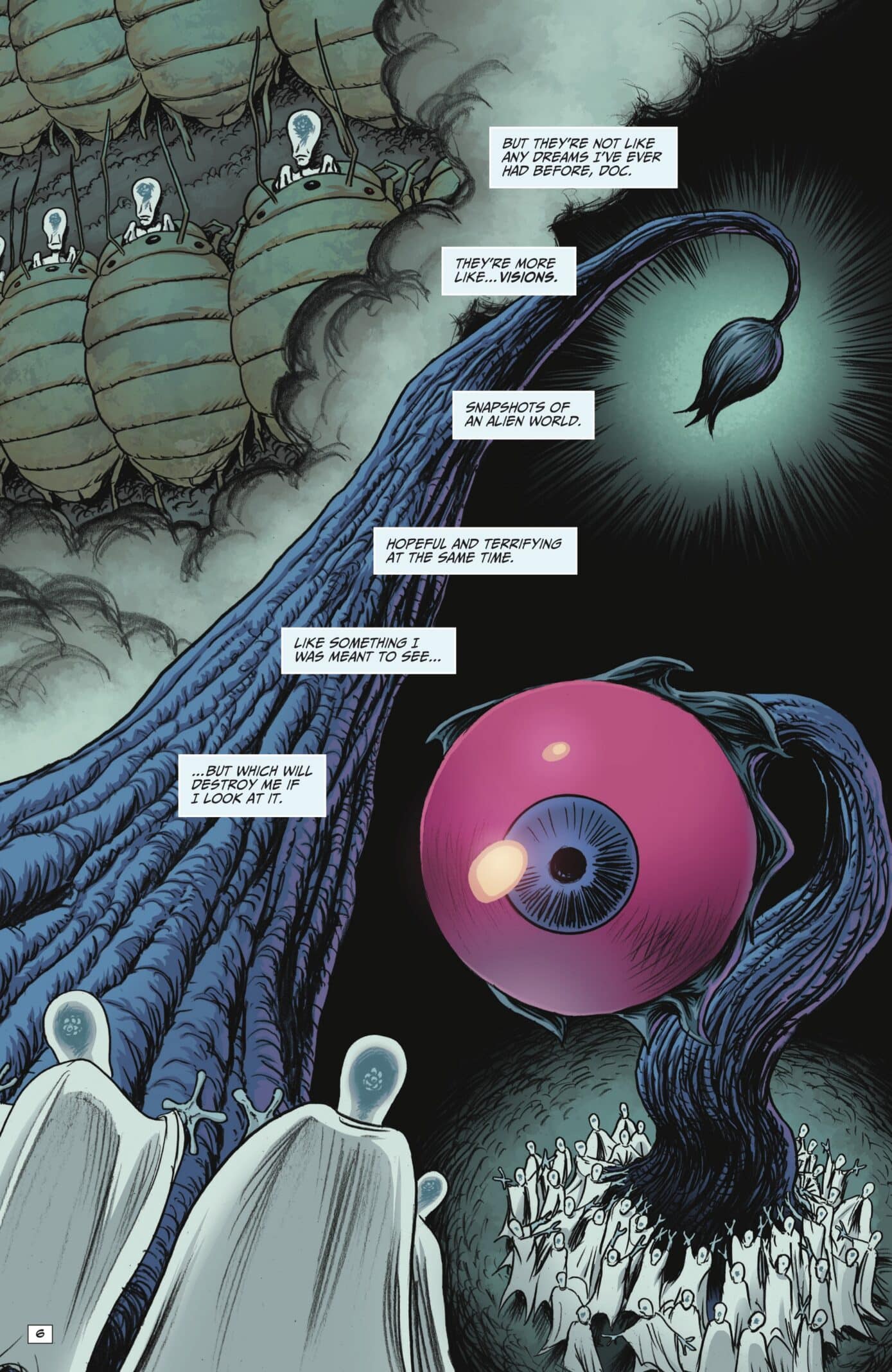
FROST: The world in Rodney’s visions doesn’t really read like classic science fiction. Instead, it feels more like someone else’s religion. There’s ritual, hierarchy, something like worship orbiting that eye. Were you pulling from specific traditions, or building something else that echoes them? And how do you know when a made-up cosmology starts to feel real enough to believe in?
RUSSELL: As I was writing this, it occurred to me that what I was really writing was an allegory for creativity. How the power of this internal world is enough to make you obsessive and to make some pretty poor career choices. How staring blankly at a laptop for six hours might make you seem like some sort of Heaven’s Gate weirdo to people who don’t understand why you’re doing it. So that was more the cosmology than anything else. It’s a science fiction story, but one built on a very personal experience with the galaxy within.
FROST: This book feels like it could go either way, totally self-contained or the start of something bigger. What do you think about it? Do you feel that Rodney’s story is done here, or is there more you’re still interested in exploring with this wily, wild man?
RUSSELL: I feel like this story is told in its entirety here. I don’t feel the need to come back to Rodney or the Forgotten Divine. I feel like this is as complete a story as I’ve ever written and I love how it ends. And when you feel like you’ve stuck the landing, you’d better have a good reason to risk messing it up later.
Learn more about the soon-to-be-launched The Forgotten Divine Kickstarter campaign here. Find out more of Mark Russell’s bibliography here, and Russ Braun here.