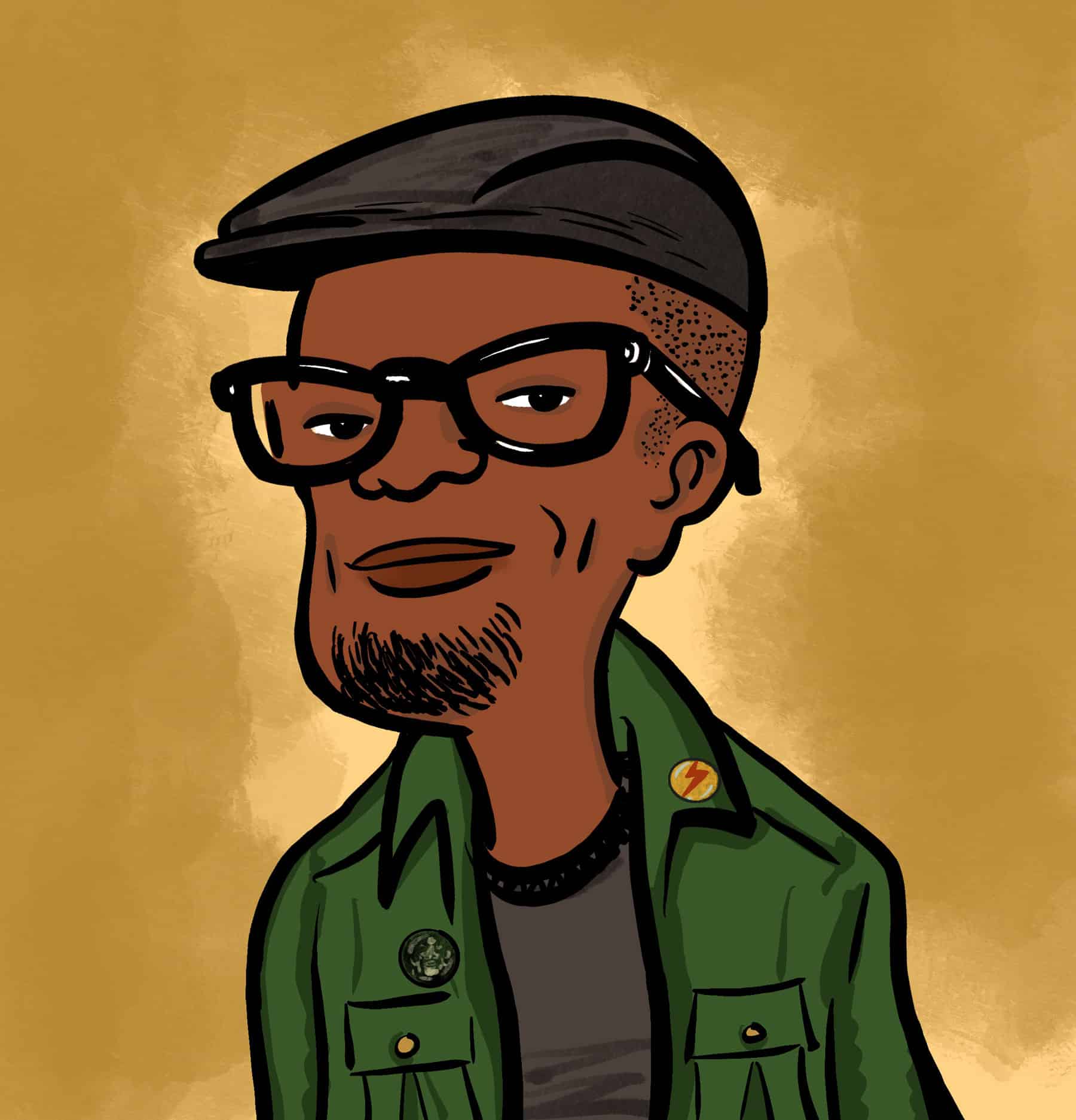
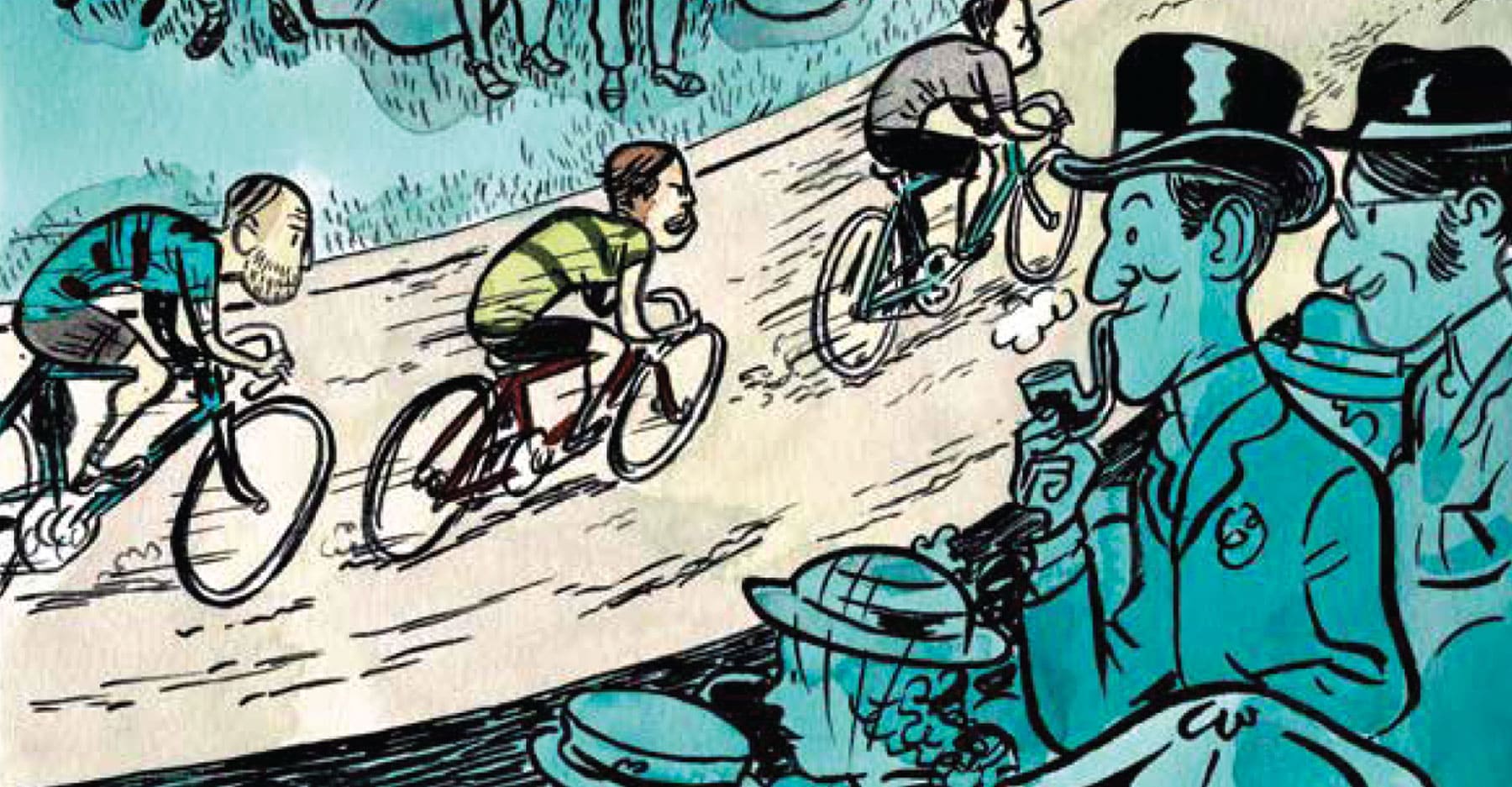

A veteran of the San Francisco Bay Area’s storied alternative comics scene, Frederick Noland has spent more than three decades working as a cartoonist, teacher, and illustrator. This year, his work is reaching a broader audience with two major releases: the recent Our Little Wild Time (Fantagraphics), collecting some of his best short comics from across his career, and the upcoming Major Taylor: The World’s Fastest Man, out September 1 from Drawn & Quarterly. A nearly 400-page graphic biography of a man who, at the turn of the 20th century, was one of the world’s most famous athletes, Major Taylor plunges readers into the wild world of early bicycle racing and the story of a Black man who pushed himself to the brink—and beyond—to prove himself in a world that expected him to stay in his place.
Recently, Noland sat down for a video chat with fellow cartoonist François Vigneault to discuss the infinite possibilities of visual storytelling, his calling to tell lesser-known stories from Black history, the sometimes difficult lessons he’s learned from the past, and the knowledge he hopes to pass on to the next generation. This conversation has been edited for length and clarity.
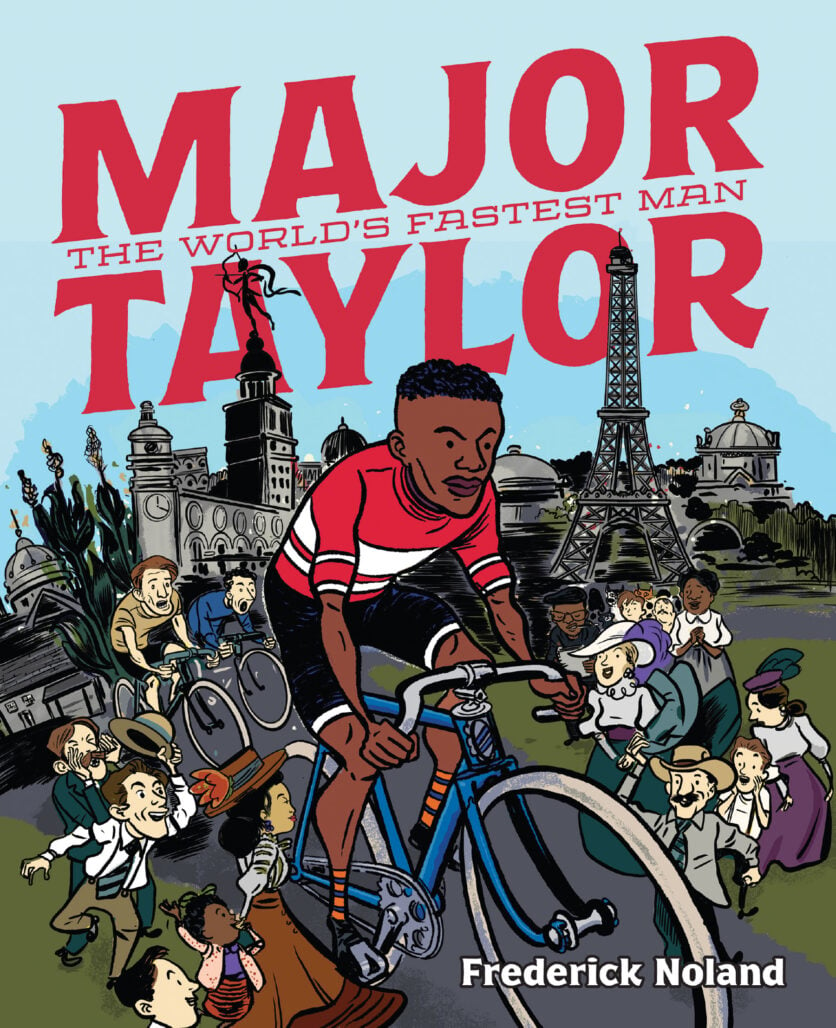
François Vigneault: I know you as a short story writer, either slice-of-life comics, or things that are kind of weaving in and out of fantasy. With this book, you’re tackling something much longer. Number one, what made you say “I’m gonna tell the story of Marshall ‘Major’ Taylor?” And number two, why did it evolve into such a large project?
Frederick Noland: Yeah. So number one, I’ve been telling the story of Marshall Taylor since 2015 or so. I’ve just been with it for so long. I did a mini-comic about him. And that went through some revisions and some tightening up. And in the midst of the pandemic, I started working on a loosely planned, longer story with Taylor. Because the mini-comic I did was 24 pages, and it barely gets into the story. It could just really hit the highest of the highlights, you know? And the way it was researched, I only read two books, I didn’t get super deep on it.
I’m just by nature kind of a researcher. If I find something interesting, it doesn’t matter what it is, I’ll really dig into it, and I always have. It’s obsessive, like I get really obsessive. I mean, now, I’ve got an official diagnosis, so I get to say, “Oh, yeah, I’m a man of letters.” Unfortunately, they’re all diagnoses, not degrees!
So yeah, in the midst of the pandemic, I was kind of at loose ends, just like everyone, which was fine with me. Because I just work, I just draw, I just write. And Peggy [Burns, co-publisher at Drawn & Quarterly] saw it because I kind of, you know, auditioned! So Peggy offered me a chance to do a book. So the reason it’s so long is because it was an opportunity to do a longer book. It was sold at 200 pages, and then I threw out the outline almost immediately, because I kind of made that shit up anyway. It was an educated guess outline. It wasn’t serious. It was a Potemkin outline. And any outline’s doomed from the start if you’re doing biography, anyway, because you’re gonna discover new things as you go.
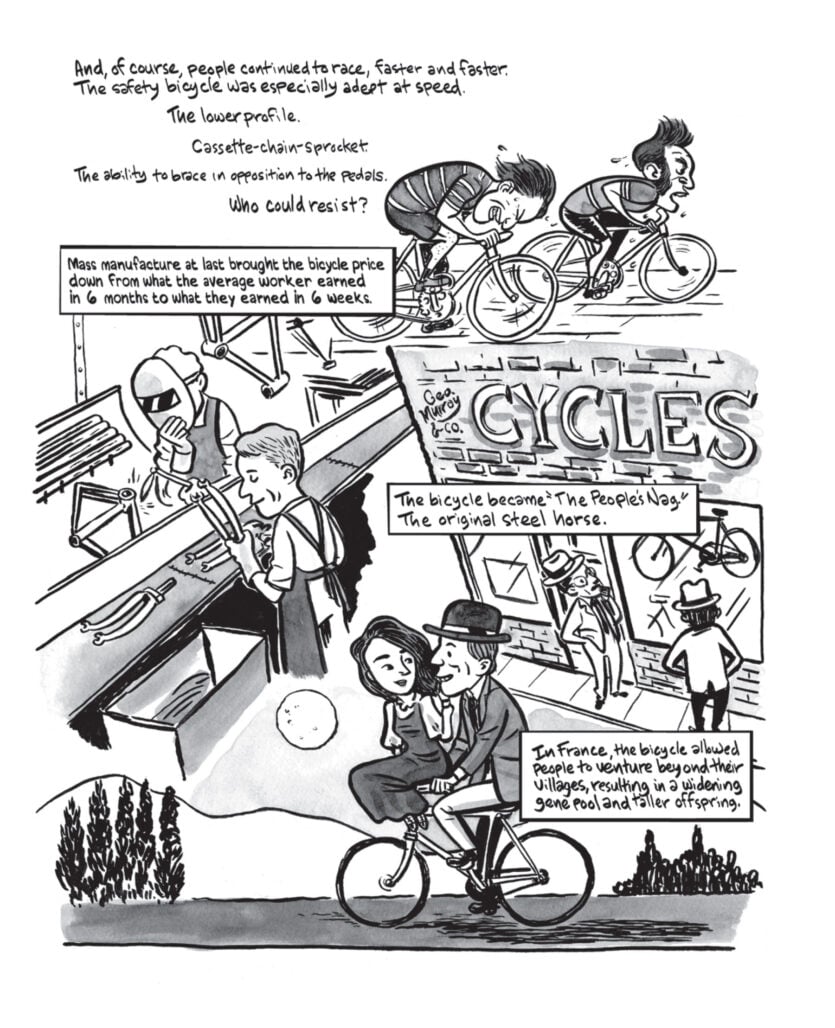
It went to 350 pages, because [cartoonist] Ellen Lindner and I, we were talking on my podcast, and she mentioned a couple of books about the history of cycling, and a couple of factoids, you know, how the introduction of the bicycle caused people—it’s in the book—to travel between villages in France, and they got taller, and it was just so mind-blowing. So I got into that book, and another one, and I was like, I can’t really talk about Taylor until I talk about the history, because you really have to know how big cycling was. It’s something I still don’t think I convey in the book. Like, the invention of the bicycle itself, you’ve got the cotton gin, and you’ve got the bicycle, and then you’ve got some other stuff behind those two things.
Vigneault: Yeah, it is fascinating. I’m not as into biking as you are, but I love biking, and it’s been something that’s been important to me for a long time. And I remember I realized “Wow, this invention changed everything.” It’s more important in many ways, for more people around the world, than the car is.
Noland: By far, by far! You don’t have roads without bicycles. You don’t have the nascent American road system without the League of American Wheelmen pushing for that.
So the book got longer because I had to tell that history. And I remember early on, Peggy was just like, “okay, this doesn’t match the outline, which is fine, but just let me know where you’re going.” And so I had to tell her, look, I gotta set the scene!
Vigneault: Right, and that kind of loose quality comes through in the way the narrative’s told: In the art, in a variety of different things. You have different sections throughout the book that are in full color, and then you’ll switch in the middle of a scene. I was trying to figure out how you were gonna treat different scenes. Sometimes you have things that are tightly paneled, other times you’re very loose. Did you have a guiding vision, or were you just kind of improvising as you went?
Noland: All of the above. The color is actually coded: If something’s in black and white, it’s generally a historic piece. It’s this thing that’s already happened, it’s like the Old Testament, you know? It’s pertinent, stuff comes from that, but you don’t have to really state it. And the same thing goes for the scenes that are kind of monotone, a kind of a bluish green. Those are intended to just set the plate for the next scene… they’re dialogue heavy. So, they’re coded that way because I want people to understand to just scan through them, you know? So read them real fast to get to the next part! To condense the story, and move it along as quickly as possible, so that we can just get to the more important parts without bogging people down, because there’s so much to tell.
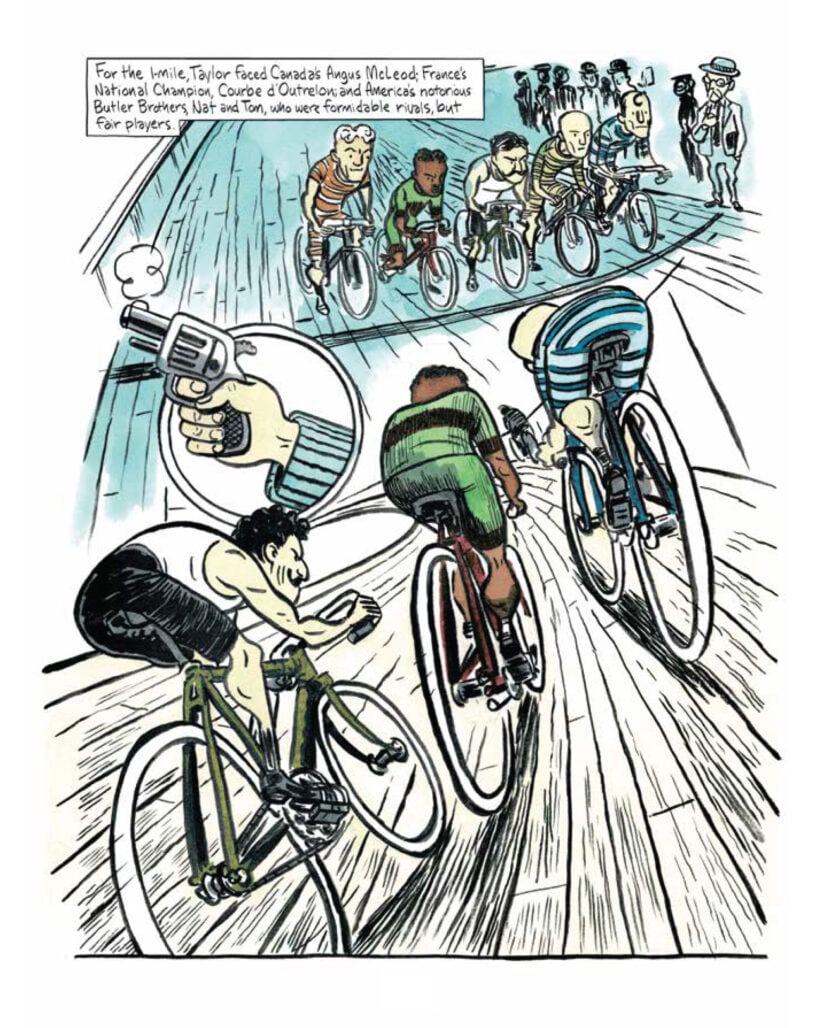
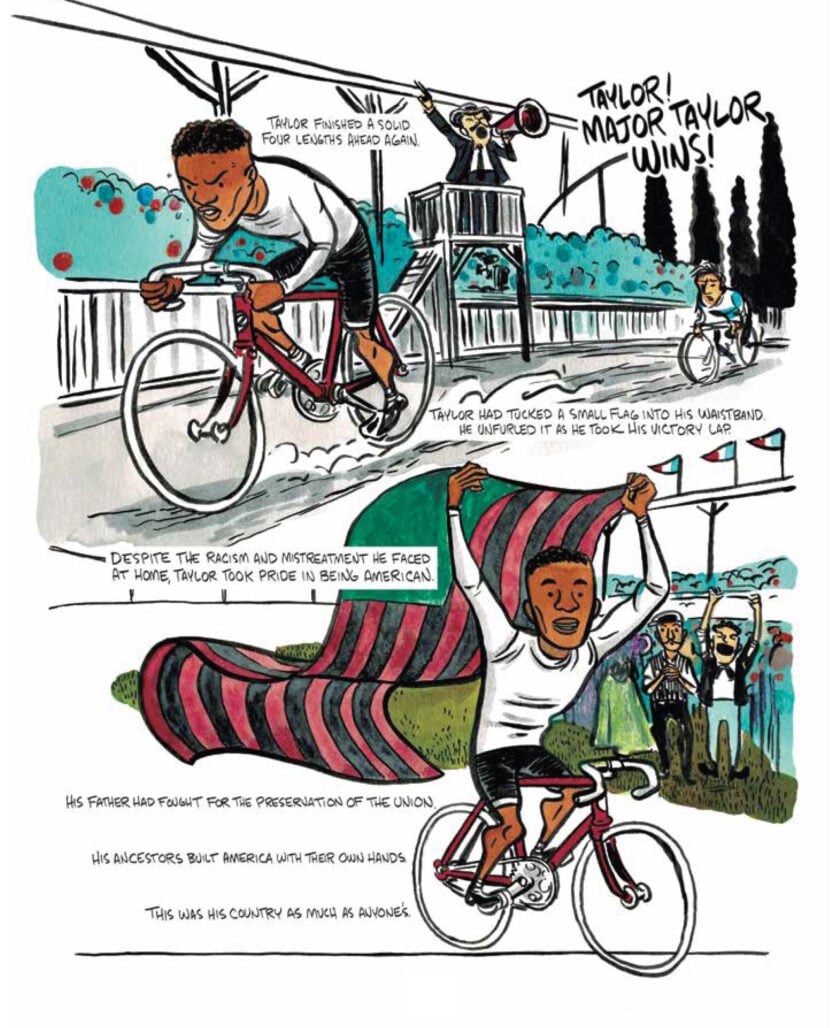
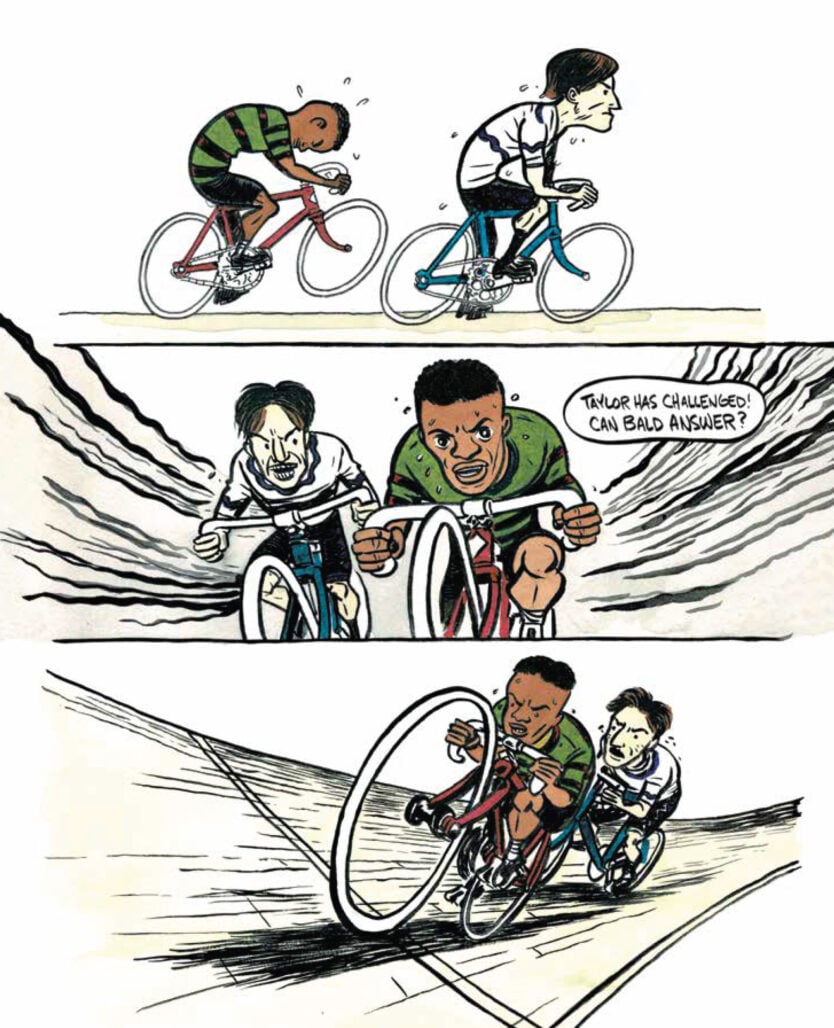
I also had a code where, when they were racing, I would usually not have panels at the side. It would be running along the bottom, because, to me, visually, first off, that looks constrained. Like, it’s a race. Why is there this stop? It looks like something they’re gonna run into. And that’s just me, perhaps.
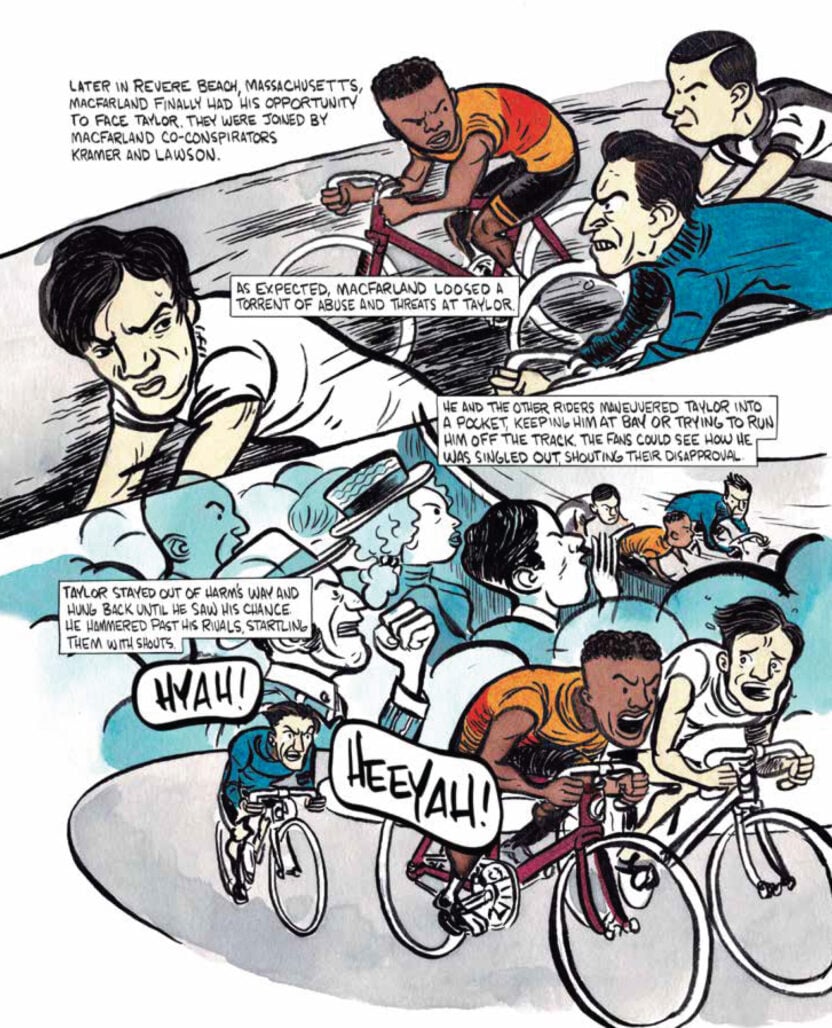
But I also tried to be thoughtful about when I had Taylor completely enclosed in a box. It was a very broad visual metaphor, but it was that he didn’t ever allow himself to be boxed in. And as the book goes along, not to give anything away, there’s way more panels. It becomes much more claustrophobic.
Vigneault: As I was reading it, I kept seeing a Franco-Belge BD kind of vibe. I was seeing some influence of, say, Christophe Blain, or Edmond Baudoin, or Blutch. I was thinking, with how much of Major Taylor’s career is happening in France, or in Montreal, I was wondering if BD is an influence on you.
Noland: Okay, so I would love it if you would send me all those, because I don’t know any of them! I am a tremendous fan of Dupuy and Berberian.
Vigneault: Yeah, I can definitely see that, too.
Noland: And Yves Chaland, though I haven’t read his work. His stuff I’ve just looked at, because for whatever reason, I’m not into the story. A book that I was looking at around the time that I was working on this one was by Jorge González, who’s an Argentinian cartoonist who’s very much in that mode. I wanna say it’s Dear Patagonia. It’s a compilation, and it’s untranslated. It’s probably translated, but I just wanted it right then. Like, just give me the book! My Spanish is near non-existent, but I just want the pictures. You can tell a story, again, from the pictures. I’m sure I’m missing a lot, but it’s just this very rich narrative that covers these different aspects of, I believe, the gold rush in Argentina around the 1920s.
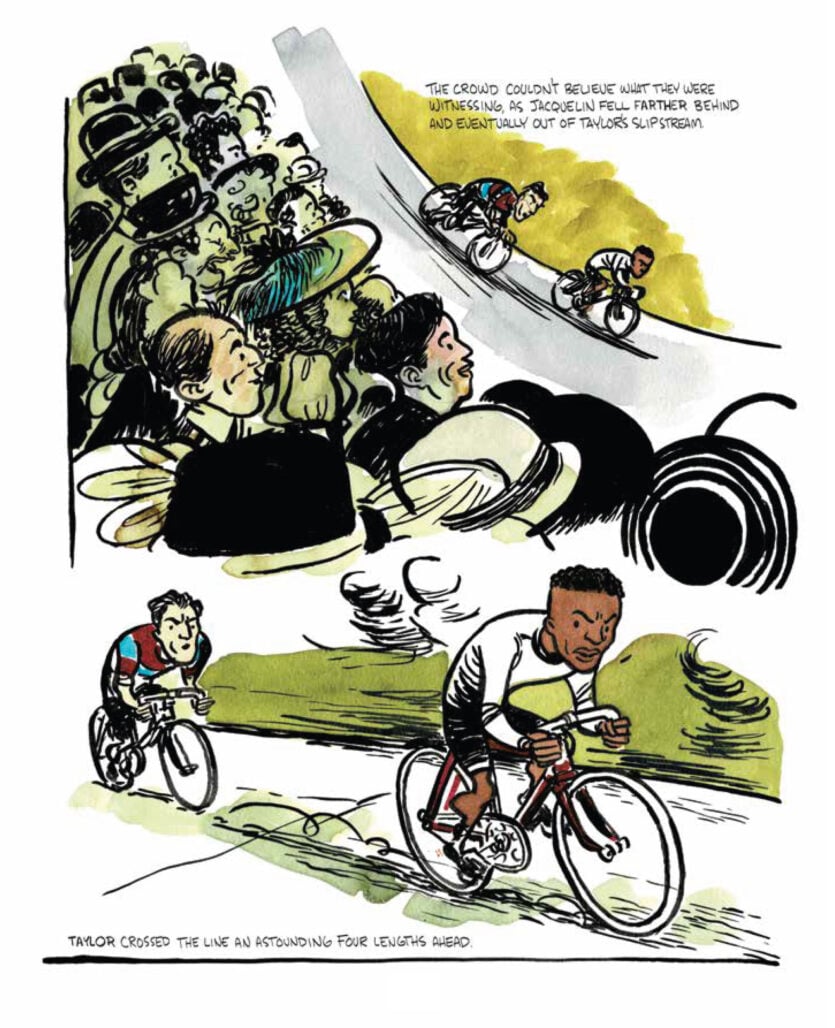
Vigneault: I love that, actually, what you’re saying about the visual language of comics, and I think that that really came across in the storytelling. There’s a direct narration that you’re doing, telling what happened, giving historical anecdotes, or data, which I thought was really interesting. But then so much of it is about capturing movement on the page, which, of course, is extremely difficult. You use a lot of deep perspectives, and exaggeration, curving lines, and the body in motion, and of course, the bicycle, which is always an infamous thing that’s difficult to ride. Oops, not difficult to ride, but difficult to draw, right?
Noland: Yeah, it ain’t easy to ride either!
Vigneault: It made me think about a quote from Ernest Hemingway. In his memoir, A Movable Feast, there’s this whole section in that where he gets obsessed with bike racing, and he is at the velodrome all the time, and he has this quote where he says: “I have started many stories about bicycle racing, but have never written one that is as good as the races are.” And I thought about that multiple times reading your book. I think comics, and especially your loose way of interpreting the medium, with these borderless pages and things that are flowing through to each other, I think that that might be a really good way to get the reader into something that can otherwise be hard to describe.
Noland: I mean, you’re a cartoonist, you know… Comics can do anything. Like, books can do really great stuff, film can do great stuff. But we get to steal from every single one of them. There’s not a story you can’t tell in comics.
Vigneault: One question I had, and I don’t mean for this to come across as too much of a criticism, but I did find the book to be so positive in some ways. As you mentioned this at the very end in your author’s note, you go against the grain of trying to tear down your biography subject. I definitely noticed that as I was reading, and I was wondering what the interaction was between, as you mentioned, wanting to lift up this particular person and depicting his faults. There’s a word that gets bandied around a lot, which is hagiography. And with this book, I felt it is almost literally a hagiography, one of stories of Christian saints who suffer, and yet achieve greatness through their piety. Almost as if you are presenting Major Taylor as a saint, you know…
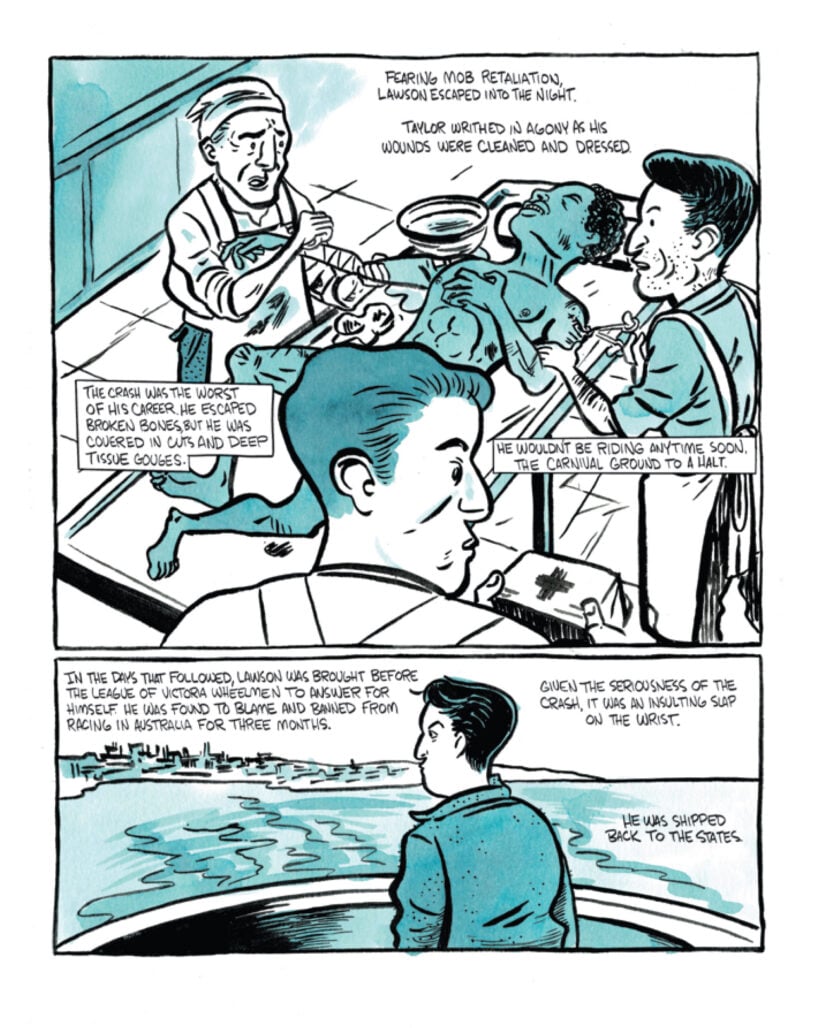
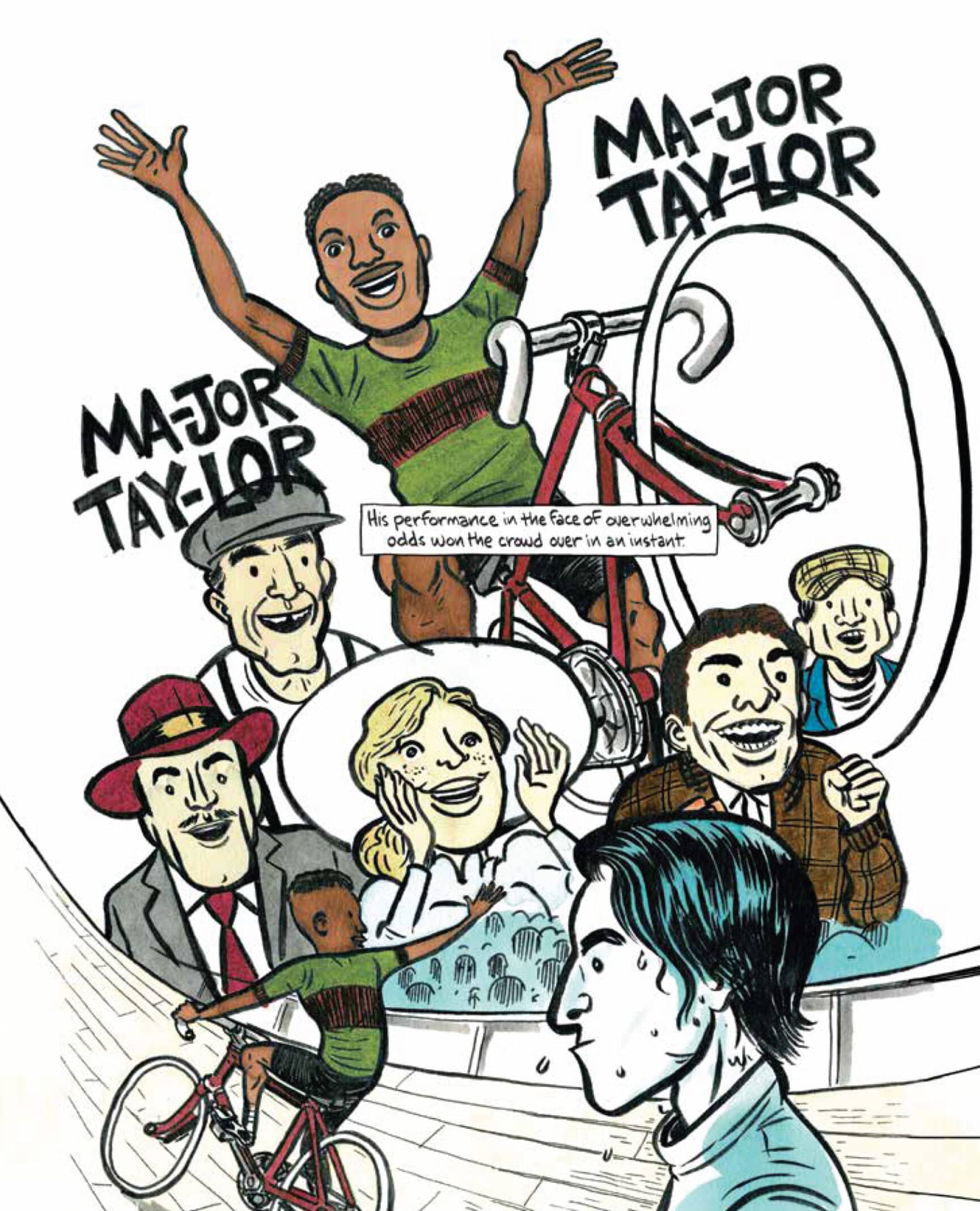
Noland: No. No, I was very careful to not do that. I was very careful to not sanctify him. That gets to an interesting point. Taylor himself was very challenging, because he was a genuinely really good guy. He was a very observant Christian. Like, he wouldn’t race on Sunday until he was forced to, he didn’t drink, he was married to the first person he’d ever known in that way. And it was challenging because the charisma with him is on the velodrome. In his life, he was so measured, you had to tell the story with people around him and the circumstances. I didn’t see it as that positive. I was careful to not end the book in that way where they lead the lamb out to the slaughter… if they’re a colored lamb, you know? I mean, I wasn’t fucking going to tell that story. You can end with the people carrying you out on your shoulders if you’re the right shade, but we don’t get that.
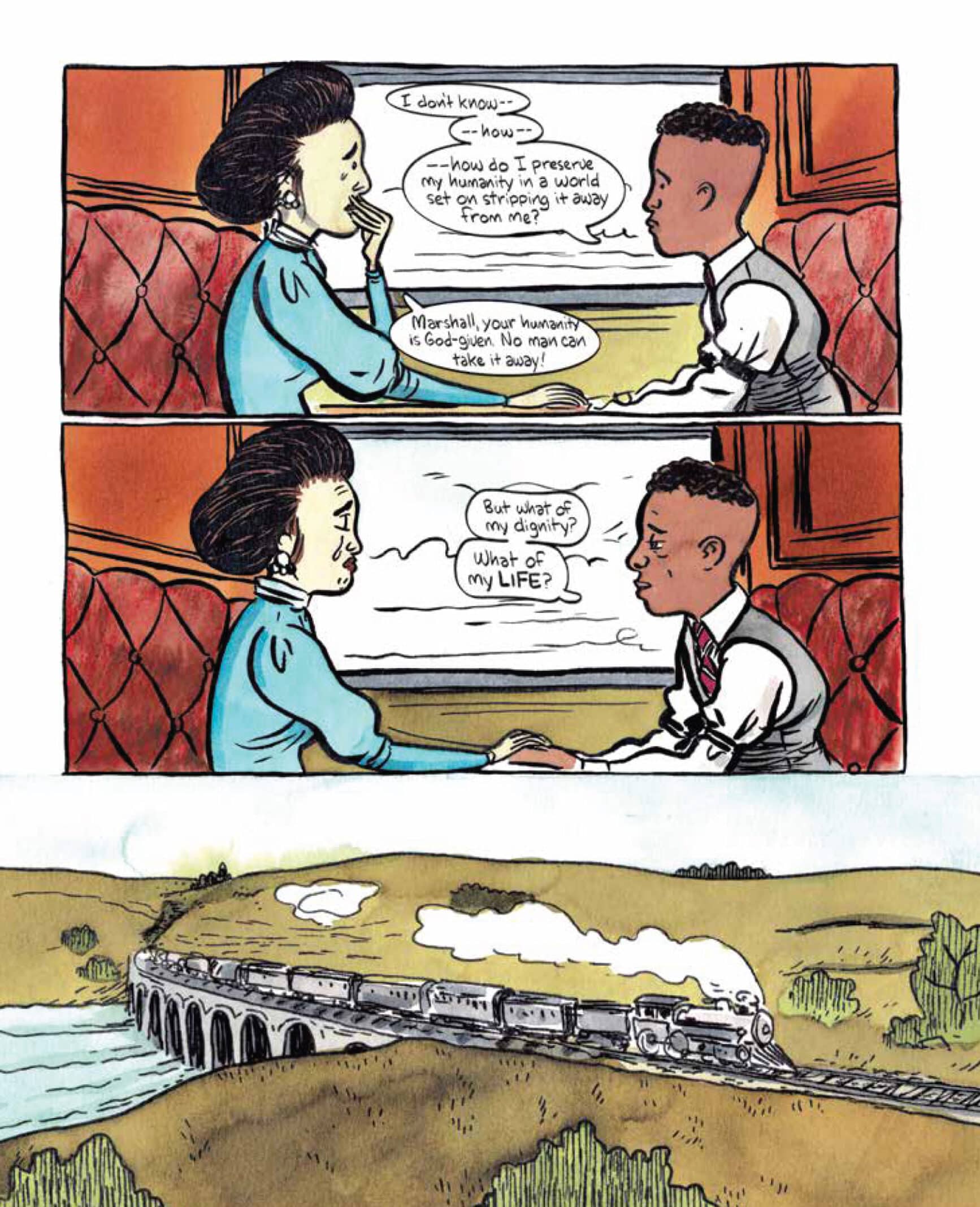
So, I had to tell the story by his circumstances, and the people around him, so you would see the anger, and you would hear about the outrage from the other people. I really understood this deeply, why he was the way he was. You don’t get to be angry about things when you’re Black. You don’t get to complain about things that are deeply unfair when you’re Black, because you’re just complaining, and you’re just a malingerer, and you’re just a problem that has to be eliminated. So he had to navigate this world that was constantly trying to litigate and physically force him off the track. So he had to be extremely measured.
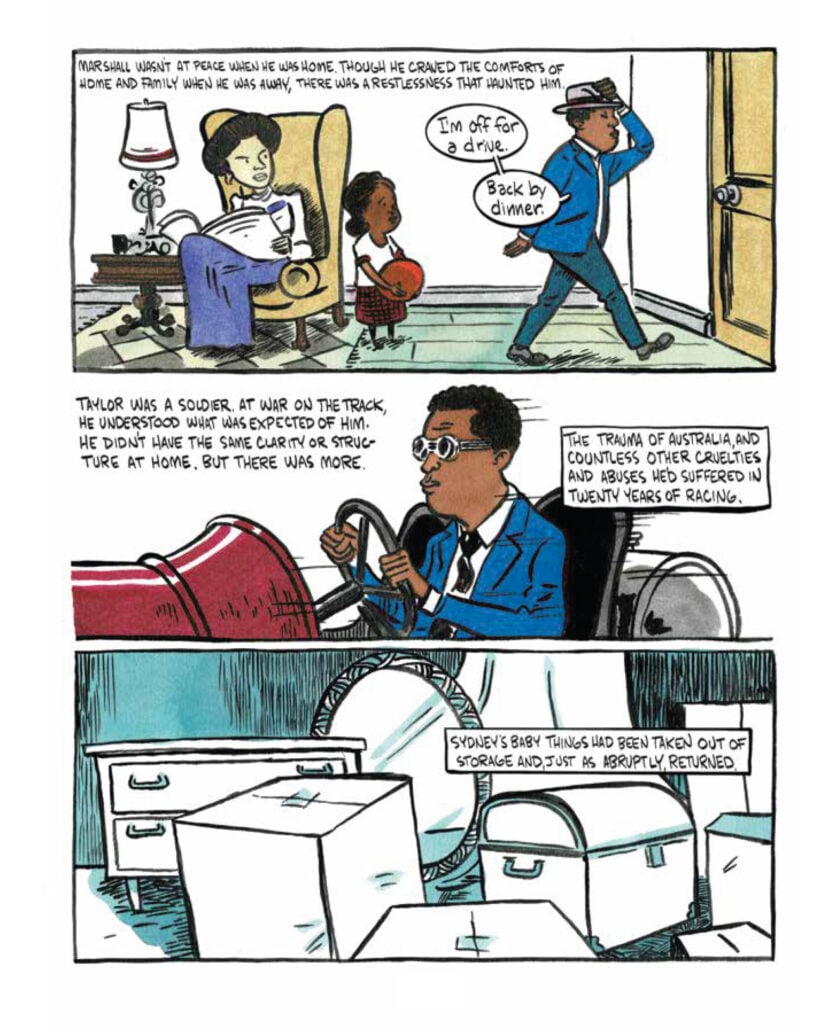
Another way that he doesn’t really come across well is, and it’s maybe a little coded, but he wasn’t in the home. And that’s beyond being a man of his time, quote unquote. He traveled a lot, but also when he retired, he wasn’t comfortable at home. He wasn’t a great partner to his wife, and he kind of squandered their fortune. I don’t get too into that in the book, but I do show it, he just chiseled away at this tremendous retirement, this nest egg that he had. And that’s for a couple of reasons, he didn’t have access the way other people did. But he was also imprudent, you know? That very thing that made him unstoppable in the velodrome, this Don Quixote attitude: “This is the mission, I’m going to do it, that windmill is going down.” That ain’t great in a civilian life.
I relate to him deeply because I can be very much on a mission myself, for things that I need to do. So yeah, I found it very relatable in a lot of ways. But I think he’s very flawed. And that was also really important, because he’s a Christian—and because I grew up in that world, I’m very sensitive to that—to not deify him in any way. Because that would have been a tremendous disservice to him as a Christian man, and I’m not going to do that.
Vigneault: Right. And that’s just my interpretation. Because, of course, once you let the story out into the people…
Noland: Oh, certainly, yeah. I’m very aware. I was talking to my son about that, because he really enjoys the book, and it’s really deeply flattering. But I was telling him that I’m gonna have to deal with, when it’s out in the world, that that book’s not mine anymore. I can tell people what I was thinking if they ask me. But it’s all up to interpretation.
Vigneault: Especially with a biographical figure, right? I find it fascinating, the kind of the space that you’re inhabiting as an author. Where you’re finding this sort of unsung hero, who was so famous at the time, but by the time you found out about him, you yourself had never heard about him before in your life, and he was less known than he should have been.
Noland: By far.
Vigneault: So it’s like, well, we gotta build the statue first, you know? And then maybe later on you add the plaque that is the asterisk on the statue. But in your mind, you’re maybe like, “hey, we need a statue to start with, we don’t even have one yet, to get the conversation started.” That’s an important bit of work that this book is doing.
Noland: There is a literal statue! I have to give credit to Lynne Tolman of the Major Taylor Association. It’s in Worcester. There’s pictures of me with her in front of it. There is a statue. People have built it! But I take your meaning. Because nobody reads the plaques. They want to see the statues.
In some cases, they’ve torn down some statues, we may need to tear down a lot more. And we need some new ones that are on the same billing as those that already exist. My dog in this fight is Black history, because we have a handful of, you know, to use the term that you mentioned previously, Black history saints.
And to sidebar a little bit, when you make someone a thing like that, you don’t see them. Like, you’ve now taken them out of the equation. You’ve taken that humanity out of them. And when you don’t see them, you don’t see that accomplishment. Because you don’t see the faults in Martin Luther King, and how he transcended that. You don’t see the faults in Malcolm X and how he transcended that, you know?
So anyway, we’ve got these figures. You’ve got who I mentioned. We got Rosa Parks. We got like, two token black women, you know, and then it’s just the pantheon of great Black men. Black, religious, Christian, straight men. Because that was the whole story, the civil rights movement.
Vigneault: Even though the story is a little more complicated than that.
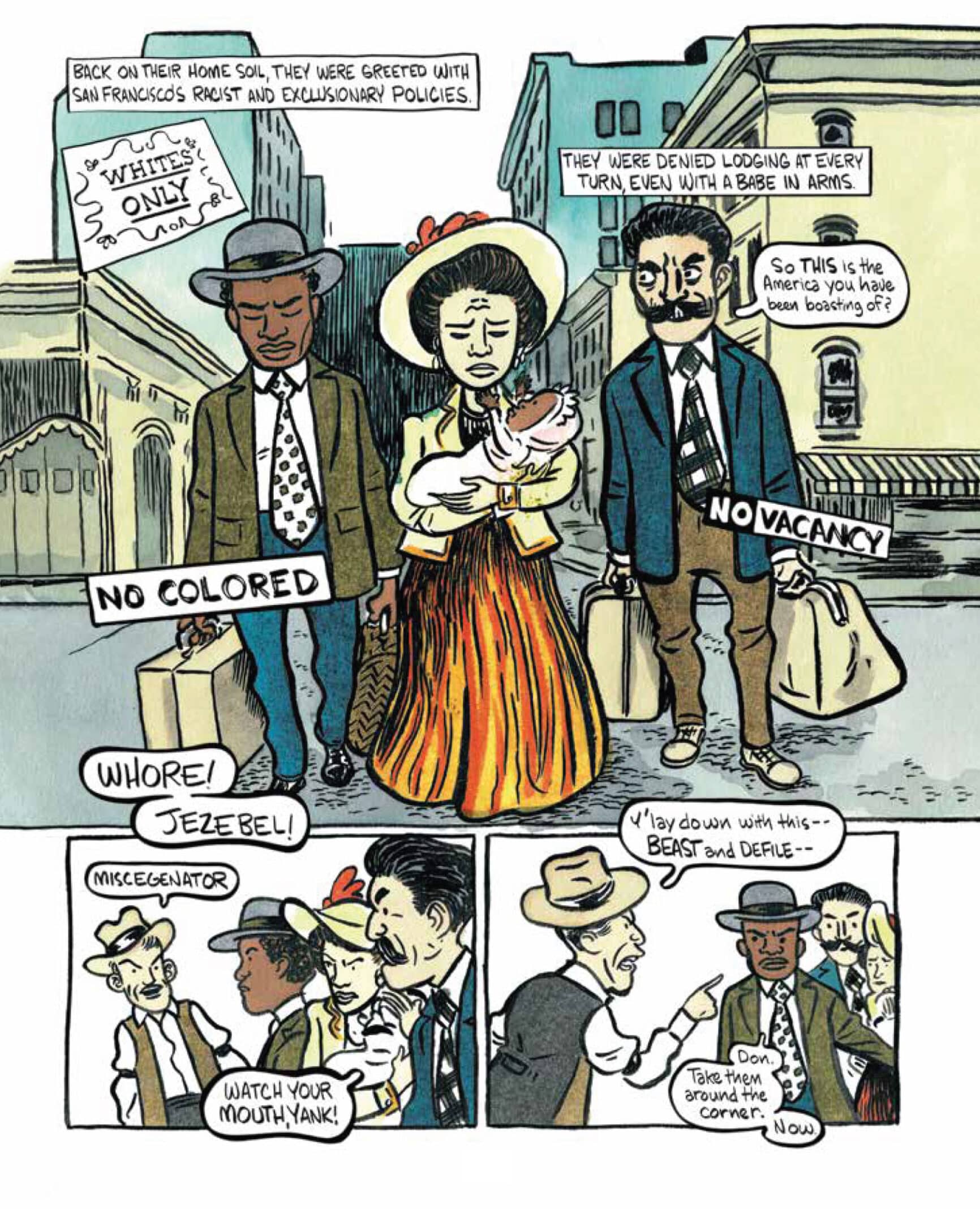
Noland: Right, and again, we do ourselves, and everyone, a disservice when we oversimplify the picture, because you don’t see what has been overcome to bring people together to do this thing, in this cause, you know? So a big part of the book is, yeah, to try to broaden the conversation, to try to be like, yeah, we have so many more people.
Vigneault: Do you feel a responsibility to do that? Do you feel like this is your calling?
Noland: Yes. Because I know how to do this, because I know how to research, and I know how to write, and I know how to do comics. And I would have killed for this book when I was six. Because if I had this when I was six, I wouldn’t have hated myself when I was 15. And I wouldn’t have had to come back from that. I would have known I’m not alone in that.
Vigneault: You’re putting out this book and it’s going to exist out in the world, and you never know who’s going to read it. You never know what kid’s going to read it, what adult is going to read it, what library is gonna put it on the shelf, who it might influence next. There’s a whole other generation that’s gonna be influenced by that.
Noland: Yeah. I mean, that’s the fascinating thing about the long tail of life that you observe in general as you get older. It’s like these very small things that arced into these tremendous things years later. A real brief example is my buddies Rob and Mike got me into alternative comics, and they worked really hard to get me out of WildC.A.T.s and into Love and Rockets. They were just like, we got to save this kid. This was in 1991 or whatever, and I abandoned any thought of mainstream comics, and became just increasingly esoteric in what I liked, and what I created. And they could not have possibly known that they were basically making a way for me to have a career as a cartoonist. They were just like, “this fat motherfucker is never going to get laid.” Maybe if we just kind of bring him into a little smidgen of reality, you know?
So anyway, that’s the long tail of that. And of course there’s everything you do when you’re rearing a child. Like, I can tell you what the long tail of my parenting was. I mean, it’s been for a number of therapists to hear, and it’s been for a number of girlfriends to deal with, but that’s another story. So the long tail of Major Taylor, I hope, is to get more people to see that this is a possibility.
Vigneault: Unpack that a little bit. What do you mean by a possibility?
Noland: It’s that whole trying to imagine a color you’ve never seen. It’s so much better now, but growing up, there weren’t many books that had non-white male people in them, you know? There were no children’s books except, “hey, here’s your 50th book about Benjamin Banneker!” Like, I’m pretty sure we did something after Benjamin Banneker, that was 1700 and something! I don’t want some patriotic tale, I just want to hear about other people that looked like me. Don’t tell me how he was some background character with a pointed hat. I’m sorry. If you start me talking about America, I get very angry.
So, if you haven’t seen work that represents you, it’s gonna be hard to imagine that the world would be tolerant of work that represents you, or that it’d be interested in work that represents you. So to make a book like Major Taylor, and be like, “no, here is a book that is carried by a Black character, It’s 360 pages, and he is a major figure, and there’s other people like him.” This is the long tail of that. Oh, hey, I’m a Black cartoonist. Oh, hey, I’m whatever I am. I’m Inuit. I am Native American. I am Filipina. I am some combination thereof, and I can make a comic about this person who looks kind of like that. And people are gonna read that because that’s still a very human story that is compelling and relatable.
So that’s the hopeful long tail of that, because, you know, I’m 53. Like, I know the books that I want to do after this. And there’s so much more. There needs to be more people who do work like this. Us creators get out there and tell those stories that are not going to be told in school.
Vigneault: That makes me wonder, you’re talking about presenting Marshall Taylor as a figure for people to look up to, but also to consider in the fullness of his history. I wonder, do you consider yourself a role model now for another generation of creators?
Noland: No.
Vigneault: Not at all?
Noland: Well, because I’m a teacher, I do have these students who have followed me semester over semester, and who have applied parts of my philosophy of comics to their own. Yeah, I guess, yeah. If you have a stage and you have a spotlight, you’re a role model. People are watching you, your behavior is being observed, some people are going to emulate it.
But I would never be like, I’m a role model for my son, because to me, that sounds like I want my son to be a little version of me, and I wouldn’t wish that curse on anyone.
Vigneault: Maybe another term for it that maybe is less freighted is maybe mentoring, like this idea of generation to generation.
Noland: That’s funny because if you put it that way, I’ve actually mentored a couple of people. That’s so different because I’m just like, yeah, I know a couple of things here. 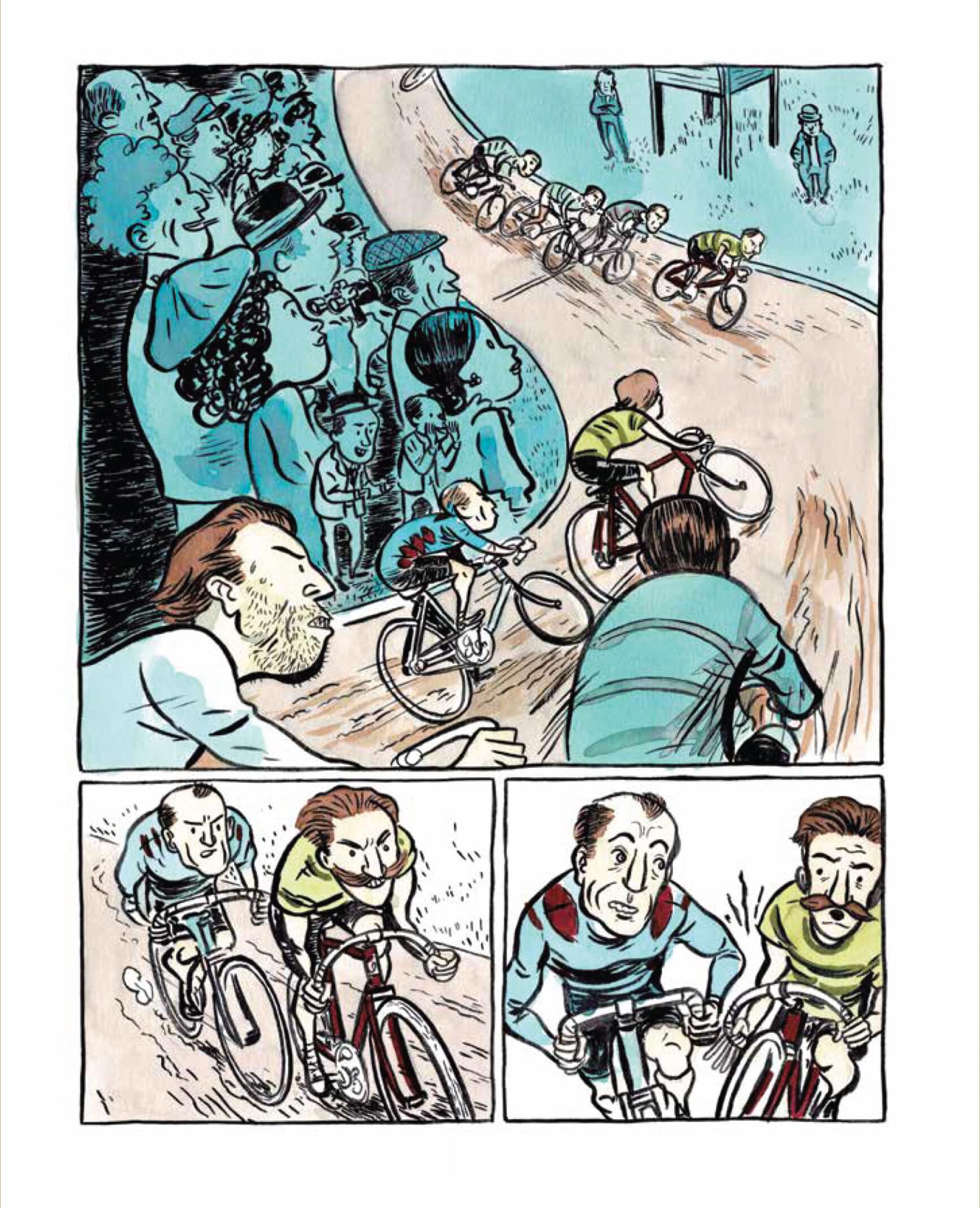
Vigneault: You did kind of a really short book about James Baldwin, right?
Noland: Oh, yes, yeah.
Vigneault: There’s a line from The Fire Next Time, where he said, “you were not expected to aspire to excellence, but you were expected to make peace with mediocrity.” And that felt like a total through-line in Major Taylor’s life and his work. I was thinking about that in terms of Taylor as a role model, the lessons that he can teach all of us, and that we can kind of pass on that idea of pushing yourself, doing something bigger than you thought it was going to be, and where to go next.
Noland: One of the biggest things to me in that book that I hope I imparted is that the hand you get dealt’s the hand you get dealt. And it’s what you do with that, it’s what you do in spite of that, that counts. And he did this. Admirably. It is always important to do better than you’re done by.