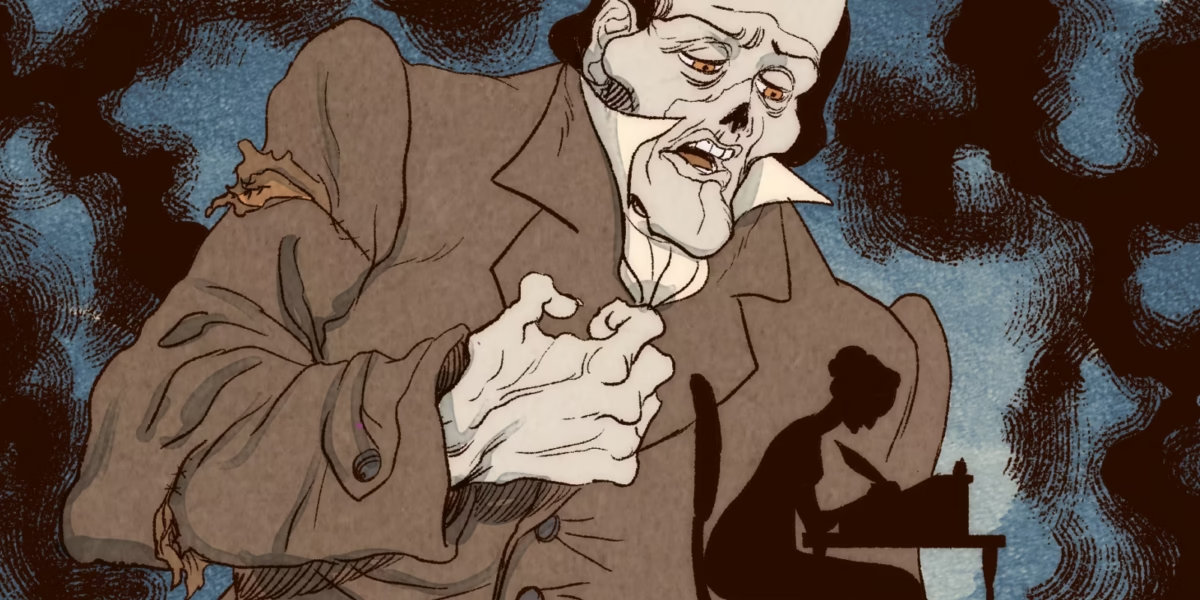

Some artists develop a style that shines throughout their body of work, a unique visual cosmology complete with signature elements that often find their expressions in the areas of line work, shading, and inking. You get one of these artists’ books in your hands and you know what you’re getting: something that only that creator can make. Koren Shadmi is one such artist, and his signature is his ability to approach each of his graphic novel biographies as a recreation of not just his subjects’ lives but of their times as well.
A Shadmi book is as much about personal narrative as it is about the building blocks of their existence. It considers color, sound, and even the very air the people in it lived and breathed. It’s about capturing the spirit of a certain time and place to better understand the men and women at their center. It’s what made his Velvet Underground book, All Tomorrow’s Parties, a masterpiece and a shining example of what graphic biographies can do.
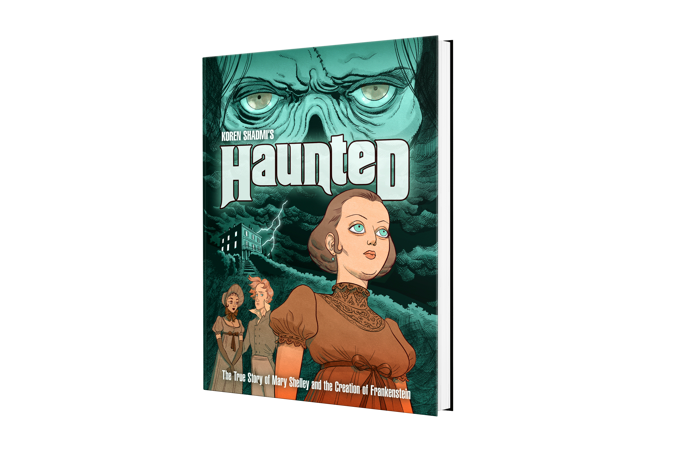
Now, Shadmi sets his sights on one of literature’s towering figures, Mary Wolstonecraft Shelley. The book’s titled Haunted: The True Story of Mary Shelley and the Creation of Frankenstein and it’s currently on Kickstarter.
Shelley’s creation, Frankenstein, has been a constant presence in world culture. Everyone’s tried their hand at it, from director James Whale in Universal Studios’ Frankenstein (1931) to comics creators Bernie Wrightson, Junji Ito, and most recently Michael Walsh. Such a figure demands nothing less than extensive research and a deep understanding of the times she navigated. Shadmi is just the visionary this story deserves.
I corresponded with Shadmi to talk process and expectations as well as how he plans to bring Shelley’s world to the comics page. It follows below.
RICARDO SERRANO: Mary Shelley has been the subject of many books over the decades, from non-fiction to fantasy to horror and every other genre imaginable. What do you think makes your take on her story standout?
KOREN SHADMI: On a superficial level, Haunted is the first serious graphic novel biography about Shelley’s incredible life. Just by the mere fact of doing a sequential adaptation of her unique life story, I felt like I was charting new grounds and bringing something fresh to the world. The comics medium offers a certain level of intimacy between the story and the reader that you can’t get by watching a film, and I think her specific tale really lends itself to be told in this visual way. Additionally, my books are exhaustively researched, so this is a very loyal representation of what happened in Shelley’s real life – I’m hoping readers can feel like they are actually getting a window into the past, into this incredible moment in literary history. This isn’t some sensational monster romp or wildly loose fictionalization, it’s a serious work of non-fiction.
SERRANO: Addressing Frankenstein and his monster is obviously inevitable here. With all the different versions of them out there, how did you land on your design for those characters?
SHADMI: I think one of my favorite depictions of the monster is that of Bernie Wrightson—he manages to make him a really disturbing looking creature, but also give him a sense of pathos and humanity. So I definitely took some inspiration from there, but tried to push the vision to be even more grotesque. I tried to remain faithful to Shelley’s original vision—for instance, the monster had long black hair. In the new Del Toro movie the monster is kind of handsome and beautiful, which is an interesting and subversive choice, but I was trying to emphasize his abnormalities. Frankenstein, the mad scientist, is in a sense an amalgamation of Percy Shelley and Mary’s Father. So I chose to represent him as looking like Percy.
SERRANO: As you were researching the book, did you notice something that was perhaps underrepresented in Shelley’s story that you wanted to bring forward?
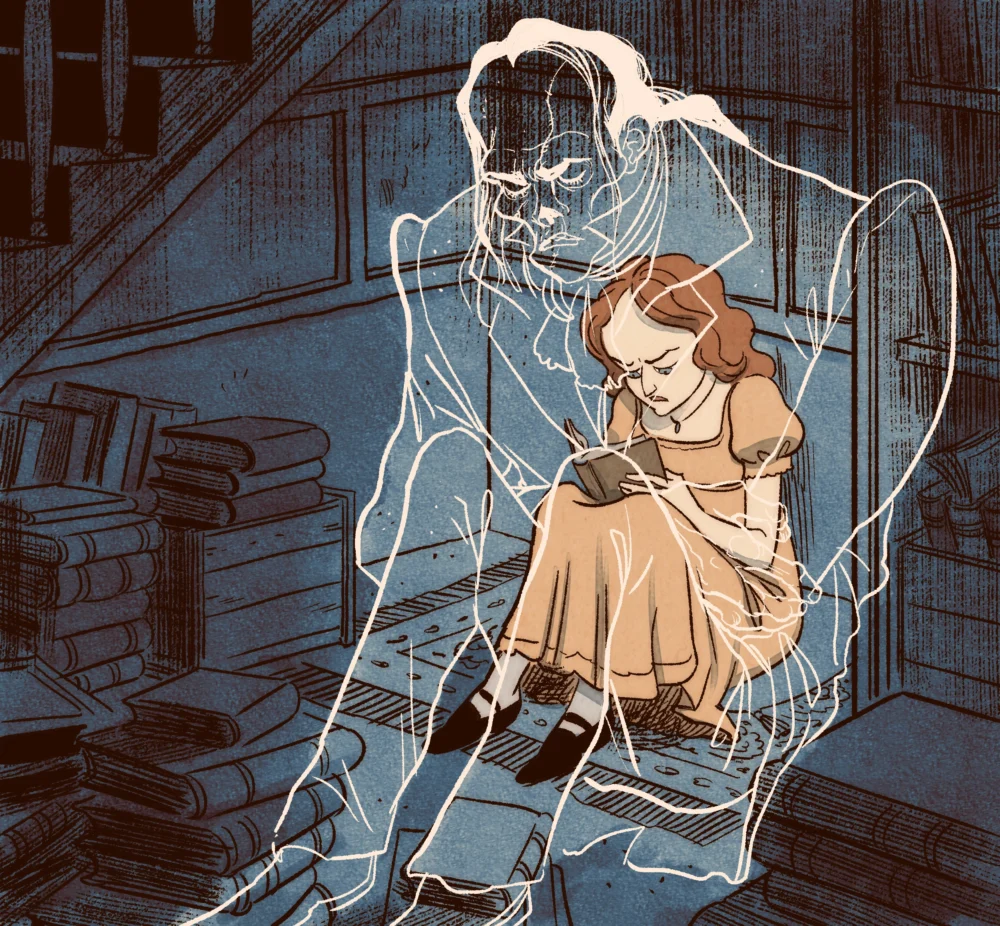
SHADMI: When I was reading about Shelley’s life I was struck by how much tragedy she had to cope with, and how much abuse and mistreatment she had suffered from her family, her husband and others. In spite of that, she was able to keep it together and keep writing, and keep being a loving mother to her son. It’s a huge feat. I wanted to bring her incredible stoic perseverance to light. There’s lots of other fascinating facts, but you would need to read the story!
SERRANO: Each of your books, in my opinion, visually adapts to the people you study, especially in terms of tone and personality. Your Bela Lugosi book, for instance, evokes classic black and white movie aesthetics. Rod Serling’s would often remind of that special look we still associate with The Twilight Zone. What did you aim to capture with Shelley’s story on the visual front?
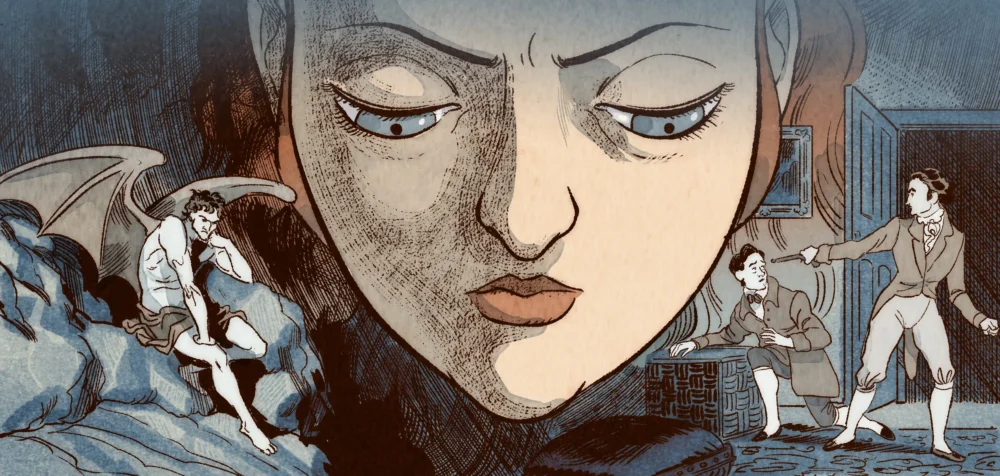
SHADMI: The story takes place in the early 19th century. Shelley and her circle of artists and poets represented the apex of the romantic movement. There’s a lot of art I love from that period, so I tried to echo some of it in the book. The book has a unique watercolor texture to it, that I hope works well with the time period, I wanted it to harken to visuals from the period but also not look too dated or archaic. I would describe it as a mix of mid-century Disney meeting 19th century engravings.
Haunted is set for an October release.