
Greetings, fellow Americans! Rough times of late, huh? Yeah, it’s not going great.
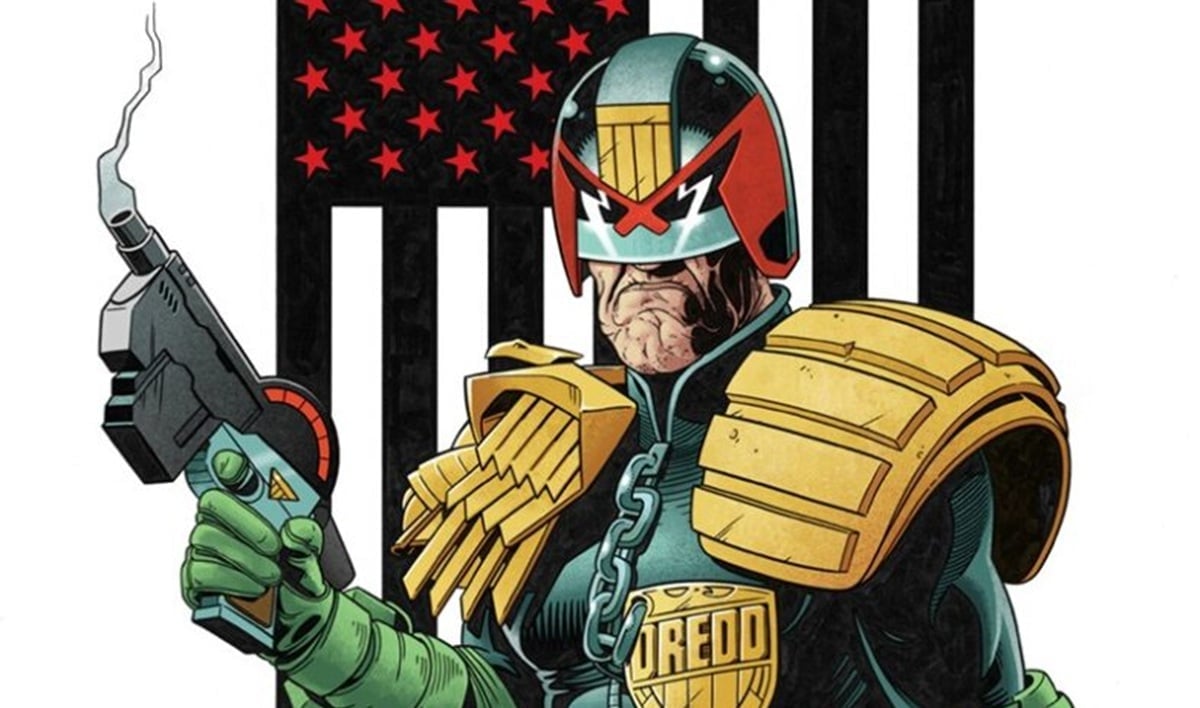
But I won’t get into all that, except to say one good thing has finally happened for us this year — and that is today’s return of 2000AD to American comic shops on a weekly basis. If you’re not familiar, 2000AD is the weekly anthology comic from Rebellion Publishing, the bedrock of comics in the U.K. Anchored by Judge Dredd (you know Judge Dredd!), it features excellent sci-fi/fantasy/sometimes horror stories, and, for my money, it’s the best anthology in all of English language comics.
For many years, American readers have been able to read it digitally. But if they wanted a physical copy of the weekly magazine…well, those were much harder to come by. Today that changes!
The Galaxy’s Greatest Comic (as they call it) is now available through US comics distributors, just a handful of weeks behind when it arrives in UK shops, with a price tag of $7.99 per over-sized issue.
I’ll get into my specific recommendations for how to read 2000AD below, but first a brief explanation of why I like it so much:
- It’s weekly. I love having a good weekly book to anchor my comics-reading routine around, and, except for a break around the holidays, 2000AD hits every Wednesday all year, like clockwork.
- It’s long-running. Part of the attraction to comics for me is the vast backlog of material that informs much of the medium, requiring archaic feats of searching and research and being a total comics sicko to fully access. Well, 2000AD first started publishing in 1977. It’s got worlds within worlds of material, and you can go down rabbit holes reading old Judge Dredd, or exploring stuff like Slaine, or checking out the early works they published from future heavyweights like Grant Morrison or Alan Moore or any number of other creators. There is just A LOT to explore with 2000AD. And you won’t get bored sorting through it, because it is both intricate and great.
- It’s a great artist and writer showcase that embraces experimenting. Sure, Dredd is in every issue, but outside of those 6 or so pages (and sometimes the odd Rogue Trooper story), you’ll see artists and writers getting to do more experimental, original things in this anthology. I especially like some of the regular features that actively encourage this, like Future Shocks and Tharg’s 3Rillers. It also regularly features work from some of the best artists in the biz, with favorites of mine that include Henry Flint, John McCrea, PJ Holden, INJ Culbard, and more; working from scripts by writers like John Wagner, Peter Milligan, Ben Wheatley, Rob Williams, and more.
There are plenty of other reasons I like 2000AD, but those are the big ones. Now, let’s get onto my advice…how to read 2000AD for Americans.
How to read 2000AD for Americans
Step One: Just jump in
This is the most important step. As I noted above, 2000AD has run for nearly 50 years, and new readers shouldn’t expect to find an absolutely perfect circumstance to jump in and understand every thing in its pages. I had to grapple with this a bit myself. I found the whole thing intimidating, and it actually kept me from accessing 2000AD for a good while before I took the plunge about three years ago (I’m a digital reader, so I didn’t need it to be in US comic shops). But I was wrong.
Truly, you just need to pick it up and go. Some stories will be mid-run, others will be grown from long continuities. But it’s all fine. If you’re reading comics, chances are you just jumped into some title at some point (my first American comic was Uncanny X-Men #345, and I had no idea what had come immediately before it…it was fine), especially if you started before the 2010s, and the Big 2’s obsession with seasons and new 1s.
This week’s first stateside 2000AD, for example, has a very accessible Judge Dredd story, along with a set of other stories that are all mid-run. But they’re fun stories with great art (especially Silver), and you’ll get your bearings quickly. Also, if you’re feeling totally put-off by any of them, just wait a few weeks, and something new will start.
So yeah, no time like the present.
Step Two: Accept that it’s British
Sometimes characters in 2000AD stories will take a lift up to their flat because they’re knackered and need a cuppa before heading out on holiday. And you need to be okay with this. Will you feel an odd-but-patriotic mix of anger and confusion (the American way!)? Sure. But just reach out and touch the miniature American flag you keep with you at all times. It’s okay. Get past the occasional linguistic difference, and good comics await.
Also, if you’ve gotten into the Premiere League over the past two decades as I have (I’m an Arsenal supporter), you already know how stylish it feels to be up on British things that many of your fellow Americans are unaware of. Nothing like it.
Step Three: Check out the back catalog
Finally, here’s a quick list of books you can and should seek out if you want to familiarize yourself with what 2000AD has to offer:
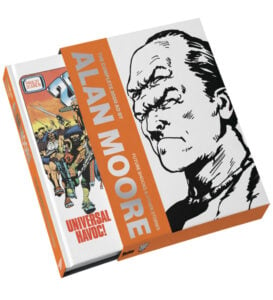 The Complete 2000AD by Alan Moore
If you’ve read this far into an article like this one, you surely know who Alan Moore is. But are you familiar with the work he did for 2000AD? Maybe not. To that end, however, this year the publisher started collecting it with The Complete 2000AD By Alan Moore Vol. 1. These are great stories, wherein Moore collaborates with artists ranging from Dave Gibbons to Bryan Talbot to Steve Dillon, and this book is also indicative of the publisher’s history of being a launchpad for big names in American comics (see also Grant Morrison‘s early work on Zenith.
Read our review here!
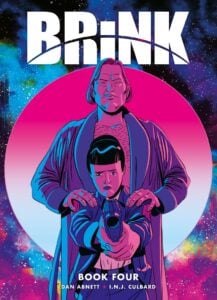 Brink, Vol. 1 – Vol. 4
One of the ongoing stories in this week’s magazine is Brink by writer Dan Abnett, artist INJ Culbard, and letterer Simon Bowland. And while I’ve found this current arc really accessible, the full story has been going for some time. If you want to get a sense of the type of complex sci-fi 2000AD regularly publishes, this is a great introduction to it. There are four books preceding this current arc to check out, and the story is also indicative of the fantastic art that you’ll regularly find in this magazine, with Culbard ranking as one of my personal favorites.
Abnett’s scripting throughout Brink is layered, complex, and patient, and Culbard consistently finds engaging ways to make it all visually interesting, even when a chapter is majority talking heads.
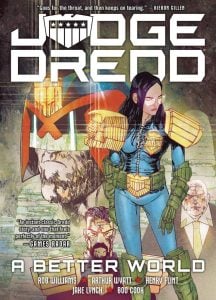 Judge Dredd: A Better World
I included Judge Dredd: A Better World in The Beat’s Best Comics of 2024, and it remains my favorite Dredd story in recent memory. It’s a satirical riff on police violence and the brief push in this country for police reform. In that way, it showcases Dredd at his fundamental best, juxtaposed against the broader approach to law and authority and violence in the United States. It’s also just a really well-done story, rich with interesting characters, big twists, and amazing boldly-paneled art. If Henry Flint is not on your favorite comics artists list, that is about to change. This story is written by the team of Rob Williams and Arthur Wyatt, with letters by Annie Parkhouse.
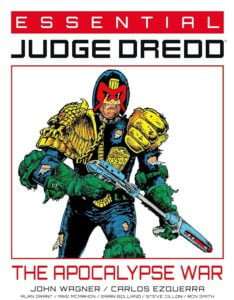 Essential Judge Dredd: The Apocalypse War
If you’d also like to check out historical Dredd, the best place to start would be with The Essential Judge Dredd: The Apocalypse War. Widely regarded as one of the all-time best Dredd stories, this one comes from the character’s creators writer John Wagner and artist Carloz Ezquerra, with contributions from other all-time greats, including Alan Grant, Mike McMahon, Brian Bolland, Steve Dillon, and Rod Smith. It’s a Cold War story, to be sure, but it’s a great tense Dredd thriller that will give you as a new reader a clear idea of Dredd’s broken future Mega City setting. And if you like this, good news: there’s a whole series of Essential Judge Dredd trades to sort through.
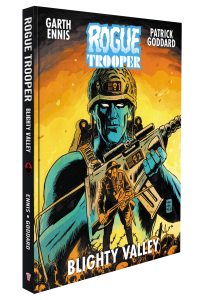 Rogue Trooper: Blighty Valley
The second most popular character at 2000AD is Rogue Trooper, and one of the best Rogue Trooper stories in recent memory is Rogue Trooper: Blighty Valley from Garth Ennis, Patrick Goodard, and Rob Steen. I don’t know that it’s all that great a primer for the character, but that doesn’t matter. It’s just a fantastic war comic. And by the end of it you’ll know about Rogue, his gun, helmet, and bag, etc. And just in time for this year’s Rogue Trooper film, too.
Read our review!
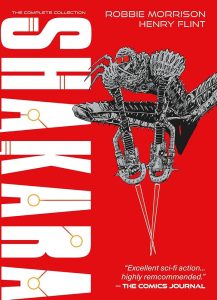 Shakara: The Complete Collection
Finally, I mention above that 2000AD is a fun place to find experimental and surprising comics stories, and I think Shakara serves as a good example of that. It’s bonkers in the best way. It’s from writer Robbie Morrison, artist Henry Flint, and letterers Ellie deVille and Annie Parkhouse.
Shakara!
Read our review!