
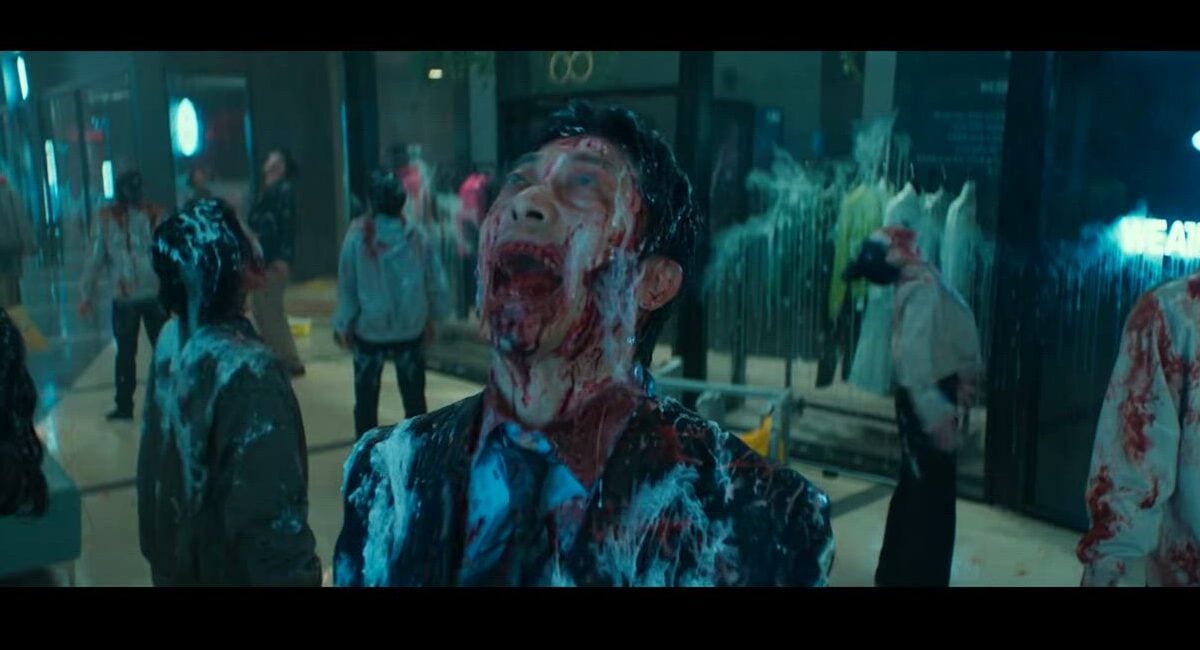

As far as established movie monsters are concerned, modern zombies have proven to be quite malleable throughout their film trajectory. They went from shambling corpses (Night of the Living Dead) to running corpses (28 Days Later), from flesh eaters to brain eaters (Return of the Living Dead). George Romero gave them the ability to relearn basic human skills in Day of the Dead while Colm McCarthy allowed them to retain their intelligence despite still being hungry for people in The Girl with All the Gifts (based on the book by Mike Carey).
Director Yeon Sang-ho of Train to Busan fame has found a way to considerably alter the formula in his latest film Colony, a movie that can best be described as Die Hard meets Resident Evil. It presents audiences with one of the most frightening and fascinating adages to the living dead recipe in recent years.
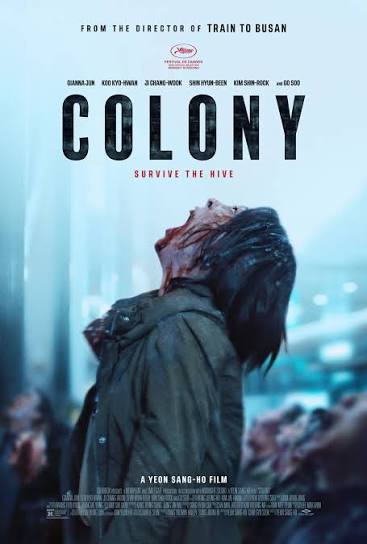
Colony centers on the actions of a bioterrorist that orchestrates a zombie outbreak inside a massive building as a means to bypass the limits of humanity in favor of something more efficiently interconnected. It’s based on the social structures of ants (hence the title) and how they cooperate to survive. A group of survivors must try to outsmart the highly coordinated zombies as they search for a way out.
Yeon Sang-ho invests a lot of time in making his zombies feel fresh here, framing them as a new organism of sorts that carries some of the original monster’s signature traits while deviating enough to distance itself from tradition. And they really feel different. They follow hive mind behavior patterns, meaning they can learn as a group and then act upon the knowledge they acquire. It’s all geared towards raising their numbers, which ramps up the tension knowing they share such an insidiously coherent agenda.
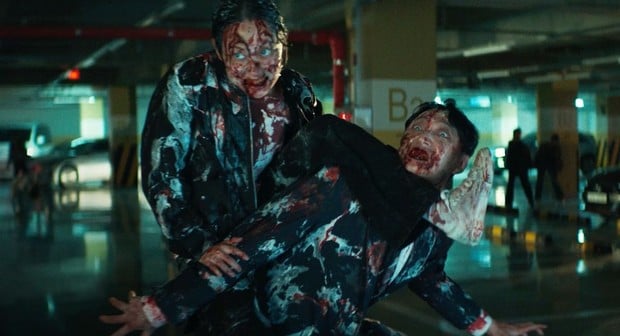
This gives way to some highly kinetic action sequences that take full advantage of the ant-like dynamic (which also owes a lot to the director’s anime background). Zombies are always lunging at their prey, jaws snapping at limbs. They run and bite in a frenzy, but there’s method to the violence. They do what they do for a higher purpose.
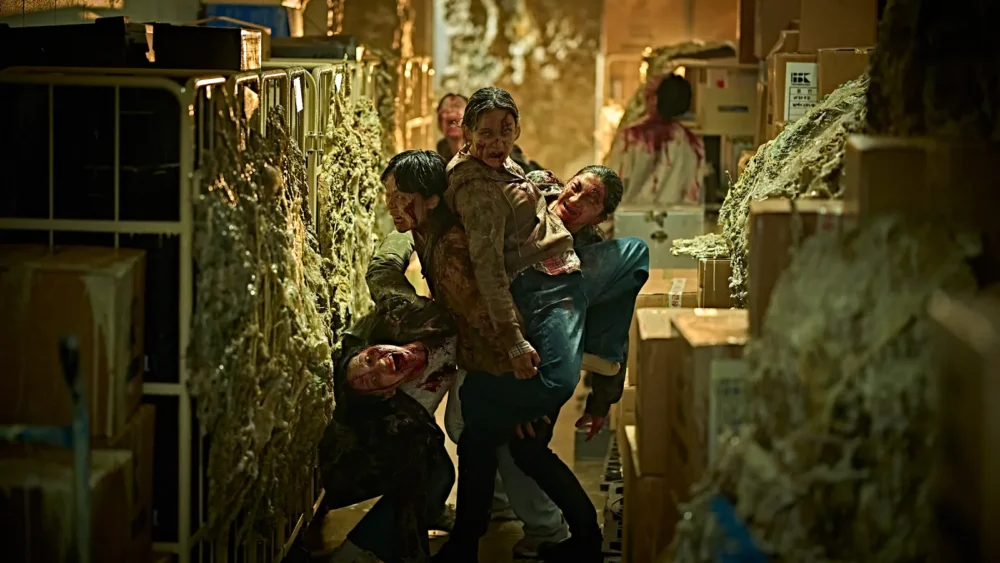
The zombies also secrete a white substance that strengthens their ability to communicate, pointing to a full biological takeover of humanity. It’s shown to be a highly efficient type of fungus that reshapes the environment to their benefit, turning the zombie into an invasive force rather than a mere representation of mindless consumption. It’s Darwinism at its finest, and at its cruelest.
Like some of the greatest zombie movies before it, Colony essentially deals with societal collapse. Unlike those films, though, we’re presented with the very thing that could replace us. Their success doesn’t just turn the world dead. It proposes a new standard of life. This, along with a few other surprises, suggests a new category of zombie horror.
The movie does explore the very familiar, but still relevant, themes of unethical science and the consequences of putting the fate of technological advancement in the hands of a few powerful people, and it comes through with the sharpness it requires. What makes it special, though, is the decision to fall back on new strain of zombie to get those ideas across.
The zombie genre takes an important evolutionary step with Colony. Yeon Sang-ho took it upon himself to show audiences that long-standing monsters are always ready to be put in a position to give themselves a proper upgrade. In the process, he offers a reliable blueprint for the evolution of time-tested horrors.






I saw it a few weeks ago. Pretty good zombie flick. Recommended!