
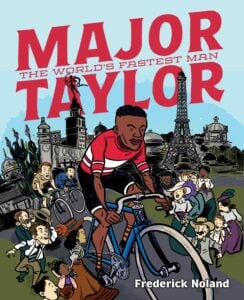
 Major Taylor – The World’s Fastest Man
Writer/Artist: Frederick Noland
Publisher: Drawn & Quarterly
Publication Date: September 2026
Anti-Blackness is global and no matter the excellence of Black people in the colonial world. No matter the heights we reach, the existing power structures stand to remind us of Black people’s “place” in the hierarchy. As preface, capitalism is dependent on hierarchy — there must be someone on the bottom and whether through legislature or individual agents; sentinels of the status quo, hierarchy must be reinforced.
Race and class go hand-in-hand, and writer and artist Frederick Noland does an excellent job crafting a story of rags to riches across the almost 400-page Major Taylor: The World’s Fastest Man. I want to emphasize the craft on display in really making you root for Marshall “Major” Taylor.
Per cited resources, Taylor was charming and that reflected on an international level. The craft here is taking a boy and later a man, and, through art, crafting a narrative that almost makes him larger than life — taking a biographical history and marrying it to a de-colonial, anti-racist lens of the broader history around it. I want to emphasize the “almost” here with respect to Noland’s writing and intentionality with Taylor, whose faith kept him humble when he could have just as easily been idolized. Noland depicts a human being who is not without flaw, but who is guided by a moral center to victory in the face of anti-Blackness and oppression.
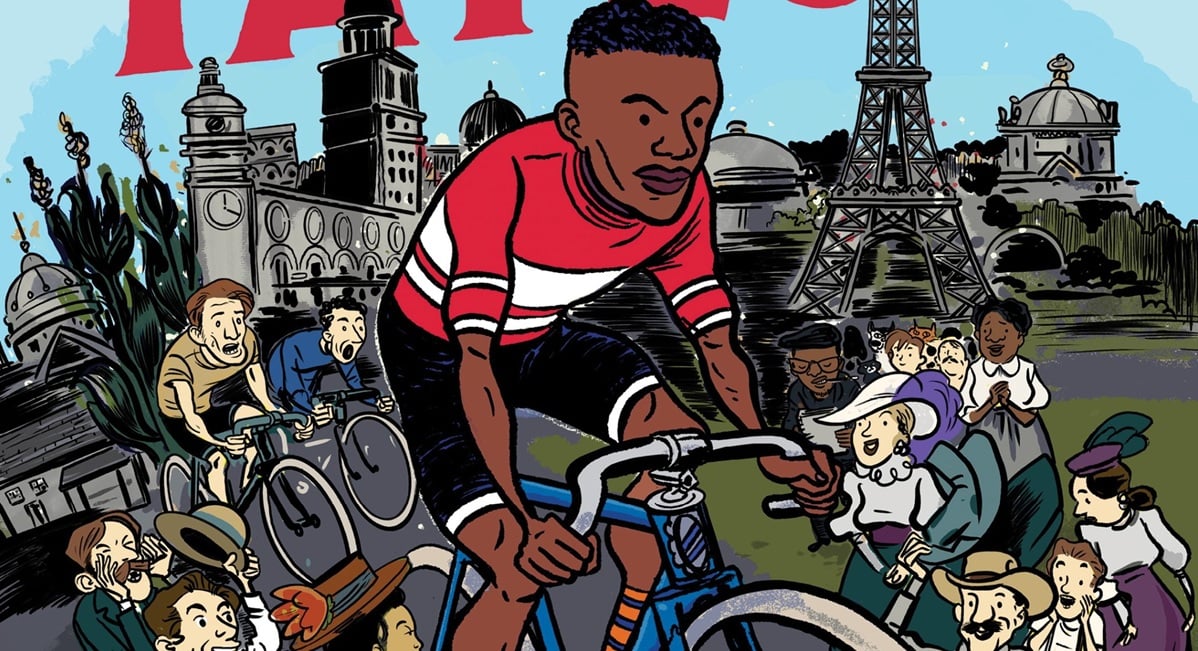
Major Taylor: The World’s Fastest Man is a compelling biography, beautifully illustrated with a watercolor approach to the expressive and dynamic illustrations. Following Marshall “Major” Taylor from his youth to his adulthood, we learn about his pious upbringing and the role that his faith plays into his professional career. One of the things that I really appreciate in Noland’s writing is the elegant narration, mirroring Taylor’s own. Taylor is by all accounts exceptional — I mean, he becomes the fastest man alive, overcoming tragedy and oppression time and again by the strength of his faith and determination. The sad reality is that he shouldn’t have had to. Black people are too often regarded as “resilient” or “strong” for the suffering we are subjected to under the system of white supremacist capitalist patriarchy. Imagine if we weren’t.
Across seven chapters we see Marshall “Major” Taylor across formative points in his racing history; we see him as a child and watch him grow up and mature to the point of his last race and he becomes a legend. In Chapter 1, we learn first a history of the bicycle and its evolving class signifiers then we meet a young Marshall Taylor before he is given the nickname/title of “Major.” Taylor in his first friendship on the page gains skill on a bike, child’s play as he and his friend Dan were able to simply play without the construct of race occurring to them.
That construct however was all around them, with Marshall’s father working for Dan’s family. Marshall, too, was an employee, so the power dynamic of their companionship should not be lost under the guise of a race neutral ideology. That being said, there is something liberatory in children, uncorrupted by the bigotry and biases of their parents and the world around them, approaching things with curiosity and open minds, something that as adults we must work harder to hold and maintain. Still, Marshall Taylor is not free from influence — Christianity is one of the major threads that Noland pulls on through the tapestry of Taylor’s life and it is there from his introduction to us as an eight year-old.
Religion is often seen as a unifier, both a practice and tool that equalize those in faith. Bias on the table, the reality of how Black folks in America were converted makes it inseparable to me from the shackles that bound and oppressed our ancestors, yet I know it has been a powerful theology for organizing.
To this, I hold Kwame Ture’s words: “Yes! When we judge Christianity, we judge it by the principles of Christianity, by the thoughts, words, deeds, and actions of Jesus Christ. Peace be upon His name. That’s the only way in which we judge Christianity. If we judged by Christians, my God, you know how many people have been killed in the name of Christianity?”
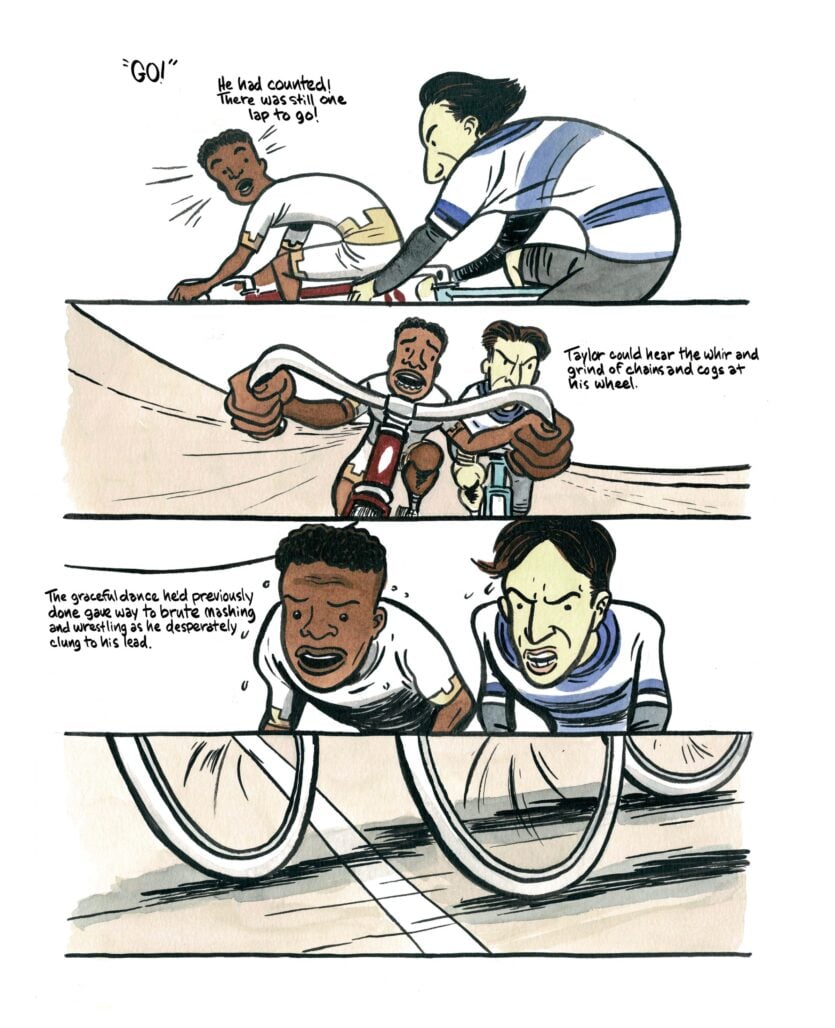
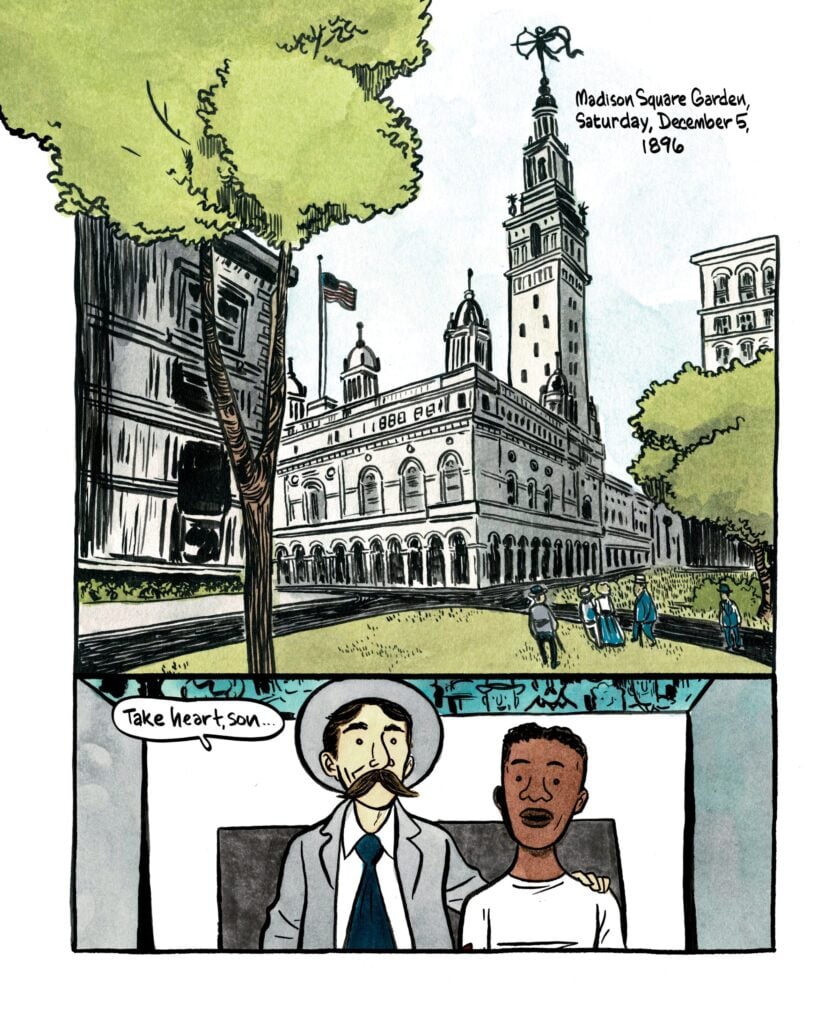
We see that Major learned his piety at home, largely from his mother, and this is a sticking point for him in spite of fellow “Christians” oppressing him (his first experience at a YMCA had him segregated, unable to participate with his white friends.) He is a gentleman guided by the principles of his faith, and when Dan’s family leaves, he is guided to help support his family, a responsibility he shouldered all his life.
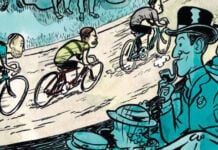
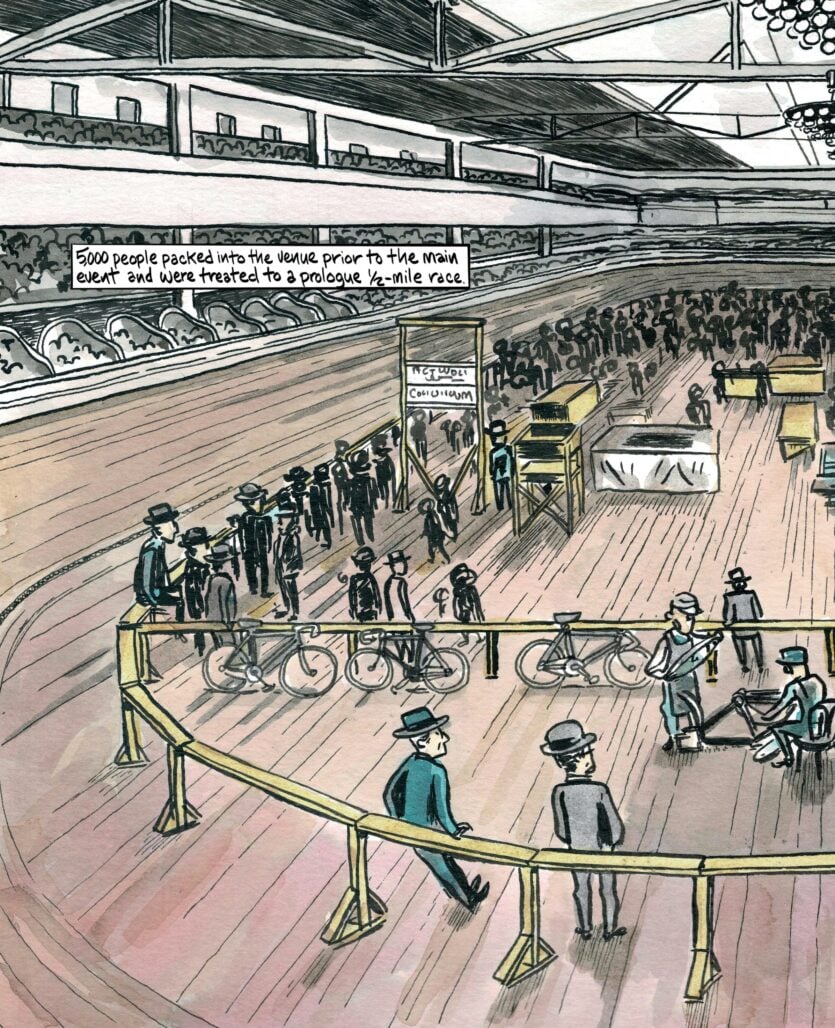
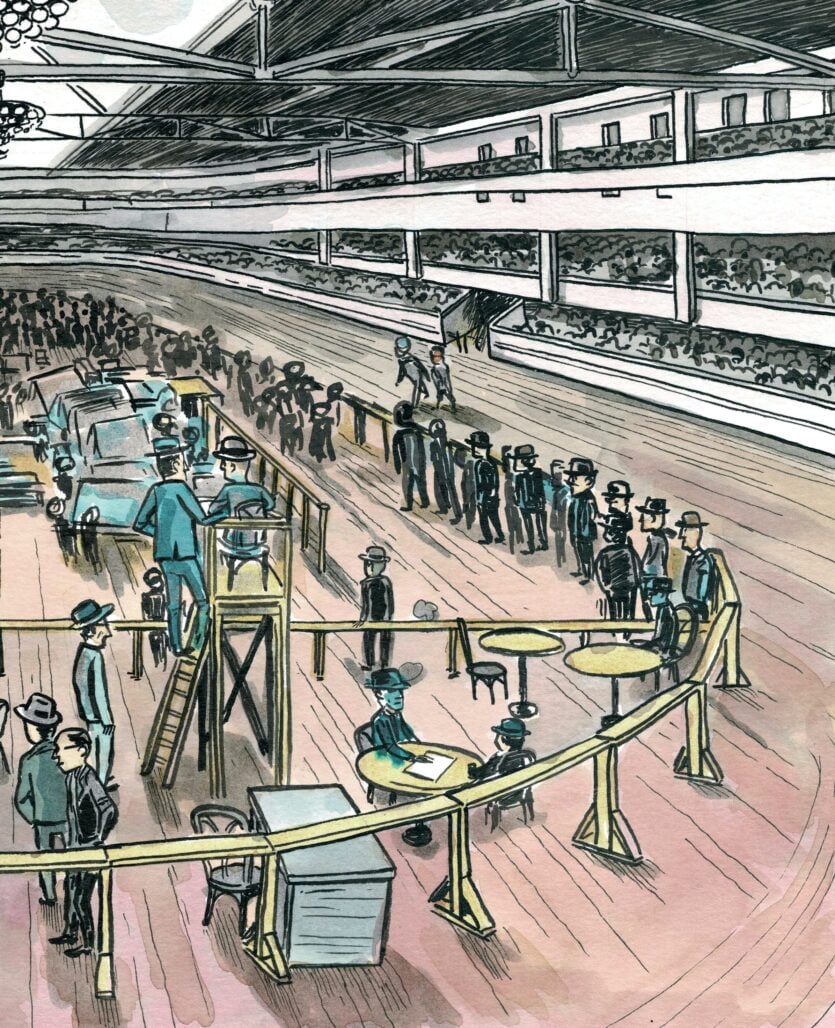
The environments approached with watercolor washes are beautiful, a perfect combination with the line work here, evoking a brush pen. I cannot stress enough how gorgeous of a read this book was from cover to cover. There are multiple moments throughout where the color drops out or where Noland uses a limited palette to great effect across vignettes where we have a more bird’s-eye-view of the history. I was aware of many industry holdovers that persisted from the time of this narrative to the present yet still found myself a little awed at seeing entities like Western Union and JP Morgan (a reminder that chattel slavery is not too far in the rearview of America or any other colonial state.)
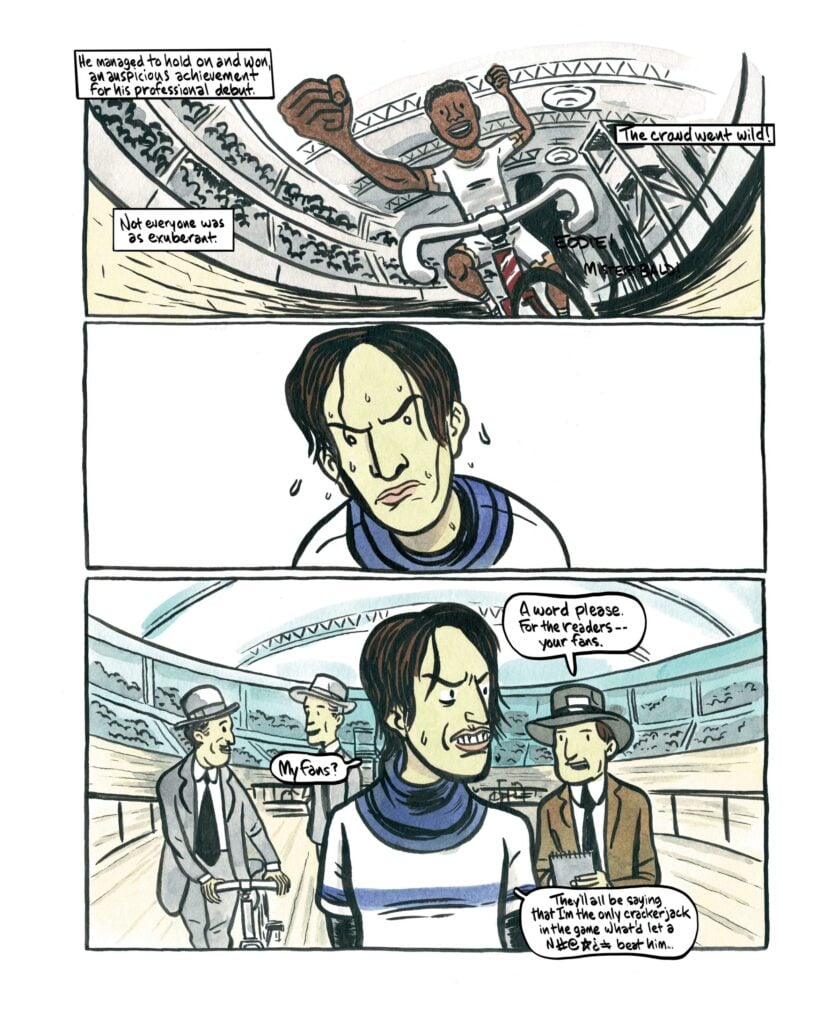
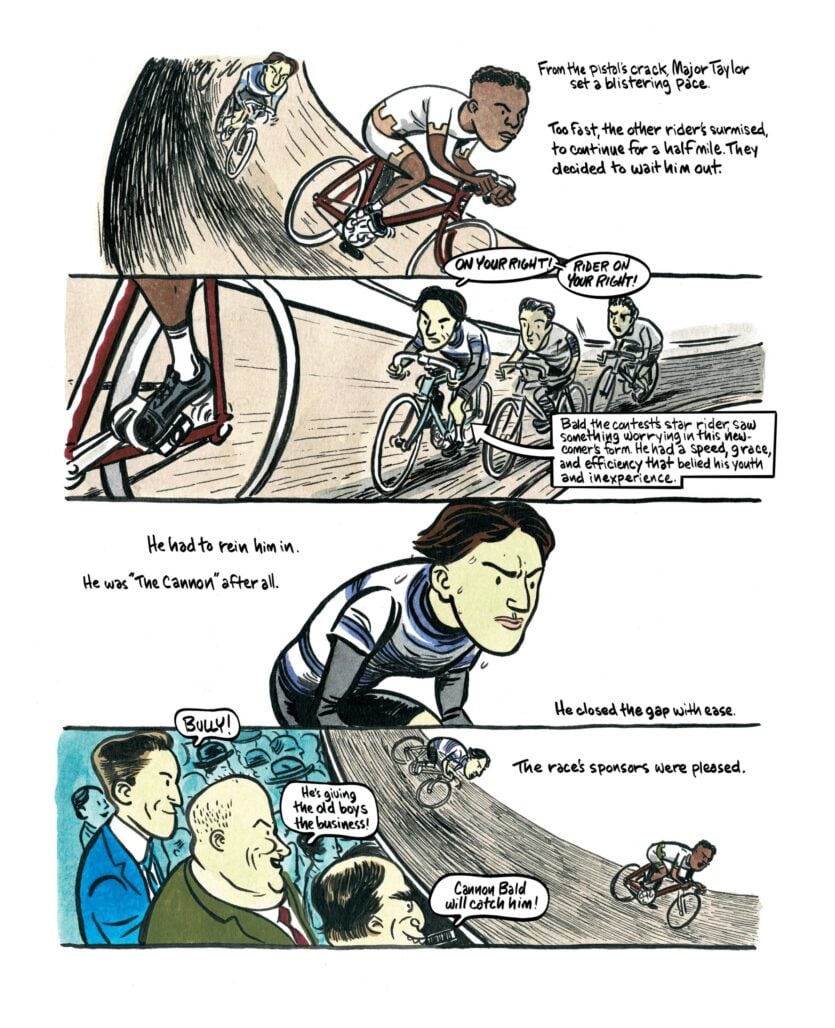
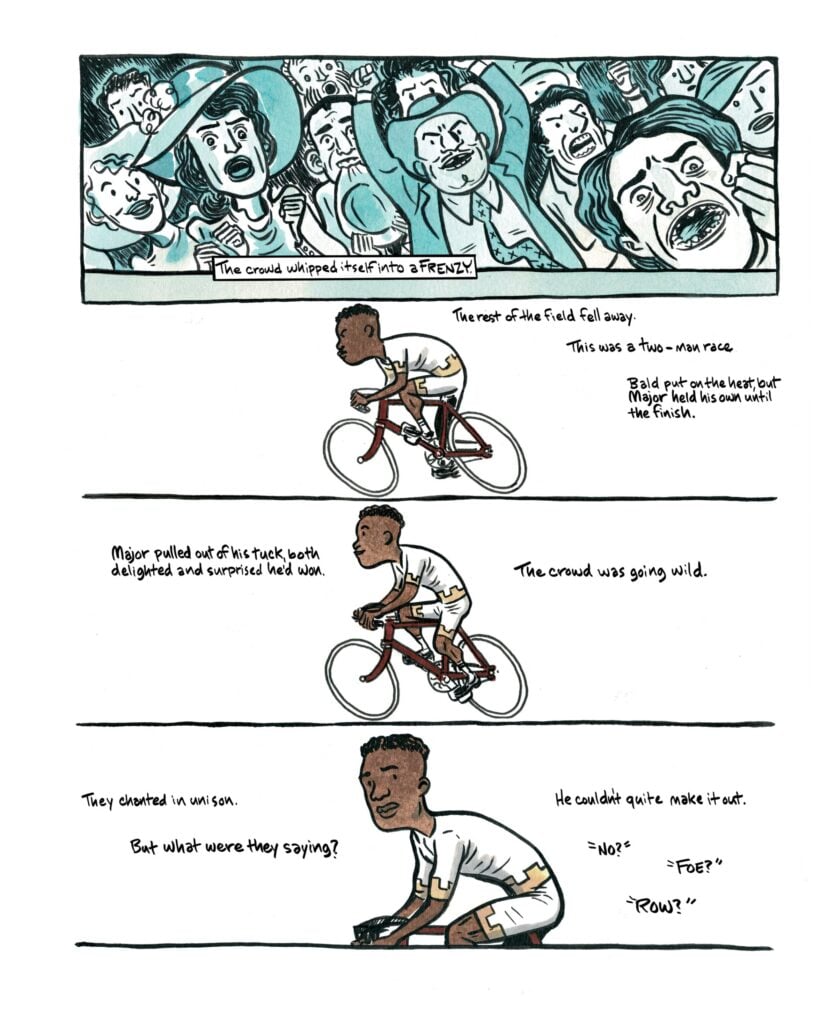
His labor in support of his family is soon exploited, using him as an entertainer. The very same is true of his first race in Chapter 2, yet it ends up setting him on a path that he rides the rest of his life. This first race shows Major Taylor vibrant amidst the mass of de-saturated, dangerous looking men, some lobbing racist insults, only for Taylor to win his first race. Taylor continues work in bicycle shops, training customers, while gaining insider knowledge and a lifelong mentor in the form of Louis “Birdie” Munger. Noland’s character art is impressive and expressive. There’s a moment in the back end of the book where Birdie is screaming in support of Taylor, and it’s as funny as his expression is intense. Birdie demonstrates himself an ally, seeing the humanity in Taylor as a kindred spirit.
I really love the details in recreating historical images from editorials, even when some of them were intentionally and blatantly racist. This, in addition to the range of attitudes from competitors and spectators presented, painted a vivid picture of the world around Taylor and further juxtaposed his “exceptionalism.” While certainly exceptional, Major Taylor was also a victim of tokenization in a country actively hostile and growing more hostile with Jim Crow, and increased efforts to reinforce the systems of white supremacist capitalist patriarchy. Noland weaves between moments with grace, really flexing his pen and holding these things in conversation together; Major Taylor was excellent, the most excellent in his field, and at the same time, was exploited when he was not being excluded and colluded against. There are multiple moments in later chapters where his celebrity is challenged by bigoted organizing structures and rivals. In Chapter 5, after suffering such racist insults and indignities like bands playing “Dixie” when he won or placed in America, to go and race in Canada and find a sense of national pride reminded me of James Baldwin. The moment is beautiful, yet stung me so profoundly, as it is not a feeling I have been able to hold while Noland pushes this thread.
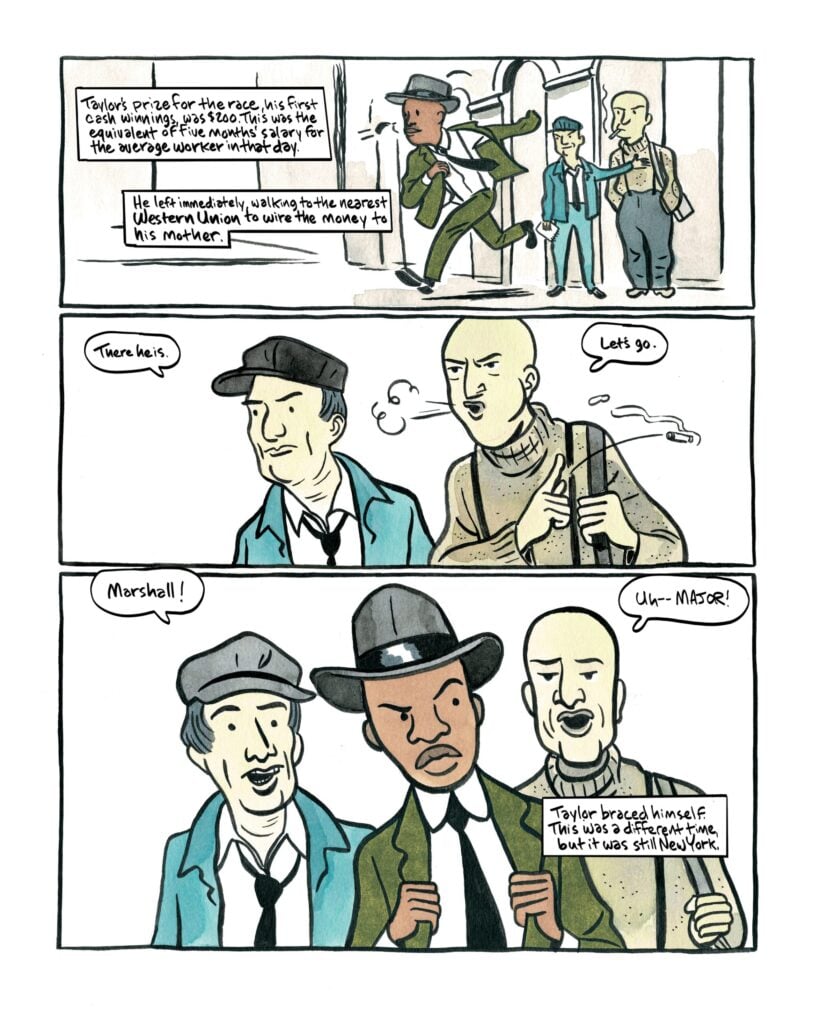
A true rags-to-riches story, Taylor finds acceptance in church and celebrity in the racing world. He becomes husband to Daisy Morris, who supports him through international travels and aids his recovery after a devastating crash (while pregnant.) We don’t get a huge amount of time with Daisy, as they meet in Taylor’s adult years, but the time Noland dedicates to her is handled with grace and care. The acknowledgement of her rejecting the privilege of “passing” and her pride in being Black was wonderful. There is a Black excellence to them and their relationship, especially in how they ascend class barriers. The wealth Major Taylor amasses allows them to travel for his work and experience a life abroad. Even when entering a new class strata, he was still Black. No amount of money changes that. Capitalism requires a hierarchy.
The sentiment persists that anti-blackness abroad is different from anti-blackness here in the states; Gil Scott Heron sang “Home is where the hatred is.” The experience abroad was yet another reminder to me of Baldwin, a man whose stay in Europe provided perspective on American anti-blackness, and yet they both loved this country. Noland gives us a view of Taylor that does not judge, presenting him as a genuine and kind human being. Every panel approaches Taylor with an admiration and care, a care that Taylor also brings to his marriage. With that, his and Daisy’s marriage is also where Noland is able to demonstrate some flaws in Taylor without bringing him low, or attacking his character. The man was a workaholic, and had been since he was a boy; that impacts relationships.
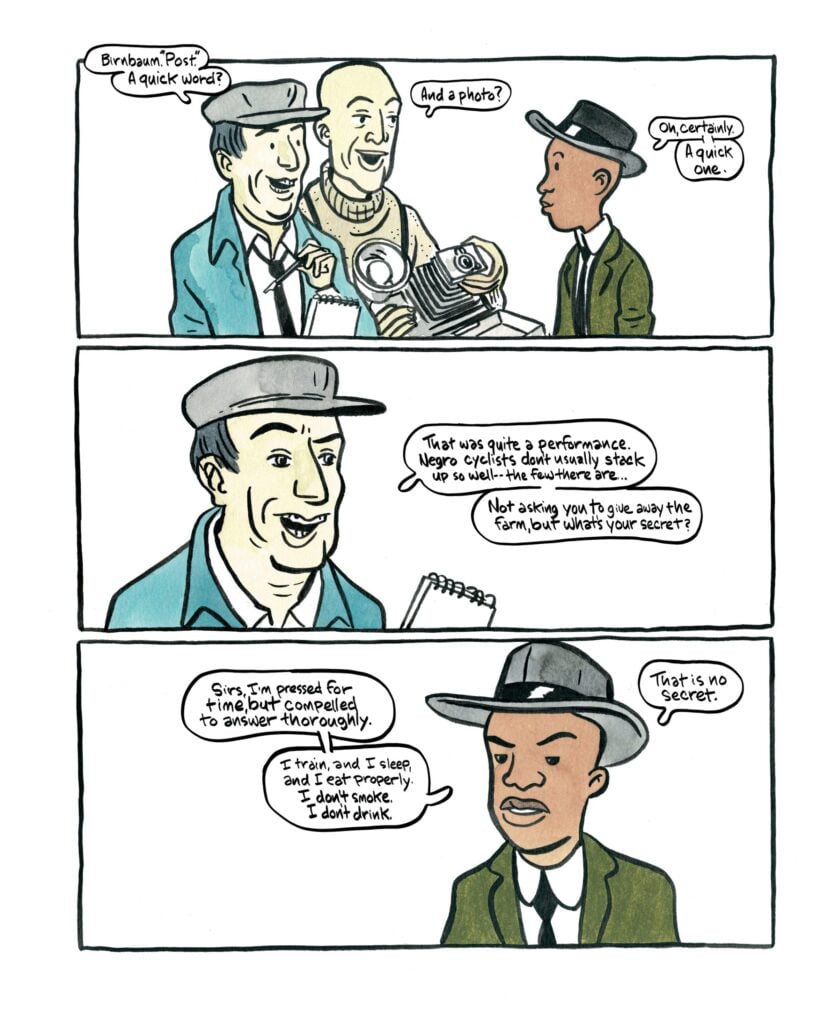
I cannot stress enough how wonderful of a read this was. I can’t reccommend Major Taylor: The World’s Fastest Man enough. A story of victory, a story of a man with a strong moral center and work ethic. A lesser known Black historical figure, Noland spotlighted Marshall “Major” Taylor without making an idol of a man; instead, illustrating the all-too-familiar resilience that has seen Black people succeed in hostile environments. Marshall “Major” Taylor was the fastest man alive while suffering under white supremacist capitalist patriarchy. Imagine if he didn’t have to suffer such injustices. Imagine the greatness that we could collectively achieve if we didn’t either.
Major Taylor is out this month from Drawn & Quarterly
And check out the Beat’s other recent comics reviews!