
 Albion
Plot: Alan Moore
Script: Leah Moore & John Reppion
Pencils: Shane Oakley
Inks: George Freeman
Colors: Wildstorm FX
Letters: Todd Klein
Publisher: Rebellion
Publication Date: July 2026 (latest printing)
There are reboots and relaunches, universal resets and more all across comic book culture. Few such events – or crises, if you will – are like this one, though. Welcome to Albion, a quintessentially British approach to the task, with a massive volume of backstory all waiting to be unlocked. And it sprang from the mind of Alan Moore, tinted with the collective consciousness of a million little boys, each left alone with a comic for longer than they probably should have been.
Reprinted for the first time to mark its 20th anniversary, Albion is a book worth picking out of the schedules for a closer look, because it may be the deepest of deep cuts for afficionados of British comics. On the surface, it’s the story of a young man, Danny, who encounters people he believed were fictional, remembering them from the comics served to British children decades before. This sets him on a trail to uncover a great injustice, and perhaps bring back the heroes of his childhood. It’s good stuff.
And, if you’re one of those comics people who likes a continuity challenge, this could be it, with characters from long-defunct anthologies Lion, Valiant, Smash! and Wham! (punctuation is publisher’s own) popping up all over the place and various players revealed to be – gasp – that person from back then, in most issues.
This is, of course, a very Alan Moore thing to happen. We know his layered work well, and this tendency is shown in the merest glance at the footnotes in From Hell, or any attempt to read The League of Extraordinary Gentlemen, especially the later episodes and their references to popular culture that was fading before our grandparents were born. This time, it’s an Alan Moore outline passed for development and scripting to daughter Leah Moore and her husband John Reppion, with artist Shane Oakley adding his own contribution, and all of it resulting in an extremely busy comic book.
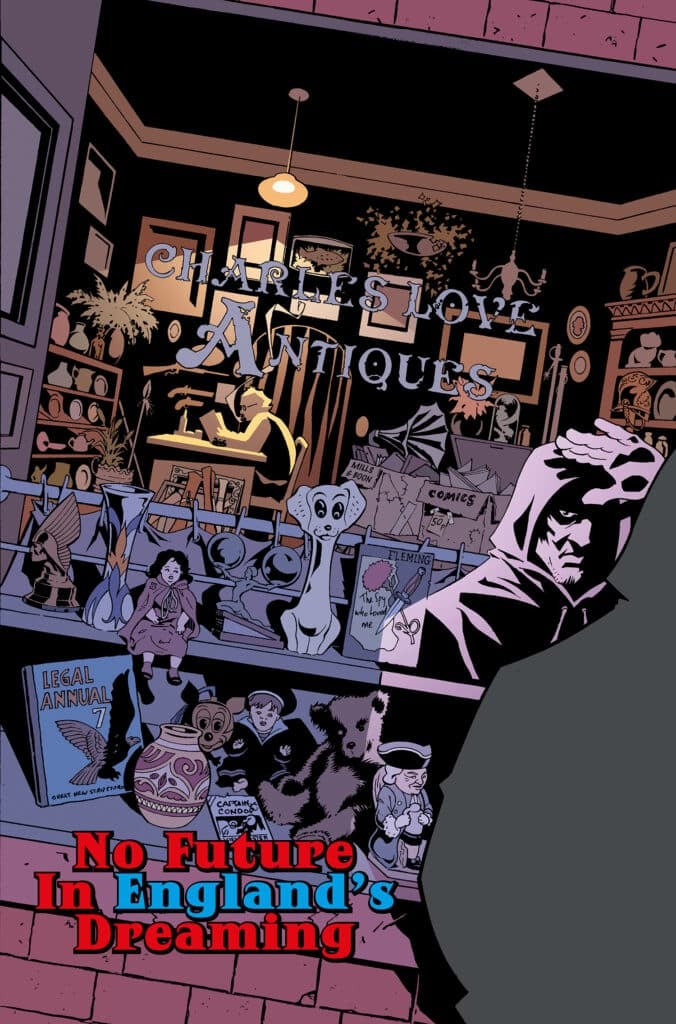
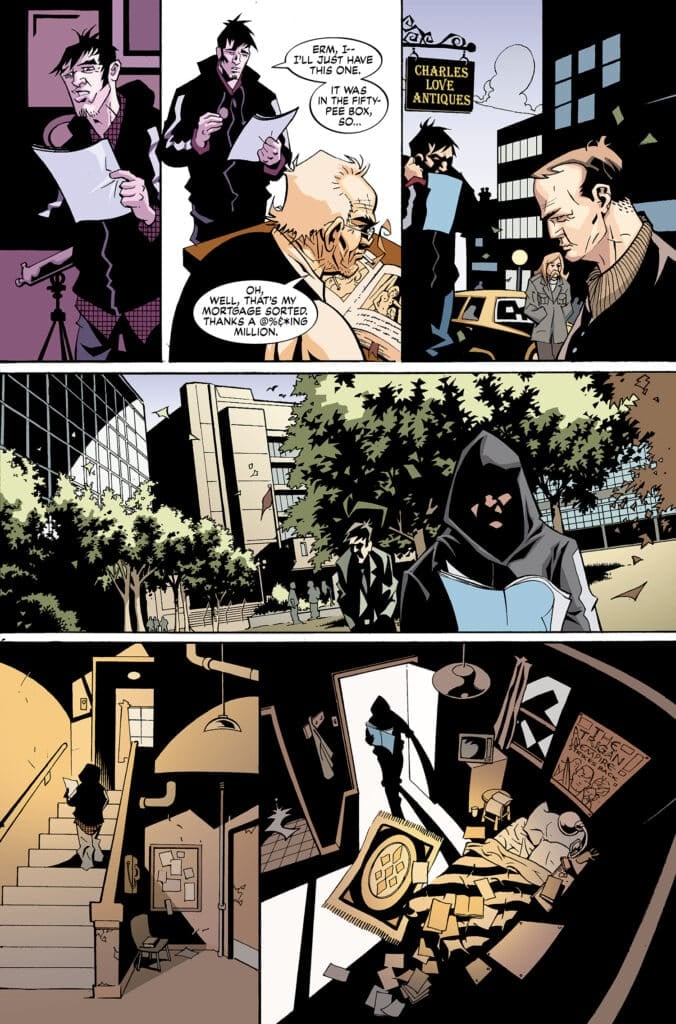
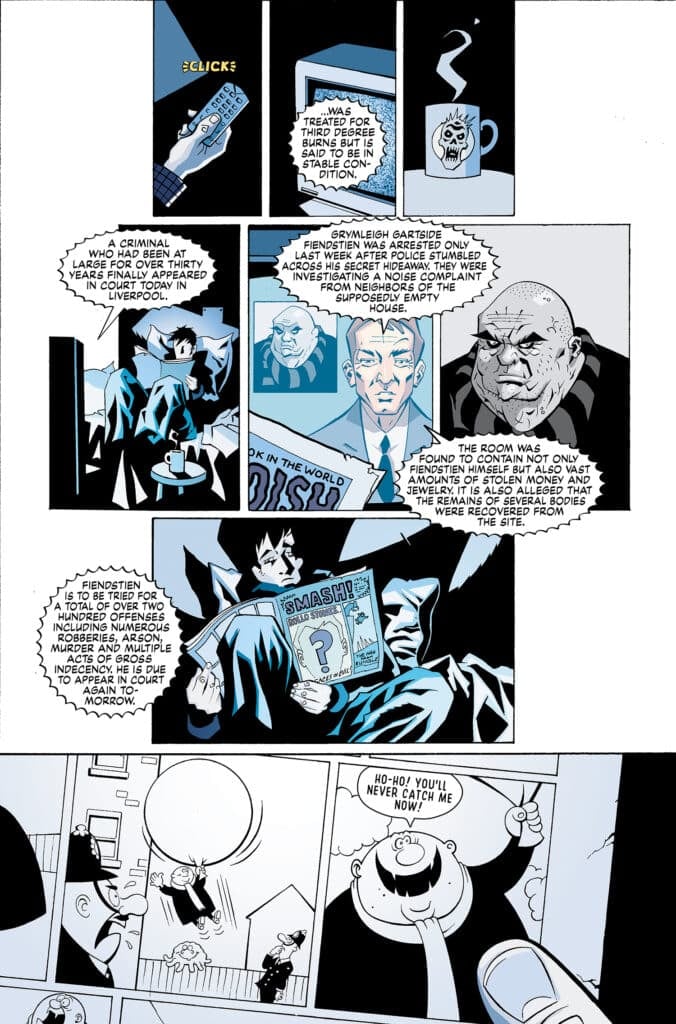
You can read it as a hero’s journey story – and it’s a good one – or pick up more resonance from the layers if you understand them. Again, this is very Alan Moore: perhaps hard to follow without a glossary, and a different experience for an audience in the know. A hint, a name, and a realization (or realisation) and it becomes clear: an early appearance by “Eagleton”, for example, is revealed as Eagle Eye Private Eye, a junior detective in his own black-and-white strip, and the arch-enemy of Grimly Feendish, whose detention by the authorities is what shocks Danny into action.
Itself a piece of comics history, Albion is an odd duck. It was created as a joint project with DC Comics, using characters picked up in back-catalogue purchases from English publishers by 2000 AD owner Rebellion, which gathered under one roof a massive chunk of comics history, and of course many of the characters that show up in this book. Some are better-known than others: the Spider, for example, a side-switching gadget-wielding, vaguely-foreign genius with a chilling attitude and pointy ears, has had some reprints and attention, possibly because Superman co-creator Jerry Siegel wrote him for a while. Ironically, many of these old comics are now more widely-available than 20 years ago, when Albion was published in floppy issues, because Rebellion’s Treasury of British Comics reprint has been collecting them in satisfying hardbacks.
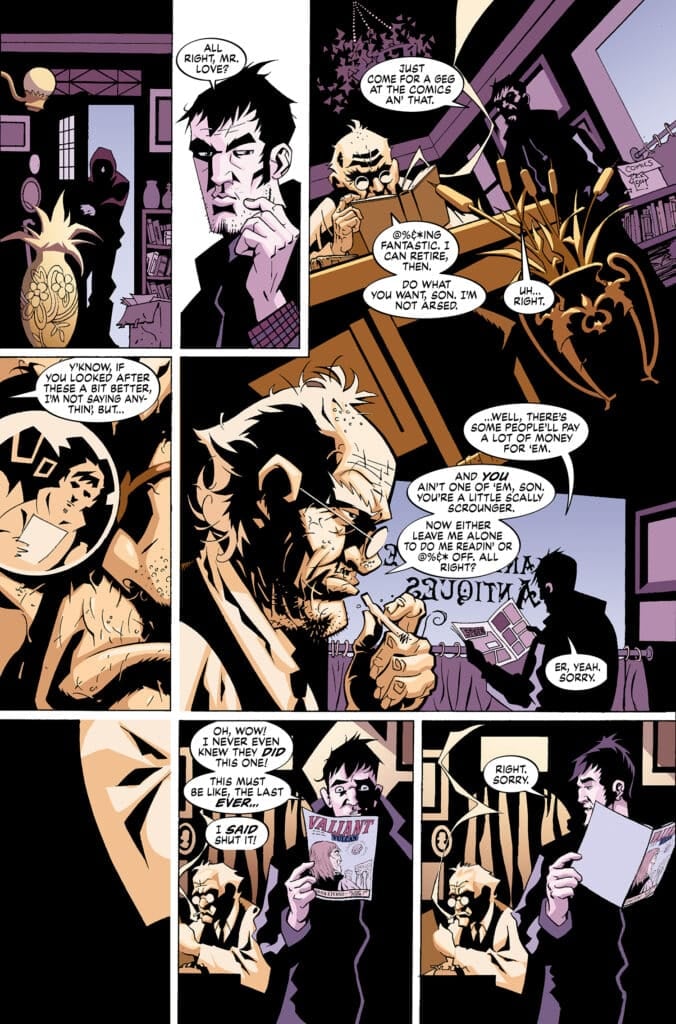
But we can keep it simple. Generally, these are lesser-known British properties, mostly from the former Odhams/Fleetway corporate structure, although it has a few DC Thomson guests sneaking in quietly and even includes cameos from other pre-internet entertainment options, such as the eponymous Metal Mickey, robot star of a ludicrous TV sitcom.
This is all designed to build that milieu of scuffed 20th-century Britain, upsetting the comics trope of throwing back and updating, because this one comes with an unusual vibe, while setting a story in an ill-defined ‘present day’. And this is no shiny superhero adventure: in Albion, the team-up happens amid cobwebs and rusty gears, in a version of England that’s distinctly working class. This is all about pints of beer and dusty shops, regional accents and wearing your coat because it might rain later. Downton Abbey is another world.
It’s called out in the first issue’s chapter title: No Future In England’s Dreaming, invoking the Sex Pistols and all their generational angst. There are song references in chapter titles throughout, from street-level English artists like the Pistols, The Kinks and Billy Bragg. And, there’s a real-life link to the music of the time. You might also remember the absolute gem of a tune Grimly Fiendish, released by the Damned in 1985. Yes, it’s about this story’s Grimly Feendish, the legendary Leo Baxendale character who appears in Albion. He inspired the song, which mis-spells the name for copyright purposes. Joyfully, it’s from the bad guy’s point of view:
Let me get the story straight
You never gave me a break
It’s a case of give and take
You didn’t make me good you just painted me green
You made me part of your forgotten dream
And some of that narrative leaks into Albion, with Grimly’s own comments reflecting it, and of course it brings joy to realize that. That’s part of the fun of really good comics, which pay off in a variety of ways. Again, Albion is great without this, and the layer adds something special.
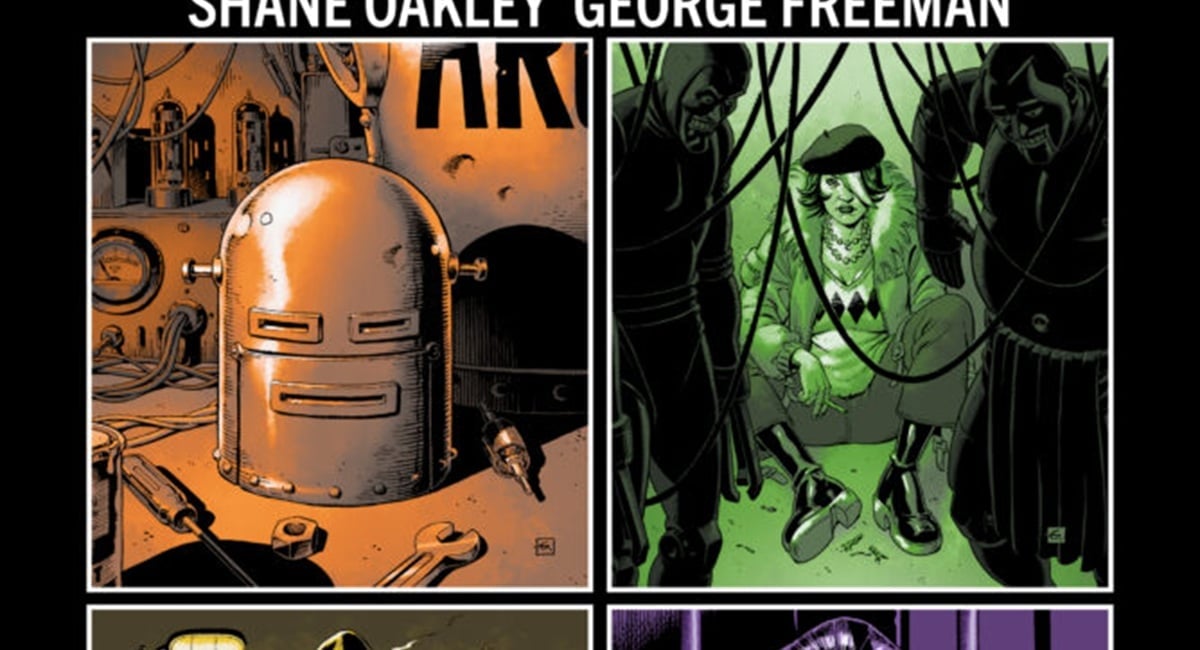
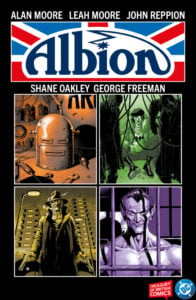
Let’s also make special mention of Dave Gibbons’ covers. I remember just seeing them made me excited the first time around, and they’re gathered in this reprint along with a new introduction and backmatter. Otherwise, it’s the same content, retaining some challenging references to outdated war comics language. It was a different time, and it’s a small part of the whole.
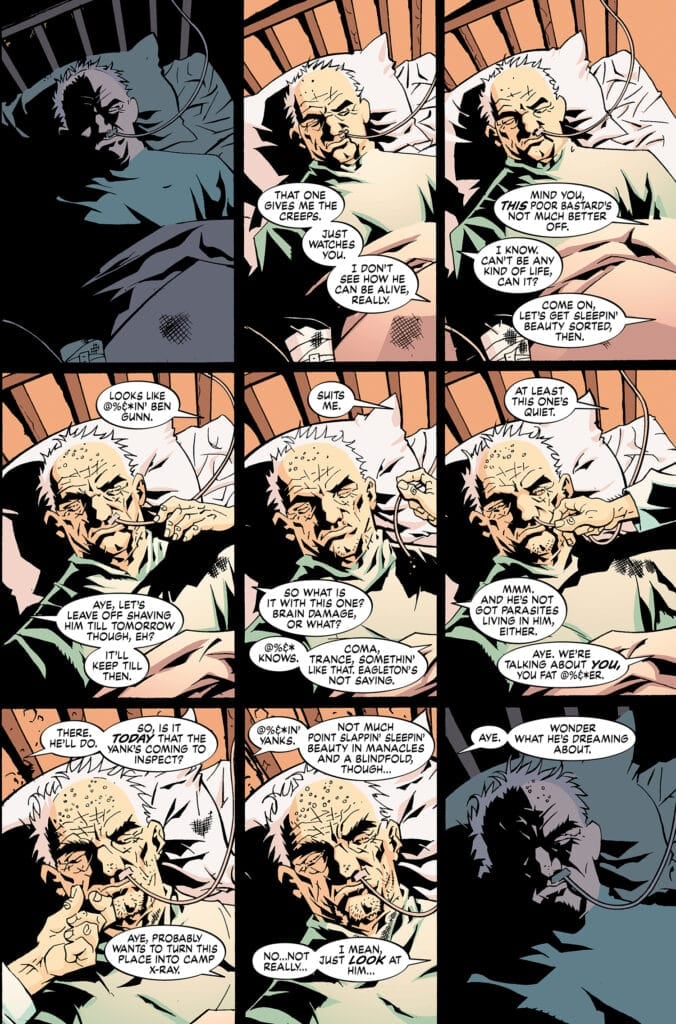
So why should non-British audiences read such a thing? The very first page has a character emphasize its Britishness with “@%€*in’ Yanks”, although my North American keyboard is getting the symbols slightly wrong.
Because, obviously, it’s superb stuff, and its creators know what they are doing as they play in this sandbox (for them a sandpit). Albion rips along at a pace and brings shocks and aside almost constantly. Spotting the cameos is only part of it. It’s one of those books that rewards careful reading and re-reading and that’s great value for money, at least until you get into buying all the other books.
They’re worth it, too. If you want to get really deep into that sort of thing.
Albion is also a gateway to more of those really good comics. We asked Rebellion to recommend the next books that Albion readers might pick up. SPOILER WARNING: this gives away who is who, in a Marvel-end-credits way. The Treasury of British Comics has reprinted the original runs of many of these characters across the past decade, with collections including:
- The Spider (four published volumes) 2000 AD Shop : The Spider: Syndicate of Crime (book 1)
- Robot Archie (two published volumes to date) 2000 AD Shop : Robot Archie and the Time Machine
- Faceache: 2000 AD Shop : Faceache Vol. 1: The First Hundred Scrunges
- Steel Claw: 2000 AD Shop : The Steel Claw: Invisible Man
- House of Dolmann: 2000 AD Shop : House of Dolmann
Read more great reviews from The Beat!




Hey! I’m from Albion. Albion, NY that is. [grin]
Comments are closed.