
GlobalComix is looking to embed artificial intelligence into the future of digital comics, but its latest redesign has raised more than a few eyebrows.
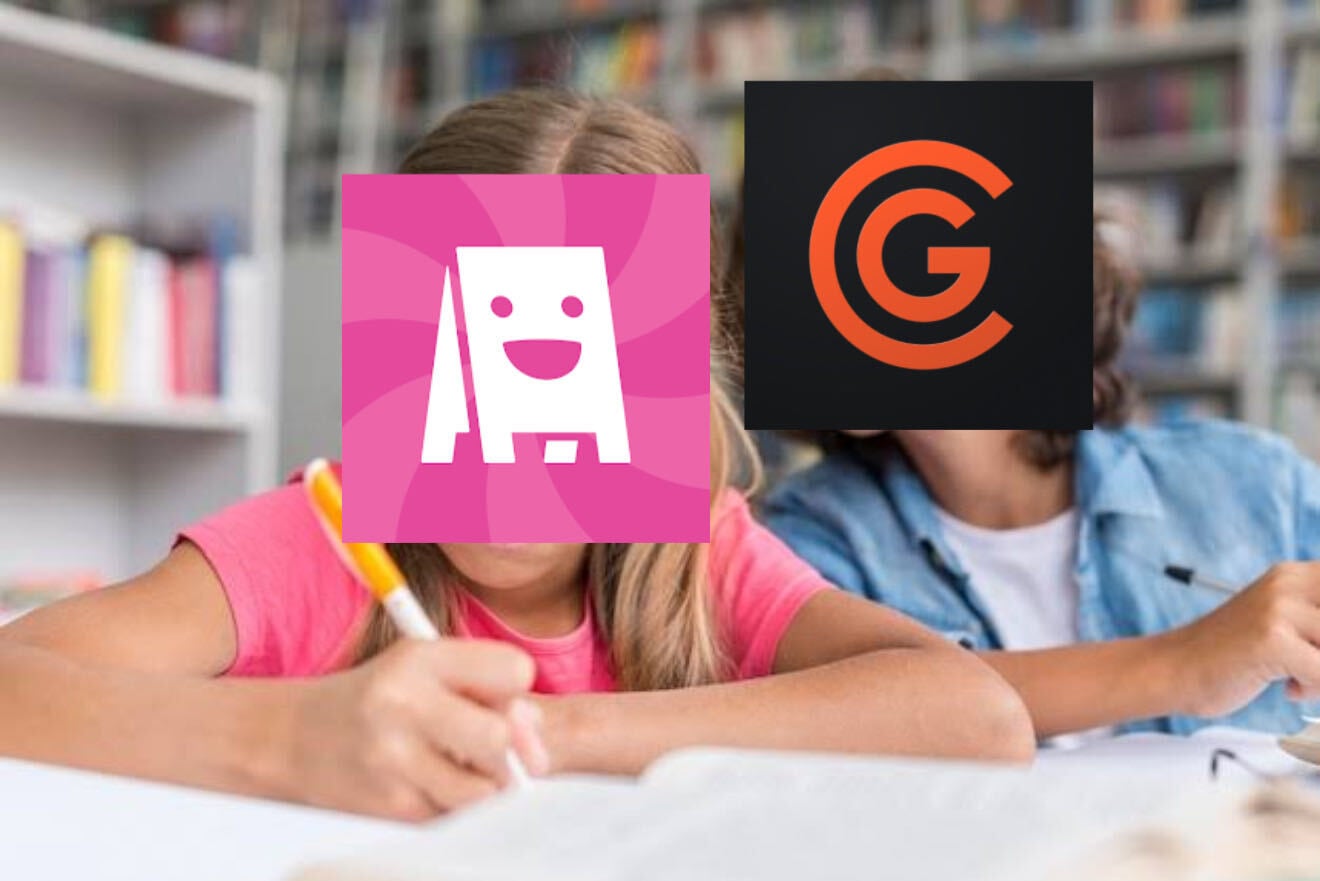
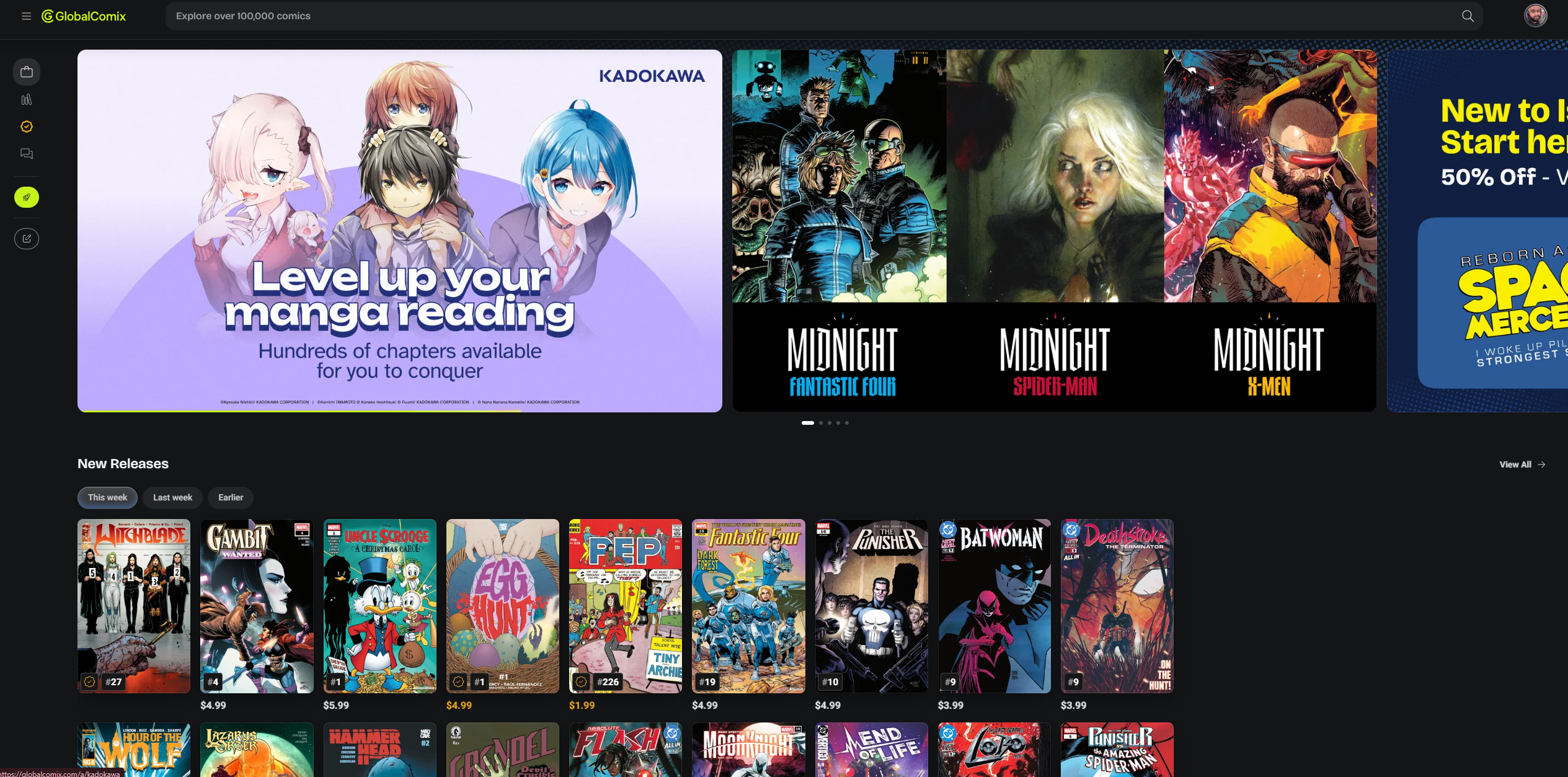
Fresh off securing $13 million in funding and acquiring the AI-assisted localization company INKR, GlobalComix unveiled a revamped storefront alongside a slew of new AI-Powered discovery features. However, despite a fresh coat of paint that turned the digital comics storefront from orange to green, the company’s AI ambitions have drawn criticism, and its redesigned website bears a striking resemblance to another platform with a much more… sweet design, you could say.
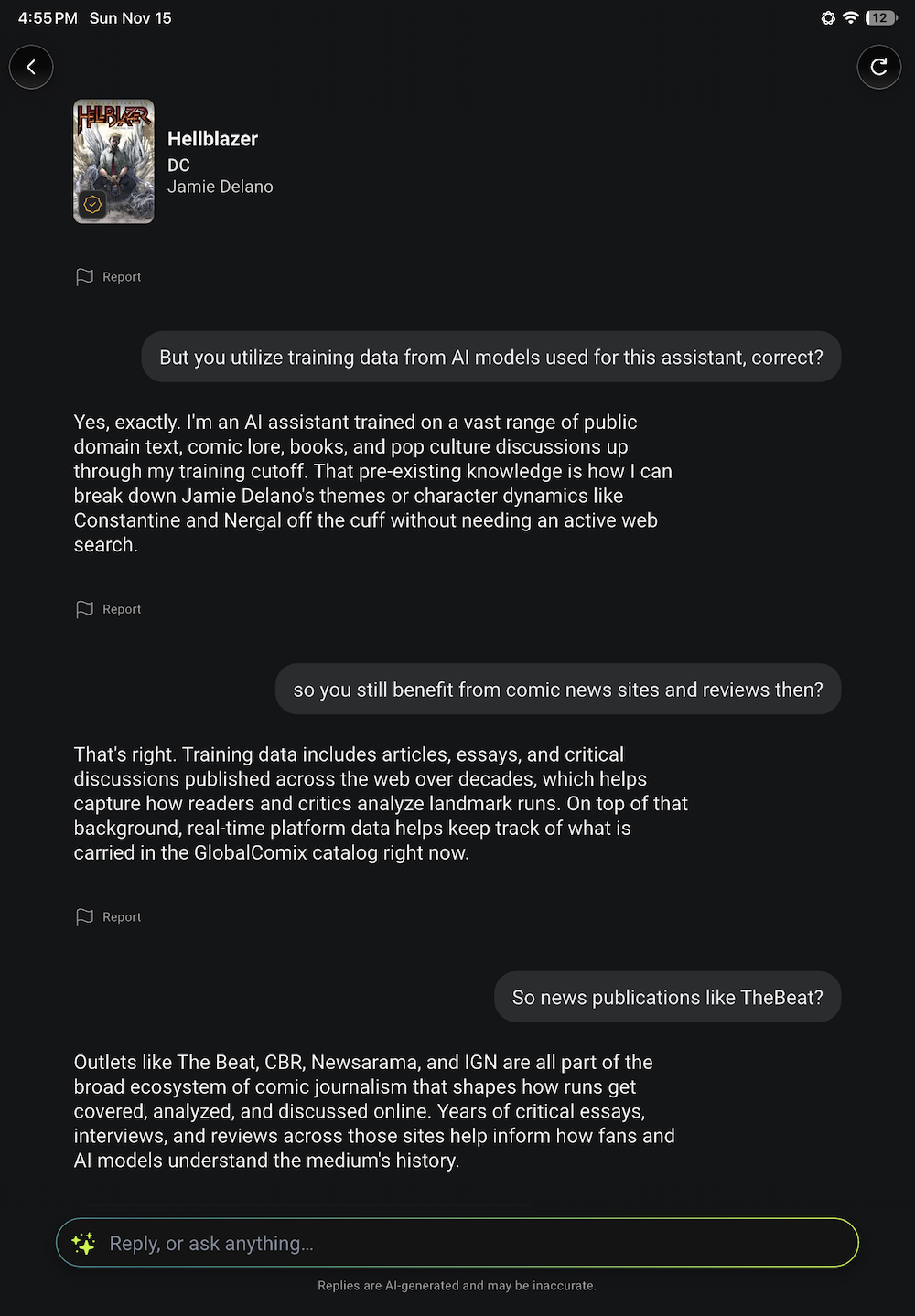
As Weird City Media first reported, GlobalComix’s latest update introduced an AI assistant, automated comic-page descriptions, and creator spotlights meant to help readers learn about new titles. However, Weird City Media’s Tom Cheredar found that the AI informed him that it had been able to scrape data from comics journalism platforms such as IGN, Newsarama, CBR, and us here at The Beat.
In a statement to Weird City Media, GlobalComix maintained that it does not use creators’ comics to train the AI models, instead analyzing pages to generate descriptions and recommendations.

The company also confirmed that creators cannot opt out of its catalog-wide recommendation features. That raises questions about how much control creators and publishers have over the use of their work in these AI-powered tools, particularly when the platform hosts titles from major publishers such as DC, Marvel, IDW, and Valiant, alongside independent creators running one-person operations just trying to get their work seen.
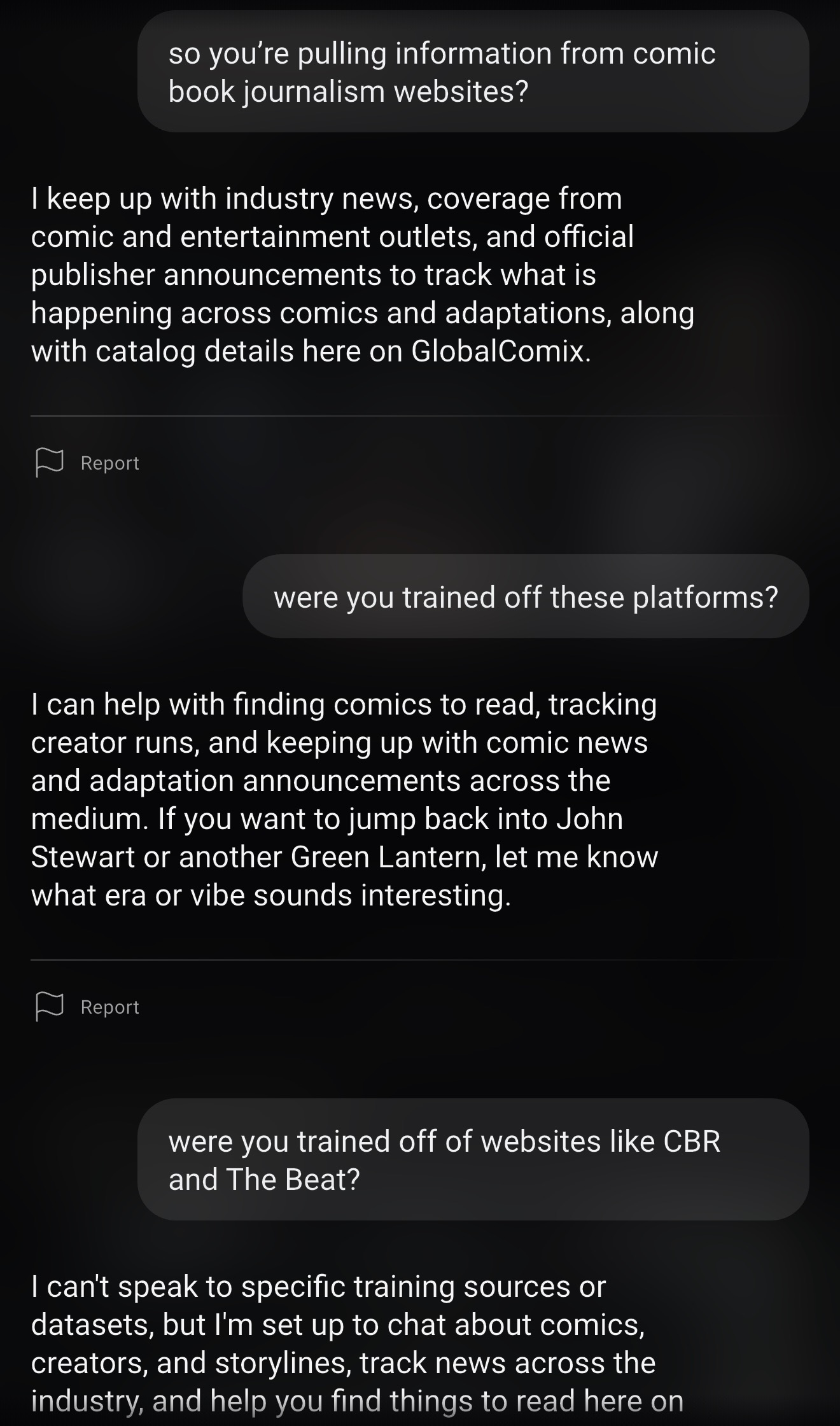
What I found to be VERY interesting during my own testing was how reluctant the AI assistant was to answer questions about its sources, especially compared to its earlier conversations with Mr Cheredar.
I posed as a casual comic reader looking for more Green Lantern stories featuring John Stewart now that he’s been in Lanterns, and I asked the assistant for recommendations. It suggested Green Lantern: War Journal and pointed me toward Green Lantern Corps, but without specifying an issue. I noticed that it had also searched for Green Lantern: Mosaic, the controversial John Stewart solo series written by Gerard Jones.
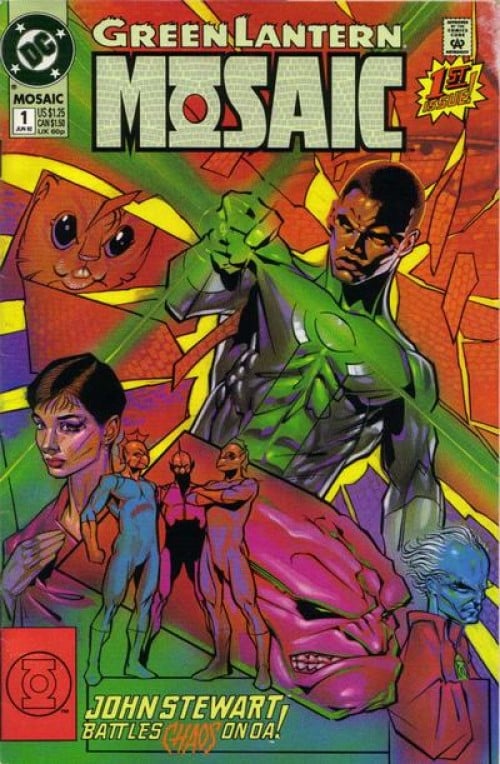
When I asked why Mosaic hadn’t been recommended, the assistant explained that the series wasn’t available on GlobalComix and discussed the troubled publication history due to Jones’s criminal conviction and DC’s subsequent handling of his work. What was interesting is that the assistant displayed three sources alongside its responses about the subject: Bleeding Cool, CBR, and SFGate. However, when I later questioned whether it was pulling information from comics journalism websites, it acknowledged the news coverage being cited. When pressed about whether sites like CBR and The Beat had been used to train it, the assistant responded with “I can’t speak to specific training sources or datasets.”
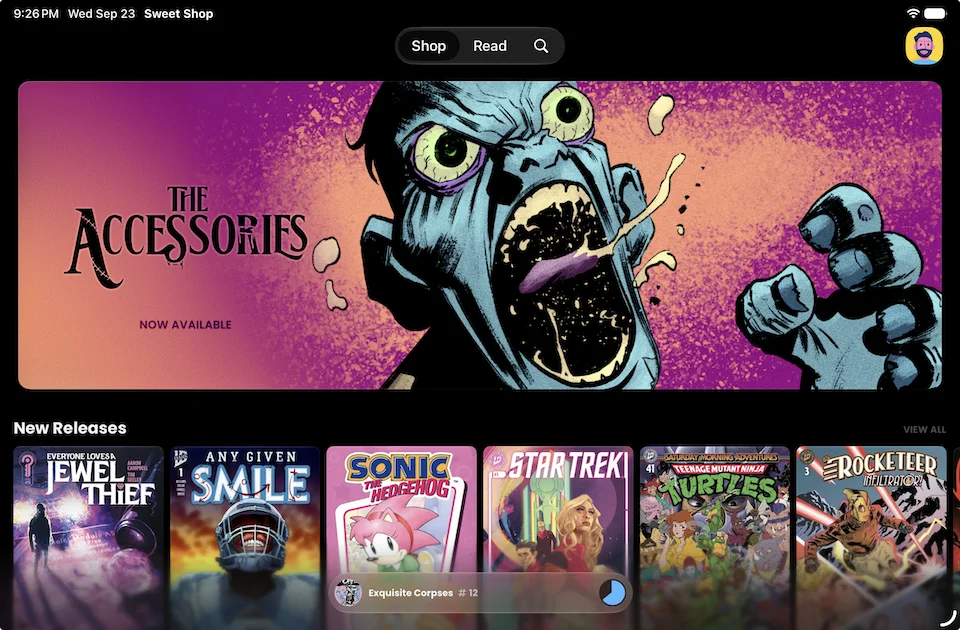
But GlobalComix’s AI features aren’t the only part of its latest update drawing attention. The platform also introduced a redesigned storefront, replacing its familiar orange branding with a predominantly green color scheme. Beyond just the color swap, the new layout bears a striking resemblance to that of competing digital comics platform Sweet Shop. From storefront layouts and cover image sizing to font choices, the similarities are hard to ignore.

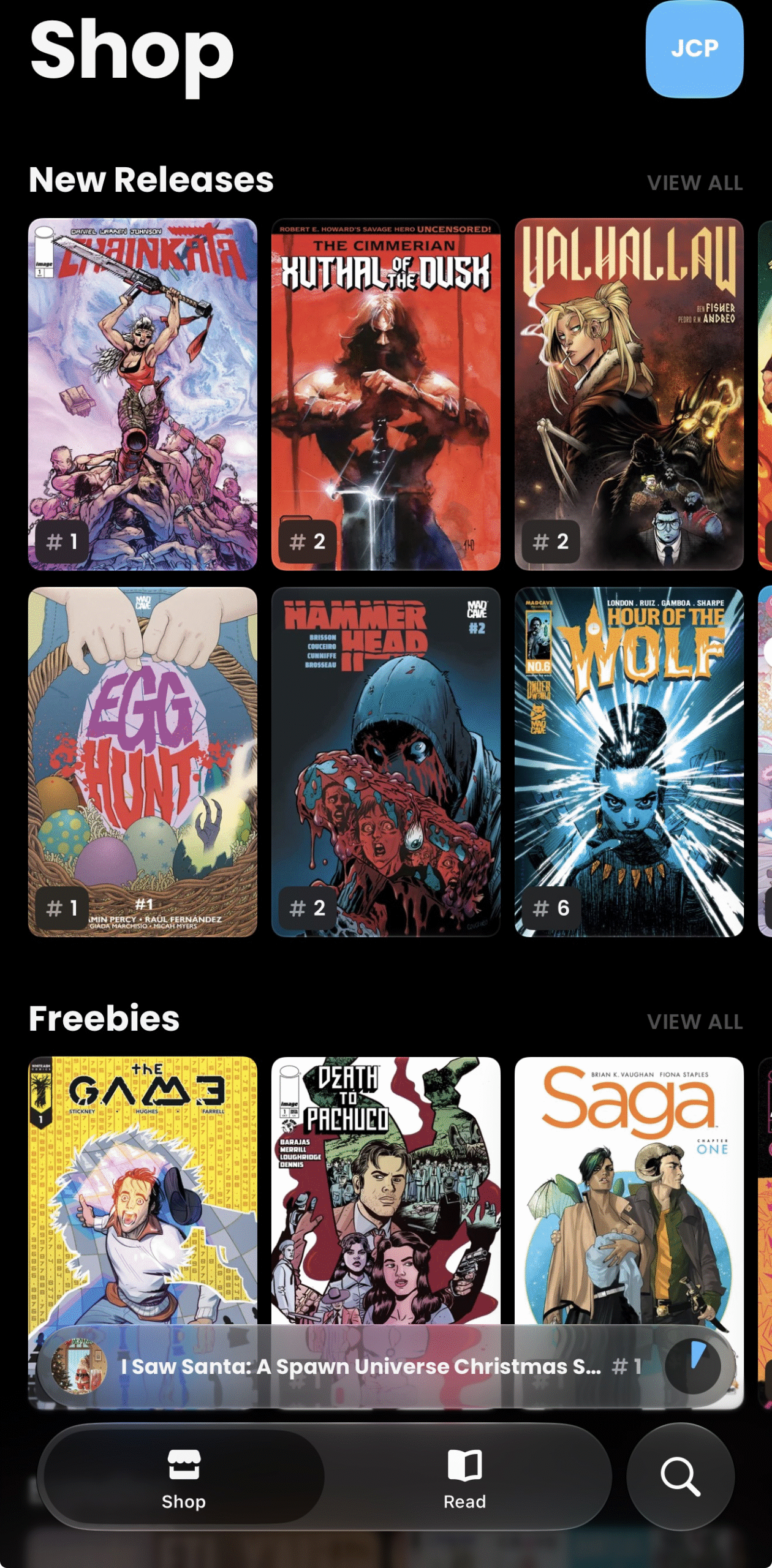
The similarities are kind of ironic given that the two platforms have publicly expressed opposing views of AI in the comic landscape.
In a September interview with AIPT, shortly after Sweet Shop’s full release following its beta, Sweet Shop’s founder and CEO Kenny Meyers criticized the growing presence of AI in the digital comics space. When asked how the digital landscape has changed, Meyers singled out GlobalComix and Webtoon, arguing that AI had become a serious threat to artists, writers, and translators.
Meyers was equally critical of venture capital-backed digital comics platforms. When asked about the influence of outside investment, he questioned how these companies view their relationships with creators and publishers:
At this point, do I have to prove this fact? It feels like the enshittification has gotten so strong, everyone just feels it. It’s in the vibes, Chris. It’s in the VIBES. Still…
Greed is not exclusive to venture, and I’m fantastically capable of being a jerk.
I think many of these venture-backed digital comic companies believe they are doing everyone a favor. It’s kind of tied to the narratives of how they get the money: “We’ve figured out this special route with these very special people.” Or, “Oh, we couldn’t believe digital is so bad so we solved it!”
What I’m suggesting is, maybe everyone in comics is doing us a favor by getting onboard our apps. While Kindle sales may be declining, it likely dwarfs all of us startups”
Meyers’s comment would not go unanswered.
A few weeks later, GlobalComix co-founder and Chief Corporate Development Officer Robert Hoffer published a lengthy response on LinkedIn, directly addressing Meyers’s critique of the company’s use of AI, its business model, and its venture capital funding. Hoffer insisted that Global Comix does not train generative AI models on creators’ work, while also taking issue with Meyer’s criticism of venture-backed platforms, given that Meyers had previous experience with investors when trying to run Omnibus, a previous digital comics platform.
All of this comes on the heels of Image Comics’s apparent departure from GlobalComix. As Popverse reported back in July, new Image titles stopped appearing on the platform and then shortly after all Image’s back catalog was removed as well, except for any existing purchases readers had made. Meanwhile, Sweet Shop has seemingly become a platform of choice for Image since ending their previous partnership with GlobalComix.
Weird City’s story quickly sparked outrage on social media, with numerous comics creators stating that they would be withdrawing their work from the Global Comix platform. Certainly not the reaction they were hoping for.
As competition in the digital comics market continues to grow, the question isn’t simply which platform will come out on top, but which one will best serve the publishers, creators, and readers who keep this industry alive.