
So, they finally did it at Marvel.
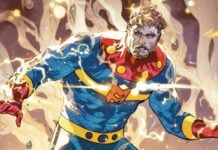
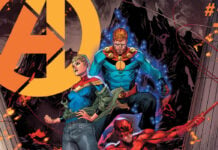
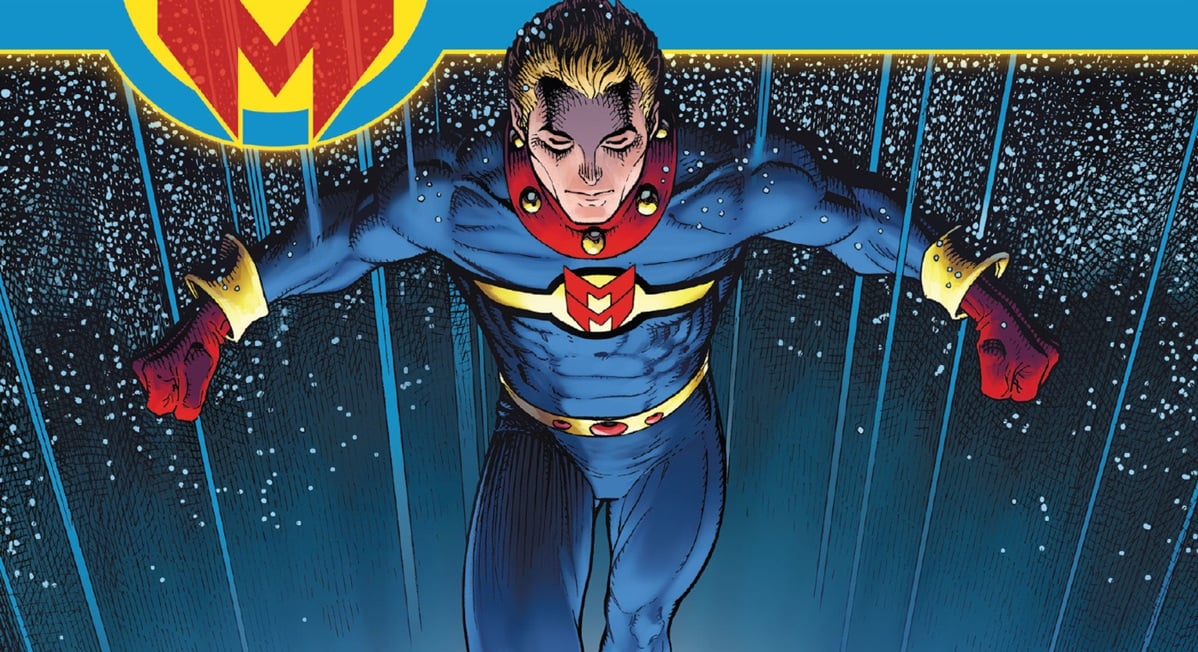
Picture Charlton Heston screaming at the destruction of the world at the base of the Statue of Liberty in Planet of the Apes. They incorporated Miracleman into the Marvel Universe. Kind of. It’s not Mike Moran. That might have been considered a bridge too far. Or they might be saving that story for future issues of Avengers, but the code word and the costume have arrived in the pages of Avengers Armageddon. And this week Chip Zdarsky and Marco Checchetto officially include the new Miracleman as a member of the Avengers in the first issue of the new series.
I’m not sure if I should let out an exasperated sigh. This isn’t the first time someone tried to incorporate Miracleman into another shared universe, Todd McFarlane tried when he thought he owned the property. His version ultimately became something else entirely in two different ways. I…strangely don’t care about what Marvel’s doing now. The original comics are still wonderful. Still groundbreaking and intriguing stories.
Although I would argue that Marvel already had their own version in The Sentry, it makes sense to me that they’d go in a different direction to capitalize on the character. And move away from the taint that now infects the end of the last incarnation.
“I have legends to write; tales of how it feels to live in a mythology.”
But the magnificence of the closing chapter of the original epic of gods and monsters sure was something. In Miracleman – Book Three: Olympus, Alan Moore and John Totleben (originally with Sam Parsons & Wayne Truman, but with Steve Oliff and Joe Caramagna in the new Marvel editions) crafted what remains almost an ultimate treatise on the “god problem” of superhero existence. As Mike Moran comes face to face with his origins and works to transcend the little people of ordinary existence.
To the modern reader, this arc might feel cramped. Dense. Rushed even. In six issues, Moore & Totleben go through Miracleman discovering the aliens behind his ascension, address the natural progression of a higher being, work through Miraclewoman’s origins and the implications of a dark, counter project running parallel to Moran’s genesis, the profound elevation of Miracleman’s daughter, universal politics, aesthetics of beauty, and a dark mirror to the extreme of superpowers. It’s a lot. Indicative of an earlier method of storytelling that really gave you your money’s worth. There is a sheer metric ton of material to really chew through and contemplate. Along with some weighty moral and ethical implications of human advancement, the death of the ego, and the alienation of affection that you see between Miracleman and his simply human wife, Liz. There’s a deep sadness couched within the advancement to godhood presented here.
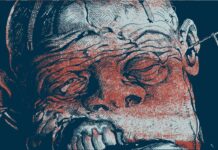
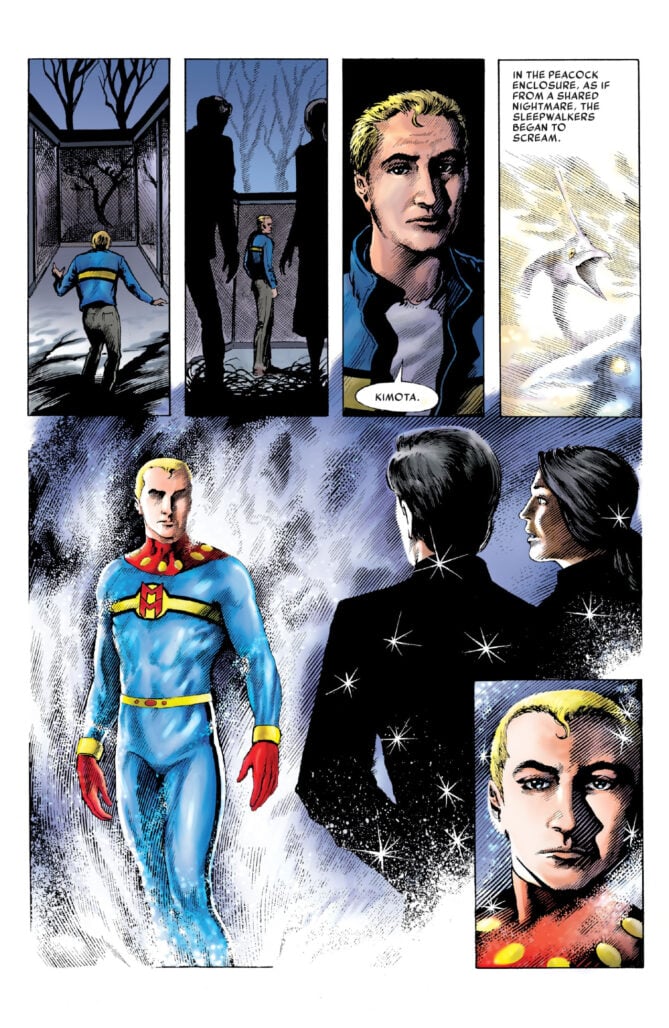
John Totleben is an incredible artist. One of my absolute favourites, in the interest of showing my bias. His attention to detail and ability to convey mood and atmosphere through his incredibly rich pen and ink stippling and hatching is second to none. He captures the eerie horror of both the ordinary and the absurd with what feels like effortless ease. His work with Stephen Bissette on Swamp Thing is sublime, but I think one of his single greatest achievements is chapter five of Olympus that was originally in Miracleman #15. It’s one of the most brutal, horrifying comics I’ve read. Graphic and disturbing in a way that probably thoroughly scarred my young brain. Superheroes, especially the kids, aren’t supposed to destroy London. It’s a harrowing depiction of Kid Miracleman and examines the depths of what happens when the super-powered go bad.
But through the arc, Totleben also shows his versatility, because it’s not just horror on display. There’s complexity in his layouts, going through Miracleman’s journaling, the dances of reality, the discovery of the Qys and the Warpsmiths, the beauty of the new Olympus, and the coupling between Miracleman and Miraclewoman. There’s beauty to be had too, acting as a counterpart to the sheer horror.
In the new Marvel editions, this is echoed in how Steve Oliff handles the colours. It’s not too far off from Sam Parsons’ originals, which is a relief. It looks a bit richer on modern paper, but hasn’t profoundly changed the feel or atmosphere like some restorations. And Joe Caramagna likewise does an admirable job cleaning up and maintaining the feel of the letters.
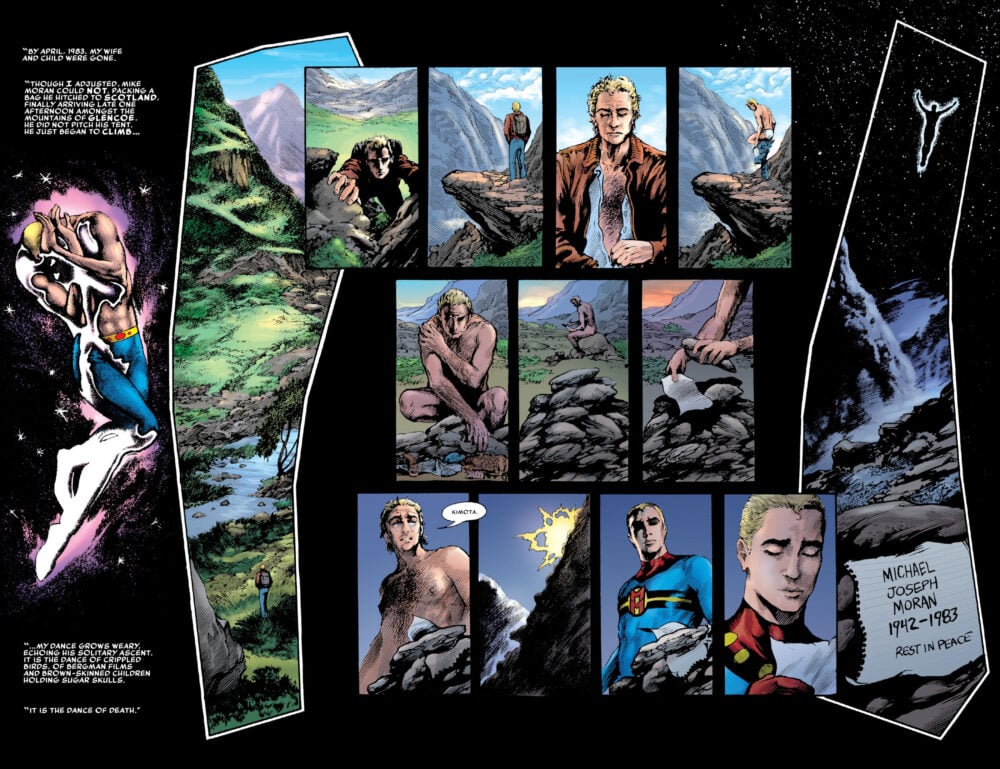
“Honestly, Father, you shouldn’t worry about them so much. They’re only people.”
I think an argument can be made that the examination of the “god problem” within superhero comics has been elaborated upon further, possibly deeper, in other works. That you’ve got things like Morrison & Yeowell’s Zenith, the various permutations of The Authority, Williams, Harrison & Co.’s The Ten-Seconders, and Moore and his collaborators own Swamp Thing, Watchmen, and Supreme, among others. It seems like a natural rumination to question what would happen if people actually had superhuman powers. I think the “Olympus” arc in book three of Miracleman from Moore & Totleben (with Oliff and Caramagna in the recent editions) remains one of the most succinct.
It also remains an argument that the addition of more and more superpowered individuals increases the god problem exponentially. It ceases to be a question of whether they can uphold the status quo as it presents that idea isn’t even possible when gods walk the earth. Making the concepts of a shared universe even more problematic for traditional superhero universes.
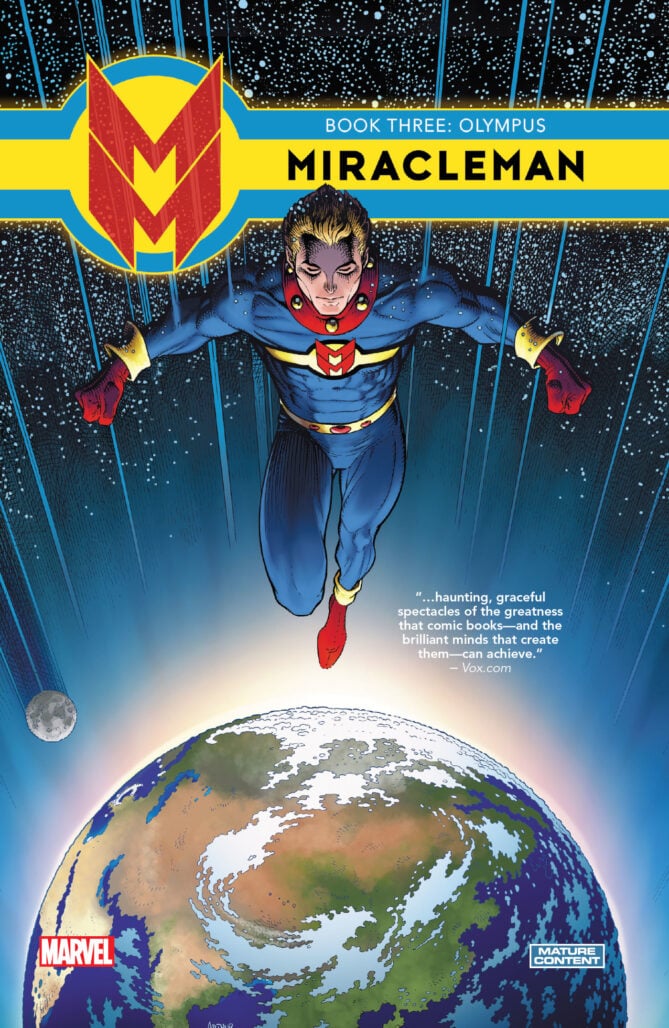
Classic Comic Compendium: MIRACLEMAN – BOOK THREE – OLYMPUS
Miracleman – Book Three: Olympus
Writer: The Original Writer (Alan Moore)
Artist: John Totleben (with Tom Yeates – #16, Michael Kelleher & Kellustration – art restoration on Marvel issues)
Colourist: Steve Oliff (Sam Parsons – original issues)
Letterer: Joe Caramagna (Wayne Truman – original issues)
Publisher: Marvel | Eclipse (original issues)
Release Date: October 1 2014 – March 4 2015 | October 28 1986 – December 1989 (original issues)
Available collected in Miracleman – Book Three: Olympus, Miracleman: The Original Epic, and Miracleman Omnibus
Read past entries in the Classic Comic Compendium!
Check out other recent review pieces from The Beat!