
With more people reading manga and webtoons (aka vertical scroll comics) than ever before, Beat’s Bizarre Adventure gives three writers an opportunity each week to recommend some of their favorite books and series from Japan, Korea, and elsewhere. This week we have fantasy, roommates, and, of course, ROCK.
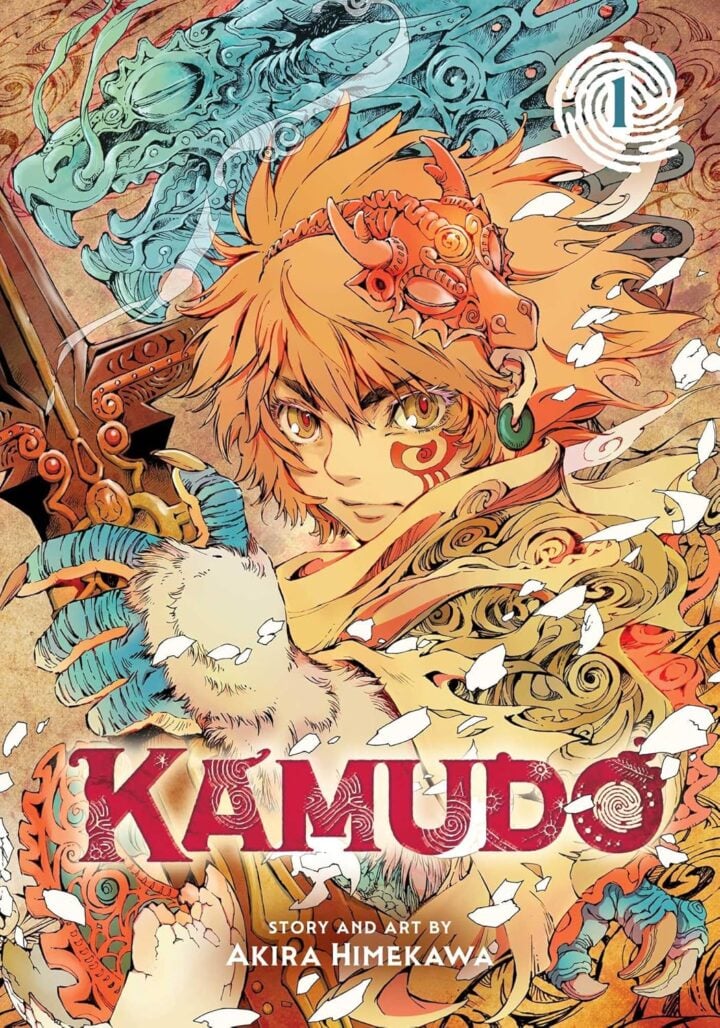
Kamudo
Writer/Artist: Akira Himekawa
Translator: David Evelyn
Letterer: Sara Tinsley
Publisher: VIZ
Fantasy stories thrive on intricacy. One does not simply create a story with swords and dragons, and then not create a world around that. The bigger and more elaborate something is, the more readers engage with the work. Think of the mythologies in works like Lord of the Rings and A Song of Ice and Fire. Kamudo by Akira Himekawa fits nicely into this tradition.
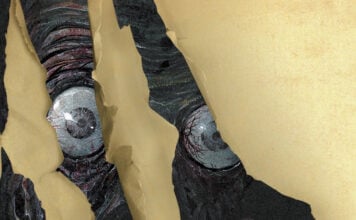
The world of Ryujinkyo is populated with half human, half animal demi-creatures. The most powerful of these species are demi-dragons, who watch over the kamudo gates that sustain life-giving pulse., But the great dragon that created the world is dying. The fate of the demi-dragons lies in the hands of Kamuna, a boy who is something entirely new to Ryujinkyo: a human.
Himekawa builds an elaborate world in Kamudo. The demi-dragons have birthing rituals, councils, and their own unique fighting style. Other demi-creatures have unique advantageous traits as well. That said, the story centers on how each species reacts to the emergence of Kamuna as an entirely new creature. Some reject him, some want to kidnap him, but there are also some who admire him for his individuality. Even within the demi-dragons, individual members harbor complex thoughts and feelings towards this boy who doesn’t look like a dragon and could destroy them all.
Kamudo’s intricate world-building is matched by its art. Every page is filled with elaborate line work that fully brings this fantasy world to life. Himekawa draws with a delicate line, filling backgrounds with ornate symbols and drapery. When Kamuna begins his training, you can see the story of his people’s creation etched into the side of the mountain training ground. Himekawa’s creature design is just as impressive; despite the difficulty of drawing anthropomorphic creatures that each look unique, every creature is instantly recognizable.
The world of Kamudo is brought to life on every page by stunning art. It feels fully thought out, and the joy of reading, like any fantasy story, lies in discovering that world as it progresses. — D. Morris
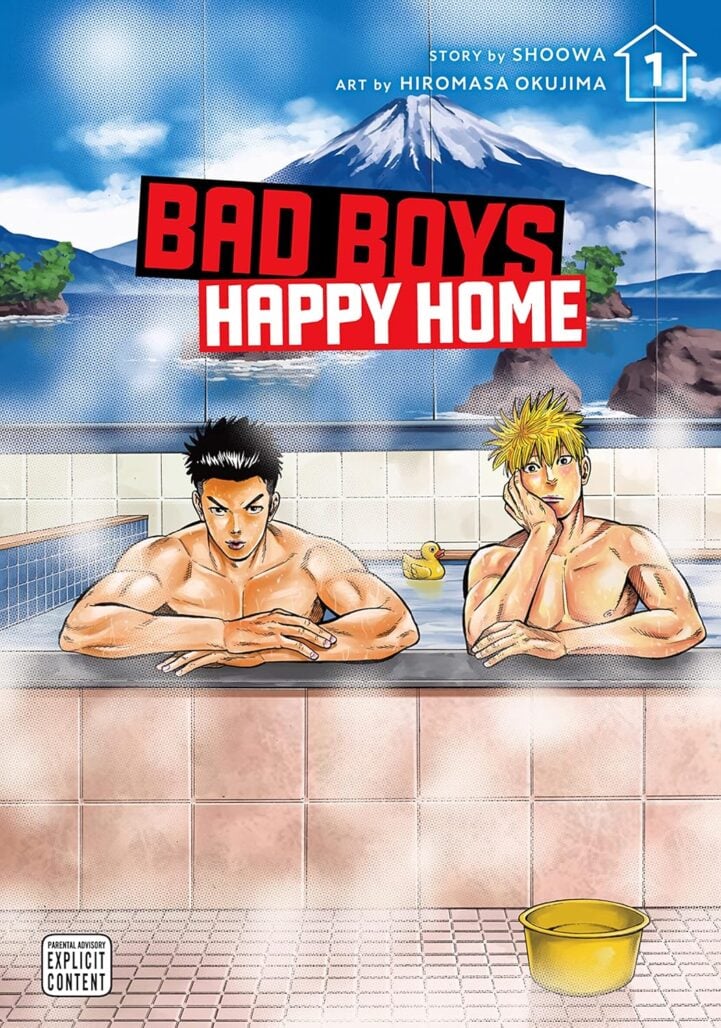
Bad Boys, Happy Home
Writer: SHOOWA
Artist: Hiromasa Okujima
Translator: Adrienne Beck
Touch-up and Lettering: Deborah Fisher
Cover and Graphic Design: Julian [JR] Robinson
Publisher: SuBLime
Adolescence. The period in one’s life when the emotions run high and hormones are off the charts. Adults treat you like a kid, yet expect you to take responsibility for your future and study hard. At such a tumultuous period, Akamatsu’s only method of release is duking it out with Seven, a guy who lives in the nearby park. The fact that he never wins those fights only fans Akamatsu’s flames. Until the day he hears that Seven was reported to the police, losing his place in the park. Feeling responsible, Akamatsu offers Seven his place to stay. But living with his fight-mate has its fair share of surprises…
Behind Bad Boys, Happy Home is an unlikely duo. The writer SHOOWA is an established Boys’ Love manga artist; among her work, only the Iberiko Pork series has made it to English. The artist Hiromasa Okujima mostly draws manga for the shonen/seinen demographics, and Bad Boys, Happy Home is him dipping his toes into the Boys’ Love genre for the first time. He’s now mainly known for Babanba Banban Vampire, available from Dark Horse, snagging itself an anime adaptation on Netflix as well.
From this unlikely duo comes a work so gripping, wacky, and fresh that you won’t be able to put it down. Since it’s complete at just three volumes, you have every reason to give it a chance. And yes, that includes non-BL readers as well.
Seven and Akamatsu might share one brain cell, but they are honest and sweet at heart. After they decide to share the small flat Akamatsu is renting out, cohabitation leads to many unexpected developments. Despite the ups and downs, both are so responsible when it comes to taking care of the house and each other. They go shopping together, visit Akamatsu’s parents and even go to an aquarium. But that doesn’t mean the fists stop! Action on the streets and between the sheets are their preferred way to communicate, after all.
Bad Boys, Happy Home doesn’t stick to the usual structure or character design conventions of Boys’ Love manga. While a little unique, it has heart, courage to sidestep, and promises a fun and steamy journey during your stay. Just like its main characters! — Merve Giray
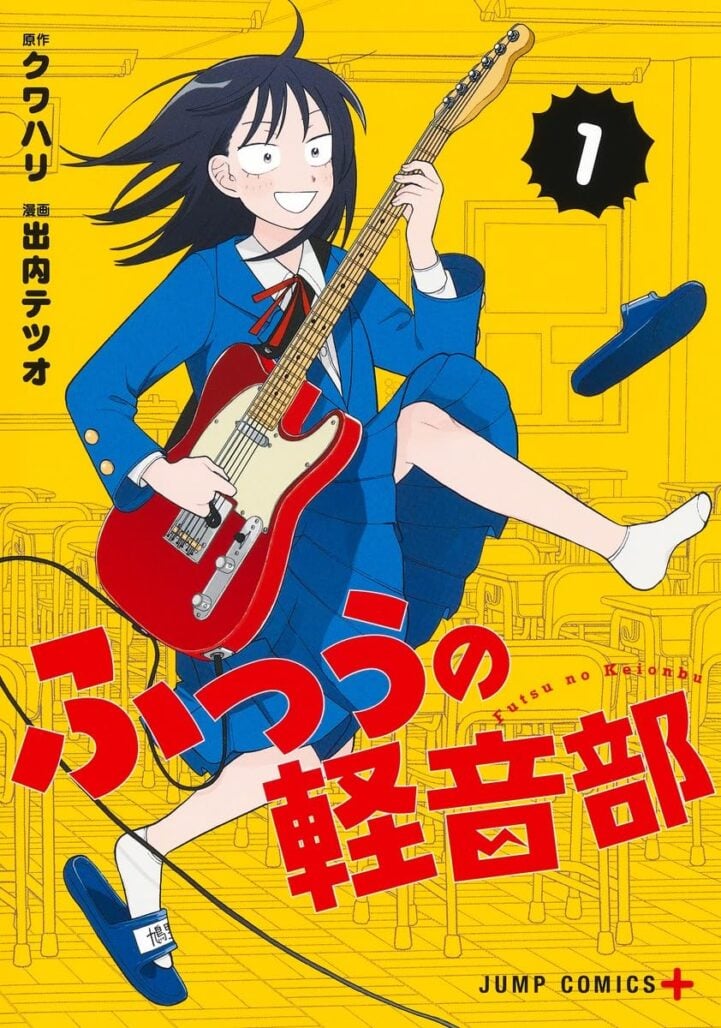
Girl meets Rock!
Writer: Kuwahali
Artist: Tetsuo Ideuchi
Translation: Catherine Delage
Lettering: Jem Marasigan
Editing: Jessica S.
Platform: Manga PLUS
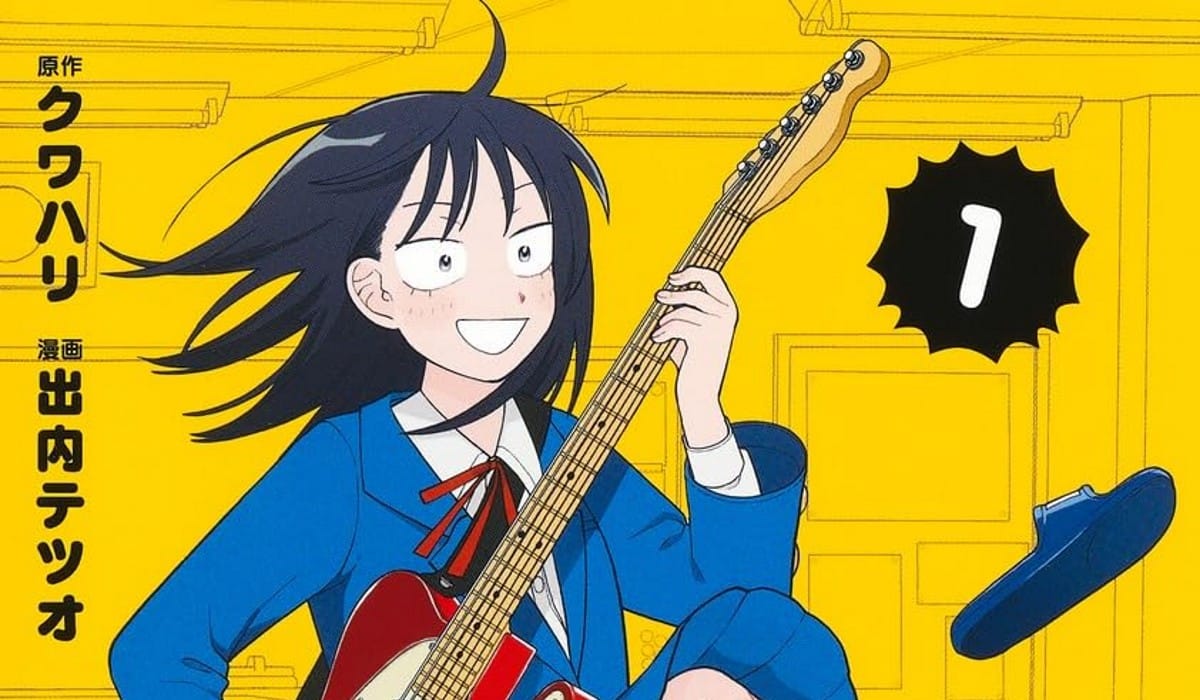
Chihiro Hatano’s dream is to play in a rock band as part of her high school’s light music club. So when she meets a drummer in class with the same dream, you’d think that the two of them are connected by destiny. But nope, wrong! Momo has her own group of friends she promised to play in a rock band with, so Chihiro ends up joining forces with a quiet bassist named Rin instead. They’re joined by two loser boys who sink their chances at scoring a place in the upcoming concert. A few chapters later, Momo’s band has imploded, and Rin has devoted herself to spreading the church of Chihiro across the land. Wait, what?!
Girl meets Rock! started as a webcomic before its creator Kuwahali was paired with artist Tetsuo Ideuchi to expand and reimagine the story. As a result, the series has a chaotic energy that makes it tough to pin down. The first few chapters ignore musicianship in favor of relationship drama; a surprising number of the characters are mean girls or manipulators; many others are boys, clashing with what you’d expect from the traditionally sapphic girl band genre. Not to mention the constant “needle drops” referencing songs by bands like NUMBER GIRL and The Blue Hearts, an affectation that Manga PLUS’s localization sadly butchers by cutting the lyrics.
Not quite what you’d expect from a series with the Japanese title “ふつうの軽音部,” or “Ordinary Light Music Club.” Yet that “ordinary” descriptor is also what gives the comic its charge. This is a story not about prodigies who take Budokan by storm, but about kids with (if they’re lucky) above-average talent playing together at their school club. Kuwahali apparently based this series on their experiences as a teacher, and while Girl meets Rock! is by no means as naturalistic as girl band peer Linda Linda Linda, its best moments capture that same sense of warmth infusing high school monotony. The nostalgia you feel for your Game Boy’s battery dying.
As one of Chihiro’s older classmates says in her final school performance: “We’re a bunch of losers playing out some adolescent fantasy…forget music, all we want to do is gossip. This school’s LMC is hardly about rock and roll. But! Despite all of that! This ugly, painful, cold club has been hard on me, but it’s even more fun!” If that speech stokes the coals in your heart as it does mine, this series is for you. — Adam Wescott
Follow Beat’s Bizarre Adventure to get weekly manga and webtoon recommendations!