
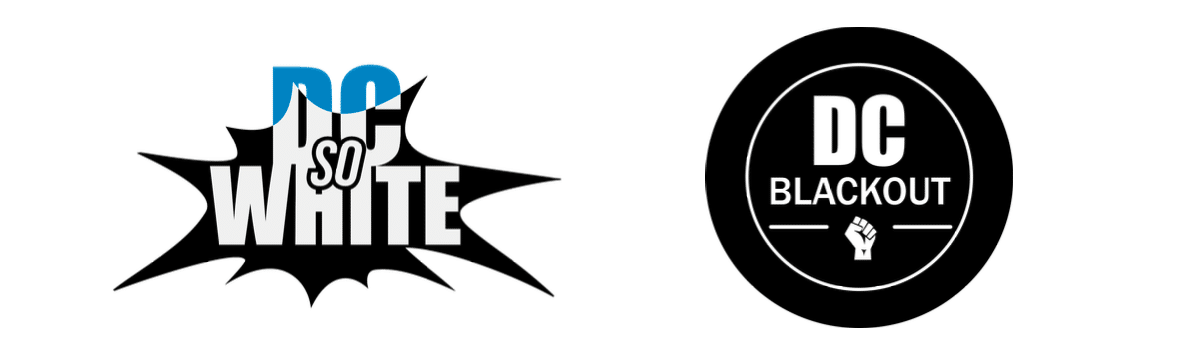
Yesterday the Black Comics Alliance, organizers of the #DCSoWhite campaign launched the second phase of their public protest: #DCBlackout, an organized boycott of DC Comics until they implement “meaningful structural changes are made regarding Black representation in their mainline continuity.”
The Black Comic Alliance is
a collective of content creators, journalists, and comic creators focused on amplifying Black voices, supporting Black creators, and pushing for equitable representation throughout the comic book industry. Through campaigns, journalism, community outreach, and industry accountability efforts, the organization works to ensure Black readers and creators are not treated as temporary initiatives, but as foundational parts of the medium’s future.
[Disclosure, one of the Black Comics Alliance organizers is occasional Beat contributor James Portis III.]
The organizer point out that the boycott is not rooted in hiostility, but rather “frustration over what the organization describes as a repeated pattern of underinvestment in Black characters, inconsistent publishing support, and the marginalization of Black creative voices.”
The boycott has led to a lot of discussion online, and also rumors and speculation that DC is planning some titles that would fulfill the demands of the boycott. But the movement is in its early stages, even if the conditions it is protestign are not.
In the meantime, who would YOU like to see as a Black DC character with their own ongoing? (My pick is Static, always Static.)
Developing.
The Black Comic Alliance, the collective of content creators behind the viral #DCSoWhite campaign, officially announces Stage 2: DCBlackout, a coordinated protest movement calling on readers, supporters, and content creators to withhold financial support as well as cease content creation for DC Comics publishing initiatives until meaningful structural changes are made regarding Black representation in their mainline continuity.
Launched in response to longstanding concerns surrounding the treatment, investment, visibility, and sustainability of Black characters and creators within DC publishing, #DCSoWhite sparked widespread discussion across the comic industry and fan communities. According to the Black Comic Alliance, DCBlackout represents an escalation of that movement after what organizers describe as “continued inaction and performative responses.”
“In almost 50 years, DC has only had 10 Black ongoing series in its mainline continuity, with only 1 surpassing 50 issues, and not a single [title led by a] Black woman. They constantly blame sales, but they’re playing a game with the deck stacked against us. This needs to stop,” – James Portis III, also known as JPenumbra
“DC Comics chose to give a Confederate officer a series before a Black character. Not a good look. Black people only have value to DC Comics during February.”– Ernie Carothers, also known as Blerd Without Fear
The DCBlackout initiative calls for supporters to:
● Post on social media and call for DC Comics to publish 1-3 brand new ongoings for Black heroes in their mainline continuity with strong Black creative teams
● Cancel their pull list subscriptions for all DC titles, including ongoings, mini series, and collected editions, until a Black-led ongoing in mainline continuity is solicited.
● Raise awareness about the fact that digital sales are not valued the same as preorders of single issues
● Push for transparent, long-term commitment and investment to Black representation
● Support Black creators through independent and creator-owned projects
● Encourage industry-wide conversations surrounding equity, visibility, and sustainability
The Black Comic Alliance states that the protest is not rooted in hostility toward fans, creators, or the DC Universe itself, but rather in frustration over what the organization describes as a repeated pattern of underinvestment in Black characters, inconsistent publishing support, and the marginalization of Black creative voices.
Among the concerns cited by the organization are:
● The lack of sustained, ongoing titles led by Black characters in the mainline continuity
● Short-lived initiatives without long-term commitment
● Limited marketing support for Black-led books
● Underrepresentation of Black editorial and creative talent
● Disparities in publishing opportunities, such as not valuing digital sales and not allowing titles to get to trade before cancellation.
“I want to ensure that the comic book readers of the future can see themselves within the pages of DC now and in the next generation,” – Charlie Wilson, also known as Captain Diesel
“The way DC treats its Black characters, especially Black women characters, is something that needs to be addressed. We all deserve better.”– Dr Kaori Knight
The Black Comic Alliance says DCBlackout will remain active until DC Comics publishes a Black-led ongoing in their mainline continuity and gives it promotion on the levels that would show faith in the title and a desire for it to succeed. The lack of transparency on how sales work, as well as the lack of support on display previously, as seen recently with the lack of promotion for The New History of The DC Universe: The Dakota Incident, cannot continue if they wish to say that “Black books don’t sell”.
Supporters can participate in the movement by using the hashtags #DCSoWhite and #DCBlackout across social media platforms and by engaging in discussions surrounding equity and representation within the comic industry.





“In the meantime, who would YOU like to see as a Black DC character with their own ongoing? (My pick is Static, always Static.)“
Static is also high on my list but the last attempt was pretty bad. It’ll probably be a bit before another try. In the meantime, Steel (John, not Natasha) would be great. On the more obscure side, Dr.Mist, founder of the Global Guardians, has always had a special place in my heart.
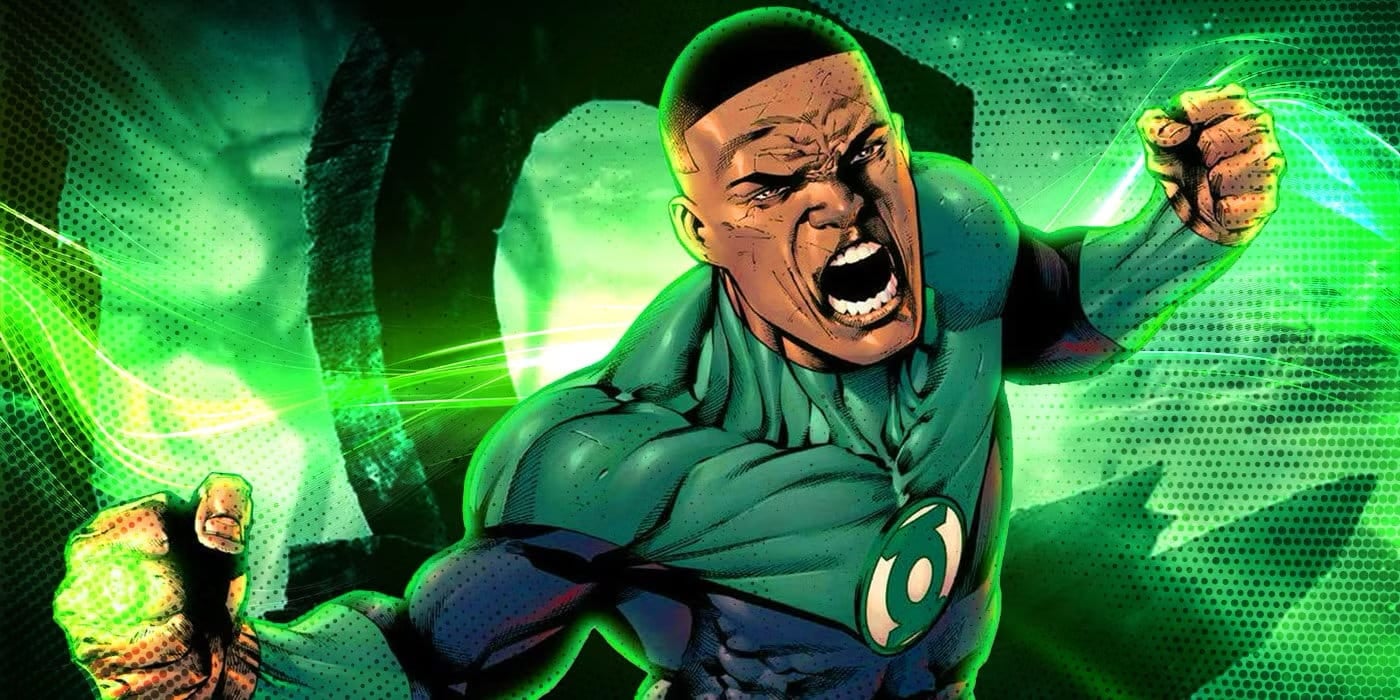
In DC, it’s got to be John Stewart Green Lantern helming the title. And should have been since Justice League animated show. And he should have been the anchor of the first movie.
At Marvel, well, I’m still steamed that they killed off Bill Foster in Civil War.
I absolutely support the goals of this movement (and have similar concerns about representation for women, Asian, and queer characters and creators both at DC and around the industry).
However, I am a bit confused about some of the claims made in this launch statement.
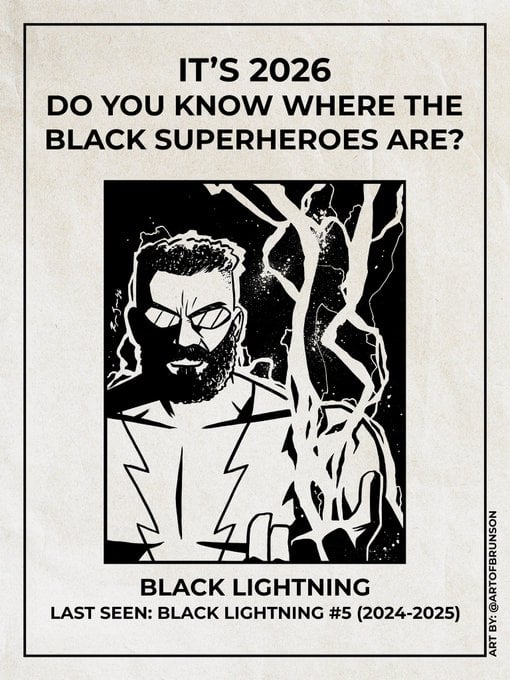
Black Lightning’s mini-series set up the fact that he is a major player in the Justice League, where he has appeared since his series ended. Mr. Terrific: Year One ran in 2025 with an all-black topline creative team. Also, contrary to James Portis III’s claims, DC has had several titles led by black women characters and/or black women creators before, at least once of which was ongoing (e.g., Far Sector, Silencer, Nubia and the Amazons). Recently, Jahnoy Lindsay launched Absolute Green Lantern last year (where Jo Mullein is a co-lead), Stephanie Williams is stepping in between Tom King arcs on Wonder Woman, and Jamal Cambell is returning for another Zatanna series. And, that is just the list of black characters and creators who are top of mind for me, as someone who hasn’t read any DC in the past few months.
I’m not saying any of that representation is “enough” because there is no such thing. And, I would agree that 2026 feels like a step back after a 2025 full of positive examples. However, it seems like DC is putting in regular effort to book black creators and to feature black characters in team titles when they cannot sustain their own ongoings. DC could be doing even more, but with the unclear claims of the launch statement I’m uncertain the current state of affairs warrants a boycott.
As for Black female leads, didn’t Naomi have her own comic (and TV show) a few years ago?
All of the Milestone characters, especially Icon.
Comments are closed.