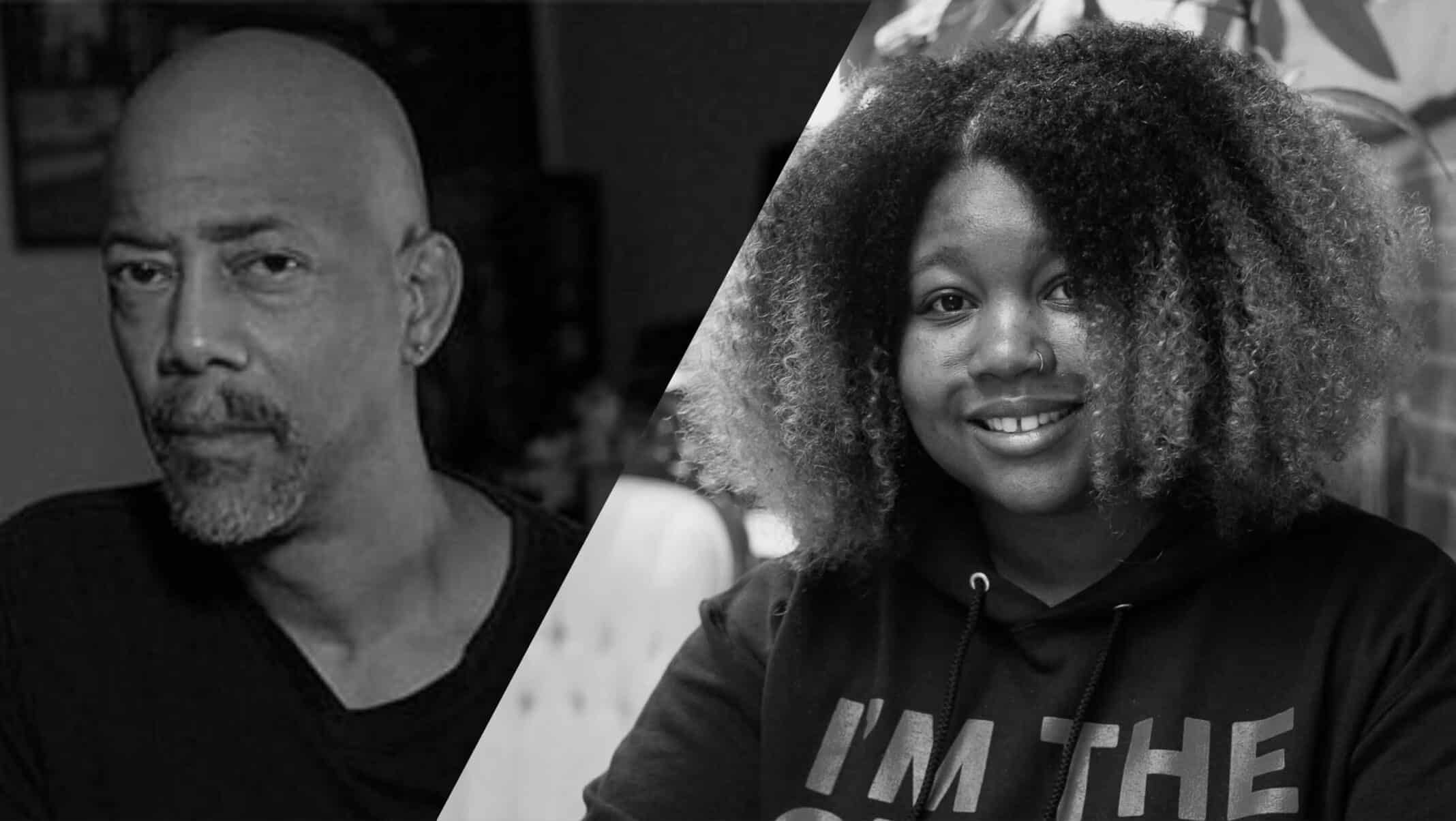

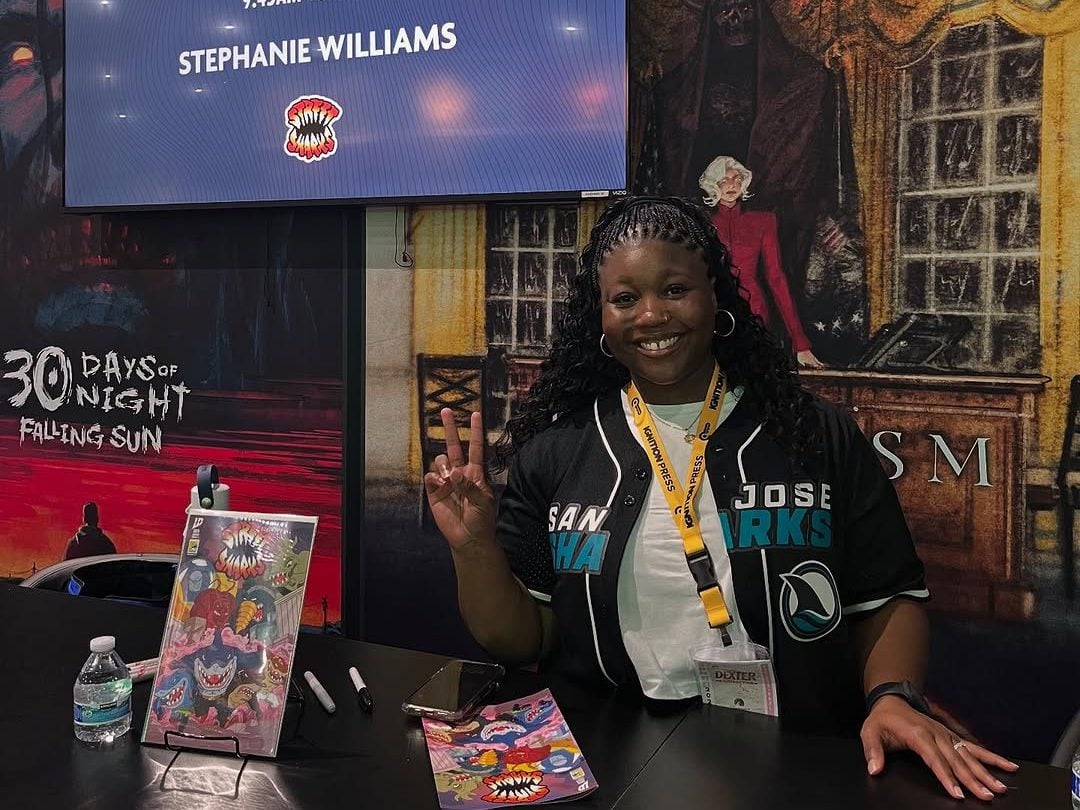
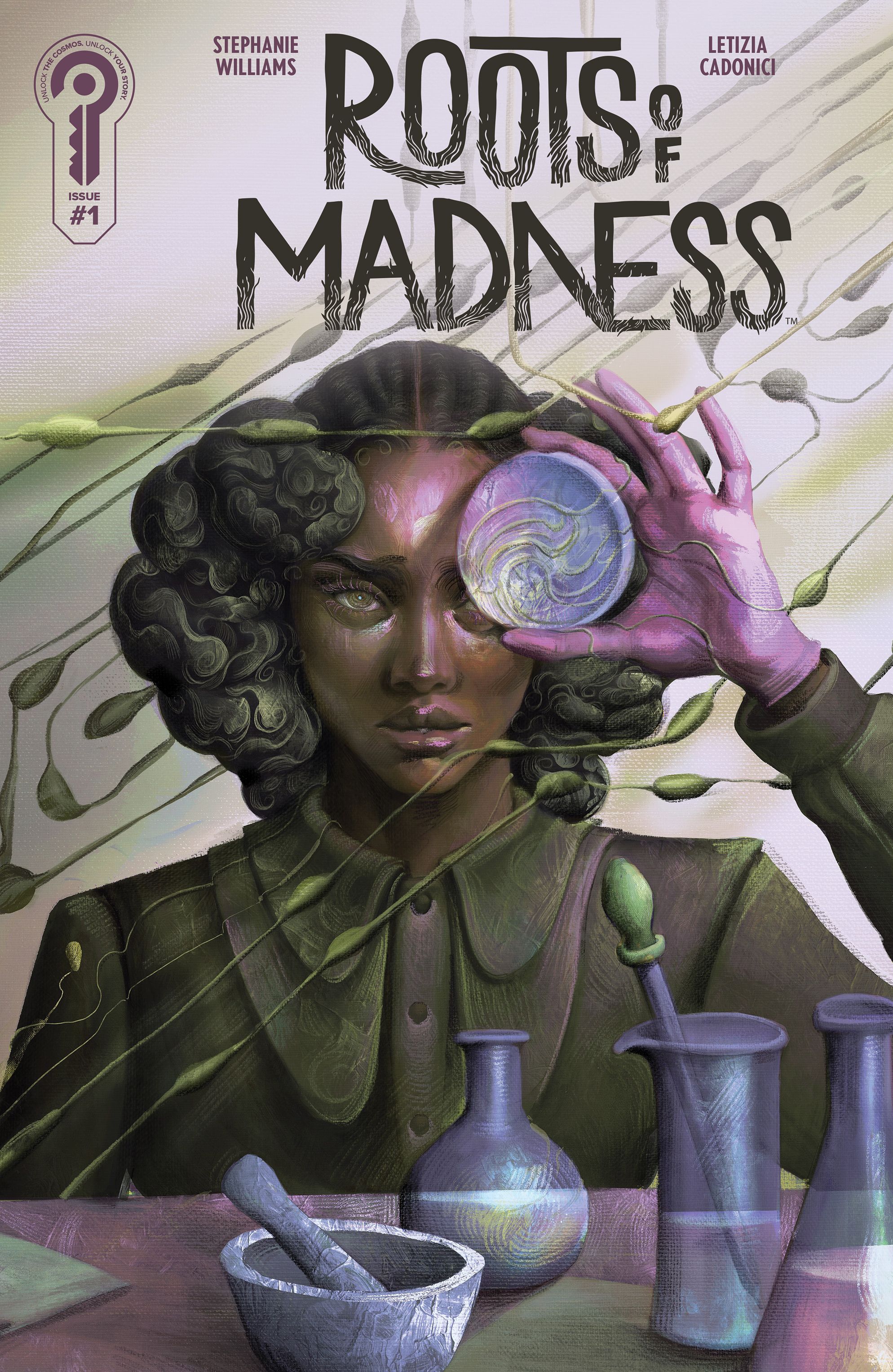
On May 14, 2026, comic book history was made. Stephanie Williams became not only the first Black Person in 30 years to be nominated for Best Writer at the Eisner Awards, but also the first Black Woman EVER to be nominated for Best Writer. Williams, whose work includes Roots of Madness at Ignition Press, Street Sharks with IDW, Temporal with Mad Cave Studios (Which is also up for Best New Series at the Eisners), Nubia and the Amazons at DC Comics, and issues of DC’s current Wonder Woman run, has spent years proving she is one of the strongest voices in comics. That alone should have made this nomination impossible to miss. And yet, many comic book publications, including this one, did not report on this groundbreaking achievement.
It’s an issue that runs deep within the core of comic book journalism and the comic book industry at large. Many, unless they are acting opportunistically, aren’t conscious of the importance of this nomination. It shouldn’t be surprising, as many in the comics ecosystem also ignore or downplay racial issues in comics or nerd culture as a whole, unless it serves an opportunity or narrative. Is it malicious intent? No, but it is something that comic pros, as well as comic journalists, need to discuss for the future of the medium to thrive. We have to be honest about the blind spots shaping what we choose to celebrate in comics journalism. And we need to have a candid discussion about who is expected to yell loud enough for the blind spots to be noticed.
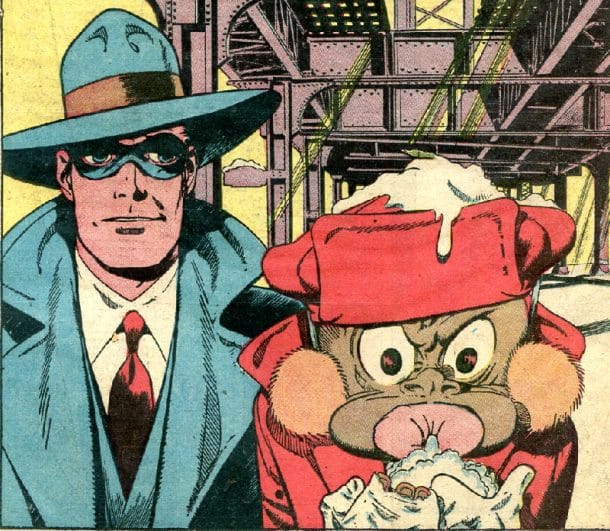
The Eisner Awards began in 1988, named after cartoonist Will Eisner, a figure who was undeniably a trailblazer in comics. Eisner helped show that the medium was more than just the funnies in the back of newspapers. But his legacy, like the history of comics itself, is complicated. Eisner also created one of the most controversial depictions of Black characters in the medium: Ebony White. Ebony White was a big-lipped caricature of Black people who, despite his appearance, was often one of The Spirit’s most trusted allies. He was able to disarm bad guys, outsmart criminals, and provide knowledge that helped save the day. Eisner would later alter Ebony White’s appearance into a less offensive depiction, but the character remains a part of a larger history of how Black people have been depicted, dismissed, and reduced throughout comic book history.
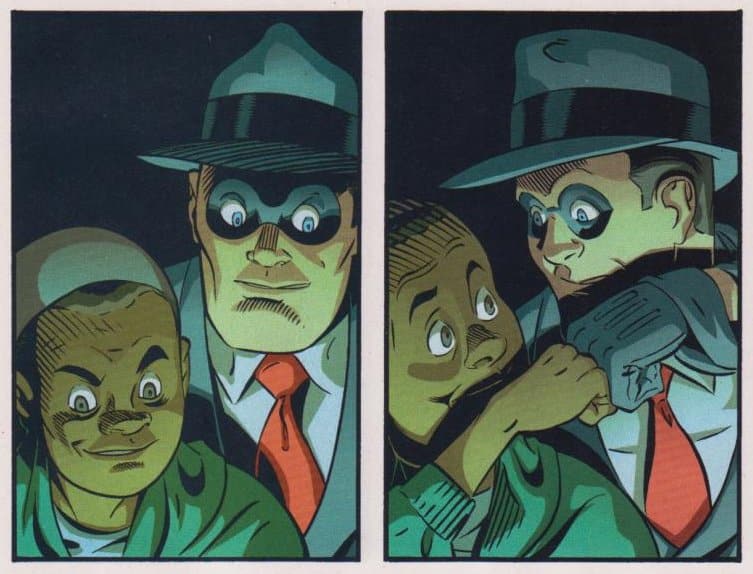
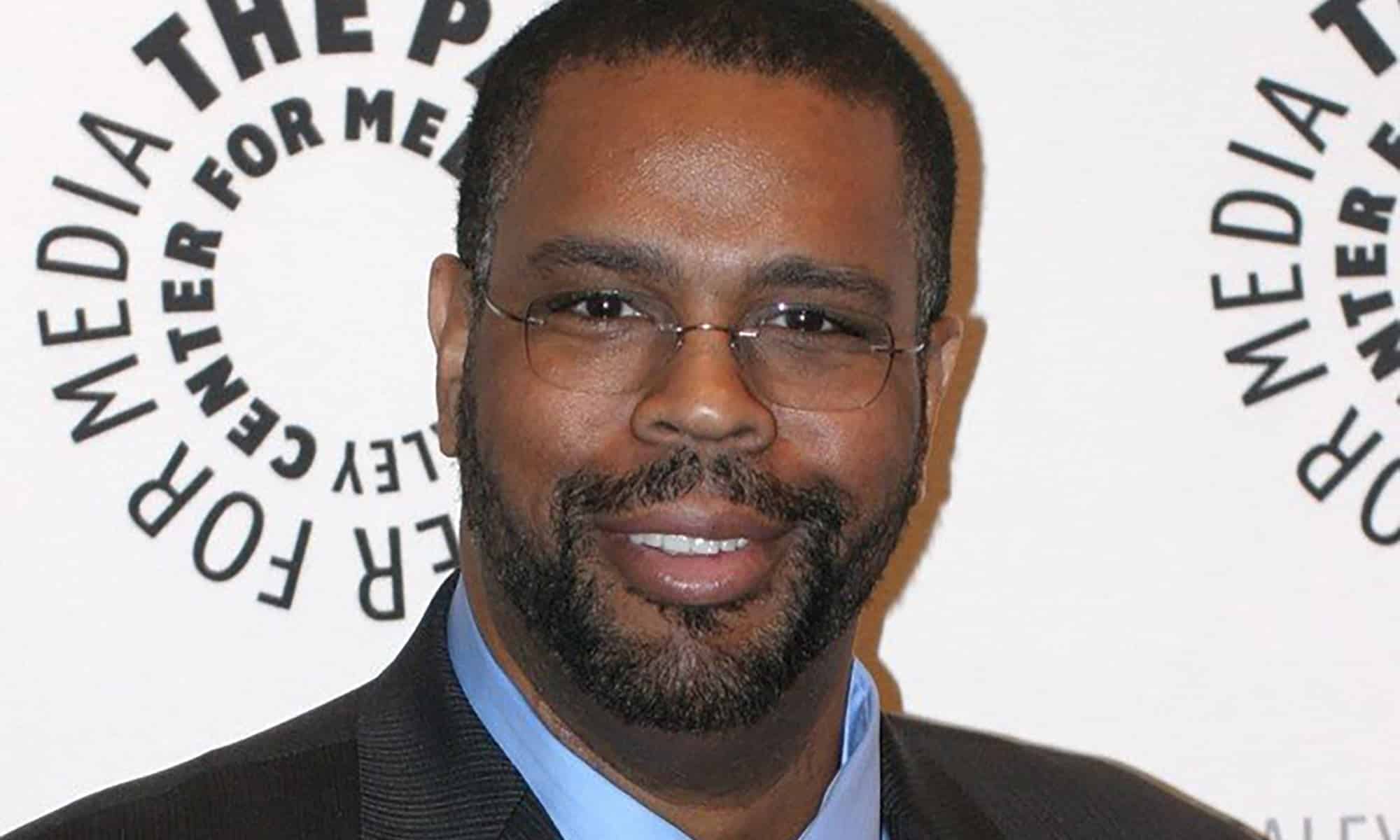
The shadow left by this feels impossible to ignore when you look at the awards ceremony named after Eisner himself. The Eisners are considered the comic book industry’s equivalent to the Oscars. They are supposed to represent one of the highest honors in the medium. Yet in nearly 40 years, only two Black writers have ever been nominated for Best Writer, the late Dwayne McDuffie for his work on Icon, and now Stephanie Williams for her work on Roots of Madness and Temporal. This is emblematic of a deeper issue within comics.
To suggest that no Black writer has deserved, at bare minimum, a nomination for Best Writer is objectively false. And when people say this is not a big deal, what they are revealing is the unconscious bias that has shaped not only comic book fandom, but also comic book journalism over the years. There have been plenty of critically acclaimed Black writers whose work could have, and should have, been considered for nomination. Some of them have even had their work nominated for, or have won, Eisners in other categories. David F. Walker alone has had his work on Bitter Root, The Black Panther Party: A Graphic History, and Big Jim and the White Boy, all nominated for Best New Series, Best Reality-Based Work, and Best Publication for Teens, respectively, with the former two winning. Regine Sawyer, one of this year’s judges for the Eisners, said this when asked for her thoughts:
“In regards to The Best Writer Nomination, in general most Black Writers have not been given the opportunity to be as prolific as Stephanie has been in a single year. That’s something that’s a rarity for us and it’s key to being nominated. Also, the ones that have been just as prolific, like Vita Ayala, but never received any nomination, let alone one for Best Writer, until this year. With that said, there’s a few factors to consider, the opportunities Black Creators receive vs what they don’t receive in the mainstream comic book industry, how companies support those creators and their work by submitting it to awards like the Eisners, how judges regard those works when/if they have the opportunity to read them.”
For most of mainstream American comic book history, especially when it comes to superheroes, stories have treated cisgender, heterosexual white men as the default. They have been the heroes, the audience, the creators worth elevating, and the perspective the industry assumed mattered the most. But the truth is that fans of every race, gender, and sexuality have been here since the beginning. Fans from marginalized communities have always existed; it’s just that many of them have been silenced or disregarded even when they become comic creators themselves, despite working just as hard and telling stories just as impactful as the default voices the industry has been more than happy to celebrate.
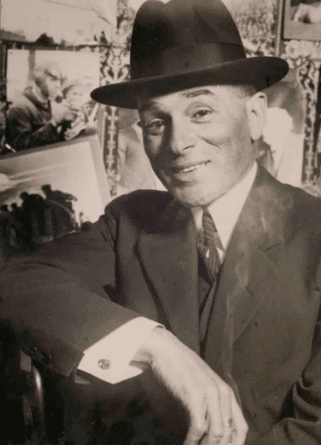
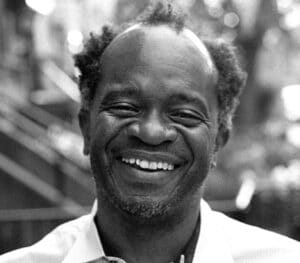
There have been Black creators in this industry from the very early days. Matt Baker comes to mind as an artist who didn’t get the recognition he deserved until after his passing. There’s also George Herriman, the creator of Krazy Kat, whose Black Creole heritage was obscured for much of his life, meaning one of comics’ earliest giants was not fully recognized as part of Black comics history until long after the fact. Joseph Illidge was the first Black editor in DC’s Batman office, but he’s hardly ever recognized for that. There are too many instances of Black writers, artists, and editors who have not been given their due. In many cases, Black creators are given a smaller award, and certainly not recognized on the level they deserve, instead being relegated to a footnote, and an “honor just to be nominated,” rather than legitimized as groundbreaking and worthy of mainstream recognition and reward. A lot of it comes down to the fact that the industry, consciously or not, has not treated their work as being as important as the default voices it was already trained to elevate.

That training does not stop on the creator side of things. Popular culture has taught people that characters such as Superman, Batman, and Spider-Man are the top superheroes worth reading, no matter what. They are not just seen as important because of quality. They are embedded into the very culture at its core. For decades, the fans who saw themselves most represented in these stories were also the ones likely to become writers, editors, critics, journalists, and commentators in the space. So when those same fans become the loudest voices, it’s very easy for them to view comics through an unconsciously biased perspective without ever understanding what they’re doing.
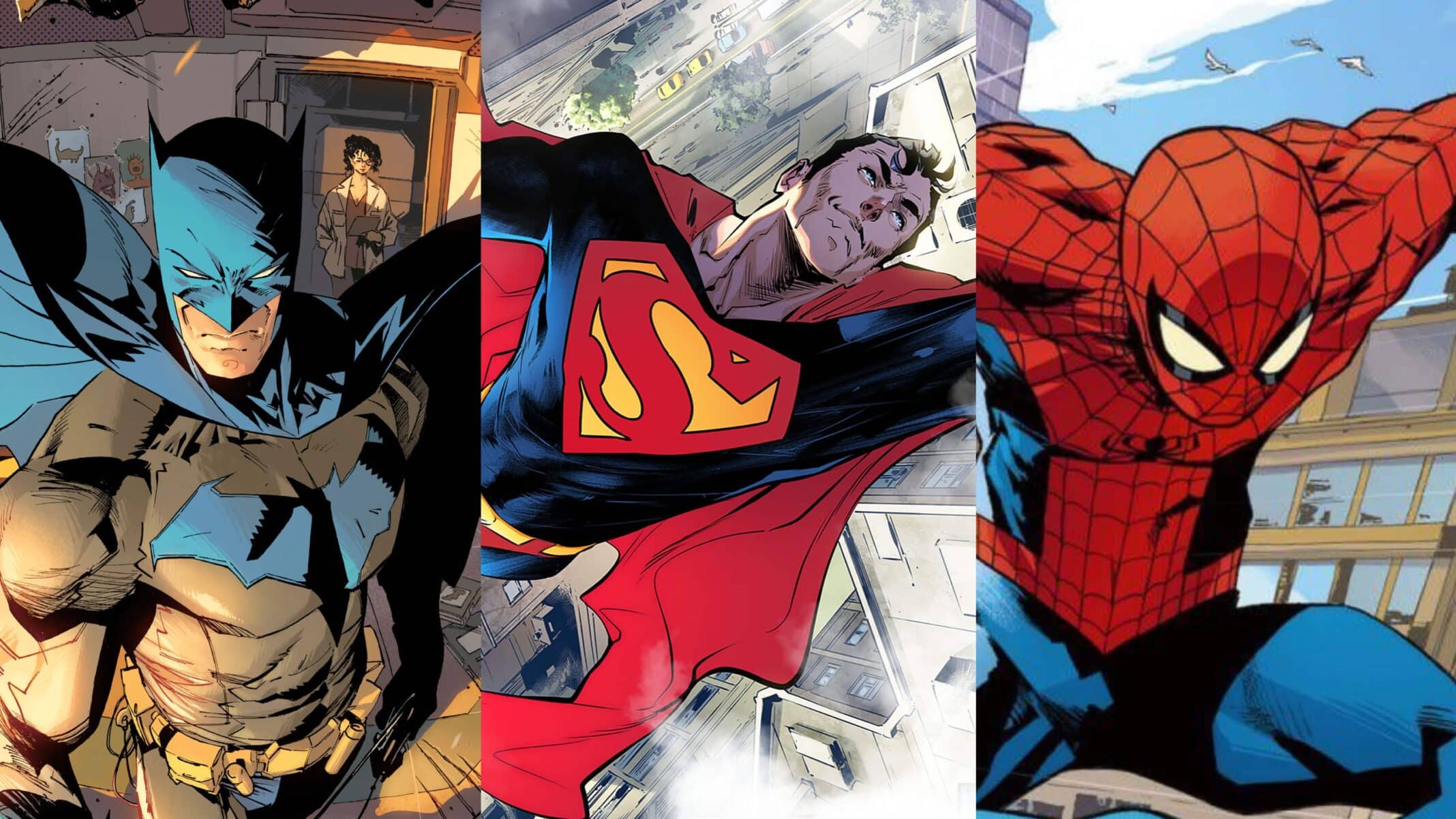
That brings us back to the last few weeks. A Black woman made history by being nominated for Best Writer, but she did it without needing a title at either of the “Big Two” publishers, those being DC and Marvel. She made history with her own intellectual properties, those being Roots of Madness and Temporal, working with publishers who saw her visions, and helped her make them a reality on store shelves. She did not get here by being attached to one of the industry’s usual suspects. She got where she is by doing the work with her own creations.

But because many weren’t focused on that work, they missed history happening right in front of them. They were caught up in the hustle and bustle of DC’s Absolute Universe, the chaotic, some say directionless, state of Marvel, as well as the usual cycle of discourse and nonsense that dominates the comic book zeitgeist. Meanwhile, Stephanie was cooking up a body of work that landed her a groundbreaking nomination.
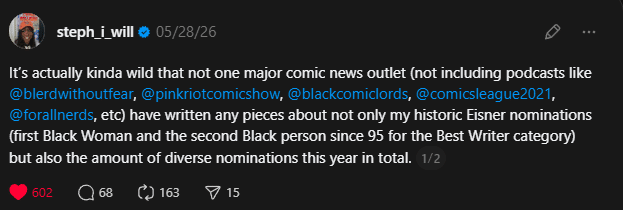
When Stephanie brought it up that many comic publications did not cover her historic nomination, but many podcasters, such as Blerd Without Fear, The Black Comic Lords, The Pink Riot Comic Show, and others had, the issue was clear. This wasn’t some grand conspiracy to undermine her work. It was something a lot more common and sadly, a lot more damning. Unconscious bias on a grand scale.
When the nominations dropped, there were celebrations to be had. Many on social media and on podcasts praised Williams, as well as Rodney Barnes for his book Crownsville, Murewa Ayodele for his work on Storm, the collective who worked on the anthology Noir is the New Black (which included Joseph Illidge, ChrisCross, Greg Burnham, and Quinn McGowan), and others for their nominations alongside their white counterparts. The problem lies with folks doing the bare minimum. Too many comic publications just uploaded the nomination list as if it were just another press release, which, sadly, is something that is a larger conversation when it comes to comic journalism altogether. But in this case, no one was looking for an outlier despite it staring them in the face. Nearly 30 Black creators are nominated or are a part of creative teams that were nominated. No one was looking for BREAKING NEWS. The legendary artist Denys Cowan, one of the co-founders of Milestone Media, the co-creator of Static, and one of the creative forces behind the Static Shock TV show, is being inducted into the Eisner Hall of Fame this year. This is a man who was once told, “We already have a colored artist at Marvel Comics.” That alone should have garnered dedicated coverage. Instead, outside of broader Hall of Fame announcements, one of the most important Black artists in the history of comics has largely been treated like another name on a list.
The issue is compounded even more when you go further back in the timeline. Dr. Sheena Howard, whose book Black Comics: Politics of Race and Representation won the Eisner for Best Scholarly/Academic Work, became the first Black woman to ever win an Eisner. But most of the dedicated recognition around that historic win came from her university, local news, and broader news sources, not comic journalism publications that could have given it the praise it deserved.
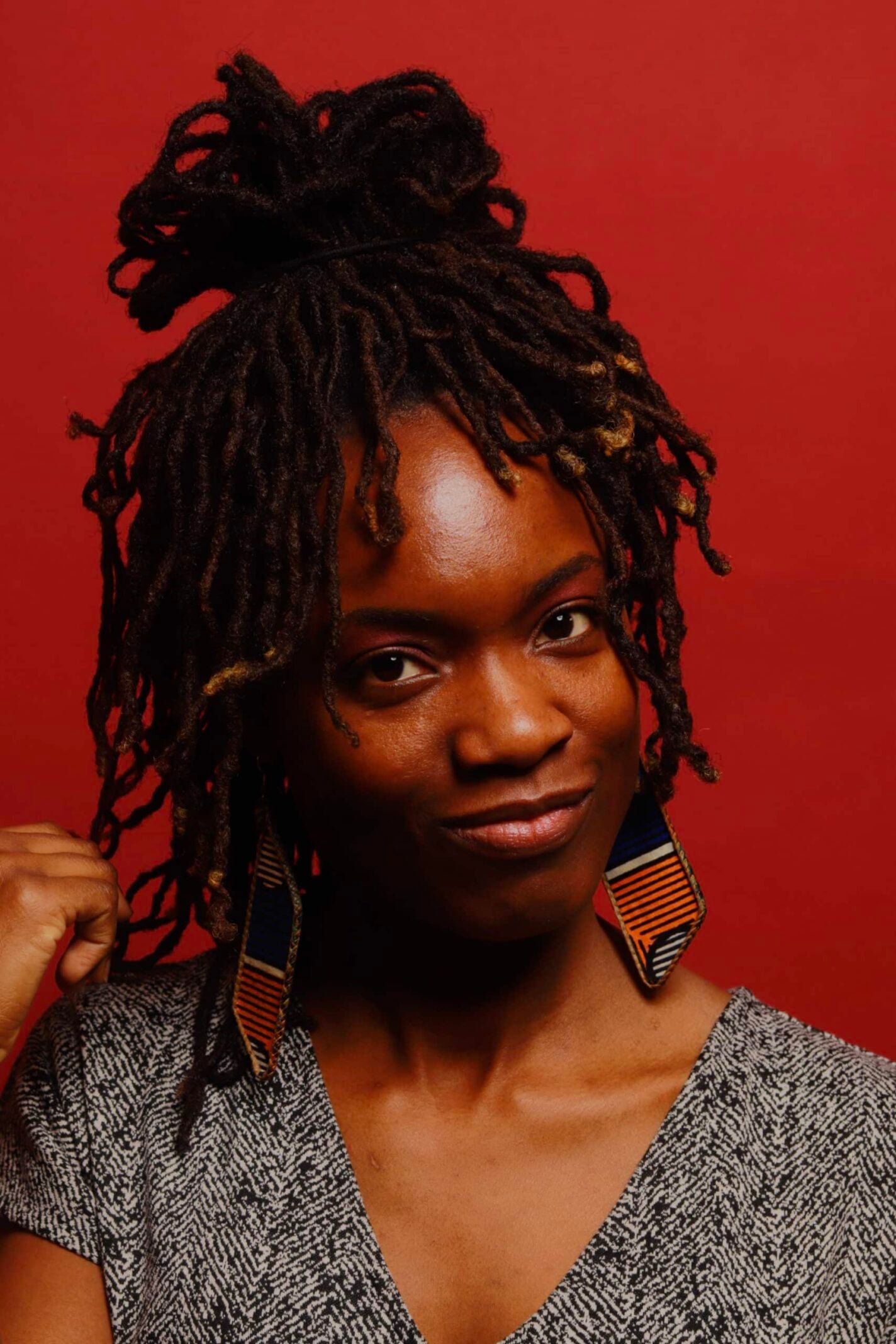
“It’s not rocket science to fairly cover people of color in comics journalism and outlets at large. I don’t know how people can fix their unconscious bias in the way they tend to ignore or overlook Black people and people of color. From my lived experience, my accomplishments are mostly only covered when I reach out to media outlets and pitch. I don’t know what it’s like to be something other than a Black woman, so I don’t know if it’s different for others. When I became the first Black woman to win an Eisner, I had to advocate for myself and pitch to get covered. It’s great that Black journalists or Black outlets cover our experiences, but it locks us into just those outlets, and it’s a barrier white people in comics don’t have to break or contend with, in my opinion. It’s not for me to tell comic journalism publications how to do a better job addressing unconscious bias in their research, reporting, and coverage decisions because that’s labor I shouldn’t have to do. Mainly because the question itself feels unfair and problematic. Sorry if this isn’t the action-oriented answer you wanted but it’s exhausting trying to tell other people how to treat us like everyone else. Black female creators and writers work so hard to accomplish things, and even when they break the barriers and beat the odds, than they have to contend with being ignored for their accomplishments. It’s just exhausting.”
That exhaustion is the point. It should not fall on Black women, Black creators, or just Black journalists to constantly explain why their milestones deserve to be treated as milestones. That work should already be happening in editorial meetings, pitch discussions, and coverage decisions before the person being overlooked has to say anything at all.
Regine Sawyer, who was previously mentioned, saw a similar situation when Women In Comics Collective International, better known as WinC, received the Bob Clampett Humanitarian Award at the Eisners for the work the organization had done. There was some listicle-based and roundup coverage, but little that treated the award as the major comics industry moment that it was. Again, the issue is not that major milestones were never mentioned. The issue is that too often, work done by Black comic creators is acknowledged without being elevated.
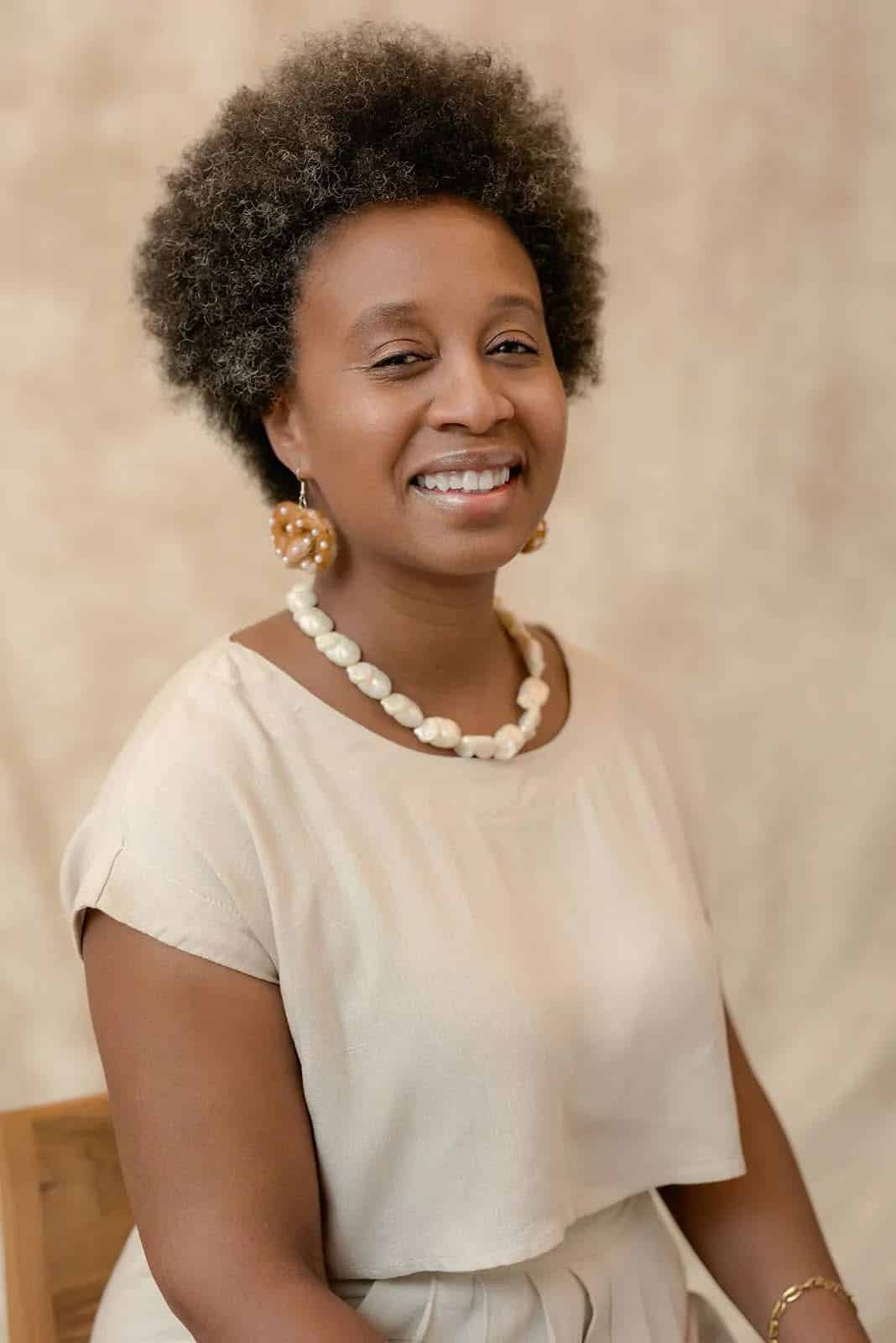
When asked for her thoughts on the lack of coverage and how we can improve, Sawyer said:
“We shouldn’t have to beg for it. We work hard in this industry and make history doing it, we can’t force outlets to have a high regard for that, but we can bring to folks’ attention the implications of what that lack represents in terms of racism, misogyny/noir, homophobia, etc.”
In my case, while I brought up Stephanie Williams’s historic nomination on my podcast, I hadn’t thought to pitch a story to The Beat on the topic, and I take responsibility for that. But at the same time, I am not the only contributor to this website. I also recognize that not one of my colleagues pitched it either, and that is a failure on us as a publication. As a contributor to Comics Beat, I believe we failed Stephanie in that moment. And frankly, I believe that the larger comic journalism industry owes her and Black creators as a whole an apology. It should be loud, it should be prominent so that this failing cannot happen again. It needs to be learned from. More voices of color need to not only be allowed to write for these publications, but need to feel welcome. Many complain about the comic industry as a whole, whether it be comic shops, comic conventions, comic publishing, or even comic journalism, that it is not welcoming to marginalized groups, or at the very least, it is not visibly made to feel welcoming. Our opinions and our interests are seen as controversial or not worth talking about. Stephanie Williams said it best in her interview with Comic Frontier recently about her nomination not being covered. When asked how comic journalism sites can improve with similar coverage in the future, she said:
“The simple answer is to hire and pay Black writers and other underrepresented voices, and not just for Black History Month features. Build actual relationships with creators across the industry so milestones aren’t a surprise you missed. Treat award nominations as news, not only as a hook for a review. And maybe an even simpler one — follow the people already doing the work. The podcasts and smaller outlets that covered this aren’t hard to find. They were right there. If a major site genuinely doesn’t know what’s significant, the fix is partly humility. Amplify, credit, and pay the folks who caught what you didn’t. None of this is charity. A more diverse, more curious newsroom just makes for better, more interesting coverage of the whole medium. And I feel like this applies beyond comics.”
That is the first step in improving this space. That is how we address this in the future. There are more conversations to be had, more barriers to be knocked down, and more uncomfortable truths this industry still has to sit with. But until we address the unconscious bias many of us carry when it comes to marginalized fans, characters, journalists, and even creators, we are not going to improve.
Because this cannot just be a moment where everyone says “we have to do better” and then moves on until the next historic first gets missed. Stephanie Williams should not have had to point this out to the community at large. Black podcasters and smaller Black-led outlets should not have had to be the only ones doing the work major comic journalism sites failed to do. And Black creators should not have to wait another thirty years for the industry to notice what should have been obvious.
The comic industry loves to talk about legacy. It loves to celebrate history when it is convenient, marketable, and easy to package. But if that history only matters when it centers the same default voices it always has, then we aren’t preserving the legacy of comics. We are falsifying it. Stephanie Williams made history. The failure was not hers. The failure was that too many of us were not paying attention.






Well said and we’ll written. Wow, this really hit home.
Comments are closed.