
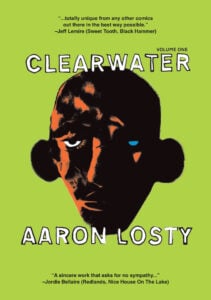
 Clearwater Vol. 1
Writer/Illustrator: Aaron Losty
Illustrator: Artyom Trakhanov
Publisher: Battered Brush / CA$20
Jan 2026
This is how Mousey became John. The first collection of Aaron Losty’s comic, Clearwater, is about growing up in the Dublin suburb Finglas. A crime drama about coming up poor, and Mousey the runt of the social circle. He got his name because all he does is squeak when you push him around. There’s not much to do in Finglas, not much to do it with; cruelty is easy to find where everything else is scarce, and softness in that environment becomes a target.
Calling this a crime book is not really fair. Or Losty’s tipping his hand to John’s fate? At any rate, Mousey and his peers are kids. They do terrible shit to each other just to feel something, yes, but they aren’t criminals. At the same time, John’s got that same blend of sensitivity, ambition, and steeliness that the gangster stories that dip into childhood start out with. Goodfellas and Dead Presidents both show this same trajectory in its early stages. John has yet to grow up to be La Haine, currently a little more Ratcatcher. This is how Mousey became John. Crime like the miniseries The Corner is crime. But the parent with the habit, that’s the neighbors.
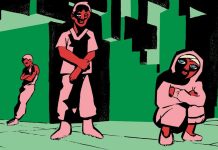
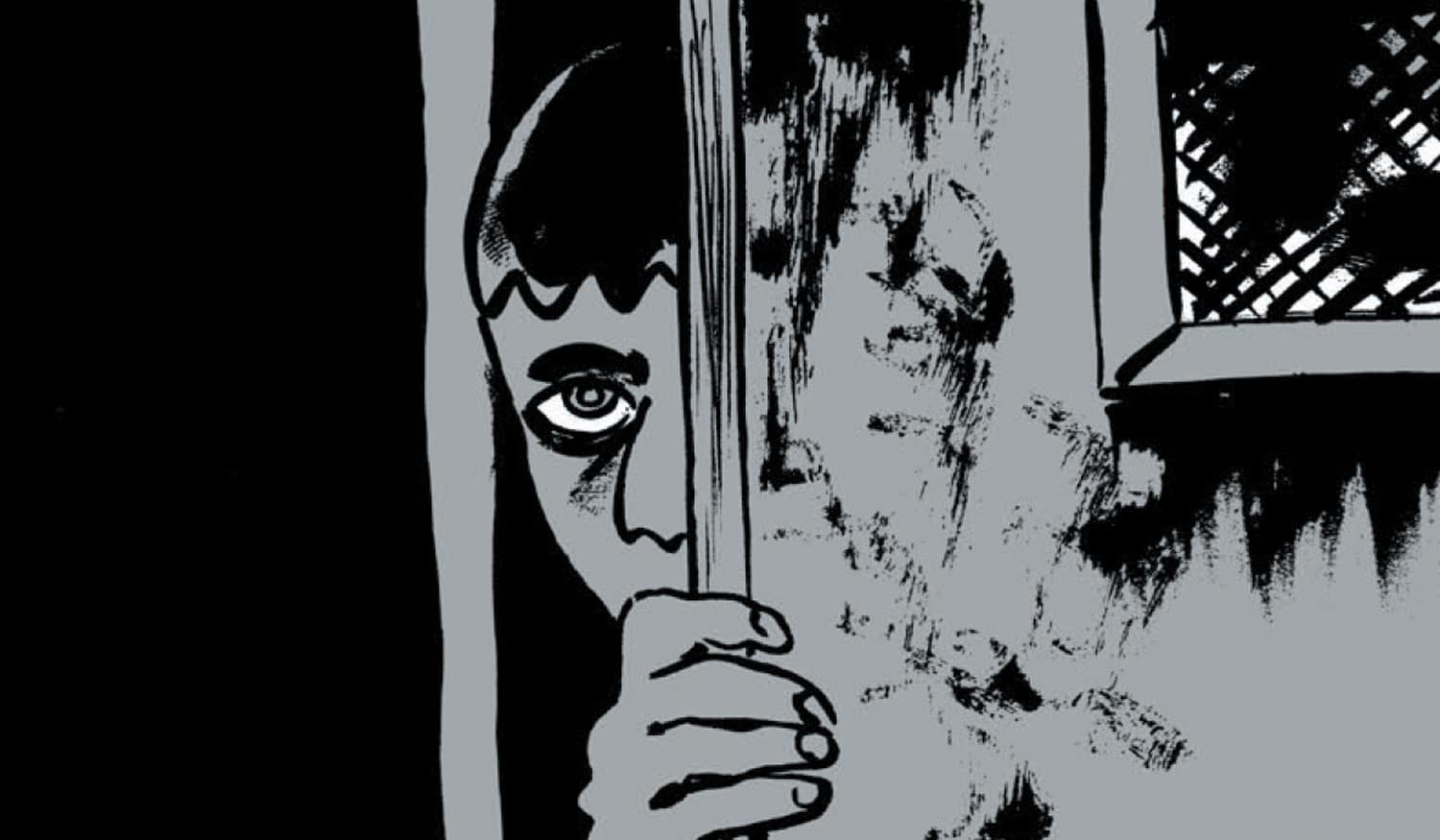
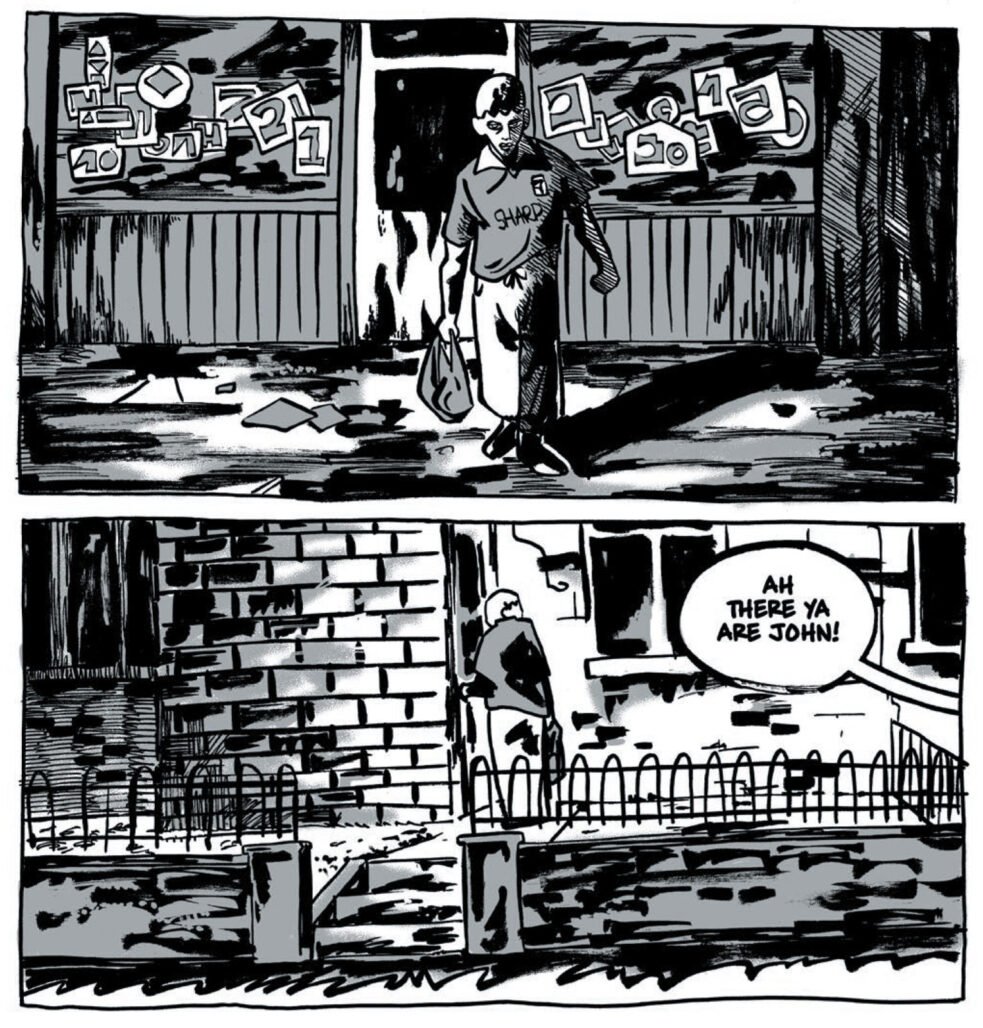
A story about hard times, stylized and realistic in its telling. The domestic drama of the story, everyday people in a setting the opposite of fantastic, connects through Losty’s art style to a broader cultural story. Clearwater‘s aesthetic speaks to folk tales, woodblock prints, and illustration functioning as a craft (instead of the leisurely pursuit of the arts, a whole other essay, one that Clearwater‘s existence as a passion project makes even more complicated). I think the art does something comics are particularly well-suited for: achieving a sense of realism without having to be photorealistic.
The places feel very concrete, the characters loose and gestural. Which suits the story, too, kids are cartoonish and dramatic and so why not their depictions? And Finglas is solid, static. Yet Losty defies the restrictions of its realism by extending the same emotional prestige of “what is real” to the inner lives of its characters.
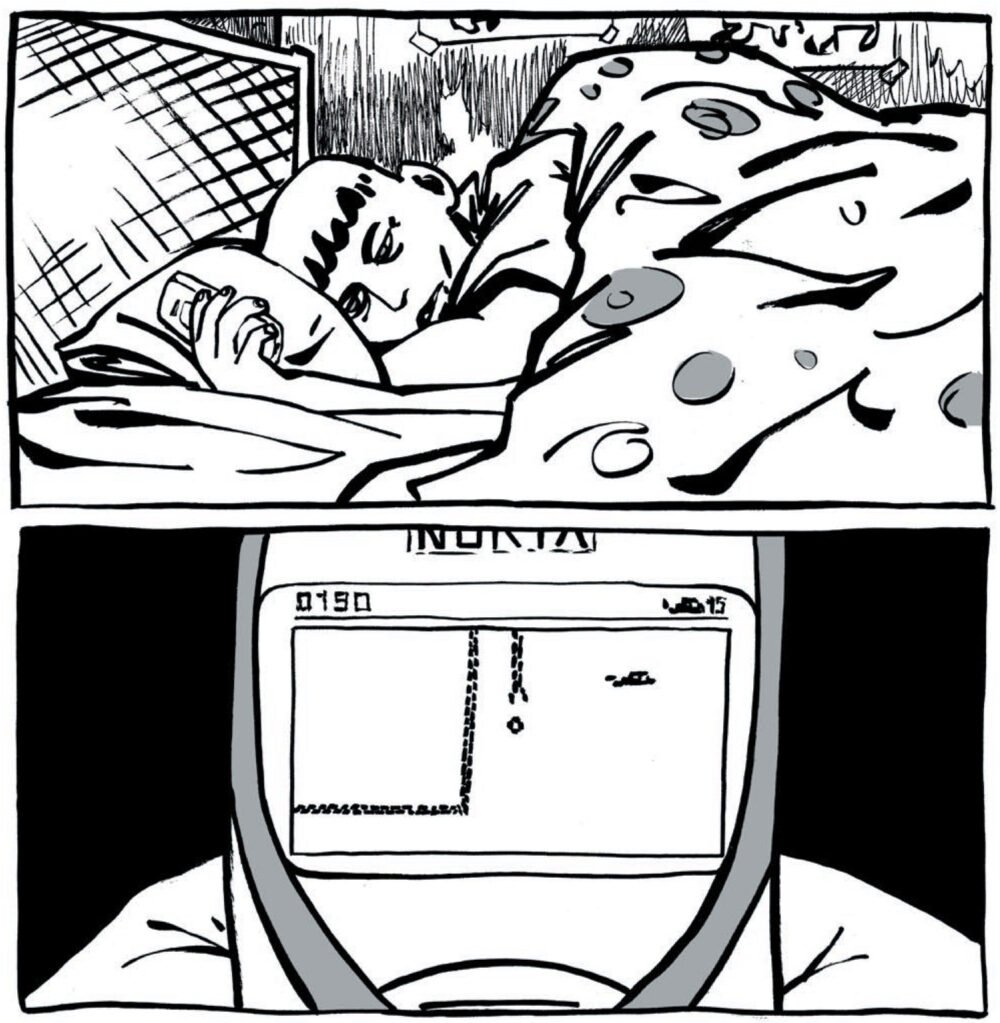
 Losty’s art reminds me, aesthetics and story, of the “hip and endearing” indie comics scene here in the US in the late 90s/early 00s. Pushing for comics to be seen as something more. Clearwater is set during that Highwater Books time period, but yeah it’s a story about Finglas, not Somerville. Kids are kids, swapping trading cards and listening to Tupac CDs their parents don’t know they own. Mom has her eye out for the safety of the kid next door but has nothing to say about the smouldering mass of a father that haunts the kitchen. Growing up is hard, a universal truth. But the details, a shiny Renaldo instead of Riolu, are irreplaceable.
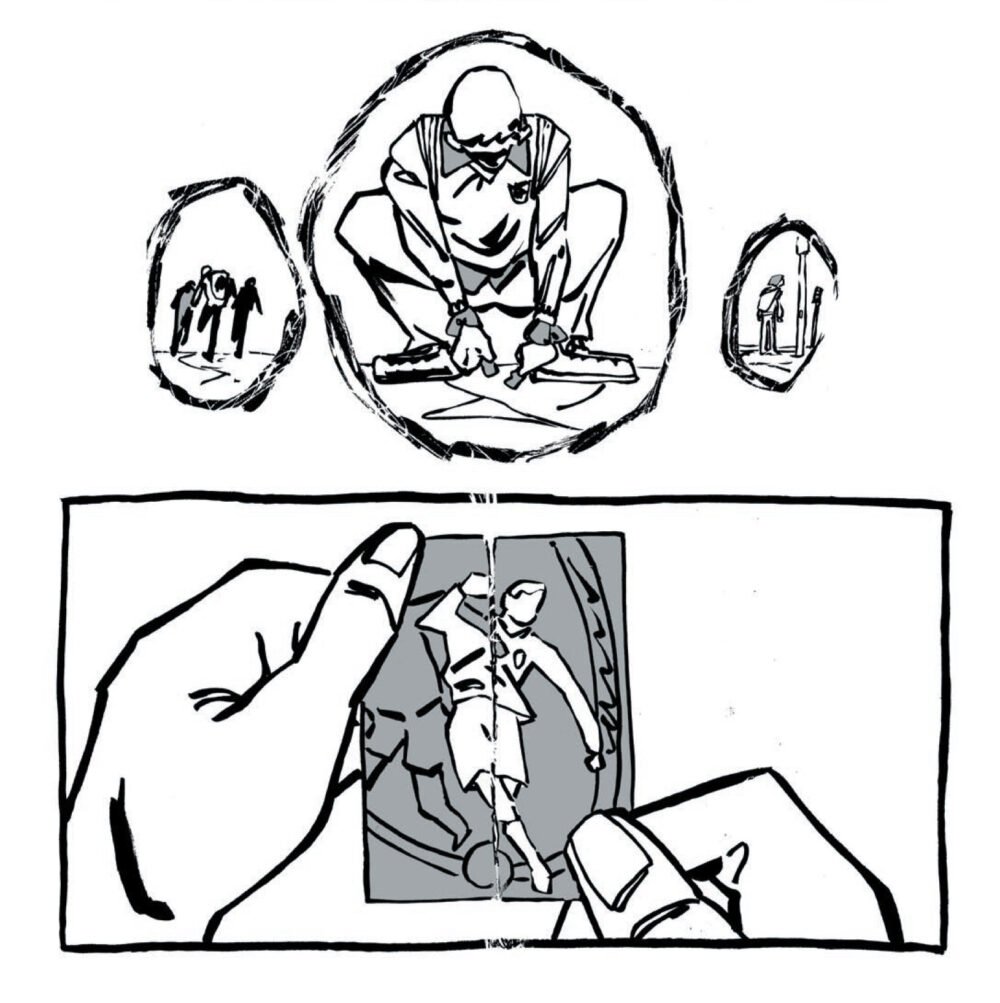
Realness is the resentment that the other kids have for Mousey pulling a shiny card. A bigger fish, the kind of lad who mugs you and then offers you a cigarette after because he crushed your pack, swims by. Him ripping Mousey’s card in half because he reads him for being the most timid in the bunch is this passing bully of a greater magnitude getting it wrong. The worst part isn’t him destroying John’s best pull, it’s buying some cards because your friends are into it and it seems cool, and they dislike you for it. Ripping Renaldo in half gets John pissed, probably, but he’s used to it.
That little moment after everyone else has left, where he holds the card back together. Another success from Losty’s stylized cartoonist approach: color (well, grey) communicates the card catching the light. The style of illustration is raw and brut and at times austere, but stuff like the monochrome accents are a clear and overt sign of his coming back to the panels, and adding to the story by adding to the art. Shit happens. Even with the shred down the center, the effect on the card still looks cool. A little sparkle of the hardness beneath, John’s quiet lack of response is a sign that he can endure.
Another genuine moment in Clearwater is the scene listening to 50 Cent together. Sharing music between friends is a crucial aspect of music culture. Music is always isolating, even when you’re sharing headphones, what you hear is still private. After things fall apart, John finds catharsis in CDs. What he hears, and what it reminds him of, isn’t something we get to know. But music is also a social thing, what have you heard, who do you listen to? American rap music in an Irish suburb was that social bridge, connecting the sentiment of coming from nothing and dreaming of getting out, from the other side of the world to the people surrounding you who feel the same way.
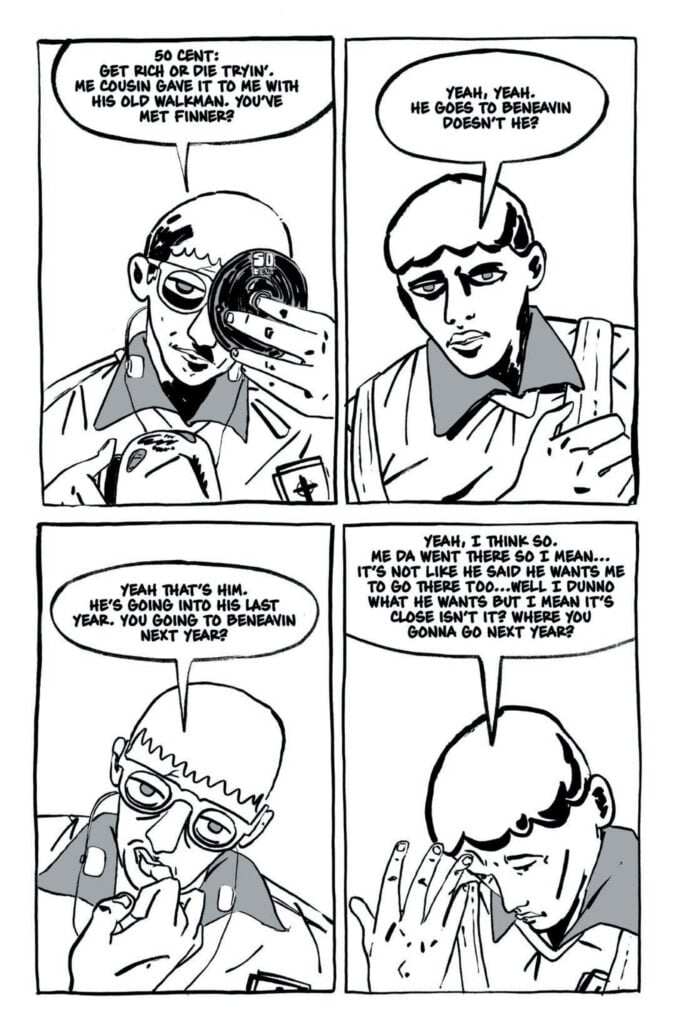
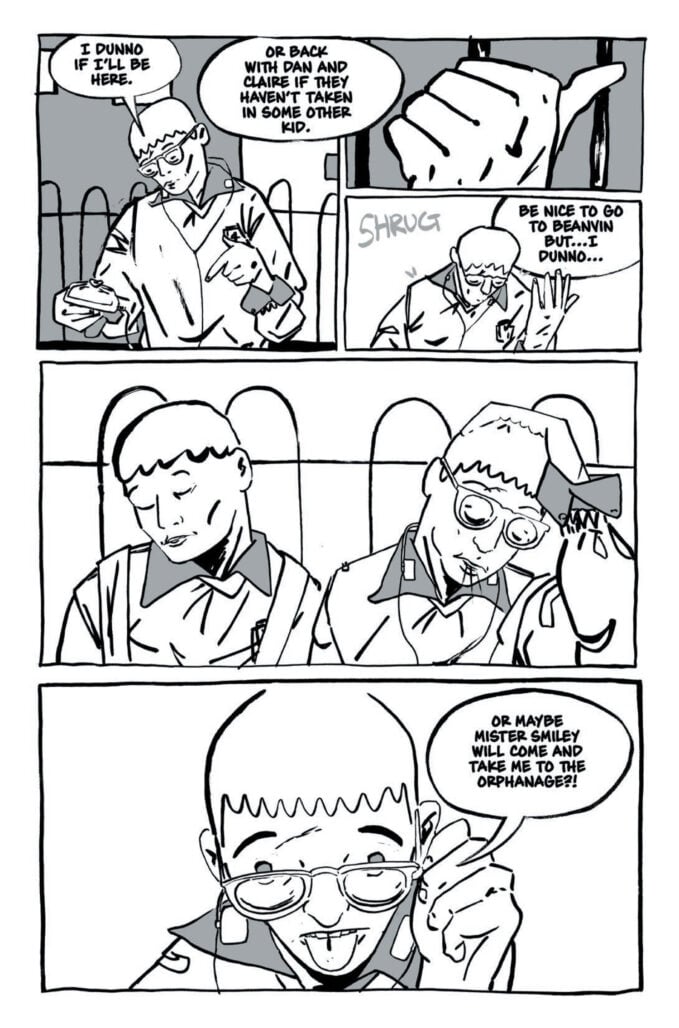 Cards and CDs and youth culture being tied to collecting things generates stress when you’re living off of limited resources. The threshold for wealth in Finglas is pretty low. A hand-me-down Walkman and some 90s American hip-hop is a treasure trove of unfathomable riches- for anyone, really, but especially for kids who weren’t in America in the 90s. That’s another connotative layer: these kids aren’t taking the bus in to the Tower Records in the city every weekend to scoop up imports. Brick cell phones are the high tech, the window to escape. Any comic that romanticizes Snake is going to get a positive review from me (see All Talk). Check out this photo of Finner’s girlfriend’s boobs.
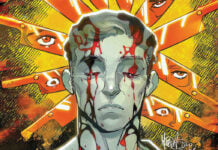
Clearwater‘s like Rodney R Rodney where its webcomic source makes for a more novel physical reading experience. RRR used a structured episodic format to deliver a slow burn experience in omnibus format. The green yuri is also a digital-to-print series where the structure makes for a novel read, now that I’m thinking about it. And Clearwater too uses its digital format in crafting its stories. But Losty writes chapter vignettes that finish on the story’s time, not because of page count or digital publishing structures. The moments masquerade as slices of life, but in truth are all Mousey crossing an inner threshold. Artyom Trakhanov‘s chapter capper illustrations are a marvelous and thoughtful touch. A sigil, a flash, one that makes you feel the chapter’s central transcendental gut-punch again.
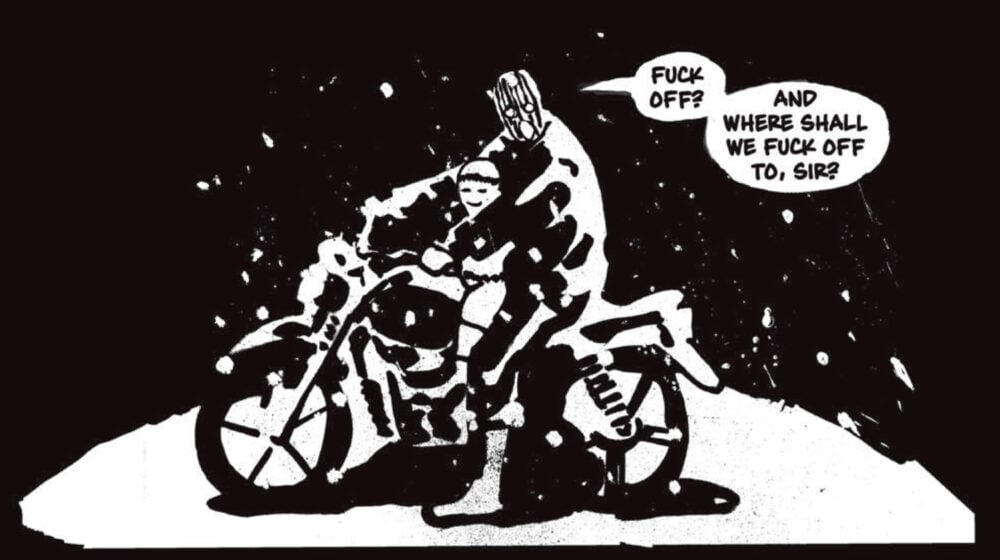
Losty’s distinct and unpredictably weighted linework drawing each page stays consistent throughout the years of doing Clearwater installments. But I do feel like, as the series goes on and Mousey matures as a person, Losty improves as a visual communicator. Clearwater blossoms with shadows as the series grows bleaker. First as more black in the drawing, giving a new life to the negative space on the page without cluttering up Losty’s spare illustrative style. The use of spot grey also moves from accenting the art to establishing atmosphere. Clearwater compounds its effects, and as the thresholds increase their intensity, the art matches its pace. A book austere and robust.
Clearwater Vol. 1 is available from Battered Brush and wherever finer comics and books are sold.