
UPDATED with D&Q’s statement below.
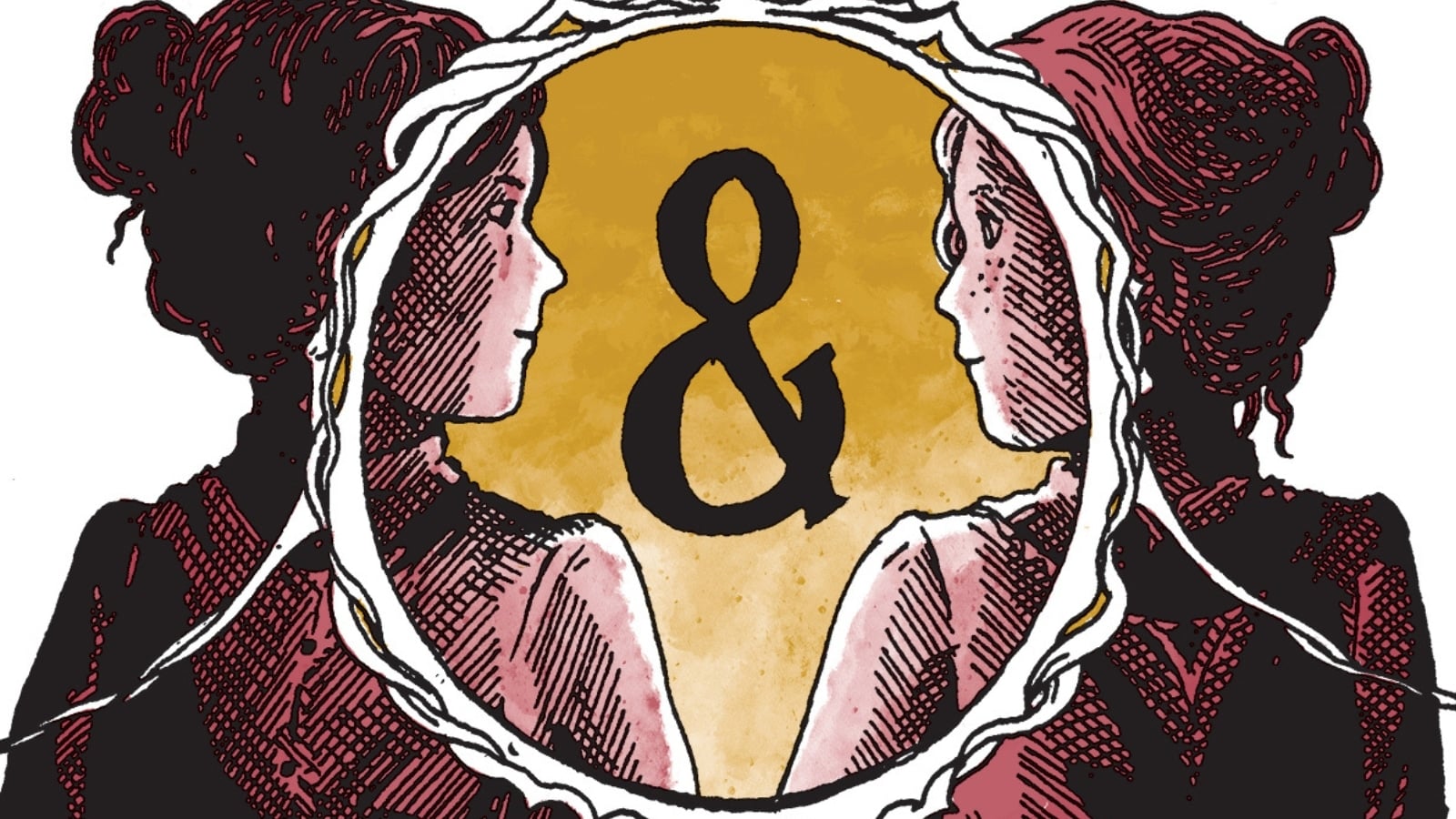
On June 15, Vermont Cartoonist Laureate Tillie Walden’s adult graphic novel debut, Charity & Sylvia, was published by Drawn & Quarterly. The book chronicles the lives of Charity Bryant and Sylvia Drake, a lesbian couple who openly lived and loved each other in a small town in Vermont in the early 19th century. Although it’s the first graphic novel about the pair, Walden’s work follows in the wake of scholar Rachel Hope Cleves, who published a biography also titled Charity & Sylvia through Oxford University Press in 2014.
On June 29, Cleves posted an open letter on social media regarding Walden’s book, which she tells The Beat she would like to see Drawn & Quarterly option for adaptation and co-credit her, with appropriate compensation.
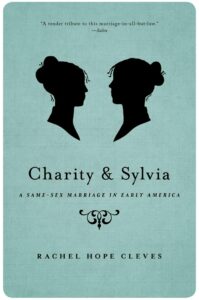
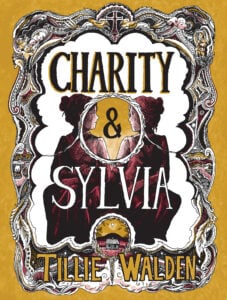
In her letter, Cleves writes, “Charity and Sylvia’s story has been so deeply meaningful to so many people—their story has, without exaggeration, saved lives—that I’ve tried to be happy that Walden’s book is making their story more widely known, even if she chose to take my title and my cover design as well as my narrative and my research with only a single sentence of acknowledgement at the end of her book in her notes section. Walden’s illustrations and storytelling are wonderful, as I told her when she reached out to me during the writing process. It would take nothing away from her hard work to be honest about how it is built on my hard work.”
She goes onto say that Walden has repeatedly said in interviews that she based her graphic novel on extensive archival research “without acknowledging that her book is, in fact, based on my book. … She has adapted my book without credit or compensation, and claimed my research for her own. I don’t doubt that Walden spent time looking at letters at the Henry Sheldon Museum, but the story that Walden tells is not to be found there. It is a story that I pieced together from years of visits to at least twenty different archives and locations across the United States, not only in Vermont but in Massachusetts, New York, Illinois, and Washington State, as well.”
Cleves cites several stories presented in Walden’s graphic novel that she narrativized from “countless fragments” and says, “It saddens me that Walden’s media blitz will make my book harder for readers to find, not easier, and diminish its continuing power to have the enormously positive impact it has had to this point, which is why I feel the need to correct the record.”
In a Zoom call with The Beat on Tuesday morning, Cleves says Walden emailed her in August 2024 to say that the Vermont Department of Humanities had commissioned her to make a graphic novel about Charity and Sylvia’s relationship. According to Cleves, Walden wrote that she was “a huge fan” of Cleves’s book. Cleves was leaving for a research trip and offered to connect on Zoom when she returned, but says she never heard back. She then received a draft of Walden’s graphic novel in the spring of 2025.
“I opened it up and started looking at it. I saw that Tillie’s art was beautiful and responded and said so, then put it down,” Cleves explains. “The email came at a time when I was doing so much work and had no time [to read the full draft].” When Walden’s graphic novel was released earlier this month, Cleves said, “They sent me a copy and I read it and I saw the cover and the title and all the press. I was getting constant emails and texts from people who know my work asking, ‘Are you upset about this?’ Endless media about it doesn’t acknowledge that it’s an adaptation.”
Prior to reading the book, Cleves spoke with New York Times reporter Robert Ito, who wrote about Walden’s graphic novel ahead of its release. In the article, Cleves is quoted as saying, “Religion was so central to Charity and Sylvia’s lives, and that’s deeply unrelatable for a lot of modern readers. I’m impressed by the fact that Tillie is writing a popular book to speak to a broad audience, but still treated the religious themes in their story with such integrity.” Ito’s article notes Cleves’s biography as a major source in Walden’s research, but Walden is inconsistent about crediting Cleves in all of the graphic novel’s publicity, sometimes claiming to have had to piece the story together exclusively through primary sources.
In the graphic novel itself, Walden mentions Cleves’s biography on the second page of the afterword, which is a highly condensed version of the supplementary, multi-page bibliography and process website Walden created. In the graphic novel’s afterword, Walden writes,
I was able to weave these short remembrances together into a story with the added context of over 900 letters (nearly all sent to them) and the formidable, endlessly informative history on their lives written by Rachel Hope Cleves titled Charity and Sylvia and published in 2014. Without these different angles from which to see them, my job would have been much harder. Their own papers rarely mentioned their childhoods, but because of the work of historian Hope Cleves and her research into that, I was able to describe their youth with a satisfying amount of detail.
This is the only time Cleves is mentioned in the graphic novel, but her name appears a total of 50 times on Walden’s website; in the notes for “Part Four,” Walden refers to Cleves as “our Holy Mother of knowledge.” Cleves was sent a link to the website after she posted her open letter, and says that it indicates to her that Walden’s book is a clear adaptation of hers.
“Clearly the process behind Tillie’s book is that she read my book really closely and started making a draft based on it and then went to the archive to look at stuff. If you haven’t done historical research, it’s hard to explain the difference between those things, but my book is a narrative. It’s not just facts,” Cleves explains. “It’s a narrative constructed out of eight years of research in which I did the puzzle work of figuring out how to put together all the pieces and I invented and then wrote a story. It’s awesome that she went to the archive, but it does not mean that her book is based on archival research.
“Drawn & Quarterly should have optioned my book and titled Tillie’s in a way that indicated it is an adaptation,” she continues. “They should have put me front and center. Not knocking her incredible work, but they should have openly acknowledged that it’s a graphic novel adapted from my book. … When you go to Tillie’s website where she lays out the process, it’s clear that it’s an adaptation, and that is at odds with Drawn & Quarterly’s marketing and packaging of the book. There’s no acknowledgment of me, my title, my cover, my story, or my research except for one sentence buried in the notes. Everything else is online.”
Cleves says her initial inclination was “to be at peace,” but then she heard from a colleague about Walden’s interview on the CBC podcast Q with Tom Power, during which Walden says that during her archival research at the Henry Sheldon Museum,
What I found was journals, poetry, and about 900 letters, but most were written to them and their responses are lost to time. So I read a lot of partial conversations. But their journals and their poetry is what showed me who they are, and no one has actually ever sat down and completely read all of it. I think I’ve gotten closer than anyone. I didn’t get through all 900 letters, but I think I made it to like the six hundreds.
Cleves says Walden’s claim that she has read more of these documents than anyone else is untrue. “I absolutely read every single word of every scrap of evidence not only in the Bryant-Drake papers at the Henry Sheldon Museum but in many additional archival finds at that collection including the Huldah Bell Ledgers, the Jonathan Hagar Family Papers, the James Family Diaries, the Drake Papers, the Zimri Lawrence Papers, the Shaw-Drake Papers, and the records of the Weybridge First Ecclesiastical Society papers,” she writes in a follow-up email after our Zoom call.
“I also transcribed every single word of Sylvia Drake’s diaries, which is how I decoded the story (there was already a transcription of the diaries made during the 1930s, but I transcribed them de novo as part of the research process and coded each entry for metadata). I also did research at over 20 other archives and historical societies and spoke to relatives and retrieved privately held documents and knocked on doors and went tromping through woods and woe-begotten industrial landscapes. Eight years of research and writing,” Cleves writes.
After hearing about the Q interview, Cleves decided to write and post her open letter on social media.
“I’m really glad there’s a graphic novel about Charity and Sylvia now,” Cleves says during our Zoom call. “That’s so beautiful. I’m just not glad about the fact that it comes through exploiting my work.”
Neither Drawn & Quarterly nor Walden had responded to emails from The Beat at press time.
Update: July 1, 2026
On Wednesday, Drawn & Quarterly Publisher Peggy Burns sent the following statement to The Beat via e-mail:
Drawn & Quarterly stands by Tillie Walden’s research for her graphic novel, Charity and Sylvia, and asks people to refer to her afterword where she explains how the book came to be, and cites Charity and Sylvia: A Same Sex Marriage in Early America (2014, Oxford University Press) as “the formidable, endlessly informative history on their lives by Rachel Hope Cleves” and explains how indebted she is to Cleves’s research.
Also in the afterword, Tillie explains that to have a handwritten bibliography in the book as robust and personalized as Tillie wanted it to be, would have made the book too unwieldy given the length of her citations to source materials and history. Tillie explains that to be as transparent as possible, she created an online archive at www.charityandsylvia.com to cite all of her source materials and also to explain where she deviates from all source materials. This archive is more than a standard bibliography as Tillie explains in great detail her research, artistic choices, citations, and source materials, both visual and written, in a five-part bibliography. In addition to citing the work of Cleves close to 50 times, many times in great detail, she includes an “about” page listing Cleves among the people and organizations that made the book possible directly or indirectly.
As well, Walden has done numerous interviews where the work of Cleves is cited either by Walden or the journalist. In a recent radio interview, Cleves is cited on air as the author of the “seminal” book. Tillie goes on how her book came to be, her research, how she weaved American history with the story and the overall creative process. Tillie goes on to explain just how meaningful the story is to her, as a queer woman who currently lives with her wife in Vermont during a pivotal moment in American history.
D+Q is closed for Canada Day. We have no further comment.
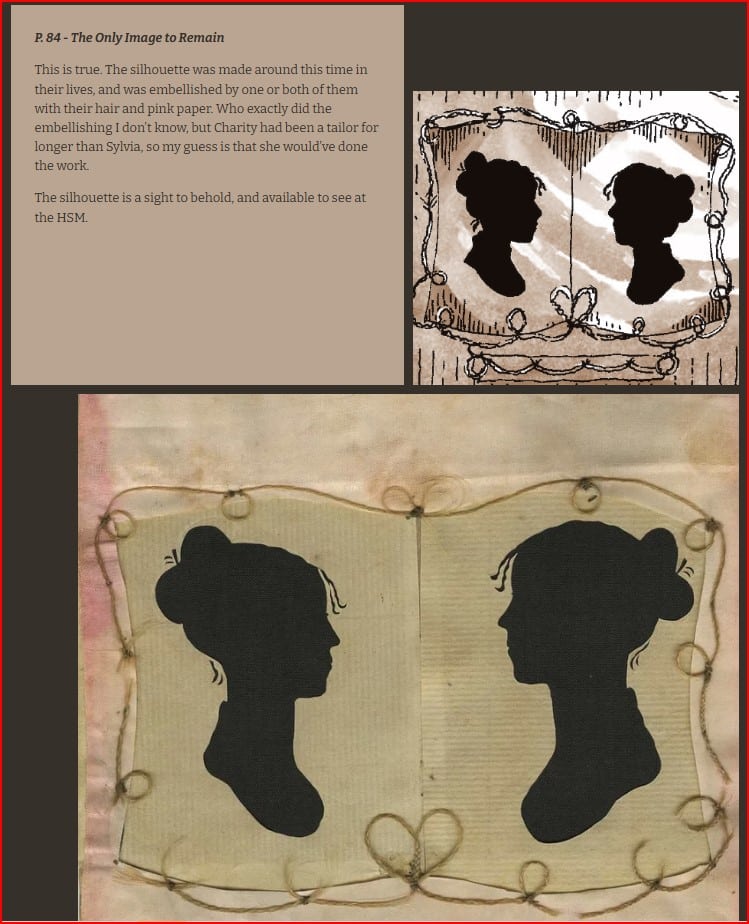
In the “about” section of Walden’s website, she writes, “After getting everything I could from Cleves, I moved on to the wonderful and arduous process of driving an hour and a half over two mountains to get to Middlebury, Vermont where the Henry Sheldon Museum is, and where the majority of C&S’s papers are. … While reading through everything I transcribed what I could, writing it out in pencil first in the archive and then going home and typing it up. I wish I could’ve transcribed everything but the time simply wasn’t there. At first I was SO SLOW with this process. Reading old handwriting is… hard. But I would say after two months I really started to get the hang of it and I got faster and faster.
“As burrowing through the archive progressed I also started to ponder story structure,” Walden continues. “It was a big question looming over me—what order in which to tell this story. Chronologically, like Cleves? Jump around time? Chapters? Parts? Below you will see images of my transcriptions as well as my meandering notes on how to begin to pull the threads of this story together. I considered many ideas before finally settling on a direction.”
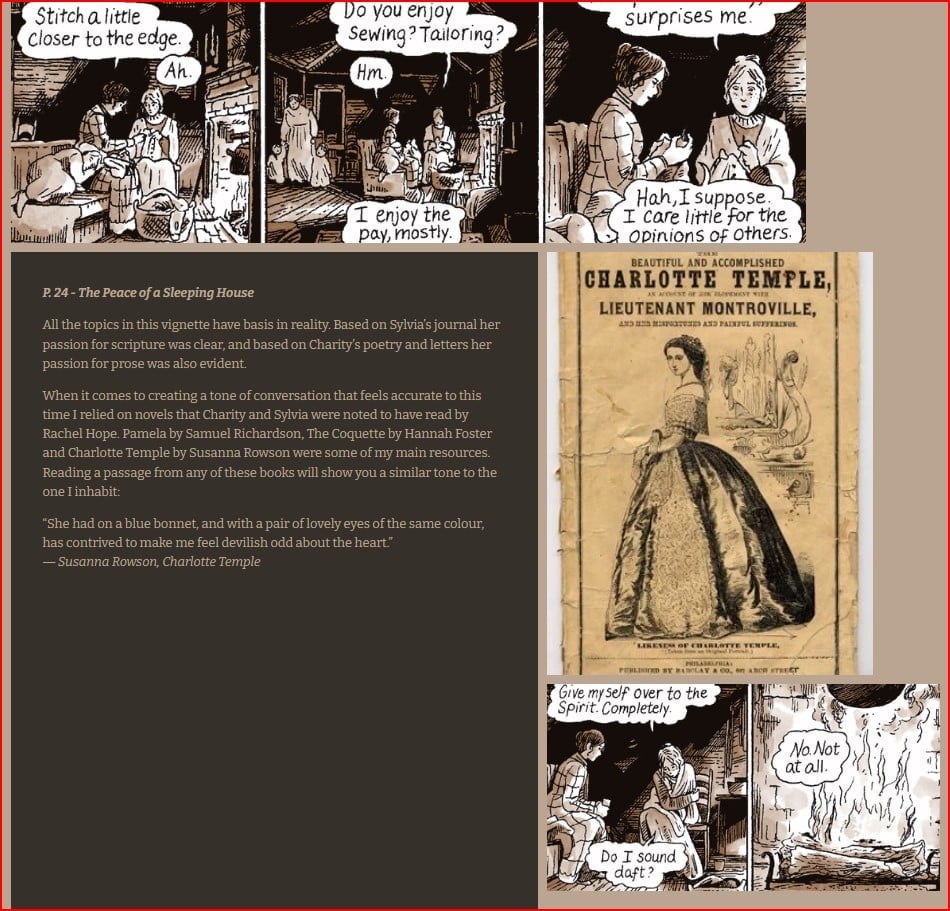
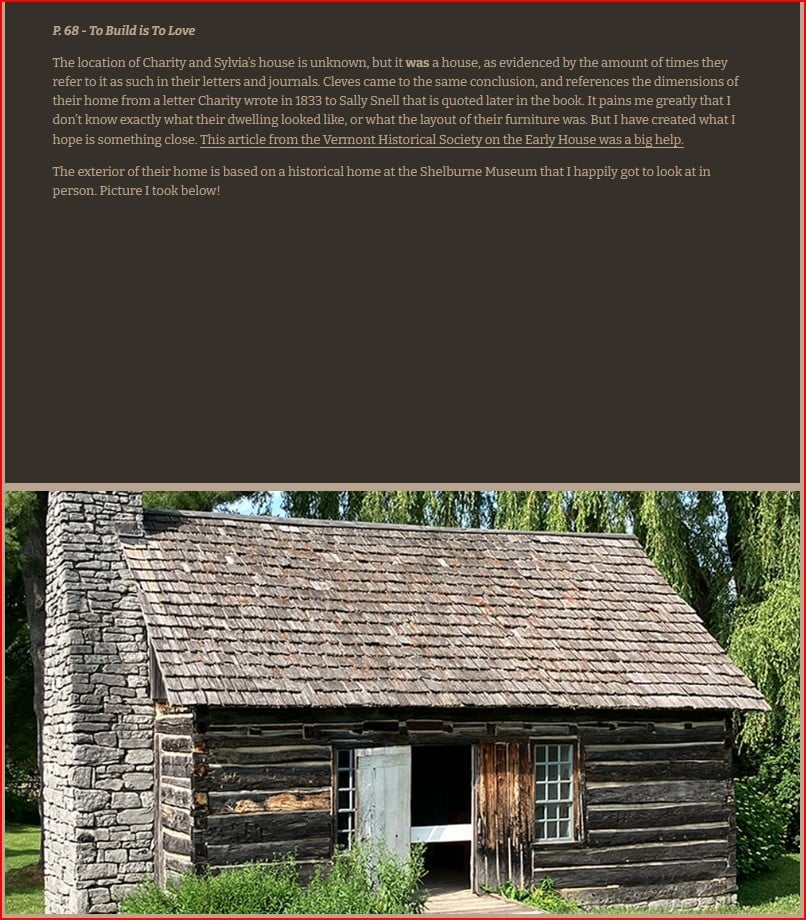
Walden writes that she read several books from Charity and Sylvia’s lifetime and “noted down any book that Cleves mentioned they had read and was determined to put my eyes on sentences that they themselves had looked at,” which informed the dialogue Walden invented for her graphic novel. In a list of books from her research, Walden says Cleves’s biography was “used extensively.”
The bibliography page for “Part Three,” which is about Charity and Sylvia’s respective childhoods, says it is “entirely based on the research done into their childhoods and youth by Rachel Hope Cleves in her book Charity and Sylvia, and it would’ve been impossible to express their experiences without her work on the subject. Her writing on their childhood, teenagehood and early adulthood spans the first nine chapters of Charity and Sylvia, all of which are referenced in this section.”
Walden has not responded to emails from The Beat at press time for this update.




This feels like a nuanced accounting of the facts, fair to both sides. Thank you for your reporting!
In their statement, the publisher provides even more proof that their author went above and beyond just being inspired by a source but now fully sounds like an adaptation. If they know how much their author took from another’s creative work they should pay for it. Seems like the fair thing to do and only strengthens their book’s reach.
Works of history can be used freely under fair use provisions, though that doesn’t mean works of history have no protection.. Fact can’t be copyrighted. This is why Dan Brown won out over the the guys who wrote The Holy Blood and the Holy Grail, despite lifting elements from it for The Da Vinci Code.
https://www.wipo.int/en/web/wipo-magazine/articles/copyright-in-the-courts-the-da-vinci-code-35264
Comments are closed.