
The wait for a new Metroid Prime game has been a long one. 18 years have passed since the series’ previous entry, Metroid Prime 3: Corruption, released on the Wii. The development cycle of Metroid Prime 4: Beyond was its own marathon. When Nintendo originally announced the game in 2017, Bandai Namco was assigned to its production. A year and a half later, development duties shifted to Retro Studios, the team behind the first three Prime games. Finally, the wait is over, and Metroid Prime 4 is in players’ hands, playable on both Nintendo Switch and Nintendo Switch 2.
The gameplay in Beyond will feel familiar to anyone experienced with the Metroid Prime series and its classic mix of exploration, first-person shooting, and occasional platforming. At the start of the story, Samus crash lands on the planet Viewros and must collect five keys in order to access the Master Teleporter so she can leave Viewros and return home. As is customary in Metroid, Samus loses most of her trademark abilities near the beginning of the game, which you regain over the course of the game.
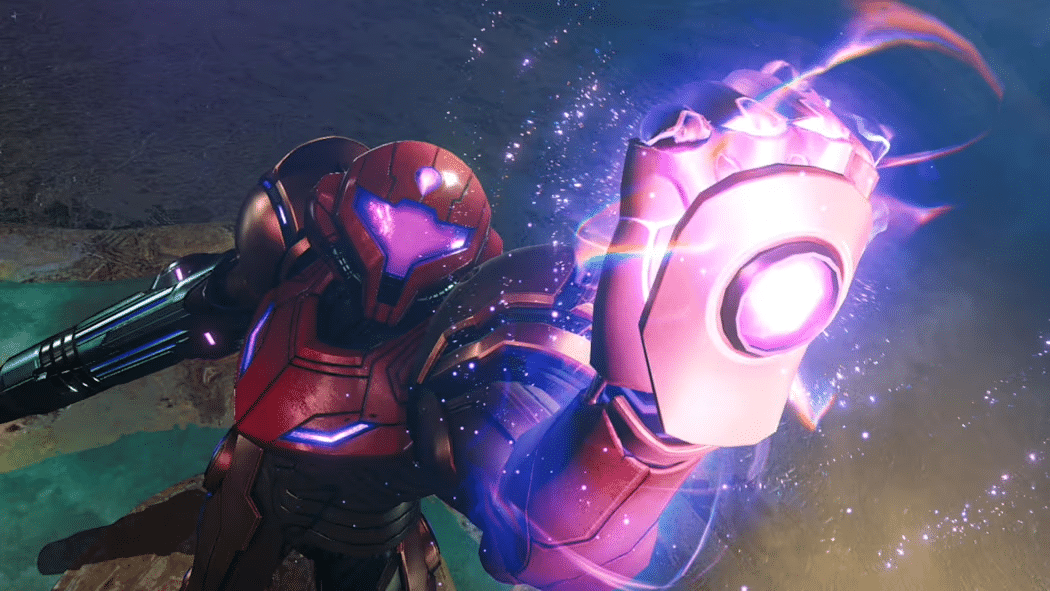
Thanks to a Psychic Crystal Samus discovers early in the game, she also acquires new Psychic Abilities. Several of them, like the Psychic Power Bomb and Psychic Grapple, are reskins of standard Metroid power-ups, but others enable mechanics unique to Prime 4. The Psychic Glove allows you to solve puzzles by tracing energy flows, and the Psychic Beam slows down time, allowing you to perfectly aim your shots, which is crucial to solving puzzles found throughout the game. As the first 3D Metroid millions of players will experience, keeping things simple is a sensible decision, if not the most exciting one.
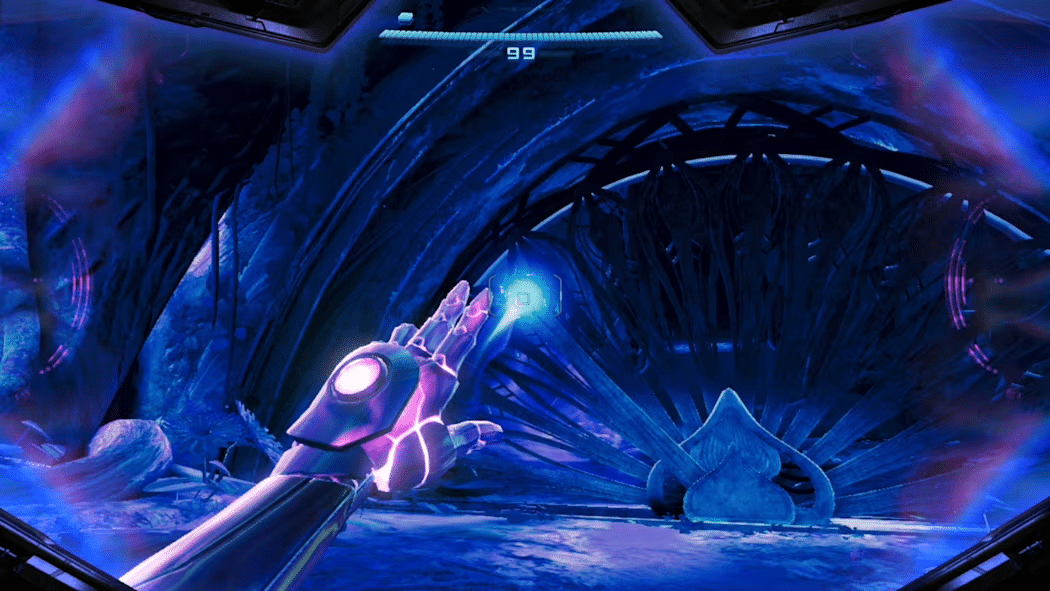
Metroid Prime 4: Beyond is the first brand-new game in the series to feature twin stick layout, which allows you to control Samus like you would in most first-person shooters. Retro Studios first applied the layout to it’s 2023 Metroid Prime remake, but experiencing it in a new title further demonstrates the value of the modernized controls.
Twin sticks aren’t players’ only option, however. You can use two Joy-Cons to control Samus, similar to how the Wiimote and Nunchuck are utilized in Prime 3. You maneuver Samus with the left Joy-Con and aim the right Joy-Con at the screen to shoot enemies. Lastly, Switch 2 owners can use the right Joy-Con as a mouse, which provides the player with fast and precise aiming. It’s ideal when using the Switch in Tabletop Mode, though keep in mind a Joy-Con doesn’t serve as the most ergonomic mouse and your hands will tire quickly. Some control modes work better than others, but every option is viable, an impressive feat, giving players an array of options to experiment with and choose from.
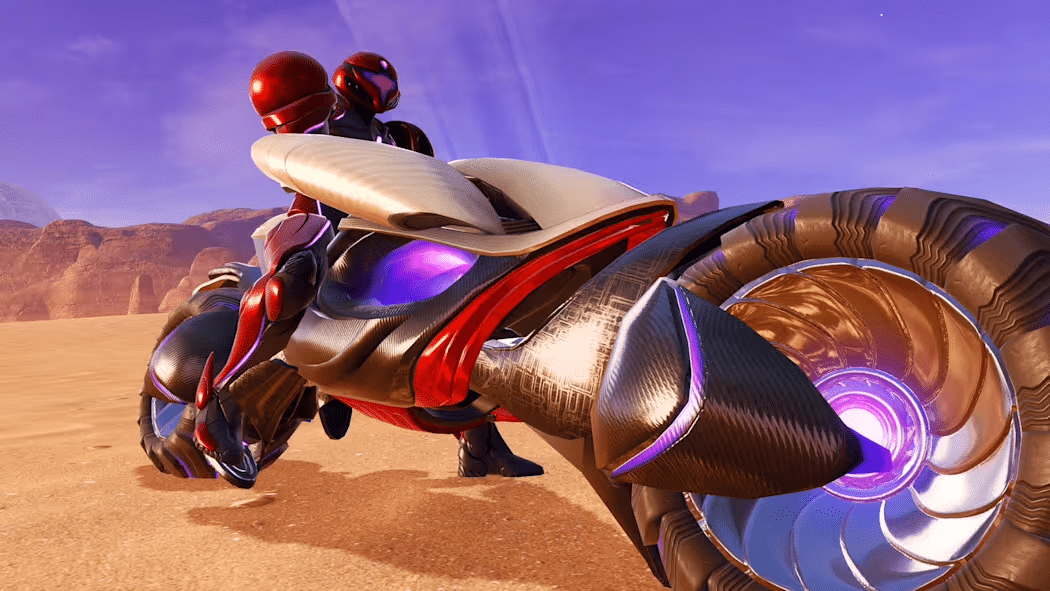
The biggest change to the Prime formula isn’t in its controls, but its environment. Beyond features an open zone named Sol Valley, a desert that serves as a central hub for Samus to traverse with her futurist motorbike Vi-O-La. Retro Studios was clearly inspired by open-world games, but Sol Valley feels barren compared to locations like Hyrule in The Legend of Zelda: Breath of the Wild and Tears of the Kingdom. Sol Valley has its share of secrets to find, several types of enemies to destroy, and no shortage of Green Energy Crystals to collect. But the space lacks dynamism. A good video game setting feels lived-in, a place where things did, can, and will happen. That’s absent from Sol Valley. The desert feels static, trapped in one moment of time. While not without its charms, it fails to justify its existence.
Retro has the ingredients it needs to cook up a better open zone, or entire open world, for the next go-round. The traversal feels great. Vi-O-La controls extremely well, keeping you entertained while travelling from one part of the map to another. Hidden items and secret areas are fun to uncover. The enemies are fairly interesting to battle against. Ultimately, what it needs is more. More to discover, more to experience, more to appreciate. The better question, however, is whether a central hub is well-suited to a Metroid game. Instead of enhancing the experience, its addition subtly transforms Beyond into an entirely different and less compelling genre.
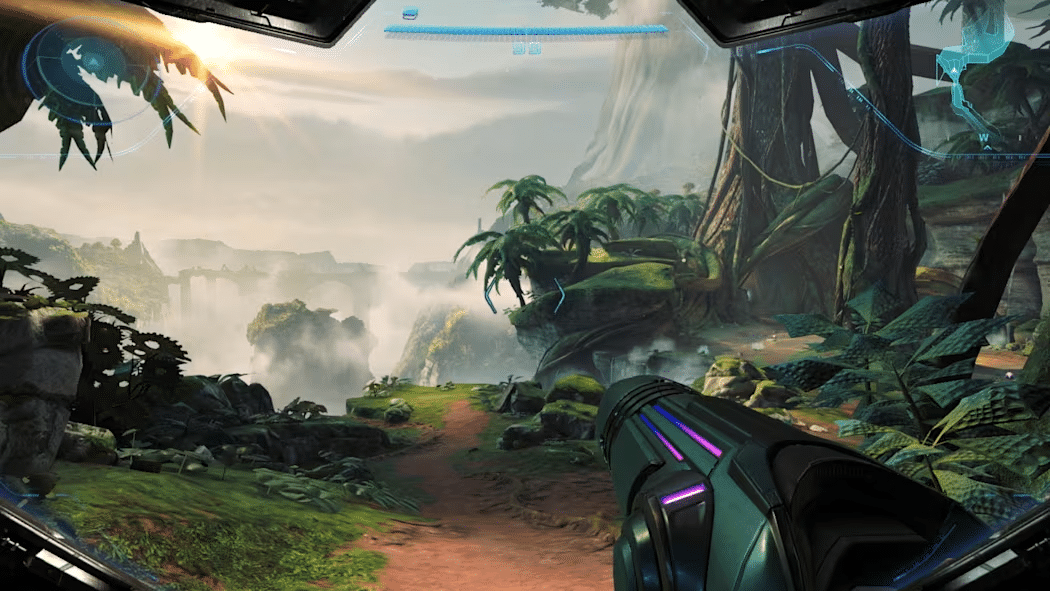
Metroid is a pioneer of a video game genre widely referred to in the US as Metroidvanias, a portmanteau of the two series most foundational to the genre. Japan describes them as search-action titles, which is the term I’ll use here. In search-action games, players travel an interconnected world where many paths are blocked off to them. Over the course of the campaign, you obtain new abilities that allow you to access more and more of the map. There’s a unique satisfaction in seeing the world open up to you, an excitement in realizing that, with your new double jump or grapple or wall climbing mechanic, you can reach places you never could before. That elation is ripped from Metroid Prime 4 because the environment isn’t interconnected; it’s a hub area containing 5 distinct dungeons for Samus to navigate. Prime 4’s world design bears more in common with a game like The Legend of Zelda: Ocarina of Time than it does the original Metroid Prime. There’s an inherent intrigue to a world that all meshes together, where all the mechanics work together, allowing you to not only access new areas but traverse the world in faster and more impressive ways. A motorbike, no matter how well-constructed, fails to bring the same level of excitement.
Given that Retro Studio’s previous project was a remake of the original Metroid Prime, it seemed fair to assume Beyond would be a return to the series’ roots of a 3D Metroid game. Instead, Prime 4 bears more in common with Metroid Prime 3: Corruption. Over the course of the game, Samus discovers other members of the Galactic Federation, who team up to form a crew that aids Samus in her mission.
Prime 4 isn’t the first time Samus is joined by allies, but it nevertheless goes against the original thesis of the Metroid series. The first game, and every following game in the 2D series, presents a lone bounty hunter up against a world that doesn’t care if she lives or dies. Samus has to figure everything out for herself to slowly but surely master her environment. Giving her a crew of friendly characters cheering her on removes the initial tension and ultimate euphoria. Their time on screen is thankfully brief, but it at the sacrifice of the cultivated vibe that makes Metroid games feel special.
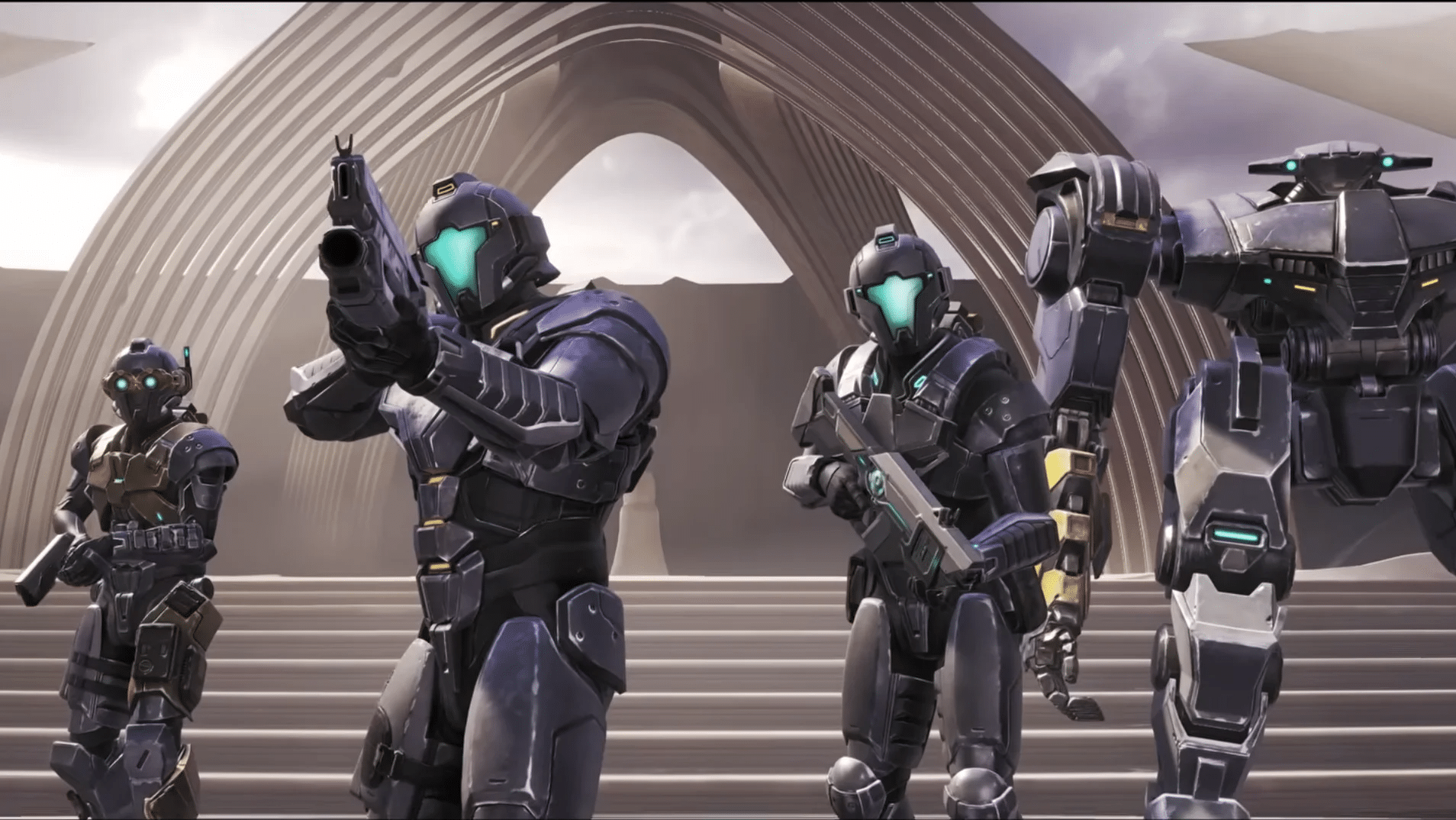
Worse, Samus’ allies come across like archetypes rather than fully three-dimensional characters. The dialogue is forgettable at best and cringeworthy at worst. Only one moment comes to mind where the game is meaningfully better for having the characters in it. More often, the game would be improved by their absence. If new characters are going to come in and threaten the classic Metroid vibe, they have to earn their place. Samus’ crew members fail to do so. The allies also hinder the gameplay more than they add to it. At best, they’re wholly unnecessary, shooting at the enemy that only Samus can actually bring down, but at other times, their presence slows down the gameplay. In several sequences, Samus has to heal them after they’re dealt a certain amount of damage, an additional, undesirable task for the player to manage. Losing because you didn’t notice an ally bleeding out is unsatisfying at best and enraging at worst.
Perhaps the biggest highlight of the game is its impressive tech. Metroid Prime 4 is a show pony for the Nintendo Switch 2, demonstrating what you can do with the console’s extra horsepower. The performance and fidelity you can get out of the game is incredible, unmatched by any prior release for the Switch 2. When playing on a television, you can run the game at 4K at 60 frames per second or 1080p at 120 frames per second. I never expected “Nintendo” and “120 frames” to appear in the same sentence. The game is a stunner, especially viewed on an OLED screen. Playing in handheld mode lowers its capabilities to 60 fps at 1080p or 120 fps at 720p, still remarkable stats, although the presence of an OLED screen is sorely missed. Metroid Prime 4‘s graphics should inspire both Nintendo and third parties to push the Switch 2 to its limits.
Metroid Prime 4 is an interesting game to analyze. The moment-to-moment gameplay is never boring. It’s very similar to other games in the series, but the modernized layout and array of control options are marked improvements, and the new mechanics are safe but entertaining. The open zone, meanwhile, while not without potential, is bare-bones and ultimately interferes with the classic, time-tested Metroid experience. However, Metroid Prime 4: Beyond is proof that Retro Studios still understands how to make a Metroid game. A Metroid Prime 5 would likely overcome the stumbling blocks present in Beyond and take Metroid where it needs to go. Here’s to hoping we don’t have to wait another 18 years to see it.
Review code provided by Nintendo.