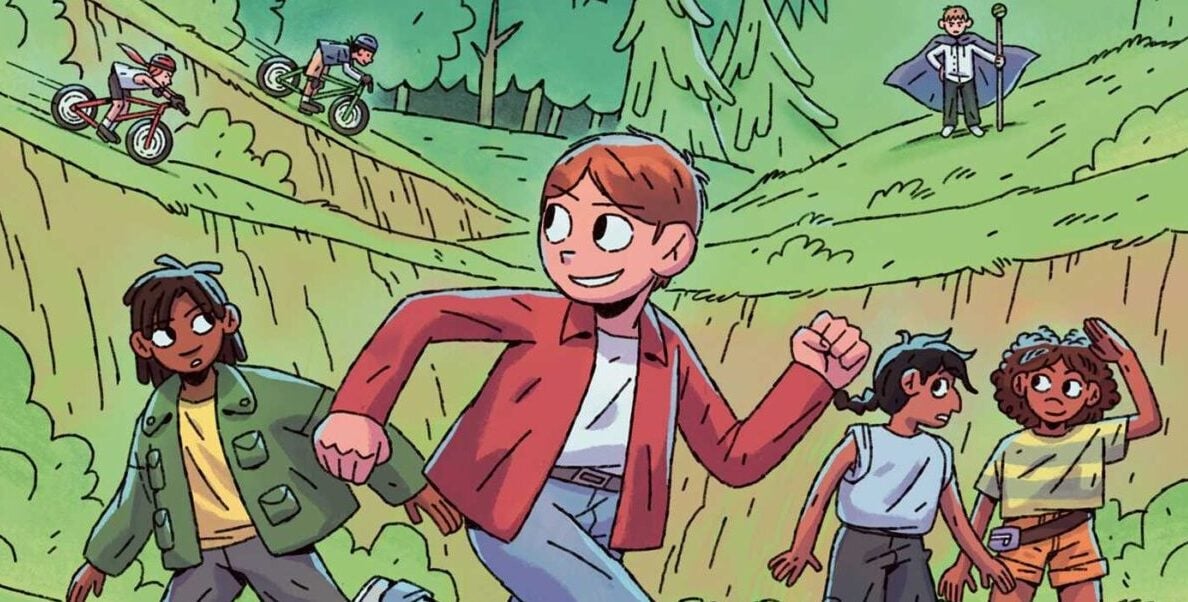

The Endless Game from the creative team of writer J.D. Amato and artist Sophie Morse is delightfully fun with a real moral for young readers. It’s a summer tale the most outrageous game of capture the flag that has been going on for generations in a small suburban town. Amato is an entertainment industry veteran with showrunning credits on hit comedy television shows, including The Chris Gethard Show, After Midnight with Taylor Tomlinson, and Desus & Mero. The Endless Game marks Amato’s debut graphic novel which is based on parts of his own life growing up in the suburbs of Illinois. It’s likewise the debut graphic novel for Morse who beautifully illustrates an expansive town and a crew of kids who balance humor, teamwork, and summer adventures as they figure out what the small town means to them and their place in the community.
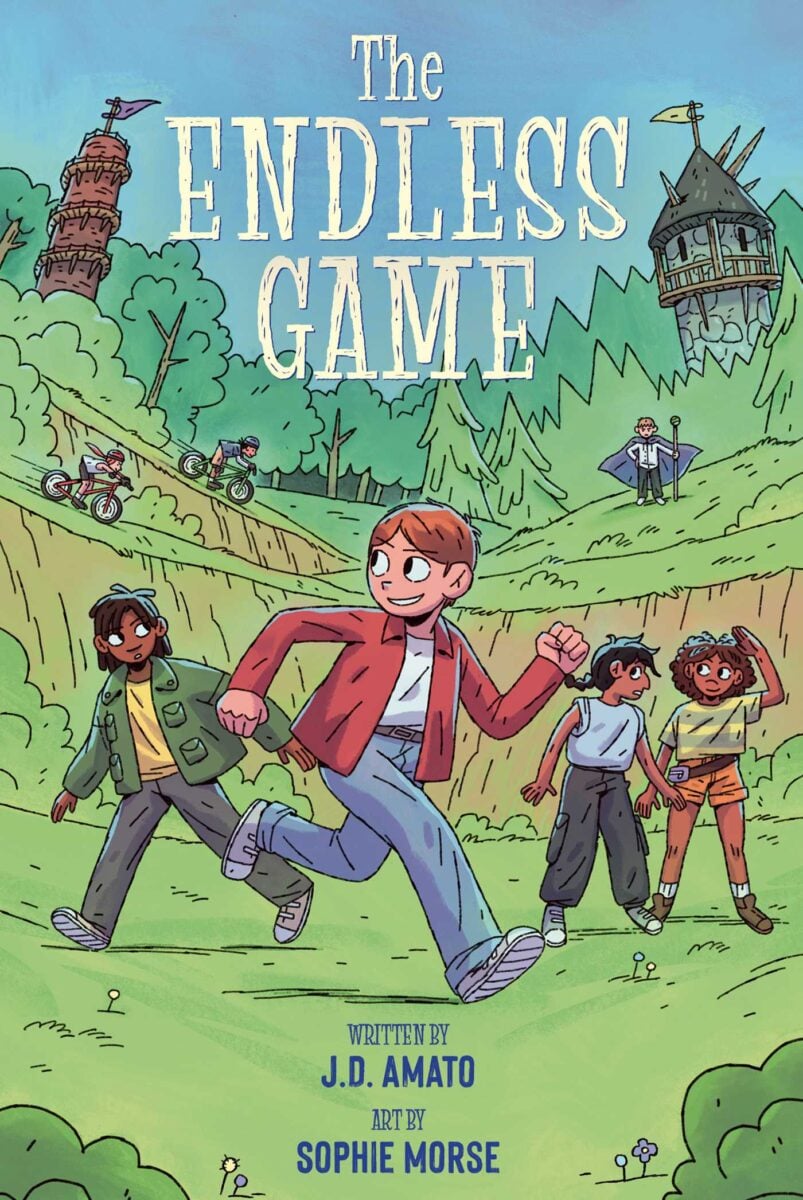
The Beat caught up with Morse and Amato to discuss The Endless Game, now available from Simon & Schuster. During our conversation, the creators discussed the differences between TV and comic book production, how the East Coast inspired the book’s setting, and growing up in the suburbs.
This interview has been edited for clarity.
Javier Perez: How are you finding the difference between showrunning and comic book publishing?
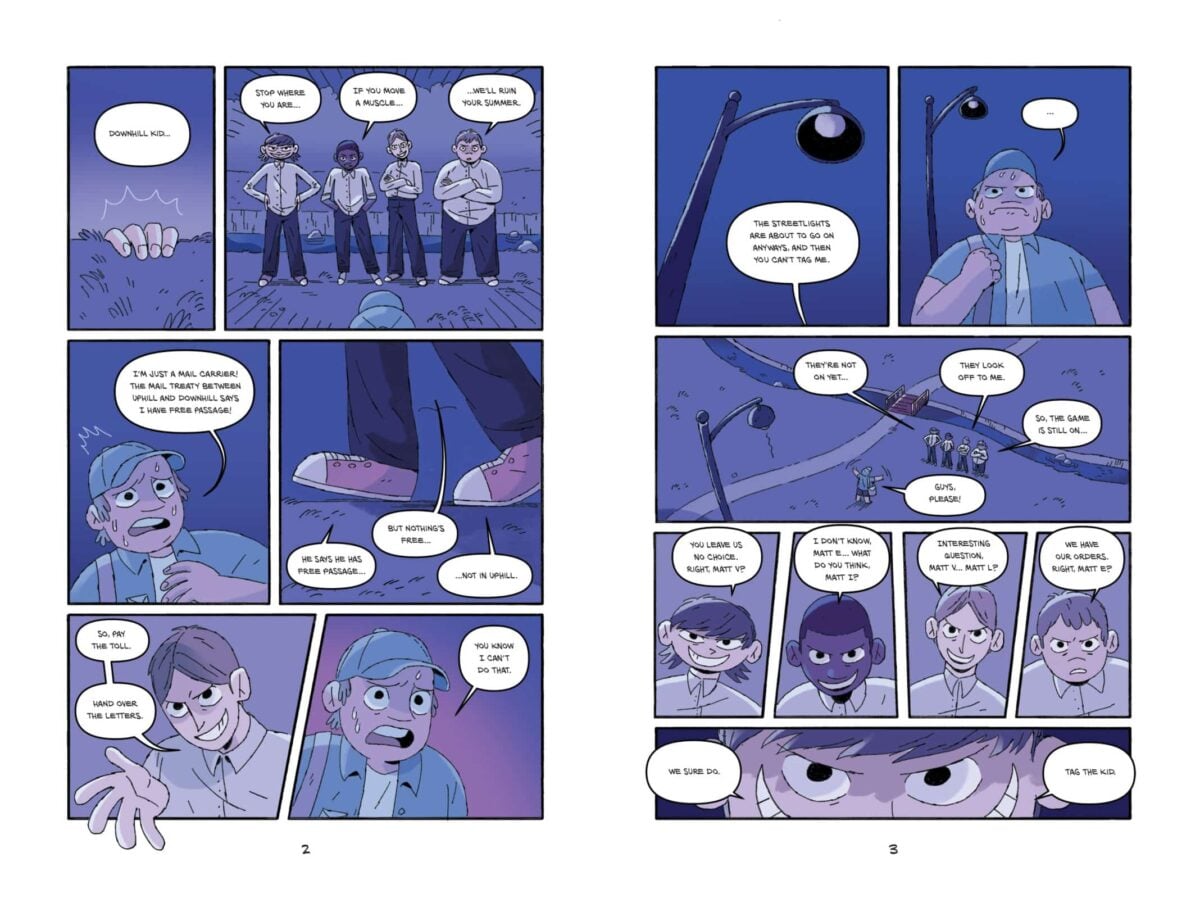
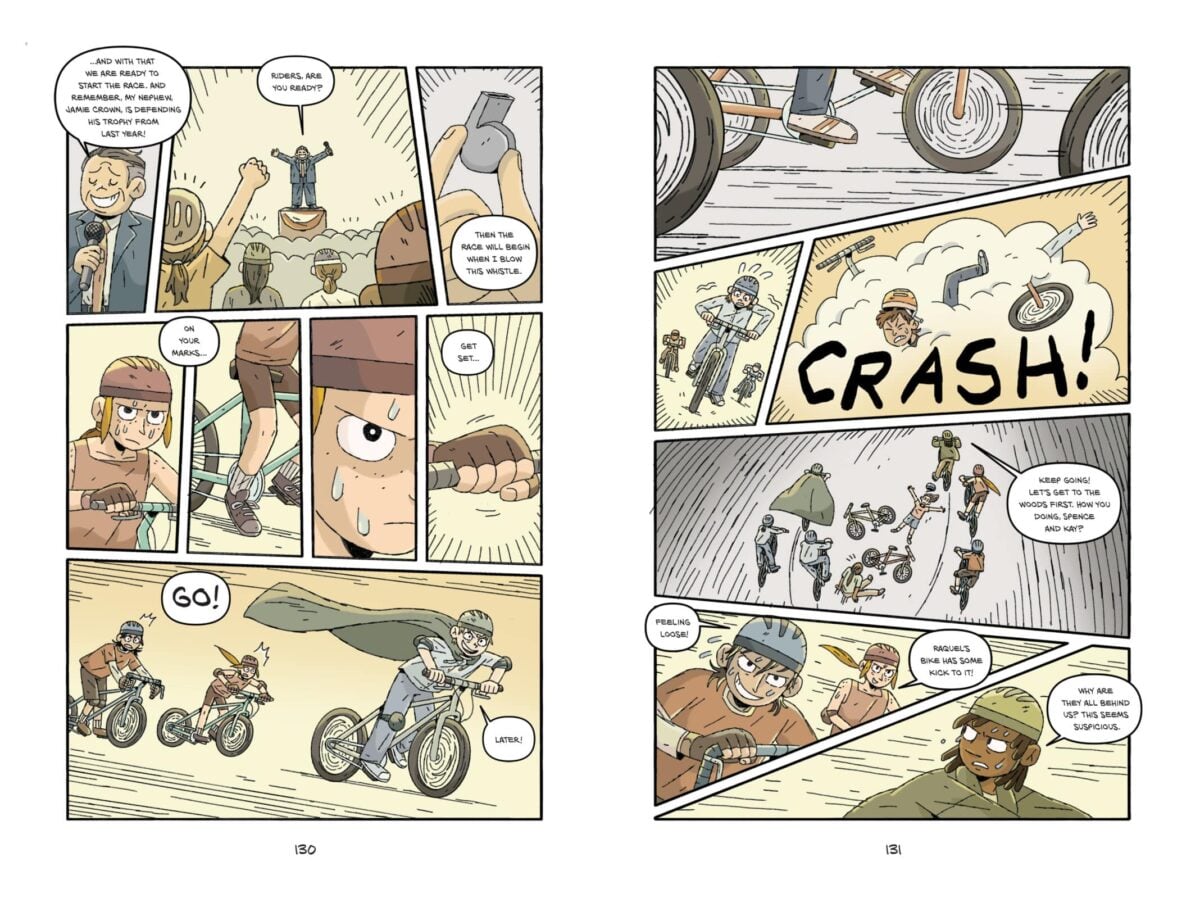
J.D. Amato: Honestly, there is so much more freedom in comic books! In television, we always have to consider how to produce our big ideas. I would be more hesitant to write something like a dangerous bike race between dozens of kids. But, in comic books, literally anything is possible. That said… illustrating a giant action set piece with dozens of bikes is no easy feat. So, I was also very fortunate to have such an ambitious partner in Sophie Morse, who never balked at our big ideas.
Perez: Where did the idea of the town rivalry come from? Was it your own experiences growing up?
Amato: I think there are a lot of silly rivalries that get passed down to any generation of kids. So, while my town wasn’t literally split in two, I was certainly presented with my fair share of needless divisions that I was expected to inherit.
Perez: Speaking of bringing your own experiences into the book: Sophie, how much of your New England backyard did you put into the book?
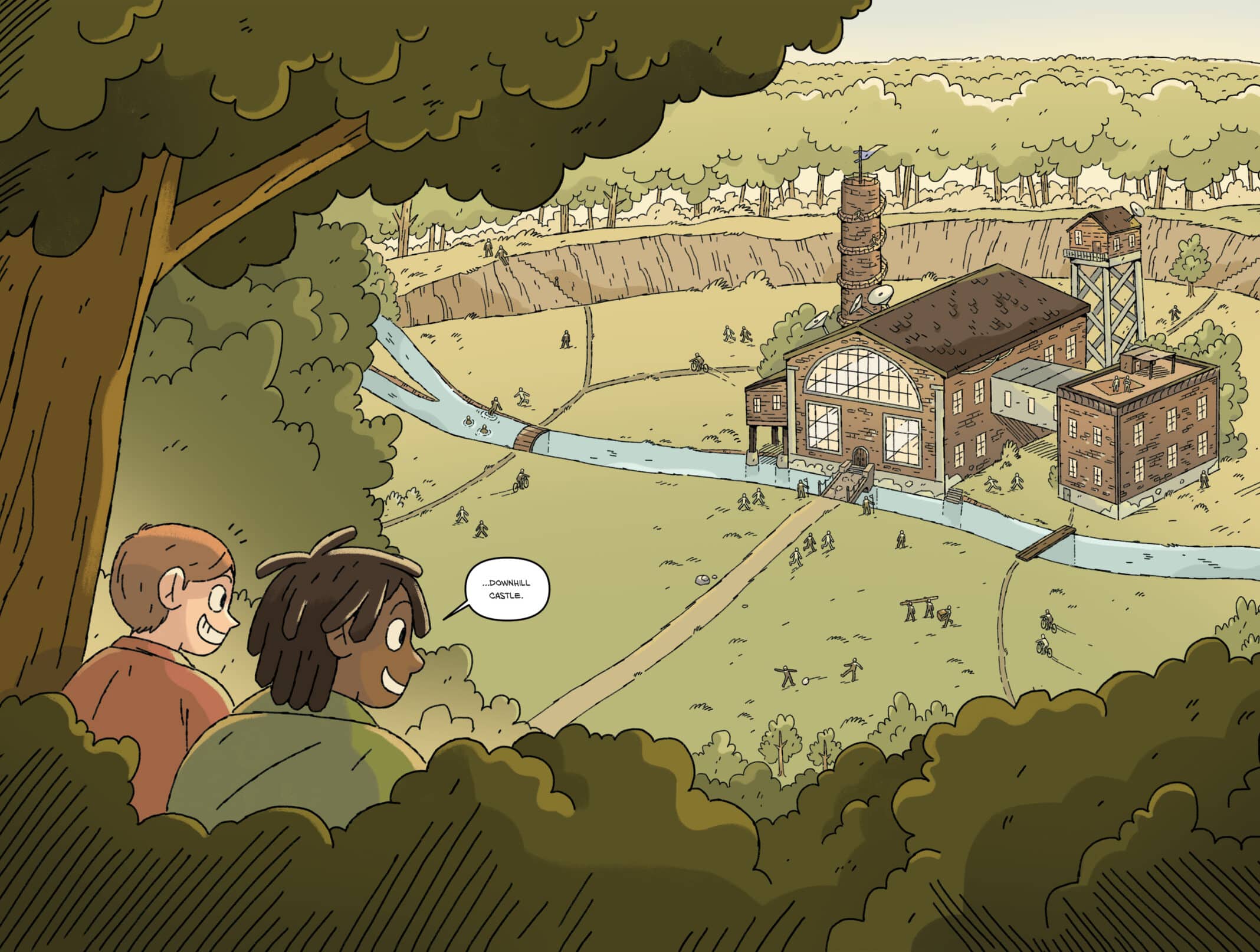
Sophie Morse: I put a lot of it in there! I grew up in a very leafy suburb of Boston, so when I started developing the book’s visuals, which take place mainly in leafy suburbs, I knew my old neighborhood would be a good place to gather inspiration. I used to drive through it pretty often during development and take pictures.
Perez: I love the establishing shots at the start of chapters and just how big the small town feels. What was the process of creating the town of Lakeside?
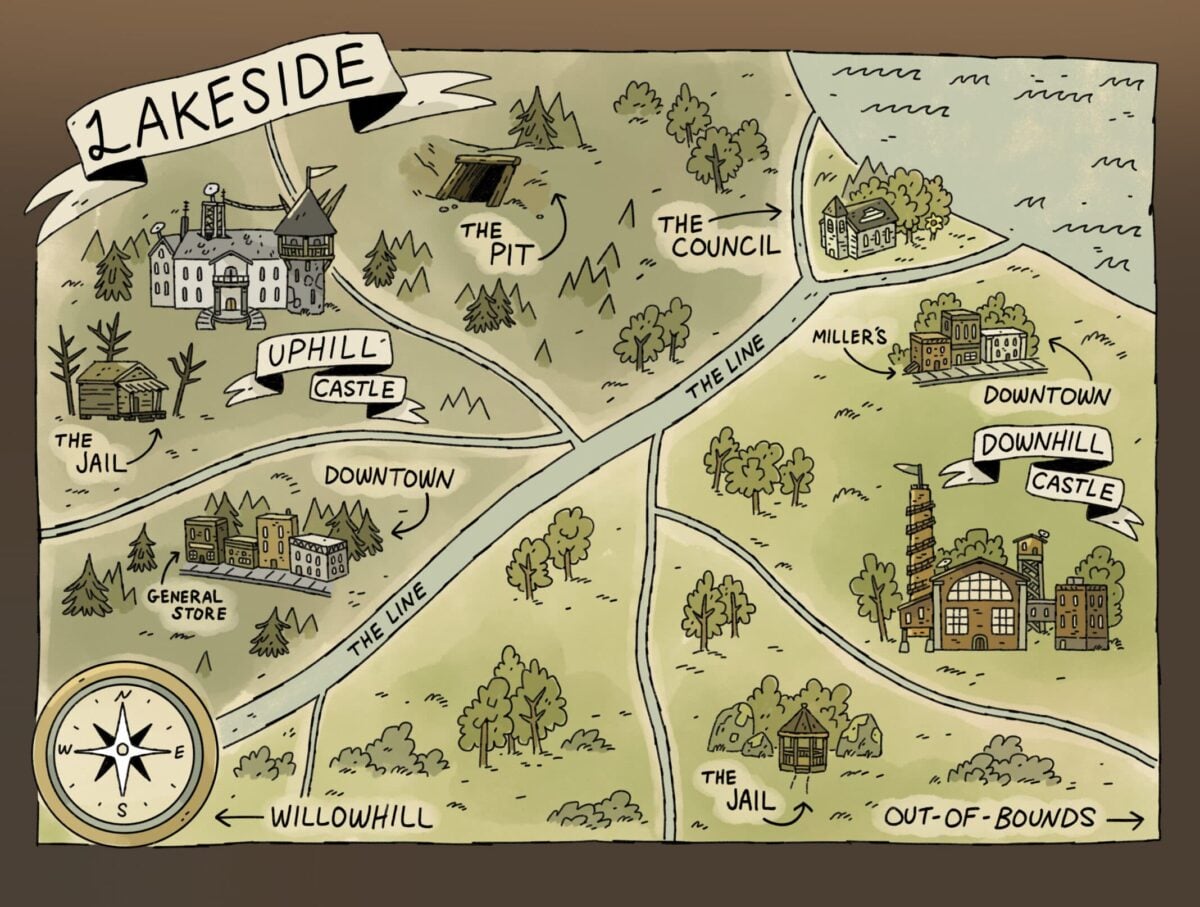
Morse: Thank you! For creating the town, I was again inspired by my own hometown and the general small towns of New England, mainly because they have a really quaint, established look I could easily pull from. I was also given many references from J.D. on towns and neighborhoods across Illinois and the Midwest. Lakeside became a mishmash of these two locations.
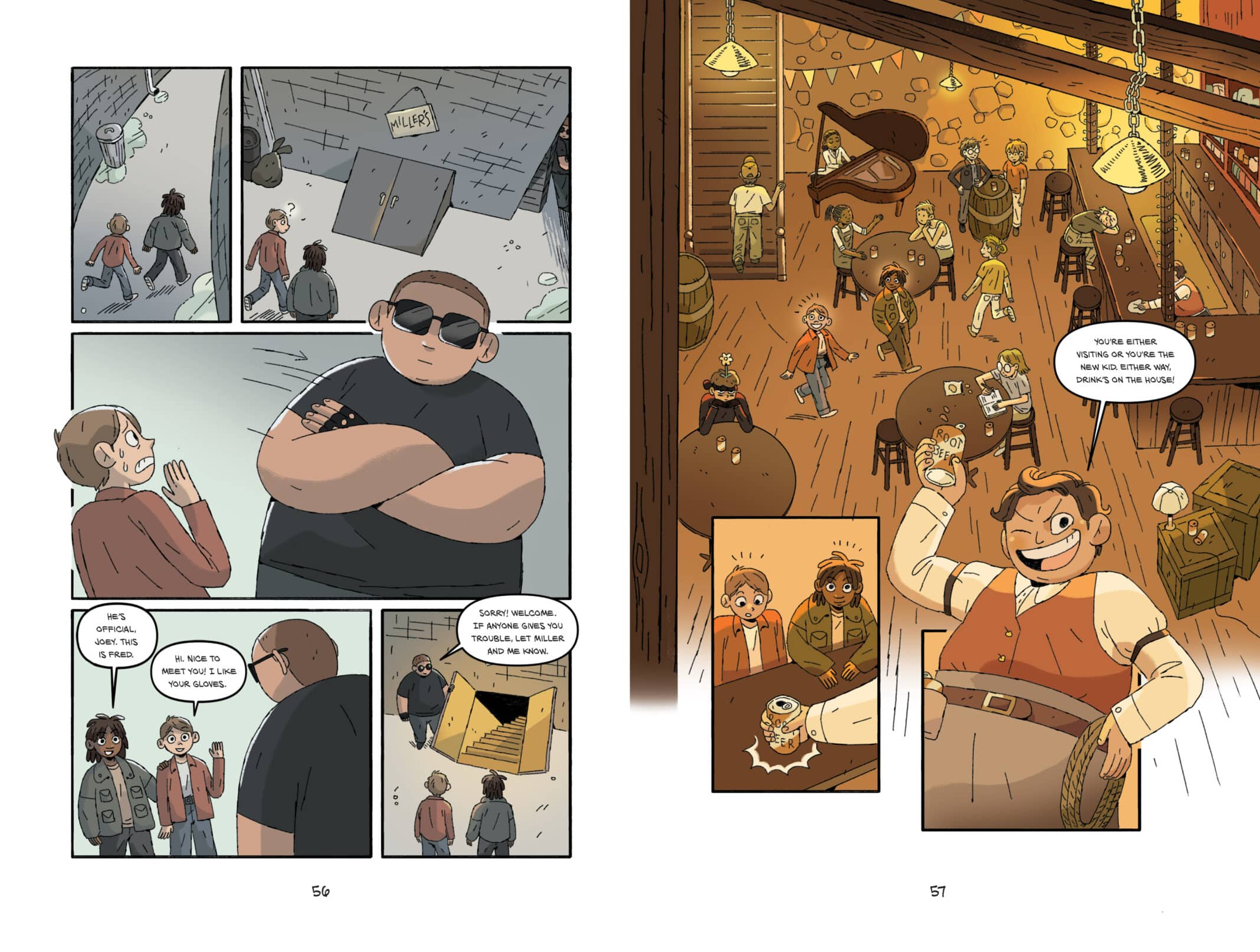
When creating Uphill, I made a choice to have Uphill be mostly cool-toned and not super vibrant. I not only wanted it to be easy to tell we are in Uphill when reading, but I also wanted the energy there to feel a little downtrodden. Also, the shapes there are purposefully sharp and spiky. There are sharp sticks everywhere, and the pine trees are spiky and closing in on you. All of these design choices are directly opposite Downhill, which is warm-toned, earthy, and vibrant. The kids wear many colors and different styles. There are softer, rounder shapes everywhere, like in the trees and the flora. One thing I decided to keep virtually indistinguishable was Uphill and Downhill’s town centers, so the reader doesn’t forget that they are part of the same town.
The Council was so much fun, and are some of my fave characters! Their abandoned church is surrounded by both Uphill and Downhill’s trees, and was designed to feel otherworldly and larger than either side. For the kids themselves, I kept them in their PJs because, after all, they’ve been home all day. Robert Anthony, the leader of the Council, wears glasses, so we cannot see his eyes, giving him some mystery.
Perez: I feel like a big theme of the book is finding your community and finding your place in that community. Am I off on that?
Amato: Totally right on! We both grew up roving through our respective suburbs with our friends– and we both felt like those adventures were such a big part of discovering our identities. So, one of the things we both agreed on early in the process is that this was going to be a book about characters going through that experience. We tried to make sure that was woven through not only the story, but also the illustration.
Perez: Anything you’d like to add?
Amato: We’re so proud of this book! Being a double debut, we both didn’t-know-what-we-didn’t-know about the graphic novel process, and so really did it our way. Both of our fingerprints are all over every detail of the book, and because of that, we couldn’t be more excited for people to read it.
Sophie: Exactly what J.D. said, we’re so proud of this cool thing we made, and I hope people enjoy!!!
Find The Endless Game at you local comic store or bookstore or order through Simon & Schuster here.