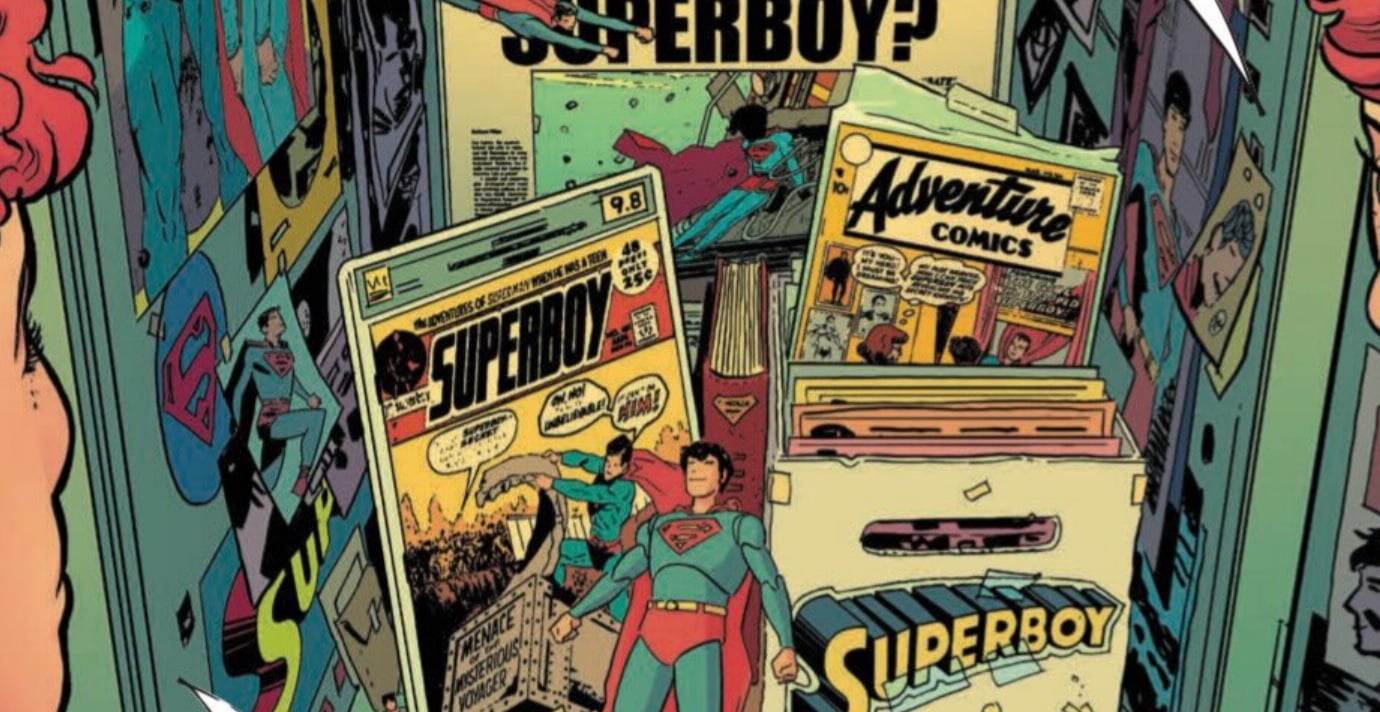

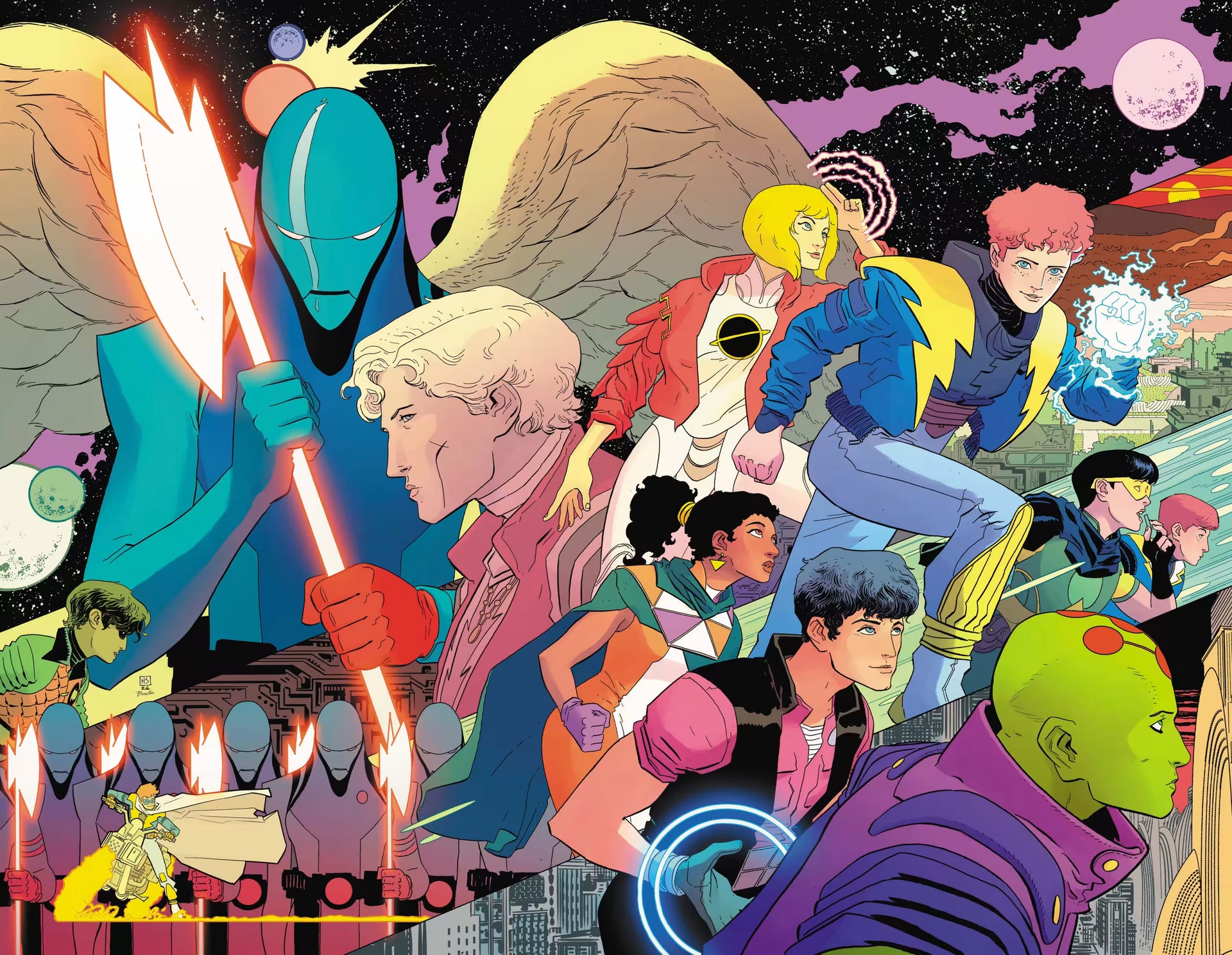
Since the DC All In Special one-shot nearly two years ago, DC has been teasing fans that a new iteration of the Legion of Super-Heroes was on its way. Sure enough, the long-awaited launch of a new ongoing series arrived last month from writer Joshua Williamson and artist Hayden Sherman that promised a bold new era for the 31st century young superheroes. During New York Comic Con, we had the opportunity to sit down with the creative team to discuss what the future holds for the beloved character, their creative process, and much more!
 The interview has been edited for length and clarity.
Taimur Dar: I think most fans anticipated you would introduce brand new characters to the Legion of Super-Heroes mythology. But I don’t think anyone would have expected character like Bat-Lad who already has the fandom buzzing. How did the development of Bat-Lad come about and what can you tease about him?
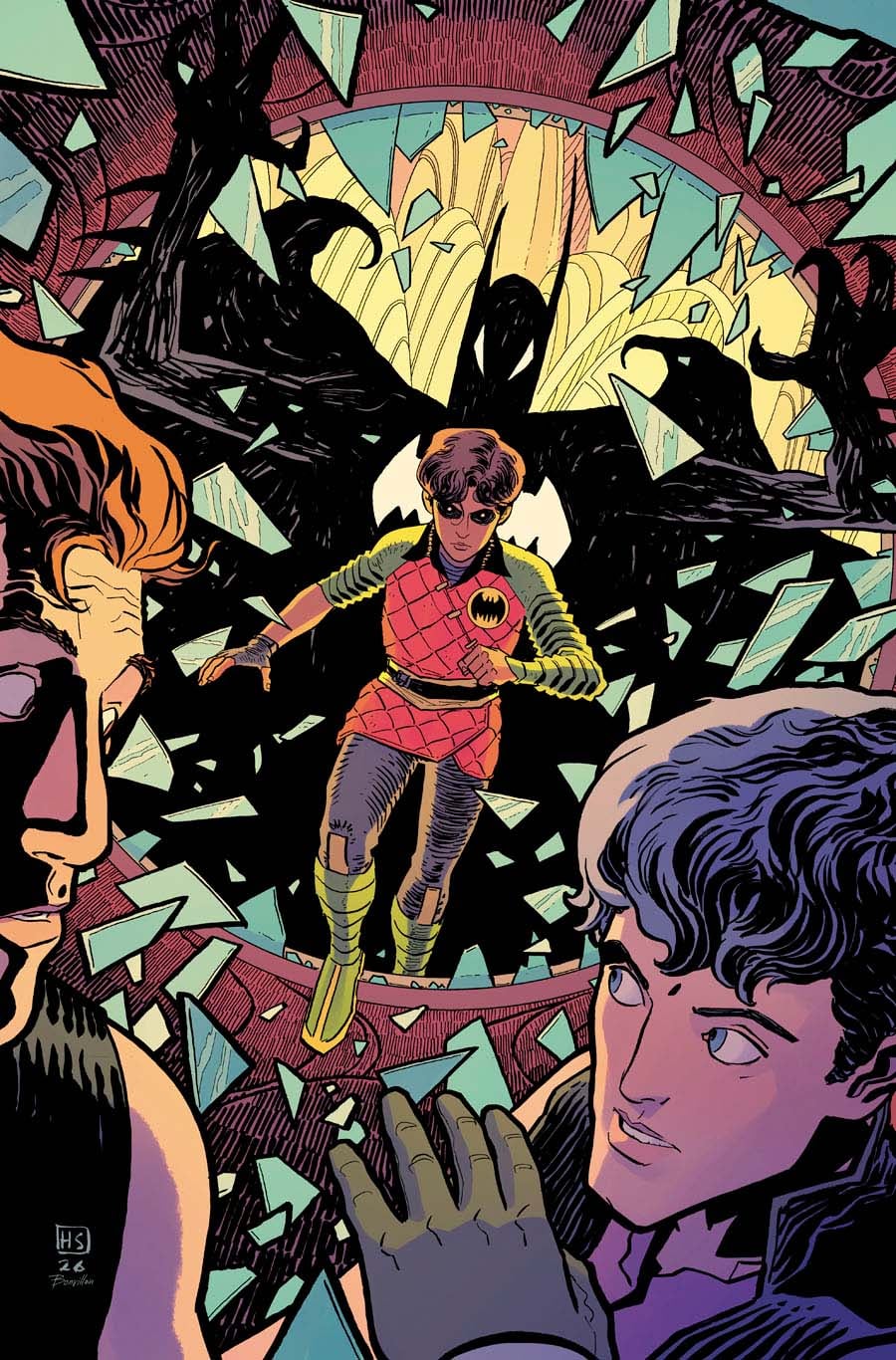 Joshua Williamson: I knew I wanted to make this Legion a little bit different. We never had a Bat character like that brought in. Without getting into spoilers too much about Bat-Lad, I don’t think it will be what people expect. I worked with Hayden and we talked about designs. It was a “boy and his monster” story which I pitched to Hayden who ran with the look of it. What’s funny was, I didn’t know Bat-Lad’s voice until I started writing him. It finally clicked and Hayden drew some amazing work.
Hayden Sherman: We had the design and a feel I had in my head. Having anything in the Bat orbit, there are certain expectations in the character types you imagine. It was really when the script came in [I said], “I love this kid.”
Joshua Williamson: I’ve dealt with this before in the past where a new character comes in and people think that new character is going to take over a book. That’s not that at all. They’re going to be one of the many Legion characters we have. You’ll see as it plays out what the actual story is.
Taimur Dar: Most people assumed Hayden was leaving Absolute Wonder Woman in order to draw this Legion of Super-Heroes book. Thankfully that’s not the case. It’s a rare company of artists who can juggle drawing two different books simultaneously. The only other that comes to mind is Dan Mora. What does the coordination of the scheduling entail?
Hayden Sherman: It’s running like a smooth engine I’m happy to say. It is the case, as with anything, [for] ongoing series the way they work is you have your lead time and then you eat away at your lead time. [Laughs]. It’s just natural. It takes longer to make these things than it does for the release schedule to hit. So we’re running up against it a little bit. We [will] have guest [artists] come on.
Joshua Williamson: We’re going to have a guest. I won’t say who it is yet. But we’re going to have a guest come on who I’m very excited about. It’s someone who is the perfect fit for the story we’re going to tell in a couple of issues. We built those [guest artist issues] in. Even when I was working on the outline, I really was thinking about Hayden’s schedule. And then it was a conversation, “We know these really big scenes and moments are coming and making sure Hayden draws those.” I remember we were in San Diego and the editor [said], “Why don’t we do xyz?” I was like, “That’s a big moment. Hayden has to draw it so that means it has to happen here.” It is an interesting mix of how do you match story and schedule.
Hayden Sherman: I’m very grateful. I like to jump around between things. I find it creatively stimulating to work on multiple stuff.
Joshua Williamson: Same here.
Hayden Sherman: When I started drawing Legion #1, I remember finishing that issue and by the end of it, because it was out of the wheelhouse being sci-fi and I had to flex different muscles than I’m used to creatively, I felt like I learned something. Then when I came back to Absolute Wonder Woman with issue #23, I could take all that stuff I learned [in Legion] and put it into Absolute Wonder Woman. And Absolute Wonder Woman teaches things I can put into Legion.
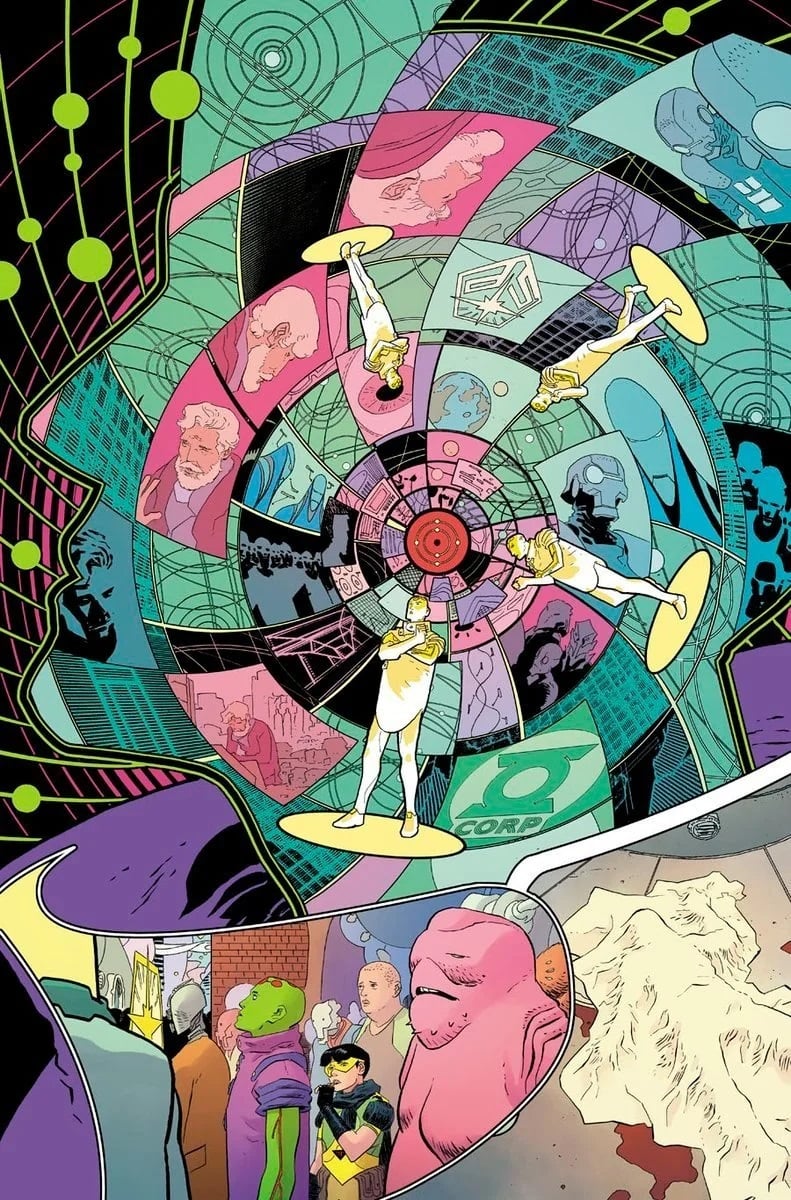 Taimur Dar: There’s a classic narrative device in storytelling of using an audience surrogate to convey exposition and information. Superboy or any character who travels to the future to meet the Legion typically serves that function. That’s not the case in this Legion of Super-Heroes book so how would you describe your approach?
Joshua Williamson: I always call them exposition machines because they’re the characters everyone is explaining things to. The way I’m doing things differently is, have you ever looked at a detective story? They’re fascinating. Detective stories are always a series of people explaining things to somebody [like] Glass Onion or Knives Out. Part of my pitch was making Brainiac One of Five, which is important, a detective. I felt in some ways he was going to play that [audience surrogate] role. It’s funny because I know some people thought Lightning Lad was going to be that role. It opens with Brainiac as the first Legionnaire you meet because he’s the one asking questions. He’s the detective. I wanted to introduce all these characters in a very organic way. Having somebody like Brainiac walking through scenes as a detective asking questions allowed me to not have so much of the audience surrogate. He is the audience in a way because he’s asking the questions and allows me to give that information to the readers.
Hayden Sherman: Something I really enjoy. You have that where you ask the questions and get the answers. But all these characters come from different corners of existence. But as they leave, they’re all meeting things that they don’t know. So they’re all going to have moments where we learn through their point-of-view about the world at large.
Joshua Williamson: With Cosmic Boy, Rokk, he was so sheltered and his life was about one thing. He was an athlete. There’s a scene coming up where they make a comment about a high five and he goes, “I don’t know what a high five is.” Things that are normal teenage things and relatable, he was sheltered he missed out on things. He also plays an interesting role in learning.
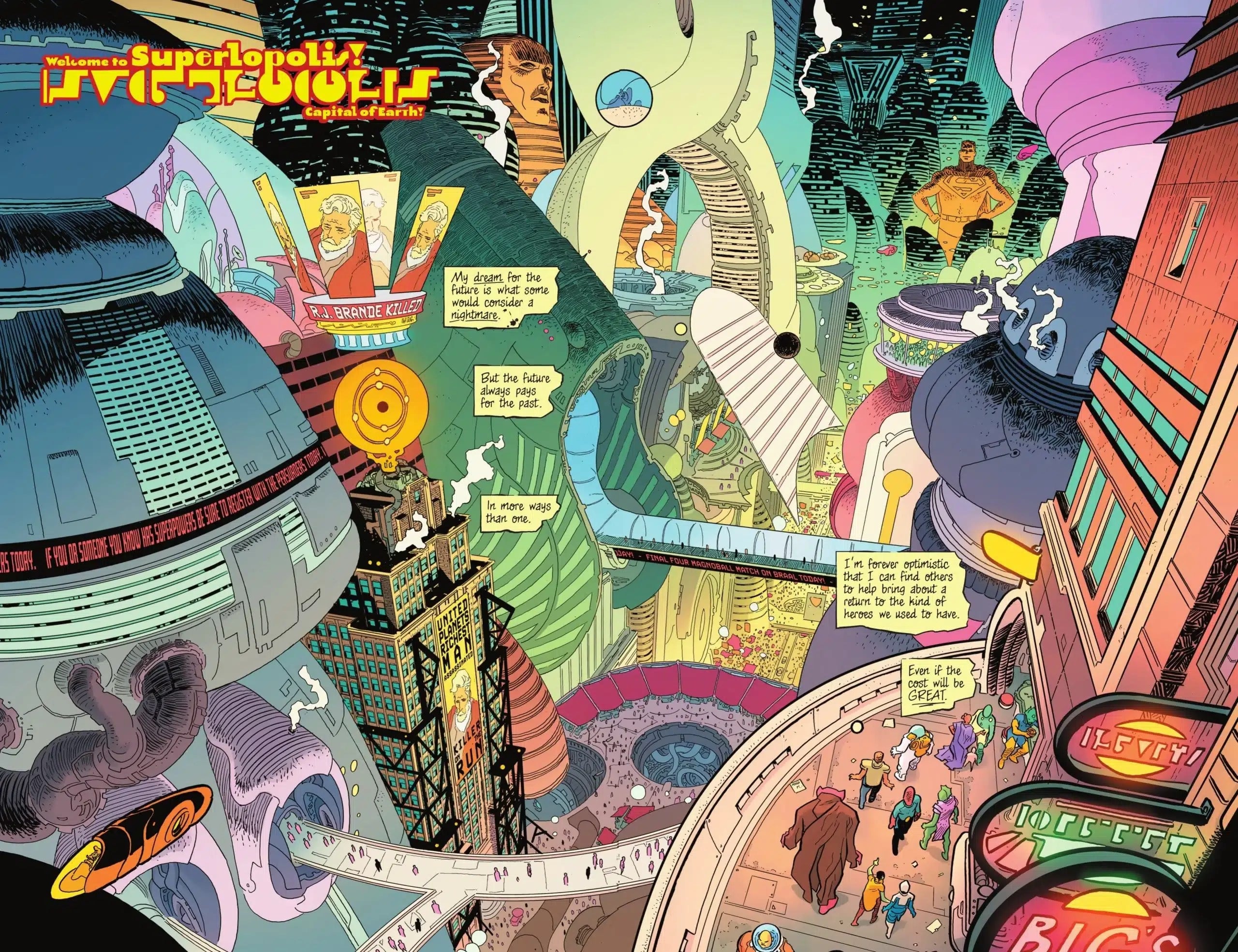 Taimur Dar: One of my favorite aspects in the first issue was going through and translating the various words in the Interlac alphabet. It’s a testament to how much detail you put in this Legion of Super-Heroes book. What went into all the Interlac words sprinkled throughout the issue?
Hayden Sherman: That was something [from] Hassan Otsmane-Elhaou, an amazing letterer to be working with. Issue #1 I hand-lettered all the Interlac because we didn’t have a font. I was asking DC, “Is there an official one? Should I be using something?” Then Hassan came in and just made a font. Going forward, there is a lot more of that which is really helpful.
Joshua Williamson: In issue #1 there’s a scene where we show Rokk’s homeworld, Braal, and there’s all these shots of these stores. If you translate it, the shops say things like “Closed for the game.” It such a small-town thing.
Hayden Sherman: In issue #4, I put something small in the background. I can’t tell the context but it kind of suggests another world. Sometimes it lets you expand [the story]. But in other instances it’s mostly signage that are mundane. It’s fun.
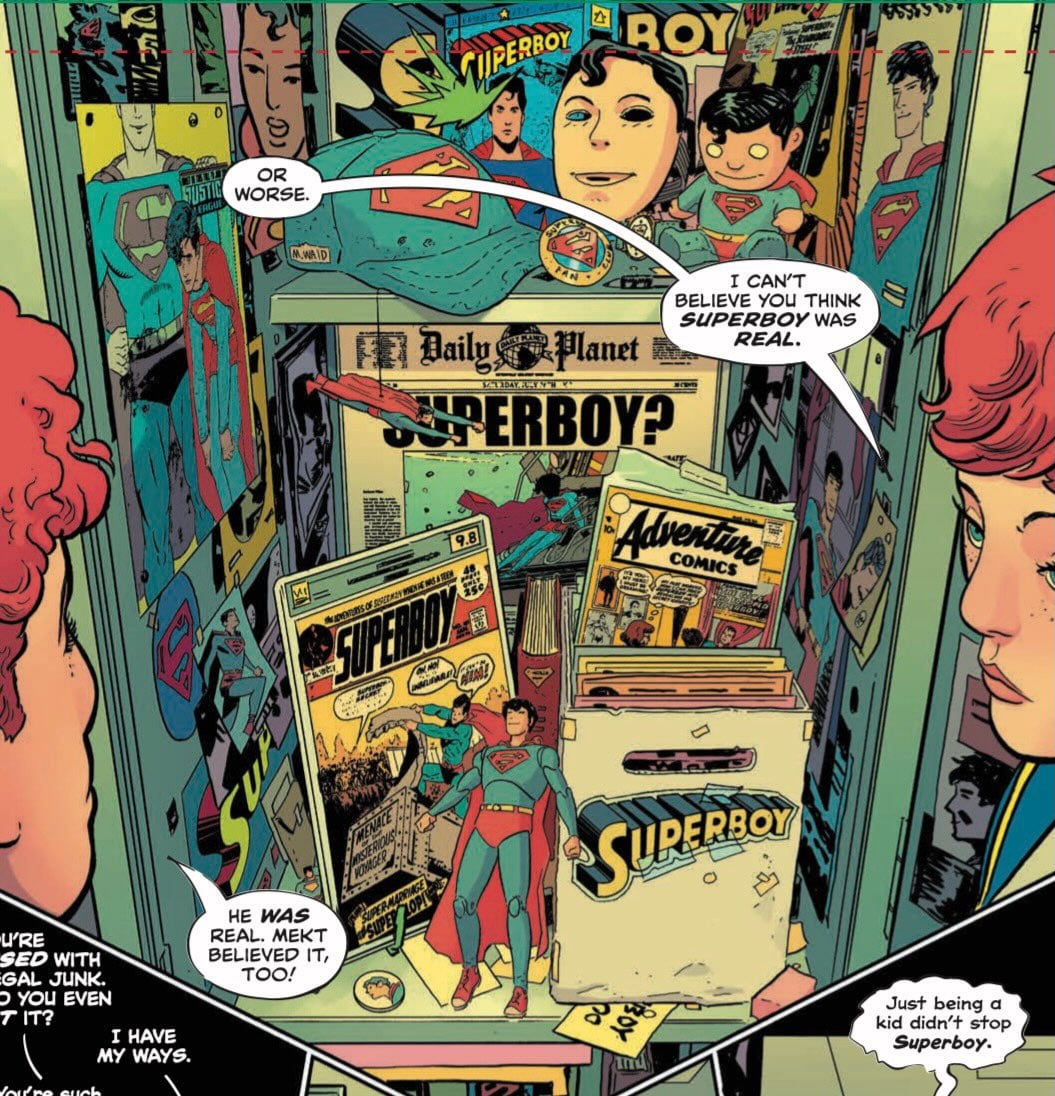 Taimur Dar: Finally, can readers expect some time travel, specifically an encounter with Superboy?
Joshua Williamson: Eventually! You can’t not do it. They’re going to meet Superboy. Their journey to meeting Superman or Superman is going to have a lot of twists and turns to it. By the time we get to issue #3, you’re going to go, “Oh, that’s where this is going.” It will probably surprise people.
Stay tuned to The Beat for more news from NYCC ’26.