
Monsters like to live on the edge between fiction and reality. They prefer to be captured in grainy video footage rather than high-definition pictures. They tease their existence rather than confirm it. In a sense, they leave us with the responsibility of filling in the blanks of the alleged truth behind them. Put simply, monsters are stories, and they wouldn’t want it any other way.
As such, cryptids are a combination of myths, legends, and unreliable eyewitness testimonies that elude objective confirmation. Unstable Games’ Twisted Cryptids saw in this idea the basis of a board/card game that puts players in the shoes of one of four creatures that some people have, at one point or another, claimed to have seen in the wild: Bigfoot, the Mothman, the Loveland Frog, and the Jackalope.
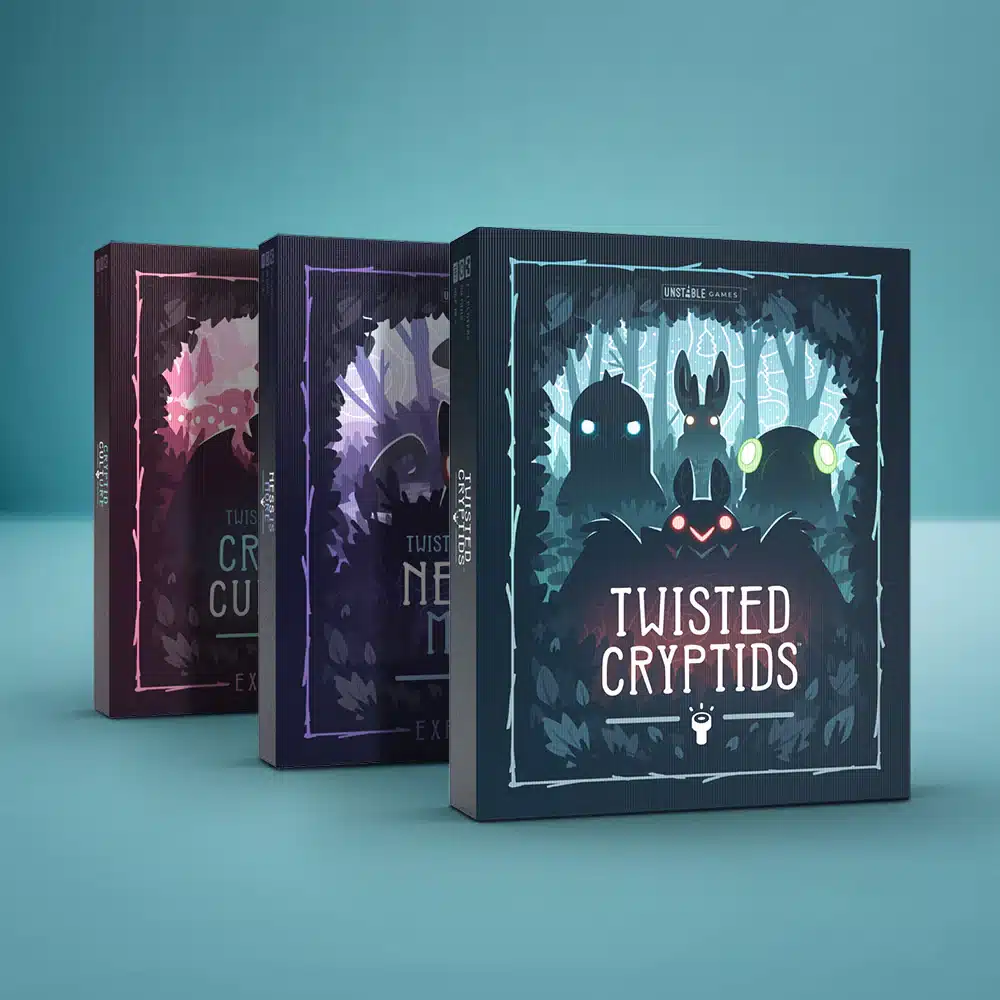
The game’s goal? Build the cryptid’s legend by gaining myth points without being outright outed as the real deal. Twisted Cryptids is a 2-4 player game that takes about an hour to complete across five rounds divided by four phases each. Players choose a cryptid and their respective little creature meeples, settle on multiple hiding spots on the gameboard, and then attempt to lure, scare, and attract humans to set the stage for encounters that can build on the cryptid’s cumulative myth score.
Players use action cards to get the humans that’ll net them the most points to stumble upon their hiding spots. The site on the board that has the highest concentration of humans by the end of a round will spark an encounter. This is where the Sighting cards come into play.
Each cryptid has a deck of Sighting cards, and they tell players which human types they either want to pull into their hiding spots or scare away so they don’t detract from the myth score that gets summed up at the end of the round. The player with the most myth points by the end of the fifth round wins.
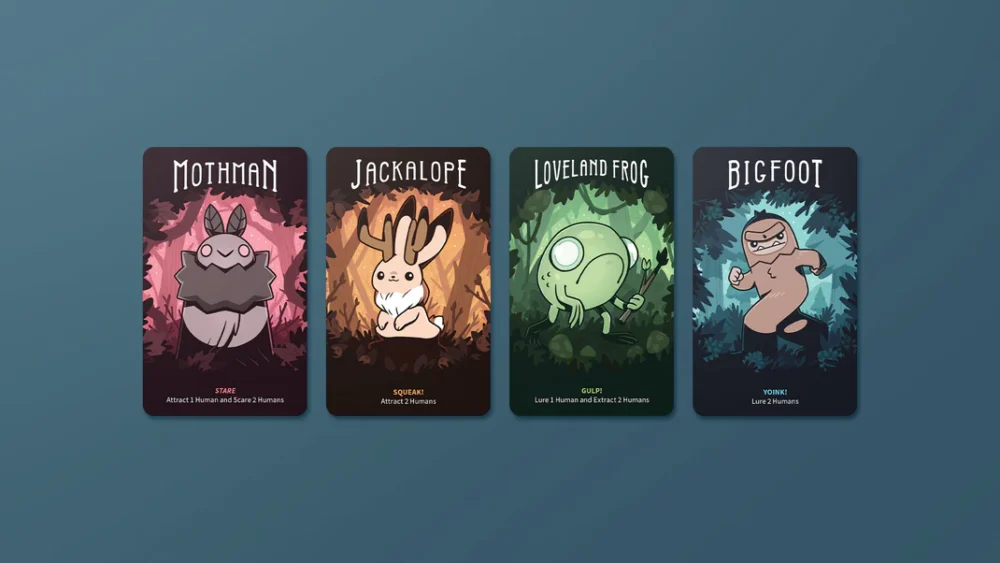
Humans come in three variations: researchers, hunters, and hikers. Their values are determined by the Sighting cards, and they change per sighting. Event cards and Hidden Trait cards round out the gameplay with extra objectives that can net huge rewards if met.
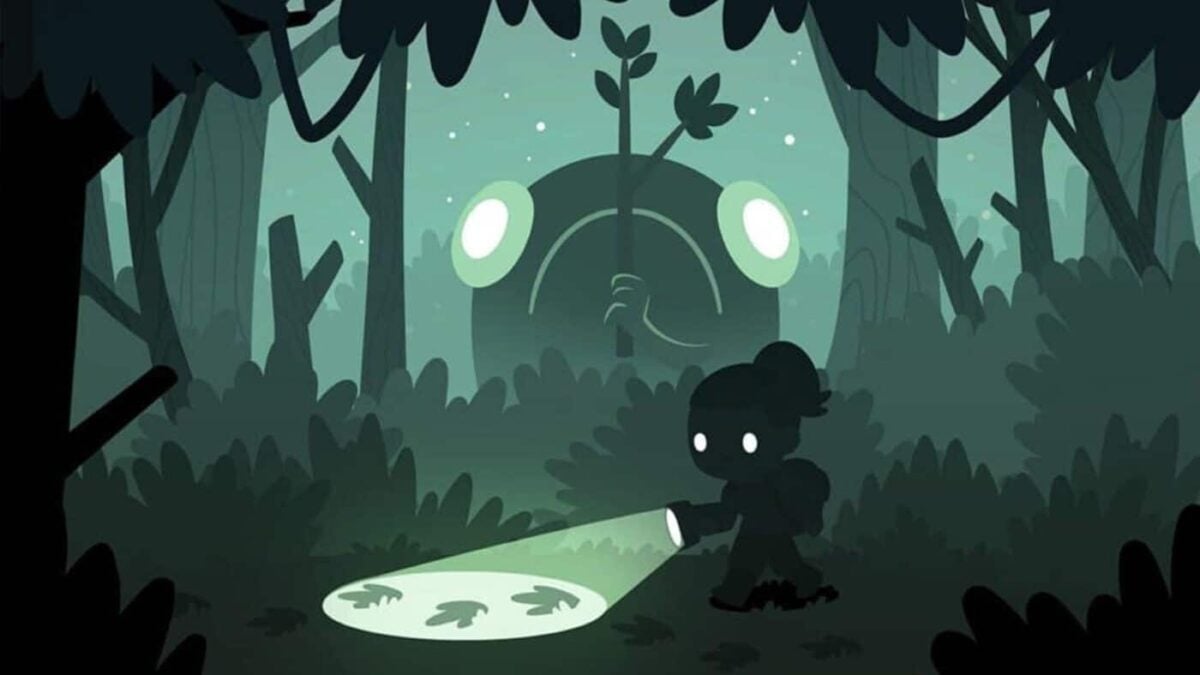
Every visual aspect of the experience oozes with a creepy cuteness that keeps things accessible for all age groups. One encounter can yield a Hoax sighting that’s represented as a group of raccoons hiding in a man’s suit. Others simply show a silhouette of the cryptid, thus hinting at a creature lurking about without offering absolute proof of their existence.
Twisted Cryptids excels at putting players in the mindset of mythic storytelling. By focusing on the creatures themselves, the game lays the foundation for an interesting reversal of traditional game roles. Players are trying to outsmart humans to become more mythical. It makes the humans feel like nosy threats that don’t deserve to get a good glimpse of your chosen cryptid, to blow the lid on its existence. Essentially, you want the cryptid to remain a mystery to the world.
The game is easy to get into after the first full round of a playthrough. There are multiple moving parts throughout its day/night cycle, and it can take some getting used to. Once the flow is established, however, it picks up the pace and intensity. Players have five full rounds (which end once the day’s phases have passed) to rack up myth points, so there’s a lot of game to be had.
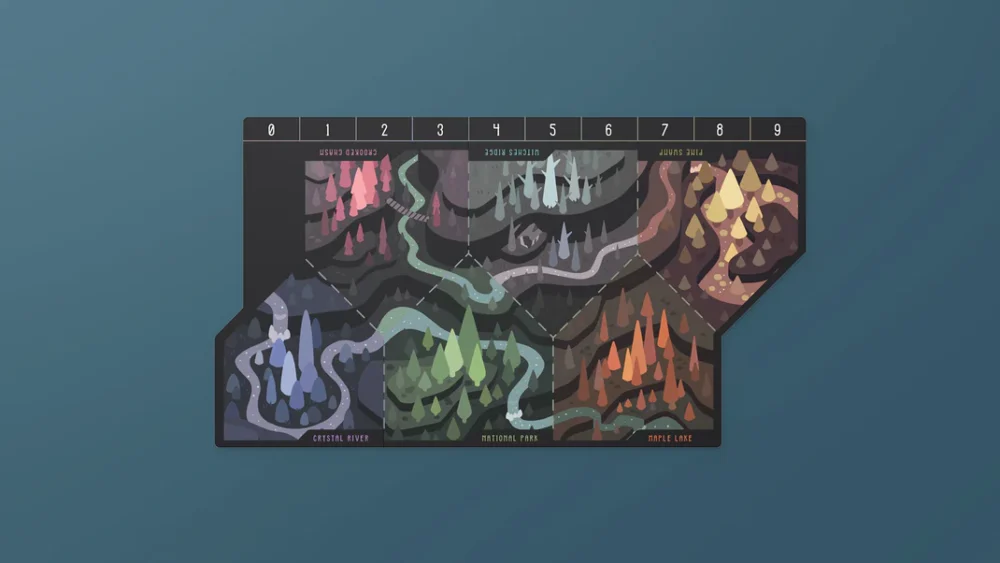
I found 3-player games to be a great way to kick things off. The pacing is just right and players don’t have to wait long till it’s their turn to take an action again. Also, the gameboard is divided into six distinct areas that serve as rest spots for specific humans. Pine swamps, crooked chasms, and crystal rivers give the game a magical sense of place, representing spaces that cryptids would feel right at home in.
That said, I wish there were some other element or buff/debuff mechanic that made these areas more interactive. Maybe Bigfoot gains an extra myth point if he survives an encounter at Maple Lake, or perhaps the Mothman can scare away hunters if he’s found on Witches Ridge. This isn’t a dealbreaker, but it’s something that could’ve differentiated the cryptids even further. Each one already has a unique ability they can play once per round. A second one tied to locations would’ve been perfect.
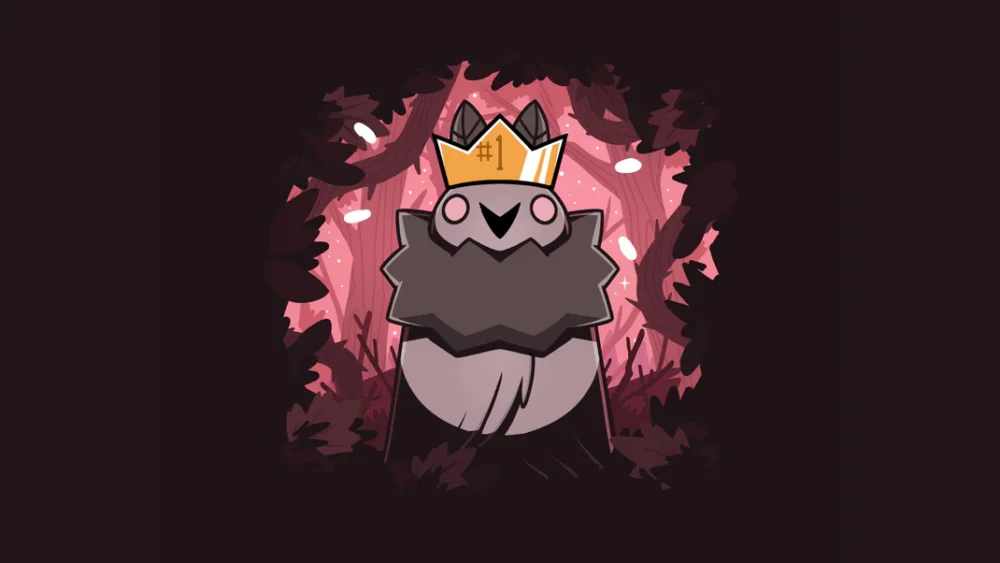
Twisted Cryptids is a more methodical and strategic game than I expected. It employs simple competitive mechanics, sure, but it injects enough storytelling possibilities to make them quite unique. It honors the nature of these creatures, their elusiveness. They come off as folk tales in need of protection to keep their mysteries alive. Play with friends that love adding commentary to game sessions. The cards’ humorous flavor text and designs allow for it. Don’t rush, take it slow, and stick to the shadows to grow your mythical presence in the wilderness. Just remember that the actual cryptids might not be as cute as the ones found here.