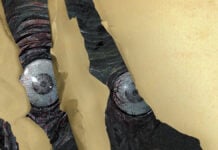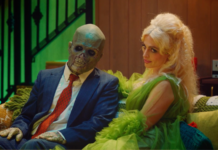

Eight years ago, Katie Cannon dissappeared. Only nine years old, the eldest child of two parents working as expats in Cairo, Egypt, the entire family spends nearly a decade mourning her dissappearence and trying to make sense of what happened to her. When Katie finally returns, wrapped in bandages, body bent in strange shapes, a mass of tangled hair and rotting flesh, the Cannon family has to figure out a way to either save their long-lost daughter, or die trying. The newest film from new-found horror-superstar Lee Cronin, The Mummy is a thrilling, grotesque and disturbing film, held back by a messy narrative and a bloated runtime.
Rather confusingly, The Mummy is technically entirely unrelated to the classic Universal movie monster of the same name, as Universal Pictures had no involvement in the film’s production, with Warner Bros Pictures instead behind the wheel here. It’s not a remake, or a reboot, or a sequel, to any previous The Mummy film, including Stephen Sommer‘s cult classic 1999 film, or Alex Kurtzman‘s disasterous 2017 attempted extended universe-starter with Tom Cruise. It’s more reinterpreting elements of the legendary movie monster to tell an entirely new story. With James Wan and Jason Blum producing, this isn’t necessarily the first time Blumhouse Productions have done a very drastic reinterpretation of a classic movie monster, but it is the first not directly involving the studio which made them classic in the first place. Instead, Cronin’s film is unlike anything else in the franchise, occupying a strange role with exciting potential.
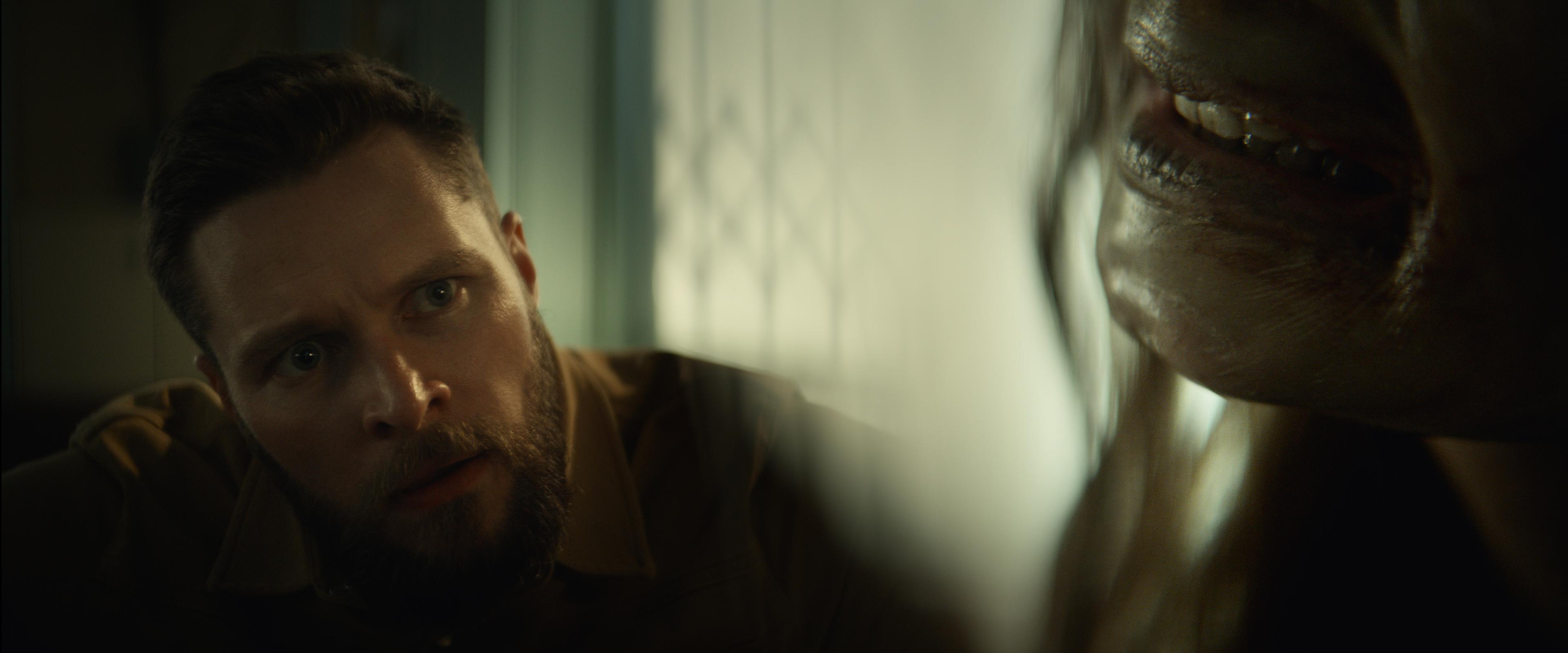
As described above, the plot begins when Charlie and Larissa Cannon, an expat couple living in Cairo, Egypt, have to deal with the dissappearence of their eldest daughter Katie. Vanishing right under the nose of her ambitious journalist father, Katie is missing for eight years, before returning to her grief-striken family in Albuquerque, New Mexico as something entirely different and not entirely human. It’s an interesting premise for sure, one that takes advantage of fears around human trafficking and child predation to emotionally enthrall the viewer as the narrative begins.
The problem then, comes from the bloated nature of the narrative. There’s also a B-plot, following Egyptian police officer Dalia Zaki as she investigates what exactly happened to Katie, as well as various other running threads including Charlie investigating Egyptian daemonology. For as interesting as most of it genuinely is, the film’s mammoth 2 hour 17 minute runtime weighs it down, and severely weakens the bombastic and ridiculous, blood-soaked third act, which feels more like a relief when it kicks in and less like an explosive finale. It’s all interesting, but it moves at far too much of a glacial pace, especially compared to the ruthless pacing of Cronin’s previous film, Evil Dead Rise.
Writted and directed by Lee Cronin, the film has a tough balancing act, with many characters and lots of ongoing plot threads at any time. Many of these unfortunately get lost in the shuffle towards the end, but the actual Cannon family itself luckily all are given memorable moments and points of development or character intrigue. It’s unfortunate that the most under-explored element of the film is the part of the narrative actually set in Egypt, because I really love that the film not only places an Egyptian character at the forefront, but has large patches almost entirely in Arabic. Sadly, it doesn’t necessarily engage with Egyptian mythology or folklore in an interesting way, defaulting on pseudo-demonic cliches that make it feel more in line with a possession film than one focused on mummification.
It also feels tonally incongruent with the rest of the film, taking inspiration from psychological horror detective films like Se7en. The film is by far at its best when it’s a gnarly haunted house movie with one emotionally decaying family, haunted by the monstrous thing that was once their daughter, so it’s good that the bulk of the film is focused on that.
As a reinterpretation of a well-known and well-established movie monster, some viewers might be quite alienated at the final product. While the film itself is quite good, if held back by some flaws, I think it’s quite fair to say it doesn’t resemble any previous The Mummy movie at all. In fact, it’s far more akin to an Evil Dead movie, with gnarly and disturbing body horror thrills that will make you squirm in your seat and are more effective at making me feel nauseous than anything I’ve seen since Bring Her Back last year.
With persistent rumours that the film was initially meant to be titled The Resurrected, less of a 1-1 title comparison with previous entries might have made a difference into how the film has been perceived. It’s a tough one, because I love so much of what the film has to offer, and think it’s very much a good movie, but it also does itself a disservice by trying to be a Mummy movie about an teen girl and her grieving family. What is for certain however, is that this is by far the scariest and most gruesome film in the larger ‘franchise’ or history of this specific monster, and that’s pretty awesome as is.
On a technical level, this is one of the best looking and most well-crafted horror movies of the decade so far. Shot by Dave Garbett and edited by Bryan Shaw, the film looks spectacular, with some truly brilliant and inventive shot compositions that make even the most small-scale and intimate scares look all-encompassing and impactful. It’s hardcore as hell too, never shying away from moments of gore and violence, including one particularly jaw-dropping sequence involving a horrific, Saw-style videotape, and another involving embalming fluids and a scorpion. It’s got a glacial but methodical pace, and when things get out of hand, it goes full on ballistic in the most exciting and thrilling way. It definitely is a film that illicits a strong audience reaction, with exceptional practical effects and a fantastic sense of tension built in by the technical prowess of the team alongside the score by Stephen McKeon.

Jack Reynor stars as Charlie Cannon, the families’ ambitious and motivated patriarch who is indirectly responsible for Katie’s disappearance years ago. Reynor is in great form here, switching between compelling moments of sympathy and moments of frustratingly real character flaws on a dime, and he’s a huge part of what makes the film work. His wife Larissa, played by Laia Costa, is good but never truly shines in comparison, buckling under the weight of some of the better performances around her and never really standing because of it. She’s not bad by any means, and it doesn’t impact the narrative in any negative sense, she’s just not working on the same level as Reynor here.
May Calamawy portrays Detective Zaki, the missing persons inspector in charge of investigating Katie’s case in Egypt. She’s rather compelling throughout, tapping into some of the same energy as Jodie Foster in The Silence of The Lambs or Maika Monroe in Longlegs, but unfortunately because The Mummy doesn’t truly center around her character, she often feels like an afterthought or relegated to the b-plot of the narrative. She’s definitely compelling in spite of this, and like mentioned previously, when re-interpreting an orientalist and very dated storytelling trope such as ‘the evil mummy’, it’s good to emphasize the presence of a character from the region itself, even if she still ultimately ends up far too sidelined.

Natalie Grace is the real star of the show as Katie, covered in prosthetics for the entire film but putting her all into the performance regardless. It’s very brutal and physical, demanding a lot from her and the accompanying stunt performance team, and they absolutely succeed. This film lives or dies by the quality of her performance, and she does a fantastic job her, channeling much of the same vitriolic and explosive energy that made Alyssa Sutherland’s turn in Evil Dead Rise so memorable. She’s the best performance of the film by far, and manages to get some real horrific and disturbing moments in, an impressive feat considering she’s still relatively new to film itself and especially the genre.
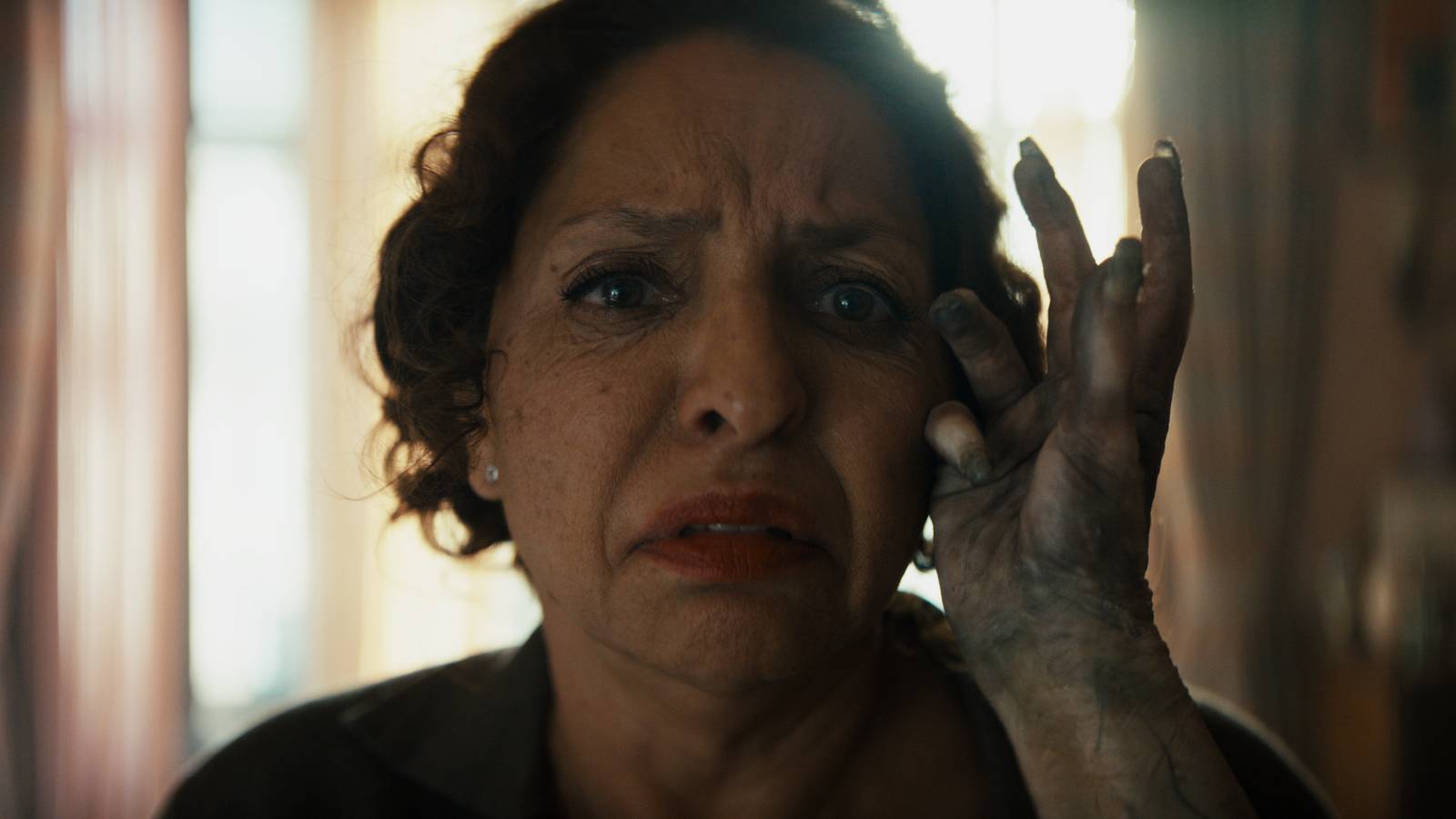
Other supporting performances include Shylo Molina as the Cannon’s middle child, Sebastian, who does a good job but is criminally underutilised as the film goes on ; Billie Roy, as the Cannon’s youngest child, Maud, a true scene-stealer in both some of the funniest and some of the most disgusting scenes in the film, and Veronica Falcon, who plays Larissa’s mother Carmen. She’s very good throughout, and her character is the first to be tormented by Katie, so she gets a lot of chances to chew the scenery and make her moments impactful.

Thematically, The Mummy is about a whole lot of things, but at the same time, doesn’t necessarily tackle most of them with much depth. Much of the fear of the early parts of the film revolve around concerns of human trafficking, child predation, and a metaphor for a lost, abused child trying to acclimatize back into regular ‘human’ life after their trauma. This is quickly thrown out the window when the possession antics begin, with the thematic focal point becoming the family’s grief around the Katie who they’ve lost, who is still alive but not truly there. That’s really interesting in itself, but it’s undercut by the consistent back and forth between the main narrative, in New Mexico, and the b-plot, in Egypt.
Much of the film’s problems come from the bloat this distance causes, and the whole film either should’ve been set in New Mexico, about Aztec mummification rituals, or in Egypt. Cutting back and forth between them does the film no favours, especially when it comes to limiting the amount of time they get to explore any of the ideas they present. They also, unfortunately, throw out a really underwhelming epilogue, in a film that’s already too long, just to try and make a happy ending work, and it thematically undercuts The Mummy massively.
Overall, The Mummy is a good film, bordering on great, but held back by a bloated runtime and underwhelming B-plot that really minimize all the things that make the movie itself so compelling. Featuring great performances, particularly from Jack Reynor, May Calamaway and Natalie Grace, alongside superb technical elements, this disturbing and gnarly film will definitely leave an impression on you, even if it’s thematic core gets lost in the messiness of the plot and it’s overly extended length. It’s a good film, a well-made, compelling and disgusting horror film, which is at its best when it leans into the thrills, and at it’s worst when it pads itself out or loses focus of what it’s about. Whatever Lee Cronin is up to next, he’s sure to be a director to keep your eye on, making challenging and brutal films that manage to consistently entertain despite some of their flaws.