
 Creepy Presents: Bernie Wrightson
Artist: Bernie Wrightson, with Howard Chaykin and Carmine Infantino in select stories
Writers: Bernie Wrightson, Bruce Jones, Bill Dubay, Nicola Cuti
Publisher: Dark Horse Comics
Release: February 3, 2026.
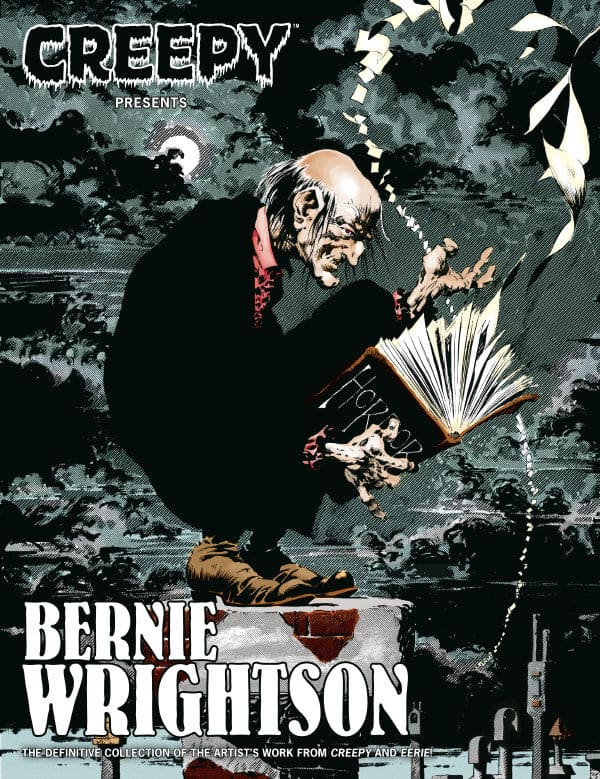
Few names ever become synonymous with the genre they frequent the most. Bernie Wrightson is one of those few, a name that might as well be in the dictionary definition of horror in some shape or form. His work in the pages of Eerie and Creepy gave comics some of the best examples of how to conjure real terror in sequential storytelling. Now, readers can discover or rediscover these short form stories in the new paperback book Creepy Presents: Bernie Wrightson, published by Dark Horse Comics.
The book features six stories from Creepy and five from Eerie, along with a frontispiece and illustrations gallery that rounds out the body work Wrightson produced for each magazine. Most of them are in black and white, but the stories that were originally presented in color carry over as such.
Bernie Wrightson’s art is characterized by intricate shading and heavy texture work. Characters feel alive and full of blood, like potential victims that are in line to get seriously harmed by the horrors they’re subjected to on the comics page. Environments get the same treatment, carrying a sense of story about them that demands readers extend their stay in each illustration. Not a single cobweb is there for the sake of it. Wrightson made sure every specific detail reflected something about both the human characters and the monsters that haunt them.
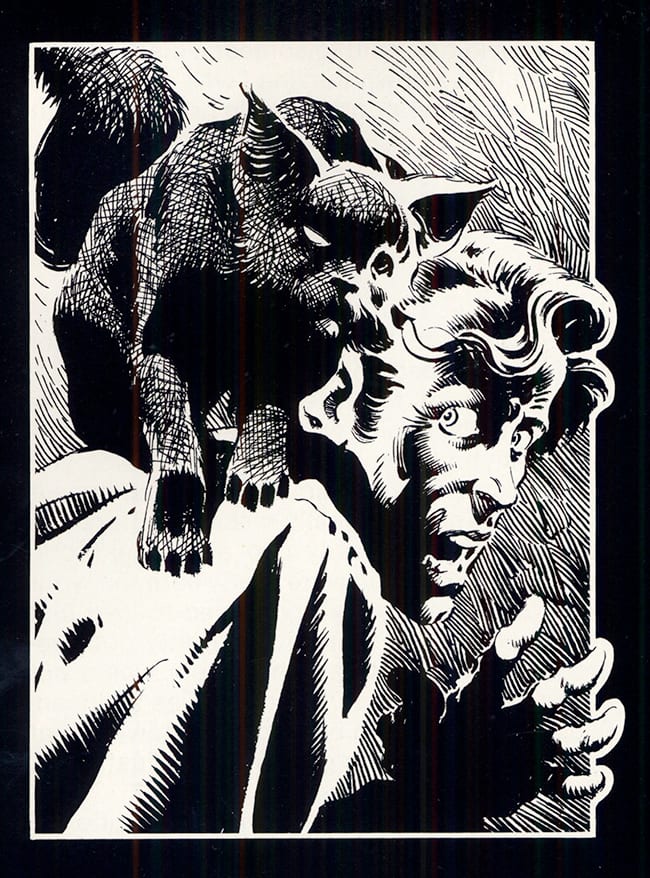
This is all evident in the very first story contained in Creepy Presents, “The Black Cat.” One of the best adaptations of Edgar Allan Poe’s work in comics, Wrightson turns the titular feline into a force that imposes its will on the main character through the cunning application of judgment and guilt.
The story follows a troubled man that struggles with his temper. It spills over to his cat and then to his wife. In classic Poe fashion, death follows not far behind. Wrightson draws a mean cat here, a character in its own right that represents moral constitution and integrity. This comes through thanks to the cat’s facial expressions and overall body language, which project suspicion, anger, and even warmth depending on the situation.
Like other horror masters of his time, Richard Corben among them, Wrightson’s clear love of classic horror also offered readers an education on some of the genre’s best works. Poe and Lovecraft adaptations frequented the pages of Creepy and Eerie. Wrightson’s “The Black Cat” is one of the most impressive of its kind, and it probably introduced a whole generation of readers to the original author.
The story that follows “The Black Cat” in Creepy Presents is one of the best pieces of short horror fiction ever to be printed, and it still carries the emotional and terrifying punch it had back in 1974 when it released in Creepy #63. It is simply titled “Jenifer,” illustrated by Wrightson and scripted by Bruce Jones (another horror great).
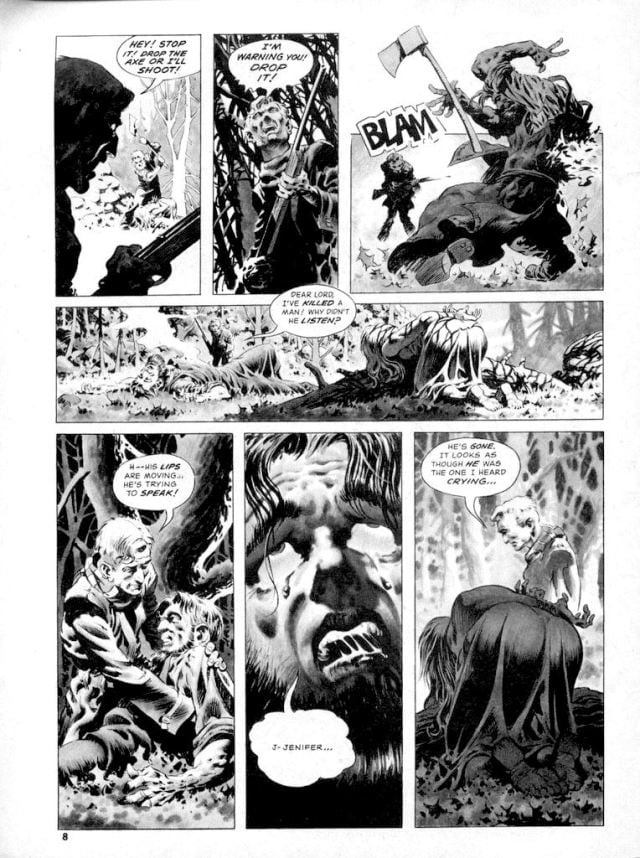
A hunter stumbles upon a man that’s ready to execute a woman in the woods. He shoots the man and saves the girl. Only then does he see her hideous and monstrous face, the face of Jenifer. He takes her home only to see things turn bad quick. A tale of psychosexual horror unfolds, where man is presented as a victim of his own sex drive with no viable treatment other than violence to cut through the hormones.
Wrightson blends fear and psychological torture to produce some of the most painful facial expressions ever illustrated. He captures a sense of helplessness that drives the story and adds layers to the man’s emotional composition, especially as it relates to his inability to escape Jenifer.
The man’s house is given a haunted quality, with heavy shadows indicating a shift in the way things were and how lust grew to shatter any chances of a return to normalcy. Artists looking for stories that show just how powerful a narrative tool shadows can be need look no further than “Jenifer.”
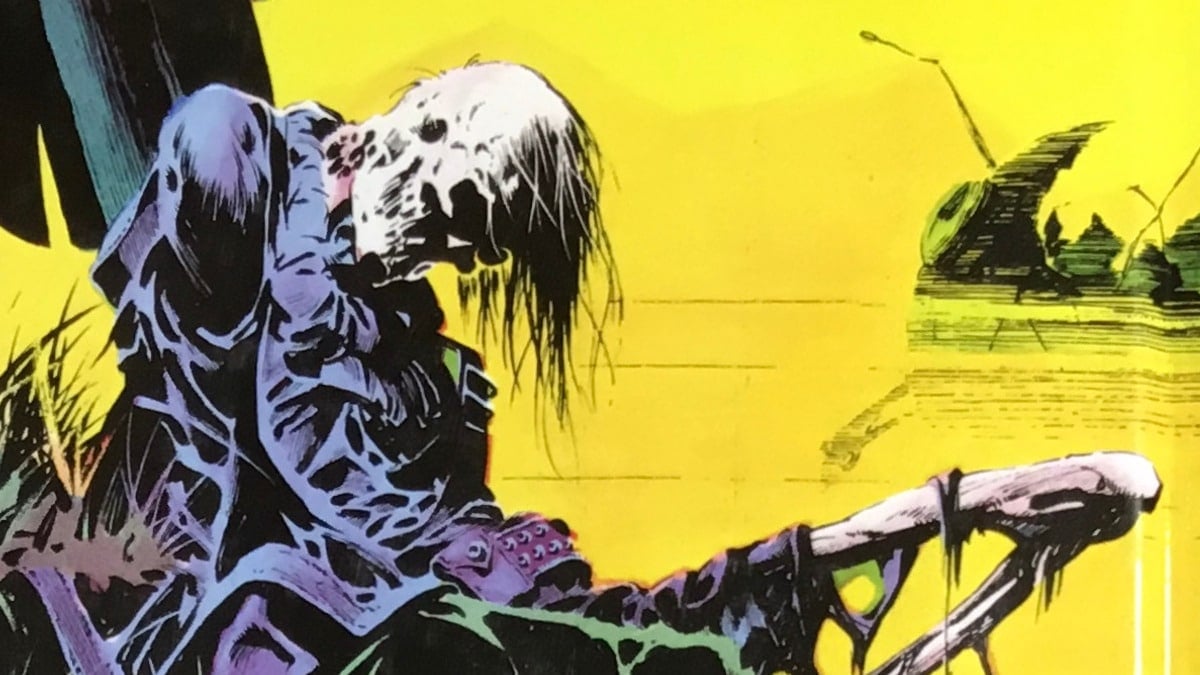
Another great tale that showcases Wrightson’s talents comes in the form of “The Muck Monster,” a Frankenstein-inspired tale with a twist that makes an already tragic story even sadder. This one’s presented in full color, which makes his signature gooey textures pop out even more.
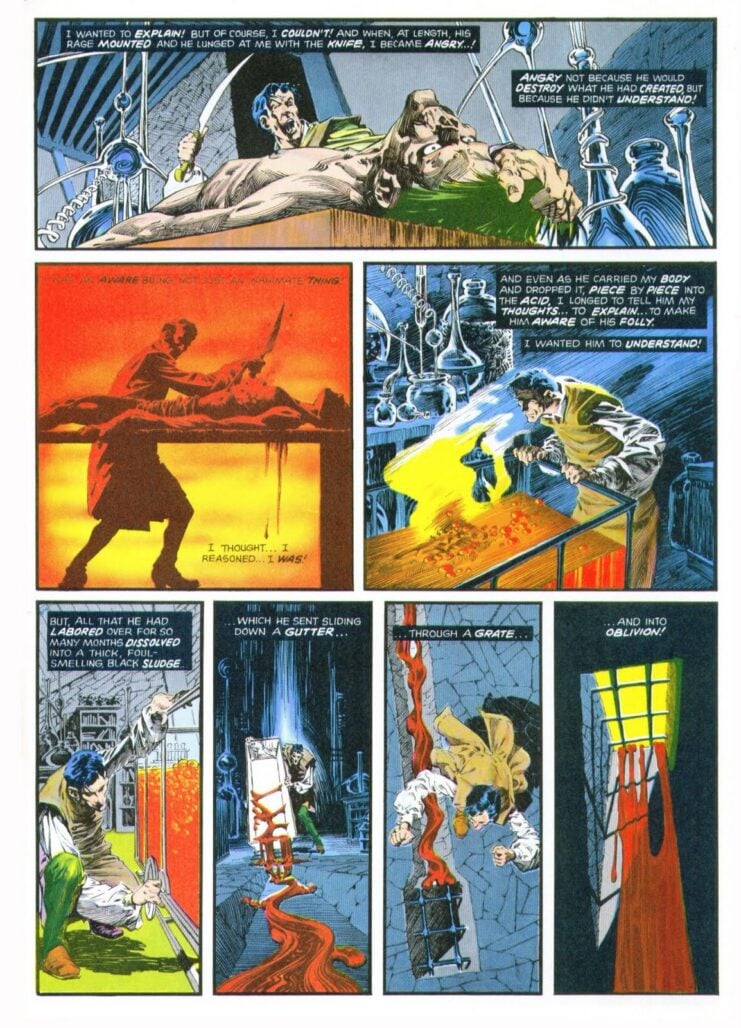
A mad scientist is in the process of bringing dead flesh back to life. Failed experiments get melted. One such case, though, retains his consciousness after becoming corpse muck (hence the title) and decides to find a way to stay alive. Wrightson smartly focuses on the reanimated person’s existential crisis as he reckons with his liquid-like state. Sadness and confusion color the narration, but with a sense of calm resignation that digs deeper into the idea of death and its meaning.
The muck is given the respect a fully-fledged character is supposed to get. It looks like something that was smeared on the page, weighty and consequential. Care was taken to capture the shapes the muck takes as it courses through the ground in search of anything that could give it structure or a body of some sort. “The Muck Monster” feels like a story that was dear to Wrightson, that he wanted to get right. It’s an accomplishment and deserves to be discussed more.
Creepy Presents: Bernie Wrightson is an appreciation of legacy. It’s one of the best arguments readers can get as to why Wrightson is such a crucial part of the history of horror comics. Hell, of the comics medium as a whole. The stories contained within this book attest to the influence a single creator can have over an entire genre. Simply put, Bernie Wrightson is horror comics. Inseparable. Essential.